Dethatching With a Rake: Timing, Technique and Cleanup
Check thatch depth, wait for actively growing grass, rake in overlapping grid passes, then clear the debris. This guide covers dethatching with a rake from timing to cleanup.
The Cobalt Hollow Team
November 28, 2026 · 6 min read
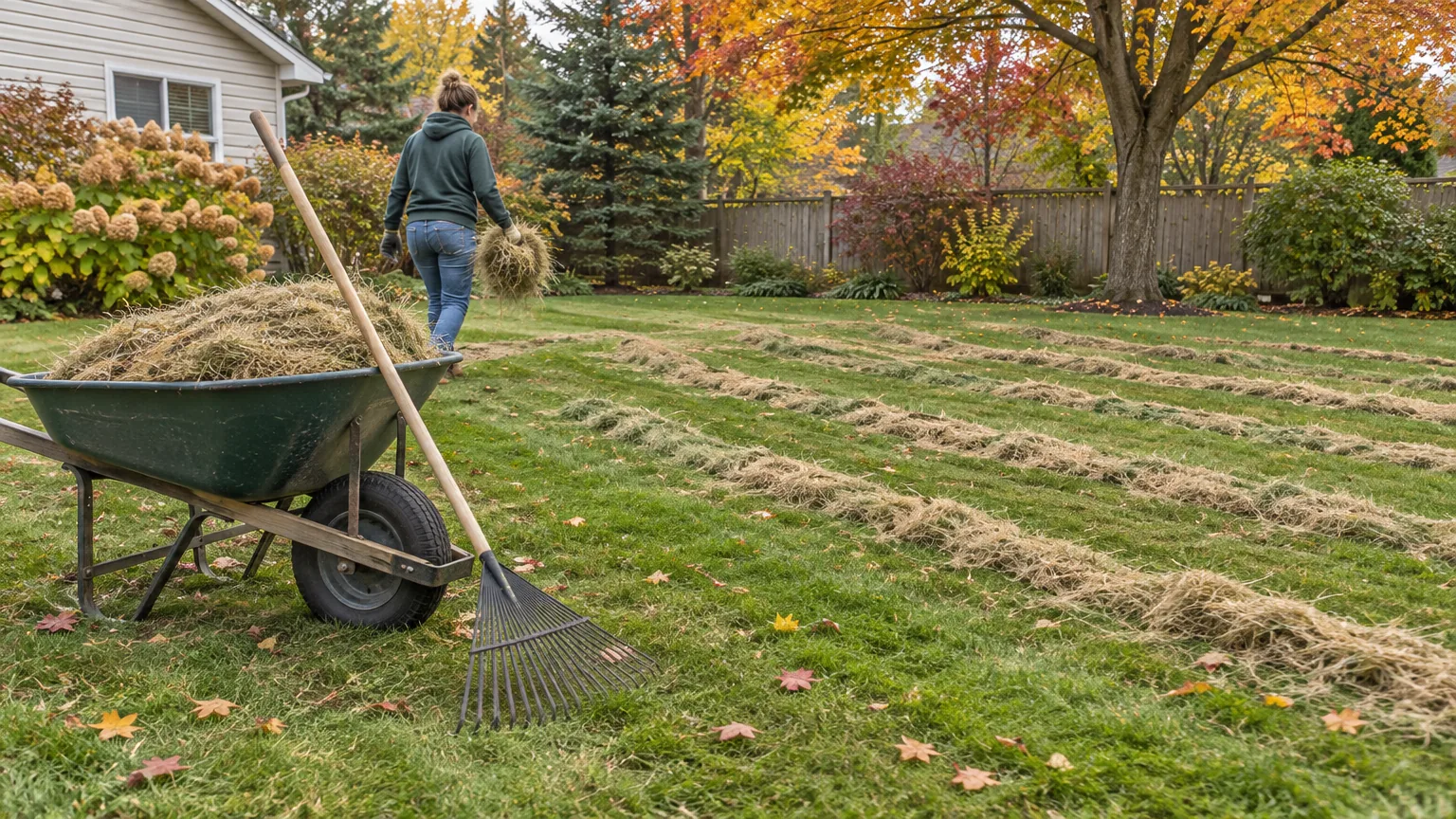
Dethatching with a rake means pulling the matted layer of dead grass and roots off the soil surface using steel tines, then clearing the debris away. Check the thatch depth first, pick a time when the grass is actively growing, work the lawn in overlapping passes, and rake up everything you loosen. This guide covers each step, plus the mistakes that tear up a lawn.
How to check thatch depth before you start
Thatch is the layer of dead stems and roots that builds up between the green blades and the soil. A thin layer is normal. A thick layer can hold back water, nutrients and air from the grass roots.
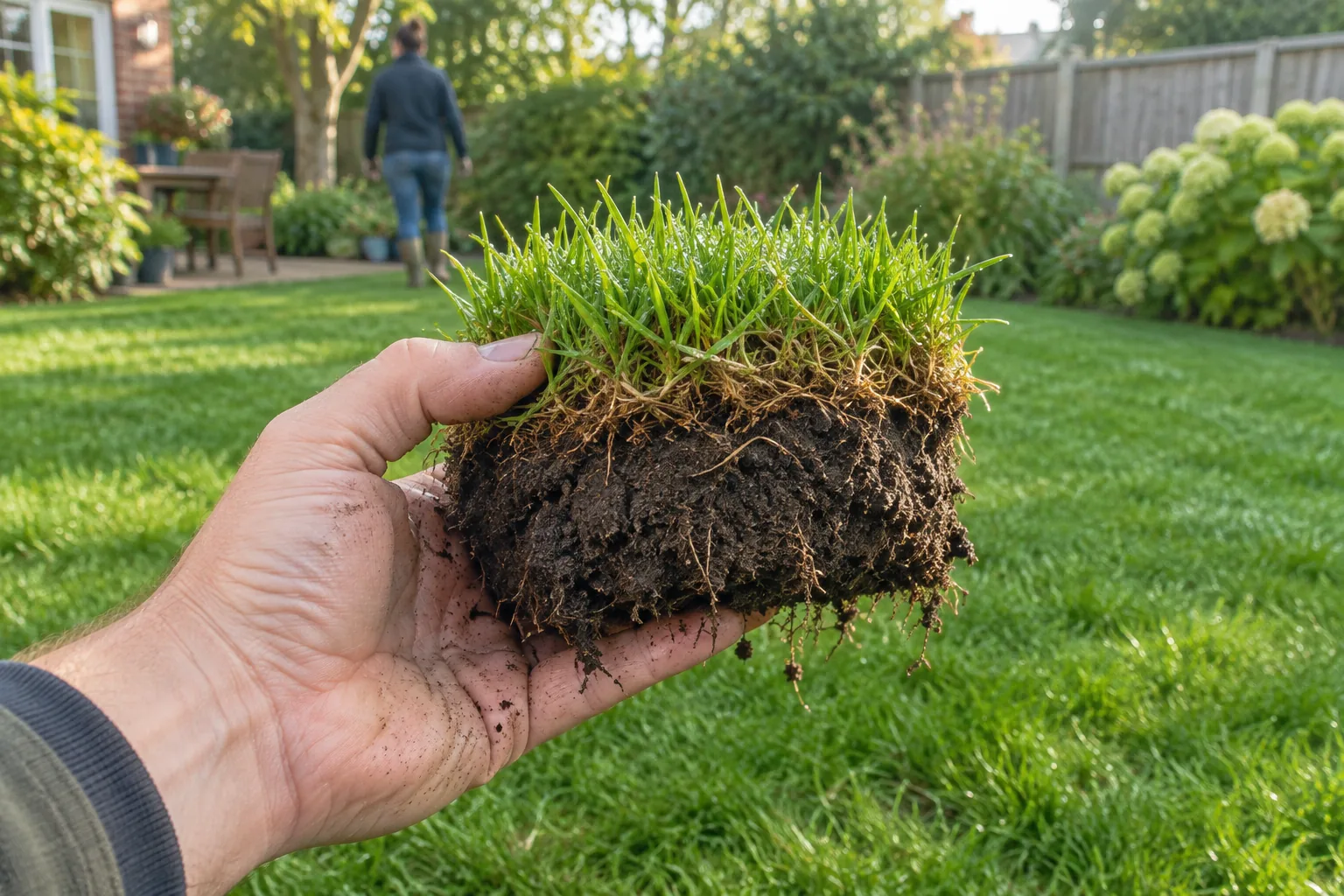
Cut a small wedge of turf with a trowel or knife, lift it out and look at the side. Measure the brown, spongy band above the soil. If it is thicker than about half an inch, dethatching is worth doing. If it is thinner, leave the lawn alone and keep mowing.
Signs the lawn needs it
| What you see | What it points to | Next step |
|---|---|---|
| Lawn feels spongy underfoot | Thick thatch layer | Measure the wedge |
| Water pools or runs off | Matted surface blocking the soil | Measure, then dethatch if thick |
| Brown patches with green grass around | Dead grass built up in spots | Rake that area and re-check |
| Mower scalps or rides high | Thatch lifting the blades | Measure the wedge |
| Thin band, firm turf | Normal thatch | Skip dethatching |
When to dethatch: timing by season
Dethatch when the grass is actively growing, so it can fill in the bare spots you open up. For cool-season lawns, that means early fall or spring. For warm-season lawns, late spring into early summer is the usual window, once the grass has fully greened up.
Is October too late to dethatch?
It depends on your region and grass type. In mild areas, October can still work for a cool-season lawn if the grass is growing and you can overseed soon after. Where frost is close, skip it and wait for spring. Do not dethatch a warm-season lawn in fall, and avoid dry, stressed or dormant turf in any season.
Pick a day when the soil is slightly moist, not soggy and not hard. Mow the lawn a little shorter than normal beforehand and bag the clippings.
Choose the right rake for the job
A rake is a long-handled tool with a row of tines on a head, used to gather or loosen loose material. A leaf rake has flexible tines meant to glide over the surface, so it gathers leaves but does little to loosen matted thatch. A dethatching rake has stiffer steel teeth that reach down into the layer and pull it up.
So yes, you can use a metal rake to dethatch, as long as the tines are rigid enough to hook the thatch and the head is wide enough to cover ground. Larger lawns or very thick thatch call for a power rake, also called a vertical mower or scarifier, which uses spinning vertical blades.
| Tool | Good for | Keep in mind |
|---|---|---|
| Leaf rake | Gathering leaves and loose clippings | Tines are not built to pull thatch |
| Manual dethatching rake | Small to medium lawns, light thatch | Takes steady arm and back work; take breaks |
| Power rake or vertical mower | Large lawns, thick thatch | Follow the manual; blade depth matters |
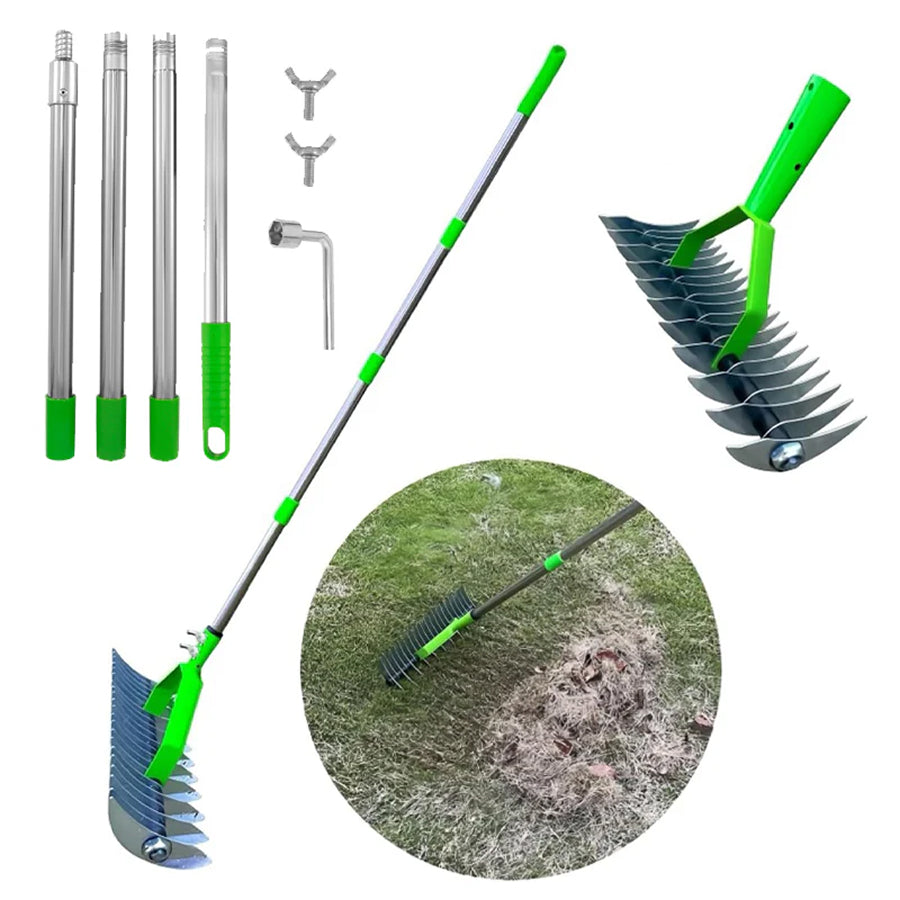
If your lawn is small or the thatch is light, a manual rake is a reasonable choice. The TurfTine Pro is a dethatching rake with a double-sided head: 11 teeth on one side for thatch and 21 teeth on the other for fine debris. Its handle is made of detachable pole sections, so you can add or remove sections to fit your height.
 In this guideTurfTine Pro$119.99View
Dethatching with a rake: step by step
- Mark sprinklers, shallow irrigation lines and utility covers, and clear sticks and toys.
- Set the handle to a length that lets you stand upright. With the TurfTine Pro, snap the pole sections together and lock the head on; no tools are needed.
- Start at one edge. Reach out, set the teeth into the turf and pull toward you with firm, even pressure.
- Overlap each pass slightly and work in one direction across the lawn.
- Cross the lawn a second time at a right angle to the first pass.
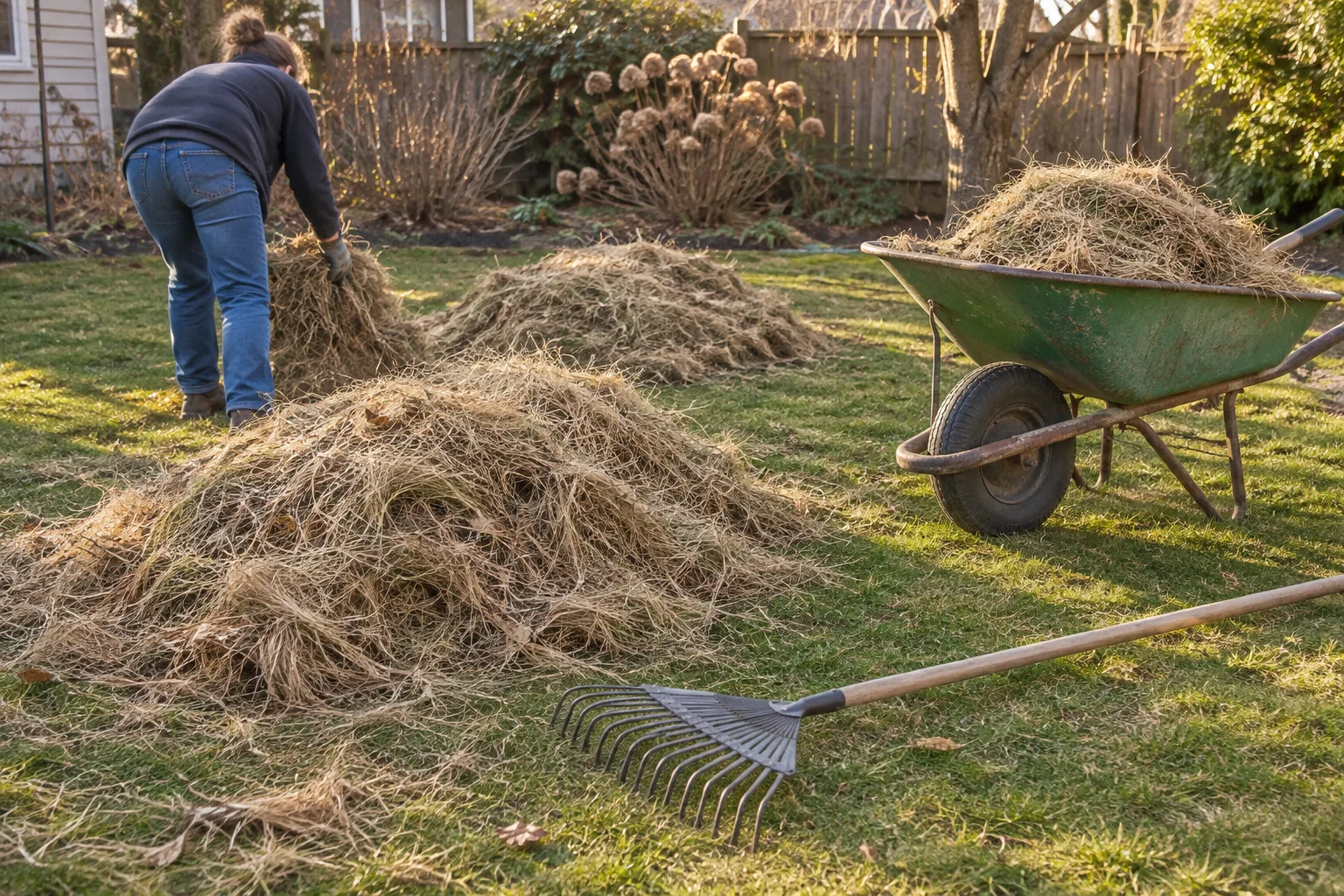
- Rake the loosened thatch into piles as you go, and clear them away.
The goal is to lift the thatch, not to dig. If the teeth are tearing out green turf and bare soil in strips, ease the pressure or shorten your stroke.
Stroke pattern
Use short, overlapping pulls rather than long sweeps. Work in a grid pattern: one set of passes in a single direction, then a second set across them. Keep the pass count modest on the first try, then look at the lawn before deciding whether it needs another round.
With the TurfTine Pro, pull the 11-tooth side through the lawn to lift thatch. Flip to the 21-tooth side to gather fine clippings and debris.
Field note
Rake a small patch first and look at what comes up. If you pull a thin handful of brown material, the lawn may not need a full pass.
Common dethatching mistakes
- Dethatching when the grass is dormant, dry or stressed, so it cannot fill in.
- Skipping the depth check and raking a lawn with normal thatch.
- Raking when the soil is soaked, which lets the teeth rip out whole clumps.
- Pressing too hard and gouging the soil instead of lifting the layer.
- Leaving the loosened thatch on the lawn, where it settles back down.
- Dethatching a warm-season lawn in fall, or a cool-season lawn in midsummer heat.
- Going back over the same area again and again in one session.
Wear gloves and sturdy shoes, and take breaks. If you have back or health concerns about raking a large area, hire a lawn care professional instead.
Cleanup and aftercare
Gather the piles into a wheelbarrow or onto a tarp. Thatch can go into a compost pile in thin layers or into yard waste collection; check local rules. If leaves have also fallen, the guide to gutter cleaning covers clearing them from above so they do not land on the freshly raked turf.
Once the surface is open, you can overseed bare spots, then water the lawn lightly and keep the top layer of soil moist while the new grass seed settles in. Follow the seed package for watering and mowing timing. Top-dressing with a thin layer of compost is another option; the TurfTine Pro can also spread mulch, topsoil, compost, sand or gravel.
Can you aerate with a rake?
No. A rake scratches the surface; it does not pull soil plugs or open the ground below. If the soil is compacted from heavy foot traffic, use a core aerator or spike tool as a separate job.
Caring for the rake
Brush off soil and clippings and keep the tool in a dry space. The TurfTine Pro has a carbon steel head with a galvanized surface and a stainless coating, and its sections come apart so it can be stored in a garage or shed. For more handles and heads for yard work, browse the Garden Hand Tools & Pruning collection.
Plan on repeating the depth check each year before deciding whether dethatching with a rake is needed again. A lawn with normal thatch can skip it.