
Automatic Coop Doors: What Actually Stops a Raccoon
Raccoons open latches, lift sliders, and learn schedules. A door only protects your flock if the mechanism, the material, and the timing all hold. Here is the checklist we use.

Nathan Pierce
August 6, 2026 · 7 min read
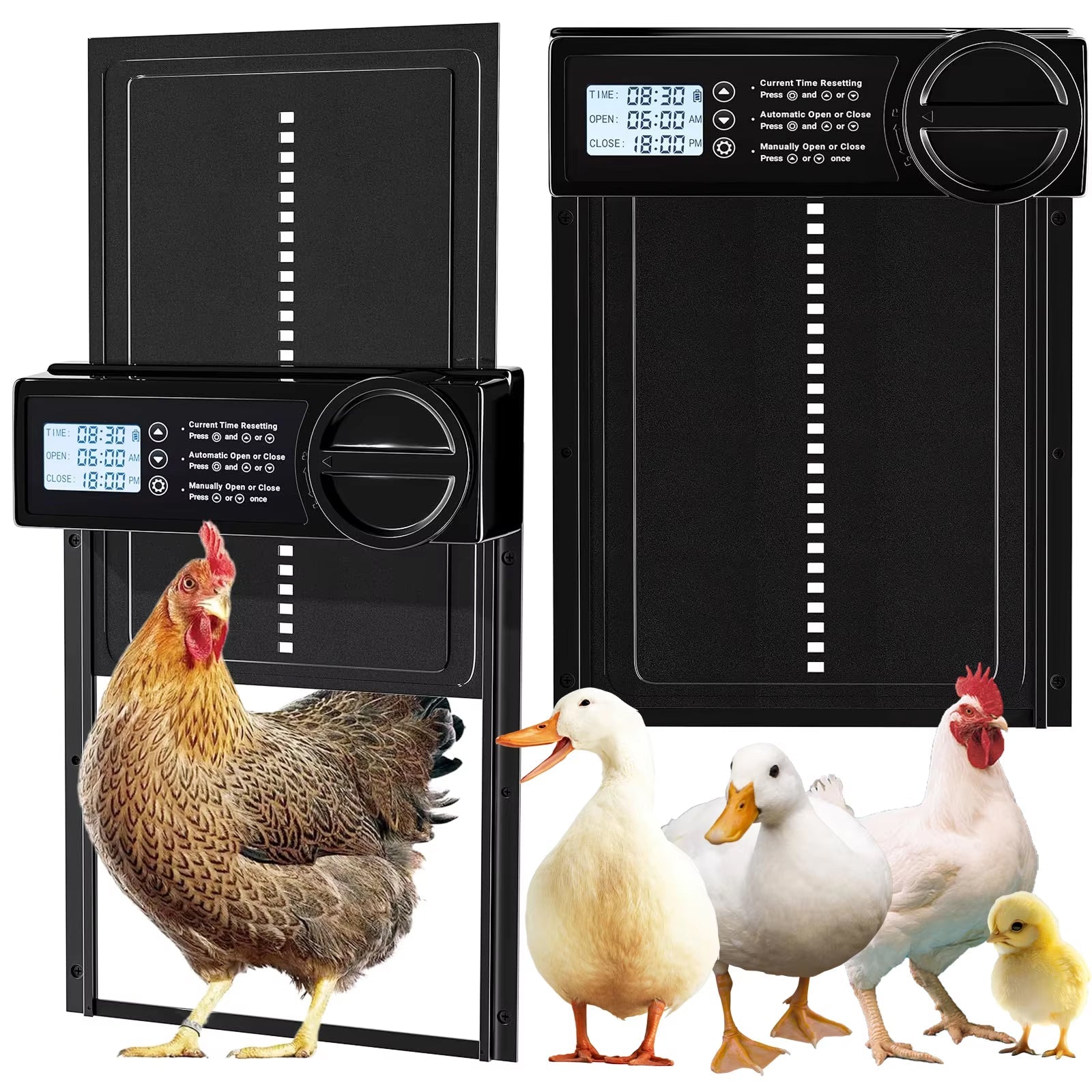
Most coop losses happen in the first hour after dusk — the window between when hens settle and when you remember to walk out and latch the door. Raccoons work that window. An automatic door removes the human factor, but only if the door itself is not the weak point.
Vertical slide beats side-hinge
A vertically sliding door sits in a track. To open it, a predator has to lift the full weight of the panel straight up through the guide rails — no purchase, no leverage. Side-hinged flaps can be pried at the edge. If you remember one mechanical rule, make it this one.
Metal panel, sealed electronics
- Aluminum or steel panel: raccoons chew and claw plastic doors at the corners.
- An IP44-or-better rating on the housing — dawn condensation kills cheap boards as reliably as rain.
- Battery power beats wall power in a coop: no cord to chew, and the door still runs through an outage.
The safety reverse is not optional
A door strong enough to stop a raccoon is strong enough to hurt a hen that lingers in the threshold. Look for a pressure-sensing reverse — the door should stop and retract the moment it meets resistance, then retry. Test it with a gloved hand on day one, before a bird tests it for you.
Tested pickFlockGate$129.99ViewTiming
Set the close time 30-45 minutes after local sunset, not at sunset. Stragglers are still filing in at dusk; the extra half hour prevents lockouts without meaningfully widening the predator window.
A monthly two-minute check
- Run one manual open/close cycle and listen for grinding — grit in the track is the most common failure.
- Wipe the track and the photo sensor (if fitted) with a dry cloth.
- Check batteries before each season change; cold nights drop weak cells fast.