Beef Jerky Recipe for a Food Dehydrator: Cuts, Marinade, Timing
Slice lean beef thin, marinate it, heat the strips to 160°F (71°C), then dry them on the trays until they bend and crack without snapping. Cuts, marinade and doneness checks are below.
The Cobalt Hollow Team
October 29, 2026 · 6 min read
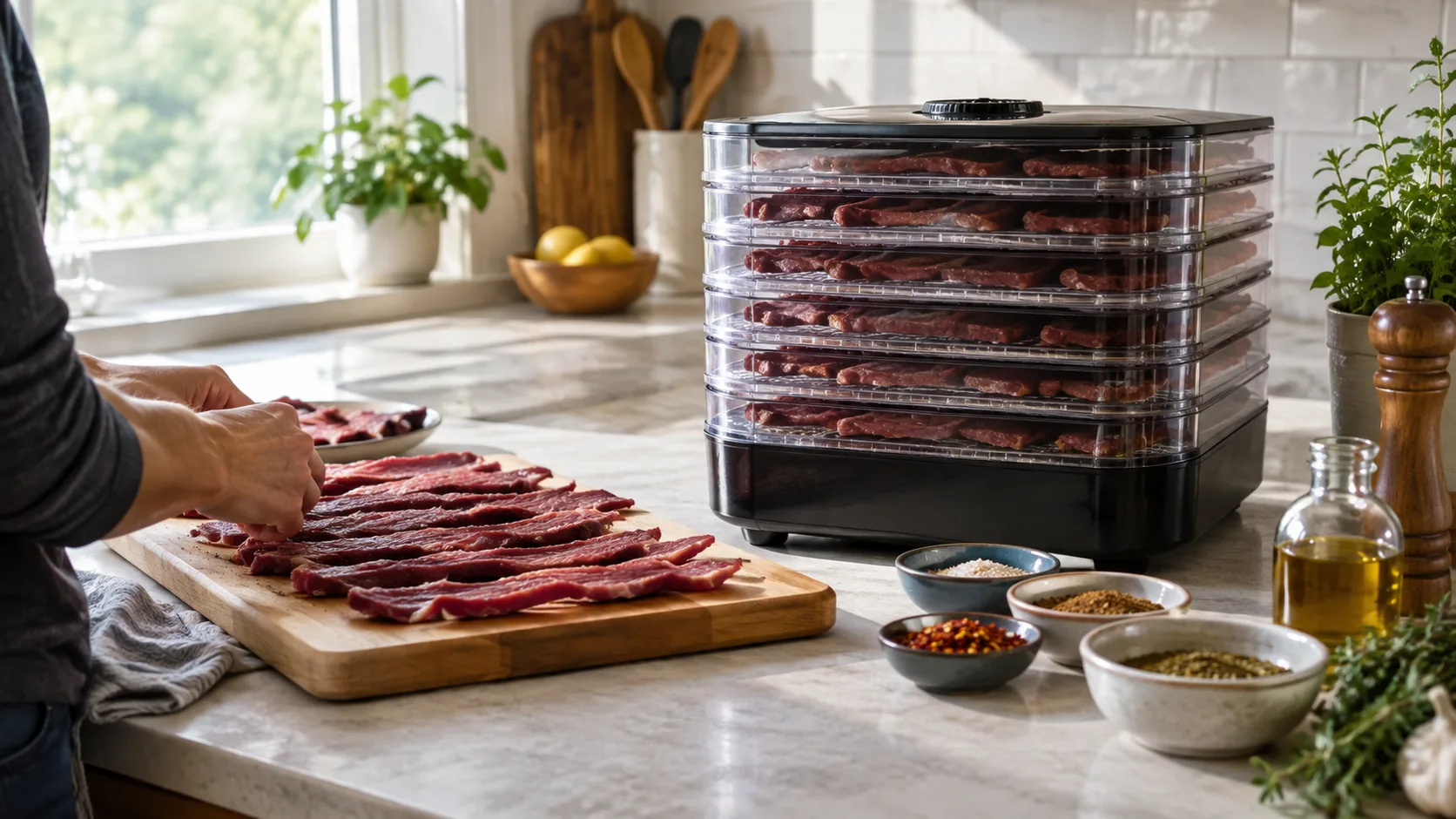
This beef jerky recipe for food dehydrator use starts with lean beef sliced about 1/4 inch (6 mm) thick, a salty marinade, and a heating step that brings the strips to 160°F (71°C) internal temperature. After that, you dry the strips in a single layer until a cooled piece bends and cracks without snapping. This guide covers whole-muscle and ground jerky, temperature steps, doneness checks and storage.
Beef jerky recipe for food dehydrator trays: ingredients
This batch uses 2 pounds (900 g) of lean beef. It is a starting point you can adjust to taste.
- 2 lb (900 g) lean beef, trimmed of visible fat
- 1/2 cup (120 ml) soy sauce
- 1 tablespoon brown sugar
- 1 teaspoon garlic powder
- 1 teaspoon onion powder
- 1 teaspoon ground black pepper
- 1/2 teaspoon liquid smoke, optional
- 1/2 teaspoon red pepper flakes, optional
You also need a sharp knife, a food thermometer, a baking sheet with a rack, a zip-top bag or covered dish for marinating, and a dehydrator with an adjustable temperature dial.
Choose the cut and slice it
Fat turns rancid during storage, so pick a lean, whole-muscle cut and trim every visible edge of fat. Round roasts, flank steak and sirloin tip all fit.
| Cut | Texture when dried | Slicing note |
|---|---|---|
| Top or bottom round | Firm, even chew | Lean and uniform, slices into even strips |
| Flank steak | Stringy, pulls apart | Visible grain; slice with or across it |
| Sirloin tip | Medium chew | Trim the outer fat cap |
| Lean ground beef | Softer, uniform | Shaped into strips instead of sliced |
Freeze, then slice
Put the beef in the freezer until it is firm but not solid. A firm roast holds still under the knife, so you can cut even strips. Uneven thickness dries unevenly, so match the strips to each other.
Slice with the grain for a firm jerky that tears in long fibers. Slice across the grain for a more tender bite that breaks apart.
Marinade and marinating time
Whisk the soy sauce, brown sugar, garlic powder, onion powder, black pepper and any liquid smoke or pepper flakes in a bowl. Add the strips and turn them until every surface is coated. Seal the container and refrigerate it overnight, turning the bag once.
Marinate in the refrigerator, not on the counter. Discard leftover marinade that touched raw meat, unless you bring it to a full boil first.
For a sweet and spicy batch, raise the brown sugar and add more red pepper flakes. For a teriyaki style, add a little ginger and garlic. The drying steps stay the same.
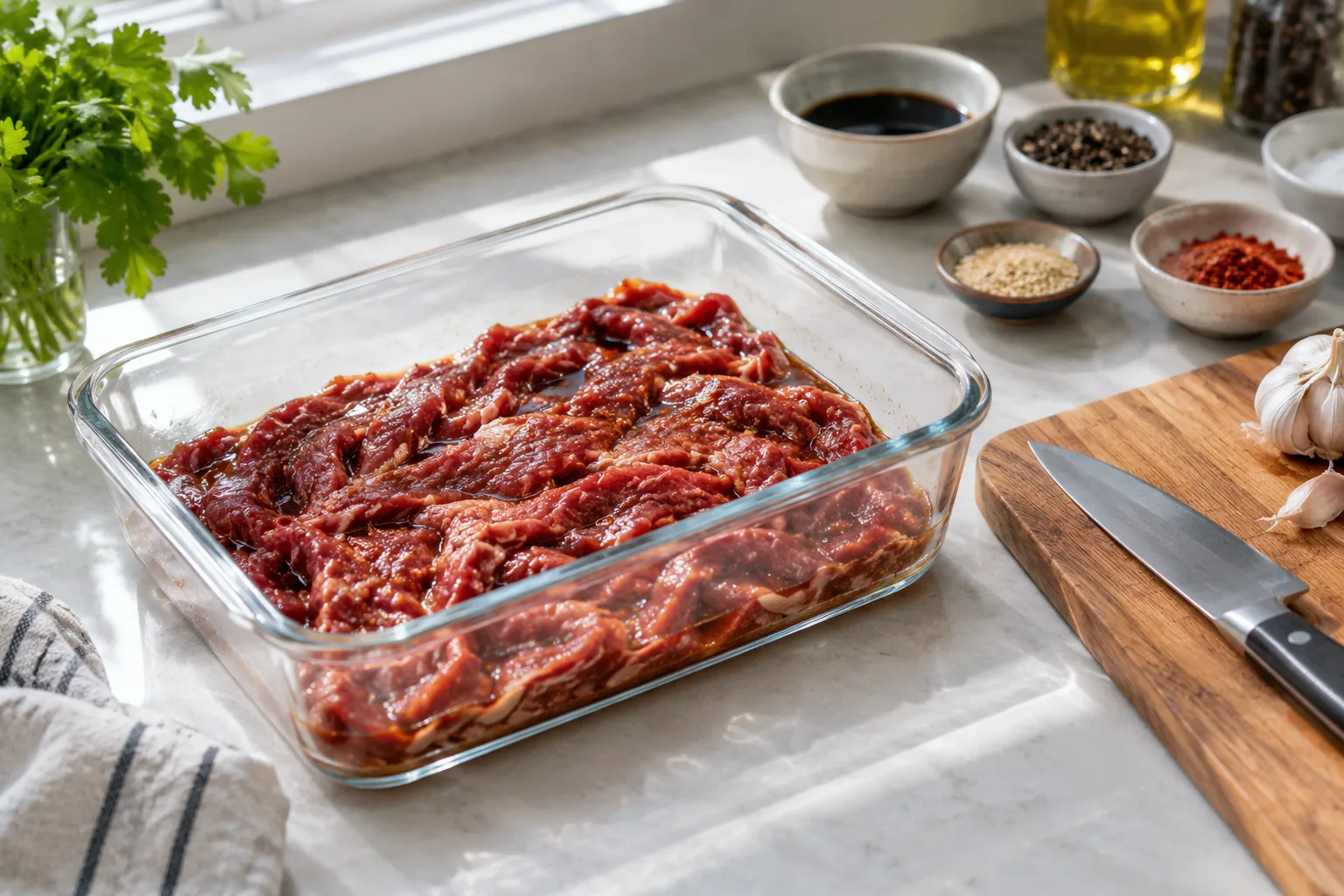
Step-by-step: how to make jerky in a food dehydrator
Follow your dehydrator manual and wash hands, knives and boards after touching raw meat. These steps put the heating step before drying.
- Remove the strips from the marinade and pat them with paper towels. Surface liquid adds to the drying time.
- Lay the strips on a rack over a baking sheet and heat them in an oven at 275°F (135°C) until a food thermometer reads 160°F (71°C) in the thickest part of several strips.
- Arrange the heated strips on the dehydrator trays in a single layer with small gaps between them.
- Slide the trays into the unit, set the temperature dial and set the timer.
- Check a piece every hour once the first few hours have passed.
- Cool a piece to room temperature and run the bend test described below before you stop.
The heating step matters because dehydrator air alone may not bring meat to 160°F (71°C). Heating first, then drying, covers that gap.
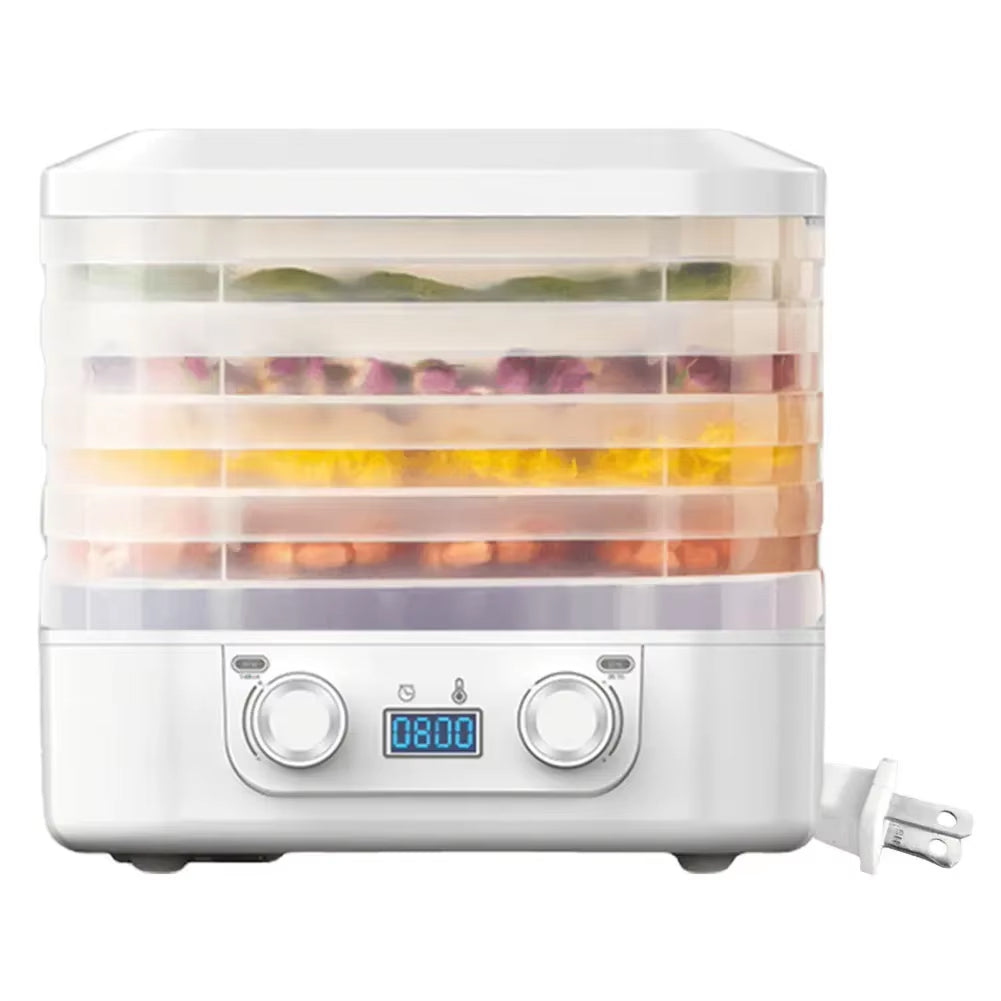 In this guideCrispHarvest$149.99View
Dehydrator temperature and timing for beef jerky
The CrispHarvest dehydrator has a dial from 30 to 70°C (86 to 158°F), and the higher end of that range is used for jerky. It also has a built-in timer and a fan that moves warm air across five stacked trays. Set the dial near the top of the range after the heating step.
| Stage | Temperature | How to use it |
|---|---|---|
| Heating step (oven) | Oven at 275°F (135°C); meat to 160°F (71°C) internal | Check with a food thermometer before drying |
| Drying at 145°F | 145°F (63°C) | Dry until the bend test passes |
| Drying at 130°F | 130°F (54°C) | Runs long; keep checking by feel |
| Top of the dial | 70°C (158°F) | Drying only; it does not replace the thermometer check |
How long at 130°F or 145°F?
No single number fits every batch, so judge by the bend test rather than the clock. Drying takes longer with thicker slices, fully loaded trays, strips pressed from ground beef, and a humid kitchen. Thin slices on a lightly loaded tray finish sooner than thick ones on a full stack.
For a starting timer setting, check the CrispHarvest user manual that comes in the box. Start testing pieces after the first few hours at either temperature, then test every hour. Drying at 130°F (54°C) runs longer than drying at 145°F (63°C), so plan more checks.
Field note
Test a piece after it has cooled to room temperature. Warm jerky feels softer than it will once cool, so a hot strip can lead you to over-dry the batch.
Ground beef jerky for a dehydrator
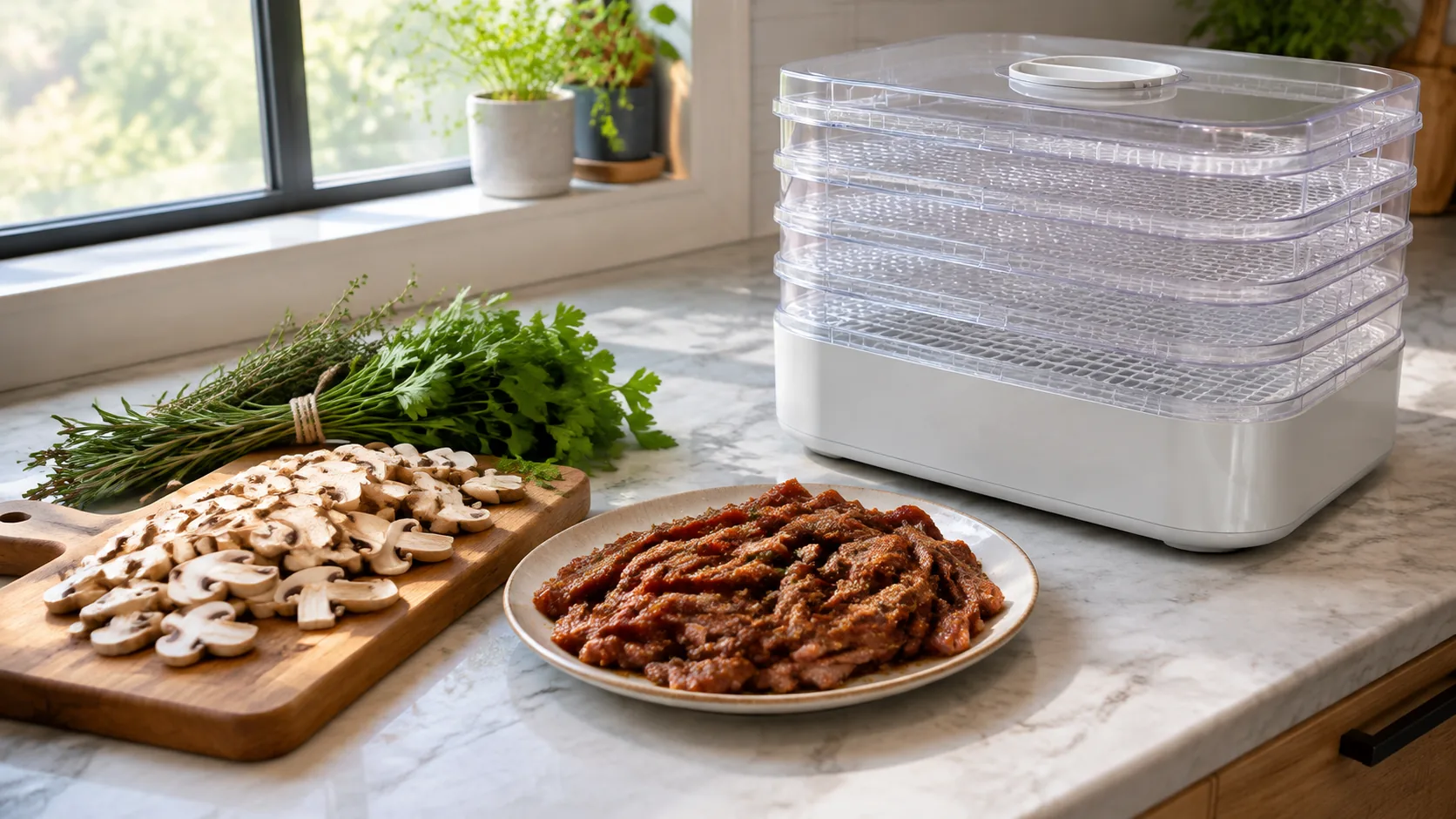
Ground jerky follows the same beef jerky recipe for food dehydrator drying, but uses lean ground beef shaped into strips instead of sliced. Mix 2 pounds (900 g) of lean ground beef with the marinade ingredients, but cut the soy sauce to 2 tablespoons so the mix is not wet. Chill the mixture overnight in the refrigerator.
Press the meat between two sheets of parchment to an even 1/4 inch (6 mm), then cut strips. A jerky gun works too if you own one. Heat the strips to an internal temperature of 160°F (71°C), then dry them on the trays like sliced jerky.
If you grind your own beef, the VoraxMill electric meat grinder comes with three stainless steel cutting plates, so you can swap plates to change the texture. Choose a finer plate for a uniform strip. Take the parts that touch meat apart after each session, rinse them and let them dry.
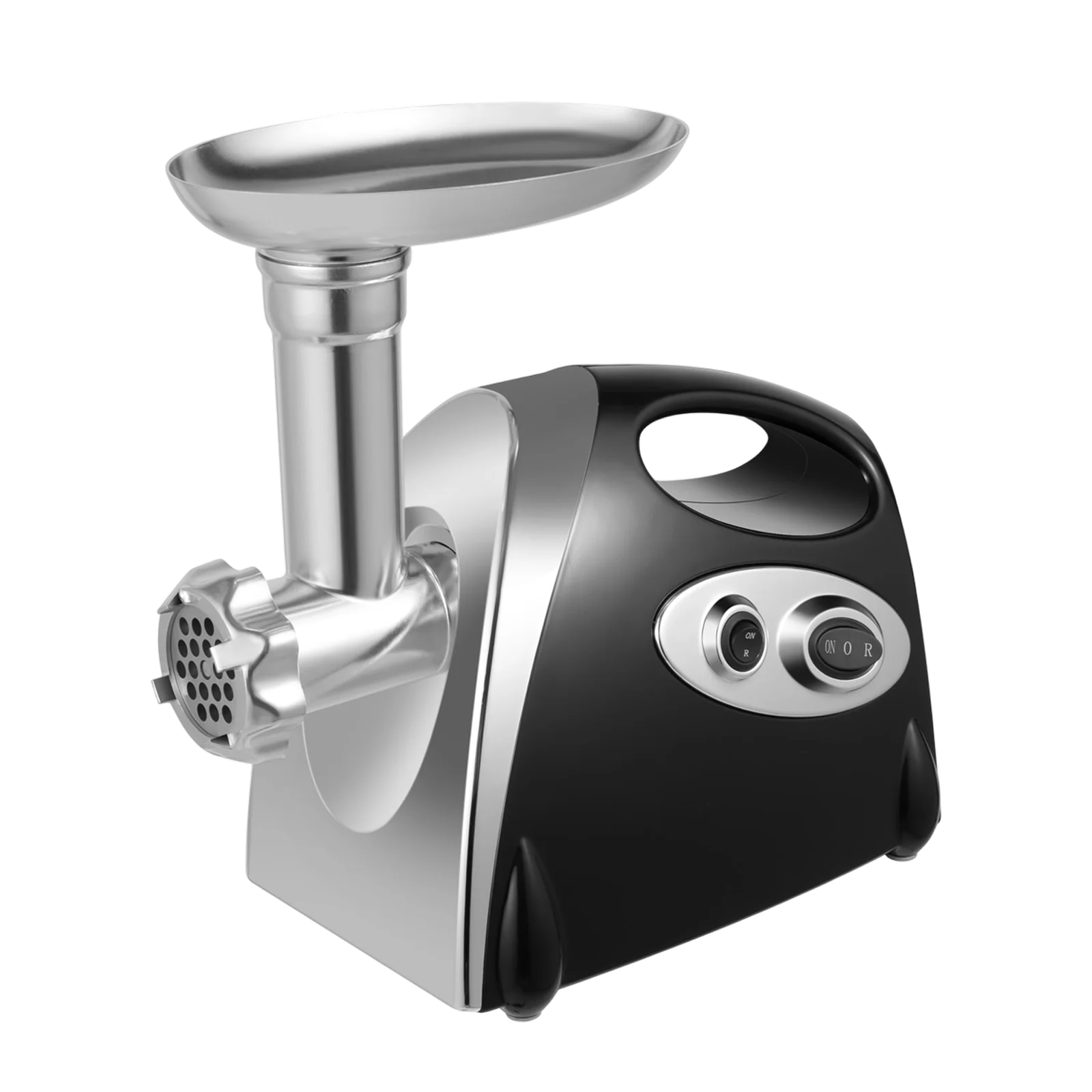 In this guideVoraxMill$229.99View
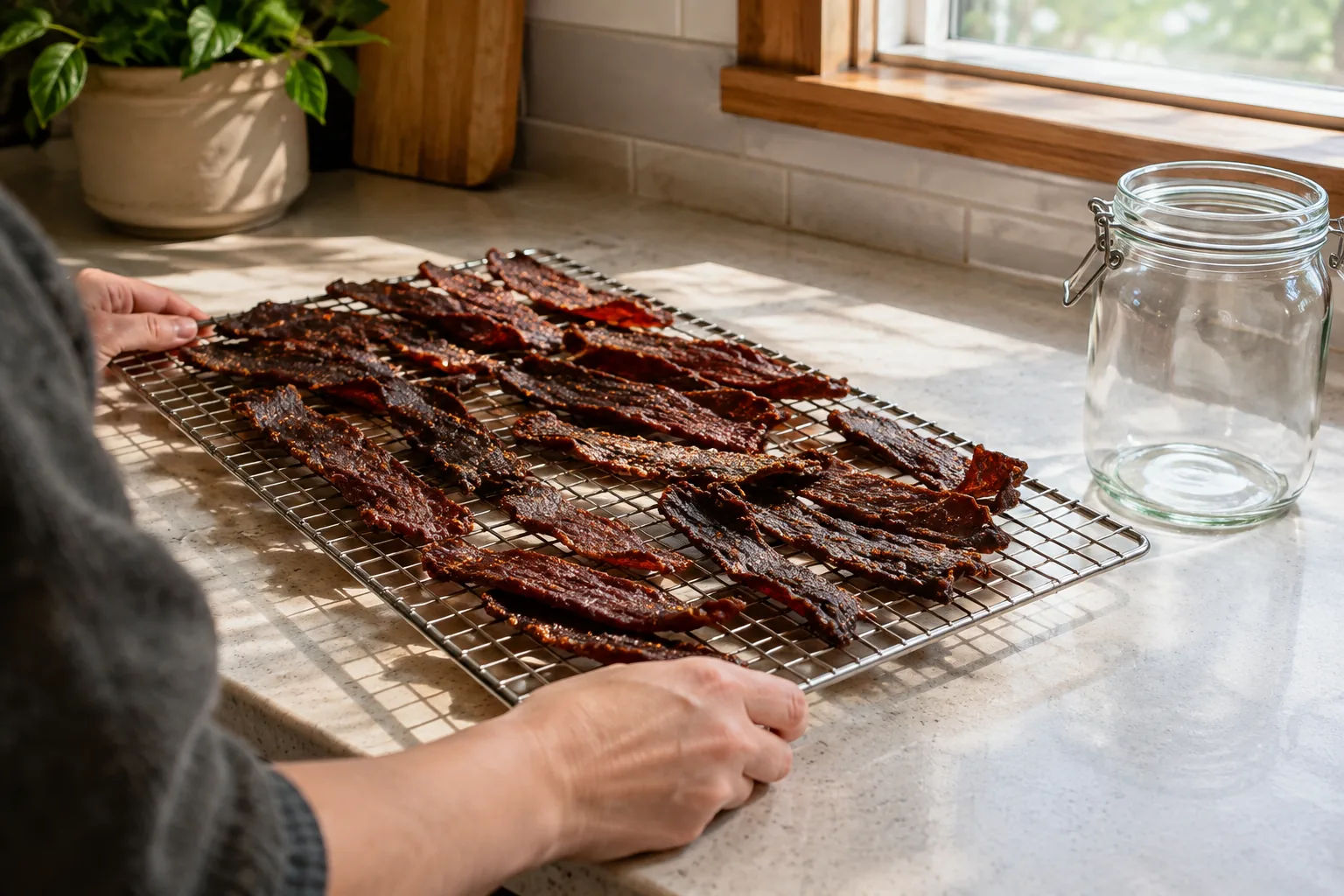
How to tell when jerky is dehydrated enough
Take one strip off the tray and let it cool, then run the bend test: the strip should crack and show white fibers at the fold but not snap in two. Dark, moist spots or a soft, rubbery bend mean it needs more drying.
| What you see | What it means | What to do |
|---|---|---|
| Bends without cracking | Still moist inside | Return to the trays and check again in an hour |
| Cracks, does not snap | Dry enough | Cool the whole batch |
| Snaps in two | Over-dried | Shorten the next batch and slice thicker |
| Wet spots at the thick end | Uneven thickness | Pull the dry strips and keep drying the rest |
Store the finished jerky
Blot any fat beads, let the jerky cool fully, then pack it in an airtight container. Keep it at room temperature for short-term snacking. For long-term storage, use the refrigerator or freezer. Discard any batch that smells off or shows mold.
The same trays work for other projects. See how to make fruit leather in a food dehydrator, and wash the trays well after meat. The trays pull out for washing by hand or in a dishwasher. For more kitchen tools, browse the Meat, Grain & Specialty Food Prep collection.
Common jerky mistakes
- Skipping the thermometer. Check the internal temperature of the strips before drying.
- Leaving fat on the beef. Trim it before marinating.
- Cutting uneven strips. Thick and thin pieces finish at different times.
- Crowding the trays. Leave gaps so air can move.
- Judging doneness while warm. Cool a piece first.
- Storing warm jerky. Trapped warmth can leave moisture in the container.
Keep raw meat and finished jerky on separate boards and plates, and follow your dehydrator manual for placement and cleaning.