
How to Make Fruit Leather in a Food Dehydrator
Purée ripe fruit, spread it thin on lined trays, dry at 60°C (140°F) and check for a tacky, peelable sheet. Here are the steps and doneness checks for five fruits.
The Cobalt Hollow Team
October 19, 2026 · 7 min read
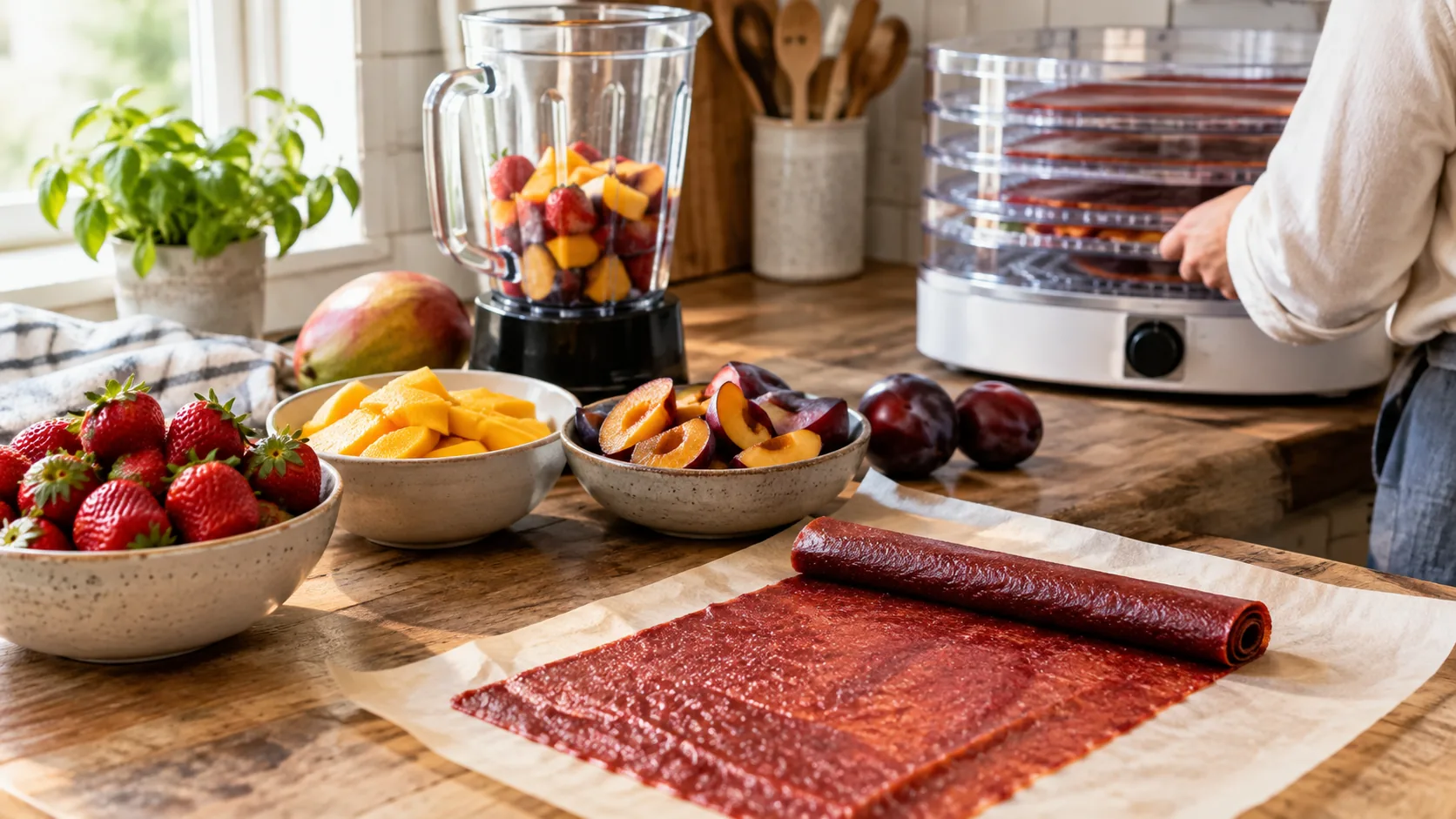
To make fruit leather in a food dehydrator, blend ripe fruit into a smooth purée, spread it in a thin, even layer on a lined tray, and dry it at about 60°C (140°F) until the sheet is tacky but no longer wet. Timing depends on the fruit, the thickness and the humidity in your kitchen, so the doneness checks below matter more than any clock.
This guide covers the base method, fruit-by-fruit notes for strawberry, mango, plum, peach and apple, a no-sugar version, and how to store the rolls.
What You Need
- About 4 cups of chopped ripe fruit, washed, with stems, pits and any tough peel removed
- A blender or food processor (our blender vs food processor guide explains which tool fits which job)
- Parchment paper or a silicone baking mat, cut to fit your trays
- An offset spatula or the back of a spoon for spreading
- Optional: lemon juice for tartness, and maple syrup or another sweetener if the fruit is tart
- An airtight container for storage
Choose ripe fruit. Underripe fruit gives a sharp, dull leather, while very ripe fruit brings its own sweetness, which is what makes a no-sugar batch work.
Set Up the Dehydrator
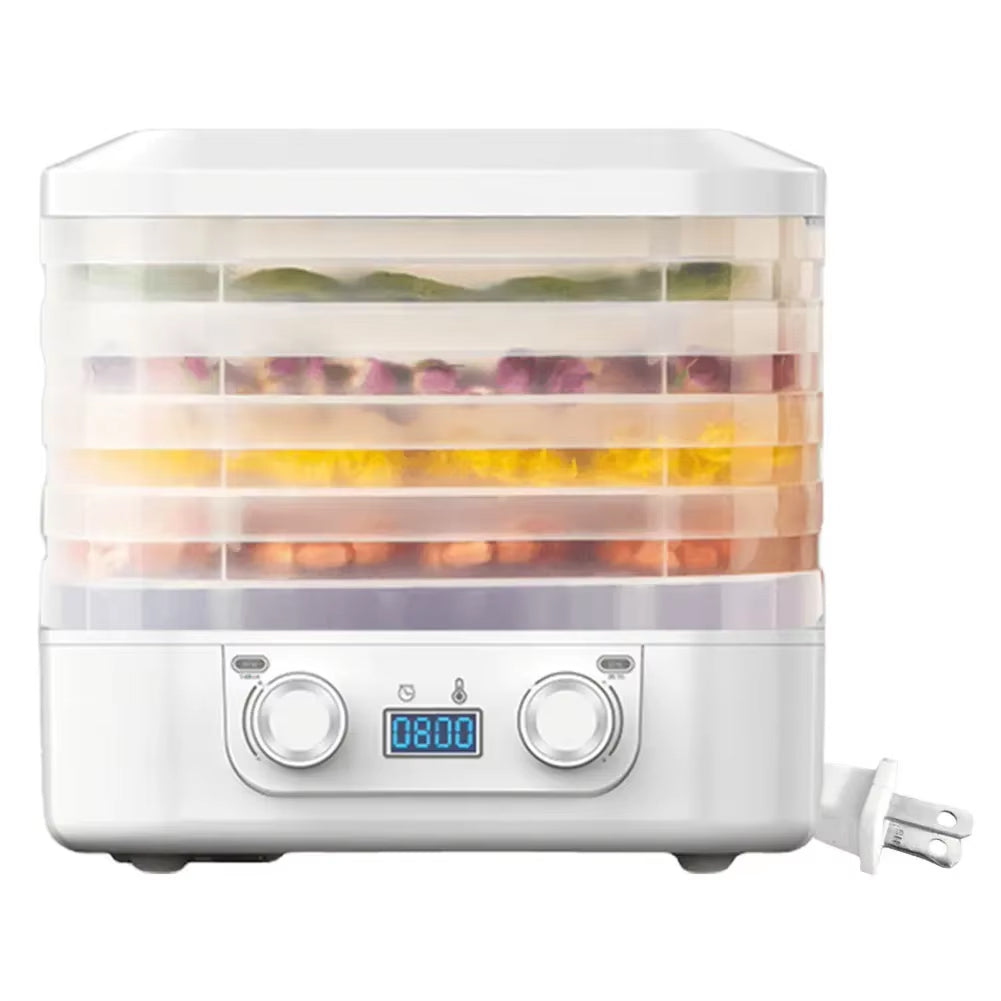
The CrispHarvest food dehydrator has five stacked trays, a fan that moves warm air across the trays, a timer dial and a temperature dial that covers 30 to 70°C. For fruit leather, set the dial to around 60°C (140°F), which sits in the upper part of that range. Because the unit holds five trays, you can load a full batch of purée in one round.
Line each tray with parchment paper or a silicone baking mat cut to fit, so the purée stays on the tray. Follow your manual on how to leave room for air to move between levels.
 In this guideCrispHarvest$149.99View
How to Make Fruit Leather in a Food Dehydrator, Step by Step
- Wash and chop the fruit. Remove pits, stems, cores and tough skins.
- Cook firm fruit (apples, underripe plums) in a saucepan with a splash of water until soft. Soft, ripe fruit such as strawberries and mango can go in raw.
- Blend until smooth. Any chunks dry unevenly and leave wet spots.
- Taste. Add lemon juice for tartness or a spoonful of maple syrup if the fruit is sharp.
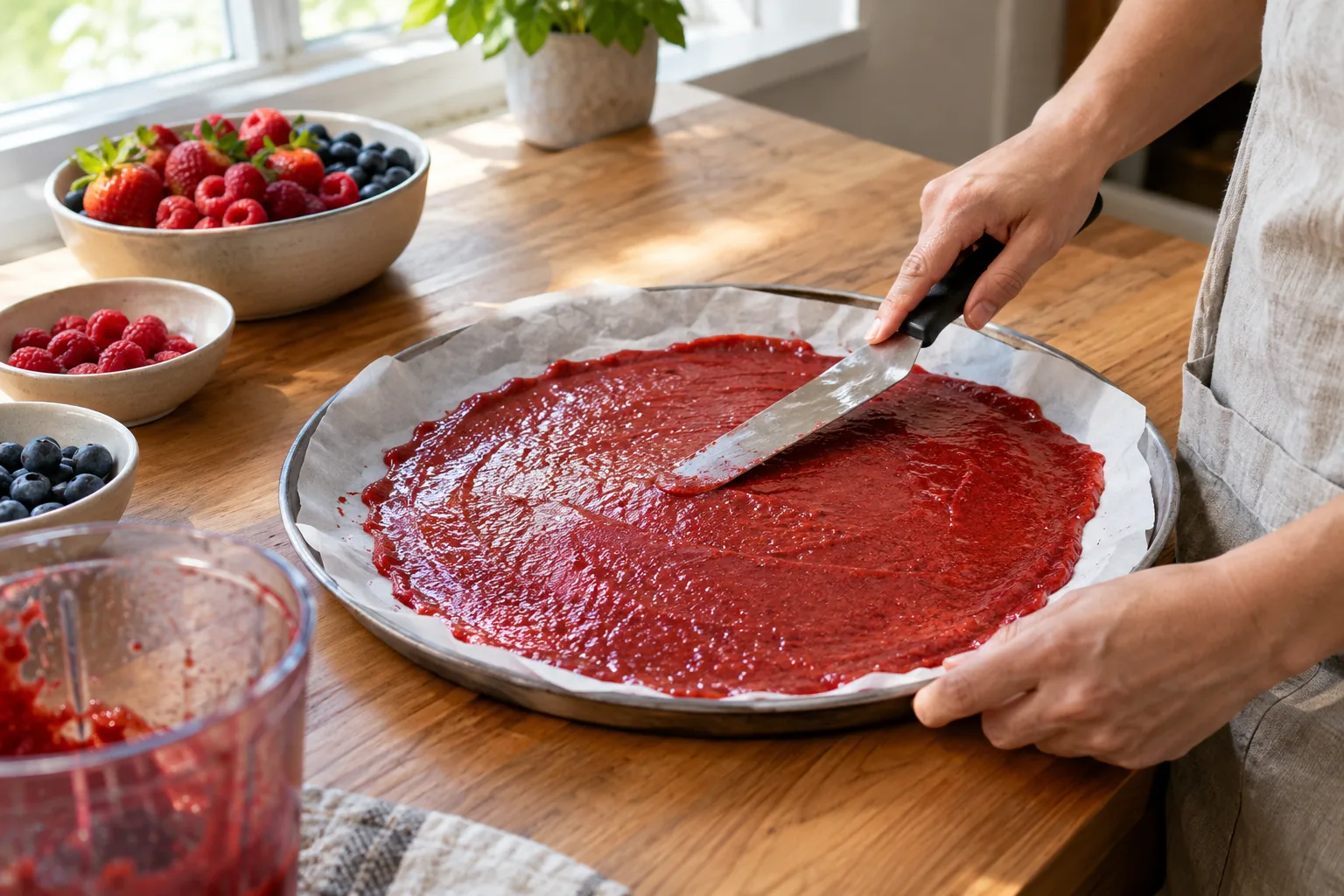
- Pour the purée onto the lined tray and spread it with an offset spatula to one even thickness of about 1/8 inch (3 mm) from the center to the edges.
- Set the temperature dial to about 60°C (140°F) and turn the timer dial to a short block, then add time as needed.
- Check the leather at intervals. Rotate or swap trays if one level is drying ahead of another.
- When done, let the sheet cool on the tray, peel it off the liner, and cut it into strips.
Unplug the dehydrator before moving trays or cleaning, and follow the user manual for loading and use.
Field note
A thick center leaves a wet middle while the edges turn crisp, so spread to one even thickness. If the edges dry first, make the rim slightly thicker on the next batch.
Fruit-by-Fruit Settings and Notes
All five fruits below dry at the same dial setting of about 60°C (140°F). What changes is the prep and how wet the purée is. The table covers all five, and short notes follow for each.
| Fruit | Prep | Flavor note | What to watch |
|---|---|---|---|
| Strawberry | Hull, blend raw | A little lemon juice adds tartness | Watery purée dries slowly; check the center |
| Mango | Peel, cut from pit, blend raw | Naturally sweet; often needs no added sugar | Fibrous strands need a long blend until smooth |
| Plum | Pit, simmer briefly with a little water | Tart skin; maple syrup balances it | Skins stay in the purée and can deepen the color |
| Peach or nectarine | Pit, peel if the skin is tough, blend raw | Mild; pairs with a pinch of cinnamon | Very juicy fruit makes a thinner purée |
| Apple | Core, chop, cook until soft | Mild; good base for mixing with berries | Cooked purée is thick and spreads in an even layer |
Strawberry fruit leather
Hull the berries and blend. Strawberry purée is wet, so spread it thin and check the middle of the sheet, not just the edges. Blending strawberries with a portion of mango or apple gives a thicker purée.
Mango fruit leather
Mango carries its own sweetness, so a no-sugar batch needs only fruit and a squeeze of lemon juice. Blend long enough to break down the fibers.
Plum fruit leather
Simmer pitted plums with a splash of water until they collapse, then blend. Taste before drying, since plum skins vary from sweet to sharp.
Peach and nectarine fruit leather
Pit the fruit and peel it if the skin is tough. Blend raw with a pinch of cinnamon. Juicy fruit makes a thin purée, so spread it a little more carefully and check the center before pulling the tray.
Apple fruit leather
Core and chop the apples, then cook them with a splash of water until soft before blending. The thick purée spreads evenly, and it works as a base for mixing with berries.
How Long Does Fruit Leather Take, and How to Tell It Is Done
A fixed number of hours would mislead you. Thickness, the water in the fruit, kitchen humidity and how many trays you load all change the time. Use a short timer block, then check.
Doneness checks
- Touch the center of the sheet. It should feel tacky, not wet or slick.
- Press a fingertip into the middle. No purée should shine through and no print should stay behind.
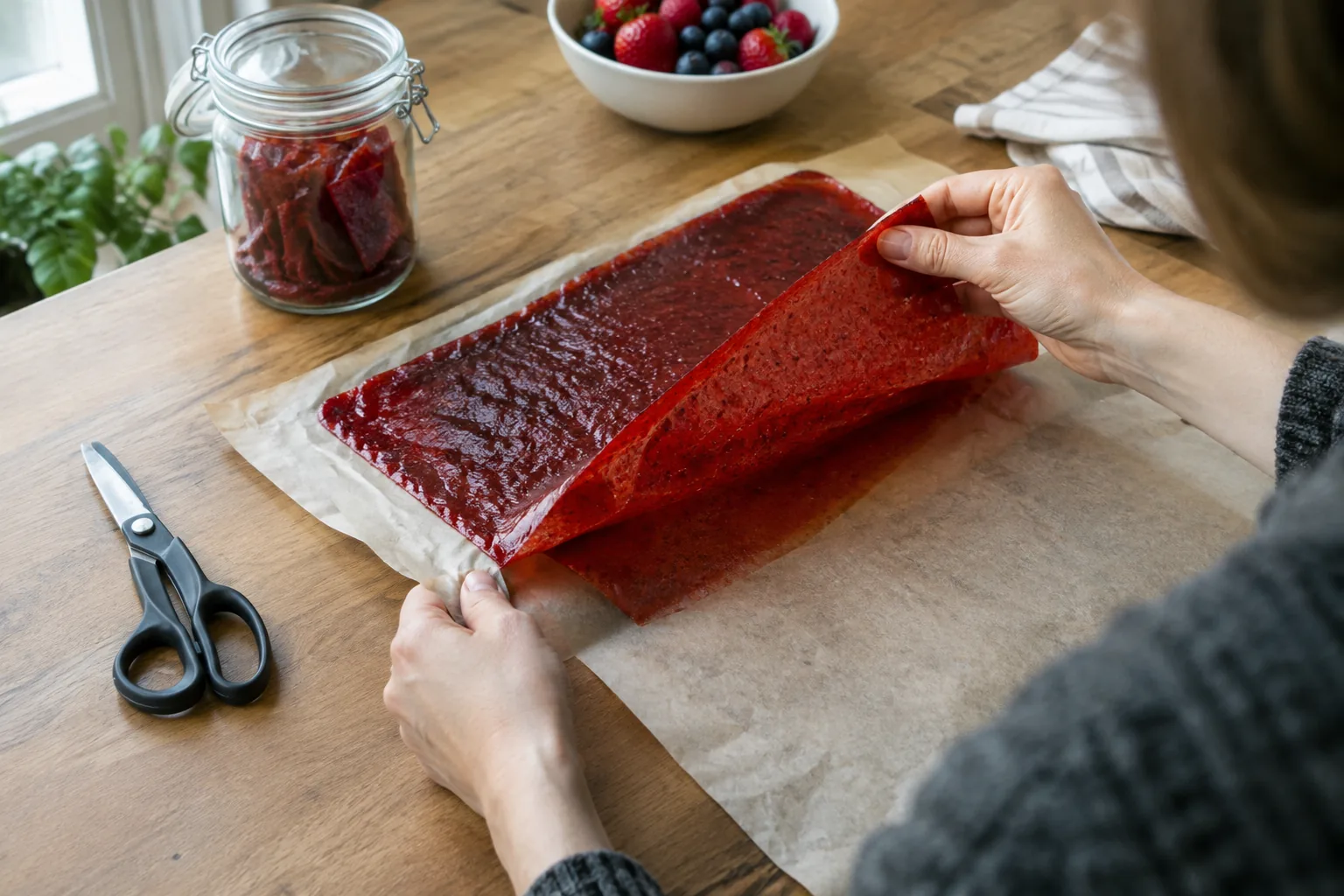
- Lift a corner. The sheet should peel cleanly from the liner in one piece.
- Check the thickest spot, usually the middle and any pooled areas, not only the edges.
- Cool a test strip for a few minutes, then roll it. It should bend without cracking or leaving damp marks on the paper.
If the center is still wet, return the tray and add more time. If the leather turns brittle and cracks, it has dried past leather; a thinner spread next time helps.
Fruit Leather in a Food Dehydrator With No Sugar
You can skip added sweeteners. Choose very ripe fruit, since ripeness supplies the sweetness. Mango, peach, ripe plums and apple purée carry the flavor without help.
- Add lemon juice for tartness instead of sugar.
- Blend a sweeter fruit with a sharper one, such as mango with strawberry.
- Use spices like cinnamon or ginger for flavor.
- Keep the layer thin, since fruit with no added sweetener can dry to a firmer, less pliable sheet.
If a batch tastes sharp, a small spoonful of maple syrup before drying is an option.
Making Fruit Leather Without a Dehydrator
An oven works too. Spread the purée on a rimmed baking sheet lined with parchment paper or a silicone baking mat, set the oven to its lowest temperature, and prop the door slightly open to let moisture out. Check the oven manual for the lowest setting and for door guidance, and apply the same doneness checks as above. The CrispHarvest uses a fan and a temperature dial for drying across its five trays.
Cut, Roll and Store
Leave the sheet on its parchment, cut it into strips with scissors or a knife, and roll each strip up with the paper inside so the layers do not stick together. Let the strips cool fully before packing.
Store the rolls in an airtight container away from heat and light. Keep a sheet of parchment between layers if you stack flat strips. If you see moisture beading inside the container or any off smell, discard the batch.
Cleaning up
Sticky purée dries onto trays, so soak them first. The CrispHarvest trays pull out for washing, by hand or in a dishwasher, including after drying fruit leather. Unplug the unit before wiping the base.
Browse more tools for drying and prep in our Meat, Grain & Specialty Food Prep collection.
Common Mistakes
- Spreading the purée too thick, which leaves a wet center.
- Leaving chunks in the purée, which dry unevenly.
- Skipping the liner, so purée slips through the tray.
- Judging doneness by the edges alone.
- Packing warm leather, which traps moisture in the container.
Frequently asked questions
Keep reading
 Meat, Grain & Specialty Food PrepFood Dehydrator Recommendations: Size, Airflow and Trays6 min read
 Food Storage, Cookware & Water FiltrationDrying Herbs in a Food Dehydrator: Temperatures and Times7 min read
 Meat, Grain & Specialty Food PrepBeef Jerky Recipe for a Food Dehydrator: Cuts, Marinade, Timing6 min read