Can Plants Grow With LED Lights? Spectrum, Distance and Hours
Yes, plants can grow with LED lights when the spectrum, brightness and daily hours suit the plant. Here are starting numbers for distance and hours, and how to check them with a light meter.
The Cobalt Hollow Team
October 18, 2026 · 6 min read
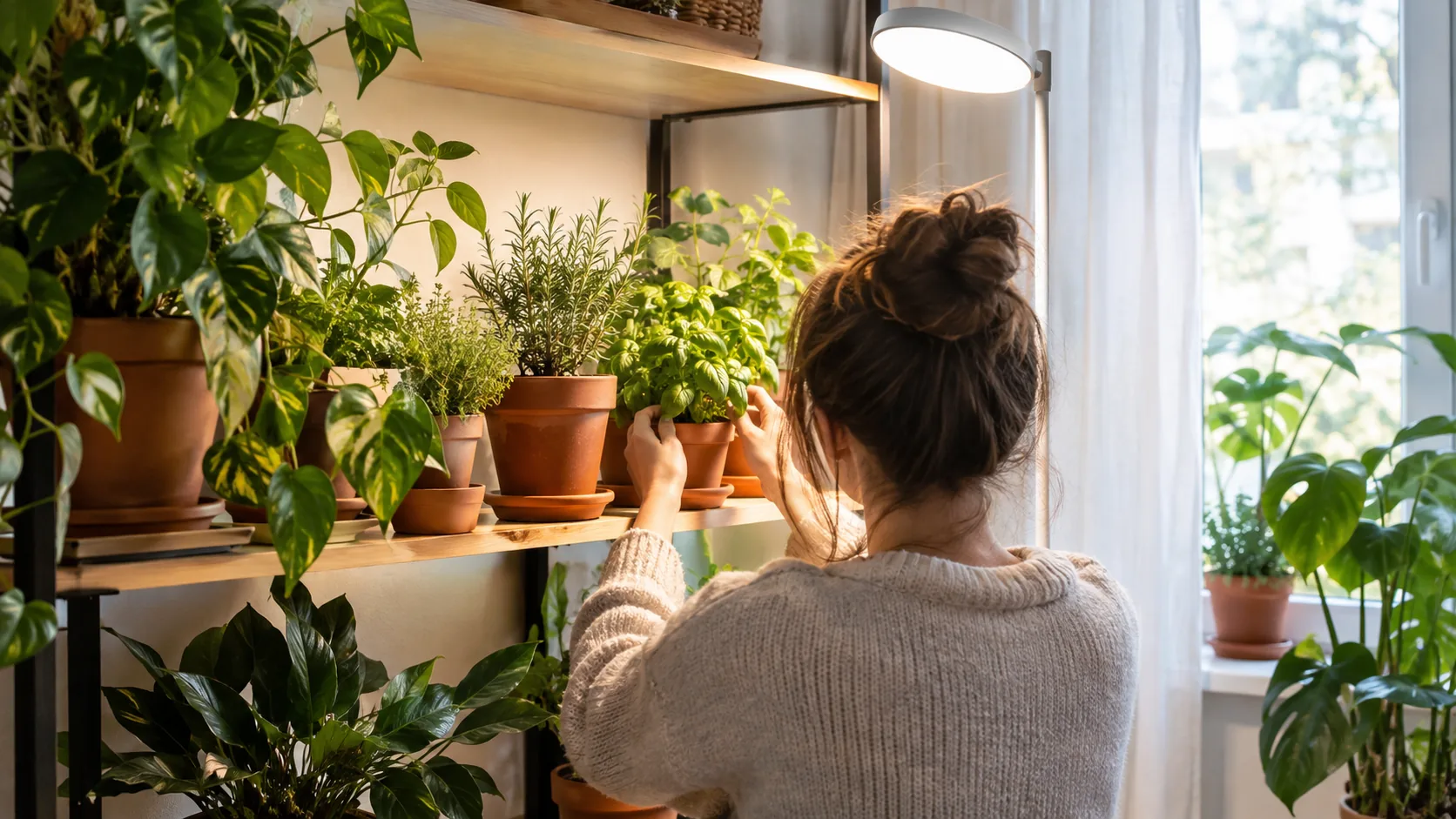
Can plants grow with LED lights? Yes, when the light covers the wavelengths plants use, is bright enough at leaf level, and runs for a set daily period. A plain household bulb can keep some plants alive, but a dedicated grow light is built to deliver light across the spectrum plants respond to.
Three things decide the result: the distance between the light and the leaves, the hours the light is on each day, and the light level you measure at the leaves. This guide gives starting values for distance, the daily period and light level, and shows how to check them with a light meter.
Can plants grow with LED lights? What they need
Plants use light for photosynthesis, mostly in the red and blue parts of the spectrum, and they also respond to white light. An LED is only a light source. So do LED lights grow plants on their own? Only when what that source puts out and where you place it match the plant.
- Spectrum: a mix that includes red and blue, or a broad white spectrum.
- Intensity: enough light reaching the leaves, not just the room.
- Duration: a daily light period followed by a dark period.
- Distance: close enough to be bright, far enough to leave the leaves uncrowded.
If one of these is off, growth shows it. Stretched stems and pale new leaves point to too little light, while bleached or crispy patches point to too much light or a light hung too close.
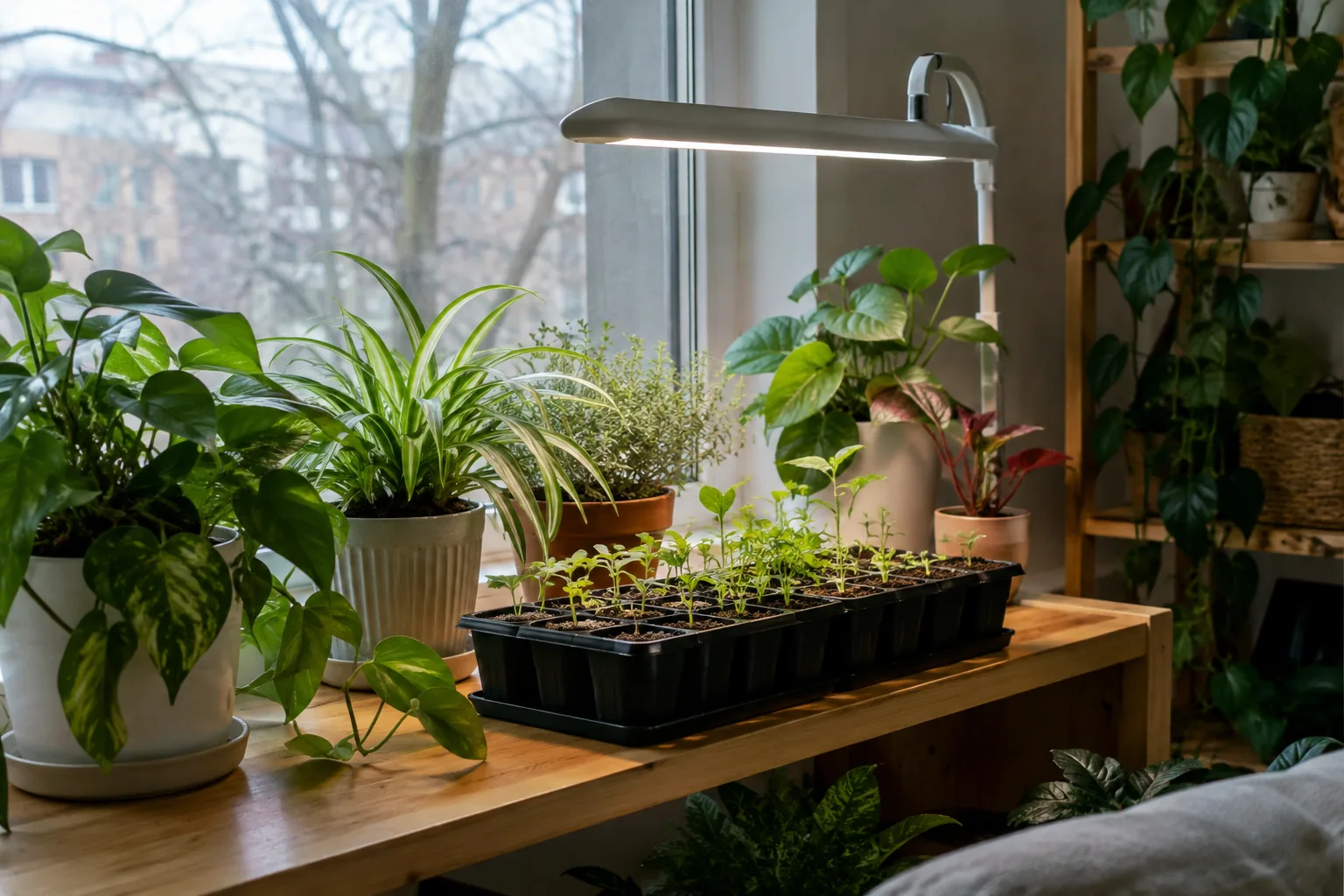
Regular LED bulbs vs grow lights
A standard LED bulb is designed for people to see by. Some plants that need little light can sit under one, but a dim or distant bulb may not supply enough light for steady growth. Grow lights are built around what plants use, with output aimed at the leaves.
| Light type | Typical use | What to know |
|---|---|---|
| Regular LED bulb | Room lighting | Suits low-light foliage plants placed close; check the lux reading |
| White full-spectrum LED head | Houseplants, herbs, seedlings | Looks like normal light, so you can inspect leaves in true color |
| Red and blue (purple) LED | Plant-focused fixtures | Targets key wavelengths; the pink-purple glow changes how leaves look |
| Multi-wavelength fixture with modes | Tents, greenhouses, larger setups | Switchable modes for growth stage |
Can LED lights grow plants from a spare bulb? With a suitable fixture, yes; with a standard bulb it depends on the plant and the distance. Grow LED lights for indoor plants come as heads, panels and hanging units.
Full spectrum LED grow lights for indoor plants
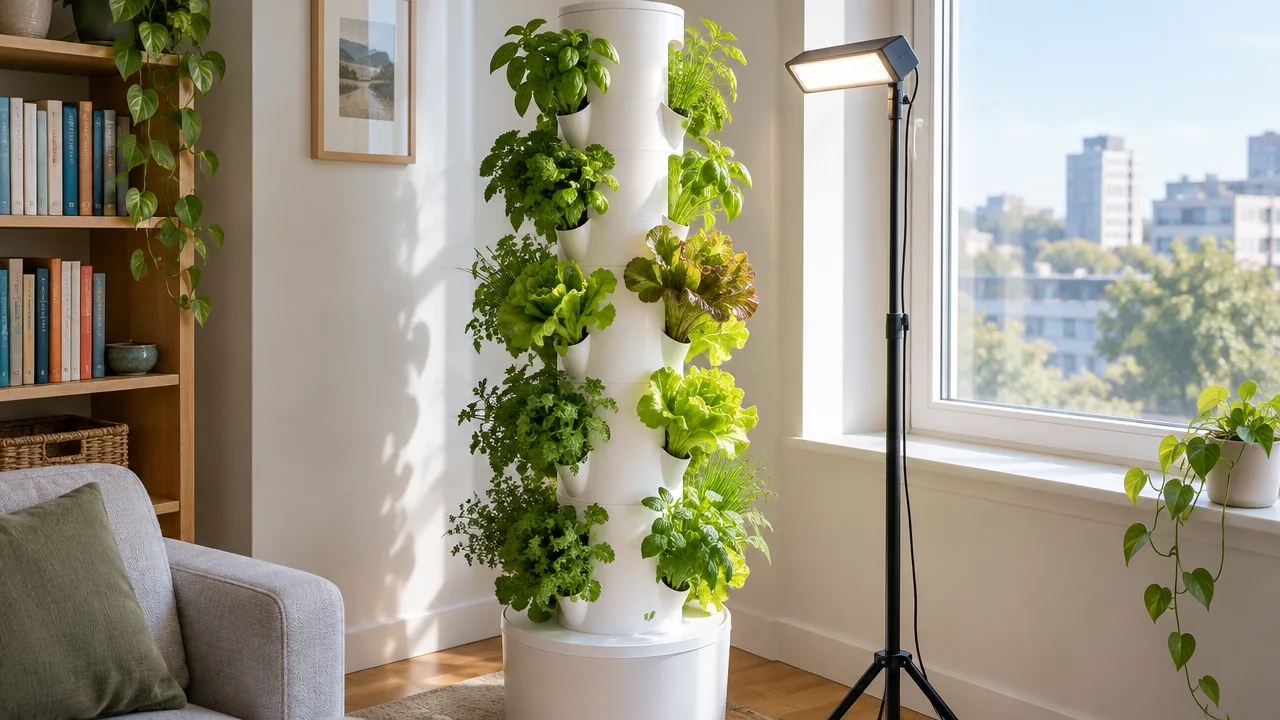
Full spectrum means the light covers a broad range of wavelengths instead of a narrow band. White full-spectrum heads resemble natural sunlight in appearance, and they suit shelves and living spaces because you do not see a purple tint.
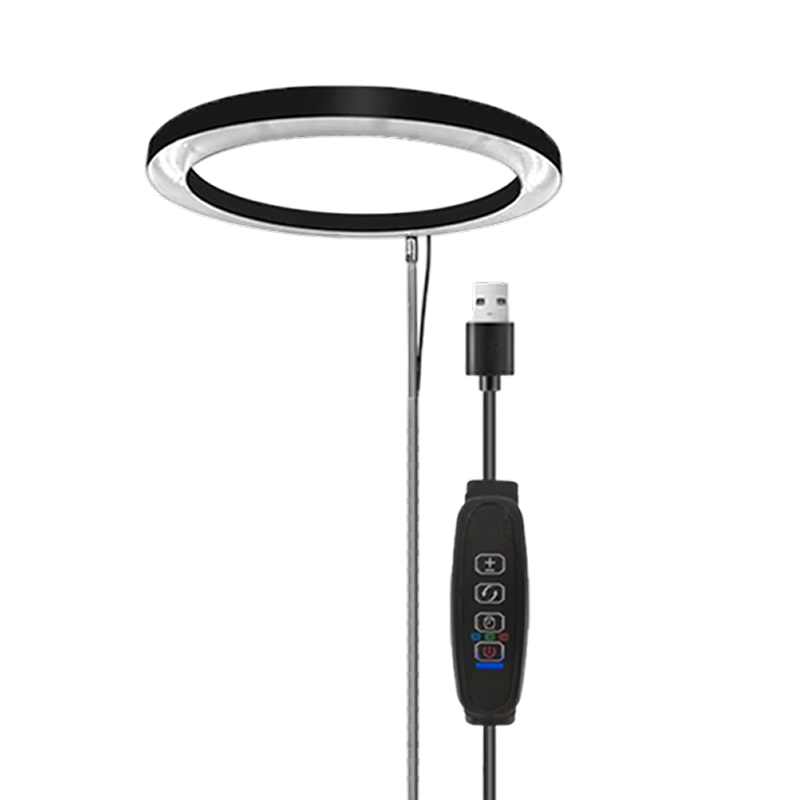
The FloraAxis is one example. It has a round 16cm (about 6.3 in) LED head with 70 LED beads that give full-spectrum white light, so you can look over leaves and soil in normal color while it is on.
Veg and bloom modes
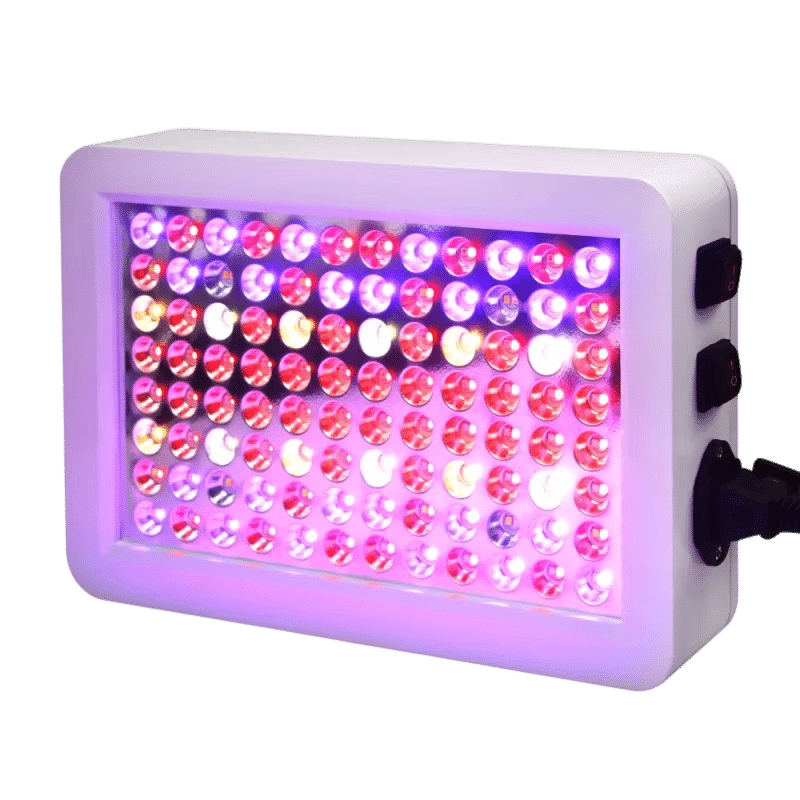
Some fixtures offer a VEG mode for leafy growth and a BLOOM mode for flowering stages, plus a combined setting. The SpectraBloom has a dual-switch control for VEG, BLOOM and VEG+BLOOM, and combines red, blue, white, UV and infrared wavelengths in one fixture. Pick the mode that matches the growth stage of your plants.
Running two separate lights of different types together works too, as long as the combined light is not too close or on too long. Measure the result rather than assuming.
 In this guideFloraAxis$99.99View
Distance, hours and intensity: starting points
These are general starting settings to adjust, not fixed rules. Fixtures differ in output, so follow your light's manual and adjust after you watch the plants and take a reading.
| Plant group | Hours on per day | Starting distance | Light at leaves (lux, rough guide to check against your plant's needs) |
|---|---|---|---|
| Seedlings and microgreens | 14 to 16 h | 6 to 12 in (15 to 30 cm) for small panels | 10,000 and up |
| Herbs and leafy greens | 12 to 16 h | 8 to 18 in (20 to 45 cm) | 10,000 and up |
| Fruiting and flowering plants | Follow the plant tag or manual | 12 to 24 in (30 to 60 cm) or per manual | 20,000 and up |
| Medium-light houseplants | 10 to 14 h | 12 to 30 in (30 to 75 cm) | 2,500 to 10,000 |
| Low-light houseplants | 8 to 12 h | 24 in (60 cm) or more | 500 to 2,500 |
Distance
Raise the head as plants grow. The FloraAxis stand extends from 20 to 165cm (about 8 to 65 in) and is adjusted by hand, so you can set the head low over seed trays and lift it later. A hanging fixture such as SpectraBloom uses an adjustable rope kit for the same purpose.
Hours
Plants need a dark period, so a starting point is the hours listed in the table, then lights off for the rest of the day. Start in the middle of the range for your plant group and adjust as you watch the leaves. For flowering plants, follow the schedule on the plant tag or in the fixture manual.
A timer switches the light on a set schedule each day. The FloraAxis has a built-in auto-timer with three settings, which you pick once at the unit.
Intensity
Lux measures brightness as the human eye sees it, so it is a rough guide for plants. Plant-focused light can also be described as photons in the photosynthetic range, written as PAR or PPFD. A lux meter is still a practical way to compare spots and see whether a change in height made a difference.
 In this guideSpectraBloom$129.99View
How to check the numbers with a light meter
Guessing by eye misleads, because a room that looks bright can be dim for a plant. A handheld light meter turns the guess into a number.
- Switch on the grow light and let it run as you normally would.
- Hold the sensor at the height of the plant's leaves, facing the light.
- Read the lux number on the display.
- Compare it with the range for your plant, as in the table above or on the plant tag.
- Raise or lower the light, or move the plant, and measure again.
- Repeat at each spot you use, and write down the readings.
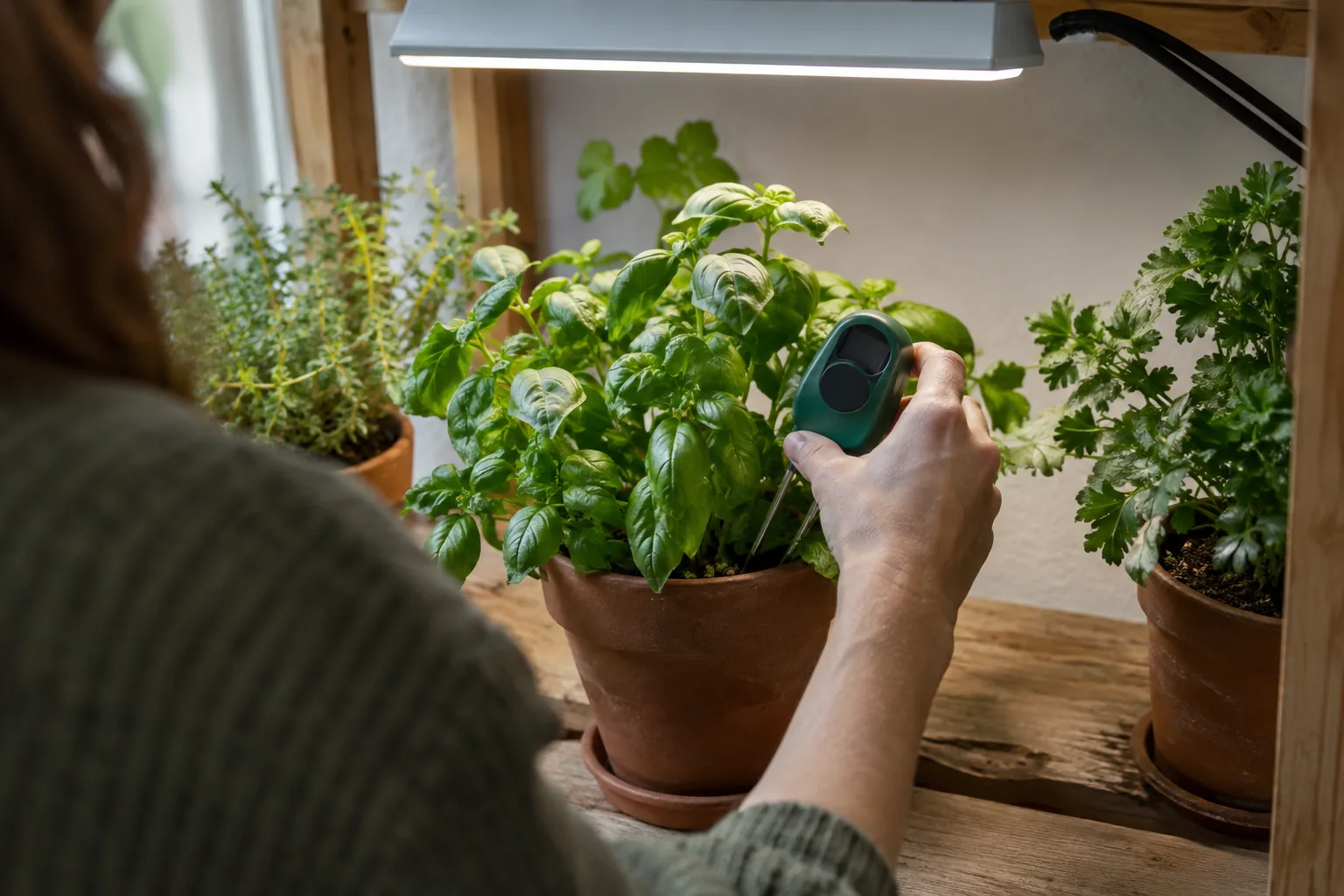
The LuxBloom uses a photodiode sensor and shows lux on a backlit display, so you can read it in a dim corner. The sensor head rotates through 270°, so you can aim it at leaves from different positions, and it stores 33 saved readings for comparing windowsills, shelves and tents. It also reads outdoor sun and window light.
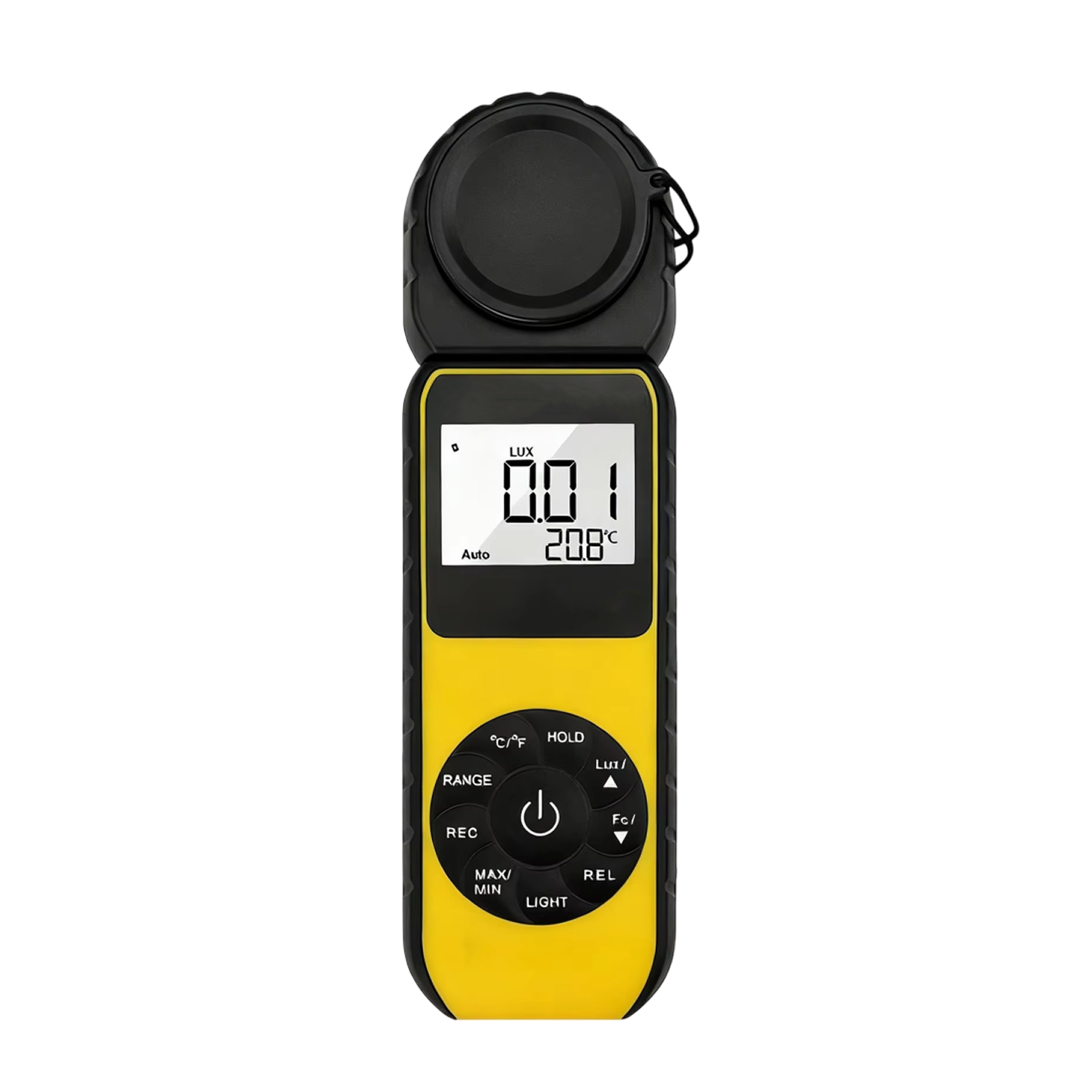 In this guideLuxBloom$99.99View
Field note
Take readings at leaf height, then again after every change in distance or position. Keep a short log so you can compare shelves later. Follow each light's manual for placement and keep cords and outlets in a dry spot.
Common mistakes with LED grow lights
- Hanging the light too far away, so leaves stretch toward it.
- Placing it so close that leaves look bleached; raise it and recheck.
- Running the light with no dark period at all.
- Judging brightness by eye instead of by a lux reading.
- Skipping the timer, then missing days on the schedule.
- Forgetting to raise the head as the plant grows.
- Mounting a fixture where the outlet or hanging point is damp. The SpectraBloom housing is fully sealed, but check that the outlet is dry and accessible.
What to use instead of a grow light
A bright south- or west-facing window supplies light for some plants, and you can place plants near the glass. Rotating pots keeps growth even, and a white wall or reflective surface nearby sends some light back to the leaves. Check window spots with a meter, because light drops quickly a few feet from the glass. For plants that stay thin and pale, you may need added light. Browse the Indoor Gardening & Grow Lights collection for fixtures and meters.