How to Plant Sweet Potato Slips, From Starting to Transplant
Start sweet potato roots indoors several weeks before planting, then set slips 12 inches apart once soil reads 65°F or warmer. Here is the full timeline.
The Cobalt Hollow Team
November 14, 2026 · 6 min read
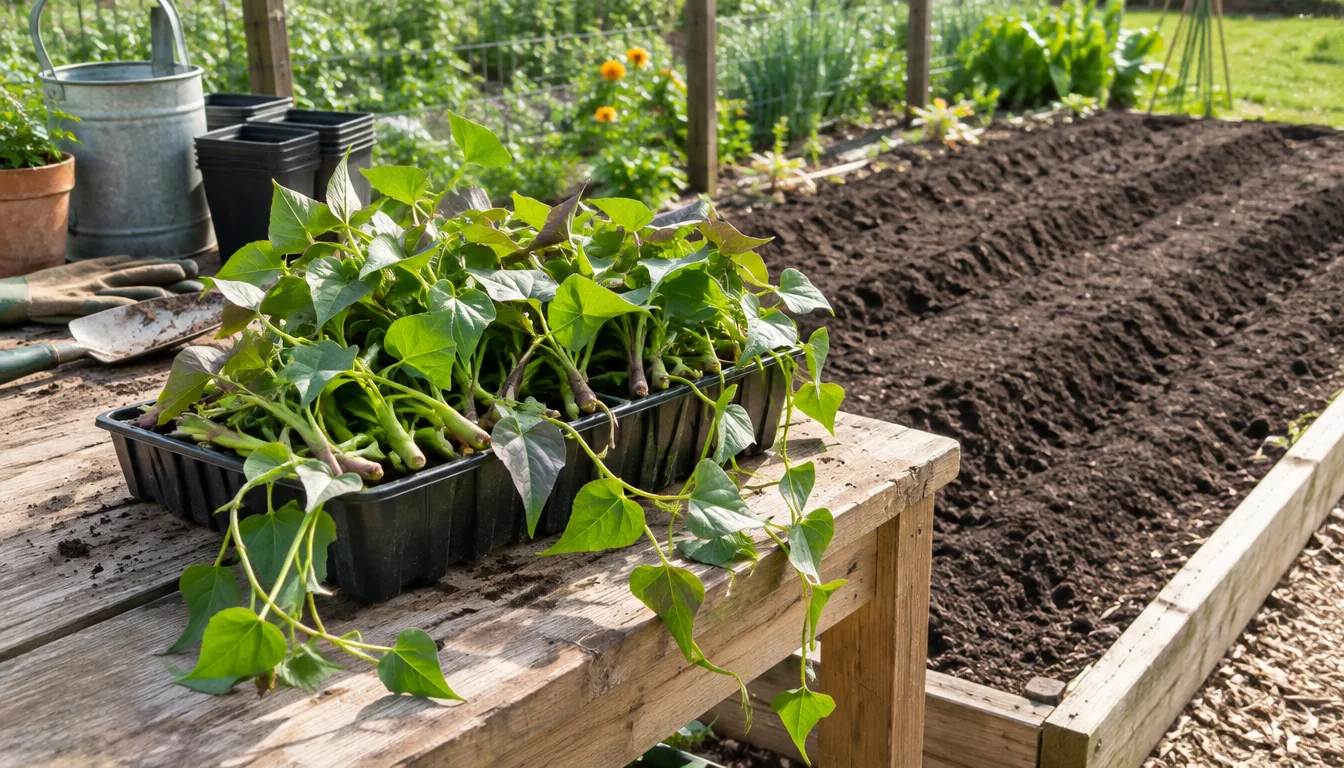
To learn how to plant sweet potato slips, start the sprouting roots indoors several weeks before your planting date, twist the slips off when they are 4 to 6 inches long, root them in water, harden them off for a week, then set them 12 inches apart in warm soil. Plant outdoors only after the last frost, when the soil reads 65°F or warmer and nights stay above 55°F.
This guide follows one timeline from the first heat mat tray to the first night in the bed, with a checklist, a spacing table and the mistakes that stall slips.
The sweet potato slip timeline at a glance
Work backward from your planting date. In most of the US that falls in late spring or early summer, once the soil has warmed. As general guidance, start the roots several weeks before that date, then mark each step on a calendar.
| Step | When | What you do |
|---|---|---|
| Sprout the roots | Several weeks before planting | Set whole roots in water or damp mix, in a warm spot with light |
| Cut the slips | When shoots are 4 to 6 inches long | Twist or cut them off the root |
| Root the slips | Right after cutting | Stand them in water until roots show |
| Harden off | The week before planting | Move outdoors for longer periods each day |
| Plant | Soil 65°F or warmer, nights above 55°F | Bury the stem, leave the leaves above soil |
Start the roots indoors
Choose firm roots with no soft spots or mold. Some store-bought roots are sprayed to discourage sprouting, so look for organic roots or buy from a nursery that sells seed roots.
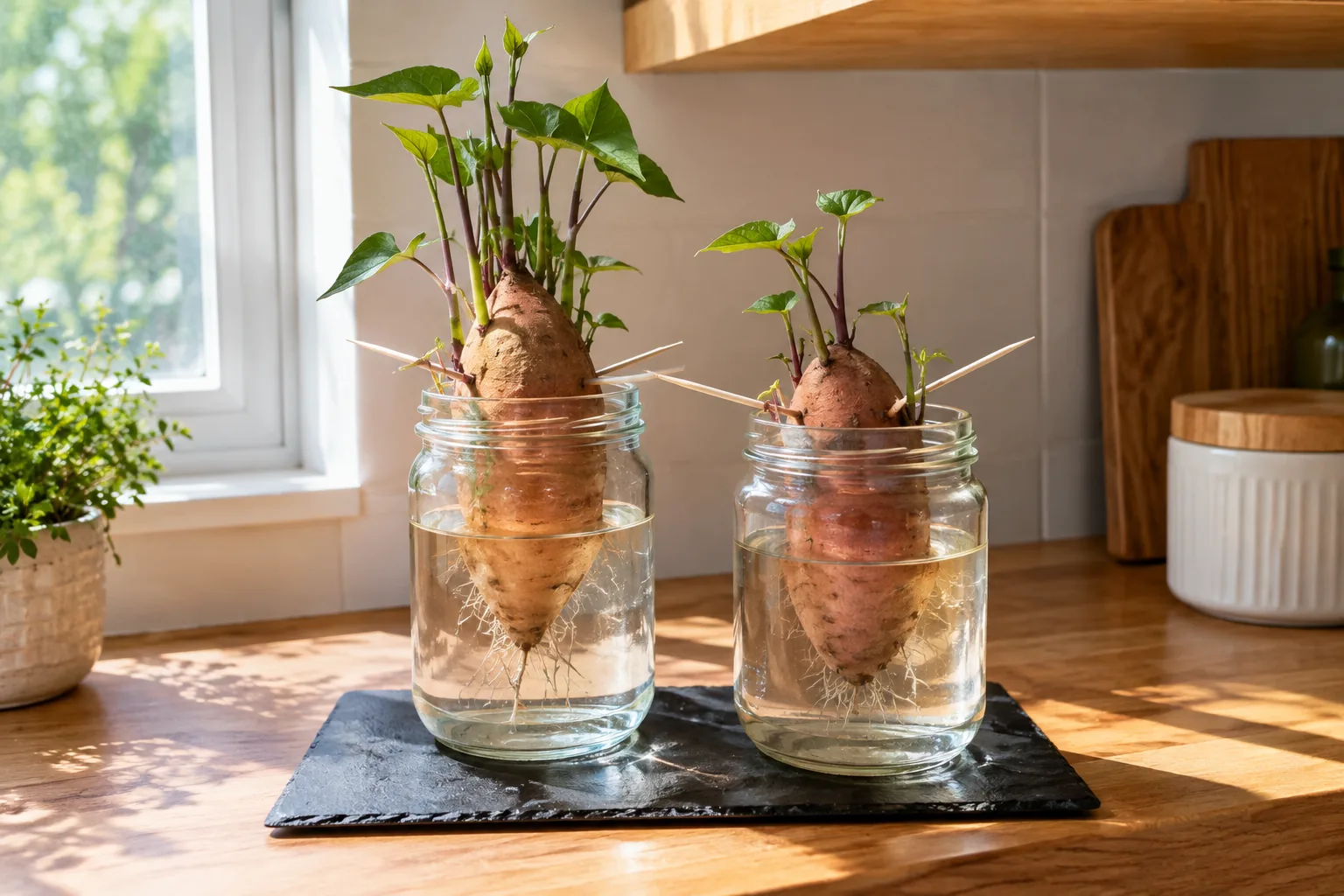
Fill a jar or cup with water, push three or four toothpicks around the middle of the root, and rest it so the bottom half is submerged. You can also lay the root on its side in a tray of damp potting mix and cover it with 2 inches of mix. Either way, the narrower, tapered end goes down into the water or mix, and the blunter end, where shoots usually form, faces up.
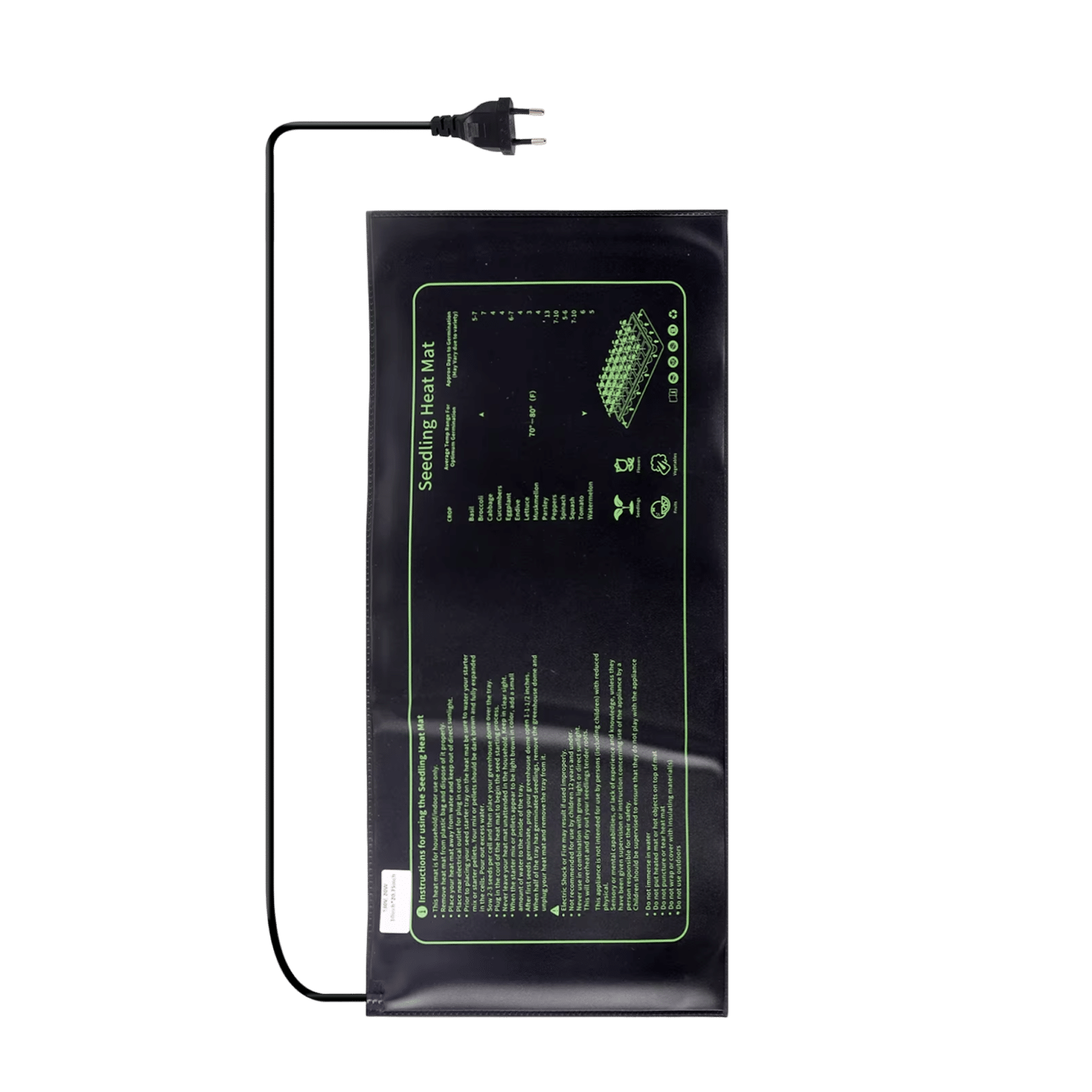
Sweet potatoes sprout in warmth. A plant heating mat gives containers a warm base, and the setup is the same one used for seed starting and rooting cuttings.
 In this guideSproutGlow$89.99View
SproutGlow is a 20-watt plug-in mat with no dials. Set it on a flat, dry surface, place your jar or tray on top, and follow the manual. Unplug it when you take the containers off.
Add light as soon as shoots appear
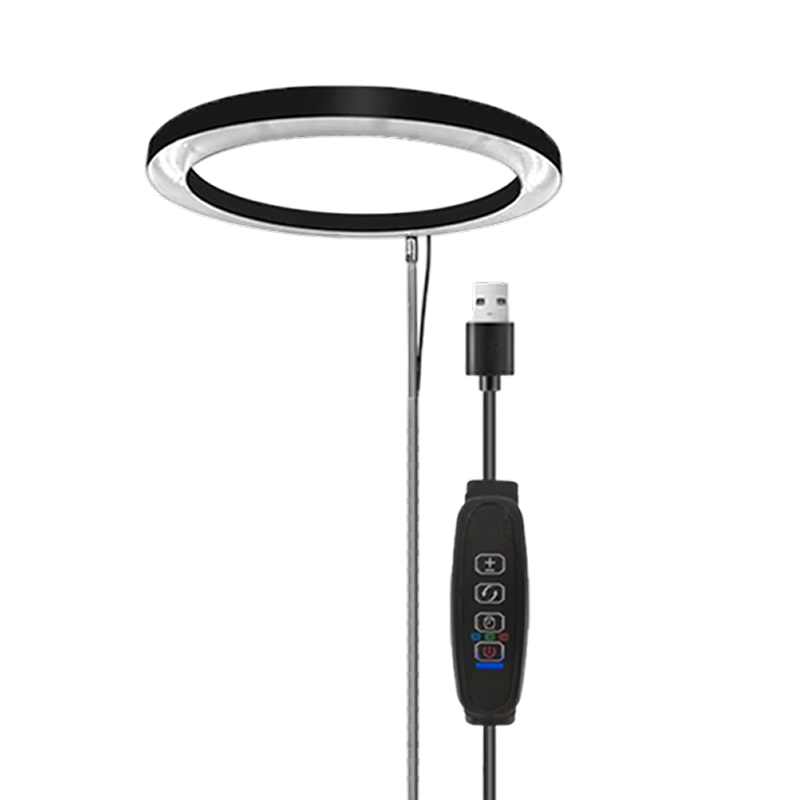
Once shoots break the surface, they need light or they turn pale and stretch. A bright window works. A full-spectrum grow light is another option, and FloraAxis has a round 16cm LED head with 70 LED beads on a stand that adjusts from 20 to 165cm, so you can set it low over the sprouting roots and raise it as the vines grow. Its auto-timer has three settings, so the light follows a set daily schedule.
 In this guideFloraAxis$99.99View
If you want the spectrum, distance and hours explained, read Can Plants Grow With LED Lights?
Cut and root the slips
When shoots reach 4 to 6 inches and show several leaves, twist each one off at the base, or cut it with clean scissors. Keep the root, since it will keep making new shoots.
- Strip the bottom leaves so a bare stem sits in the water.
- Stand the slips in a glass of water with the leaves above the rim.
- Place the glass in bright light, away from cold drafts.
- Change the water every few days.
- Plant when white roots are visible and about 1 inch long.
That is also the answer to growing a sweet potato in water: the root sprouts in a jar, and each slip roots in a glass. Water alone does not grow full-size sweet potatoes, so the rooted slip still moves to soil.
How to plant sweet potato slips by soil temperature
Dates matter less than soil. Sweet potatoes stall in cold ground, so wait until the last frost has passed and the soil has warmed. For most gardens that means a month between late spring and early summer, with warmer regions planting earlier and cooler regions later.
| Soil reading | Action |
|---|---|
| Below 60°F | Wait; keep slips in water or a pot indoors |
| 60°F to 64°F | Keep hardening off; prepare the bed |
| 65°F or warmer, nights above 55°F | Plant |
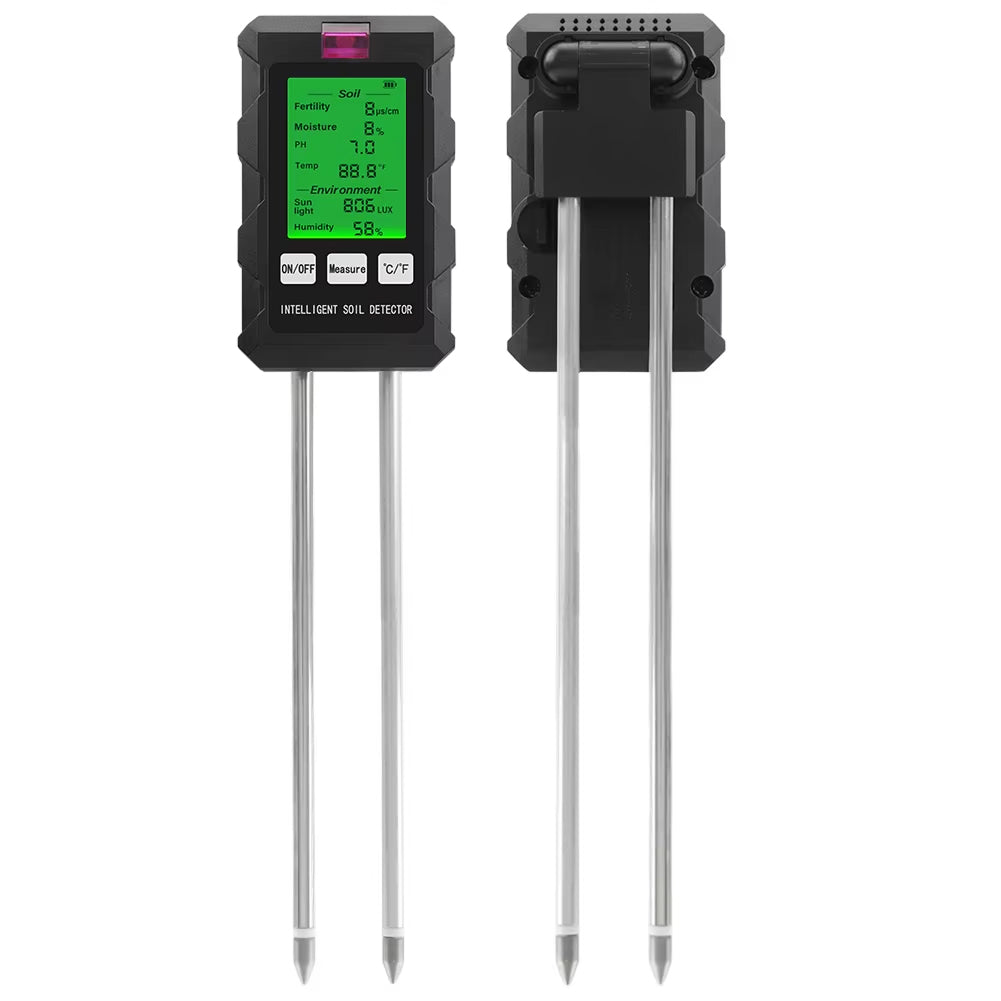
Guessing by the calendar is unreliable, so measure. RootGauge is a pen-style meter that shows soil temperature, along with pH to 0.1, moisture and light. Push the spear tip 2 to 3 inches into moist soil at the root zone and read the screen.
 In this guideRootGauge$89.99View
Take the reading in the morning on a few spots along the planned row. If you also want to check pH, calibrate the meter first with the included buffer powders.
Harden off and prepare the bed
Harden off for a week
Slips raised indoors are tender. Set them outdoors in shade for a couple of hours on the first day, then add sun and time each day. By the end of the week they can stay out overnight if nights are above 55°F.
Prepare the soil
Sweet potatoes want loose, well-drained soil. Rake it into raised ridges about 8 inches high, which warm up in spring sun and give roots room to swell. Heavy clay should be loosened first, since compacted ground can produce thin or misshapen roots.
For a patio, use a large container. Grow Bags: Choosing a Size, Filling Them and Watering Right covers sizes and watering for pots like these.
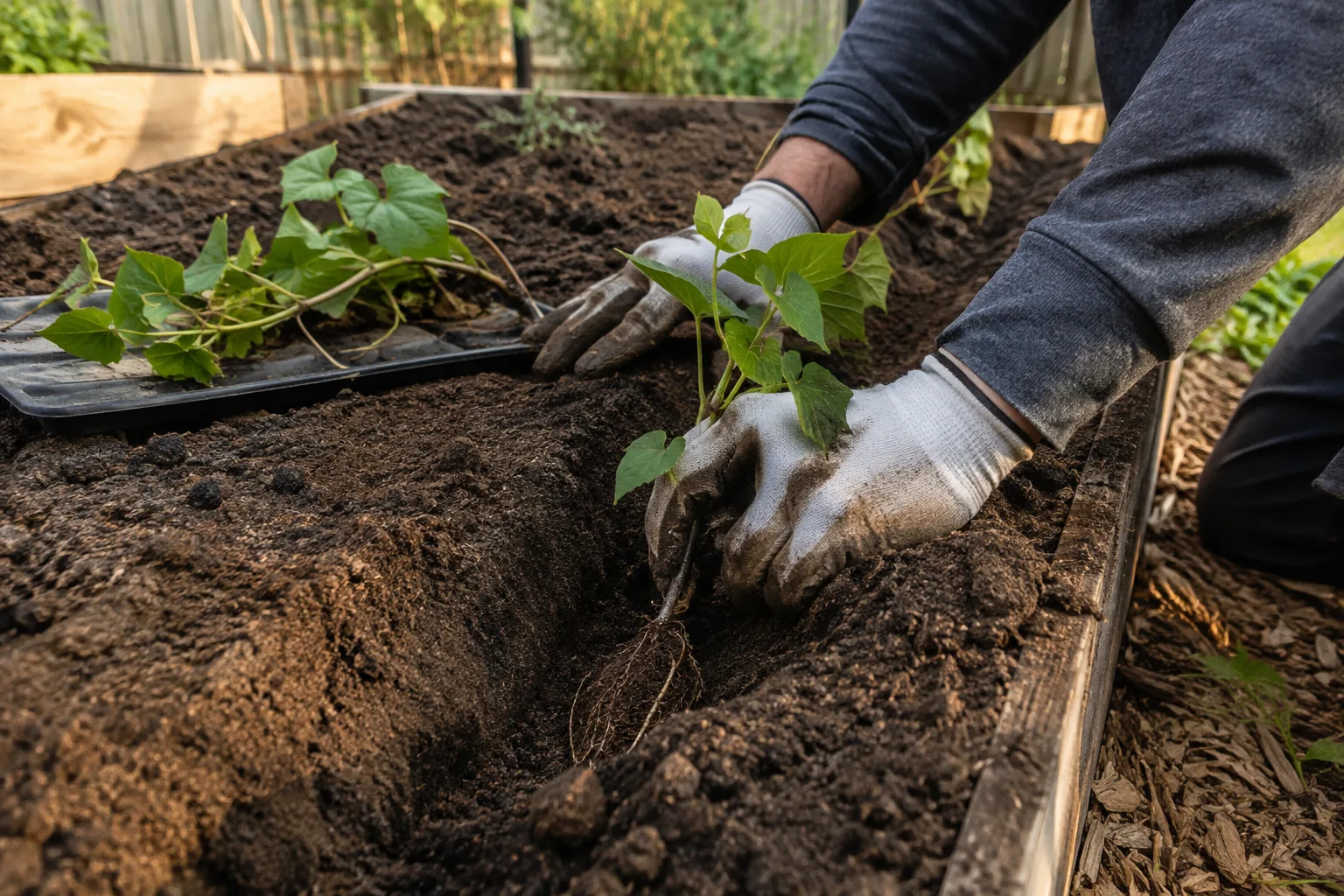
Spacing and planting steps
| Detail | Guideline |
|---|---|
| Space between slips | 12 inches |
| Space between rows | 3 feet |
| Stem depth | Bury 2 to 3 nodes, leaves above soil |
| Container size | One slip per large pot or grow bag |
- Water the ridge the day before so the soil is damp, not soggy.
- Make a hole with your finger or a trowel deep enough to cover the lower stem.
- Set the slip in, with at least two nodes underground, and firm the soil around it.
- Water in well.
- Shade new slips with a cloth if the sun is hot for the first few days.
Leaves may wilt for a few days after transplant. Keep the soil lightly moist until new growth appears, then water less often.
Planting directly and how many sweet potatoes a slip makes
Yes, rooted slips that have been hardened off for a week go straight into the ridged bed. That is the standard method in this guide.
A slower option for long, warm seasons is to bed a whole sprouting root in the ground and wait for shoots. It only works once the soil already meets the 65°F guideline above.
The number of sweet potatoes from one slip varies with variety, soil, spacing and season length. Plan on a few roots per plant, with some small ones. Crowding lowers size, so keep the 12-inch spacing.
Common mistakes
- Planting on the last-frost date instead of waiting for warm soil.
- Skipping the hardening-off week.
- Burying the leaves instead of the stem.
- Using heavy, wet soil with no ridge.
- Putting the mat or light where water can reach the plug; keep cords dry and follow each manual.
For more indoor setups, browse the Indoor Gardening & Grow Lights collection.
Field note
Keep one or two spare slips in water while the planted ones settle. If a transplant fails, you can replace it right away.