
Hydroponic Tower Garden: Setup, Plants and Upkeep
A hydroponic tower garden stacks plants in a vertical column fed by a pump and nutrient water. Use this guide for the setup checklist, plants that suit it and a care schedule.
The Cobalt Hollow Team
October 30, 2026 · 6 min read
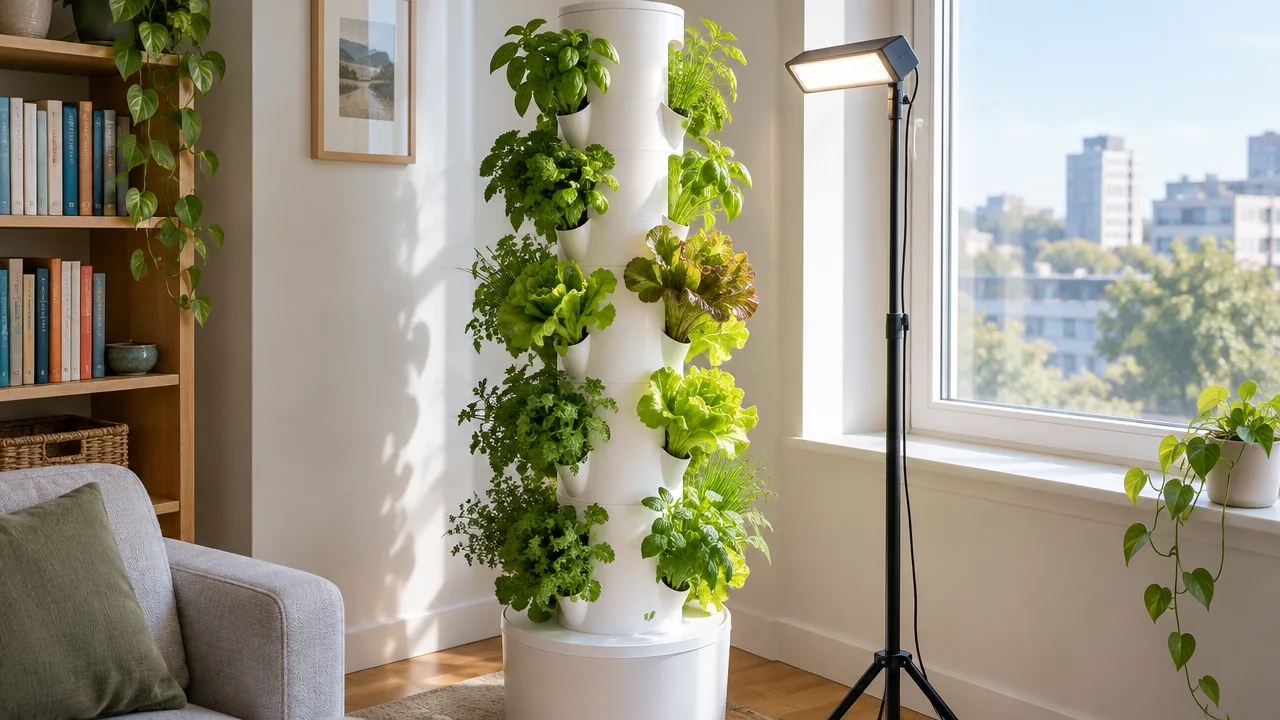
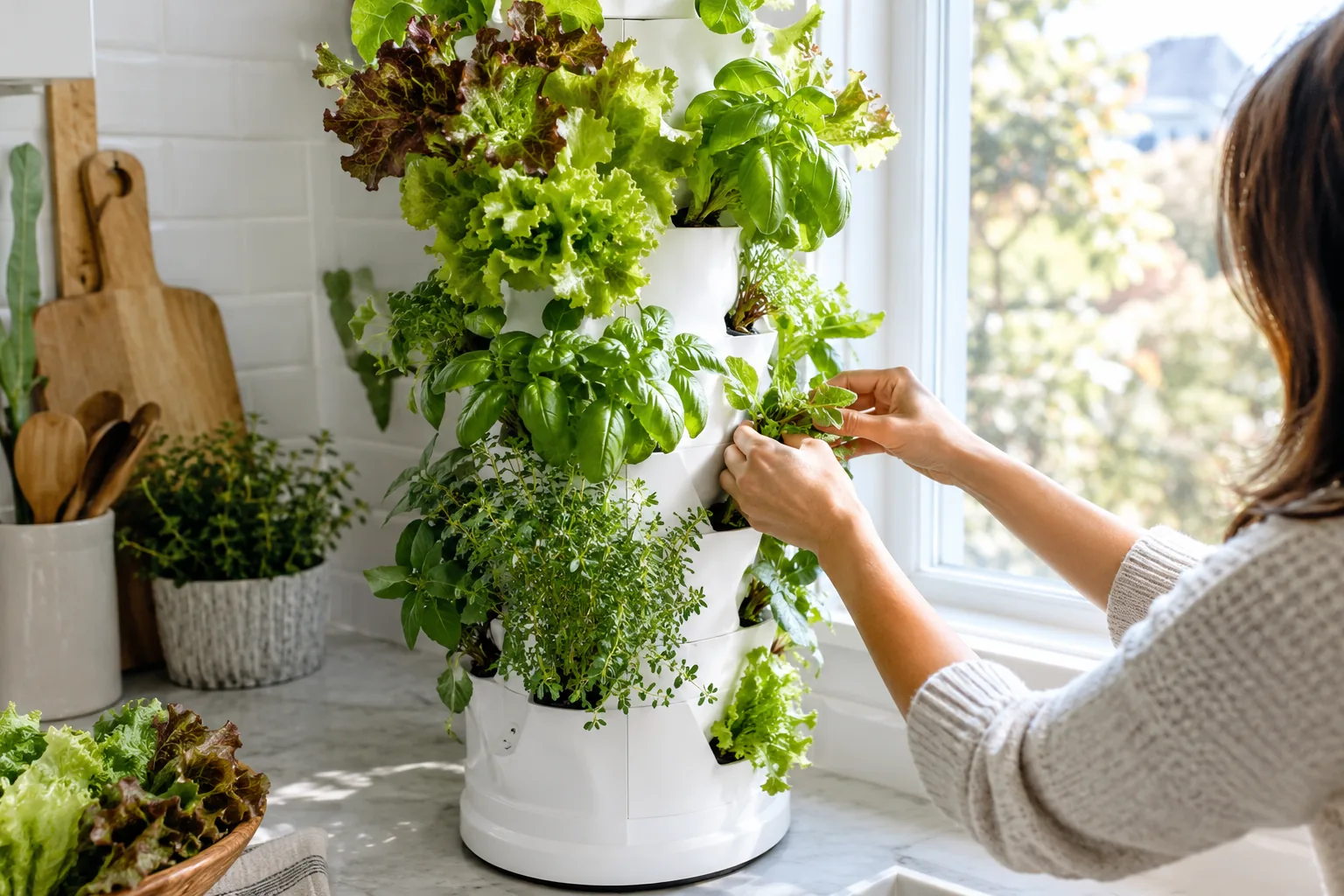
A hydroponic tower garden grows plants in a vertical column, with a pump moving nutrient water past the roots instead of soil. To set one up, pick a spot near a window or grow light and a power outlet, assemble the tower, fill the reservoir, seat seedlings in the pods, then check water and nutrients on a regular schedule.
This guide gives you a setup checklist, a table of plants that suit a tower and plants that do not, and a care routine you can print.
How a hydroponic tower garden works
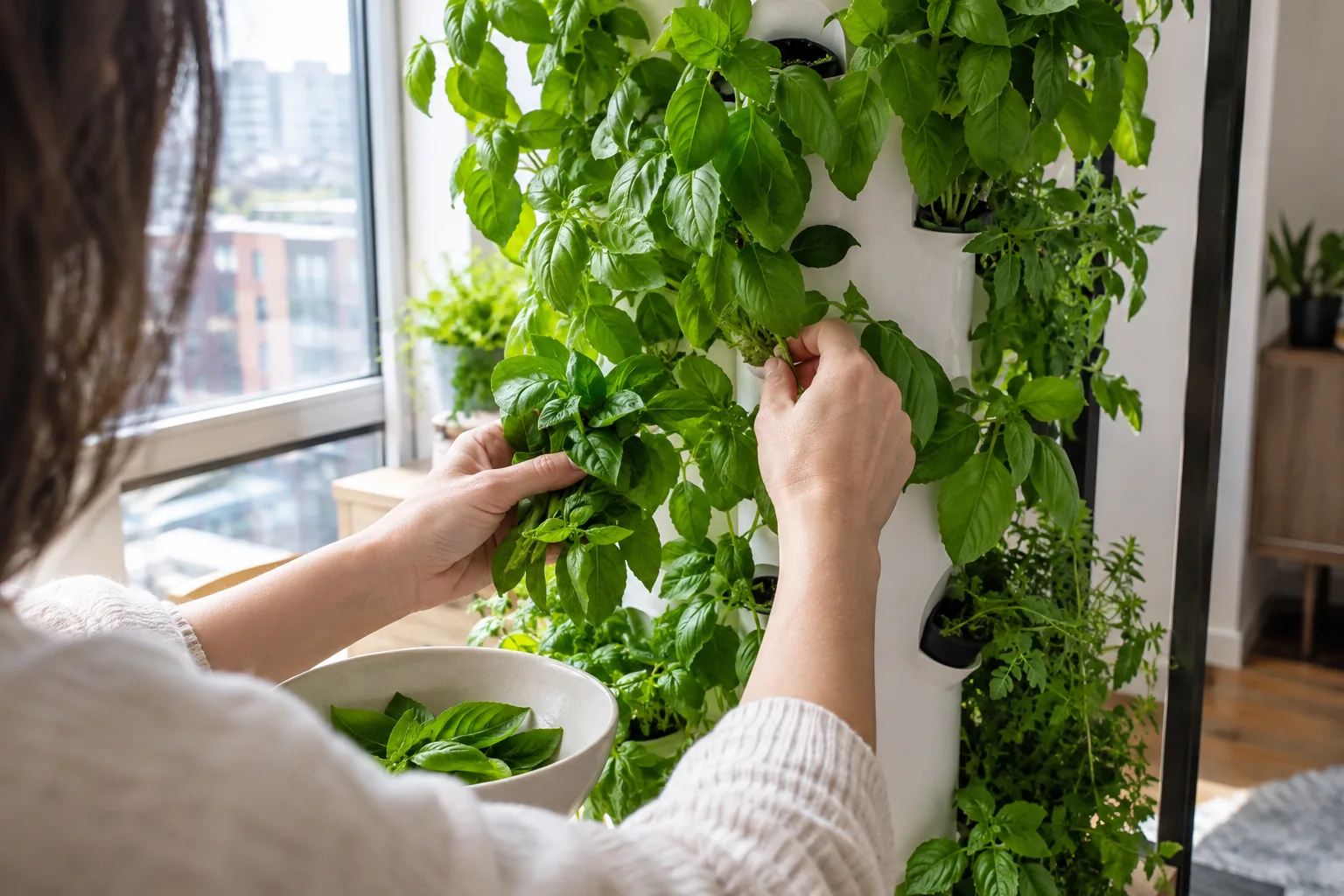
Plants sit in small pods or net pots set into the tower's channels. A pump lifts nutrient water from a reservoir and lets it run past the roots, and the water drains back down. Because the roots get water and nutrients directly, the plant does not need soil to anchor or feed it.
The vertical layout is the main draw. You stack many plants over a small footprint, which suits a kitchen counter, balcony or apartment. A tower also uses a closed reservoir, so you can monitor the water level in one place.
The parts you will handle are the same on most towers: the tower sections, the pump, the reservoir, the growing pods with sponges or rockwool cubes, and a light source if the spot is dim.
Setup checklist for your first tower
Work through these steps in order. Follow the manual for your model, and unplug the pump before you move or clean it.
| Step | What to do | Check before moving on |
|---|---|---|
| 1. Pick the spot | Choose a level surface near a window or under a grow light, with an outlet close by. | The cord reaches the outlet without stretching, and water cannot reach the plug. |
| 2. Assemble | Snap or fit the tower sections together, then fit the pump. | Sections sit straight and the pump is seated as the guide shows. |
| 3. Fill the reservoir | Add water, then nutrients as the nutrient label directs. | The water level sits in the range the manual shows. |
| 4. Run the pump | Plug in and watch water reach every channel. | No leaks at joints, and every channel gets flow. |
| 5. Add seedlings | Place seedlings in pods with sponges or rockwool cubes, then seat the pods in the tower. | Roots touch the moist medium and leaves sit clear of the water. |
| 6. Set the light | Position the grow light over the tower and set its timer. | Light reaches the upper and lower plants. |
Start with seedlings rather than seeds if you are new to hydroponic tower gardening, because a started plant is already past the most delicate stage.
A ready-made tower for apartments and counters
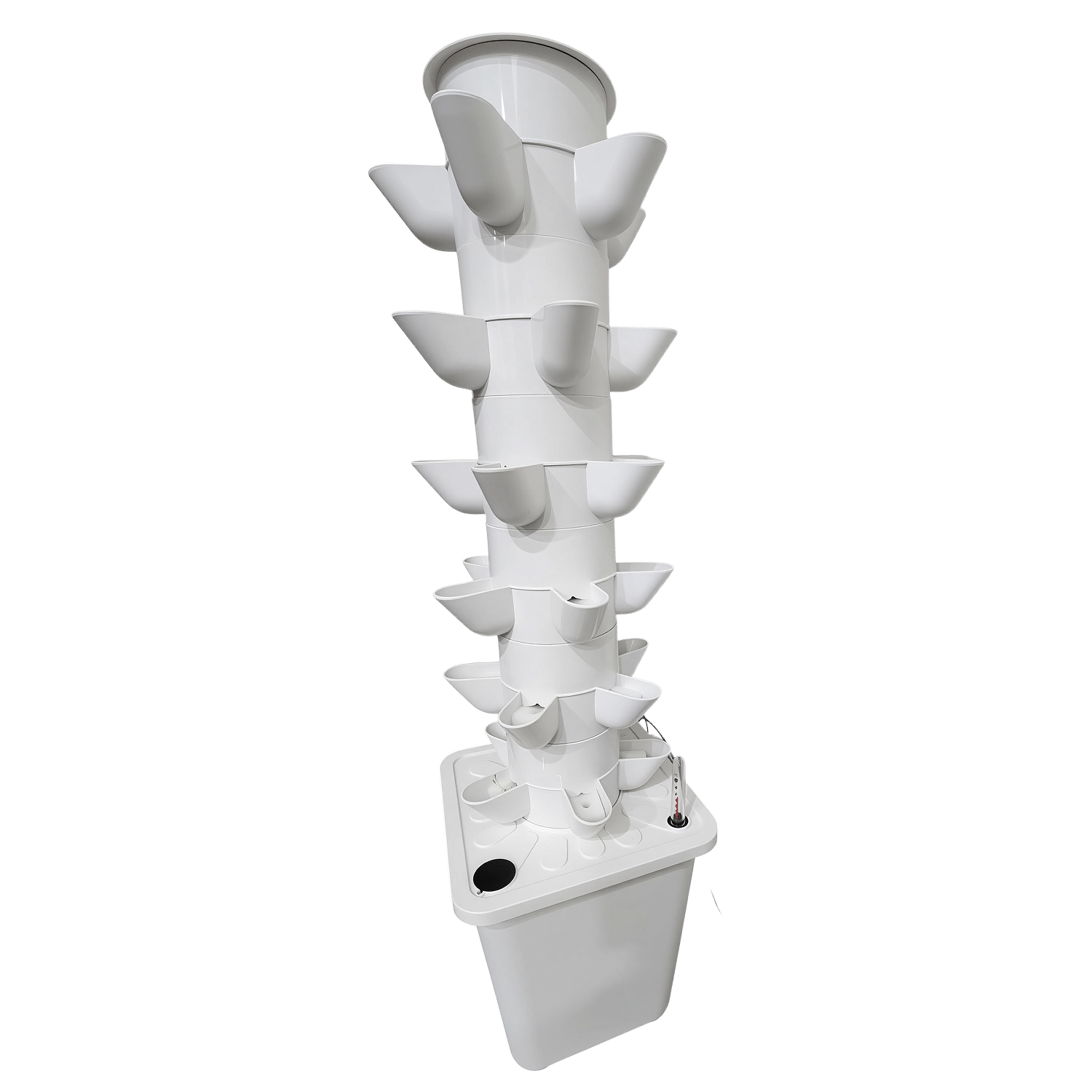
If you would rather not source parts, the SproutSpire is a vertical hydroponic grow tower for indoor gardening. It holds 30 growing pods in one tower on a footprint of 10 by 8 inches. An automated pump moves nutrient water and oxygen through five channels, and the sections go together without tools.
It runs from an included adapter, so you need an outlet nearby. The box holds the tower, the power adapter and water pump, 30 growing pods and sponges, and a quick-start assembly guide. Backup reservoirs hold additional water for the pods alongside the main reservoir.
 In this guideSproutSpire$259.99View
Lighting a hydroponic tower garden
A window can be enough for a few leafy plants, but many rooms are too dim for a full tower. Fruiting plants such as tomatoes ask for more light than greens do. A grow light fills the gap, and this guide to LED spectrum, distance and hours explains how to choose the settings.
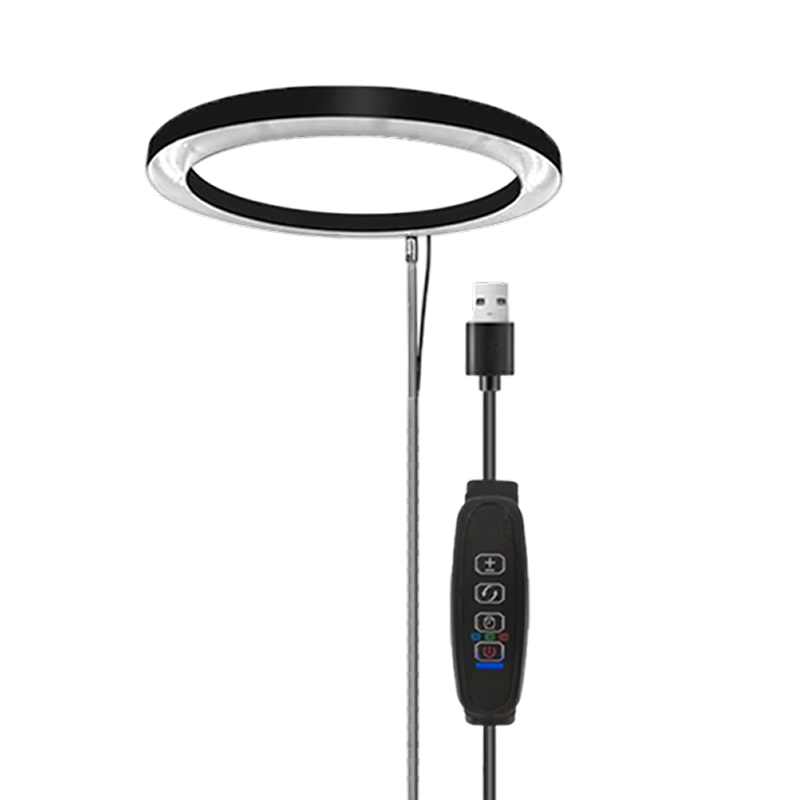
The FloraAxis is an indoor grow light with a round 16cm (about 6.3 inches) LED head on an adjustable stand. It gives full-spectrum white light from 70 LED beads, so you can inspect leaves in normal color while it is on. The stand extends from 20 to 165cm (about 8 to 65 inches), so you can set the head low over seedlings and raise it as the plants grow.
A built-in auto-timer with three settings switches the light on a set schedule, so you pick a setting once at the unit. Browse the indoor gardening and grow lights collection if you want to compare other options.
 In this guideFloraAxis$99.99View
Plants that suit a tower and plants that do not
Towers hold plants in small pods, so they favor compact, shallow-rooted plants that you harvest by picking leaves or fruit. Plants with deep roots, heavy weight or sprawling vines need more room than a pod and a channel offer.
| Plant | Fit for a tower? | Why |
|---|---|---|
| Lettuce and leafy greens | Suits | Compact, shallow roots, picked leaf by leaf. |
| Basil, mint, parsley, cilantro | Suits | Small herbs that fit a pod; pick often to keep them tidy. |
| Strawberries | Suits with care | Compact plants, but they need strong light. |
| Tomatoes and peppers | Possible | Need strong light and room; choose compact varieties and plan for staking or support. |
| Carrots, potatoes, beets | Does not suit | Root crops need depth that a pod and channel do not provide. |
| Squash, pumpkin, melon | Does not suit | Large sprawling vines outgrow the tower. |
| Corn and fruit trees | Does not suit | Tall, heavy plants need far more space and support. |
So the plants that cannot be grown hydroponically in a tower are mostly deep root crops, big vines and trees. Hydroponics as a method can handle some of these in other systems, but a tower is not the right container for them. For herb choices and care, see which herbs to grow and how to set up an indoor herb garden.
Maintenance schedule
A tower needs short, regular checks. Use this routine as a starting point and adjust it to the manual for your model and the plants you grow.
| When | Task |
|---|---|
| Every day | Look at the pump and confirm water flows in every channel. Glance at leaves for wilting or yellowing. |
| Every few days | Check the reservoir water level and top up with water as needed. |
| Every week | Check nutrient strength with a meter if you have one, and trim or harvest growth that is shading lower plants. |
| Every two weeks | Empty the reservoir, refill with fresh water and nutrients, and wipe visible film from the reservoir. |
| Between crops | Unplug the pump, take the tower apart as the manual shows, and clean the channels, pods and pump intake. |
Common mistakes
- Placing the tower where the cord, adapter or plug can be splashed.
- Letting the reservoir run low so the pump runs dry.
- Crowding plants so upper leaves shade the lower ones.
- Adding more nutrients than the label directs.
- Skipping the reservoir change, which lets residue and algae build up.
Field note
Keep a small note card next to the tower with the date of the last reservoir change. A glance tells you when the next one is due.
Building a DIY or bucket tower
You can build a hydroponic tower from food-grade buckets or stacked containers, a small submersible pump, tubing and net pots. The design works the same way: the pump lifts nutrient water to the top, and it trickles past the roots and drains back to the reservoir.
A DIY build asks for more decisions. You choose the pump size, drill the pot holes, seal the joints and make a timer plan. Check each joint for leaks before adding plants, and ask an electrician if you are unsure about outdoor or wet-area wiring.
Are hydroponic towers worth it?
A tower fits you if you want fresh greens and herbs in a small space and are happy to do a short routine. It suits renters, balconies and kitchens. It fits less well if you want to grow root crops or large vines, or if you do not have a power outlet nearby.
If you are weighing a ready-made tower against a DIY build, count your time, the parts you need to source and the space you have. Then pick the option that matches the plants you want to grow.
Frequently asked questions
Keep reading
 Indoor Gardening & Grow LightsHow to Plant Sweet Potato Slips, From Starting to Transplant6 min read
 Indoor Gardening & Grow LightsHow to Care for an Aloe Plant Indoors: Light, Water and Soil6 min read
 Indoor Gardening & Grow LightsHerb Garden Indoor: Which Herbs to Grow and How to Set It Up5 min read