Chemical Free Steam Cleaning: What Steam Handles and What It Can't
Chemical free steam cleaning works on sealed tile, grout, tubs and stovetops, and can damage unsealed wood and delicate fabric. Use the surface table to decide when steam is enough.
The Cobalt Hollow Team
November 12, 2026 · 6 min read
Chemical free steam cleaning means filling a steam cleaner with plain water and using the hot vapor to loosen grease, soap film and stuck-on residue, with no detergent in the tank. It suits sealed, hard surfaces such as tile, grout, tubs and stovetops. It can damage unsealed wood, delicate fabrics and cold glass, and it does not replace a detergent for heavy grease, hard-water scale or mold stains.
This guide sorts household surfaces into three groups: steam alone, steam with a follow-up cleaner, and no steam at all.
What steam does and does not do
Steam is hot water vapor. Applied close to a surface, it softens baked-on residue so a cloth or brush can lift it. The heat and moisture do the loosening, and the wipe-down does the removing.
That is also the limit. Steam does not dissolve mineral scale, it does not lift old stains that have soaked into porous material, and it does not leave a coating behind. It adds heat and moisture, and some surfaces cannot take either.
Two points keep expectations realistic:
- Steam loosens dirt; you still need to wipe it away with a clean cloth, or it dries back onto the surface.
- Moisture and heat are the risk factors. Anything that warps, swells, peels or fogs with heat or water is a candidate for a different method.
Chemical free steam cleaning by surface
Use this table before you pick up the tool. When a surface is not listed, check its manufacturer's care instructions, and test a hidden spot first.
| Surface | Steam alone? | Damage risk | Add a detergent when |
|---|---|---|---|
| Sealed ceramic or porcelain tile | Yes | Low on sealed tile | Soap scum is thick or hard-water film remains |
| Grout | Yes, with a small brush | Unsealed grout can take on water | Stains remain after the grout dries |
| Tubs and shower surfaces | Yes for soap film | Cracked caulk lets water behind the surface | Mineral scale or mildew stains show |
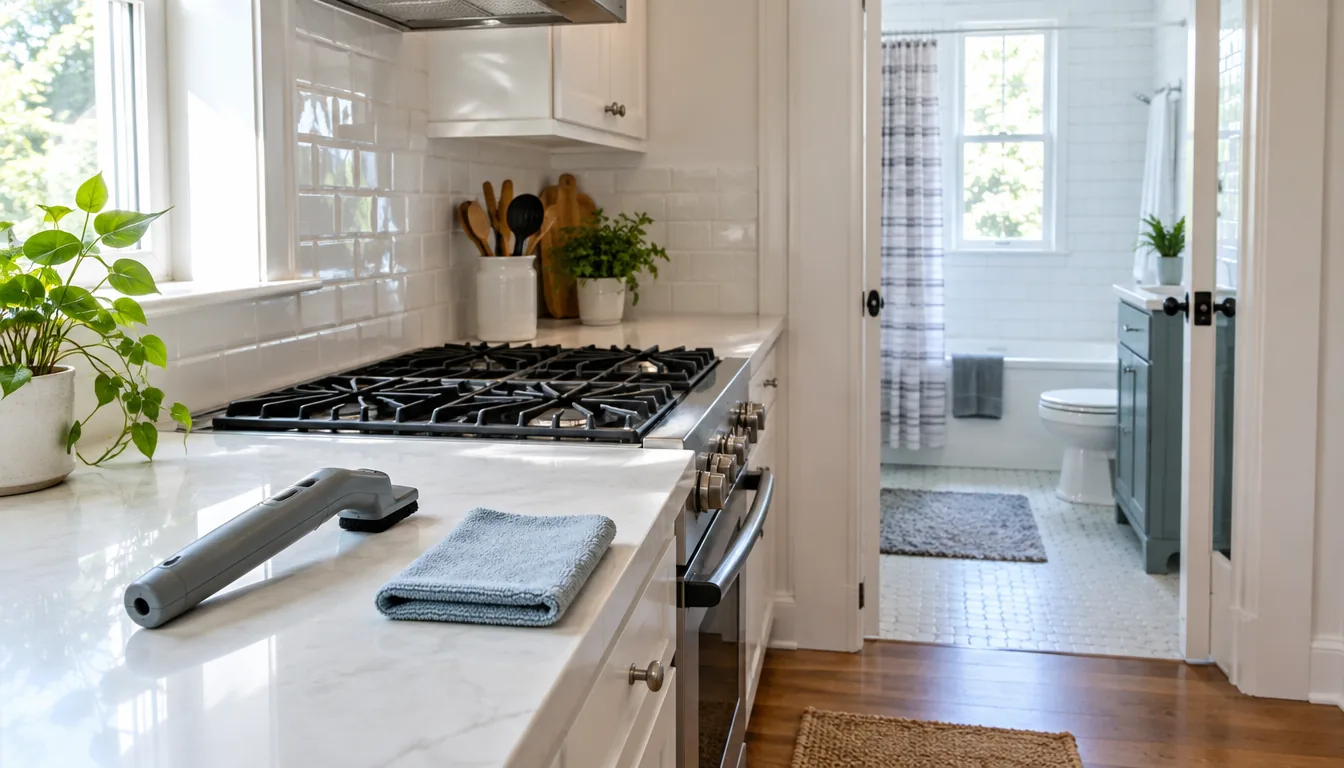
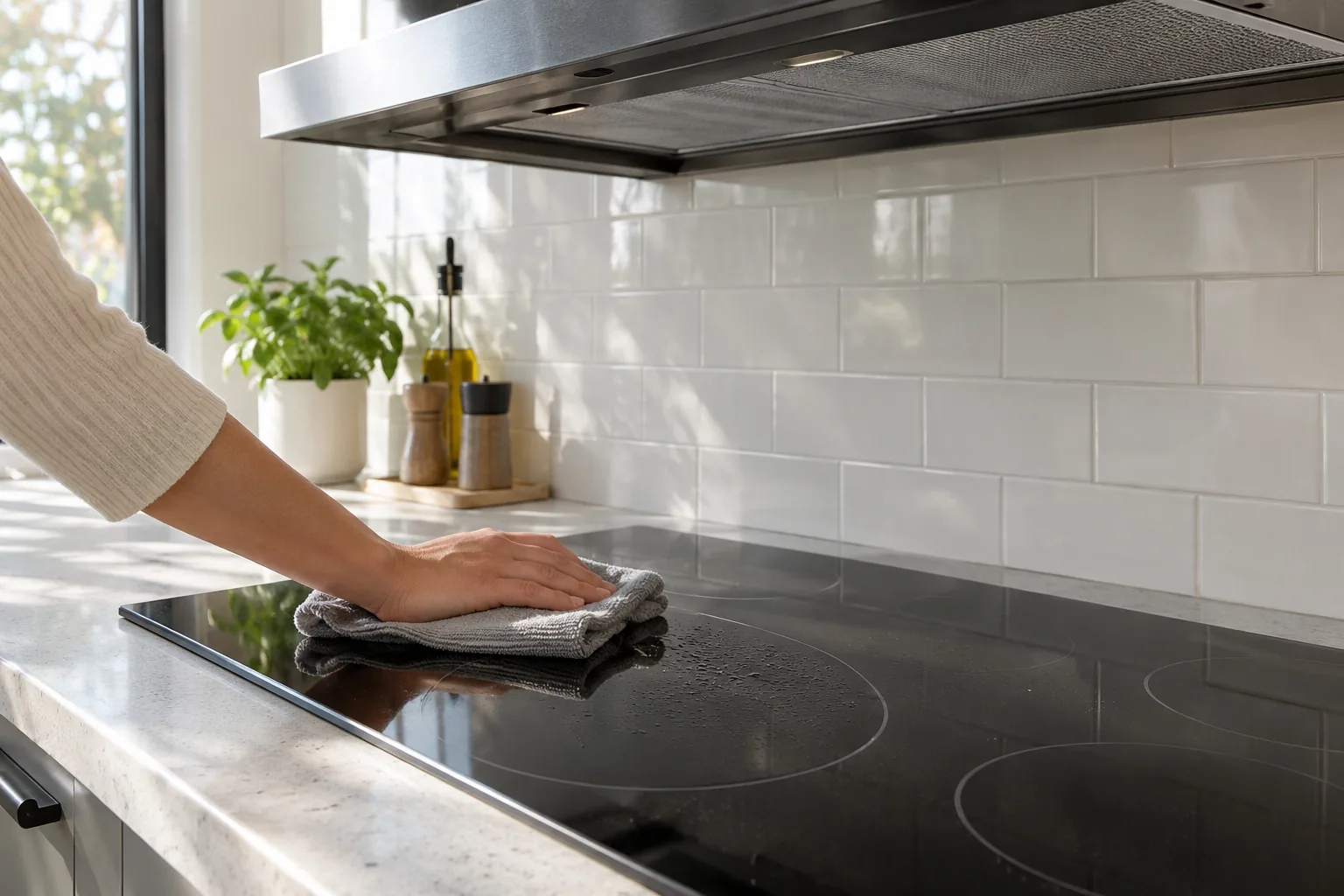
| Stovetop and range hood | Yes for baked-on grease | Check knobs, gaskets and electrical parts | Grease is thick or polymerized |
| Sealed countertops | Yes, in short passes | Seams, edges and some resin surfaces | Oil stains or etching are present |
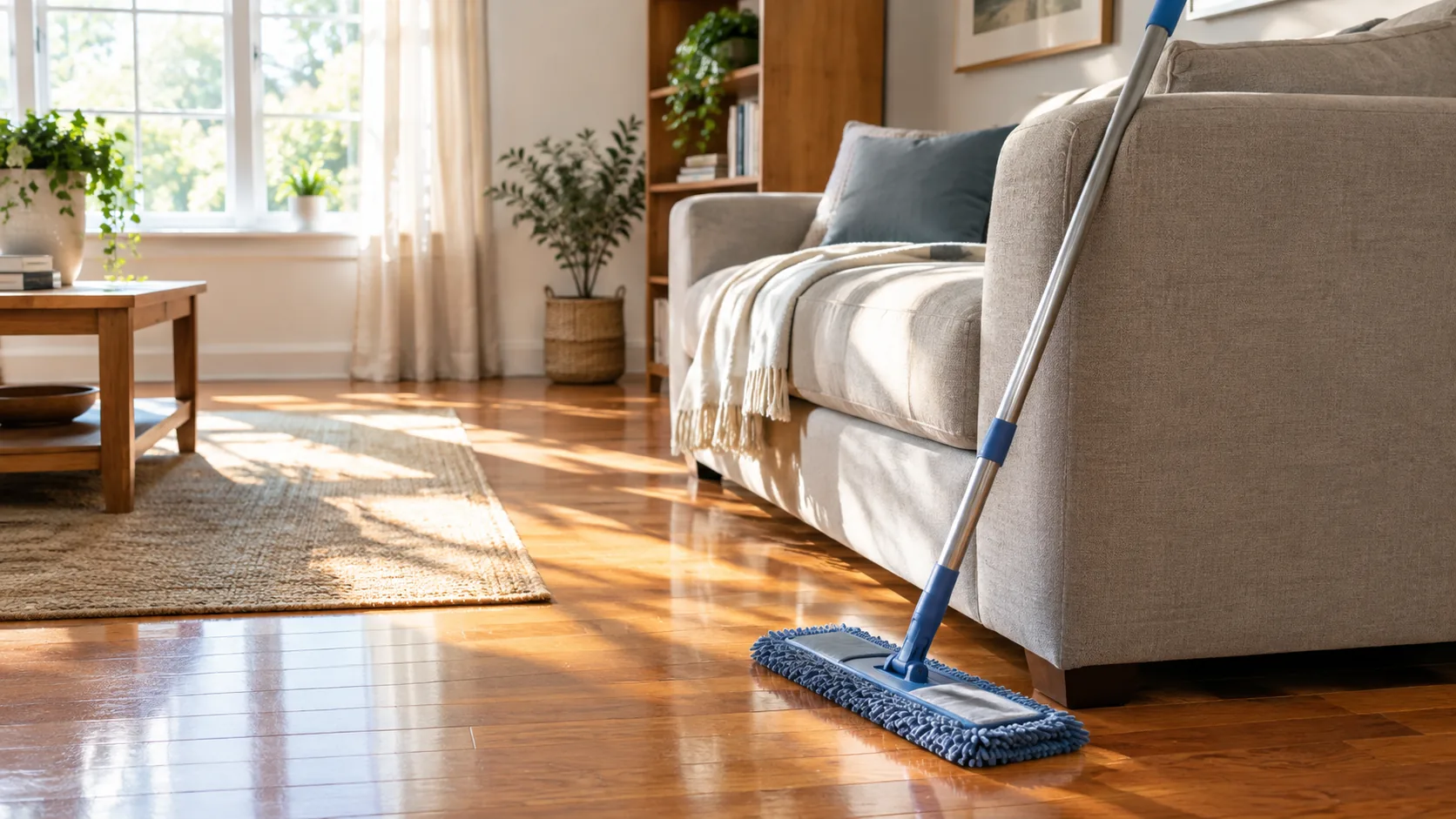
| Finished hardwood floors | No | Moisture and heat can lift finish and swell boards | Always; see the hardwood guide below |
| Laminate and unsealed wood | No | Water enters seams and swells the core | Use a barely damp cloth and a suitable cleaner |
| Upholstery and fabric seats | Low setting only, if the care tag allows | Water rings, shrinking, color transfer | Stains need a spot cleaner made for fabric |
| Silk, velvet, leather | No | Heat and moisture mark these materials | Follow the care label |
| Windows and mirrors | Use with caution | Cold glass, cracked panes and old seals | Streaks remain after wiping |
| Painted walls, wallpaper | No | Paint softens and paper peels | Use a damp cloth and mild soap |
| Electronics, outlets, switches | No | Moisture in electrical parts | Wipe with a dry or barely damp cloth, unplugged |
When you still need a detergent
Steam alone falls short in a few situations. Knowing them keeps you from scrubbing the same spot over and over.
Mineral scale and hard-water film
White crust around faucets and on shower glass is mineral buildup, not grime. Heat does not dissolve it. A descaling cleaner made for the surface does.
Thick, aged grease
Fresh or baked-on kitchen grease responds to steam on a higher setting. Layers of old, sticky grease on a hood often need a degreaser first, then steam to finish and a wipe to rinse.
Mold and mildew stains
Steam loosens surface growth, but a stain that has soaked into grout or caulk may stay. Use a mildew cleaner and follow the label, ventilate the room, or replace failed caulk.
Soaked-in stains on fabric
Coffee, ink and pet accidents sit in the fibers, and steam can set some stains. For mattresses, the mattress cleaning guide covers stains, urine and odors step by step.
If you want the least chemistry possible, start with steam on sealed surfaces and bring in a detergent only for what remains. That is a sensible middle path rather than an all-or-nothing choice.
What steam cleaning should not be used on
Use this as a checklist. If any line applies, skip steam.
- Unsealed or oiled wood, and finished hardwood floors. The hardwood floor guide explains what works for the finish instead.
- Laminate, veneer and glued surfaces, where moisture reaches seams.
- Silk, velvet, suede and leather.
- Painted drywall, wallpaper and peeling paint.
- Cold or cracked glass, and old windows with failing seals. Sudden heat on cold glass can stress it.
- Electrical outlets, switches, appliance controls and anything plugged in.
- Surfaces that carry a care label saying no steam or no moisture.
Steam is hot. Follow the manual, keep the nozzle pointed away from your hands, and keep children and pets out of the room while you work. Unplug the unit before you refill or clean it.
A handheld steam cleaner for tile, grout and stovetops
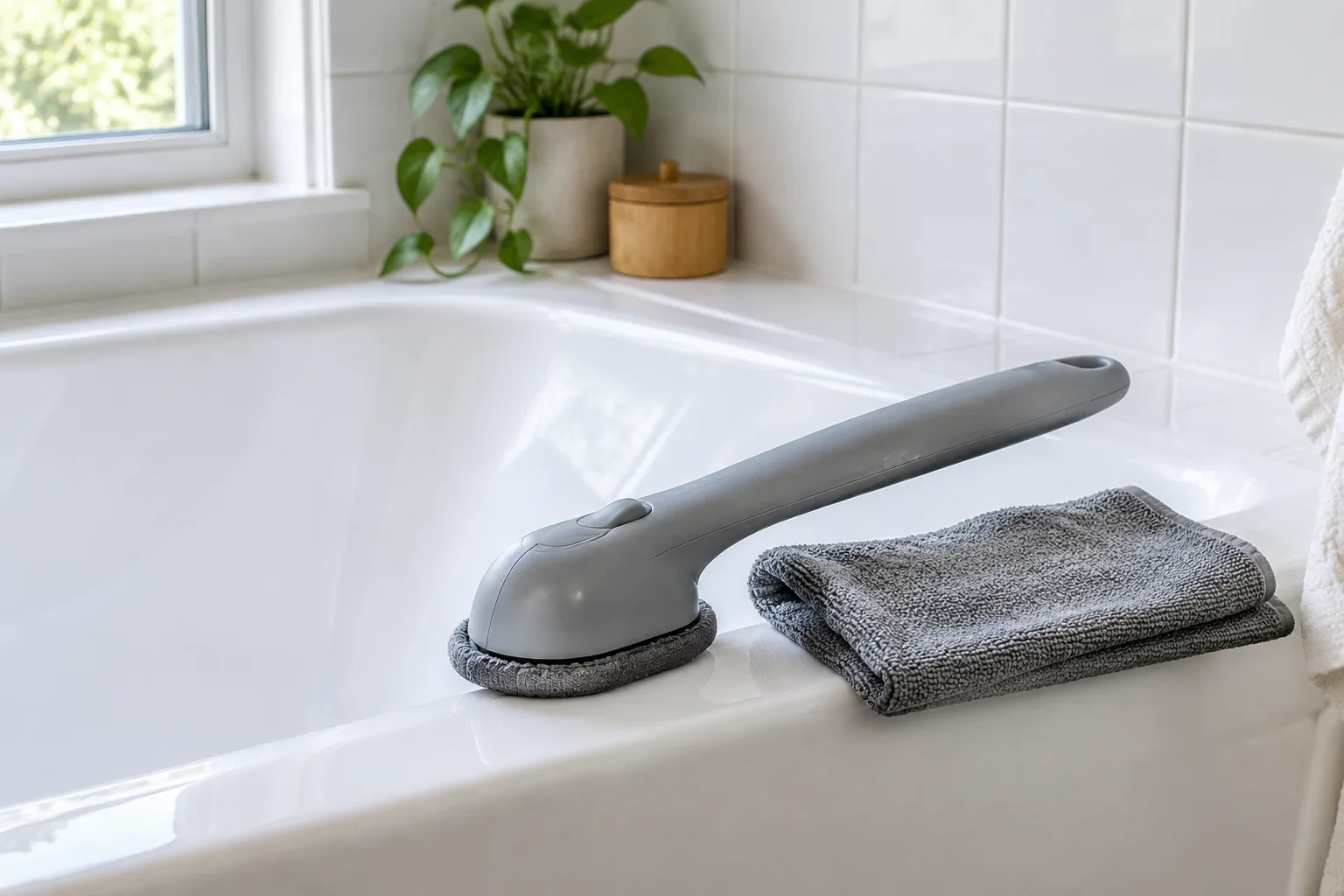
For small hard-surface jobs, a handheld unit gives you control over where the steam goes. SteamSentry is a handheld steam cleaner that runs on plain water, with no cleaning chemicals added to the tank. It has a 100mL (about 3.4 fl oz) tank, a 2500W heating element with a thermal limit, and an ABS body.
A dial on the collar sets the steam across six positions. Lower positions suit fabric and delicate surfaces, and higher ones suit baked-on kitchen grease. You change it without swapping heads.
Three attachments come in the box: a round detail brush for grout and tile, a flat scrub head for tubs and stovetops, and an extension nozzle for vent hoods and seats. A microfiber cloth and a fill funnel are included. Two safety latches hold the trigger until you flip the lock.
 In this guideSteamSentry$129.99View
Steps for steam cleaning with plain water
- Clear and dry-wipe the area. Remove loose dust and crumbs so the steam works on stuck residue, not loose debris.
- Check the surface against the table above. Test a hidden spot with a short pass and wipe it.
- Fill the tank with plain tap water using the funnel. Add nothing else. The 100mL tank is small, so plan to refill on larger jobs; unplug before you do.
- Plug in and let the element heat the water.
- Turn the collar to a setting that suits the surface: a lower position for fabric and delicate surfaces, a higher one for baked-on grease.
- Snap on the round brush, flat scrub head or extension nozzle. Hold it close to the surface.
- Work in slow, overlapping passes so the steam covers the whole area.
- Wipe the loosened residue away with a microfiber cloth right after each section, rinsing the cloth as it fills.
- Let the surface dry fully before putting items back.
Field note
Start every new surface on the lowest steam setting and a hidden spot. Step up only if the residue stays put, and keep moving so heat does not sit in one place.
Common mistakes with steam alone
- Holding the nozzle in one spot. Heat concentrates and can mark finishes or fog glass. Keep it moving.
- Skipping the wipe. Loosened grime dries back on if you leave it.
- Steaming grout and caulk that is cracked. Water gets behind it and into the wall or floor.
- Using steam as a stain remover on fabric. Test first and follow the care tag.
- Expecting steam to dissolve scale. Use a descaler for mineral buildup.
- Cleaning while the unit is plugged in near outlets or controls.
For more steam, sanitizing and specialty tools, browse the Steam, Sanitizing & Specialty Cleaners collection.