How to Clean a Mattress: Stains, Urine, Odors and Deep Cleaning
Vacuum, spot clean with the right mix for each stain, deodorize with baking soda, then dry the mattress completely. This guide gives the steps, a stain table and a care schedule.
The Cobalt Hollow Team
November 7, 2026 · 9 min read
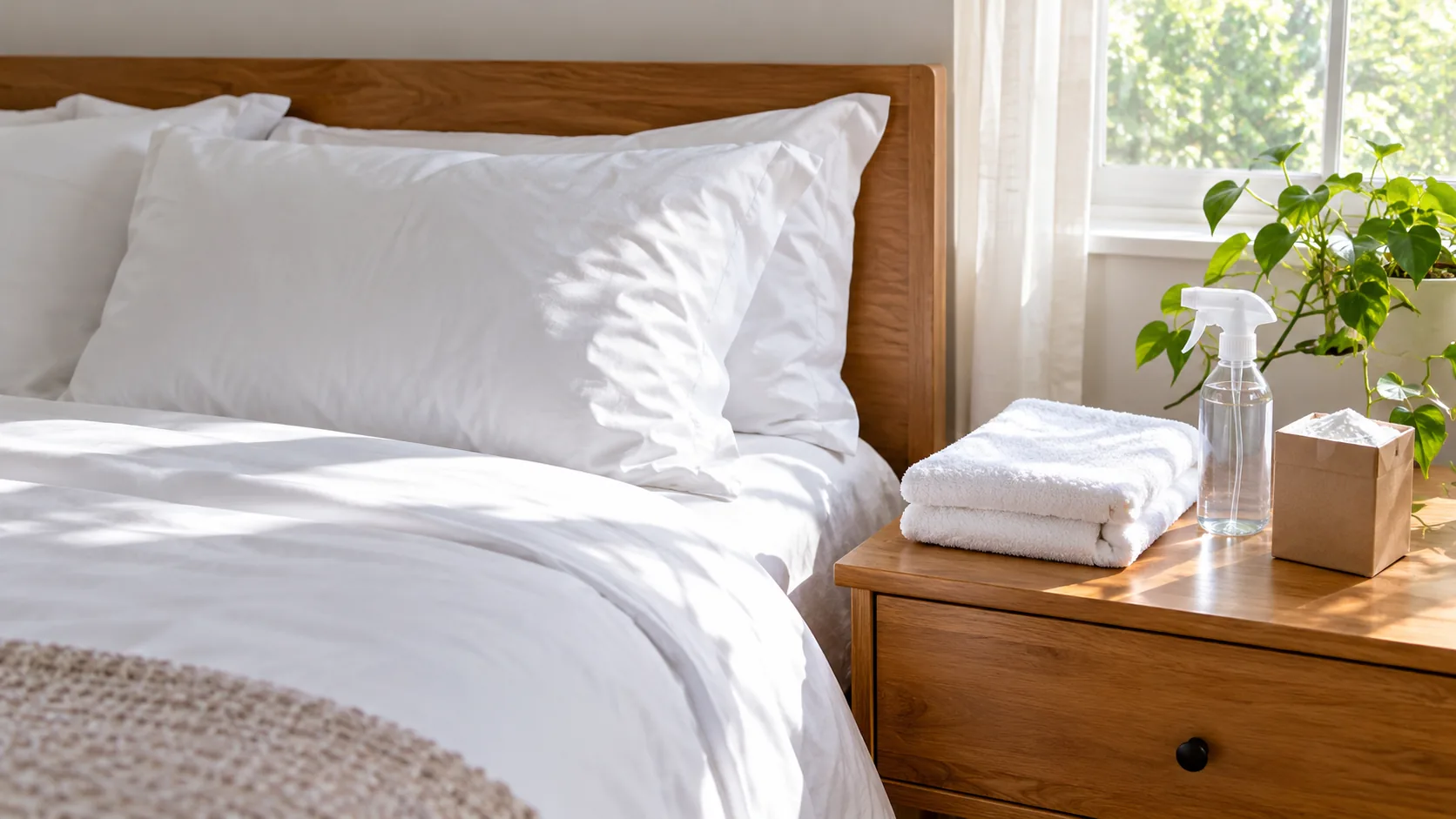
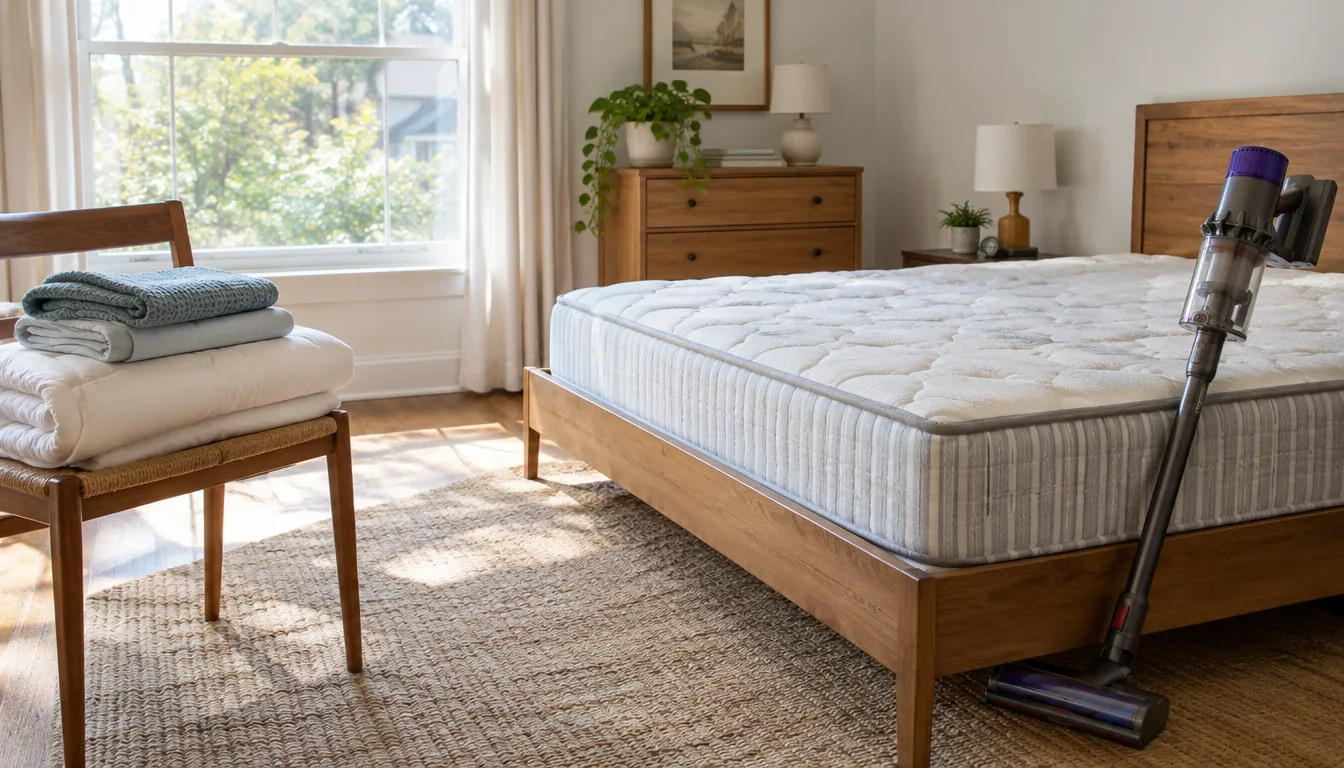
To learn how to clean a mattress, work in this order: strip the bed, vacuum the surface, spot clean each stain with the right mix, sprinkle baking soda to deodorize, and let everything dry completely before you put sheets back on. Moisture is the part that goes wrong, so use as little liquid as the stain allows. The sections below cover the supplies, a stain-by-stain table, urine, drying and a care schedule.
What you need before you start
Most mattress cleaning uses items you already own. Gather everything first so the mattress is not left damp while you hunt for a cloth.
- A vacuum with an upholstery tool, or a handheld mattress vacuum
- Baking soda and a fine sieve or a spoon for spreading it
- A spray bottle for mixes, so you mist rather than pour
- Plain white vinegar and cool water
- Hydrogen peroxide from the drugstore, in its standard bottle
- Liquid dish soap with no added bleach
- An enzyme cleaner made for pet or urine stains
- Clean white cloths or towels for blotting
- A fan, and a window you can open
Use white cloths so you can see what lifts and so no dye transfers to the fabric. Keep the mattress label or manual nearby, because it overrides general advice.
How to clean a mattress: the full routine
This is the deep clean for a mattress that has not been cleaned in a while. It does not need a washing machine, and you do not soak the mattress at any point.
- Take off the sheets, mattress protector and pad. Wash them on the warmest setting the care labels allow.
- Vacuum the top, sides and seams. Press the tool into tufts and piping where dust collects.
- Spot clean stains using the table below. Start with the newest or worst one.
- Sprinkle a thin, even layer of baking soda over the whole surface and leave it on for a few hours with a window open.
- Vacuum the baking soda off with slow passes in two directions.
- Flip or rotate the mattress if the manual allows it, then repeat the vacuuming and stain steps on the other side if it is a two-sided model.
- Let the mattress air dry completely, then remake the bed with a clean protector.
If you want the vacuuming step in more depth, our guide on how to vacuum a mattress covers tools, passes and how often to do it.
Vacuuming first: where a mattress vacuum fits
Vacuuming comes before any liquid. Dry dust and debris turn into a paste when you spray over them, so lift them first. A household vacuum with an upholstery tool works, and a handheld mattress vacuum is built for the job.
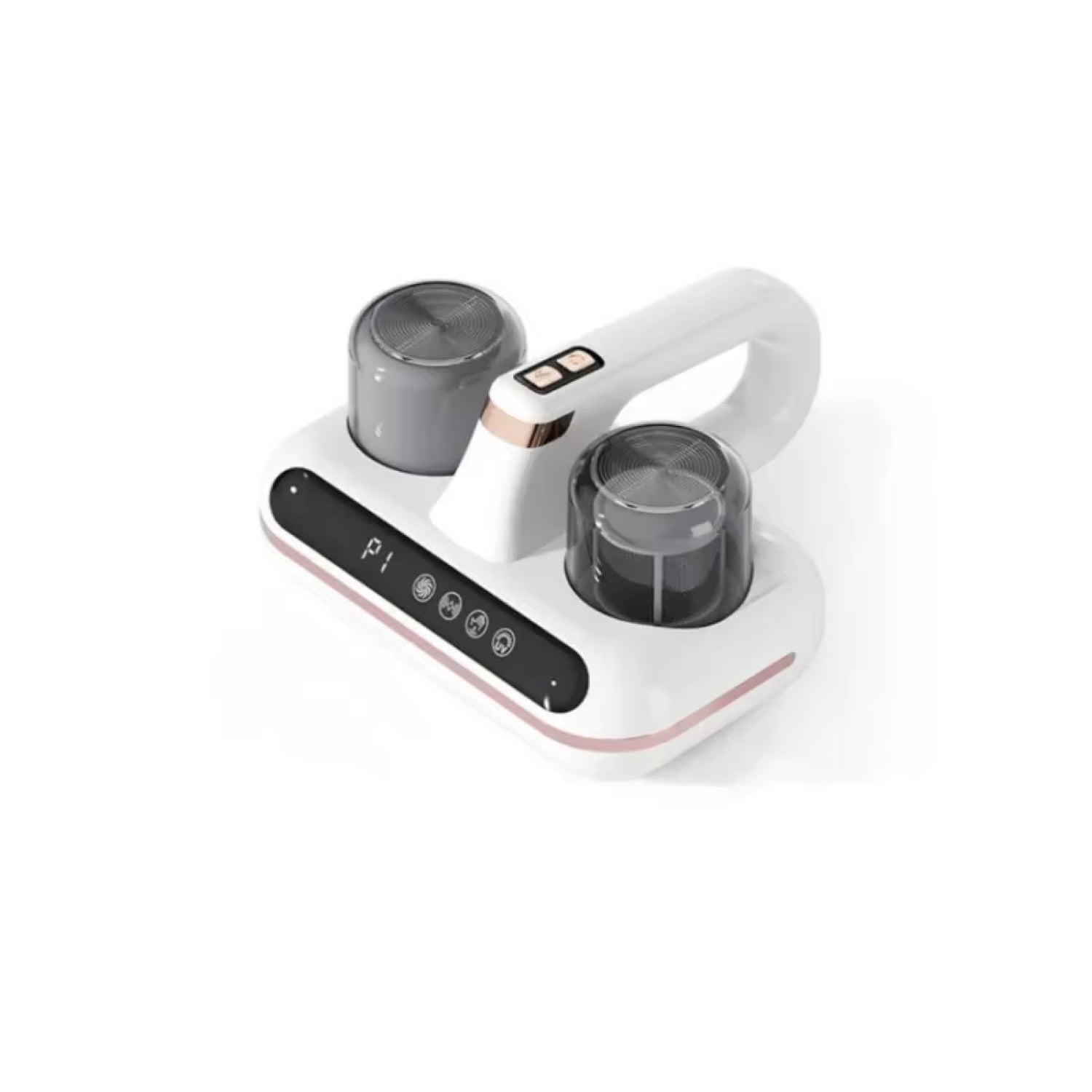
The DustPure Pro V2 is a handheld mattress vacuum with 16000Pa suction and high-frequency vibration. The head vibrates against the surface while the motor draws debris from mattress fibers into the dust bin. It also has a built-in UV-C light with a fabric sensor that adjusts the light setting automatically, and a three-layer filter system with a pre-filter, a HEPA filter and a final mesh. You charge it by USB, set it on the mattress and pick a mode on the LED panel, which also shows battery and filter status. Empty the dust bin when you finish.
 In this guideDustPure Pro V2$119.99View
Stain-by-stain cleaning table
Always blot, never rub, and work from the outside of a stain toward the center so it does not spread. Check any mix on a hidden spot first, such as the bottom edge, and let it dry to see whether the fabric changes color.
| Stain | What to use | How to apply |
|---|---|---|
| Urine (fresh) | Dry towels, then enzyme cleaner or a vinegar and water mist | Blot up as much as you can, mist lightly, blot again, then cover with baking soda |
| Urine (dried) | Enzyme cleaner, then baking soda | Follow the bottle for how long it stays wet, blot, then use baking soda to draw out moisture and odor |
| Sweat and body oils | White vinegar and water in a spray bottle | Mist lightly, blot with a clean cloth, then use baking soda on the area |
| Yellowing | Hydrogen peroxide, baking soda and a drop of dish soap | Dab on, let it sit, then blot and wipe with a damp cloth |
| Blood | Cold water and a drop of dish soap | Dab with a cold, damp cloth; avoid warm water, which can set the stain |
| Food and drink | Dish soap foam in cool water | Apply only the foam, blot, then wipe with a cloth wrung almost dry |
| General odor | Baking soda | Spread a thin layer over the whole surface and vacuum it off later |
The yellow stain mix
For the question of what takes yellow stains out of a mattress, the usual answer is a peroxide paste. Mix a small amount of hydrogen peroxide with baking soda and one drop of dish soap in a cup, then dab it on the stain with a cloth. Use the mix right after you make it, blot it up and wipe the area with a damp cloth. Peroxide can lighten some fabrics, so the hidden-spot check matters here.
Using dish soap on a mattress
Yes, you can use liquid dish soap, but only a drop, whipped into foam with cool water. Apply the foam, not the liquid, because soapy water soaks into the padding and is hard to rinse out. Skip soaps with added bleach.
How to clean mattress pee
Urine needs speed and an enzyme cleaner, because the odor comes from compounds that vinegar and baking soda only partly handle. Follow these steps for a mattress that has been peed on.
- Strip the bed and blot the wet area with dry towels. Press down firmly and swap towels until they stop picking up moisture.
- Do not pour water on the spot. Extra liquid carries urine deeper into the mattress.
- Apply enzyme cleaner according to the label. Use enough to reach the same depth the urine did, but do not flood the mattress.
- Blot the area and leave it to air out.
- Cover the damp patch with a thick layer of baking soda and leave it on until the mattress feels dry on top.
- Vacuum the baking soda away. If a smell remains, repeat the enzyme and baking soda steps once more.
For a dried stain, a light mist of vinegar and water can help loosen it before the enzyme cleaner, but do not use vinegar and the enzyme product together unless the label allows it. Let the area dry fully before you add sheets and a protector.
Field note
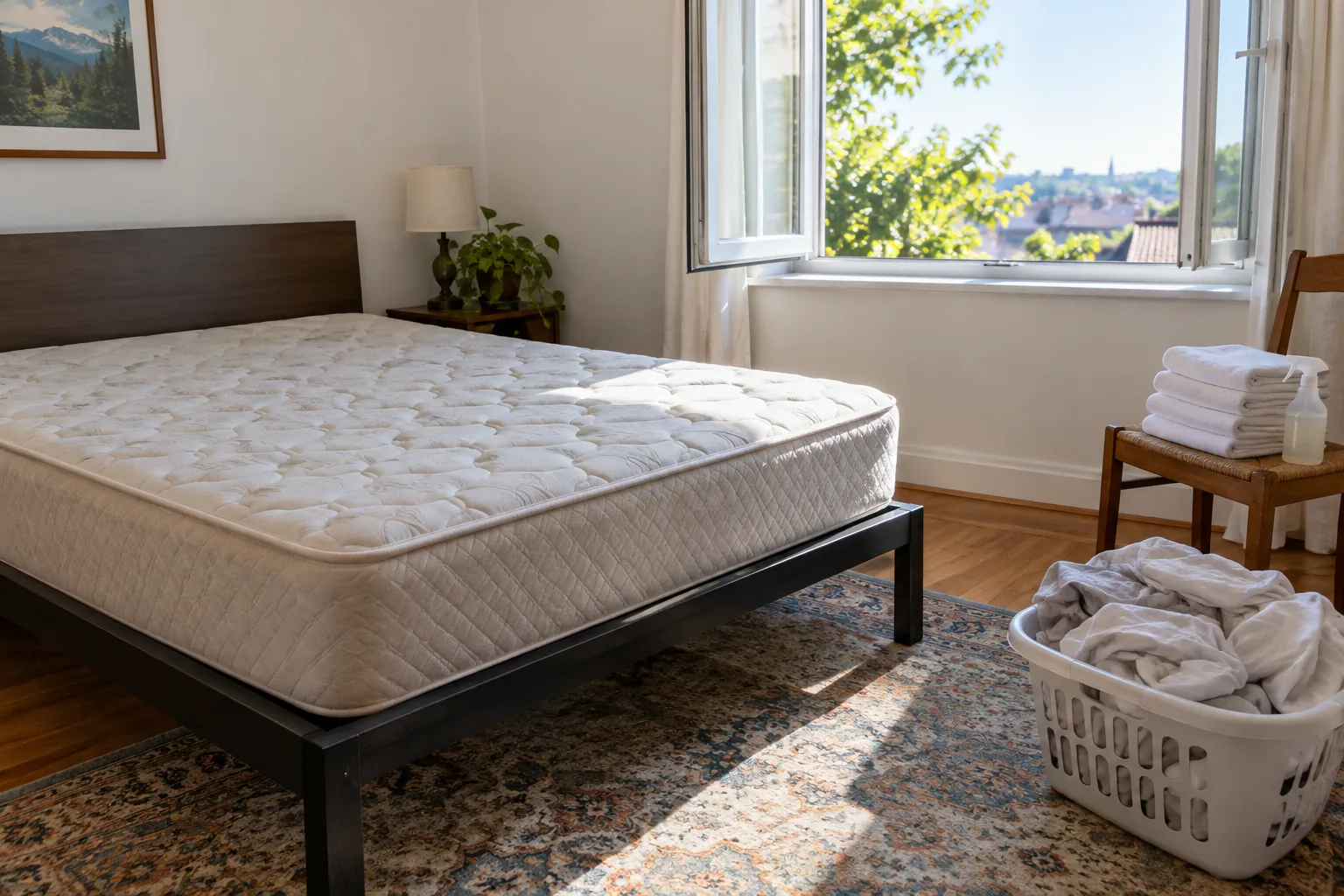
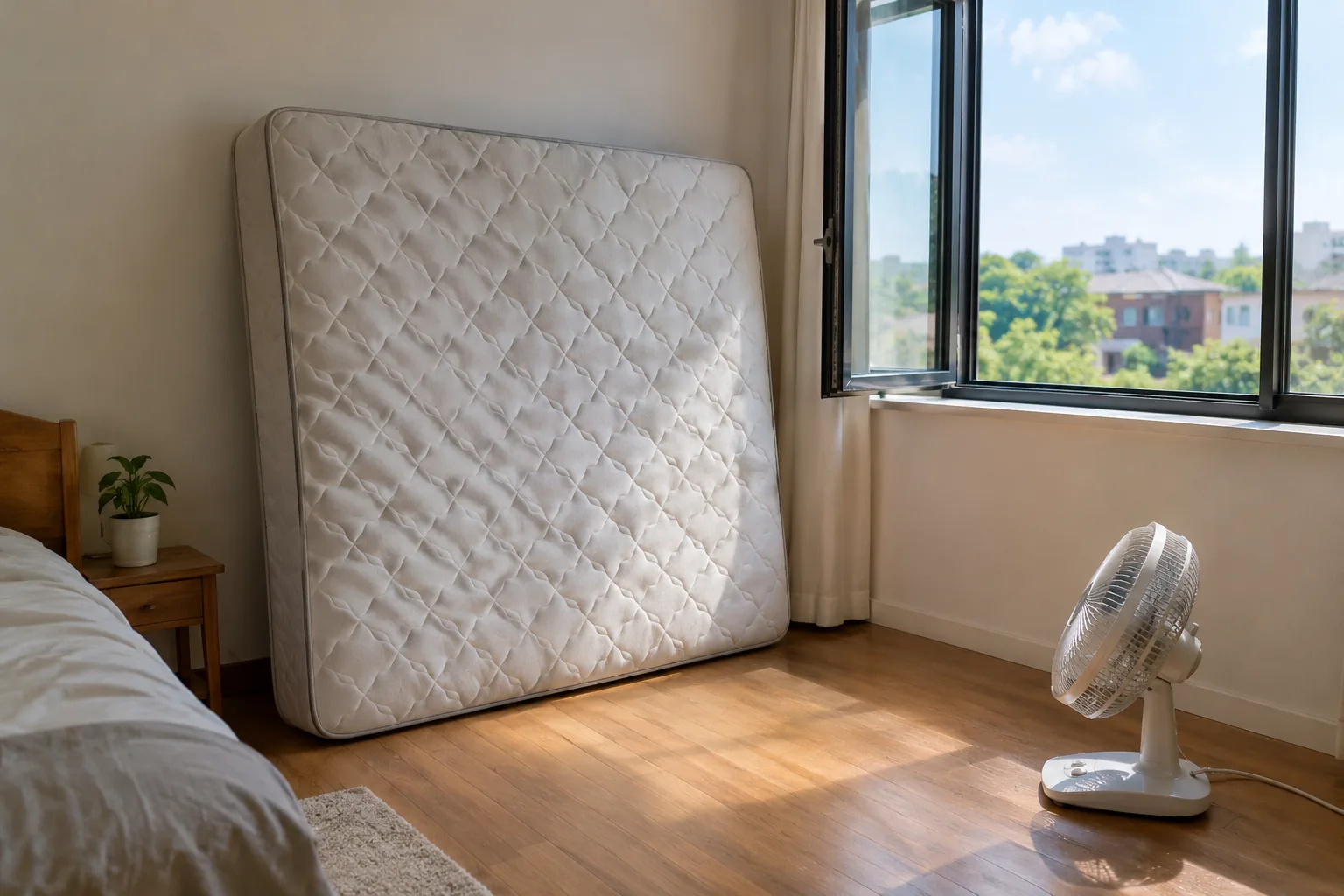
Moving air from a fan and an open window is the main tool for drying a mattress. Put the mattress protector back on only once the surface and the padding underneath feel dry.
Drying steps so mold does not form
A mattress that stays damp can develop a musty smell or mold. When you plan how to clean a mattress, treat drying as half of the job, not an extra step.
- Blot every damp spot with a dry towel until no moisture transfers to the cloth.
- Stand the mattress on its side against a wall if it is light enough and you have help, or leave it flat with the bed frame open to air.
- Run a fan across the surface and open a window. A dehumidifier in the room also helps if the air is humid.
- Use sunlight if you can move the mattress outdoors, and bring it in before dew forms. Check the label first, since some foam can degrade in direct sun.
- Press a dry towel on the stained area. If it comes away damp, keep drying.
- Check the underside and the seams, where moisture lingers longest.
Keep the mattress off the floor while it dries, and do not put a plastic cover over it until it is dry through. If you smell mildew or see dark spots after drying, ask a cleaning professional rather than spraying more liquid on it.
Steam, sprays and other ways to freshen without washing
If you want to freshen a mattress without washing it, think in terms of dry methods. Vacuuming lifts dust and baking soda absorbs odor. A mattress vacuum with a built-in UV-C light and a fabric sensor, like the one above, adds a surface step to the vacuuming. None of these replaces spot cleaning on a stain.
Steam
Steam adds moisture, which is the thing you are trying to limit. Some mattress makers advise against it, so read the label first. If the manual allows it, use a low steam setting on the fabric surface, keep the head moving and dry the mattress thoroughly afterward. Our steam, sanitizing and specialty cleaners collection lists handheld steamers, though you should check the manual of any steamer to see which surfaces it covers.
Irons, vinegar and vodka
Using a household iron on a mattress is not a good idea. Direct heat can melt foam and scorch fabric, and a damp cloth under an iron still pushes moisture inward. A vinegar and water mist does not leave a lasting smell once it dries, and some people use a light mist of vodka the same way. Both are light-mist methods, not soaking methods.
Cleaning a mattress by hand
Cleaning by hand means a cloth, a spray bottle and patience. Mist a cloth, not the mattress, wipe in small sections, and blot with a dry cloth after each one. It is slow work, and it keeps liquid out of the padding.
Adjustments for different mattress types
Before you decide how to clean your mattress, check what it is made of.
| Type | What to do | What to avoid |
|---|---|---|
| Memory foam | Mist lightly, blot, and allow plenty of air drying time | Soaking, because foam holds moisture deep inside |
| Latex | Use mild dish soap foam and cool water, and dry away from direct sun | Heat, strong peroxide mixes and sunlight on the foam |
| Innerspring | Vacuum seams well and spot clean the surface fabric | Letting liquid reach the coils, which can rust |
| Hybrid | Follow the foam rules for the top and the coil rules for the base | Flipping a one-sided model |
The manual wins over this table. If it says spot clean only, do not use a full-surface method. If you are not sure what your mattress is made of, handle it as foam and use the lightest touch.
Care schedule and common mistakes
A short routine means you rarely need the full deep clean. A washable mattress protector takes most of the load, because you wash it instead of the mattress.
| How often | Task |
|---|---|
| Each time you change the sheets | Check for new stains and spot clean while they are fresh |
| Every month or two | Vacuum the top, sides and seams |
| Every few months | Wash the protector, air out the bare mattress and rotate it if the manual allows |
| Twice a year | Run the full routine above, including baking soda |
| After any spill or accident | Blot right away and follow the stain table |
Mistakes to avoid
- Pouring liquid on the mattress rather than misting a cloth or the surface
- Rubbing a stain, which pushes it deeper and spreads the edges
- Mixing vinegar with peroxide in the same bottle
- Putting sheets on while the mattress is still damp
- Using hot water on blood, which can set the stain
- Skipping the label check on foam and latex
If you smell a strong odor that returns after cleaning, or you see signs of bed bugs, stop cleaning and ask a pest control or cleaning professional. Sprays from the hardware store are not a substitute for that advice. When a mattress is sagging, stained through or worn out, replacing it is a better step than another round of cleaning.