
How to Clean Hardwood Floors Without Damaging the Finish
Remove grit daily, damp mop weekly with a wood-floor cleaner and a well-wrung microfiber pad, and wipe spills at once. Match every product to your finish.
The Cobalt Hollow Team
November 8, 2026 · 7 min read
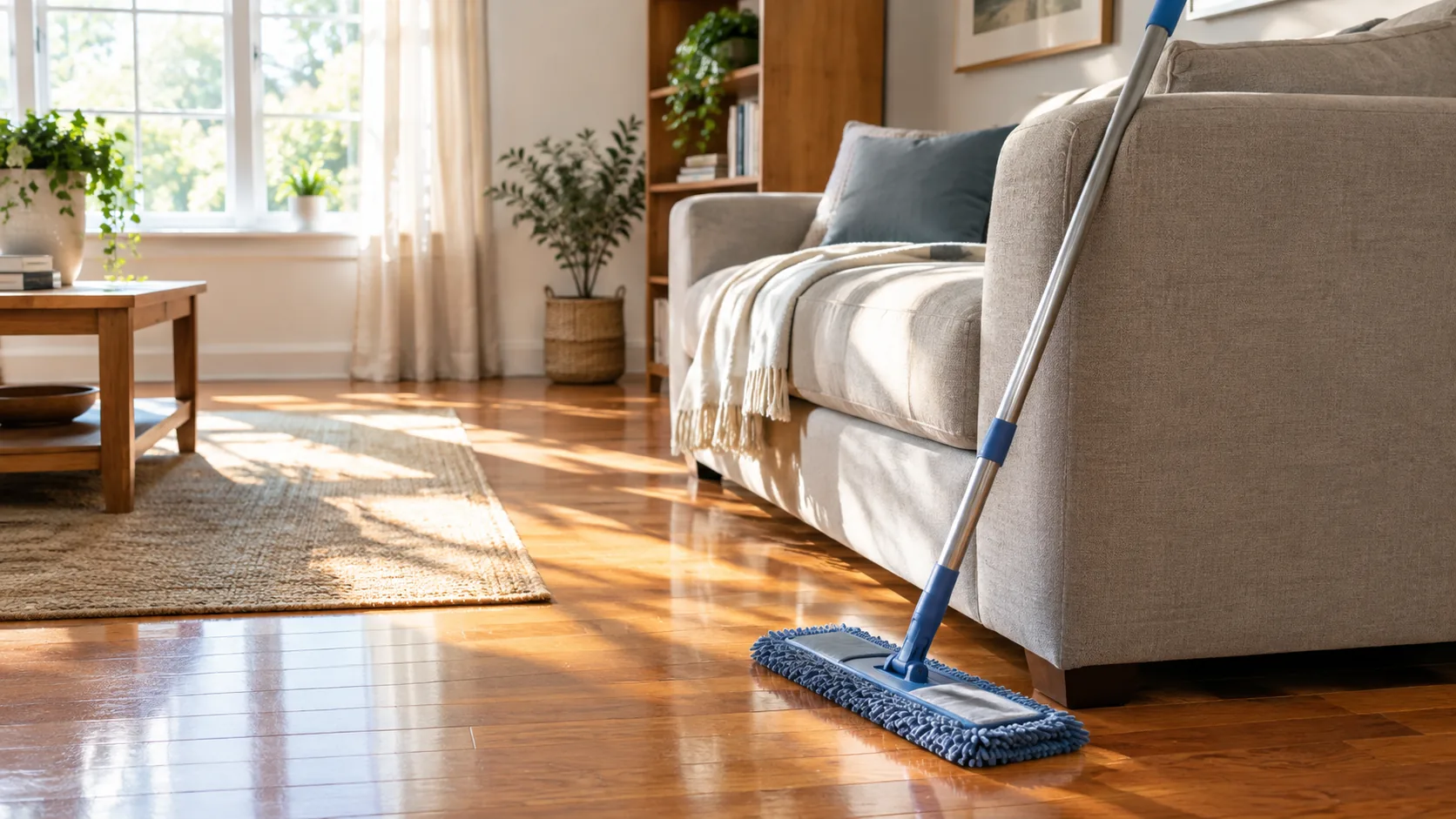
To learn how to clean hardwood floors without harming the finish, remove dust and grit with a vacuum or dust mop, then damp mop with a wood-floor cleaner and a well-wrung microfiber pad. Wipe spills right away and keep standing water off the boards. The right products depend on your finish, so identify that first.
This guide gives you a daily, weekly and monthly routine, a table of what to use and what to skip, and notes on vinegar, dish soap, disposable wet cloths and steam.
Know your finish before you pick a cleaner
A common hardwood finish is a surface finish such as polyurethane, which forms a clear film on top of the wood. Older floors, or floors that were oiled or waxed, have a penetrating finish that soaks into the boards and needs different care. Unfinished wood has no barrier at all.
If you are unsure, check the paperwork from the installer or ask a flooring contractor. A common home check is a drop of water in an out-of-the-way spot: on a surface-sealed floor it beads up, while on an oiled, waxed or unfinished floor it can soak in. If it soaks in, skip water-based mopping and follow the finish maker's care instructions.
How to clean hardwood floors: the routine at a glance
A steady schedule matters more than any single product. Grit acts like sandpaper under shoes, so the most useful habit is removing it often.
| Frequency | Task | Tool |
|---|---|---|
| Daily | Remove dust, hair and grit in high-traffic areas | Dust mop, soft broom or vacuum set for hardwood |
| Weekly | Vacuum the whole floor, then damp mop | Vacuum, spray mop or microfiber mop, wood-floor cleaner |
| Monthly | Deep clean edges, corners, under furniture and vents; check for wear | Crevice nozzle, handheld vacuum, clean pads |
| As needed | Wipe spills and wet footprints | Dry microfiber cloth |
Daily: remove grit before it scratches
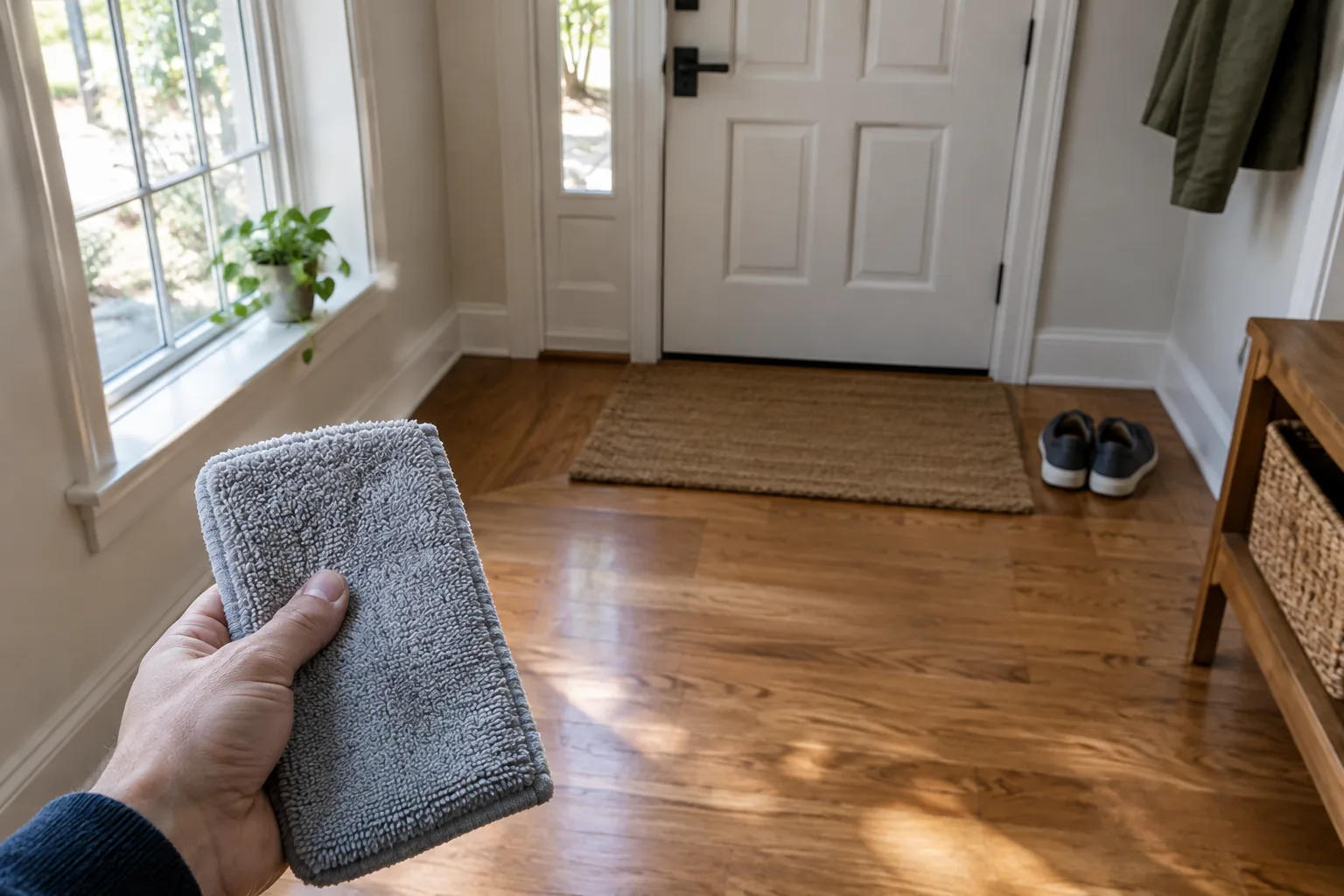
Sweep or dust mop the entryway, kitchen and hallways each day. A microfiber dusting pad holds dust and pet hair instead of pushing it around. Shake the pad outside or swap it when it is full.
A vacuum also works, provided the setting suits bare wood. Use a hardwood or bare-floor mode, and skip any rotating brush bar that is stiff or cannot be switched off, since it can scuff the finish. Our guide to a good vacuum for hardwood floors walks through the features to check.
Weekly: vacuum, then damp mop
Once a week, clean the whole floor in two passes. Vacuuming first matters because mopping over loose grit drags it across the finish.
Where a corded stick vacuum fits
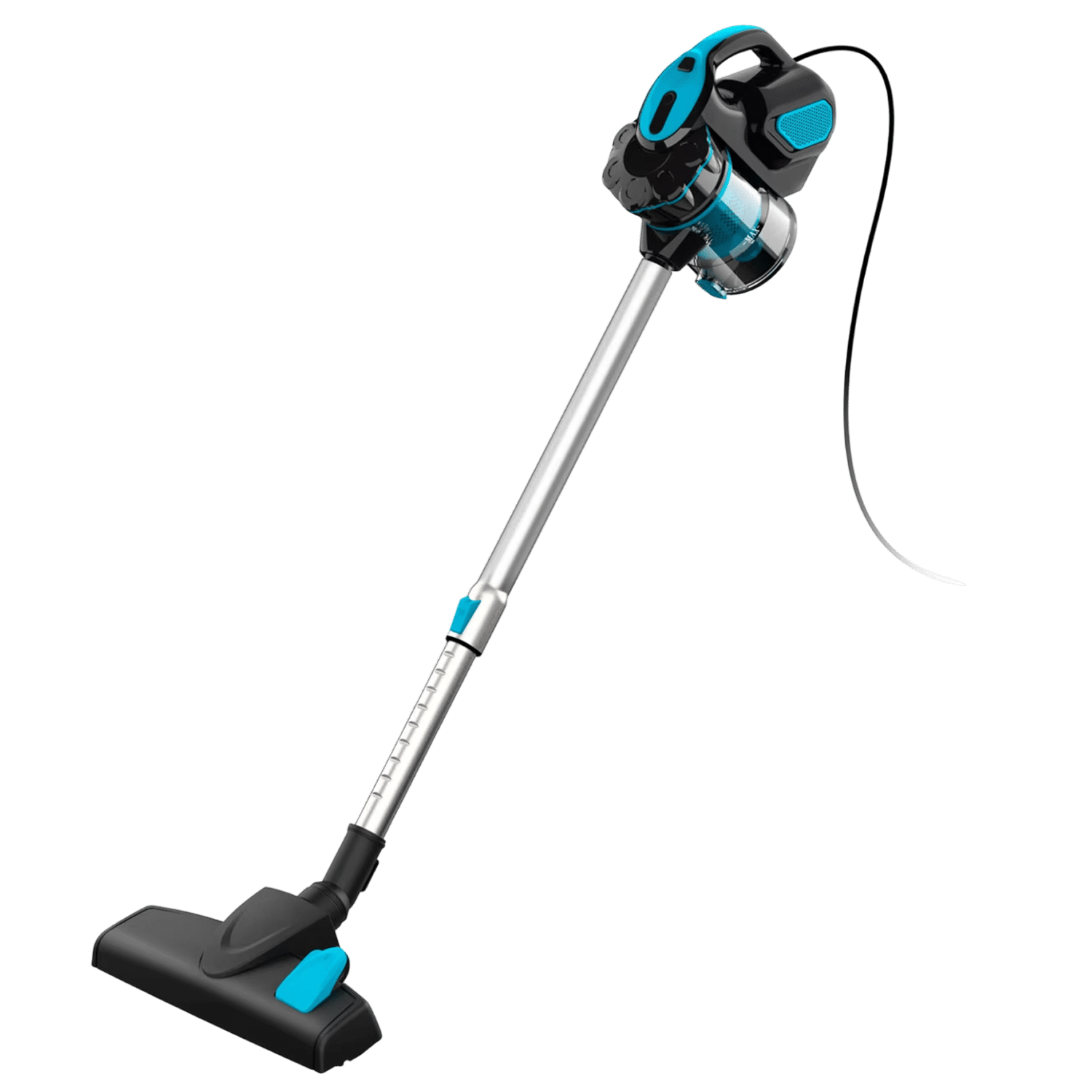
VortexGlide is a corded stick vacuum for hardwood floors with a surface switch that has a hardwood setting, plus tile, carpet and upholstery. It has a 600W motor that draws power from a 6-meter (about 20-foot) cord, so plan your outlet route before you start. The telescopic wand extends between 19 and 31 inches, and the detachable handheld unit covers stairs and furniture.
 In this guideVortexGlide$159.99View
The 1L dust bin has a molded MAX line; press the release button to empty it into a trash can when dust reaches that line. The cyclone filter is washable, and the user manual covers how to remove it for rinsing. If you also want a cordless option, browse our robot and cordless vacuums.
Damp mop steps
- Vacuum or dust mop the entire floor, including edges.
- Apply a wood-floor cleaner to the pad or use a spray mop, following the label. Mist the floor lightly rather than pouring.
- Work in the direction of the boards, one small section at a time.
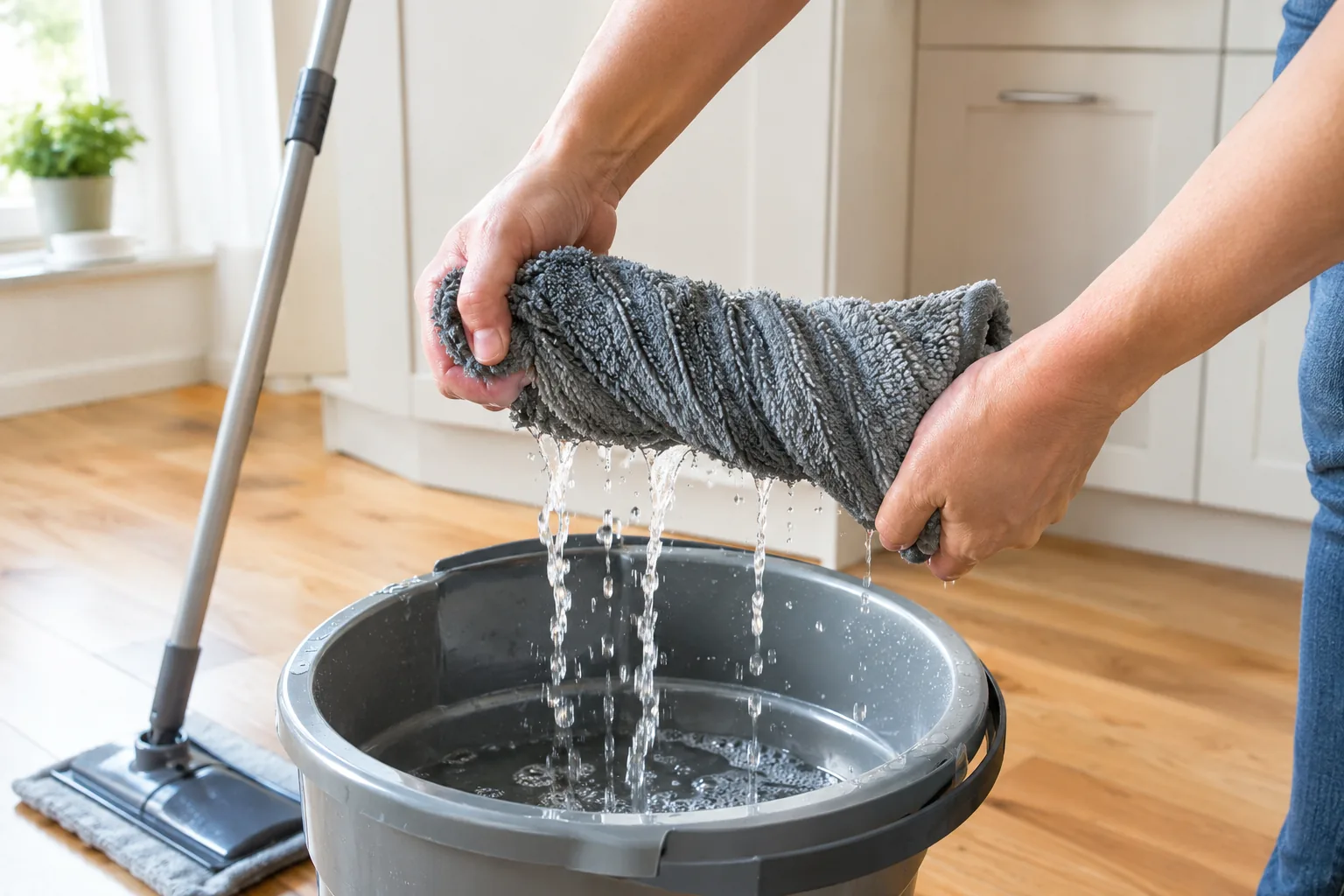
- Wring the microfiber pad until it is damp, not wet. If you see a puddle or a shiny wet streak that lingers, you are using too much liquid.
- Wipe up any visible moisture with a dry cloth and let the floor air dry.
- Launder pads after use; skip fabric softener, which can leave residue on the fibers.
Use separate pads for dusting and for damp mopping so that dry grit does not get pressed into the finish.
Field note
Wring the mop pad until it is barely damp to your hand. Excess water can seep into the seams between boards, so keep the pad close to dry.
Cleaners, water and steam by finish type
If you wonder what to wash hardwood floors with, the short answer for a surface-sealed floor is a cleaner made for wood floors, applied sparingly with a microfiber pad. Oiled and waxed floors call for the product the finish maker names. The table below sorts the common choices.
| Option | Surface-sealed finish | Oiled, waxed or unfinished |
|---|---|---|
| Wood-floor cleaner, lightly applied | Suitable; follow the label | Use only a product the finish maker names |
| Damp microfiber mop | Suitable if wrung well | Can add too much moisture; dry methods first |
| Dry dust mop or vacuum | Suitable | Suitable |
| Soaking wet mop or bucket of water | Skip | Skip |
| Steam mop | Check the finish maker; some advise against it | Skip |
| Oil soaps, wax polishes, abrasive pads | Skip; can leave a film or scuff | Only if the finish maker says so |
Water and steam
Plain water on a barely damp mop is acceptable for light cleaning on a sealed floor. Standing water is the problem, because it can work into seams and edges and cause cupping or dark stains. A steam mop pushes hot moisture into those same gaps, so check with the finish or floor maker before using one at all.
Home remedies, dish soap and disposable wet cloths
Natural and home-remedy cleaners are tempting, but a few need caution on wood.
Vinegar
Diluted vinegar is a common home recipe for cleaning wood floors naturally. It is acidic, though, and some floor makers advise against it because repeated use can dull a finish. If you try it, dilute it heavily, apply it sparingly, and check a hidden spot first. A pH-neutral wood-floor cleaner avoids the question.
Dish soap
A drop of mild dish soap in a bucket of water appears in some home routines, but it can leave a cloudy film, and a bucket invites too much water. If you use it for a sticky spot, wring the cloth well, then wipe again with a cloth dampened with plain water to pick up residue.
Disposable wet cloths
Disposable wet cloths made for hard floors can work on a sealed floor when the label lists wood. Check the label and the floor maker's instructions first, and use the cloth only damp, not dripping. Dry cloths for dusting suit every finish.
What to skip on wood
- Oil soaps and wax-based polishes on a surface-sealed floor, which can leave a film
- Ammonia, bleach and abrasive powders
- Steel wool and scouring pads
- Soaking wet mops and buckets of water
- Rotating brush bars that cannot be switched off
Monthly deep clean and spills
Once a month, go beyond the open floor. Use the crevice nozzle along baseboards, vents and under furniture, and the handheld unit on stair treads. Look over the floor for dull paths, fine scratches and worn spots.
For a deeper clean of a sealed floor, repeat the weekly damp mop with fresh pads and extra attention to sticky areas, rather than adding more liquid. Sticky spots call for a barely damp cloth and a patient second pass.
For spills, blot with a dry microfiber cloth right away, then wipe the area with a barely damp cloth and dry it. Pet accidents and potted plant leaks matter most, since moisture that sits can reach the wood. Follow cleaner labels and ventilate the room if you use any product with a strong smell. For general upkeep guidance, see a university extension guide to hardwood floor maintenance.
Prevent scratches and know when cleaning is not enough
Prevention reduces how much cleaning you need. Put mats at every exterior door, felt pads under chair and table legs, and ask guests to remove heeled or cleated shoes. Keep pet nails trimmed and lift furniture rather than dragging it. Fur and dust are covered in our guide to a good cordless vacuum for pet hair.
Cleaning cannot restore a finish that has worn through to bare wood. If you see gray patches, deep gouges, or water has soaked in repeatedly, the floor may need a recoat or a full sand and refinish. Before you research how to refinish hardwood floors yourself, ask a flooring contractor to assess whether a light screen and recoat will do or whether the whole finish has to come off. Sanding is dusty and uses heavy equipment, so follow the equipment manual and wear the protective gear it lists.
Keep a simple log of what you used and when, so any later refinishing work starts from a clear record of the finish.
Frequently asked questions
Keep reading
 Robot & Cordless VacuumsWhat's a Good Vacuum for Hardwood Floors? A Buyer's Checklist8 min read
 Steam, Sanitizing & Specialty CleanersChemical Free Steam Cleaning: What Steam Handles and What It Can't6 min read
 Robot & Cordless VacuumsWindow Washing at Home: Tools, Steps and When a Robot Helps7 min read