Cleaning Jewelry in an Ultrasonic Cleaner: Steps and What to Avoid
Run solid gold, platinum, silver and hard, unfilled stones in water with a drop of mild soap, and skip pearls, opals, emeralds and glued pieces. Checklist and steps inside.
The Cobalt Hollow Team
October 15, 2026 · 7 min read
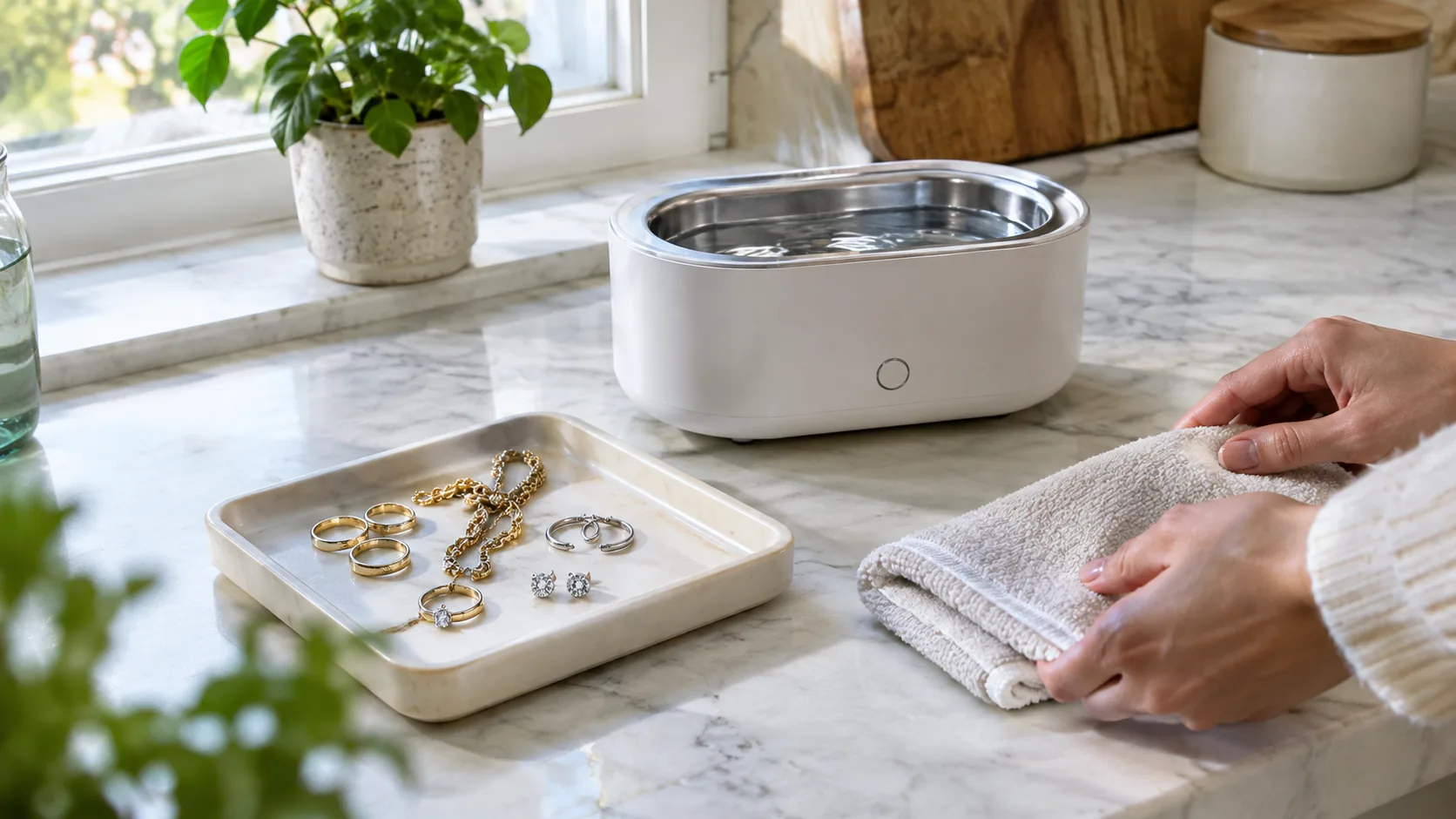
Cleaning jewelry in an ultrasonic cleaner is generally suited to hard, solid pieces such as gold, platinum, silver and natural, unfilled diamonds, sapphires and rubies. Fill the tank with water and a drop of mild soap, place items in the basket so they don't touch the tank floor, run a cycle, then rinse and dry. Skip porous, soft, glued or filled stones such as pearls, opals, turquoise and emeralds.
This guide gives you a metal-and-gem checklist, the solution choices, the cycle steps in order, a short troubleshooting list and the mistakes that damage pieces.
How an ultrasonic cleaner works on jewelry
An ultrasonic cleaner sends high-frequency sound waves through the water in its tank. The waves form tiny bubbles that burst against surfaces and loosen oils, lotion and grime. That matters for jewelry because dirt collects under stones, around prongs and inside chain links where a brush may not reach.
Ultrasonic cleaners are a familiar tool in the jewelry industry, and home countertop units follow the same idea on a smaller scale. The same action that lifts grime can also shake loose weak settings, crack stones that already have internal fractures, and strip surface finishes. So the real question is not only how to run the machine, but whether the piece is a candidate at all.
Which metals and gems can go in: a quick checklist
Check each piece before cleaning jewelry in an ultrasonic cleaner. When you are unsure about a stone, a jeweler can tell you whether it has been filled, coated or glued.
| Material | Ultrasonic cleaning | Notes |
|---|---|---|
| Gold (solid) | Usually fine | Check that stones are tight first |
| Platinum | Usually fine | Dense and sturdy; same stone checks apply |
| Sterling silver | Usually fine | Cleans oils; tarnish may need a separate polish step |
| Stainless steel, titanium | Usually fine | Solid pieces without glued parts |
| Diamond (natural, unfilled) | Usually fine | Skip if it is fracture-filled or loose |
| Sapphire, ruby (natural, unfilled) | Usually fine | Skip if cracked or filled |
| Emerald | Skip | Often oiled or filled; fractures can worsen |
| Pearls, coral, amber, ivory | Skip | Organic and soft; surfaces can dull or pit |
| Opal, turquoise, lapis, malachite | Skip | Porous or soft; can crack or lose color |
| Tanzanite, topaz, kunzite | Skip | Cleave along planes and can split |
| Costume jewelry | Skip | Glued stones and thin plating can come off |
| Plated or vermeil pieces | Use caution | Thin coatings can wear |
| Loose, repaired or vintage settings | Skip | Vibration can loosen stones |
Soft gemstones and other red flags
The term soft gemstones covers more than hardness on paper. Porous, oiled, filled, dyed or easily split stones all belong on the skip list. If any of these apply, leave the piece out:
- A stone that rattles or sits crooked in its setting.
- Visible cracks, clouding or cavities in a gem.
- Glue, wax or epoxy anywhere on the piece.
- Leather, wood, fabric or cord parts.
- Mixed pieces where one stone is on the skip list, even if the rest are fine.
Solution for an ultrasonic cleaner: what to put in the tank
Plain water is the starting point. A small amount of gentle cleaning solution helps break up oils and lotions. The right cleaning solution for an ultrasonic cleaner depends on the material, and the manual for your unit has the final word.
| Option | Use it for | Watch out for |
|---|---|---|
| Water only | Light dust, lightly worn pieces | May leave heavier oils behind |
| Water plus a drop of mild dish soap | Everyday rings, chains, earrings | Too much soap makes foam and needs more rinsing |
| Jewelry cleaning concentrate made for ultrasonic units | Heavier buildup on solid metals and hard stones | Follow the label for dilution and the materials it lists |
DIY mixes
If you want a DIY solution for an ultrasonic cleaner, mild dish soap in water is the simple, low-risk choice. Keep these out of the tank: bleach, solvents, flammable liquids, abrasive powders, ammonia mixes and anything the manual does not list. Mixing chemicals is a common source of damage and fumes. If you are not sure a liquid is appropriate, leave it out and use water.
Step-by-step: cleaning jewelry in an ultrasonic cleaner
- Inspect each piece. Use the checklist above and set aside anything doubtful.
- Fill the tank with water. Use the amount your unit calls for and do not run it empty.
- Add a drop of gentle solution if you want one. Start small.
- Load the basket. Keep items off the tank floor and avoid piling chains into a tangle. Leave space between pieces so hard stones and metal don't knock together.
- Choose a cycle. Pick a shorter cycle for light use and a longer one only for heavier buildup.
- Run it and watch the first use. Stop and check the pieces if anything sounds or looks off.
- Remove, rinse and dry. Rinse in clean water, pat dry with a soft cloth, and let pieces air dry fully before storing.
- Empty the tank and wipe it dry.
Field note
Do a quick eye check after the first run on any new piece: look at prongs and stone seats under good light. If a stone has shifted, stop using the cleaner on that piece and take it to a jeweler.
Ultrasonic, steam or hand cleaning: choosing a method
Ultrasonic is not the only way to restore how your jewelry looks. The right method depends on the piece, so match the method to the material rather than using one for everything.
| Method | Suits | Limits |
|---|---|---|
| Ultrasonic tank | Solid metals, hard unfilled stones, chains with tight links | Not for porous, glued, filled or loose pieces |
| Soft brush and mild soap | Pearls, opals, costume pieces, anything on the skip list | Harder to reach grime under stones and inside links |
| Steam | Sturdy solid pieces, if the maker allows it | Heat and pressure can affect filled or fractured stones |
| Jeweler cleaning | Valuable, antique or uncertain pieces | Requires a visit |
A brush and mild soap is the default for anything delicate. If you are weighing a jewelry steam cleaner machine instead, read its manual for what it allows, and apply the same stone checks.
A compact jewelry cleaner machine for rings, chains and eyeglasses
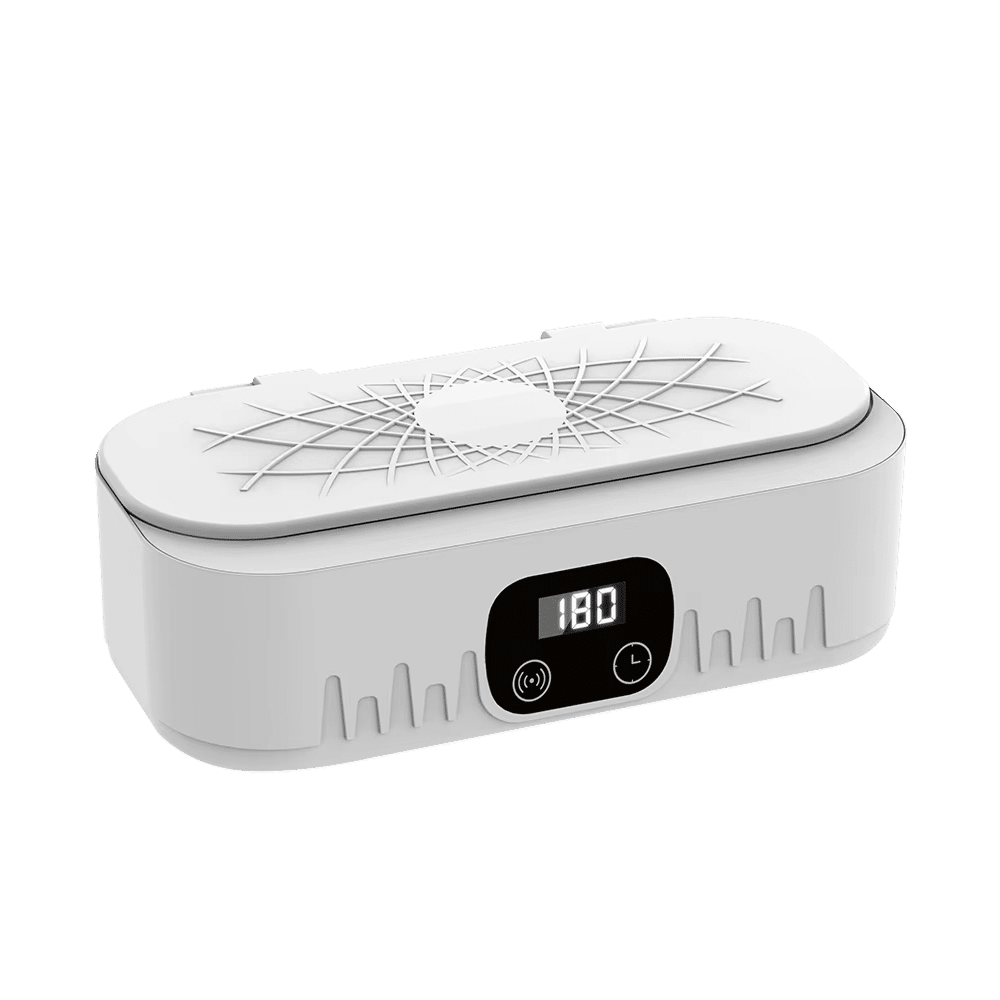
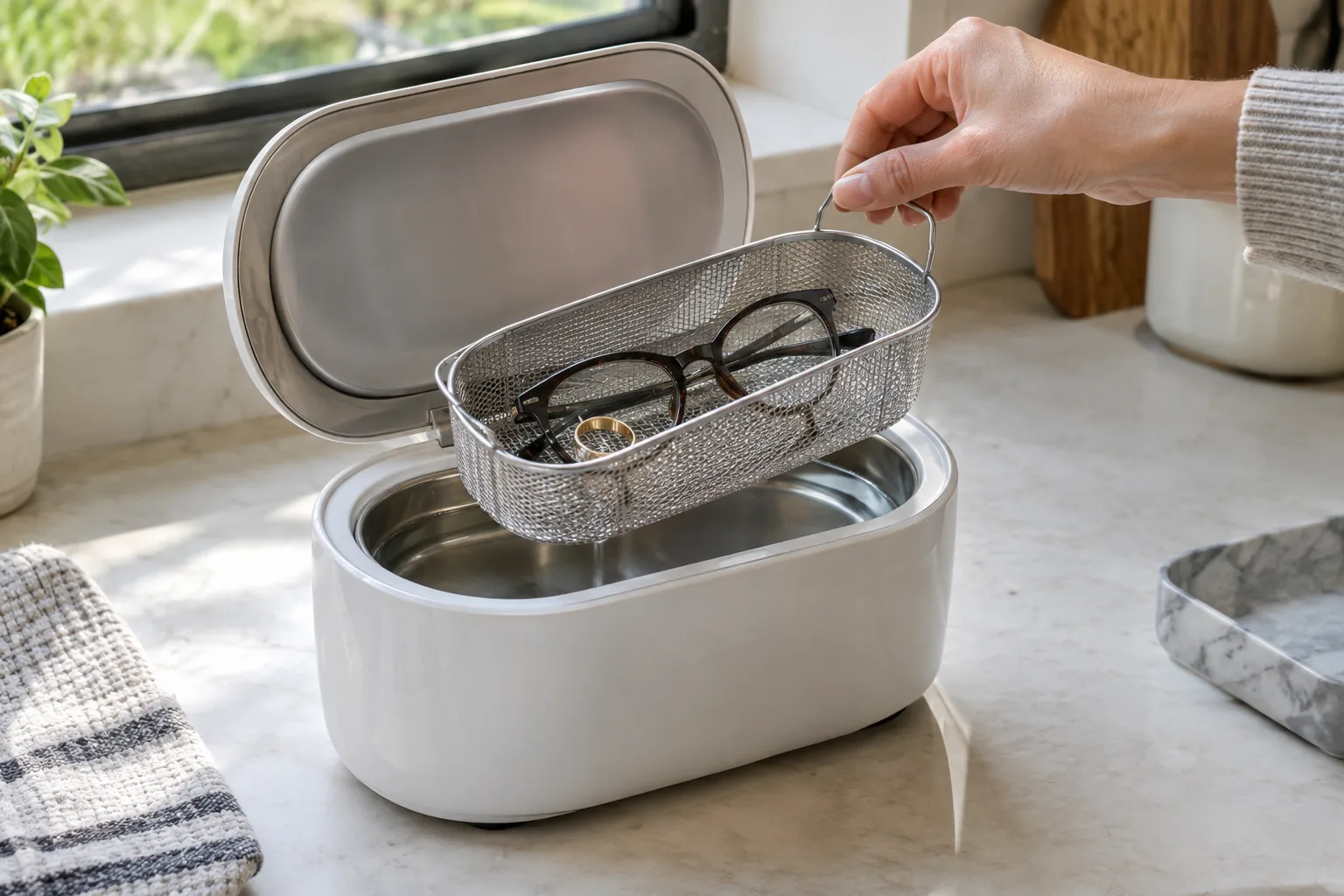
If you want a small countertop ultrasonic jewelry cleaner machine for this routine, ClaraWave is built for it. It has a 400ml tank made of 304 stainless steel, runs at 47kHz, and has a digital control panel with a cycle timer and cleaning modes. A protective basket holds items off the tank floor.
Water-level detection stops the cycle if the tank has no water, and the machine shuts off when the cycle ends. The box includes the unit, a protective storage box, a USB charging cable and a user manual.
 In this guideClaraWave$99.99View
Common mistakes, troubleshooting and care
Mistakes to avoid
Damage when cleaning jewelry in an ultrasonic cleaner often comes from a short list of habits:
- Running delicate stones "just once." Damage on a porous or fractured stone can happen on the first run.
- Putting items directly on the tank floor. Use the basket.
- Overloading the basket. Pieces that rub together can scratch.
- Using the wrong liquid. Stick with water, mild soap or a solution made for ultrasonic units.
- Skipping the rinse. Leftover solution can dull the finish.
- Ignoring the manual. Fill levels and cycle options differ between units.
When pieces still look dull
- Still grimy: brush gently with a soft toothbrush where the bubbles loosened buildup, then rinse again.
- Dark or tarnished silver: ultrasonic action lifts oils, but tarnish is a surface reaction. Use a silver polishing cloth afterward.
- Cloudy film: usually leftover soap. Rinse longer in clean water.
- Loose stone or rattle: stop, keep the piece out of the tank, and see a jeweler.
Caring for the cleaner
Unplug the unit before wiping it down. Empty the tank after each session, wipe the stainless steel dry, and let it air out before storing it in its protective storage box. Change the water between sessions rather than reusing dirty cleaning liquid.
Other items you might put in the tank
Jewelry is the main use, but the same tank-and-basket idea applies to other items. Handle each with the same caution: check the material, then the manual.
Eyeglasses and watches
An ultrasonic spectacles cleaner routine is similar to jewelry. Metal frames and glass lenses are common candidates, but coated lenses, glued parts, and frames with special finishes can be affected, so check with your optician or the frame maker first. For watches, follow the watch maker's guidance, and take off leather or fabric bands before any cleaning.
Dentures
If you are considering cleaning dentures with an ultrasonic cleaner, note that denture materials and any metal parts vary. Ask your dentist or follow the denture maker's care instructions before putting them in any machine. A jewelry unit is not a substitute for that guidance.
Firearm parts
Cleaning guns in an ultrasonic cleaner is a different job from jewelry. It involves solvents, residues and finishes that a small jewelry tank is not meant for. Follow the firearm manufacturer's instructions, make sure the firearm is unloaded and parts are separated, and use only equipment and solutions the cleaner's maker lists for that purpose.
For other household sanitizing and specialty jobs, browse Steam, Sanitizing & Specialty Cleaners.