Electric Lawn Mower Recommendations by Yard Size and Terrain
Match deck width, battery capacity and drive type to your lot size and slope, not to a brand ranking. This guide gives you the decision steps and a sizing table.
The Cobalt Hollow Team
October 20, 2026 · 9 min read
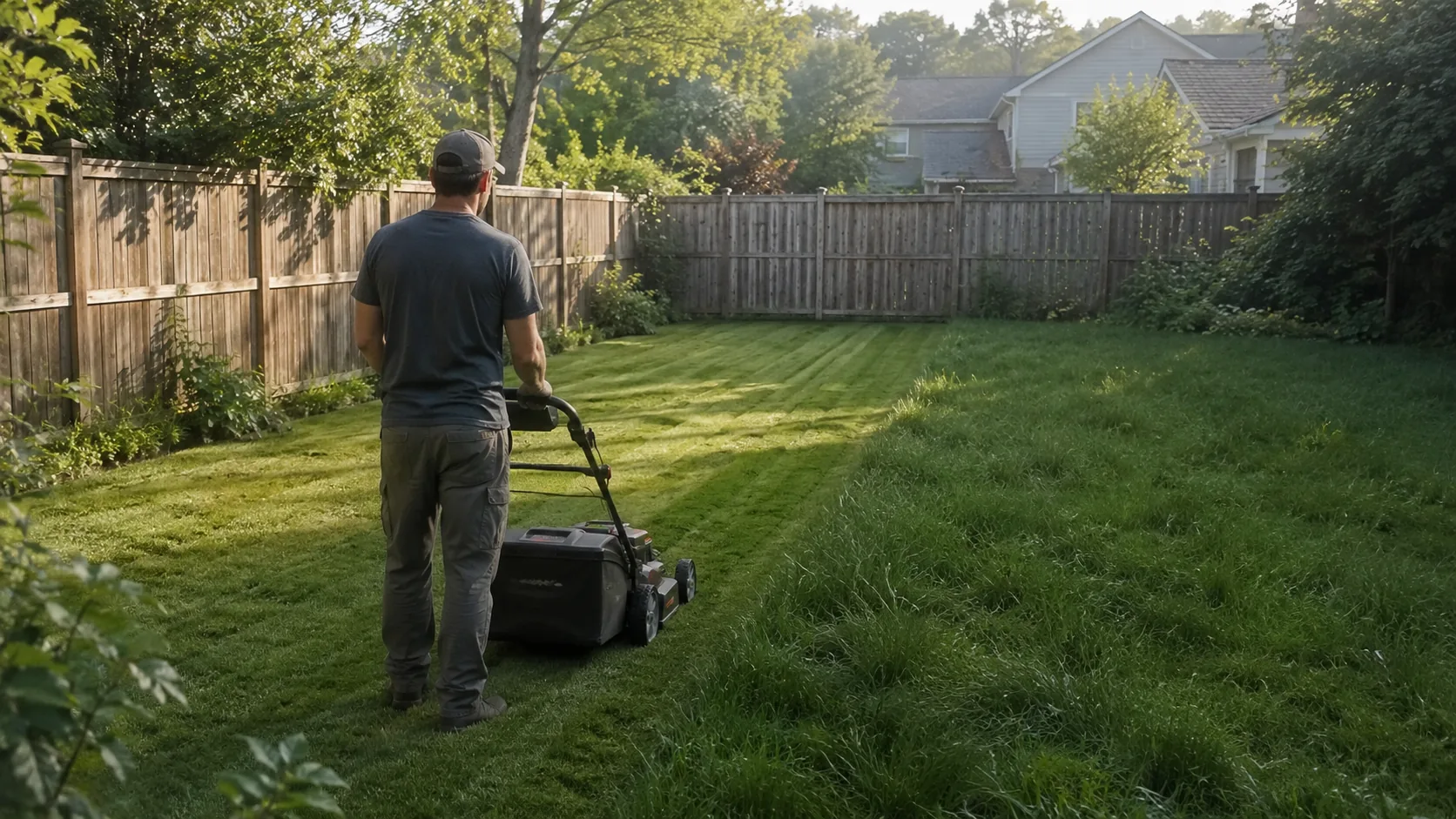
The right electric lawn mower recommendations start with your lawn, not a brand list: pick the deck width by lot size, the battery capacity by how much grass you cut per session, and the drive type by slope and ground. Small, flat lots suit a light push model, medium lots call for a wider deck and a spare battery, and large or hilly lots call for self-propelled drive or a riding mower.
Below you will find a sizing table, a terrain guide, a battery checklist, a cutting-features rundown, a push vs self-propelled vs riding comparison and the mistakes that lead to a mower that does not fit the job.
Step 1: Measure the lawn before you shop
Spec sheets make more sense once you know your mowable area. Walk the lawn and note the length and width of each section. Multiply the two for every rectangular section, add the results, then subtract beds, patios and the house footprint. A rough estimate in square feet is enough.
For scale, one acre is 43,560 square feet, so 1/8 acre is about 5,400 square feet and 1/2 acre is about 21,800 square feet.
Also note what is on the ground. Slope and gates matter as much as acreage: a narrow side-yard gate limits deck width, and a steep bank changes the drive type you need.
- Total mowable area, split into front, back and side sections
- Narrowest gate or path the mower must pass through
- Steepest slope you mow and how long it is
- Obstacles: trees, play sets, garden beds, fence lines
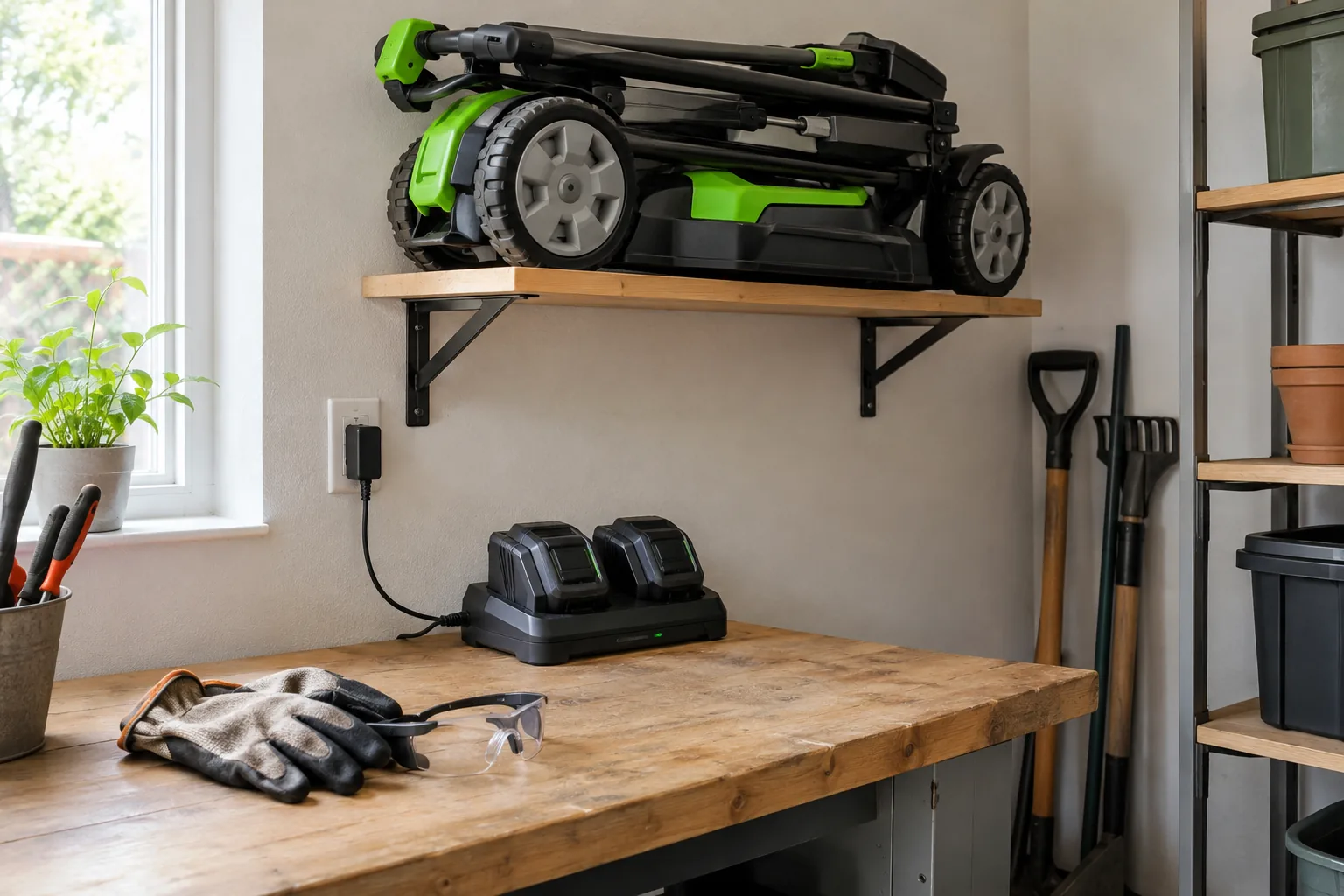
- Where you will store and charge the mower

Electric lawn mower recommendations by yard size
Use the table as a starting point. The bands are rough planning figures, and your grass height, density and moisture change how much one battery can cut. Check the manufacturer's stated runtime for the mode you will use, and read the manual.
| Yard size (rough band) | Deck width to look for | Drive type | Battery setup |
|---|---|---|---|
| Small: under about 1/8 acre | Compact push deck, roughly 15 to 20 inches | Push, no drive needed on flat ground | One battery, plus a charger within reach |
| Medium: about 1/8 to 1/2 acre | Mid-width deck, roughly 20 to 22 inches | Push on flat lots, self-propelled with slopes | Two batteries, so you can swap mid-job |
| Large: over about 1/2 acre | Wide deck, 21 inches and up, or a riding mower | Self-propelled walk-behind or electric riding mower | Multiple batteries or a riding mower's built-in pack |
Small yards
On a small lot, weight and storage matter more than a wide deck. A light compact push mower that folds or stands upright takes little garage space and turns around beds in tight room. Electric models have no fuel or oil to store, which suits a shared garage shelf.
Medium yards
Here a wider deck covers more width per pass, but only if it fits through your gates. A spare battery deserves as much thought as the motor, because stopping mid-lawn to recharge breaks up the job.
Large yards
Past roughly half an acre, walking behind a mower means a long time on your feet. Look at a self-propelled drive or an electric riding mower. Riding models have their own battery, charging and storage needs, so read the manual and plan a dedicated charging spot.
Match drive type and battery to your terrain
Drive type decides how much of the work the mower does, especially on slopes. Terrain also affects how clippings are collected or spread.
Drive type by terrain
| Terrain | Drive type to consider | What to check |
|---|---|---|
| Flat, open lawn | Push | Handle height and weight when you lift it |
| Gentle slopes | Self-propelled, rear-wheel or all-wheel | Wheel traction and adjustable speed |
| Uneven or bumpy ground | Larger rear wheels, adjustable deck height | Deck height range so the blade clears humps |
| Tight beds and fence lines | Light, cordless trimmer-style mower | Turning room and no cord to snag |
| Rough patches with weeds or light brush | Mower with interchangeable blades | Blade type matches the growth you cut |
On any slope, follow the manufacturer's manual for slope limits and mowing direction, and wear closed-toe shoes with good grip. If a slope feels steep to walk, ask a professional about equipment built for it.
Size the battery to the job
Listed battery runtime comes from specific conditions, and thick, damp or tall grass draws more charge. Plan around how many sections you mow, not the headline number.
- Look at battery capacity and voltage together, since both describe what the pack holds and delivers.
- Check whether the batteries are interchangeable with other cordless tools you own.
- Confirm the charger is included, and that you have an outlet near where you store the mower.
- For lawns you cut in two sessions, a second pack lets you charge one while using the other.
Cold weather and aging packs change runtime too, so store and charge batteries as the manual directs. If you mow in self-propelled mode, check whether the drive speed adjusts so you can set it to your walking pace.
Choose cutting features that fit your grass
Three terms show up on every spec sheet: mulching, bagging and side discharge. They describe where the clippings go, and each suits a different routine.
- Mulching cuts clippings fine and drops them back on the lawn. It suits regular mowing when the grass is not overgrown.
- Bagging collects grass clippings for disposal or composting, which suits a lawn you are about to seed or grass that has gone long.
- Side discharge throws clippings out to the side of the cutting deck, which can suit taller or damper growth.
Deck height adjustment is the other feature to check. A wide range lets you raise the cut for summer and lower it in cooler months.
Cut quality also depends on the blade. A dull or nicked blade tears grass rather than slicing it, so plan to sharpen or replace blades on the schedule in the manual. Mowing on a regular rhythm keeps clippings short, which suits mulching.
A lightweight option for edges, weeds and small patches
Not every lawn job needs a full deck mower. If you have small turf areas, fence lines or overgrown corners, a light cordless tool can cover those spots, or sit alongside a larger mower.
The SwiftBlade Pro is a cordless electric lawn mower with a foldable frame and a height-adjustable handle. It weighs approximately 7.5 pounds without a battery, and the frame folds for carrying and storage.
It takes three blade types in the same mower: plastic blades for lawn grass, flat steel blades for weeds, and a 6-inch circular saw blade for light brush. A quick-release system holds each one. A brushless motor drives the blade, and there is no power cord to drag along the ground, so you can work along fence lines and around tight corners.
Two lithium batteries come in the set. You run one, and when it runs low you snap in the second, then charge the spare with the US power adapter while you keep working. The box also includes safety goggles, protective gloves, a grass guard, an accessory tool set and an English instruction manual. Follow the manual, and wear the goggles and gloves when you swap blades or mow.
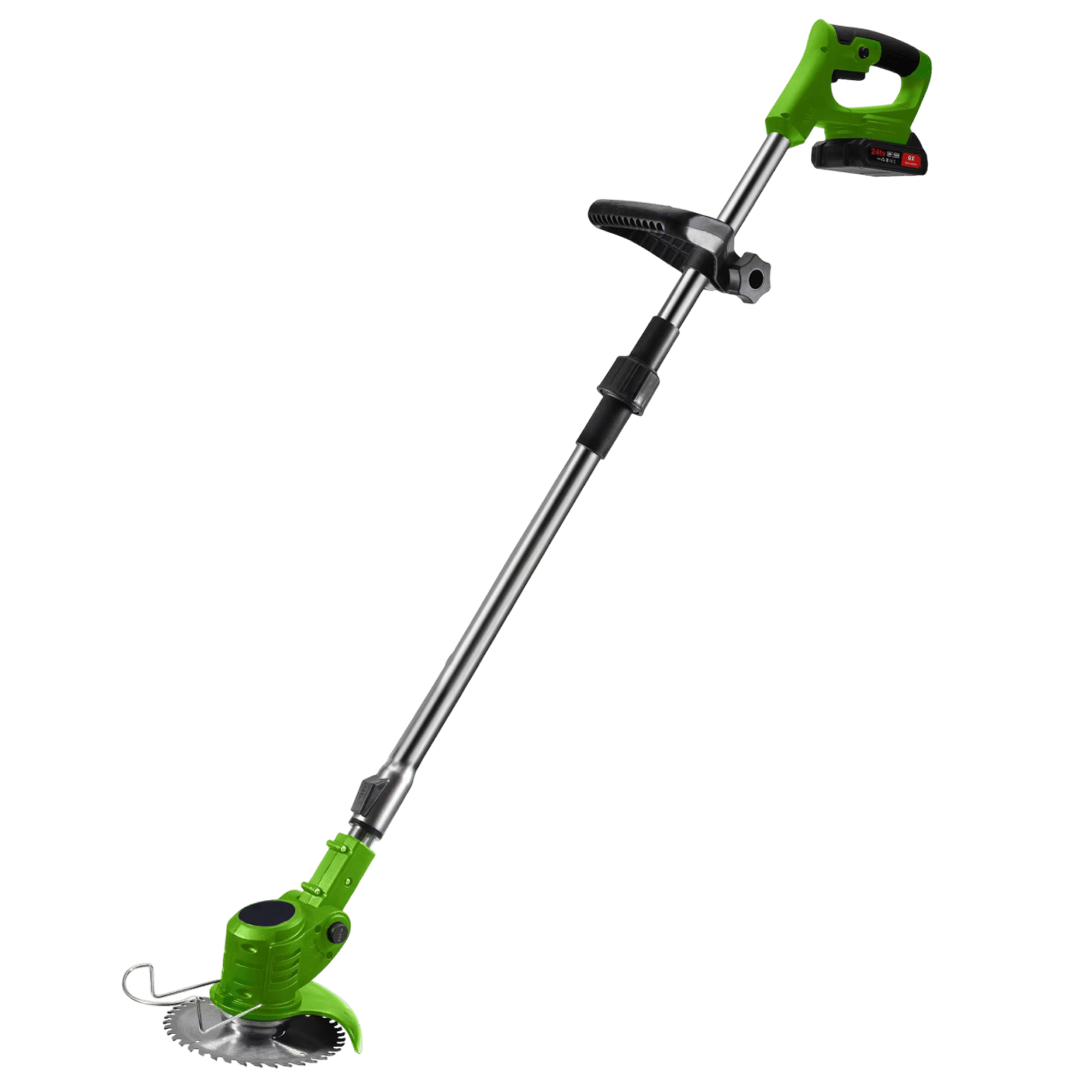 In this guideSwiftBlade Pro$199.99View
Field note
Charge every battery the evening before you mow, and put the spare on the charger as soon as you swap packs. Then a second session does not wait on a charger.
Push, self-propelled or riding: how the three compare
Once you know your area and terrain, the choice narrows to three formats. This table sets out what each one asks of you.
| Format | Suits | You provide | Plan for |
|---|---|---|---|
| Push | Small to medium flat lawns | All the forward effort | Weight when lifting and storing |
| Self-propelled | Medium to large lawns, slopes, uneven ground | Steering and pace | Drive speed control, wheel traction |
| Riding | Large lots with open runs | Steering and seat time | Garage space, charging spot, storage of the pack |
A walk-behind mower stays simple to store, while a riding unit needs room and a plan. If your lawn is mostly open grass with few obstacles, riding becomes worth weighing. If it is cut up by beds, trees and gates, a walk-behind model with a narrower deck often fits the layout.
Riding and larger electric mowers
If your lot is large, an electric riding mower is the next step to weigh. Judge it by the same three questions as any other model: deck width for your gates and obstacles, battery capacity for the area you cut per session, and drive and traction for your slopes.
Controls and seat layout
Sit on the mower in the store if you can, or study the manual's diagrams. Check that you can reach the pedals, steering and any levers without stretching, and that the seat position suits your height. Look at where the controls for drive direction, speed and blade engagement sit, and how the blade engages and stops.
Deck and cutting settings
Check how deck height is adjusted on a riding model, whether by lever, dial or another control, and how many cutting positions it offers. Also look at whether it offers mulching, bagging or side discharge, since riding mowers vary in which of these they support.
Fit, charging and storage
- Overall width and length against your garage door and storage space.
- Turning room around trees, beds and play sets.
- Where the charger plugs in and how far the cord reaches.
- Slope limits and operating rules in the manual, which apply to riding models in particular.
- Winter storage for the unit and its battery pack, as the manual directs.
Ask a licensed electrician if you need a new outlet or circuit. For broader buying guidance on electric yard equipment, see NYSERDA's electric yard equipment guide.
Common mistakes and a quick checklist before you buy
Mistakes to avoid
- Buying a wide deck that does not fit through your narrowest gate.
- Judging runtime by the box figure alone, without allowing for thick or damp grass.
- Choosing a push mower for a sloped lawn you mow every week.
- Ignoring battery compatibility with the tools you already own.
- Skipping blade upkeep, then blaming the motor for ragged cuts.
- Mowing wet grass, which clogs the deck and leaves clumps.
Checklist
Run through these questions before you settle on any of the electric lawn mower recommendations you read, including this one.
| Question | Your answer decides |
|---|---|
| How many square feet will you mow per session? | Deck width and number of batteries |
| Is the lawn flat, sloped or uneven? | Push or self-propelled drive, wheel size |
| How wide is your narrowest gate? | Maximum deck width |
| Do you bag, mulch or side-discharge? | Deck design and bag included |
| Where will it be stored and charged? | Foldable or upright storage, outlet location |
| Do you own other cordless tools? | Battery platform to match |
For more tools for a hand-maintained yard, browse the Lawn, Yard & Snow Care collection.
Care and storage routine
A short routine keeps a mower working through the season. Remove the battery before you clean or change a blade, and follow the manual for cleaning the deck.
- After each mow: remove the battery, brush off clippings and wipe the deck.
- Each month in season: inspect the blade for dull edges, nicks or bends and replace as needed.
- Before winter: clean the mower, check fasteners and store it and the batteries indoors as the manual directs.
Some local programs publish guidance on electric mowers, including Concord, MA, which is worth a look for general use and battery handling notes.