What Is a Hose Bib? Types, Anti-Siphon and Frost-Free Explained
A hose bib is the outdoor faucet with a threaded outlet that a garden hose screws onto. This guide compares the types, shows what fits on it, and covers winter prep.
The Cobalt Hollow Team
November 16, 2026 · 9 min read
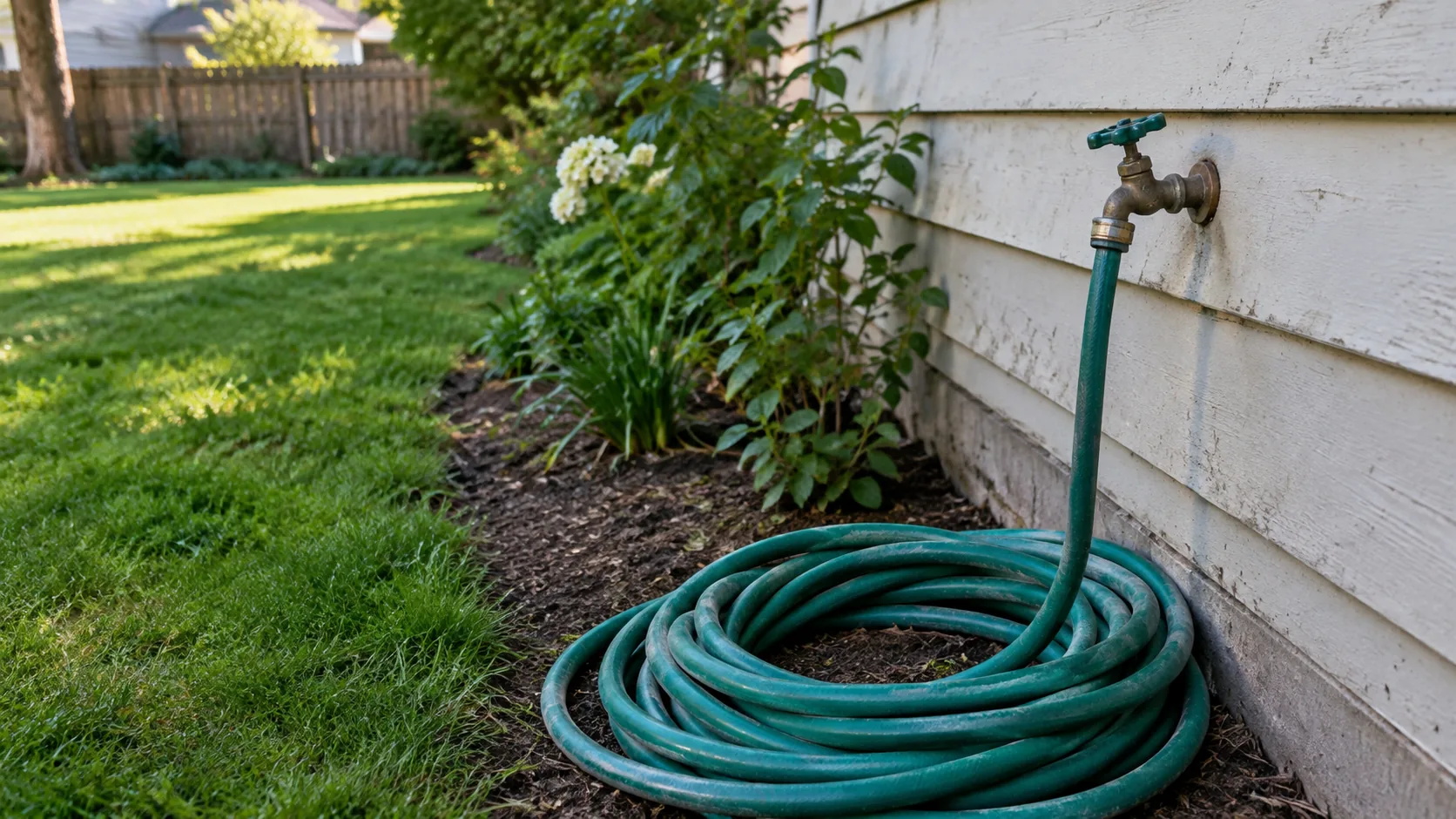
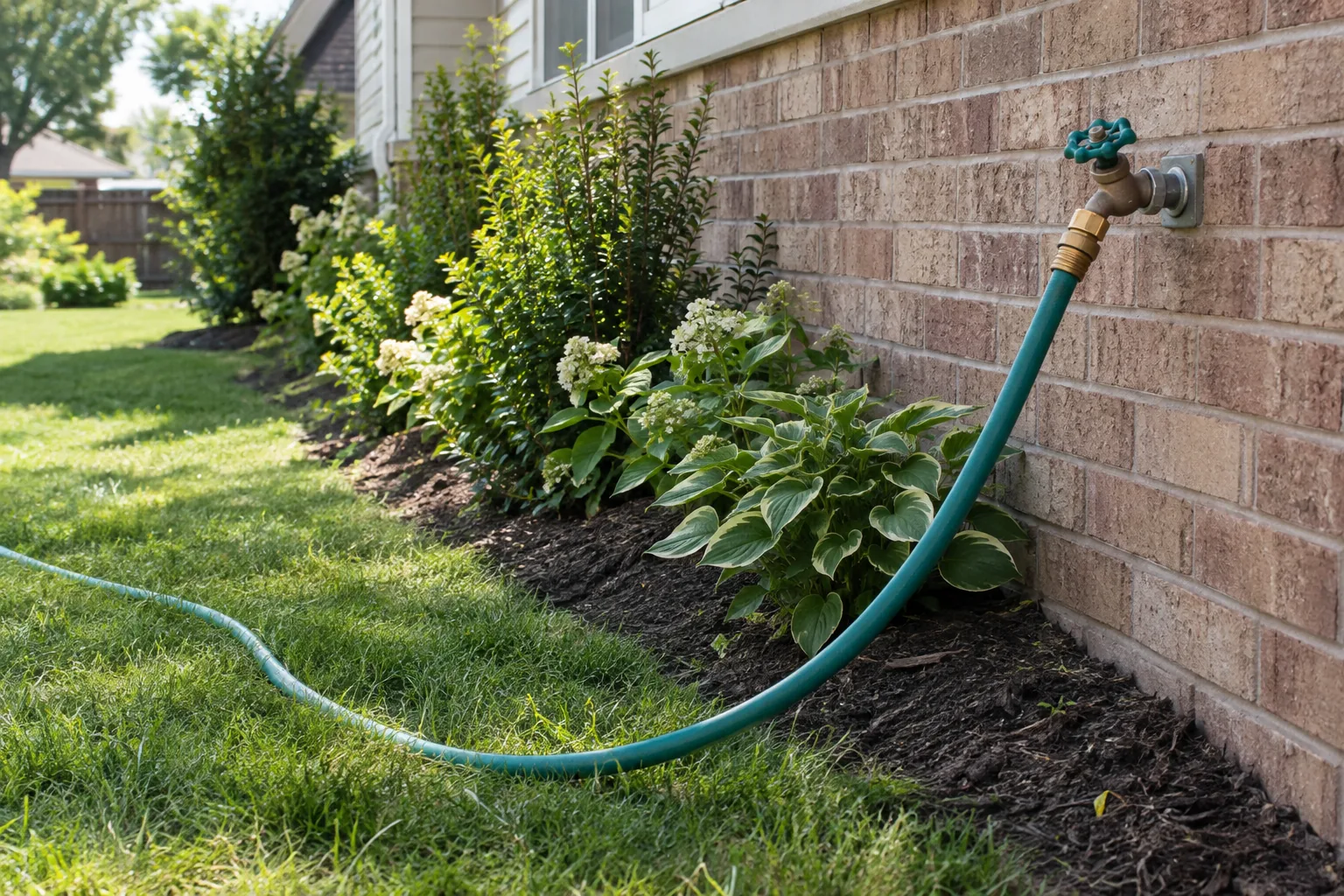
What is a hose bib? It is an outdoor faucet with a threaded outlet that a garden hose screws onto, mounted on an exterior wall and fed by the home's water supply. You may also hear it called a spigot, a hose bibb or an outdoor faucet, and all four names point to the same fixture.
The type you have decides how it handles backflow prevention and winter freezing, so it is worth identifying before you attach anything to it.
What is a hose bib, and why is it called a bib?
A hose bib is a small valve at the end of a pipe that runs through your wall to the outside. Turn the handle and water flows out of a spout with a 3/4-inch male thread, the standard size on US outdoor spigots. A hose, timer, sprayer or sprinkler threads onto that spout.
The name comes from an older plumbing term for a tap whose spout bends downward. Some sources spell it bibb, which is the same word with a different spelling. In everyday talk, "bib tap," "bibb" and "hose bib" are interchangeable.
Hose bib vs spigot vs faucet
In everyday use, hose bib and spigot mean the same thing. Some plumbers use spigot for the spout and hose bib for the whole valve. A faucet is the broader word for any tap, indoors or out, and an indoor faucet typically has a smooth spout meant for filling a sink rather than a threaded one for a hose.
So a hose bib is a kind of faucet, built for outdoor water and threaded for hose connections.
Hose bib types compared
Once you know what a hose bib is, the next step is sorting out the designs. Three basic ones exist, and some fixtures combine two of them. Check the table and then look at your own fixture.
| Type | How it works | Where it fits | Watch for |
|---|---|---|---|
| Standard | Simple valve with a threaded spout; the stem and seat sit right behind the handle | Mild climates, older homes | Water stays in the short pipe section, so it can freeze when temperatures drop |
| Anti-siphon | Built-in vacuum breaker that lets air in if pressure drops, designed to keep water from being pulled back into the house supply | Newer installs and places with backflow rules | A hose left attached and pressurized can make the breaker leak at the cap |
| Frost-free | Long stem puts the valve seat inside the warm part of the wall, and the pipe slopes to drain | Colder climates with harsh winters | Must slope slightly downward, and a hose left on can trap water |
| Frost-free with anti-siphon | Long stem plus vacuum breaker | Cold regions with backflow rules | Needs both the winter and the hose-removal steps |
How an anti-siphon hose bib works
Think of a hose left in a bucket of fertilizer or a pool. If the house water pressure drops, that water could be drawn backward into your pipes. A vacuum breaker opens to air at that moment and breaks the siphon. This is the purpose of backflow prevention on potable water lines, and local plumbing codes often require it on new work.
How a frost-free hose bib works
On a standard fixture, the valve sits at the outer wall, so water sits in the exposed section. A frost-free design moves the shutoff to the end of a long stem that reaches inside the heated part of the house. When you close the handle, the water is shut off well inside the wall, and the exposed barrel drains out through the spout. That drain only works if the hose is removed and the fixture tilts slightly downward.
Common body materials
Hose bib bodies are commonly made of brass, and you will also see copper, stainless steel and plastic. Brass and copper tend to appear on traditional metal fixtures, stainless steel on some newer or decorative models, and plastic on light-duty or temporary taps. Look for markings on the body or check the product label to see what yours is made from, and match a replacement to your pipe connection.
How to tell which hose bib you have
You do not need tools for a first look. Walk outside and work through this checklist.
- Look at the spout. A small cap or a round, vented knob on top or on the back is a vacuum breaker, which means anti-siphon.
- Look at the length of the body. A barrel that extends several inches or more out from the wall is often a frost-free model.
- Check the handle. A lever or knob sits on the stem in both designs, so the handle alone does not tell you.
- Look for stamped markings on the body or cap, which may name the type.
- Check inside. From a basement or crawl space, find where the pipe enters the wall and look for a shutoff valve on the line.
Plumbing plans and blueprints mark a hose bibb with a symbol, often labeled HB, which helps when you read a drawing of the house. If you cannot tell which type you have, ask a plumber to identify it on a visit. Local code can also set which type is allowed, and a plumber will know it.
What fits on a hose bib
Most US hose bibs use the standard 3/4-inch garden hose thread, so the add-ons are the same whatever the type. The pieces below thread on by hand, and all of them come off before cold weather on every type.
Hoses
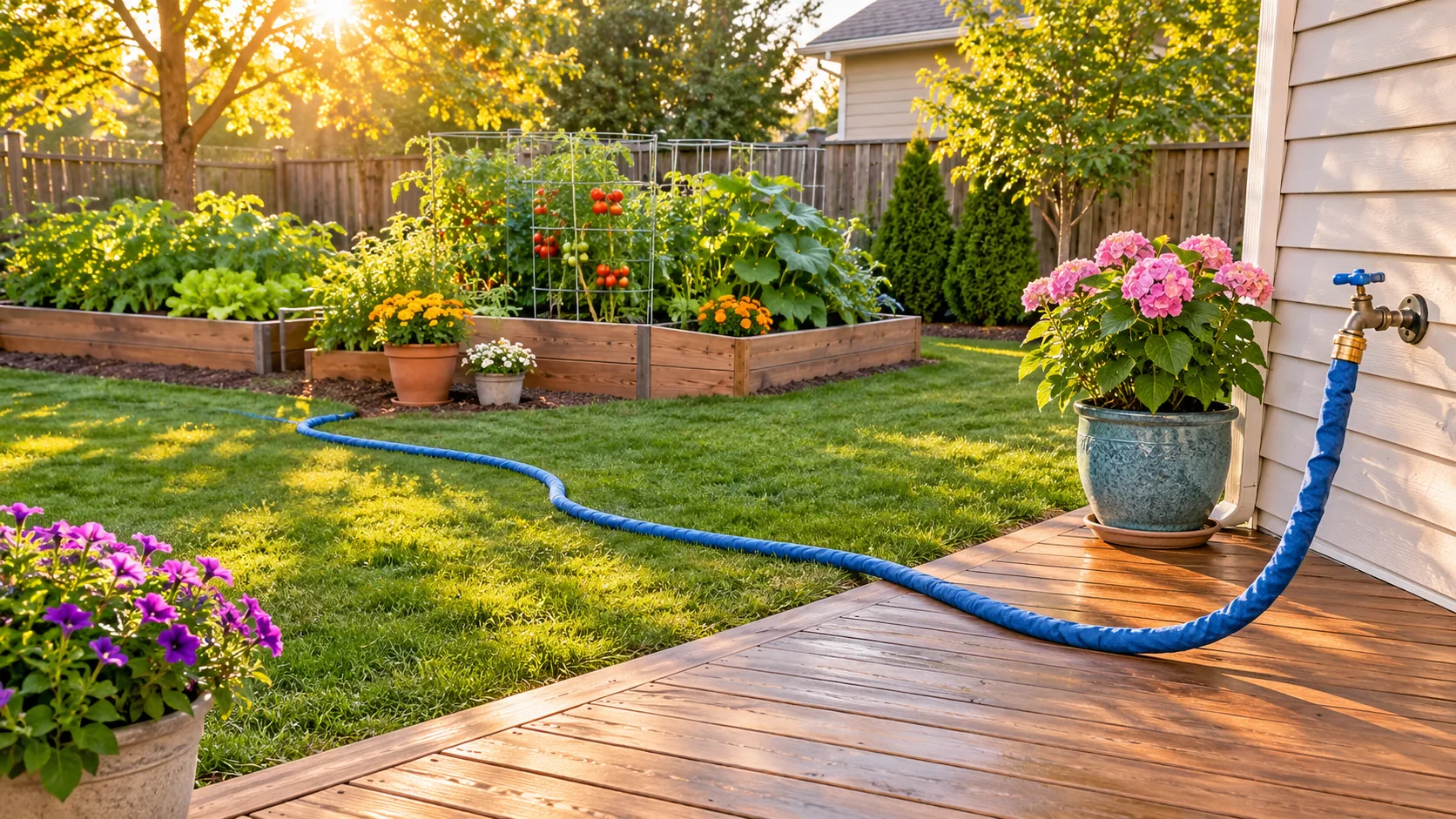
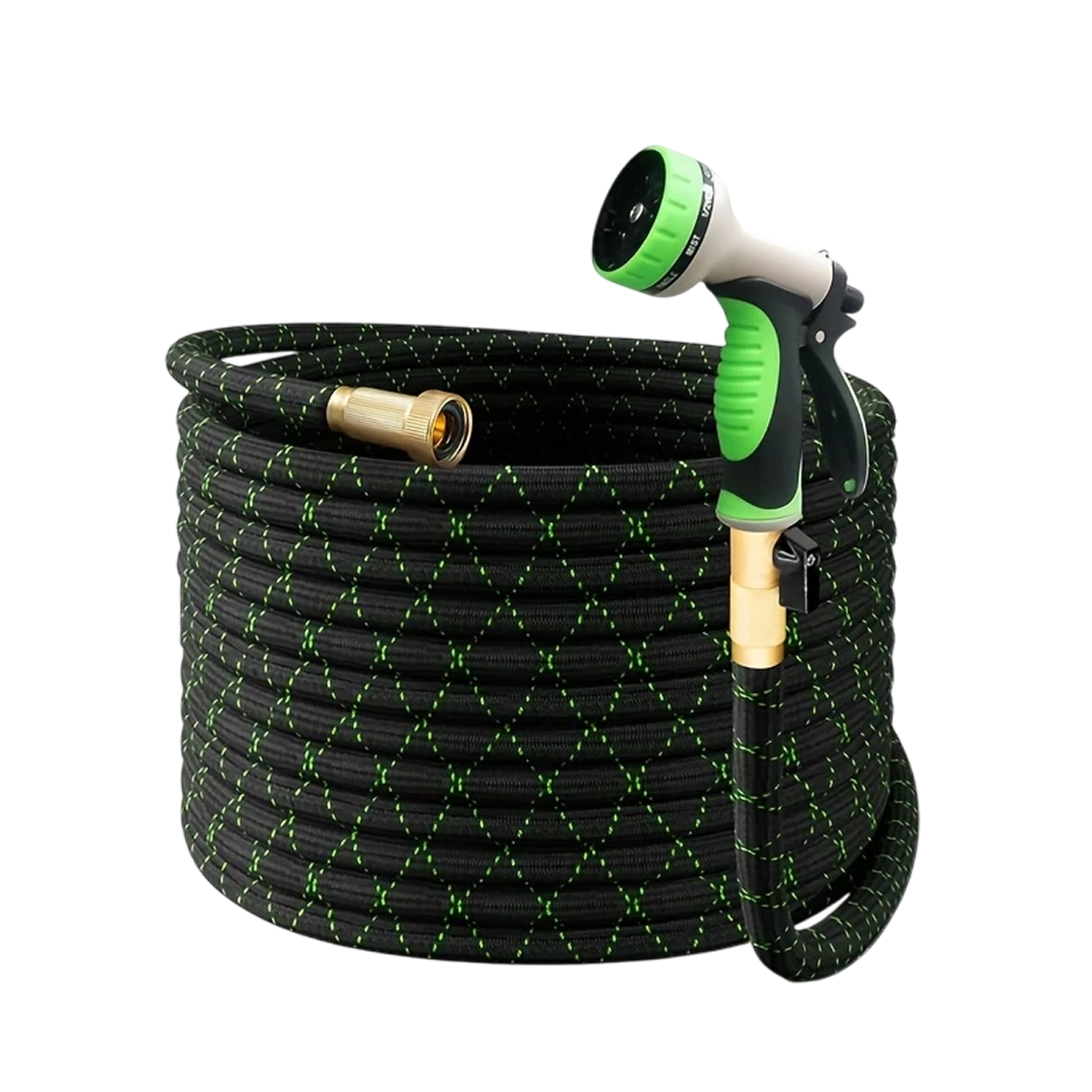
A standard garden hose screws on with a hand-tightened collar. If your spigot is on a patio, deck or beside an RV bay, a short-storage option helps. The BrassCoil is an expandable hose with a multilayer latex core and a fabric outer. It measures 16.6 ft contracted and 50 ft expanded, and its faucet end is a 3/4-inch GHT thread with solid brass fittings at both ends.
To use it, screw the brass collar onto the faucet by hand, attach the thumb-control nozzle to the far end, unroll the hose and open the spigot. The hose extends as water fills it. When you finish, close the spigot, open the nozzle to drain, and let it contract before placing it in the drawstring storage bag.
 In this guideBrassCoil$119.99View
Timers
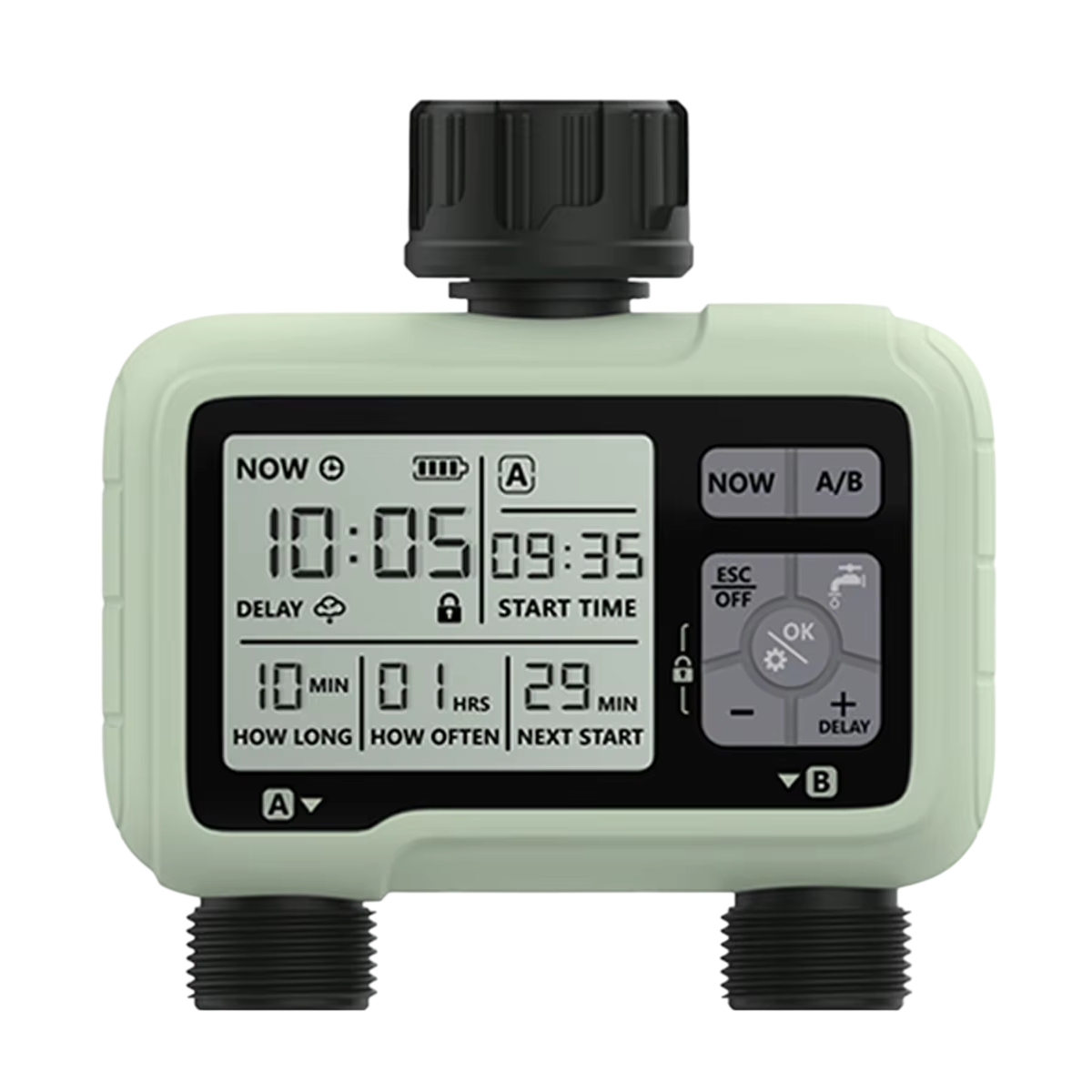
A hose timer attaches between the hose bib and the hose, so the water follows a schedule instead of your memory. The HydroTempo threads onto a standard hose connection by hand, with no tools. You set watering days with its LCD display and buttons, with separate weekday and weekend plans, and a one-tap manual override starts an extra run without reprogramming. It controls the flow to a standard hose, drip line or soaker hose.
 In this guideHydroTempo$59.99View
Filters, splitters and other fittings
Filters, two-way splitters and connector ends also use the same thread. Add them in a sensible order: the timer or splitter nearest the spigot, then the hose. Use a rubber washer inside each female connector, and replace it when it flattens or cracks. The set of replacement rubber washer seals included with BrassCoil is one example.
For larger watering setups, browse the Watering & Irrigation collection. If you are planning permanent zones rather than a hose, our sprinkler system installation guide covers zones, pipe, heads and the controller.
Field note
Hand-tighten every hose connection and add a washer if one drips. Wrenches can crush the threads or the washer on a hose bib.
Replacing a hose bib: plumber, cost and plumbing basics
Replacing a hose bib can be a small job or a larger one, depending on how it is connected inside the wall. A threaded or compression fixture on an accessible shutoff may be a do-it-yourself swap. A soldered copper connection, a pipe in a finished wall or a fixture with signs of a leak inside is a plumber's job.
Do you need a plumber to replace a spigot?
Not always. If you can shut off the water to that line, the fixture screws or compresses on, and you are comfortable with the tools, you can replace it yourself. Call a plumber if the work involves soldering, cutting into a wall, or switching to a frost-free model that must slope correctly. Follow the manufacturer's instructions and local code, and shut off and drain the line before starting.
How much does it cost?
The cost depends on your region, the fixture type, access to the pipe and whether the plumber must open a wall. Ask for a written quote from a licensed plumber, and compare a swap of the same type with a conversion to frost-free, since the second takes more work.
How to plumb a hose bib
New hose bibs connect to a cold-water line, usually through a shutoff valve inside the house so that you can isolate it for the winter. Soldered copper, threaded fittings and push-fit fittings are all used. Frost-free models slope slightly down toward the outside so the barrel drains. Because this involves cutting into the supply, have a plumber do the work if you are unsure.
Winter prep for a hose bib
Frozen water expands, and a split pipe inside a wall may not show until spring. This schedule applies to any type, with extra attention to standard fixtures.
| Step | What to do | Why |
|---|---|---|
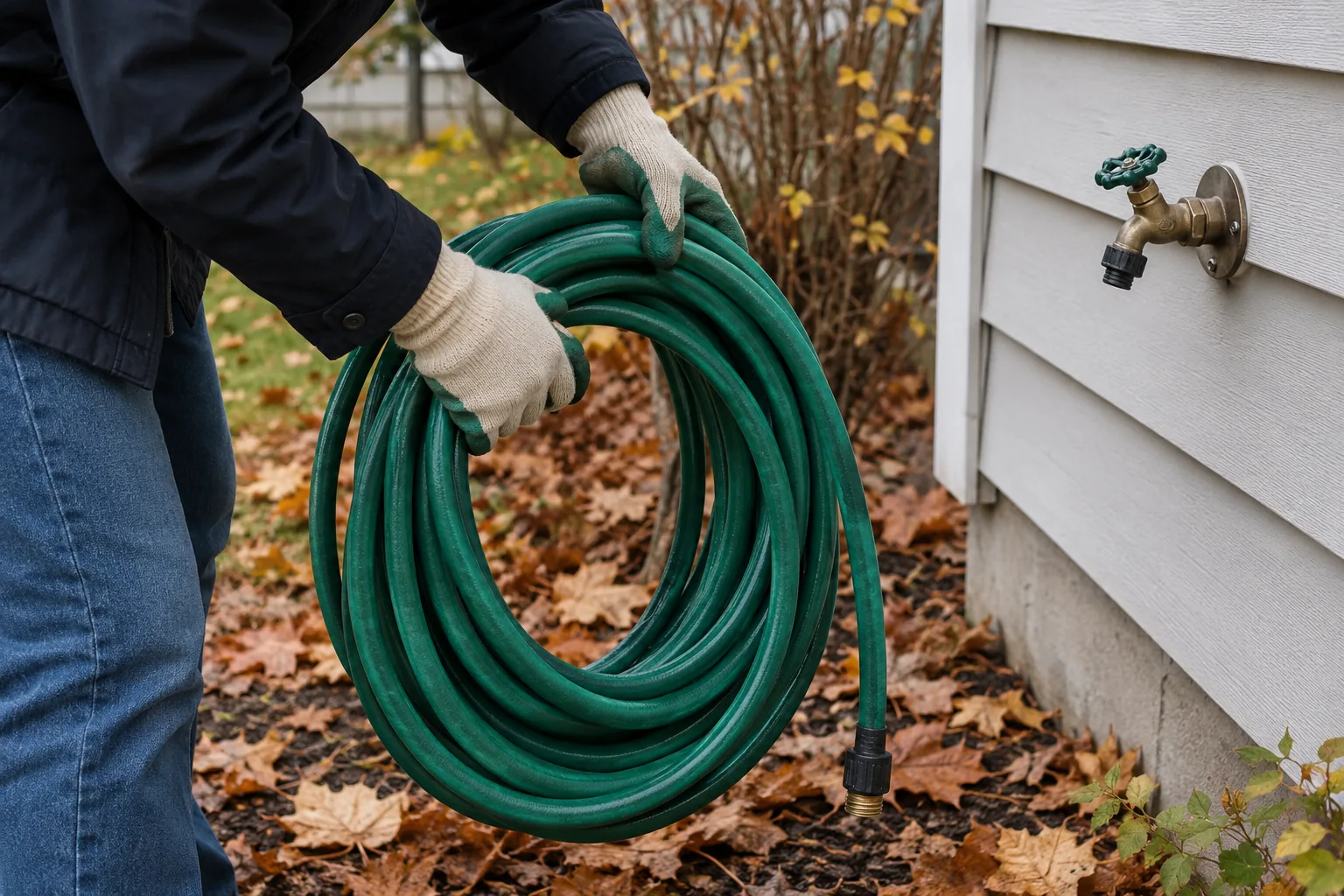
| 1 | Disconnect hoses, timers, splitters and filters before the first hard freeze | Attached gear traps water in the spout and barrel |
| 2 | Drain each hose and store it; open the nozzle to drain an expandable hose with the spigot shut off | Water left inside can freeze |
| 3 | Close the interior shutoff valve to the line, if there is one | Cuts off supply to the outside section |
| 4 | Open the outdoor handle to let the remaining water drain | Empties the pipe past the valve |
| 5 | Leave the handle open or follow the manual, and add an insulated cover if you use one | Gives any remaining water room to expand |
| 6 | In spring, close the handle, reopen the shutoff and check for drips | A drip inside the wall can point to a split pipe |
Store timers indoors and follow the manual's storage notes. Remove the hose from a frost-free model every time, because a connected hose can hold water in the barrel and defeat the slope.
Common hose bib mistakes
- Leaving a hose attached all winter, which traps water in the spout.
- Cranking on connections with a wrench instead of using a washer.
- Ignoring a drip at the handle or the vacuum breaker; replace worn washers or packing, or call a plumber.
- Installing a frost-free bib level or tilted upward, which keeps water in the barrel.
- Capping or blocking the vacuum breaker, which defeats its purpose.
- Putting a hose in a pool or chemical bucket with a standard bib and no backflow device.
Once you know what a hose bib is and which type you have, the routine is short: attach gear by hand, watch for drips, and clear the line before freezing weather. For related outdoor watering planning, our guide to the standard rain gauge shows how to record rainfall so you know when the hose needs to run.