Mouse in a Trap: What to Do Next, Disposal and Resetting
Found a mouse in a trap? Put on gloves, check whether it is alive, bag a dead mouse, dispose of it outdoors, clean the trap and area, then review placement before you reset.
The Cobalt Hollow Team
November 17, 2026 · 6 min read
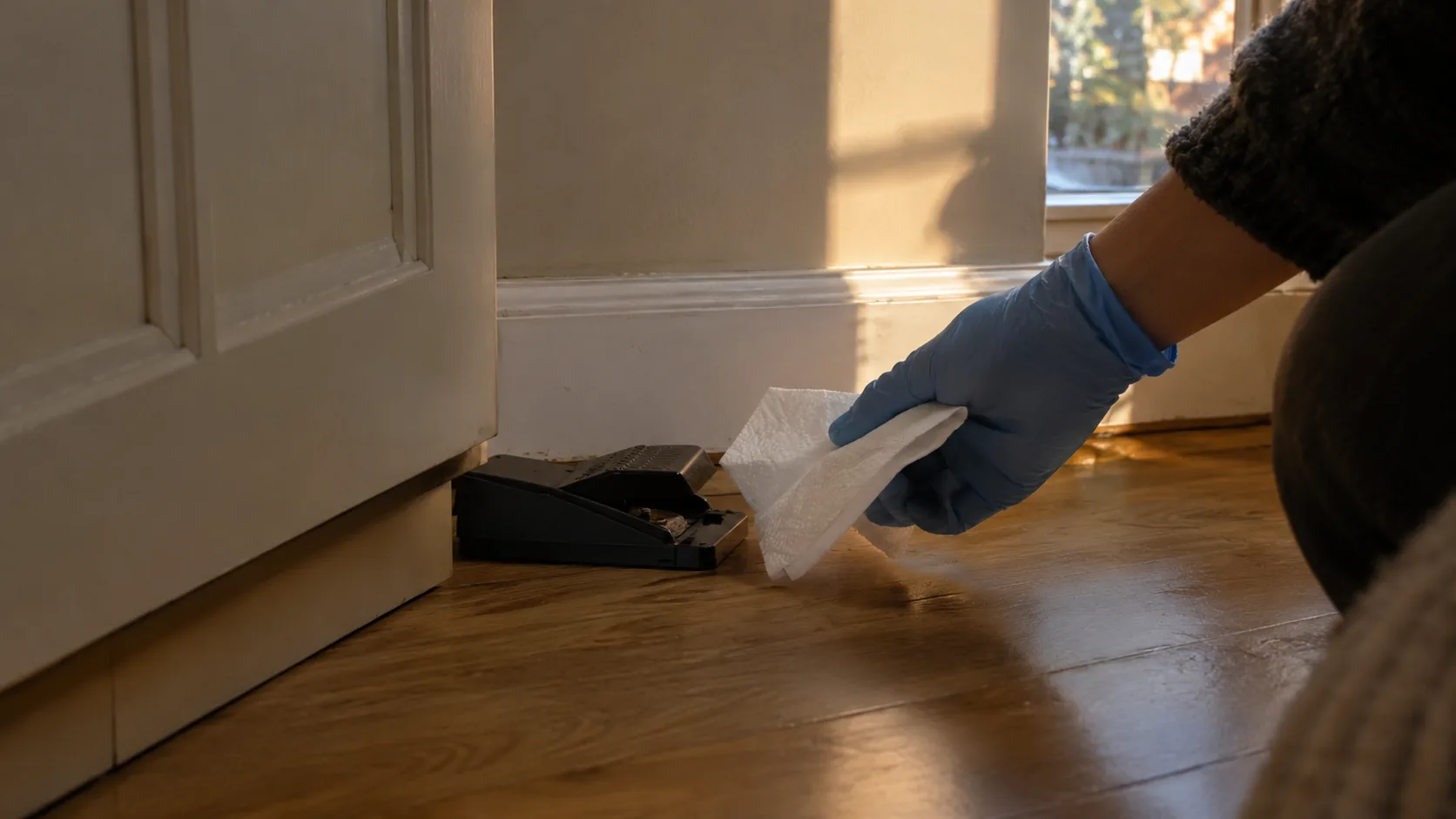
When you find a mouse in a trap, put on disposable gloves, check the trap from arm's length, and follow the trap's manual for removal. If the mouse is dead, seal it in a bag, place it in an outdoor trash can, then clean the trap and your hands before you reset anything. If it is still alive, do not bag it; see the live-animal section below. This guide walks through each step in order, then helps you review where the trap sits so the next catch is not a repeat of the last.
The checklist applies to snap, live-catch, glue and electric models, with notes where they differ.
Before you touch the trap: gloves and a look
A mouse in a trap should be handled as a source of droppings, urine and parasites. Wear disposable gloves every time, and keep your face away from the trap while you work. Have a sealable bag, a paper towel and a household disinfectant ready before you pick anything up.
What to check first
- Is the trap still closed or powered? Follow the manual before you open or lift it.
- Is the mouse still moving? A live-catch trap holds the animal alive, so move slowly and keep the trap level.
- Is anything else nearby, such as droppings, nesting material or chewed packaging? Note it for the placement review later.
- Are children or pets close? Move them to another room first.
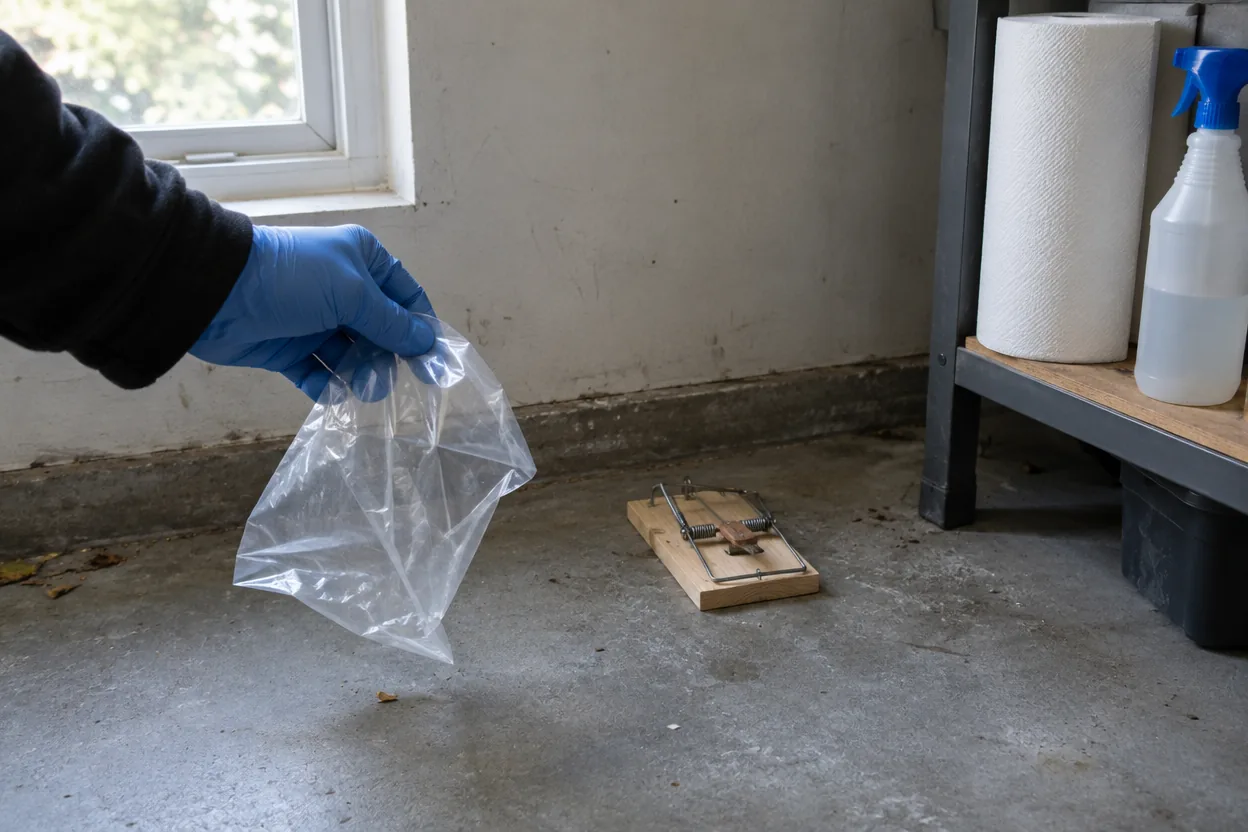
What to do with a mouse in a trap: step-by-step disposal
For a dead mouse in a snap or electric trap:
- Put on gloves and, if the manual advises, unplug or disarm the trap first.
- Lift the trap by its edge and hold it over an open bag, away from your body.
- Empty the trap into the bag using the method in the manual: lift the bar on a snap trap, or open the unit on an electric one.
- Seal the bag, then place it inside a second bag if you have one.
- Put the sealed bag in an outdoor trash can with a lid.
- Remove your gloves by turning them inside out, drop them in the trash, and wash your hands with soap and water.
Use an outdoor trash can with a lid rather than an indoor bin. Do not handle the mouse with bare hands, and do not shake the trap over a bin where the contents can scatter. If a trap seems damaged or will not open, set it aside and ask a pest control professional or check the manual. For a live-catch trap, see the table and release notes below.
If the mouse is still alive
Do not bag or throw away a live animal. Follow the trap's label or manual, keep children and pets away, and avoid handling the mouse. Contact a licensed pest control professional or local animal control for guidance on handling it.
How the after-catch steps differ by trap type
| Trap type | Opening the trap | Disposal note | Before resetting |
|---|---|---|---|
| Snap trap | Hold the base, lift the bar as the manual shows | Drop a dead mouse into a bag; if alive, see the live-animal note | Wipe the base, check the spring and re-bait |
| Live-catch | Keep it level and closed until you reach the release spot | Local rules on releasing wildlife vary, so check them before you start | Wash and dry the chamber, then re-bait |
| Glue board | Do not pull the animal free by hand | If the mouse is dead, follow the label for the whole board; if alive, contact a professional or animal control | Use a new board |
| Electric plug-in | Open the unit; shutoff engages as the manual describes | Tip the contents into a bag | Rinse the plates, dry them, and re-bait |
If you choose to release a live mouse, take it to a release spot well away from the house, because mice released close by can find their way back inside. Check local wildlife rules first, as some areas restrict releasing animals.
Clean the area and the trap
Cleaning matters as much as disposal. Spray the spot where the trap sat with a household disinfectant and let it stay wet for the time on the label. Wipe with paper towels, bag them, and throw them out with the gloves.
Do not sweep or vacuum dry droppings, since that can throw dust into the air. Dampen them first and wipe them up with a paper towel while wearing gloves.
Reusable traps need a wash too. Scrub the surfaces with warm soapy water, rinse, and let the trap dry fully before baiting it again. Old scent can linger on a used trap, and a damp trap can corrode.
An electric option for emptying and rinsing
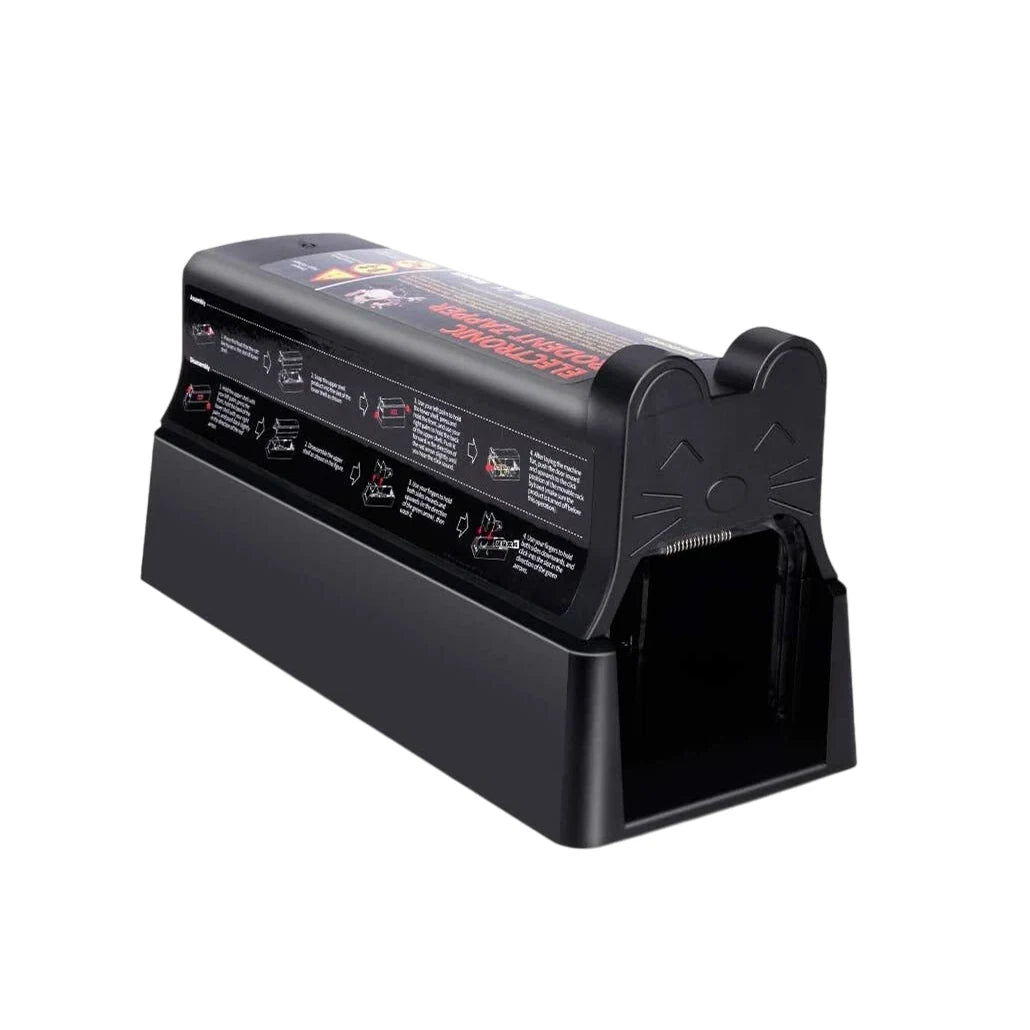
If handling traps is the part you want to avoid, a plug-in electric trap is one approach. VoltRid is an electric rodent trap for mice and rats. You bait the plates, connect the AC adapter, and place the unit where rodents travel.
An LED indicator shows the trap status without opening the lid. When it is time to empty it, the unit opens, and an automatic shutoff engages on opening so the plates are not live while you work. You tip the contents into a disposal bag and rinse the plates. Gloves and four disposal bags come in the box, along with the AC power adapter, an LED indicator cord and a user manual.
It plugs into an outlet, so there are no batteries to swap. As with any powered device, follow the manual and keep it out of reach of children and pets.
 In this guideVoltRid$119.99View
Reset the trap and review the placement
A catch tells you where mice are traveling. Before you reset, spend a few minutes on the setup, because a trap in the wrong spot may keep missing or leave a mouse only partly caught.
Placement checklist
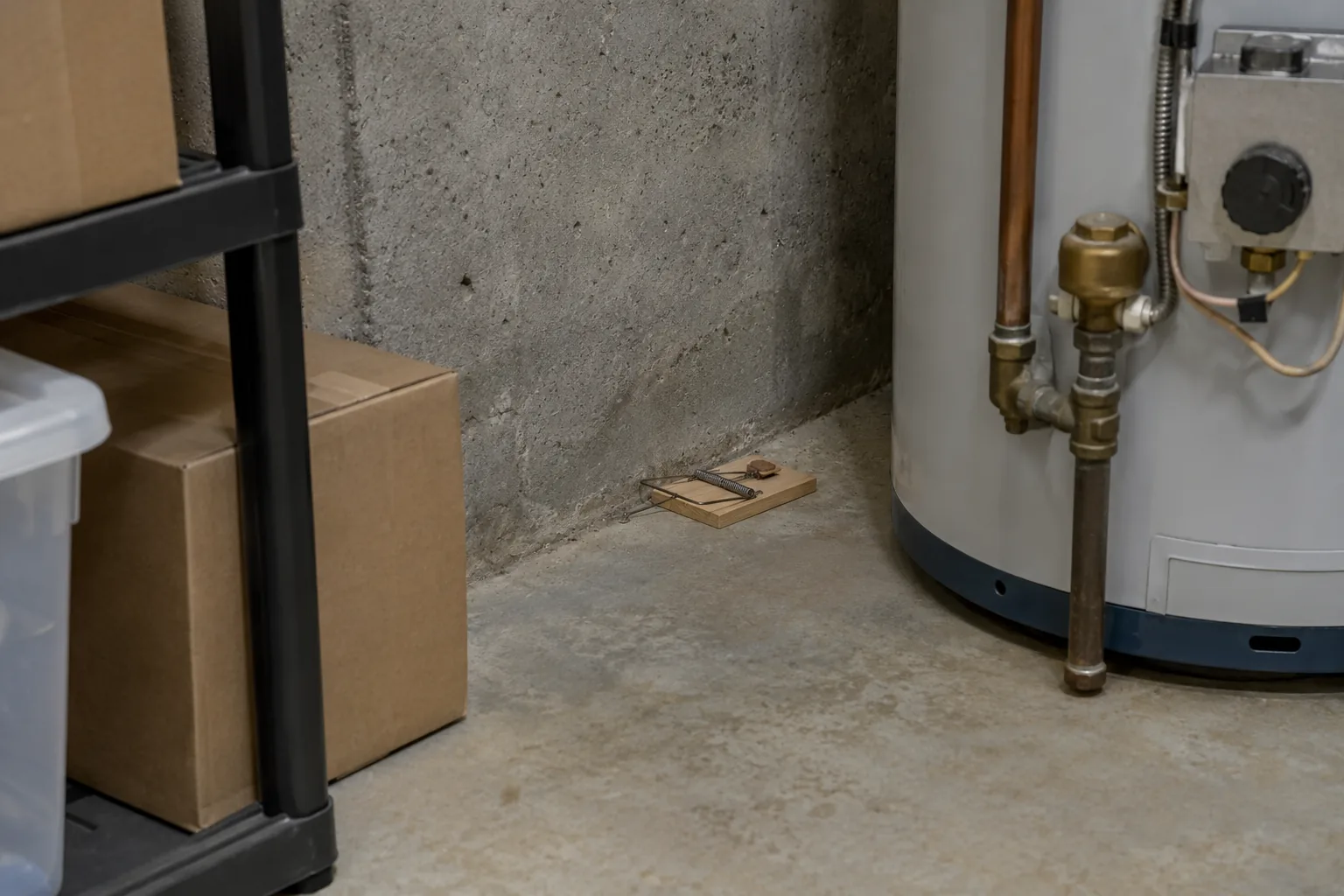
- Set traps along walls, with the trigger end toward the wall, where mice run.
- Place them near droppings, gnaw marks or grease smudges.
- Use more than one trap, a few feet apart, in an active area.
- Keep bait and traps out of reach of children and pets, such as behind appliances or inside a covered station.
- Use a pea-sized amount of bait. Peanut butter or a small piece of nut are typical choices to lure mice; check the manual for bait guidance, especially in homes with pets.
Can mice move traps? Yes, a light trap can be dragged if the animal is only partly caught. Place the trap on a flat, stable surface, and check it often.
Common mistakes after a catch
- Handling the trap without gloves.
- Resetting a trap without cleaning it, so the old scent remains.
- Leaving a sealed bag indoors where pets can reach it.
- Removing the trap and ignoring entry points. Seal gaps around pipes, doors and vents with steel wool or metal mesh.
- Leaving pet food and birdseed in open bags, which can attract mice.
One catch does not mean the problem is over. Check traps daily and close off the entry points you found during the placement review. For outbuildings, coops and sheds, our Poultry, Coop & Pest Control collection covers further pest tools. If the pest in your yard flies instead, see what a bug zapper is and where it fails.
Field note
Keep a small bin with gloves, bags, paper towels and a spray bottle of disinfectant next to where you store your traps, so every check is ready to go.
When to call a professional
If you keep finding a mouse in a trap every day for more than a week, or you see signs in several rooms, the infestation may be larger than a few traps can handle. Ask a licensed pest control professional to inspect the building. Do the same if you find a nest in a wall or an area you cannot reach.