How to Aerate Lawn Soil: Timing, Tools and Aftercare
Aerate moist, not soggy, soil while the grass is actively growing, pull cores in overlapping passes, then seed and water the same day. This guide covers the check, the tools and the aftercare.
The Cobalt Hollow Team
November 13, 2026 · 7 min read
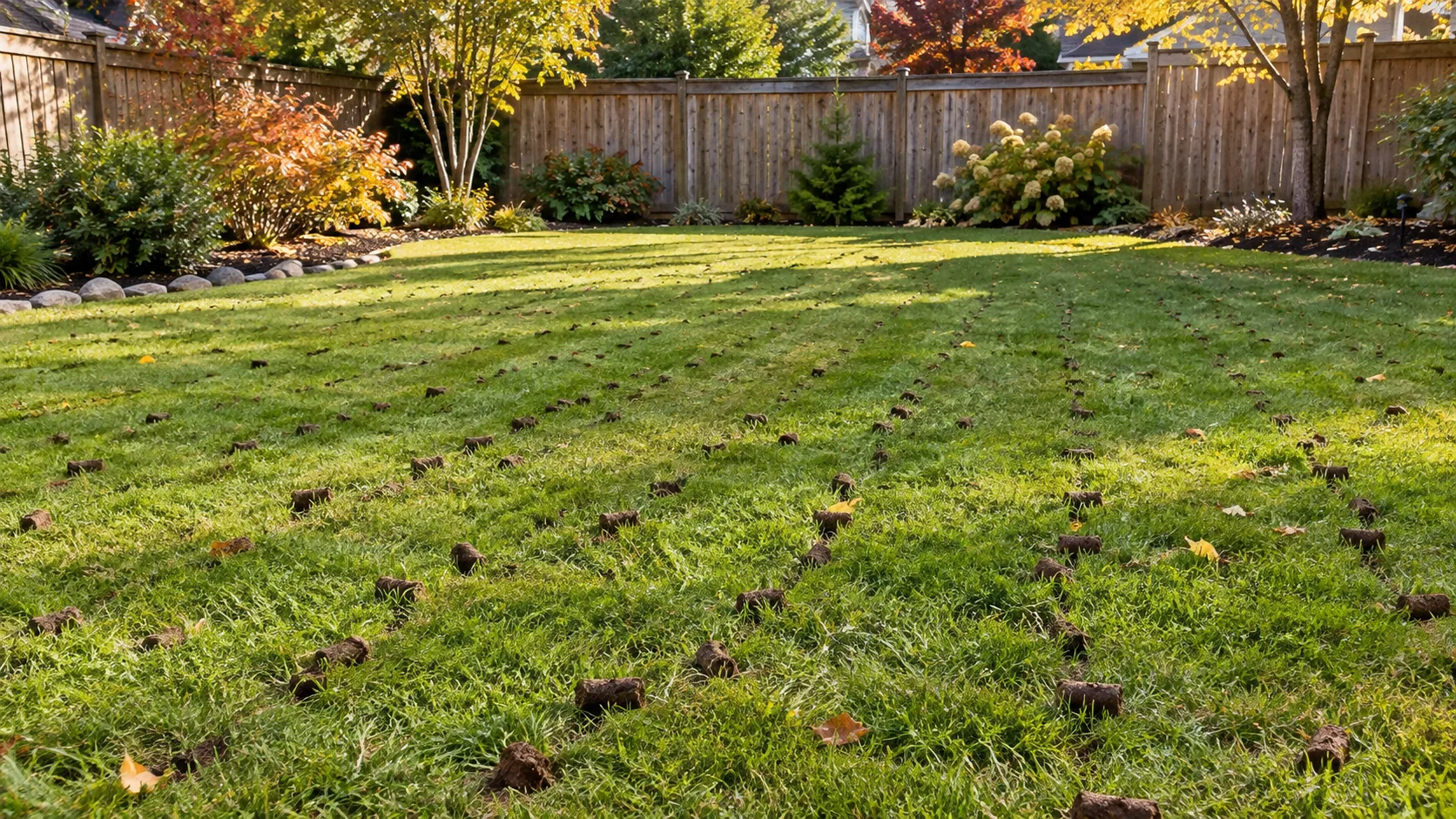
Knowing how to aerate lawn soil comes down to three things: work when the grass is actively growing, start with soil that is moist but not soggy, and pull small plugs of soil in overlapping passes. Leave the plugs on the surface and finish the same day with seed, fertilizer and a light watering.
The sections below cover whether you need to aerate, the soil-moisture check, the choice between core and spike tools, pass patterns, hand methods and what to do afterward.
Do You Need to Aerate Your Lawn?
Aeration opens channels through compacted soil so air, water and nutrients reach grass roots. Not every lawn needs it every year. Check for these signs first:
- Water pools on the surface or runs off after watering instead of soaking in.
- A screwdriver or soil probe is hard to push into the ground, even after rain.
- The lawn sees heavy foot traffic, play or parking, or sits on clay soil.
- A thick layer of thatch (dead stems and roots) sits between the green blades and the soil.
- The grass looks thin and stressed even though you water and fertilize.
If none of these fit and the screwdriver slides in easily, you can skip a season. Some lawns on dense or clay soil call for aeration every year, while loose, sandy soil may need it far less often. Use the moisture check below as your yearly test.
When to Aerate: Timing and the Soil-Moisture Check
Aerate during a stretch when the grass is growing and can fill in the holes. That aeration window differs by grass type.
| Grass type | Examples | Aeration window |
|---|---|---|
| Cool-season | Fescue, bluegrass, ryegrass | Early fall, or spring as a second choice |
| Warm-season | Bermuda, zoysia | Late spring into early summer |
Today is late October, so in many regions the cool-season window is closing. If the ground is frozen or the grass has gone dormant, wait for spring rather than forcing it.
The soil-moisture check
Dry ground turns hard and the tines skip across it. Waterlogged ground clogs the tools and smears. Run this check before you start:
- If it has not rained, water the lawn deeply the day before.
- The next day, push a screwdriver into the soil in several spots. It should go in with steady pressure to a few inches.
- Squeeze a handful of soil from just below the surface. It should hold together loosely and crumble when poked, not drip or stay rock hard.
- If the soil is soggy, wait a day or two. If it resists the screwdriver, water again and recheck the next day.
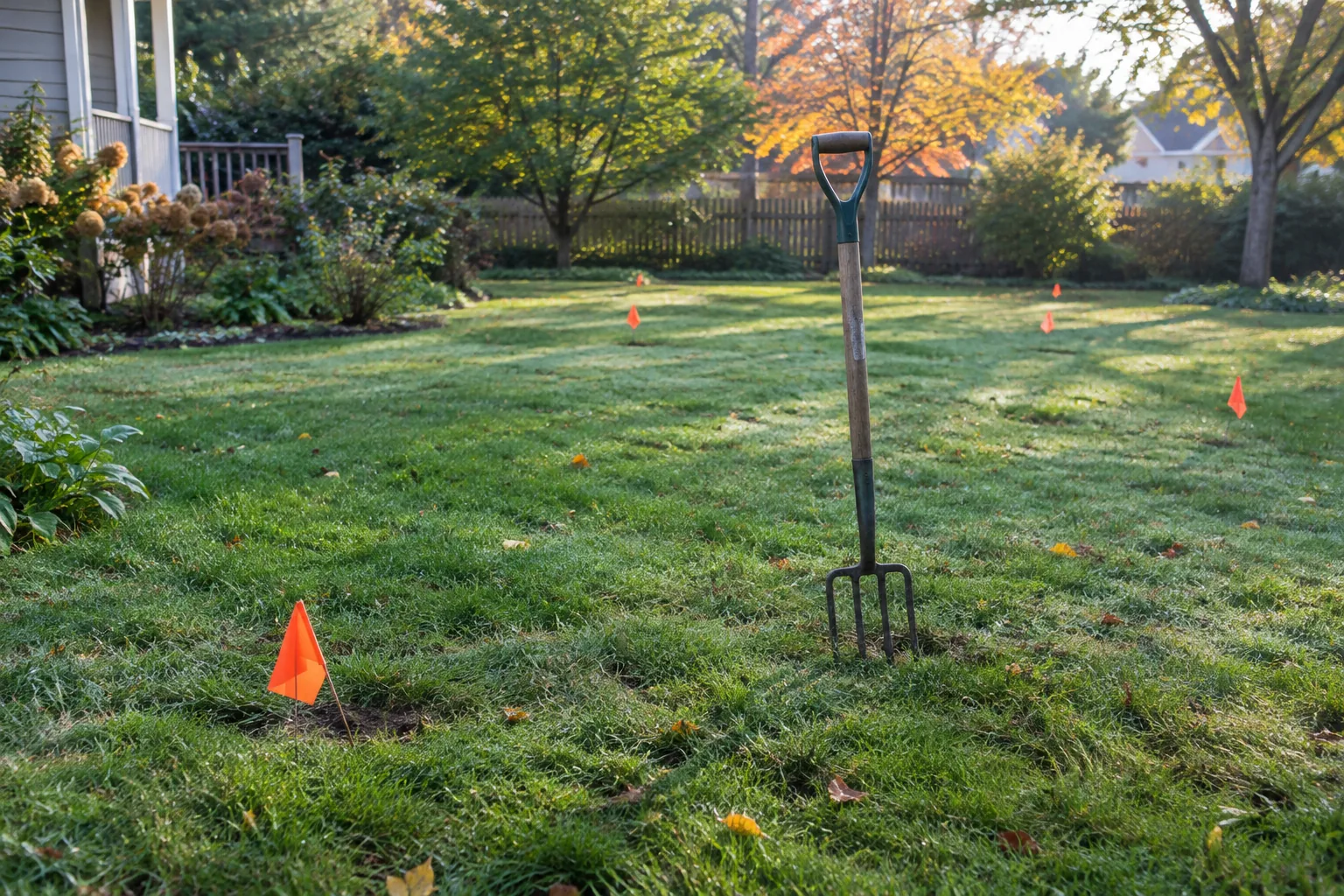
- Mark sprinkler heads, shallow irrigation lines and buried cables with flags. Call your local utility locating service if you are unsure what is underground.
Mow the grass a little shorter than usual before you start, so the tines meet soil rather than long blades.
Core vs Spike: Which Aerator Fits Your Lawn
A core tool removes plugs of soil. A spike tool pokes solid holes and leaves the soil in place. In dense soil, spikes can pack the walls of each hole, so core tools are the usual choice for compaction.
| Type | What it does | Fits |
|---|---|---|
| Core (plug) aerator | Pulls out small soil plugs with hollow tines | Compacted, clay or high-traffic lawns |
| Spike aerator | Pushes solid tines into the soil | Loose soil, light maintenance between core passes |
| Dual-action tool | Hollow tubes and solid spikes in one head | Small and mid-size lawns worked by hand |
Decide in four steps
- Do the screwdriver test. If it is hard to push in, choose a core tool.
- Measure the lawn. For a small or mid-size yard, a manual tool works. For a large lawn, consider a rental lawn aerator, a powered core machine.
- Consider the motion. Foot-pressed tools use your body weight to push the tines in; a pitchfork means lifting and rocking the fork by hand for each hole.
- Pick the tool for the job, not the other way around: core for compaction, spike for light upkeep.
If you rent a machine, follow the rental company's manual, wear sturdy closed-toe boots and keep hands and feet clear of the tines.
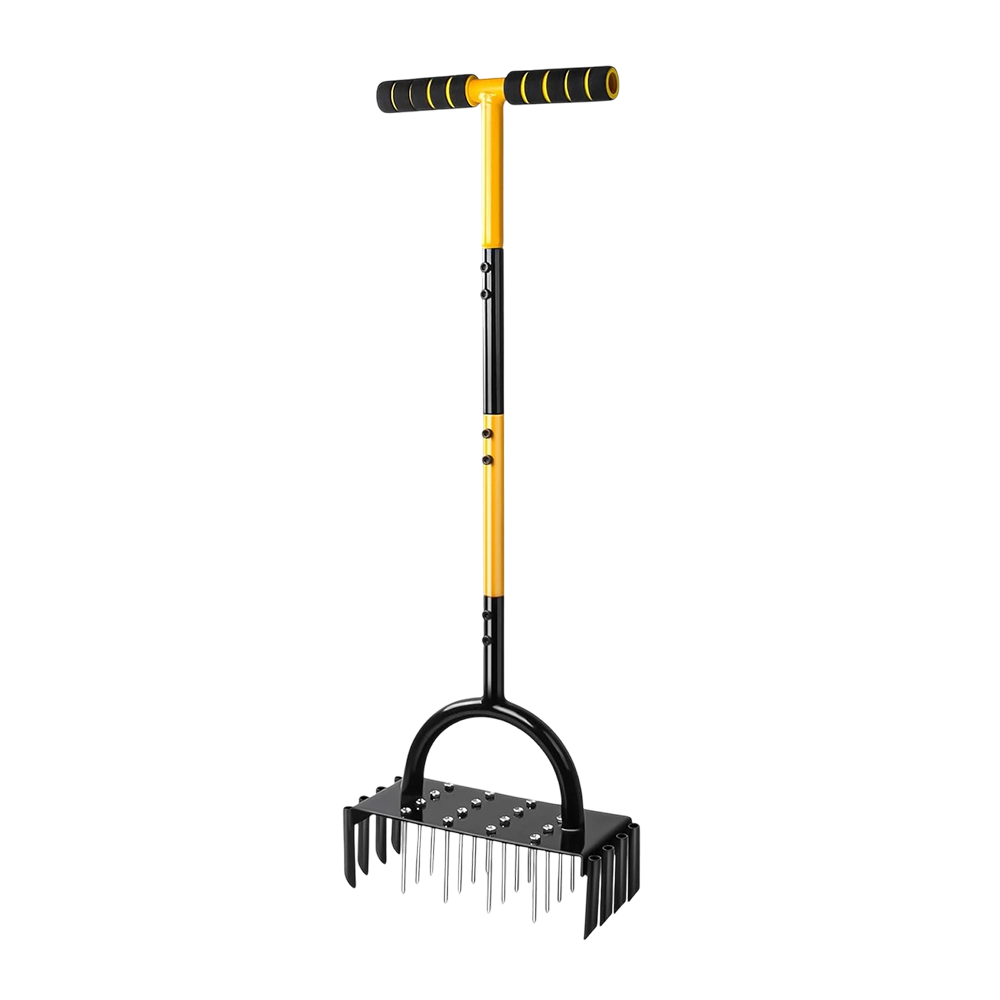
For a manual option, the RootVance manual lawn aerator has a dual-action head with hollow coring tubes that remove soil plugs and solid spikes that make additional holes, both in the same step. A wide foot platform sits above the head, so you press the tines in with your body weight. The two-piece rod adjusts in height and ends in a foam-padded T-bar, and the heavy-gauge steel head and handle are joined with the supplied spanner wrench.
 In this guideRootVance$169.99View
How to Aerate Lawn Soil by Hand
You do not need a machine for a small yard. Here is how to aerate your lawn by hand with a foot-pressed tool.
- Assemble the handle to the head with the spanner wrench and set the rod to a height that suits how tall you stand.
- Place the head flat on the lawn at one corner.
- Step onto the foot platform and press the tines into the soil with your body weight.
- Lift the tool straight up, move over a few inches and press again.
- Work in rows across the yard, then check that you have not left bare strips between rows.
Tighten the fittings with the spanner wrench if the head feels loose, and keep your feet clear of the tines when you lift.
Can you aerate a lawn with a pitchfork?
Yes, on small areas. Push the tines straight down as far as the soil allows, rock the handle back slightly to widen the holes, pull the fork out and step back a few inches. It makes spike-style holes and removes no plugs, so it suits loose soil or a small patch more than a compacted lawn. Wear sturdy boots and keep the work area clear of other people.
Pass Patterns That Cover the Whole Lawn
Even coverage matters more than speed. When you plan how to aerate lawn areas, use a pattern so you do not miss strips or double up in one spot.
| Situation | Pattern |
|---|---|
| Typical lawn | Parallel rows with holes a few inches apart, working back and forth across the yard |
| Compacted or heavily used areas | A second pass of rows at a right angle to the first, forming a grid |
| Slopes | Rows across the slope rather than up and down |
| Edges and beds | Stop a few inches from edging, trees and flagged lines |
Start with the areas that take the most wear, such as paths and play spots, then fill in the rest. A rented machine needs overlapping passes too, with turns made on the lawn edge, not over flagged items.
What to Do the Same Day After Aeration
The holes are an opening, so use them the day you make them. Do these in order:
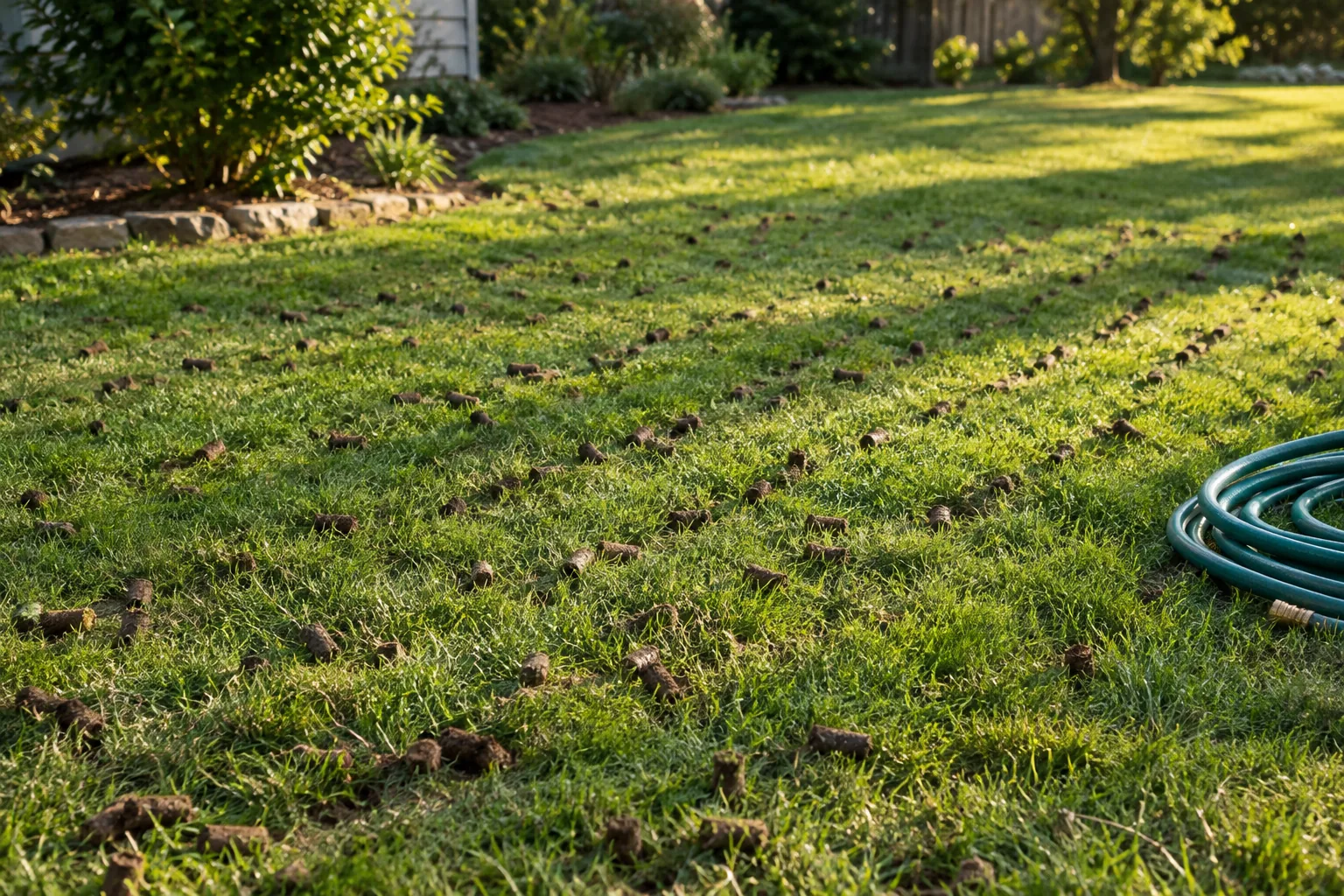
- Leave the soil plugs where they land. They break down over time and return soil to the surface.
- Overseed thin spots while the holes are open. Our guide to planting grass seed on bare soil covers seed choice, spreading and watering.
- Spread fertilizer if your lawn is due for it, following the label for rate and timing.
- Water lightly so seed and fertilizer settle into the holes.
- Keep foot traffic and mowing light while new seed establishes.
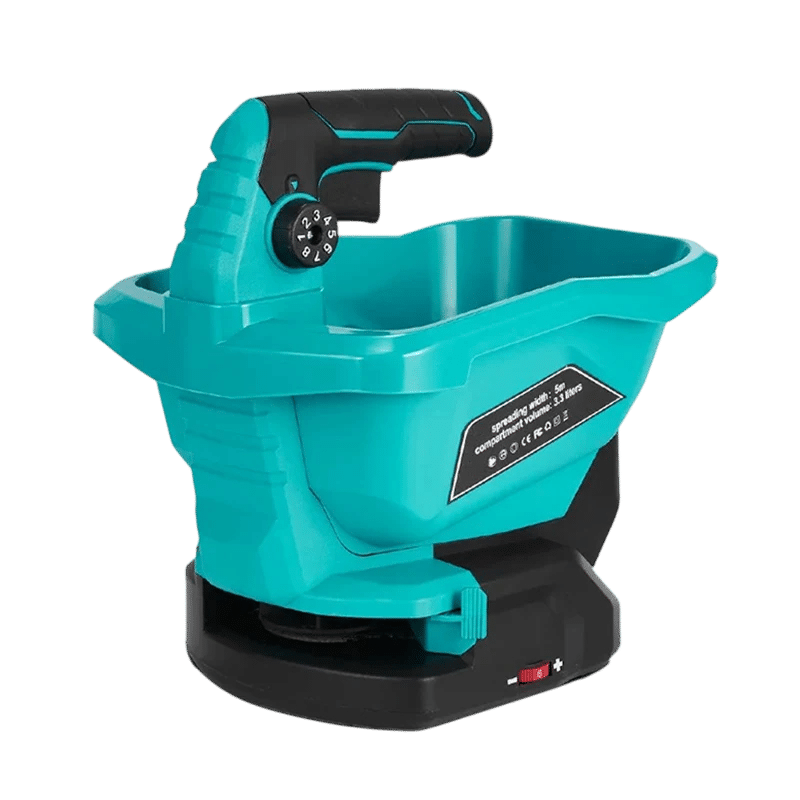
A handheld spreader lets you broadcast seed or fertilizer as you walk. The TerraSpread Pro has a 3.3-liter hopper that takes grass seed or fertilizer, six flow-rate settings with a locking dial (lower settings suit fine seed, higher settings suit larger granules) and an adjustable 140-degree broadcast arc. It is cordless and runs on a standard 18V lithium-ion battery that you supply, since one is not included.
 In this guideTerraSpread Pro$198.99View
Field note
Do the work on the day after a deep watering, and plan seeding for the same afternoon. Seed dropped into open holes while the soil is still moist sits in firm contact with the ground.
Common Mistakes and How Often to Aerate
Before you start, check that your plan for how to aerate lawn soil avoids these:
- Working dry, hard soil, which keeps the tines near the surface. Water the day before and recheck.
- Working waterlogged soil, which clogs tools. Wait until it crumbles.
- Aerating in the wrong season, such as cool-season grass in midsummer heat.
- Skipping the pattern and leaving unworked strips.
- Removing the plugs or raking them away instead of leaving them to break down.
- Forgetting to flag sprinkler heads and shallow lines.
As for frequency, repeat the screwdriver test each year at the start of your growing window. Compacted, clay or high-traffic lawns may need aeration yearly, while looser soil can go longer between passes. For more lawn upkeep tools, browse the Lawn, Yard & Snow Care collection.