How to Plant Grass Seed on Bare Soil: Prep, Spread, Water, Mow
Test and loosen the soil, spread seed at the bag's rate, press it in, keep the top inch moist and mow once the grass is tall enough. Here is each step, with a week-by-week watering table.
The Cobalt Hollow Team
November 11, 2026 · 7 min read
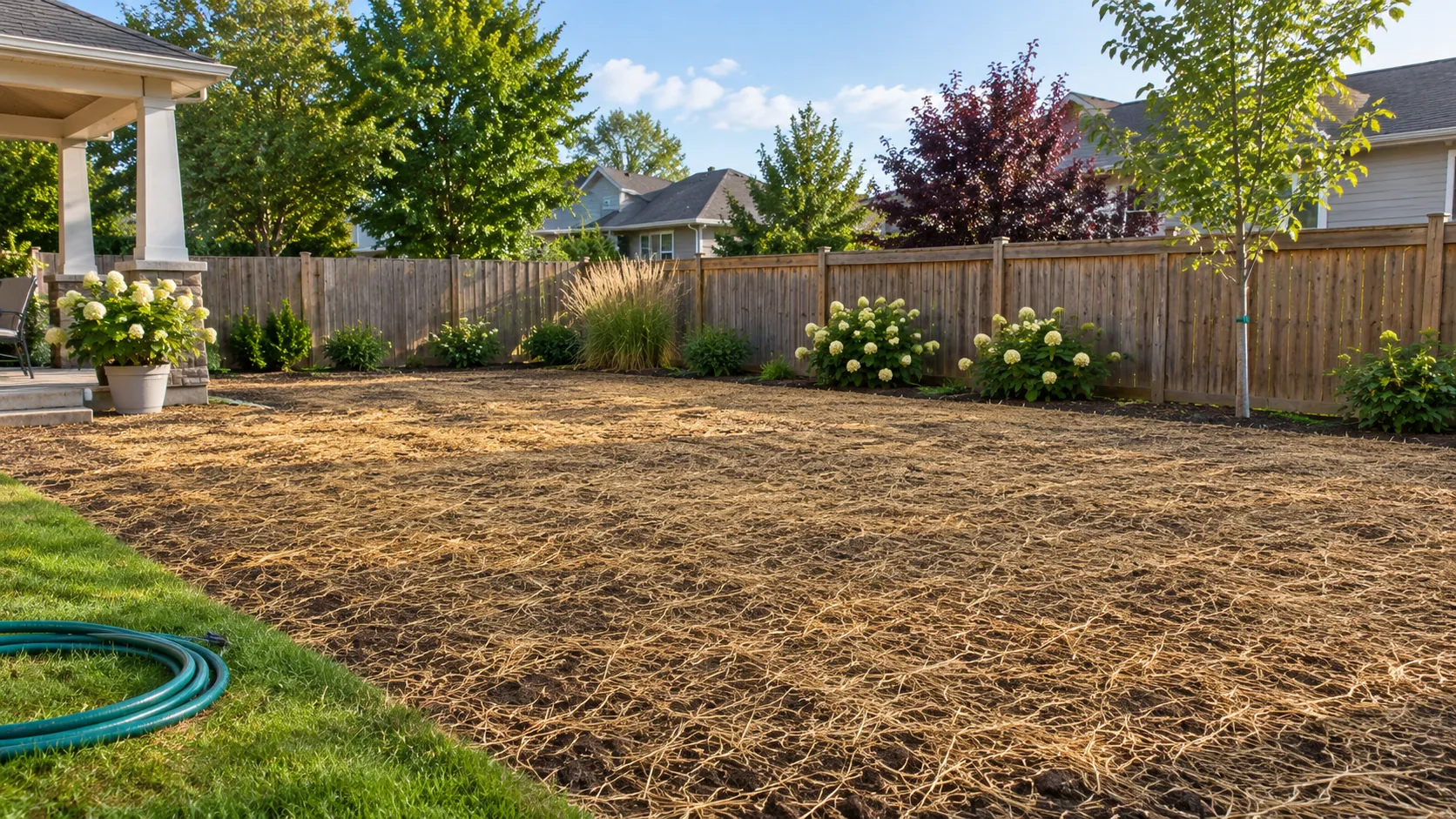
To learn how to plant grass seed, work in this order: test and loosen the soil, rake it level, spread seed at the rate printed on the bag, press the seed into contact with the soil, then keep the top inch damp until the new grass is ready for its first mow. Seed needs soil contact and steady moisture above all.
This guide covers new lawns and bare spots. It gives a soil check, spreader settings, a watering table for each week and the rules for the first mow.
The planting order at a glance
Use this checklist as the outline. Each step is explained below.
| Step | What to do | Check before moving on |
|---|---|---|
| 1. Pick seed and timing | Match the seed to sun, shade and traffic; plant in early fall or spring | Seed bag lists your conditions |
| 2. Test the soil | Read pH and moisture at the root zone | pH is near the range on the seed label or soil report |
| 3. Prepare the bed | Clear stones and clods, loosen the top few inches, rake level | Surface is crumbly with no low spots |
| 4. Seed and feed | Spread seed and a starter fertilizer at label rates | Coverage is even in two directions |
| 5. Cover | Rake lightly and roll or press the seed in | Seed touches soil |
| 6. Water | Follow the weekly table | Top inch stays damp, no puddles |
| 7. Mow | Cut high with a sharp blade once the grass is tall enough | Only the top third of the blade is cut |
Choose the seed and the planting window
Cool-season grasses such as tall fescue, perennial ryegrass, hard fescue and creeping red fescue suit the northern half of the country. Warm-season grasses suit the South, including Florida. Read the bag for sun and shade tolerance, and pick a blend that fits the growing conditions of the spot.
Early fall is a good window for cool-season seed, because the soil is still warm and the air is cooler. Spring is another option, though weeds start growing at the same time as the new seedlings. For warm-season grasses, seed in late spring or early summer once the soil has warmed.
Can you plant grass seed in the winter?
You can, but it is a gamble. Seed spread on frozen ground or snow may wash away or sit until spring thaw. This is called dormant seeding, and it only fits cool-season grass in cold regions once the soil is too cold for the seed to sprout. Plan on a spring check for thin areas and reseed them.
How to plant grass seed: test and prepare the bare soil
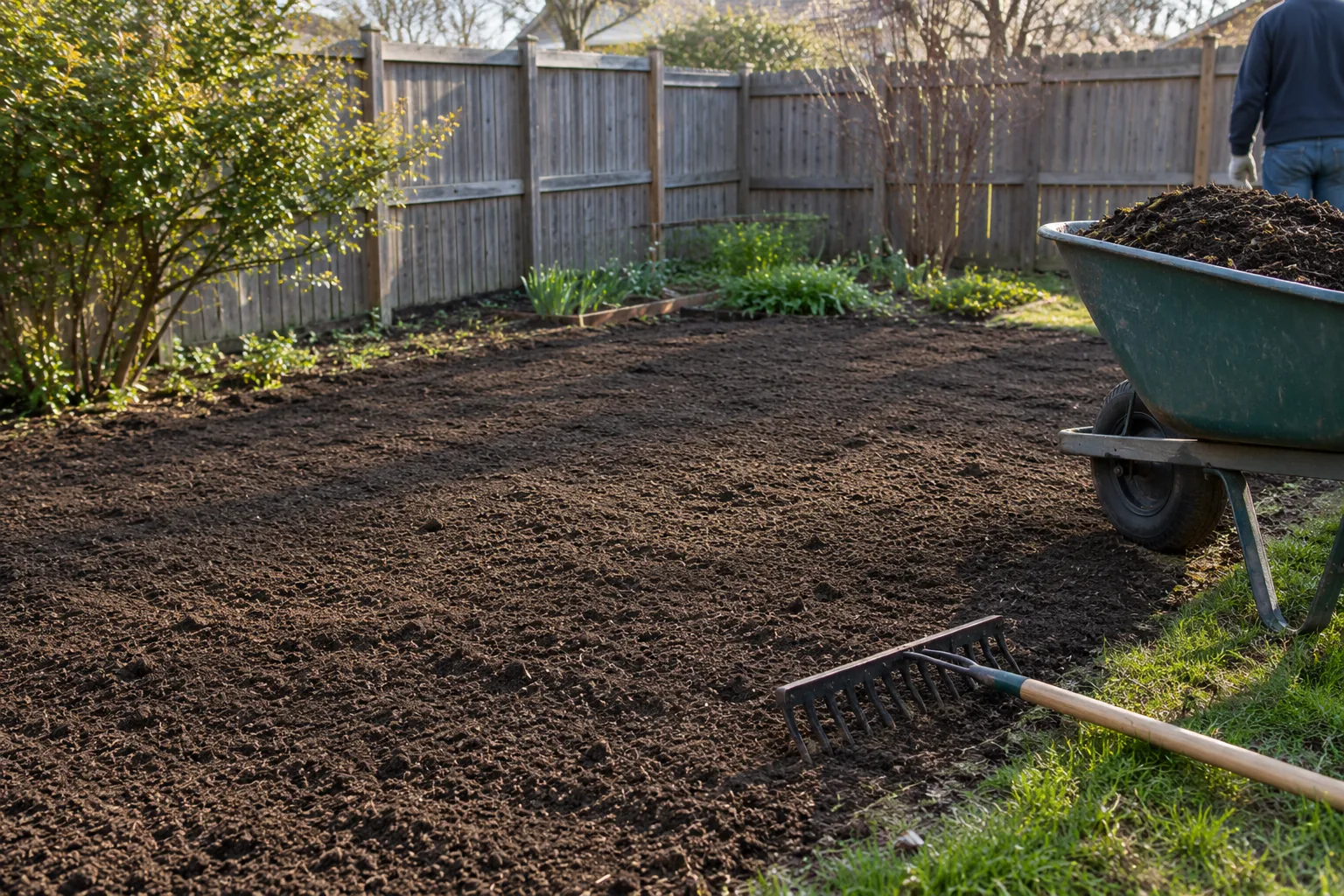
Grass seed can go directly on the ground, but it needs loosened soil to settle into. Seed lying on a hard crust dries out and washes off. Preparation is where a new lawn is won.
Check pH and moisture first
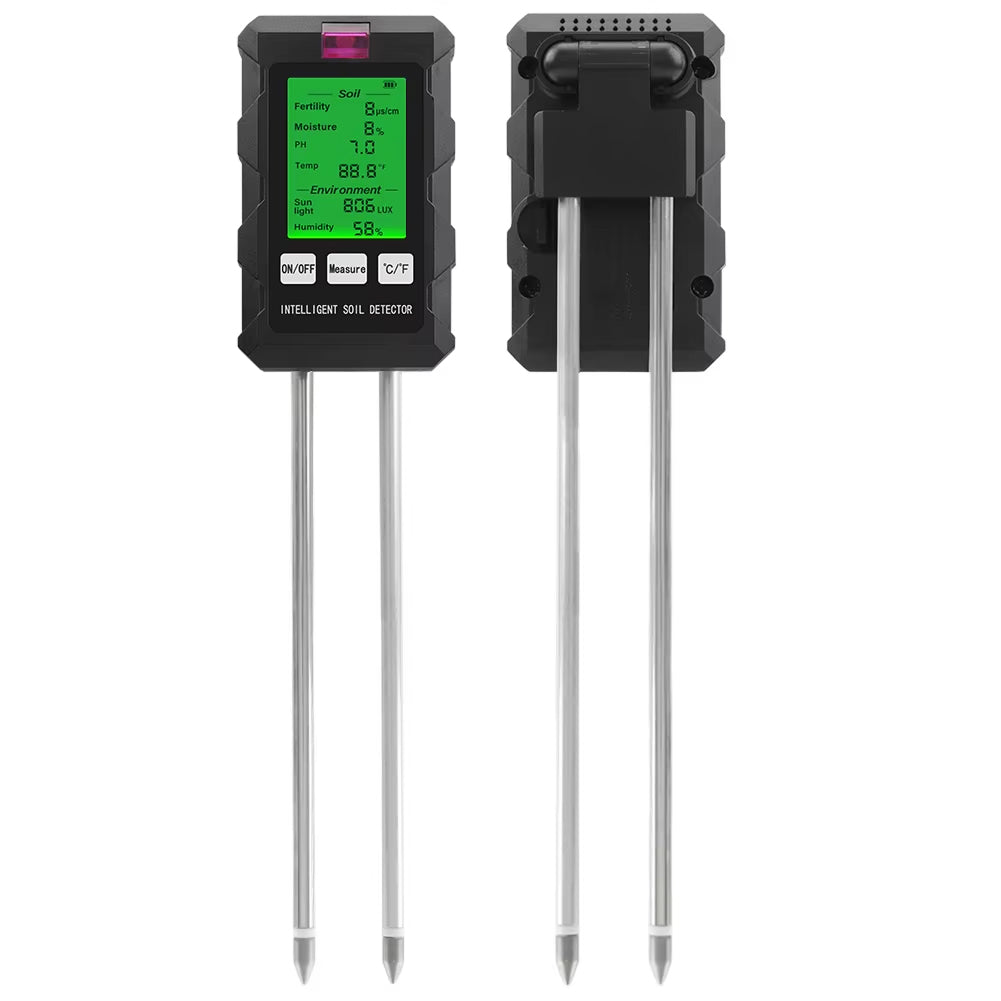
Lawn grasses often suit slightly acidic to neutral soil, roughly pH 6.0 to 7.0; check the seed label for your blend. A reading tells you whether to add lime or sulfur before you seed. The RootGauge is a pen-style soil meter that reads pH to 0.1, plus moisture, light and soil temperature. Calibrate it first with the pH 4.01 and 7.00 buffer powders that come with it, then push the probe 2 to 3 inches into moist soil at the root zone.
Take readings in several spots, since a yard can vary. For lime or sulfur amounts, a lab soil test gives the most detailed answer.
 In this guideRootGauge$89.99View
Loosen, clear and level
- Remove stones, roots, construction debris and clods.
- Pull weeds before you seed. On an existing lawn with weeds, clear them out first so seed reaches soil.
- Loosen the top 3 to 4 inches with a rake, a garden fork or a rented tiller. Without tilling, scratch the surface with a hard-tine rake until it is crumbly.
- Mix in compost or well-rotted manure if the soil is thin.
- Rake the area level and slope it away from the house so water does not pool.
Hard dirt takes extra work: break the crust, add compost and rake it fine. Sandy soil drains quickly, so work in compost to hold moisture, and plan for frequent watering in the first weeks.
Spread the seed evenly
Find the seeding rate on the bag, since it differs by grass type, and measure your area in square feet. Divide the seed into two halves. Spread one half walking north to south and the other east to west, so gaps in one pass get filled by the next.
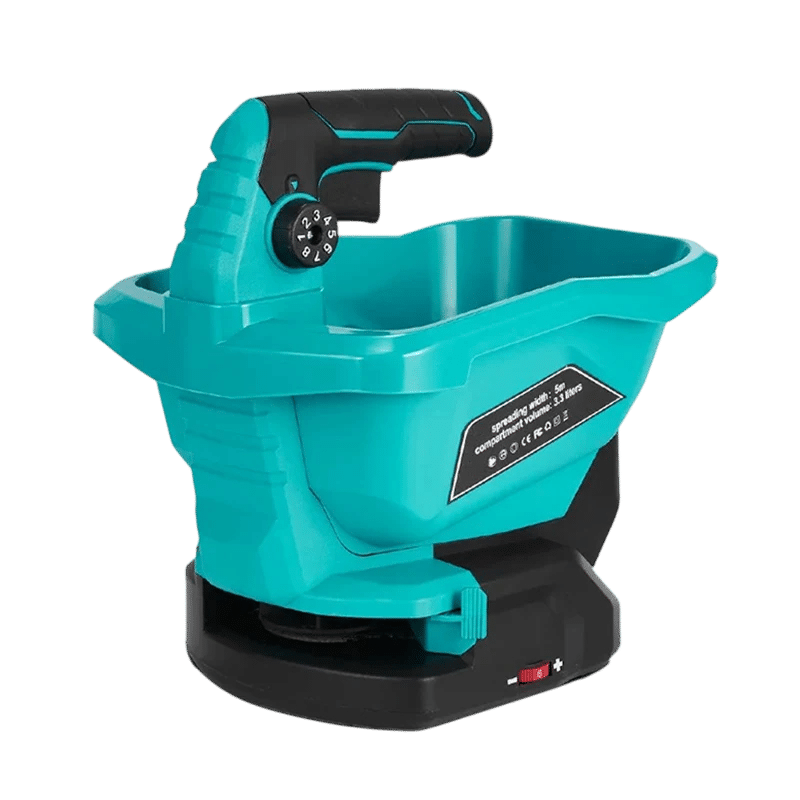
A handheld unit suits small lawns and patches. The TerraSpread Pro is a cordless lawn spreader with a 3.3-liter hopper, six flow-rate settings with a locking dial and an adjustable 140-degree broadcast arc. Lower settings suit fine seed, and higher settings suit larger granules. It runs on a standard 18V lithium-ion battery you supply.
 In this guideTerraSpread Pro$198.99View
Spreader settings checklist
| Material | Flow setting | Tip |
|---|---|---|
| Fine grass seed | Start on a lower setting | Weigh out half the seed and see how far it goes |
| Larger seed or starter fertilizer granules | Use a higher setting | Empty the hopper between materials |
| Edges and corners | Narrow the broadcast arc | Keep seed off beds and walkways |
Lock the dial once you choose, then squeeze the trigger only while you walk. Release it at the end of each pass. If the seed runs out early, lower the flow setting and make the next pass again.
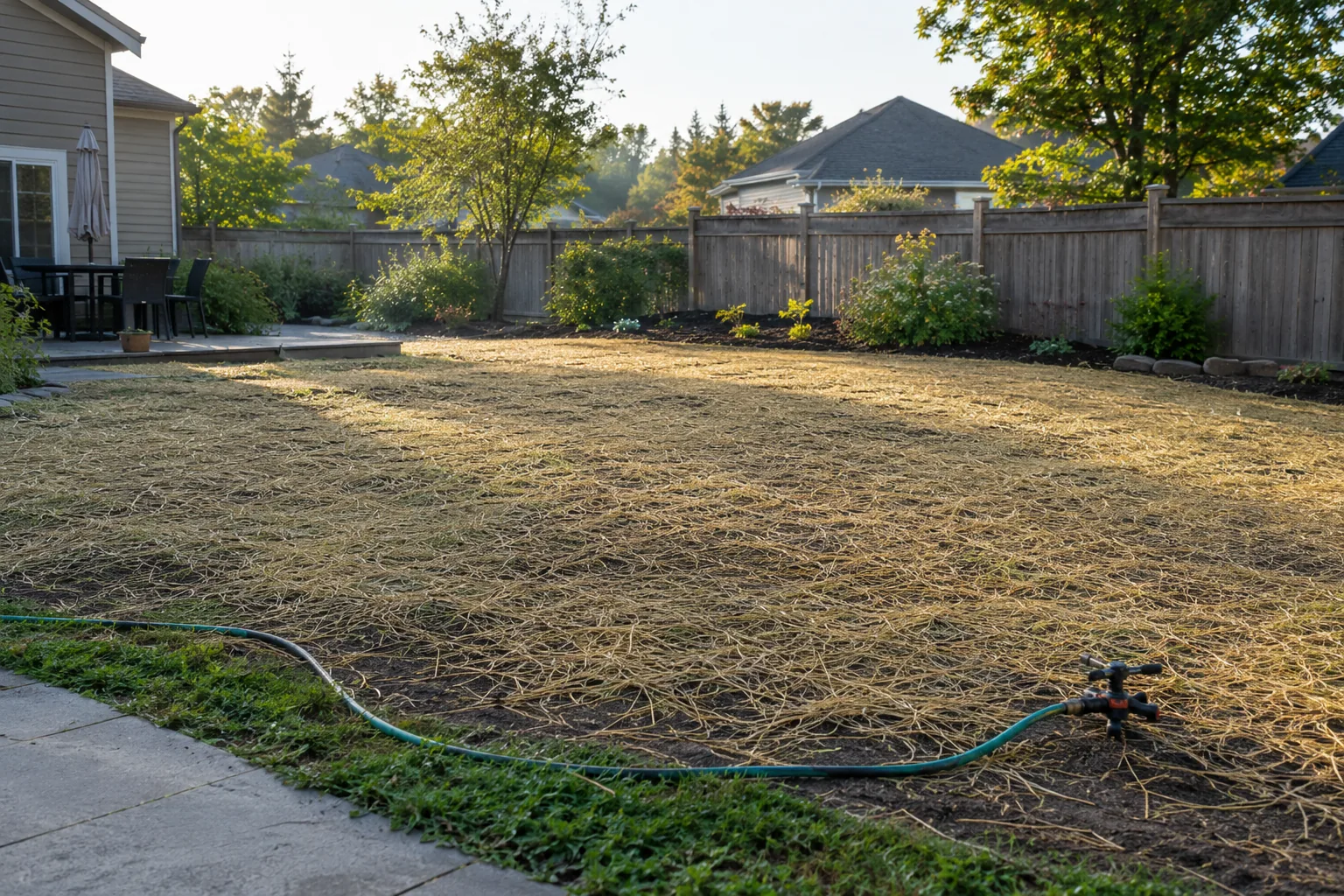
Apply a starter fertilizer the same day, following its label. After spreading, rake lightly so the seed is covered by a thin layer of soil, then roll or walk the area to press it in. A very thin mulch of straw can help hold moisture, as long as you can still see soil through it.
Watering schedule, week by week
Frequent light watering is the rule until seedlings are up. The goal is a damp top inch, not a soaked bed. Seed that dries out after it begins to sprout can fail, and puddles wash seed into low spots.
How often should you water new grass seed?
Water lightly once or twice a day at first, then less often and deeper as the roots grow. Adjust for heat, wind and sandy soil, which dry out sooner.
| Stage | Watering | What to watch |
|---|---|---|
| Seeding day through the first 2 weeks | Light mist once or twice daily, extra on hot or windy days | Top inch damp; no puddles or runoff |
| Weeks 3 and 4, as seedlings appear | Once a day, slightly longer | Bare spots drying out; reseed gaps |
| Weeks 5 and 6 | Every other day, deeper | Soil damp 2 to 3 inches down |
| Until the first mow | Two or three deeper waterings a week | Grass standing upright, not wilting |
Grass types differ, so use the weeks as a guide and follow what the seedlings show you. A HydroTempo hose timer threads onto an outdoor faucet by hand and lets you set separate weekday and weekend plans from its LCD display and buttons. The one-tap manual override adds a run outside the plan on a hot afternoon, and the saved schedule picks back up afterward.
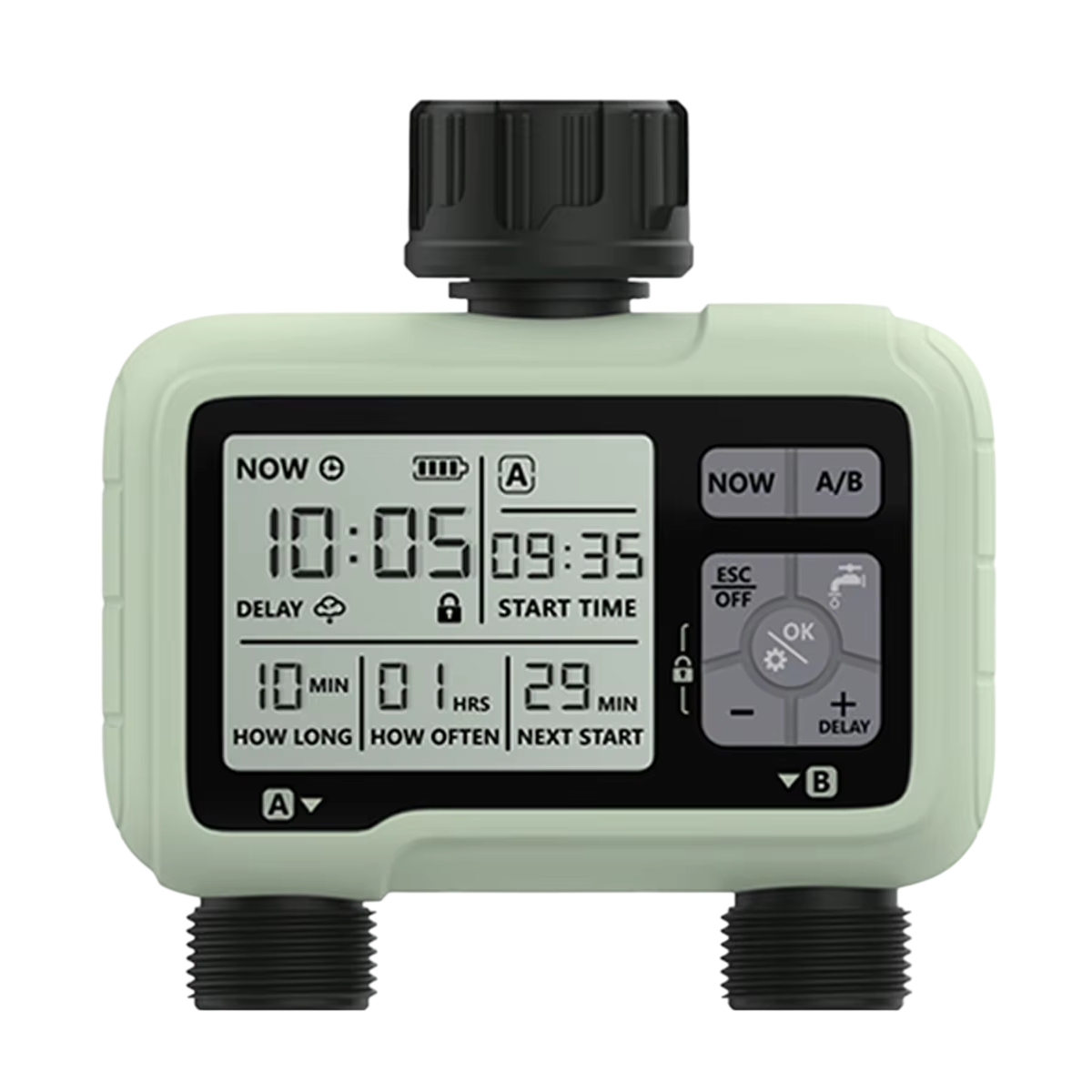 In this guideHydroTempo$59.99View
If you are building out your yard equipment, browse the Lawn, Yard & Snow Care collection.
Mow for the first time
Wait until the grass is about 3 to 4 inches tall, or the height the seed label gives. Set the mower high, use a sharp blade and mow when the lawn is dry. Cut only the top third of the blade height in a single mow.
Hold off on heavy foot traffic until after a few mows. If you are choosing a mower for the new lawn, see our guide to electric lawn mowers by yard size and terrain. After the first mow, move to a routine of deeper, less frequent watering.
Common mistakes to avoid
- Seeding on packed soil with no loosening, so seed stays on top of a crust.
- Burying seed too deep. A thin covering of soil is enough.
- Letting the top layer dry out between waterings in the early weeks.
- Spreading all the seed in one pass, which leaves stripes.
- Applying weed killer after seeding unless the label says it is fine for new grass.
- Mowing too low or with a dull blade.
Field note
Rake a small test patch with a light dusting of seed first. If your spreader setting puts down seed too thickly or thinly there, you can adjust the dial before covering the whole yard.