How to Clean a Dryer Vent Yourself: Inside, Outside, How Often
Unplug the dryer, detach the duct, brush and vacuum the lint out, then clear the outside hood. This guide gives the steps, warning signs and a cleaning schedule.
The Cobalt Hollow Team
November 5, 2026 · 7 min read
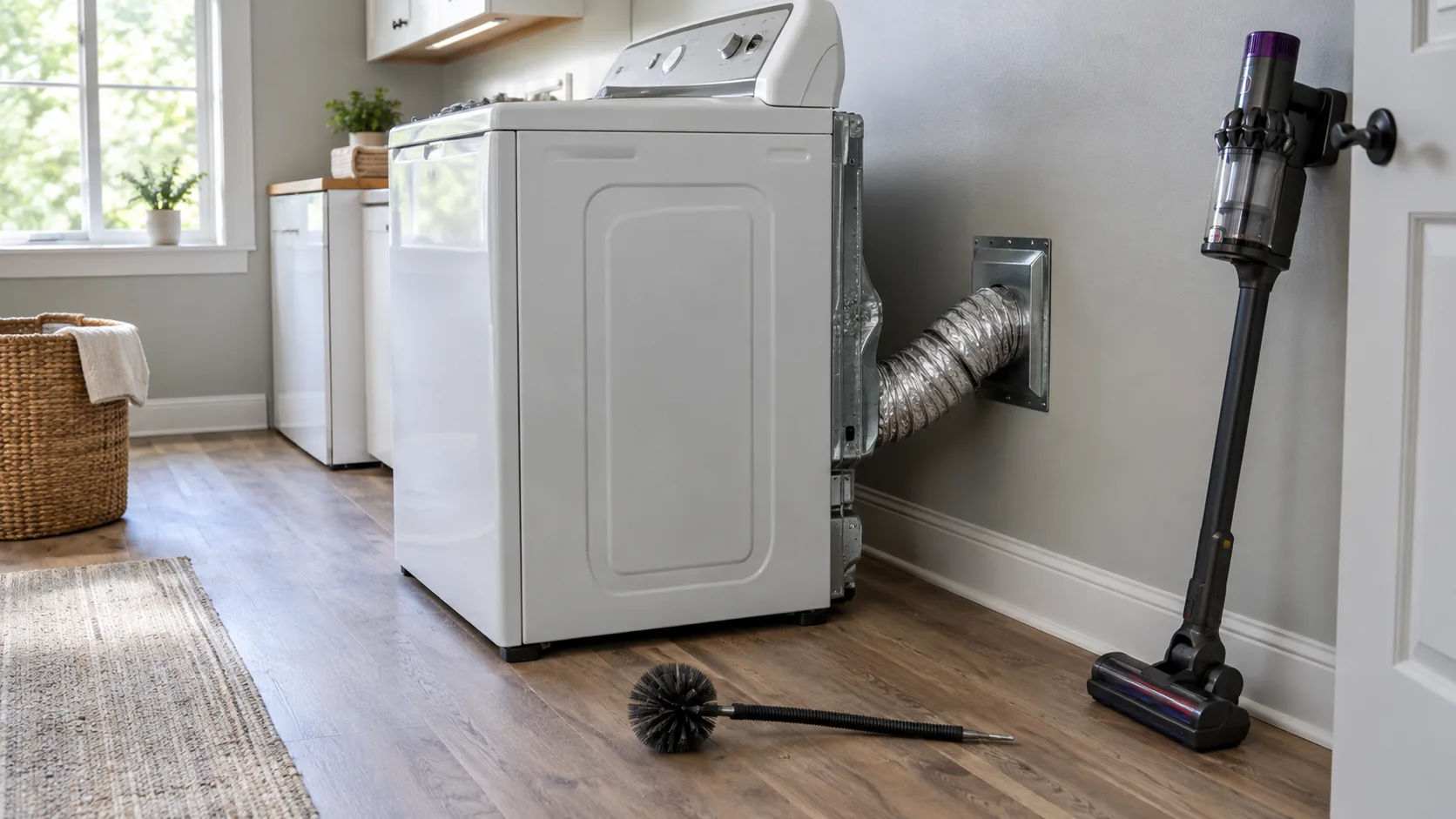
If you are wondering how to clean dryer vent ducts yourself, start by unplugging the dryer, pulling it out and detaching the duct. Brush and vacuum the lint from both ends, then clear the outside hood so the flap opens freely. Reconnect everything and run the dryer to check the airflow.
Lint is dry and flammable, and it builds up in the duct even when you empty the lint trap every load. This guide covers when to work from inside or outside, the tools, the warning signs and a cleaning schedule.
Can you clean a dryer vent yourself?
Yes, in many homes the job takes a screwdriver or nut driver, a brush and a vacuum. It is most straightforward when the duct run is short and you can reach the outside hood from the ground.
Some setups call for a service: a vent that exits through the roof, a long run through walls or floors, a gas dryer you are not comfortable disconnecting, or a duct that is crushed or damaged. In those cases, ask a vent cleaning service, an electrician or a gas technician. For any dryer, read your dryer manual first.
Tools and supplies checklist
Gather everything before you move the dryer. A flashlight helps you see into the duct, and a dust mask and gloves are useful because lint is fine and dusty.
| Item | What it is for |
|---|---|
| Screwdriver or nut driver | Loosening the clamps on the duct |
| Dryer vent brush with flexible rods | Scrubbing lint off the duct walls |
| Vacuum with hose attachment | Pulling out loosened lint and cleaning the floor and cabinet area |
| Air blower | Blowing lint out of tight gaps and corners |
| Metal foil tape | Sealing duct joints when you reconnect |
| Dust mask, gloves, flashlight | Handling lint and seeing into the duct |
A ready-made dryer vent cleaning kit usually bundles the brush and rods, so check what is included before buying extras. You can also browse the Dryers, Blowers & Trash Care collection for blowers.
How to clean dryer vent from inside, step by step
Working from inside covers the duct between the back of the dryer and the wall. Take your time and keep the duct from tearing as you move the machine.
1. Disconnect the power
Unplug the dryer. If it is a gas model, do not disturb the gas line; follow the manual or ask a gas technician to disconnect it.
2. Empty the lint trap and clean its slot
Pull the screen and remove the lint. Vacuum the slot with a narrow attachment. If the screen looks clouded, wash it with warm water and mild soap, then dry it fully before putting it back.
3. Pull the dryer out
Move it forward slowly so you do not crush or pull the duct. Leave enough room to reach behind it.
4. Detach the duct
Loosen the clamps at the dryer and at the wall, then slide the duct off. Check for tears, kinks or dents. Replace plastic or vinyl duct with a metal duct, and check the manual for the type your dryer calls for.
5. Brush and vacuum the duct
Feed the brush into the duct from the wall end, rotating as you push the rods in, then pull it out and repeat from the dryer end. Vacuum the lint that falls out. Clear the wall opening as far as the brush reaches.
6. Clean the dryer's exhaust port and cabinet area
Vacuum the port on the back of the dryer and the floor and wall behind it. Lint collects there as well.
7. Reconnect and test
Slide the duct back on, tighten the clamps and seal the joints with metal foil tape. Push the dryer back without squeezing the duct, plug it in and run a cycle. Go outside and confirm air is moving out of the hood.
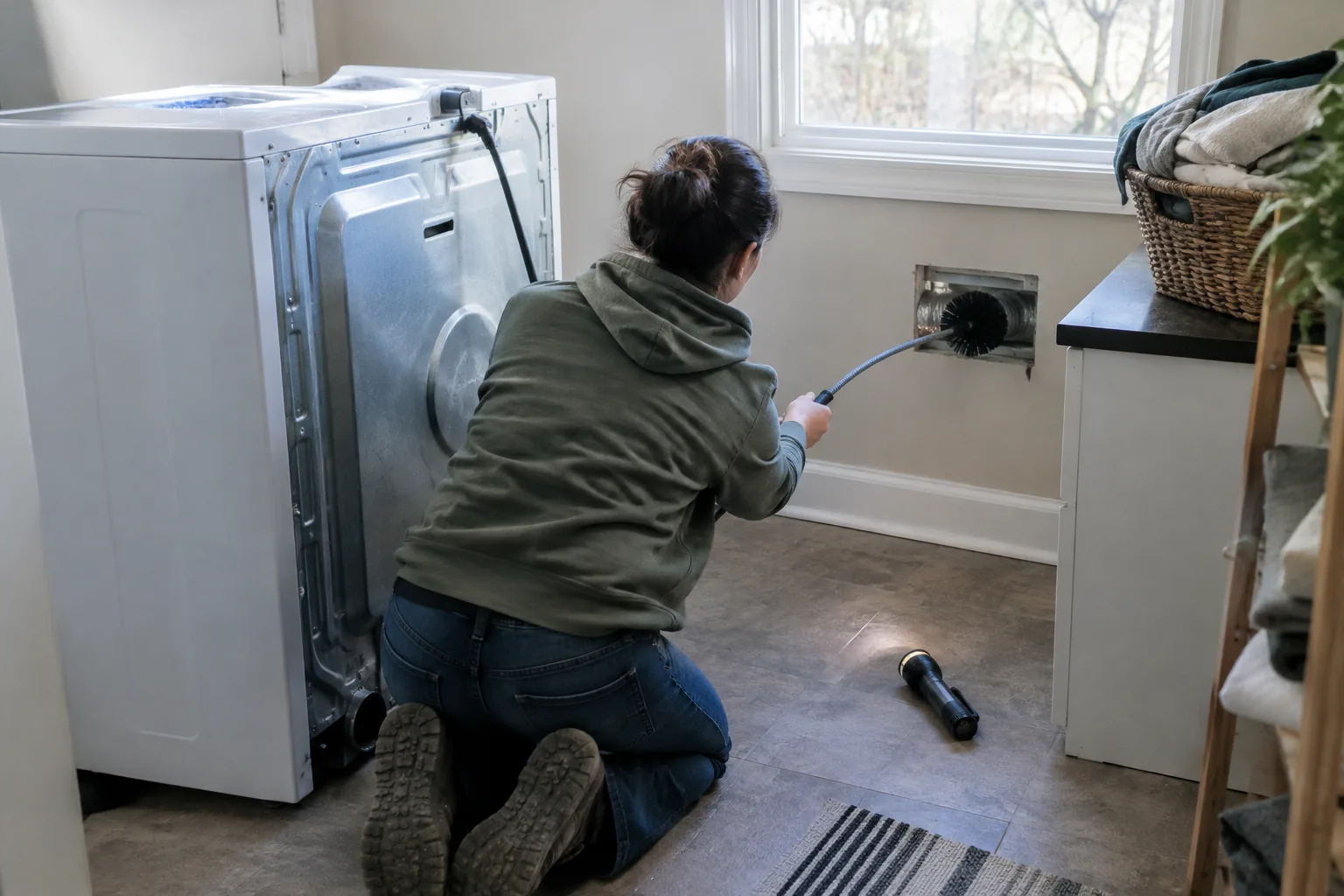
Blowing and vacuuming the lint out
A brush loosens lint, and suction or air moves it out. Vacuum with a hose attachment at the duct opening while you brush, so the lint does not settle back in the room.
A battery-powered blower helps in the tight spots around the lint slot and the back panel area. The AeroBurst is a portable, rechargeable air blower with a brushless motor and three speed settings, and it comes with a dust removal nozzle and a multi-attachment nozzle set for tight vents. Pick the setting that suits the job, and wear a dust mask because the lint will fly.
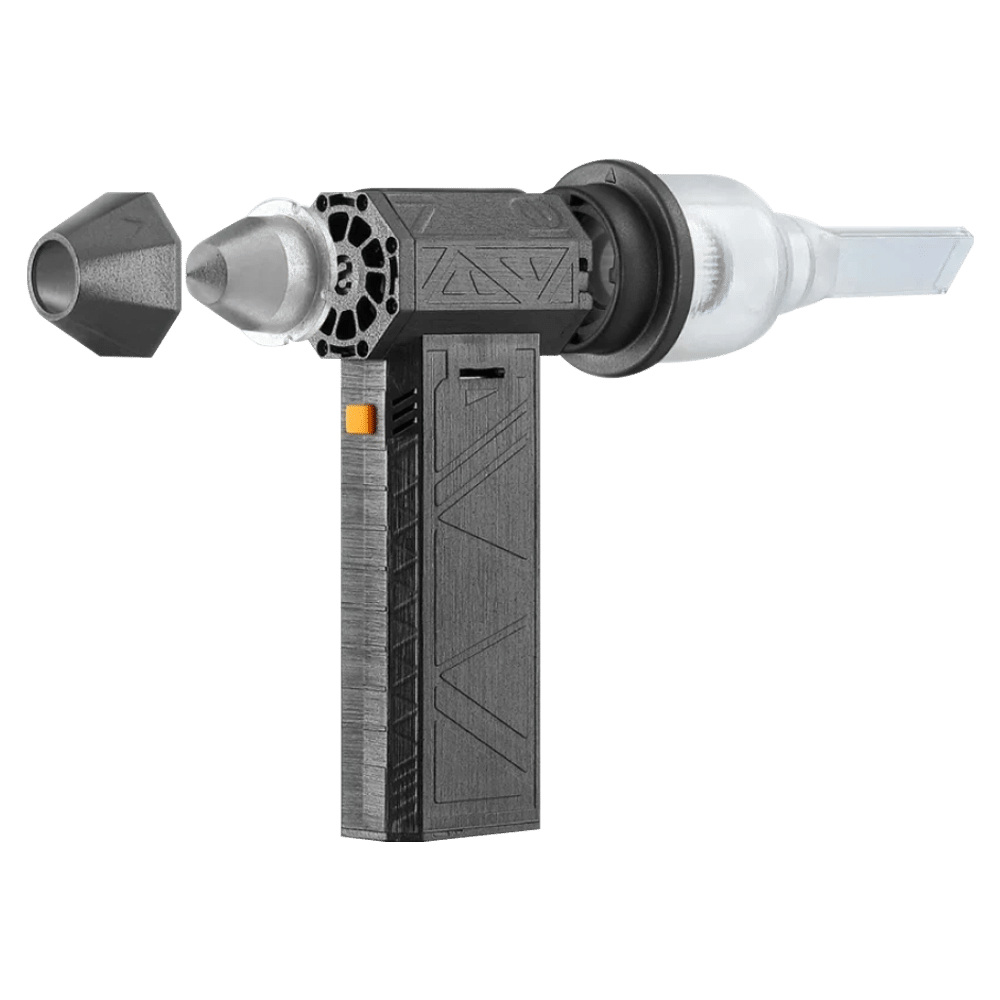 In this guideAeroBurst$129.99View
For the floor, wall and the dryer cabinet, a cordless stick vacuum with attachments does the cleanup. The AeroVault has a 3.5 lb main unit, two suction modes (Standard and MAX) and attachments for corners and other surfaces. Its bin releases with one button so you can empty the lint into the trash. If pets share your laundry room, Good Cordless Vacuum for Pet Hair covers the features to look for.
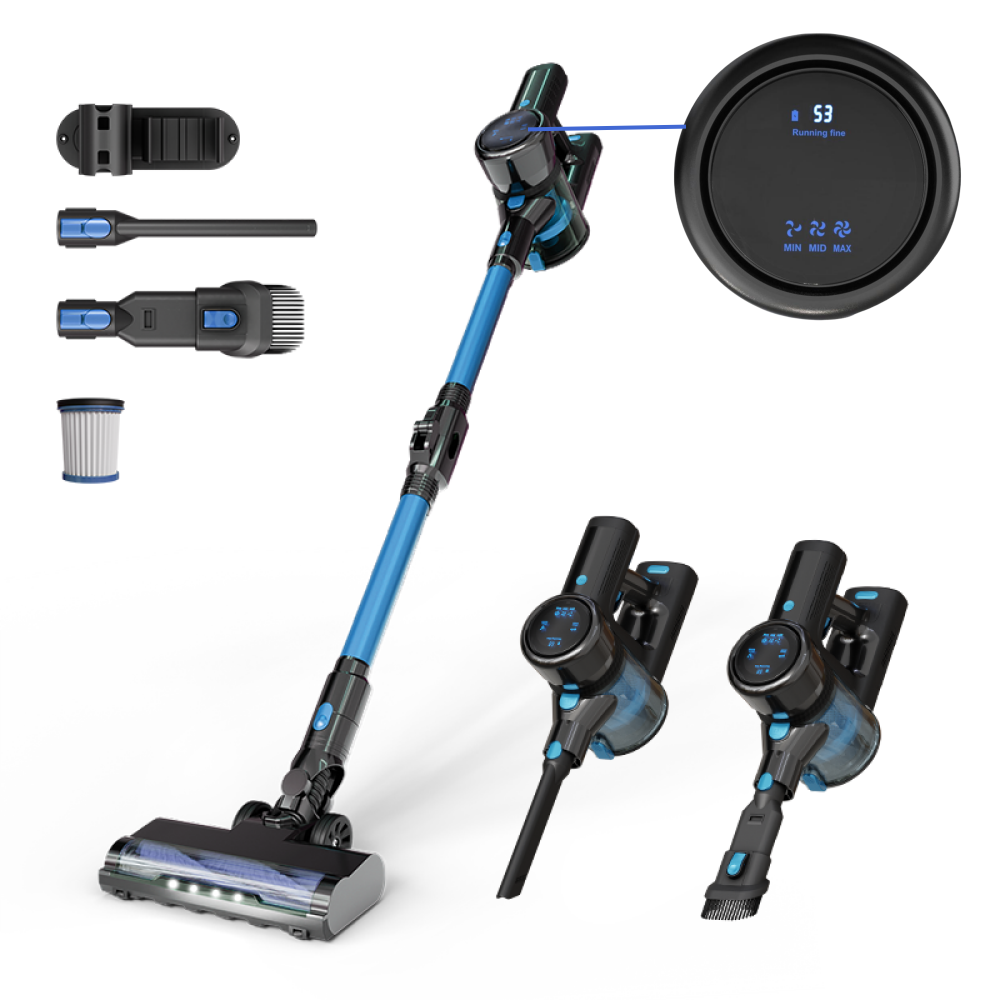 In this guideAeroVault$199.99View
Cleaning the outside vent hood
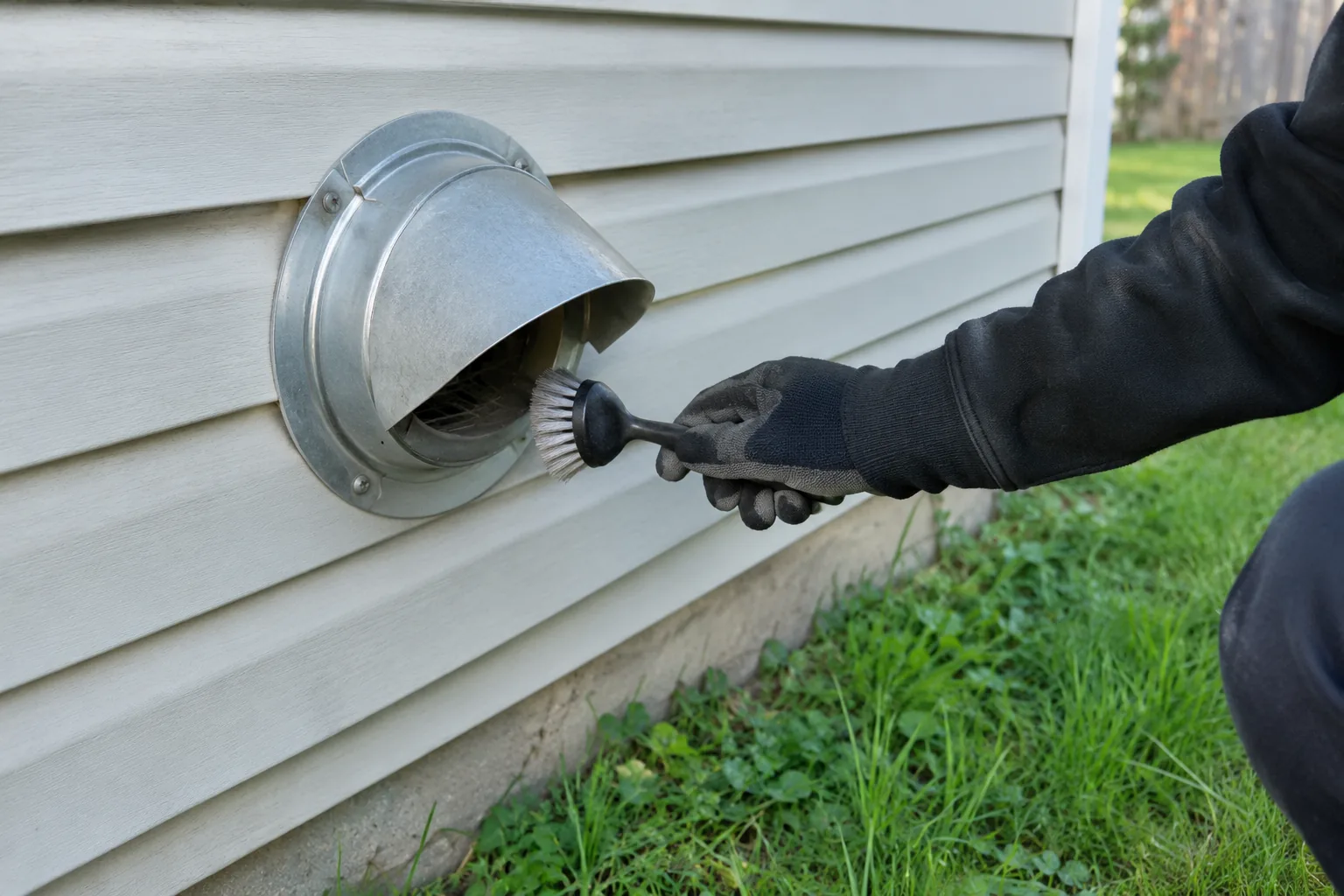
The outside end is where lint packs against the flap or a screen. Look at the hood while the dryer runs: the flap should lift and stay open. If it barely moves, air is not leaving the house.
- Unplug the dryer before you work on the duct.
- Remove loose lint and nests from the hood by hand, wearing gloves.
- Brush into the duct from the outside, then vacuum or blow out what comes loose.
- Check that the flap moves freely and closes when the dryer is off.
- Remove any screen over the opening, since lint clogs it; check the manual for what your setup calls for.
Use a stable ladder only for a low wall hood. A vent that exits on the roof is a job for a service, because of the fall hazard.
Inside or outside: which should you clean from?
The choice depends on the duct run and where it exits. Many homes need both ends cleaned, because lint sits at each end and in the middle. The table below sorts the common situations.
| Situation | Start from | Notes |
|---|---|---|
| Short run, wall exit at ground level | Inside, then outside | Brush from both ends |
| Long or bent run | Both ends | Rods may not reach the middle; consider a service |
| Hood is blocked or flap sticks | Outside first | Clear the opening before running the dryer |
| Roof exit | Ask a service | Ladder and roof work add a fall hazard |
| Damaged, crushed or plastic duct | Inside | Replace it with a metal duct |
Warning signs the vent needs cleaning
Check the vent sooner than your schedule if you notice any of these:
- Clothes are still damp after a normal cycle.
- The dryer or the laundry room feels unusually hot.
- You smell something burning, or a musty smell on clothes.
- Lint collects around the dryer, the door seal or the outside hood.
- The outside flap barely opens while the dryer runs.
If you smell burning, stop the dryer, unplug it and inspect before using it again. If you are unsure what you find, ask an electrician or appliance technician.
Field note
Hold a hand near the outside hood while the dryer runs. If you feel little airflow, clean the duct before the next load.
Dryer vent cleaning schedule
Use this as a baseline for how to clean dryer vent ducts on a routine, and follow your dryer manual if it says otherwise. Heavy use, long ducts and pets call for more frequent checks.
| Task | How often |
|---|---|
| Empty the lint trap | Every load |
| Wash the lint screen and vacuum its slot | Every few months |
| Check the outside flap while the dryer runs | Every few months |
| Brush and vacuum the full duct, inside and outside | At least once a year |
| Inspect the duct for kinks, tears and loose clamps | Each time you clean it |
While the dryer is pulled out, clean the rest of it too: wipe the drum and the door seal, and vacuum the floor behind the machine. For other vacuuming routines, see How to Vacuum a Mattress.
What a vent cleaning costs
Service prices differ by region, vent length, exit location and access, so there is no single figure. Ask for a written quote that says whether it covers both ends of the duct and the outside hood, and whether it includes an airflow check.
A DIY cleaning costs the tools you do not already own. Because the brush, vacuum and blower are reusable, you can use them for each yearly cleaning.
Common mistakes to avoid
- Cleaning only the lint trap and leaving the duct as is.
- Crushing or kinking the duct when pushing the dryer back.
- Using plastic or vinyl duct or leaving joints unsealed.
- Skipping the outside hood.
- Running the dryer with the duct disconnected.