
How to Vacuum a Mattress: Steps, Tools and How Often
Strip the bed, vacuum the top, sides and seams in slow overlapping passes, then let the mattress air out. Here are the tools, steps and a schedule.
The Cobalt Hollow Team
October 29, 2026 · 6 min read
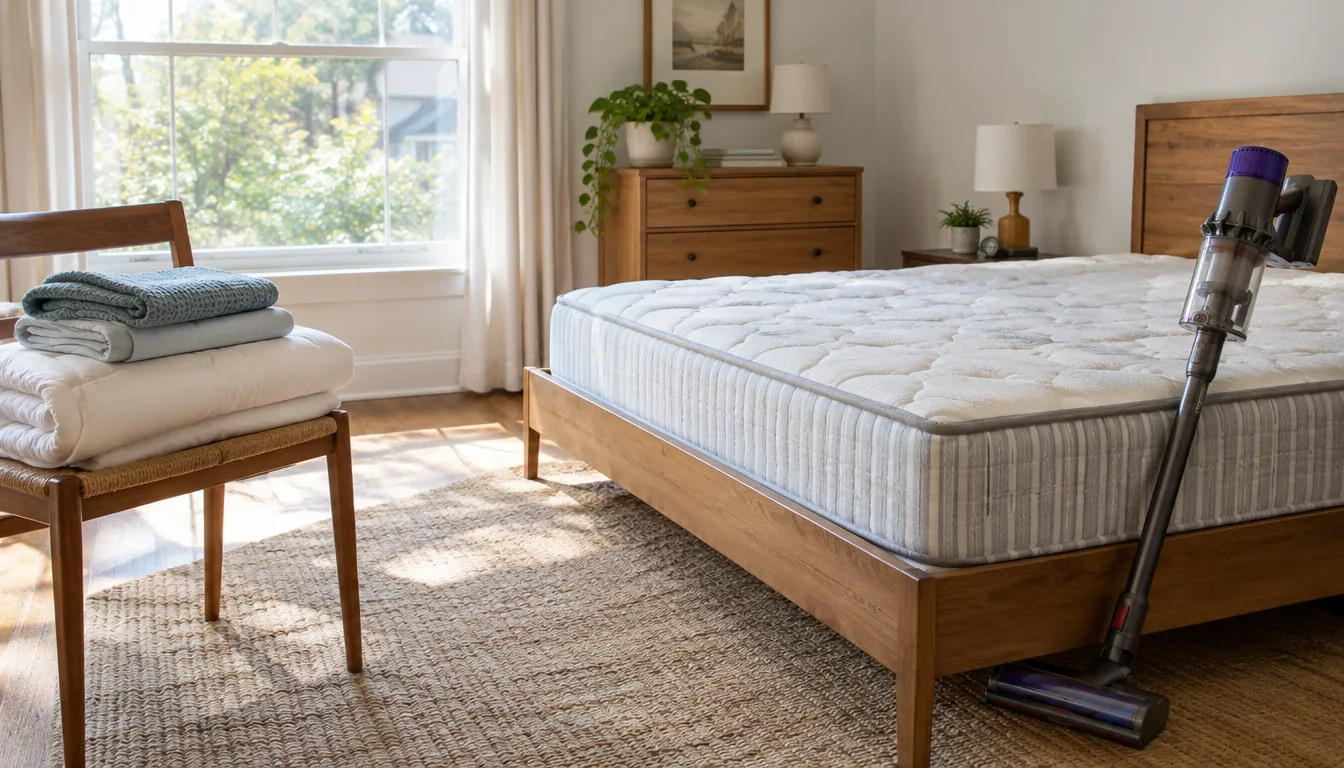
Here is how to vacuum mattress surfaces: strip the bedding, run an upholstery or brush attachment over the whole top in slow overlapping passes, work the seams and edges with a crevice tool, then repeat on the other side if the manual allows flipping. Finish by letting the mattress air out before you make the bed. The job takes a vacuum, two or three attachments and a clean, dry mattress.
This guide covers the tools, the step-by-step routine, how a handheld unit differs from a household vacuum, and a simple schedule you can adjust to your home.
Tools and attachments checklist
Before you learn how to vacuum mattress seams and tops, gather everything so the bed is not left stripped while you hunt for a part. You do not need special equipment to start. A cordless stick, a canister or an upright with a hose will all do the job if you have the right attachments.
| Item | What it is for |
|---|---|
| Upholstery tool | Flat head for the top, sides and base of the mattress |
| Crevice tool | Seams, piping, tufts and the edge where the top meets the side |
| Soft brush attachment | Loosens lint and hair on delicate or quilted fabric |
| Clean filter or empty bin | Leaves room for airflow and debris |
| Fresh sheets and a washable protector | Go on once the surface is clean and dry |
| Mattress care label or manual | Lists what the manufacturer allows, such as flipping or spot cleaning |
Check the dust container before you begin. Empty it first, and again halfway if you are cleaning a large bed, so debris has room to collect.
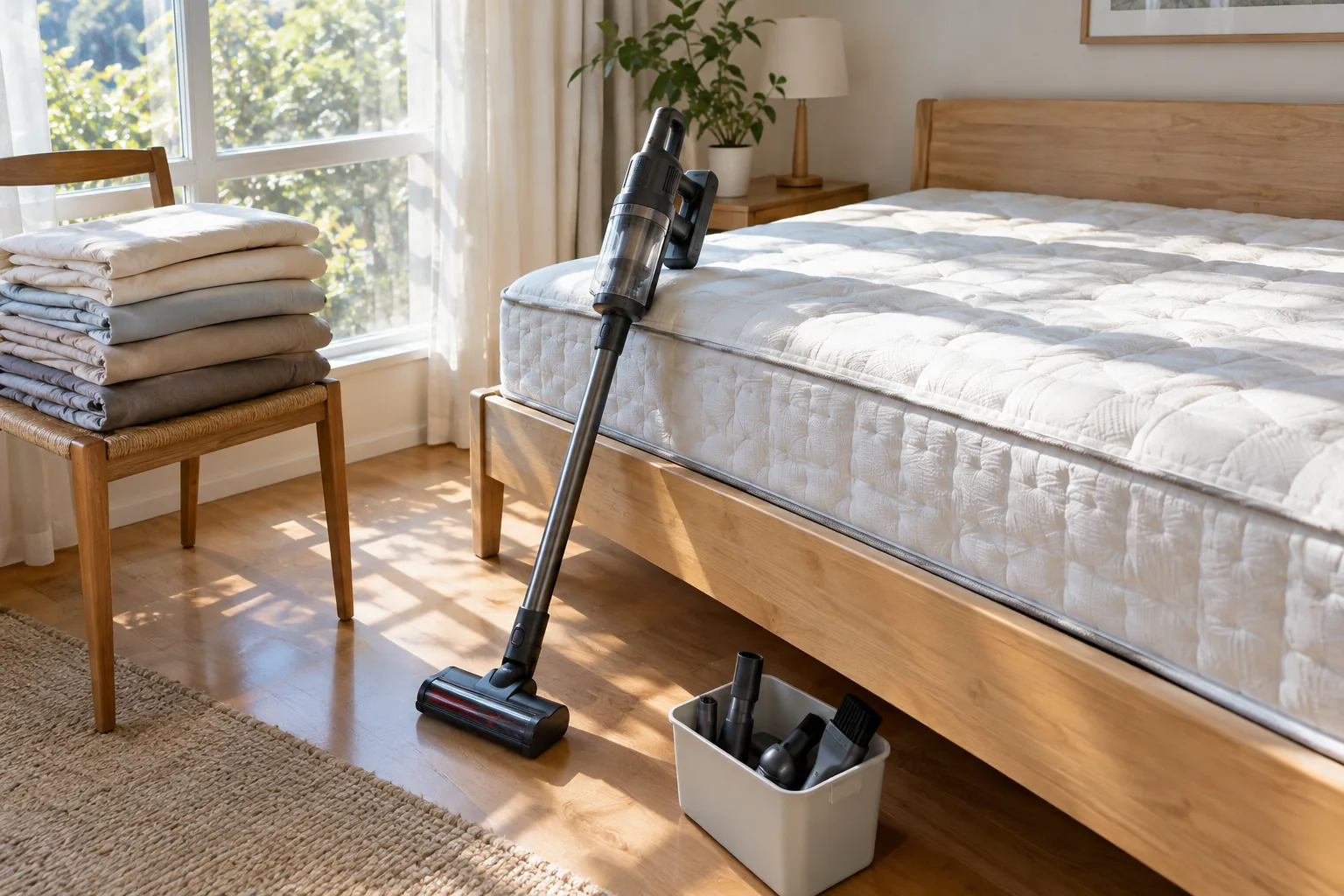
How to vacuum mattress surfaces step by step
- Strip the bed. Remove sheets, the protector and any topper, and put them in the wash according to their care labels.
- Open a window or run a fan so the room has airflow while you work.
- Attach the upholstery tool. If your vacuum has a power setting, choose the lower one for soft or quilted tops.
- Start at the head of the bed and move in straight lines toward the foot, overlapping each pass by a few inches. Go slowly so the suction has time to draw debris out of the fabric.
- Switch to the crevice tool for the seams, the piping around the edge and any buttons or tufts.
- Vacuum the sides, then the top again in lines running the other direction, crosswise to your first set.
- If the manual allows flipping, turn the mattress and repeat. Some modern mattresses are one-sided, so check before you flip.
- Vacuum the bed frame, box spring or slats while the mattress is turned or lifted.
- Empty the dust container outdoors or into a bag, then let the mattress sit uncovered for a while before dressing the bed.
Unplug a corded vacuum before you change attachments, and follow the manual for your model. Using slow overlapping passes matters more than pressing hard.
Field note
Press the head lightly and move it about as slowly as you would walk across a room. Fast, hard passes skim the surface, while slow ones give suction time to reach the upper fibers.
Using a handheld mattress vacuum
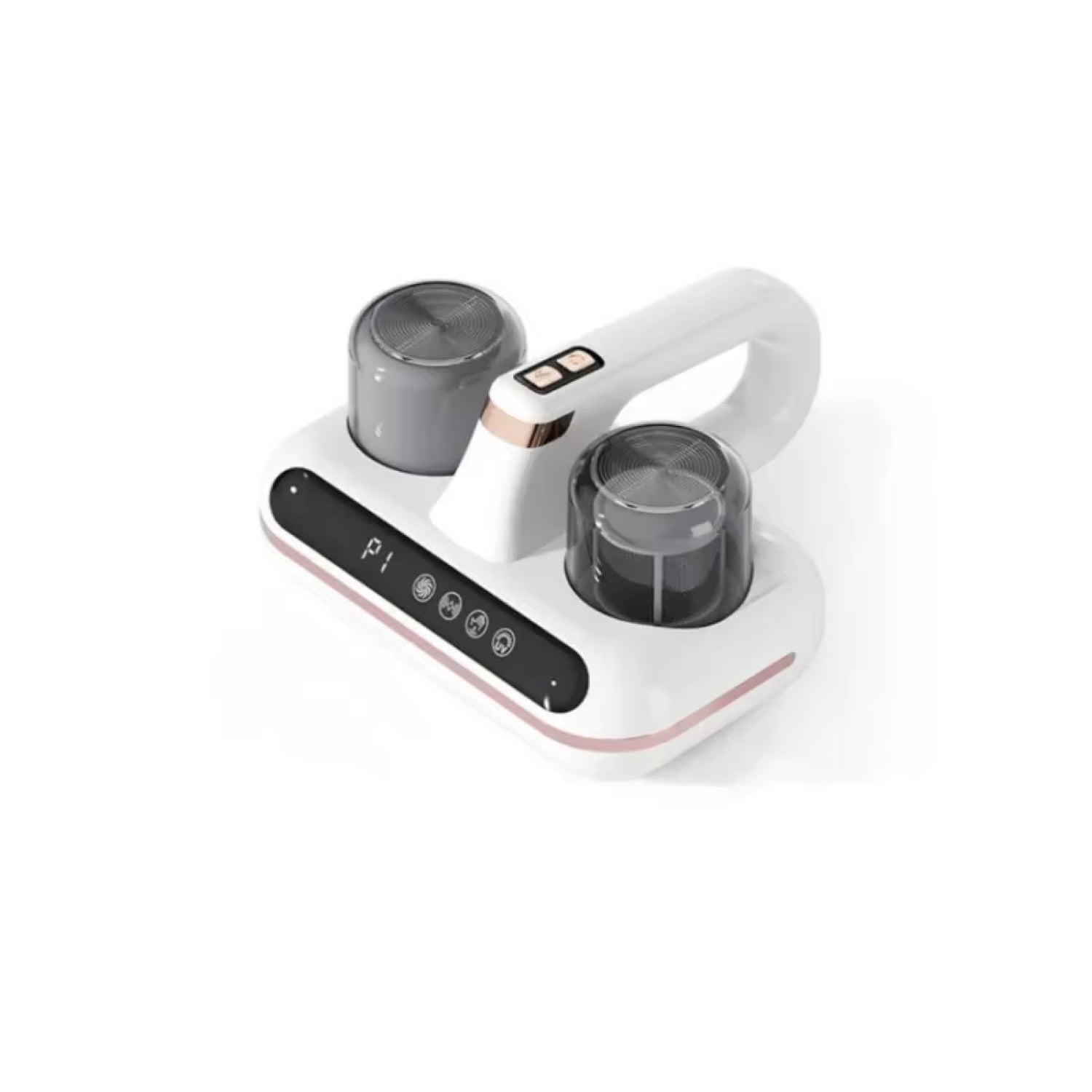
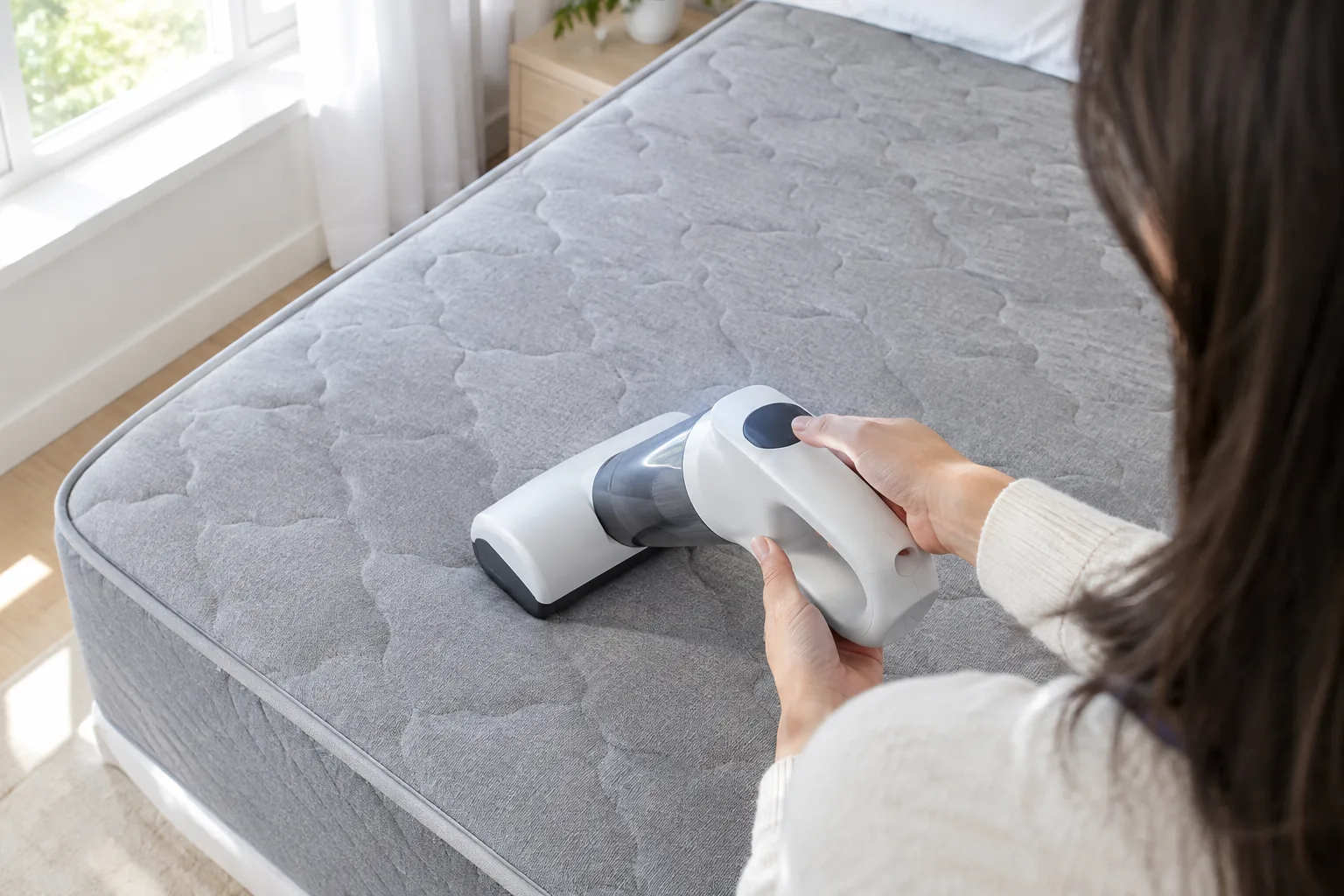
A dedicated mattress vacuum is a handheld unit built for this one job. The DustPure Pro V2 has 16000Pa suction and high-frequency vibration: the head vibrates against the surface while the motor draws debris from mattress fibers into the dust bin.
It also has a built-in UV-C light with an adaptive sensor that reads the fabric beneath it and adjusts the light setting automatically, so you do not change it by hand. Air passes through three filter layers, a pre-filter, a HEPA filter and a final mesh, in a sealed system.
 In this guideDustPure Pro V2$119.99View
Setup and use
Charge the unit with the USB cable, then place it on the mattress. Select a cleaning mode on the LED control panel, which also shows the battery level and filter alerts, and move the head across the surface. When you finish, empty the dust bin and check the filter alert on the display. The box includes the vacuum, a carrying box, the USB charging cable and a quick-start instruction manual. Read the manual for UV-C handling guidance before use.
Regular vacuum, cordless stick or mattress vacuum
Yes, you can use a regular vacuum on a mattress. The difference is in the attachments, the weight you carry and how much of the work depends on your technique. This table compares the three setups.
| Type | Good fit | Watch for |
|---|---|---|
| Canister or upright with hose | Full-size attachments, large dust container | Hose length, dragging the body onto the bed |
| Cordless stick with handheld mode | No cord; the same unit can handle pet hair on floors and upholstery | Battery capacity on large beds; clean the filter often |
| Handheld mattress vacuum | Made for flat fabric surfaces; vibration head and filtration system | Dust bin capacity; empty it when you finish and check the filter alert |
If you are comparing cordless models for the rest of the house, the Robot & Cordless Vacuums collection is a place to browse. For floor-focused buying advice, see our checklist for hardwood floor vacuums.
How often to vacuum a mattress
There is no single schedule that suits every bed. A reasonable starting point is whenever you wash the sheets or change the seasons, then adjust to your household.
| Situation | Routine to try |
|---|---|
| Adult bed, protector in place | Every few months, plus a check when you wash the protector |
| Pets sleep on the bed | More often, since hair collects on the surface |
| Children's bed | After spills, accidents or sleepovers, once the mattress is dry |
| Guest room | Before and after guests stay |
| Before moving or storing | Once, right before wrapping the mattress |
A mattress protector keeps the top fabric covered, but dust can still collect on the protector and around the edges. Vacuum the protector when you remove it, and give the mattress a pass whenever it is bare.
Baking soda, spot cleaning and moving prep
Baking soda
You can sprinkle a thin, even layer of baking soda over a dry mattress, leave it for a few hours, and vacuum it up with the upholstery tool. Test a hidden corner first, and check the care label for anything the manufacturer says to avoid. Make several slow passes, since fine powder can clog a filter, and clean or replace the filter afterward.
Spots and spills
Blot liquid with a clean cloth rather than rubbing, and let the area dry completely before you vacuum. Do not vacuum a damp mattress with a household vacuum unless the manual says it handles liquid.
Before a move
Vacuum both sides, let the mattress air out, and then wrap it in a bag made for mattresses. If you plan to vacuum seal a mattress for storage, follow the instructions that came with the bag and the mattress, since some foam and spring constructions should not be compressed.
Common mistakes to avoid
- Skipping the seams and edges, where lint and hair collect.
- Moving too fast, which leaves debris in the upper fibers.
- Using a stiff bristle brush on thin or quilted fabric.
- Vacuuming with a full bin or a clogged filter.
- Putting sheets back on before the mattress is dry.
- Flipping a one-sided mattress, or ignoring the manual's cleaning notes.
After-cleaning care schedule
Wash sheets and the protector on the schedule in their care labels. Rotate the mattress head to foot if the manual lists it. Clean the vacuum filter and wipe the attachments so they are ready the next time you vacuum a mattress. Repeat the same steps for how to vacuum mattress edges and seams each time, since those spots collect lint first.
Frequently asked questions
Keep reading
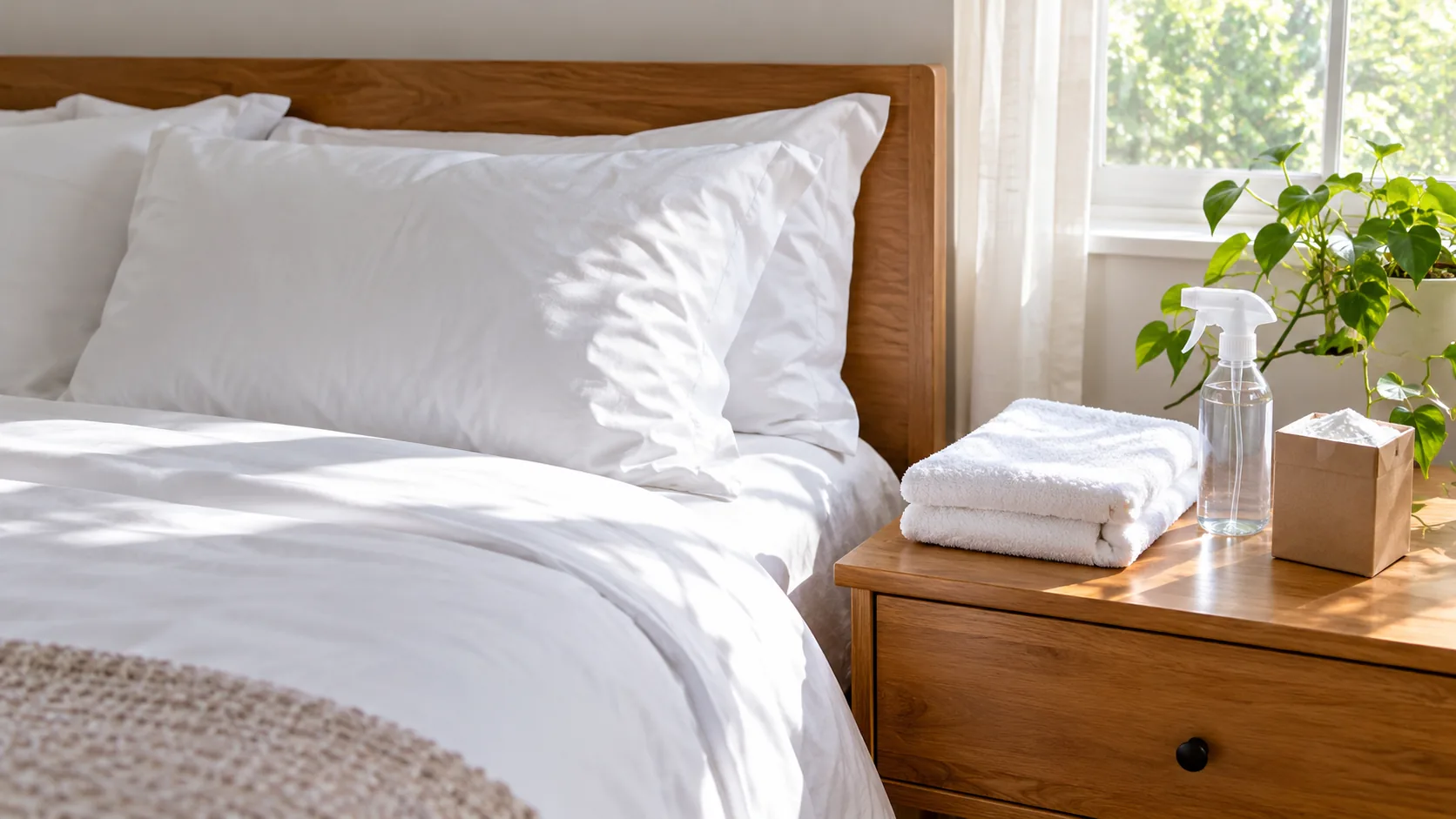 Robot & Cordless VacuumsHow to Clean a Mattress: Stains, Urine, Odors and Deep Cleaning9 min read
 Steam, Sanitizing & Specialty CleanersChemical Free Steam Cleaning: What Steam Handles and What It Can't6 min read
 Robot & Cordless VacuumsWindow Washing at Home: Tools, Steps and When a Robot Helps7 min read