What's a Good Vacuum for Hardwood Floors? A Buyer's Checklist
A good hardwood vacuum has a gentle brush roll, soft wheels, and suction modes. Use this checklist and the type and corded vs. cordless comparisons to choose.
The Cobalt Hollow Team
October 16, 2026 · 8 min read
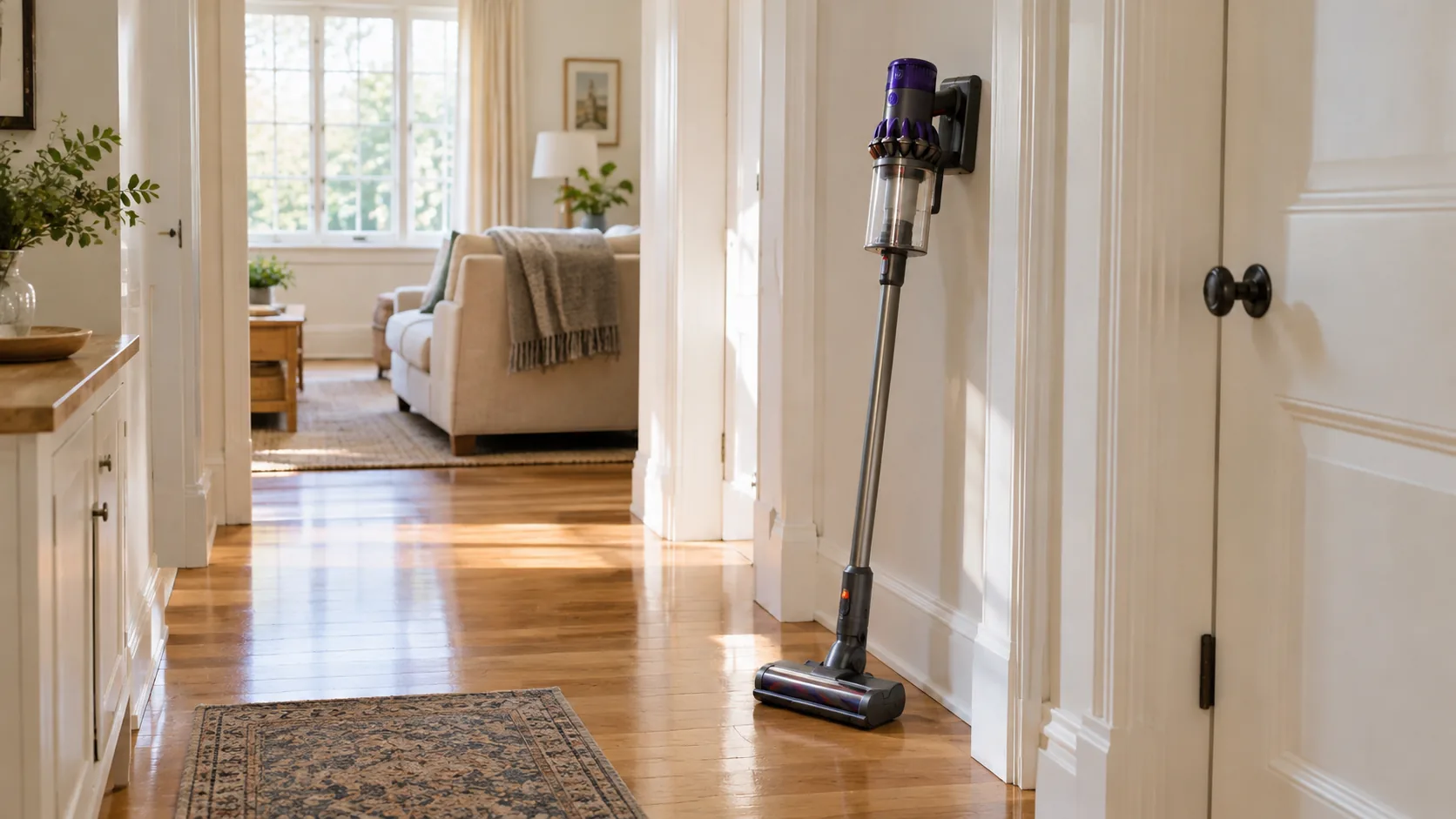
What's a good vacuum for hardwood floors? A good vacuum for hardwood floors lets you soften or switch off the brush action, rolls on smooth wheels, offers a hard-floor suction setting, and uses a sealed filtration system. Corded and cordless sticks can both fit; the right pick depends on your floor plan, your pets, and how often you vacuum.
This guide gives you a feature checklist, a comparison of vacuum types, a corded versus cordless table, two vacuums we stock, and a short decision path so you can narrow the field before you buy.
What's a good vacuum for hardwood floors: the checklist
Grit, more than fine dust, is what tends to scratch a hardwood finish. A vacuum should lift grit off the surface without dragging it across the boards. Use the table below when you read any product page, and mark each line as present, absent, or unclear.
| Feature | What to look for | Why it matters on wood |
|---|---|---|
| Brush roll control | A named hardwood setting, a soft roller, or a way to stop the roll | A stiff spinning brush can flick grit across a finish |
| Wheels and base | Smooth, free-spinning wheels and no exposed hard edges | Stuck grit on a wheel can mark the floor |
| Suction modes | A lower setting for bare floors and a higher one for rugs | You match the setting to the surface type |
| Hair management | An anti-tangle roller | Designed to keep hair from wrapping the brush |
| Filtration | A sealed system with a washable filter | Routes air through the filter instead of leaking it from seams |
| Reach | An adjustable wand and a handheld mode | Baseboards, stairs, and furniture edges |
| Bin | A visible fill line and a one-button release | Lets you empty it before it overfills |
Shoppers searching for good vacuum cleaners for hardwood floors often start with suction numbers. Start with this table instead, then compare power once the wood-friendly features are covered. Strong suction is useful, but it only helps if the brush and wheels are also gentle on the finish.
Brush roll, wheels, and weight
Why the brush roll matters most
A stiff, fast-spinning brush works well on carpet but can be harsh on a bare finish. On wood you want the brush gentle or switched to a hard-floor mode, with airflow doing most of the lifting. This helps you clean hardwood without dragging grit across it.
- A surface selector with a named hardwood setting.
- A roller with soft bristles or fins rather than only stiff nylon.
- A roller you can remove and clean, since a wrapped brush can drag debris.
To check it at home, unplug a corded unit or remove the battery first. Then flip the head over and spin the roller by hand. It should turn freely, with no stones, staples, or tangled hair in the bristles. Cut away wrapped hair with scissors before it builds up.
Wheels and maneuverability
Hard plastic wheels can leave scuffs, especially if grit is stuck to them. Look for wheels that spin freely, and wipe them with a dry cloth when you empty the bin. Fixed or squeaky wheels suggest grit has worked its way in.
A lighter machine is simple to lift over thresholds instead of dragging, and easy to steer along baseboards and around table legs. Check the listed weight of the main unit, and picture carrying it up a flight of stairs. Also check how the machine stands: a self-standing body lets you set it down upright mid-job without leaning it on furniture.
Vacuum types compared: stick, upright, canister, robot
The body style changes how a vacuum handles sealed hardwood and planks. Here is how the common types compare.
| Type | How it works on hardwood | Watch for |
|---|---|---|
| Stick (corded or cordless) | Slim and light, easy to steer along baseboards | Choose a model with a hardwood setting or soft roller |
| Upright | Wide head and large bin, suited to larger rooms | Heavier to lift; look for a brush roll you can switch off |
| Canister | Light floor head on a hose; the heavier body rolls behind on its own wheels | Check for soft body wheels, since the body trails behind you |
| Robot vacuum | Runs on a schedule for daily upkeep | Often needs a manual pass for corners and stairs |
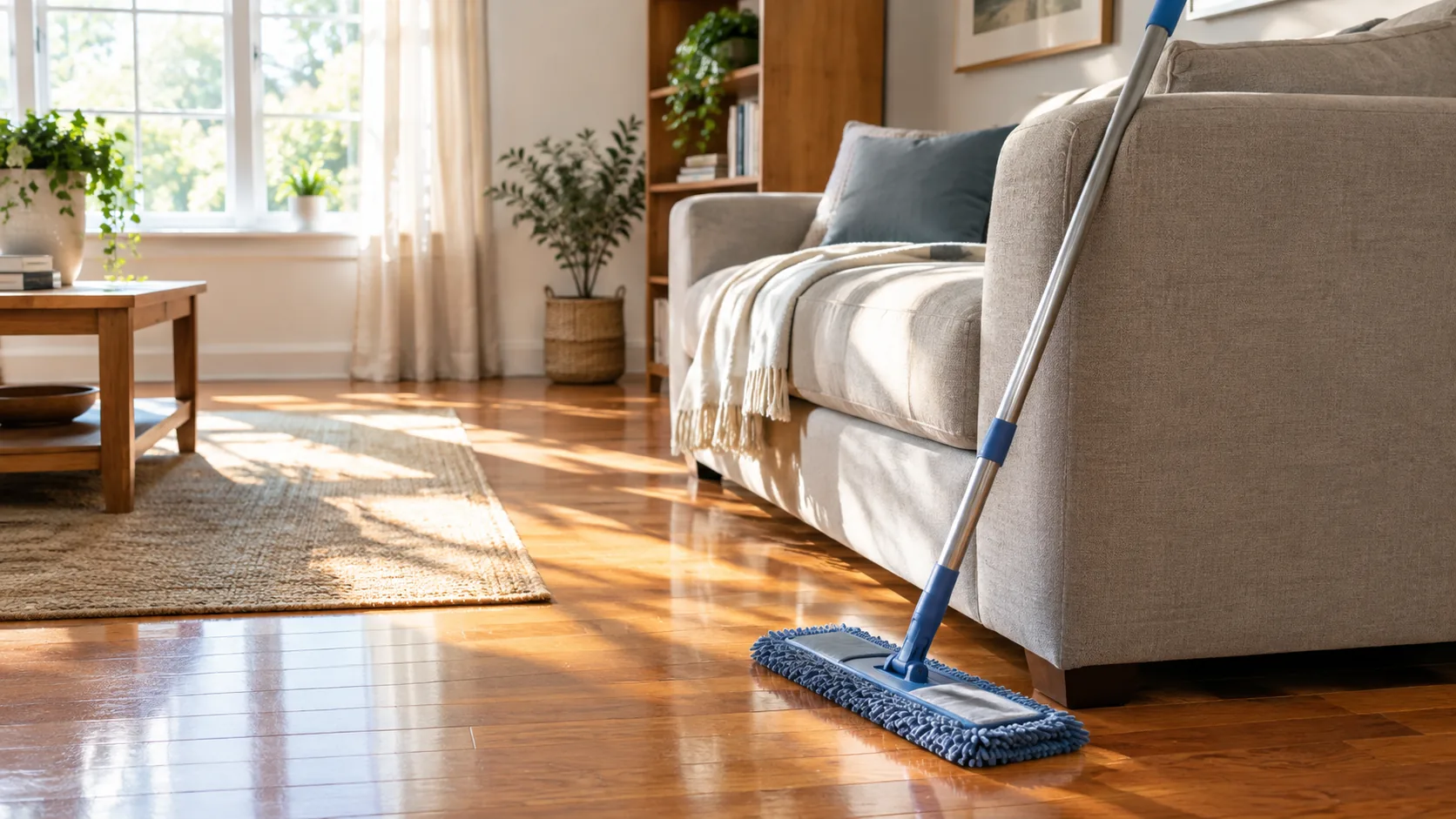
A robot vacuum can take care of daily crumbs, and some models add mopping. Mopping adds moisture, so read your floor finish maker's guidance before using any wet function on wood. If you want to look at that category, see our Robot & Cordless Vacuums collection.
Corded or cordless: which type fits
Both types can work on wood. The difference is in how you use them day to day.
| Factor | Corded stick | Cordless stick |
|---|---|---|
| Power source | Wall outlet through a cord | Removable battery |
| Run time | Runs while plugged in | Depends on battery charge; a spare can extend a session |
| Movement | Bound by cord reach and outlet changes | Free to move room to room |
| Storage | Cord needs wrapping or hanging | Needs a charging spot near an outlet |
| Suits | Whole-house sessions, larger floor plans | Quick pickups, stairs, small to mid-size homes |
If you vacuum in one long weekly session, a corded unit means you do not need to watch a charge indicator mid-job. If you grab the vacuum several times a week for crumbs and pet hair, a cordless stick vacuum is simple to keep within reach.
When comparing cordless vacuum cleaners for hardwood floors, look closely at the battery. A swappable battery lets you keep going when the first one runs out, while a built-in battery means you wait for a recharge.
Two options we stock
A corded stick: VortexGlide
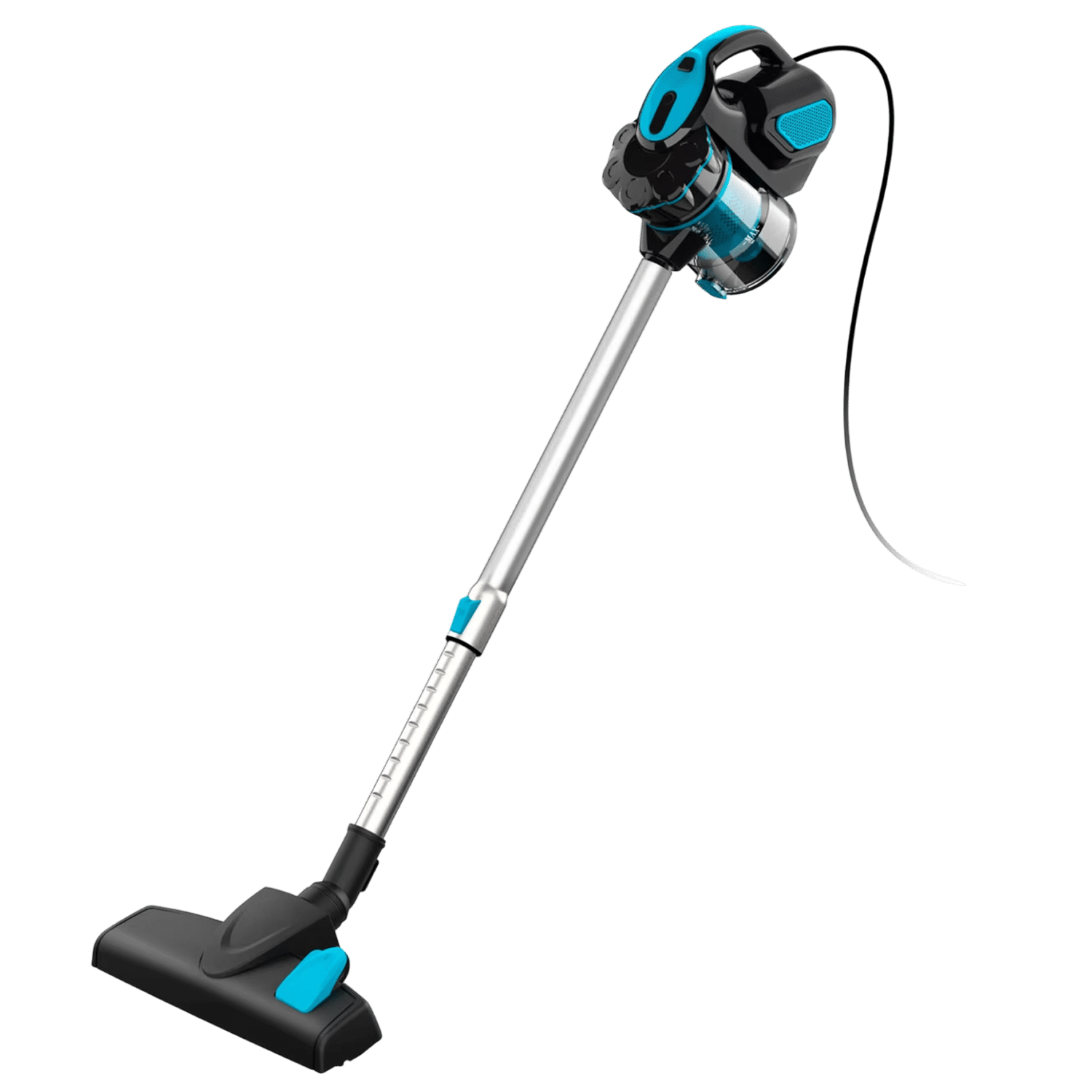
The VortexGlide is a corded stick vacuum with a 600W motor and a 6-meter cord. Its surface switch includes a hardwood setting, along with tile, carpet and upholstery, so you do not change heads between rooms.
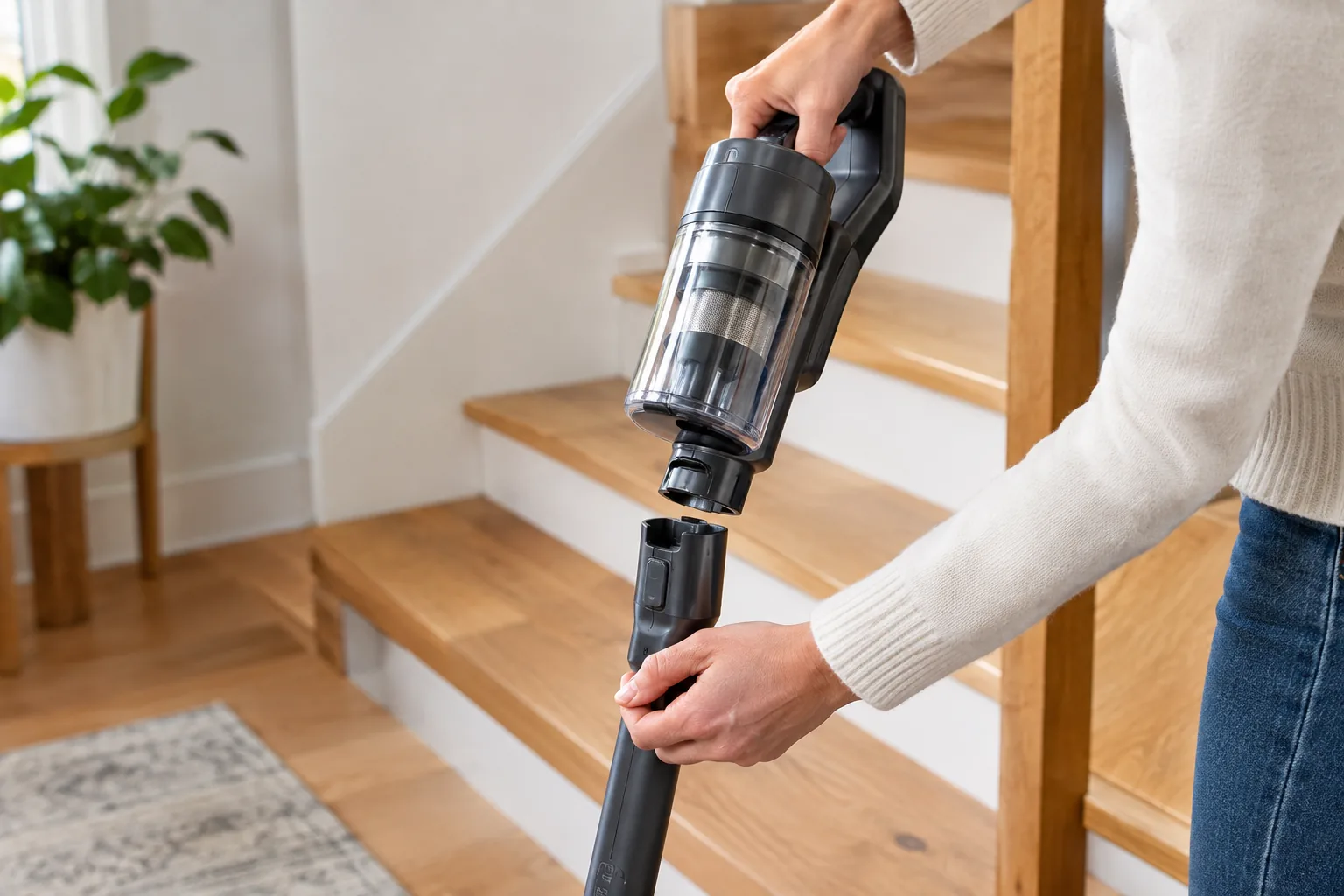
The wand extends anywhere from 19 to 31 inches, and the handheld unit detaches for stairs and furniture. The 1L bin has a molded MAX line, and the cyclone filter is washable. The box includes a 2-in-1 brush attachment and a crevice nozzle.
 In this guideVortexGlide$159.99View
A cordless stick: AeroVault
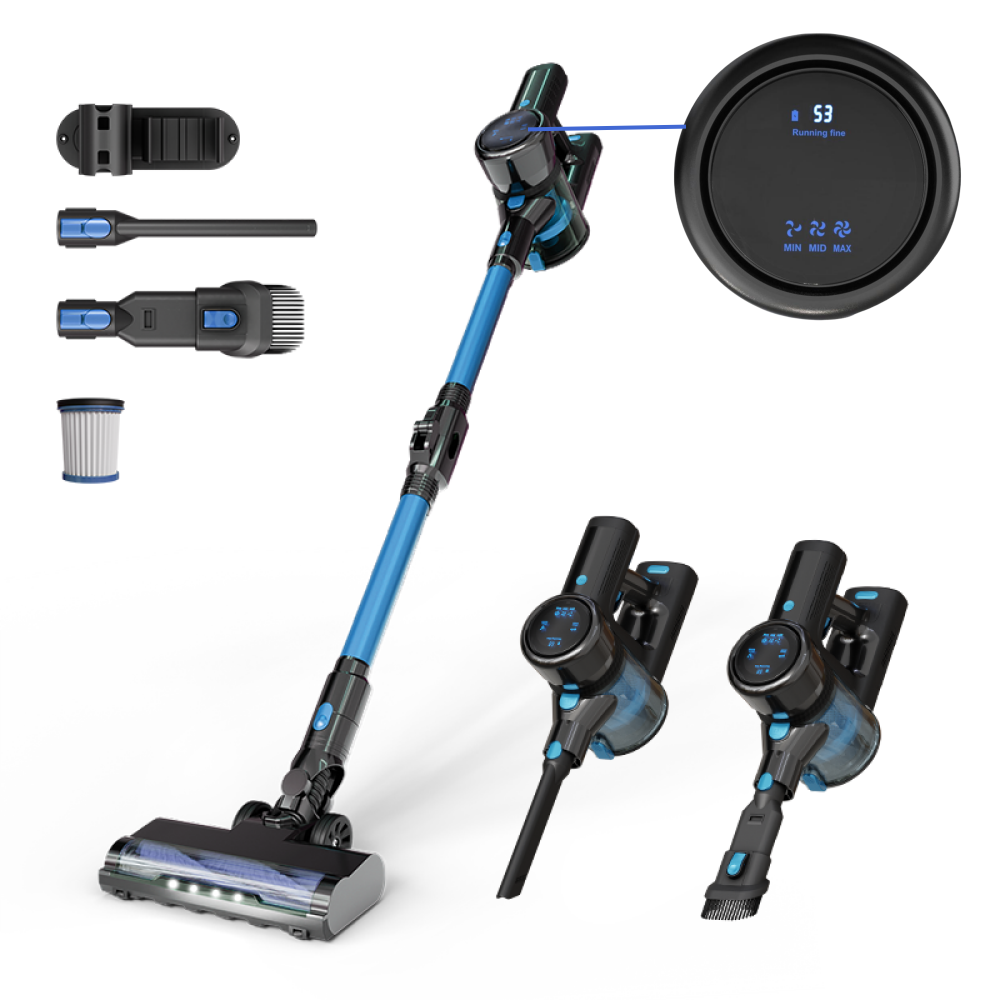
If you want a good cordless vacuum for hardwood floors, the AeroVault matches several items on the checklist. The main unit weighs 3.5 lbs, and its finned anti-tangle roller is shaped to shed hair as you work.
It has two modes. Standard covers everyday dust and hair on hard floors, while MAX raises suction for carpet and heavier debris. The battery snaps out, and a spare (sold separately) can charge on the wall-compatible adapter while the first is in use.
Filtration runs through five stages, including a washable HEPA filter, and the body stands on its own. The main unit has built-in LED lights, and four cleaning attachments are included.
 In this guideAeroVault$199.99View
Pets, mixed floors, and what a vacuum can't do
Pet hair and mixed flooring
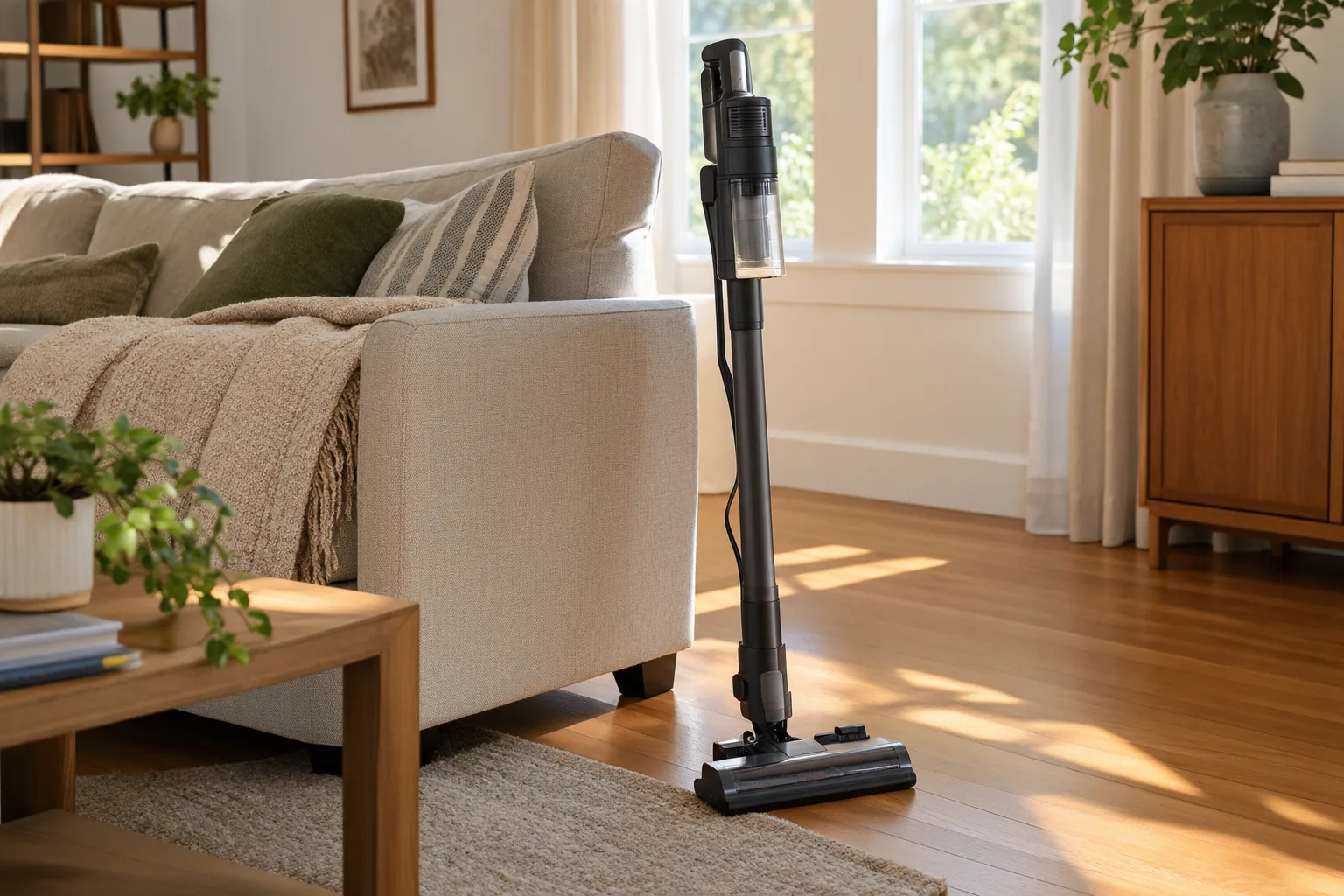
For pet hair, look for a vacuum that keeps hair from wrapping the roller and holds it in a bin you can empty without handling much. An anti-tangle roller, a sealed bin, and a handheld attachment for furniture cover most of the work. If you have pets, plan on a quick pass more often than a weekly session.
If your home mixes hardwood with carpet or area rugs, one machine with selectable settings can cover both. On the VortexGlide, you turn the surface switch from hardwood to carpet. On the AeroVault, you stay in Standard mode on the boards and move to MAX for carpet and heavier debris. Lift the head over rug fringes and edges so they do not catch in the roller, and switch back to the hard-floor setting when you return to the wood.
Keep a mat at each door to cut down on tracked-in dirt. If you have questions about how your pet's claws or accidents affect your floor finish, ask a flooring specialist.
Sticky residue and delicate surfaces
A vacuum picks up loose dust and grit. It will not lift dried spills or sticky residue. For those, check your finish maker's cleaning guidance and use only what it allows, usually a lightly dampened soft cloth. Vacuum first so you are not wiping grit across the surface.
Unsealed, waxed, or antique planks are more delicate surfaces. If you are unsure what finish you have, use the softest setting, keep the roller off, and ask a flooring specialist.
Common mistakes and a care schedule
Mistakes to avoid
- Leaving the roller spinning on bare wood when the machine offers a hard-floor setting.
- Ignoring the wheels. Grit stuck to them can scratch under the weight of the machine.
- Skipping a pre-sweep. Pick up stones or tracked-in sand by hand or with a soft broom first.
- Overfilling the bin. Empty it at the fill line.
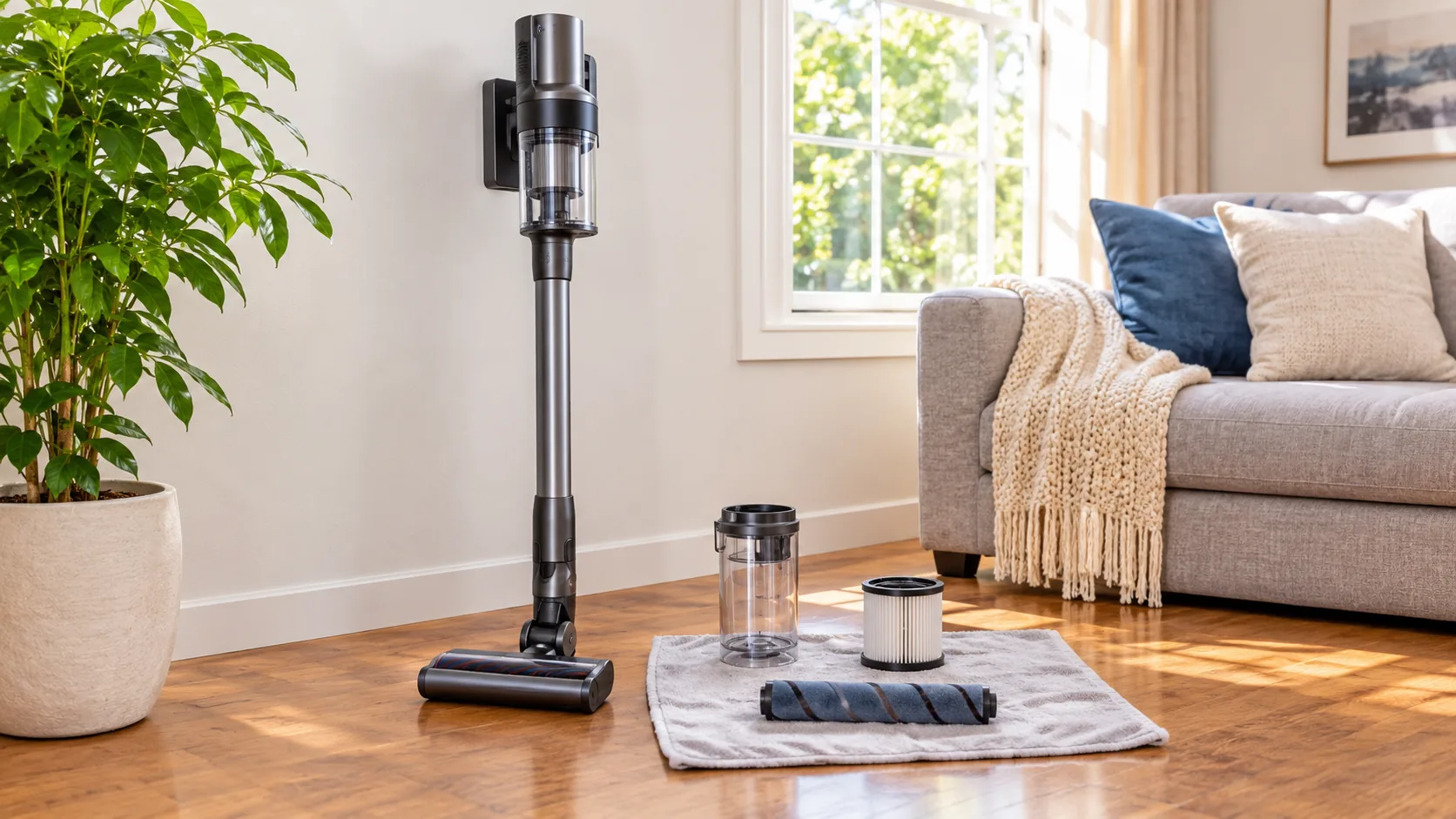
- Forgetting filter care. Rinse washable filters per the manual and let them dry fully before reinstalling.
- Buying on suction numbers alone. A spec only tells part of the story; brush control and wheels matter on wood.
Field note
Before the first pass, unplug a corded unit or remove the battery, then flip the vacuum over and check the roller and wheels for pebbles or wrapped hair. A quick look helps you catch debris before it touches the finish.
A simple care schedule
- After each use: empty the bin and wipe the wheels.
- Every few uses: pull hair off the roller and check for trapped grit.
- On a routine you set: rinse the washable filter as the manual describes, and let it dry fully.
Regular vacuuming is a good habit for hardwood because it removes grit before it is ground into the finish. Entryways and kitchens tend to collect more grit, so give them a quick pass more often than bedrooms. Unplug a corded unit, or remove the battery on a cordless unit, before removing the roller or filter, and follow the manufacturer's instructions for any washing.
How to decide what's a good vacuum for hardwood floors
- Measure your space. Count the rooms and the outlets you would need to reach.
- Pick a type and power source using the two tables above.
- Confirm the hardwood features: a gentle roller or hardwood setting, smooth wheels, and suction modes.
- Check upkeep: a washable filter, a removable roller, and a bin that empties cleanly.
- Check your manual and your floor finish maker's guidance for cleaning advice.