How to Clean a Waffle Maker Without Ruining the Nonstick
Unplug it, let the plates cool slightly, and wipe with a damp cloth or soft sponge. Here is the routine, plus a deep clean for baked-on batter that does not involve submerging the unit.
The Cobalt Hollow Team
October 20, 2026 · 6 min read
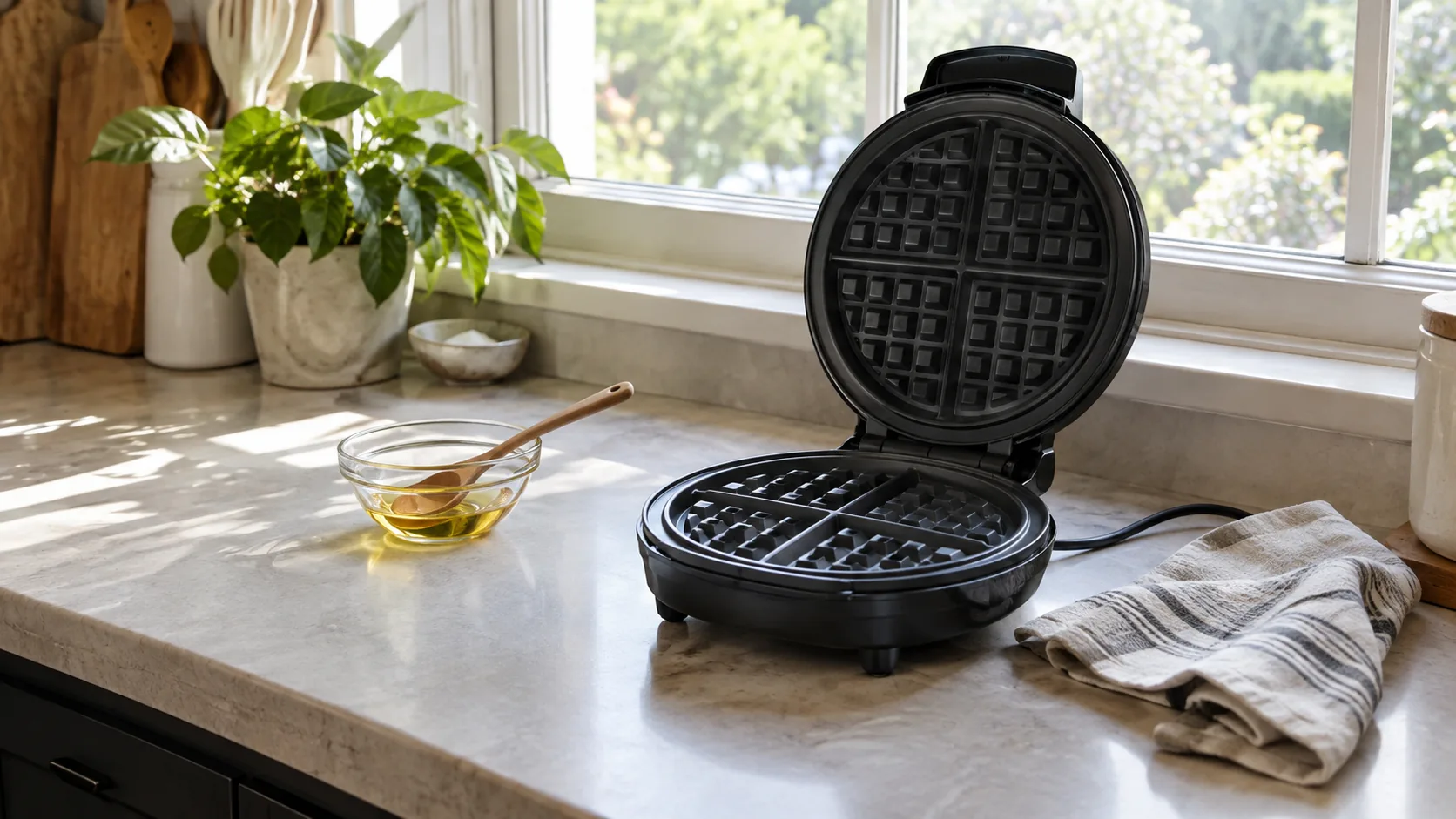
To learn how to clean a waffle maker, start by unplugging it and letting the plates cool slightly. Then wipe them with a damp cloth or soft sponge and work crumbs out of the grooves with a soft tool. Keep the whole unit out of water, because it holds a heating element and a cord.
This guide gives you a short routine for after each use, a deep clean for baked-on batter, and a schedule you can follow. The steps suit nonstick plates, where the coating is the part worth looking after.
What to gather before you start
The job needs items you probably own already. Leave abrasive pads and metal tools out of the pile, since they scratch a nonstick coating.
- Soft cloth or microfiber towel, slightly damp
- Soft sponge with no scouring side
- Paper towels for the first wipe
- Wooden, silicone or nylon tool for crumbs
- Soft-bristled toothbrush for the grooves
- Cooking oil for stuck batter
- Baking soda for an occasional stubborn spot
Read your manual first. Some models have removable plates and some do not, and the manual states what the maker allows for washing.
How to clean a waffle maker after each use
A quick wipe once the plates have cooled slightly means batter has less time to dry onto the surface. Warm is the target, not hot: unplug it and wait the cooling time your manual gives before wiping.
- Unplug the waffle maker and open the lid fully.
- Let the plates cool slightly. Do not touch them until the heat has dropped.
- Dab loose crumbs and drips with a dry paper towel.
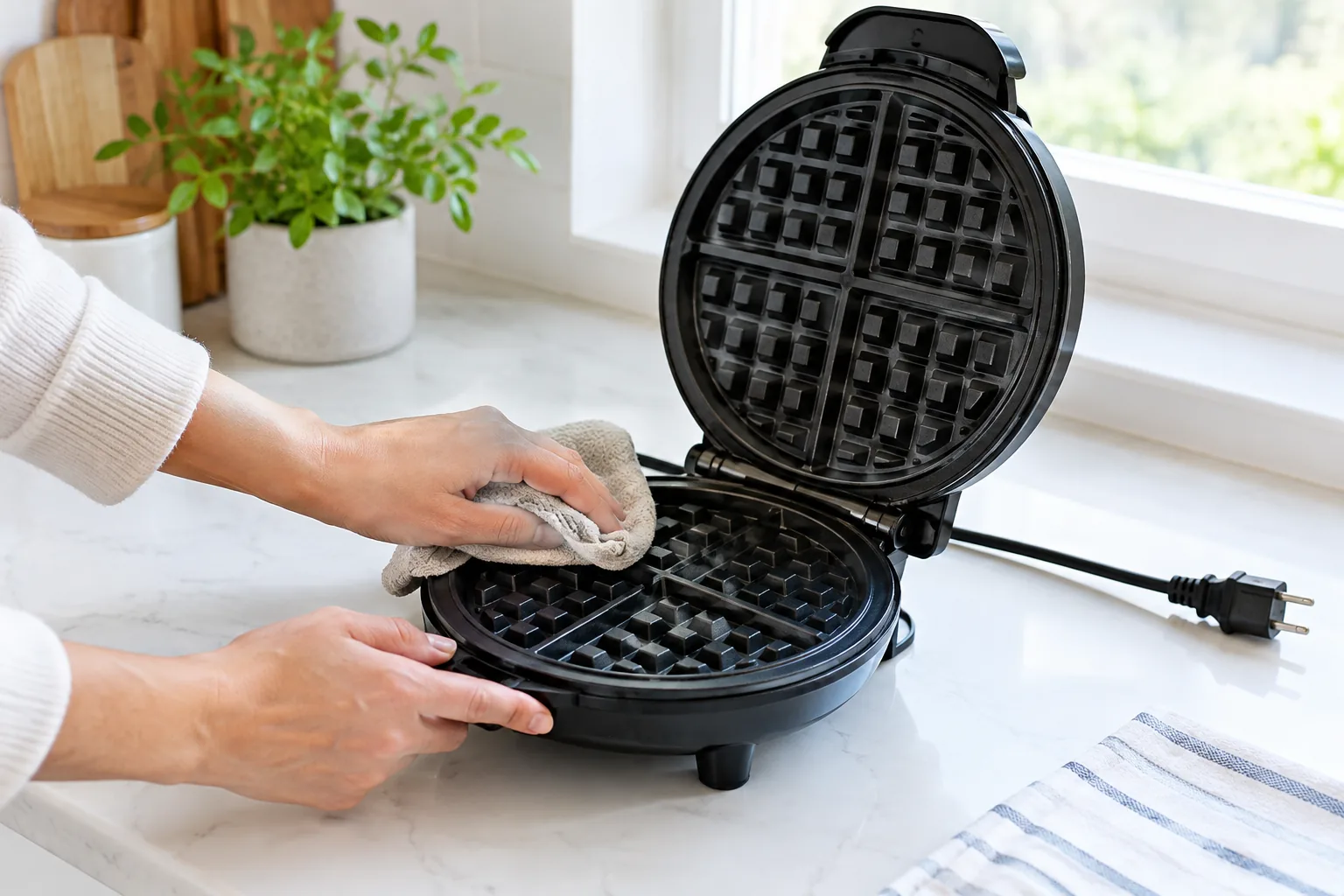
- Wipe each plate with a damp cloth or soft sponge, following the grooves.
- Lift crumbs from the corners with a wooden or silicone tool, not metal.
- Wipe the outer shell and the lid edge with a barely damp cloth.
- Leave the lid open until everything is dry, then store it.
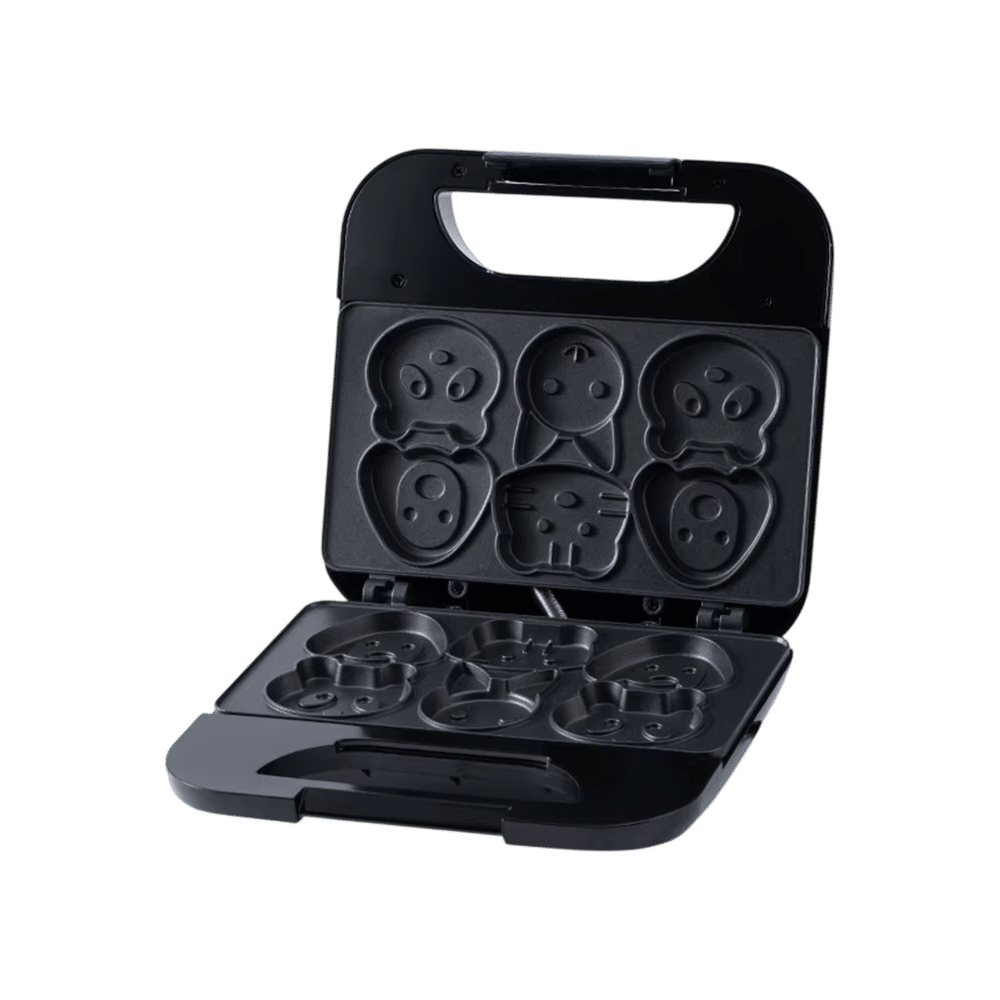
That damp cloth or soft sponge method matches the care the GoldenGriddle instructions call for on its non-stick plates: let them cool slightly, wipe, and avoid metal utensils on the coating.
 In this guideGoldenGriddle$139.99View
Deep clean for baked-on batter
When batter has welded itself to the plates, heat and force are the wrong tools. For a deep clean, a little oil and patience loosen the residue without scraping the coating. This is the method for when the daily wipe is no longer enough.
Step by step
- Unplug the unit and let it cool fully.
- Brush a thin layer of cooking oil over the stuck spots.
- Close the lid and let the oil sit so it softens the residue.
- Open the lid and rub gently with a soft sponge or a wooden tool.
- For a stubborn spot, and only if your manual allows it, mix a little baking soda with water into a paste and rub lightly with a soft cloth. Baking soda is mildly abrasive, so keep the pressure light.
- Wipe away the paste with a clean, damp cloth, then wipe again with a dry one.
Another option is a warm damp towel laid on the plates with the lid closed, with the unit unplugged and the plates cooled. It softens dried batter before you wipe. Use a cloth that is damp, not dripping, and follow your manual.
For deep grooves, a soft-bristled toothbrush fits where a sponge does not. Brush along the groove rather than across it, then pick up the loosened crumbs with a paper towel.
Match the fix to the mess
Different residues call for different responses. Use this table to pick a tool that fits the problem.
| Problem | What to use | What to skip |
|---|---|---|
| Fresh crumbs | Dry paper towel, then damp cloth | Running water over the plates |
| Sticky batter in grooves | Soft toothbrush, wooden tool | Forks, knives, metal picks |
| Baked-on patches | Cooking oil, then soft sponge | Steel wool, scouring pads |
| Cloudy film or oil residue | Damp cloth with a drop of mild dish soap, wiped off well | Soaking the unit |
| Stained outer shell | Barely damp cloth | Spray cleaner aimed at the hinge or vents |
| Sticky cord or plug | Dry cloth while unplugged | Damp cloth near the prongs |
Field note
Do not submerge the unit. A waffle maker has a heating element and a cord, so wipe it with a damp cloth, keep water out of the hinge and vents, and ask an electrician or the maker if water gets inside.
Check the cord and the edges
Cleaning is a good moment to look over the parts around the plates. Do this with the unit unplugged and cool.
- Run your fingers along the cord and look for cracks, kinks or frayed spots. If you find damage, stop using the unit and ask an electrician or the maker.
- Look at the plug and prongs for sticky residue or discoloration.
- If your model has a drip edge or overflow channel around the plates, wipe it with a damp cloth so spilled batter does not collect there.
- Check that the hinge moves freely and has no dried batter in it.
Skip any part you cannot reach with a cloth or soft tool, and see the manual for what the maker allows.
Mistakes that wear down nonstick plates
Damage to a coating tends to come from small habits repeated over time. Check this list against how you work now.
- Using metal utensils to lift waffles or scrape batter
- Scrubbing with steel wool or a scouring pad
- Spraying cleaner directly onto the plates or hinge
- Putting the unit in a sink to soak
- Closing the lid on a damp surface and storing it that way
- Skipping the wipe and letting sugary batter sit for days
If you want to know how to wash a waffle maker with plates that detach, rely on the manual. If the manual does not mention removable plates, assume they are fixed and wipe them in place.
Habits at the counter that shape cleanup
What happens before the first pour changes how much is left on the plates afterward. Small choices add up.
Pour with restraint
Overfilling sends batter overflow down the sides and into the hinge, where a cloth is hard to work in. Pour toward the center and close the lid gently. If a model has an LED signal for readiness, like the one on the GoldenGriddle, wait for it before you pour.
Choose the right tool
Lift waffles with a wooden or silicone utensil. Those are the materials to reach for on a coated surface, since metal can scratch it.
Mind the batter
Sugary or cheesy batters leave residue that is slower to wipe off once it cools. The GoldenGriddle plates can also take pancake mix, cookie dough and cake batter, so apply the same wipe-down after any of them. If you blend your batter before pouring, this comparison of a blender and a food processor shows which kitchen tasks suit which tool.
A simple care schedule
Spread the work out and no single job becomes a chore. This schedule fits a household that makes waffles weekly.
| When | Task |
|---|---|
| After each use | Unplug, cool slightly, wipe plates with a damp cloth or soft sponge |
| After sugary or cheesy batter | Add a toothbrush pass along the grooves |
| Before each use | Look over the cord and plug for damage |
| Every few uses | Wipe the outer shell, lid edge and the area around the hinge |
| When residue builds up | Oil-and-wait deep clean from the steps above |
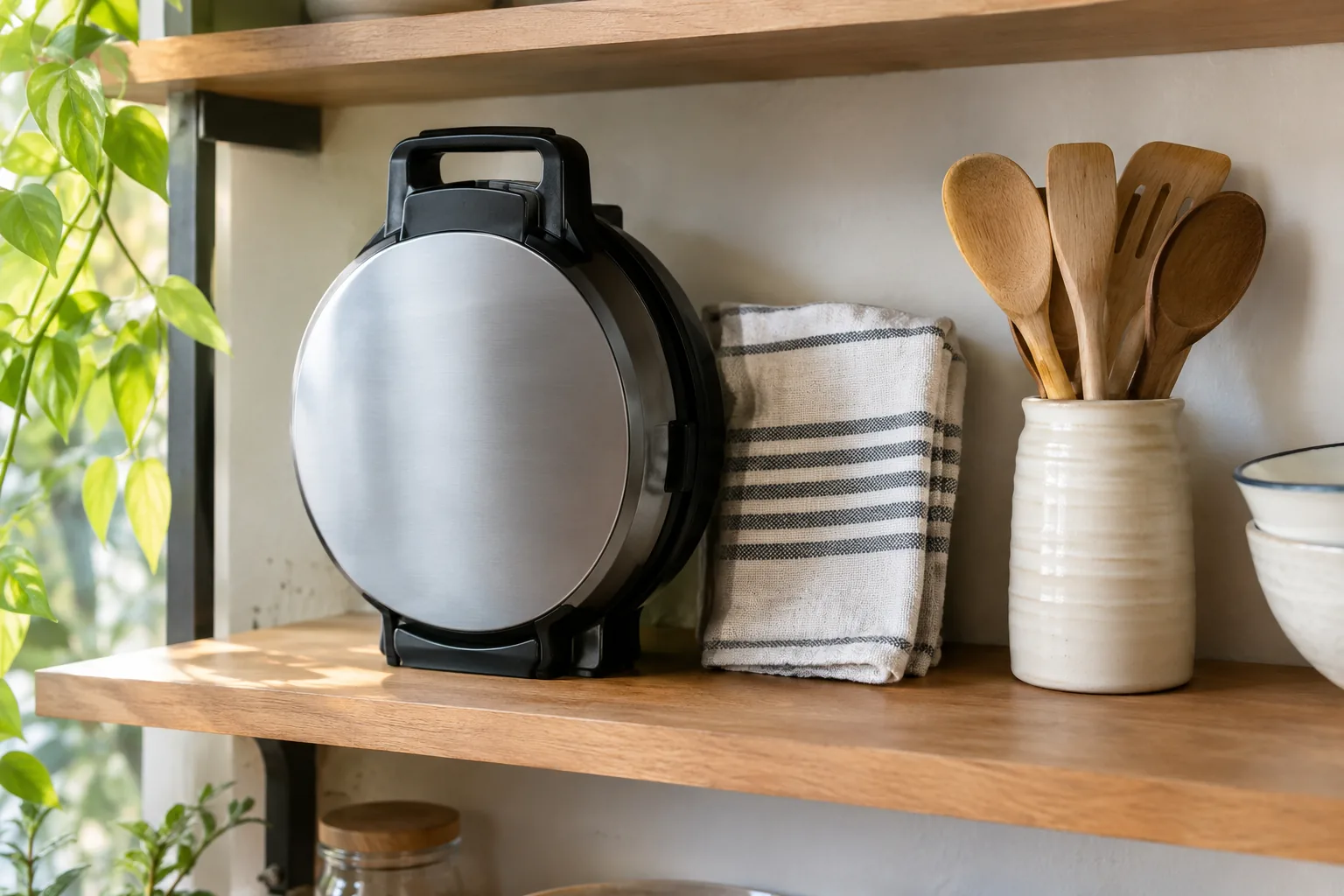
| Before storing | Check that plates and shell are dry, then store with the cord loosely coiled |
Look for small scratches or flaking in the coating now and then. If you see them, stop using abrasive tools and contact the maker for guidance.
If you are shopping for other countertop gear, browse our cooking appliances and countertop ovens to see what your counter can hold.