Non Stick Ceramic Coating Pans: How to Choose and Make Them Last
Check the base, weight and oven limit before you buy, then cook on low to medium heat with silicone, wood or nylon tools to keep a ceramic pan releasing food.
The Cobalt Hollow Team
November 22, 2026 · 6 min read
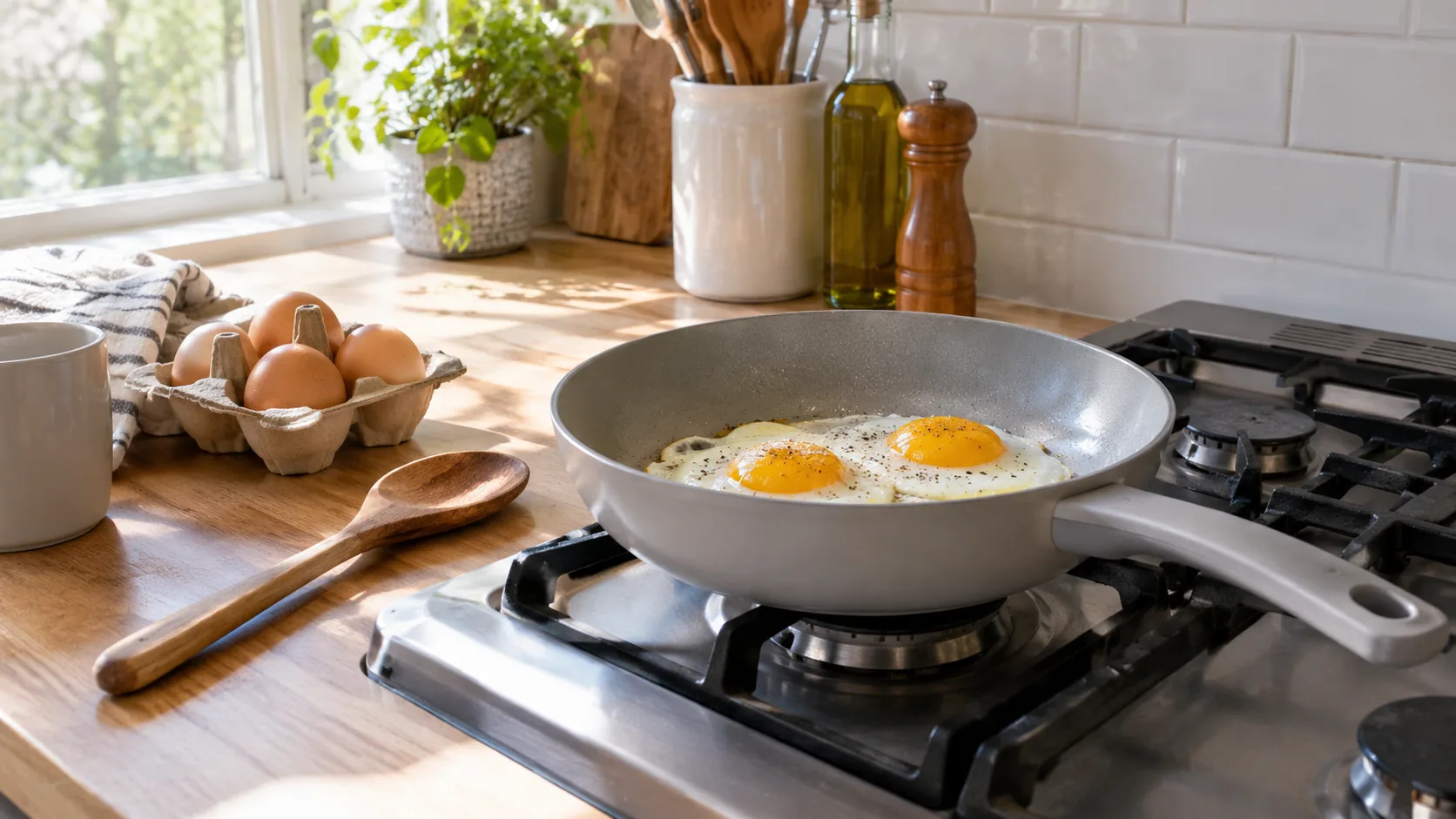
Non stick ceramic coating pans work well when you match the base to your cooktop, pick a weight you can lift with one hand, and confirm the oven limit in the manual. Then cook on low to medium heat with silicone, wood or nylon tools. This guide gives you the buying checks first, then the heat and utensil habits that keep the surface releasing food.
A ceramic nonstick coating is a smooth layer applied over a metal body. It is sold as a nonstick option without traditional nonstick chemistry, but it still wears if you use harsh heat or metal tools, so habits matter as much as the purchase.
What to check before you buy non stick ceramic coating pans
Look past the color and the marketing line. Five checks on the product page or in the manual tell you whether a fry pan fits your kitchen.
| Check | What to look for | Why it matters |
|---|---|---|
| Base | Flat, and magnetic if you cook on induction | A magnet should cling to an induction-ready base |
| Cooktop match | Listed for gas, electric, ceramic or induction | The pan must work on the stove you own |
| Weight | Light enough to lift and tip with one hand | You move the pan constantly when frying and plating |
| Oven limit | A stated temperature for the pan and the handle | Handles and lids can have a lower limit than the body |
| Tools and cleaning | Which utensils and whether the dishwasher is allowed | Follow the maker's care list to keep the coating intact |
If a listing gives no oven limit, assume it is unknown and keep the pan on the stovetop. Ask the seller or check the manual before the pan goes in the oven.
Base and cooktop: the part that decides everything else
A pan that rocks on the burner heats unevenly, and a pan that does not match the stove may not heat at all. On induction, the base has to be magnetic. On gas, electric and ceramic cooktops, a flat base keeps contact with the burner.
A multilayer core is built to spread heat from the center toward the edge. That matters when you sear or cook a full pan of vegetables, because the outer ring is meant to heat along with the middle.
If you might change stoves, look for a magnetic base: one pan carries over from gas to induction.
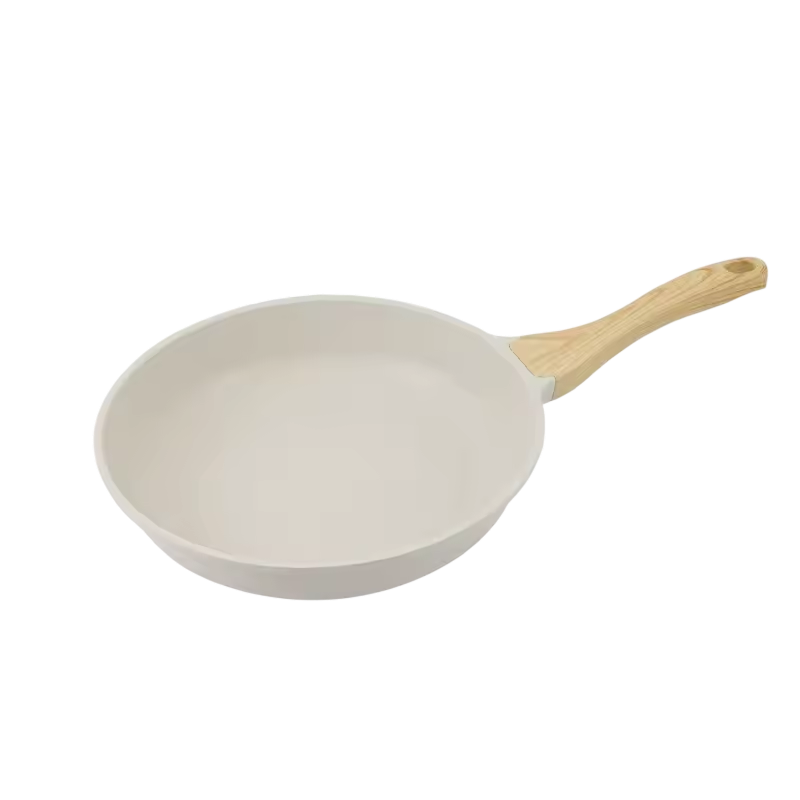 In this guideFerrastone$99.99View
The Ferrastone ceramic pan follows that pattern. It has a magnetic base that fits induction, gas, electric and ceramic cooktops, a multilayer core, and a light body you can lift and pour with one hand. The box holds one pan, so check the product page if you want a lid or a set.
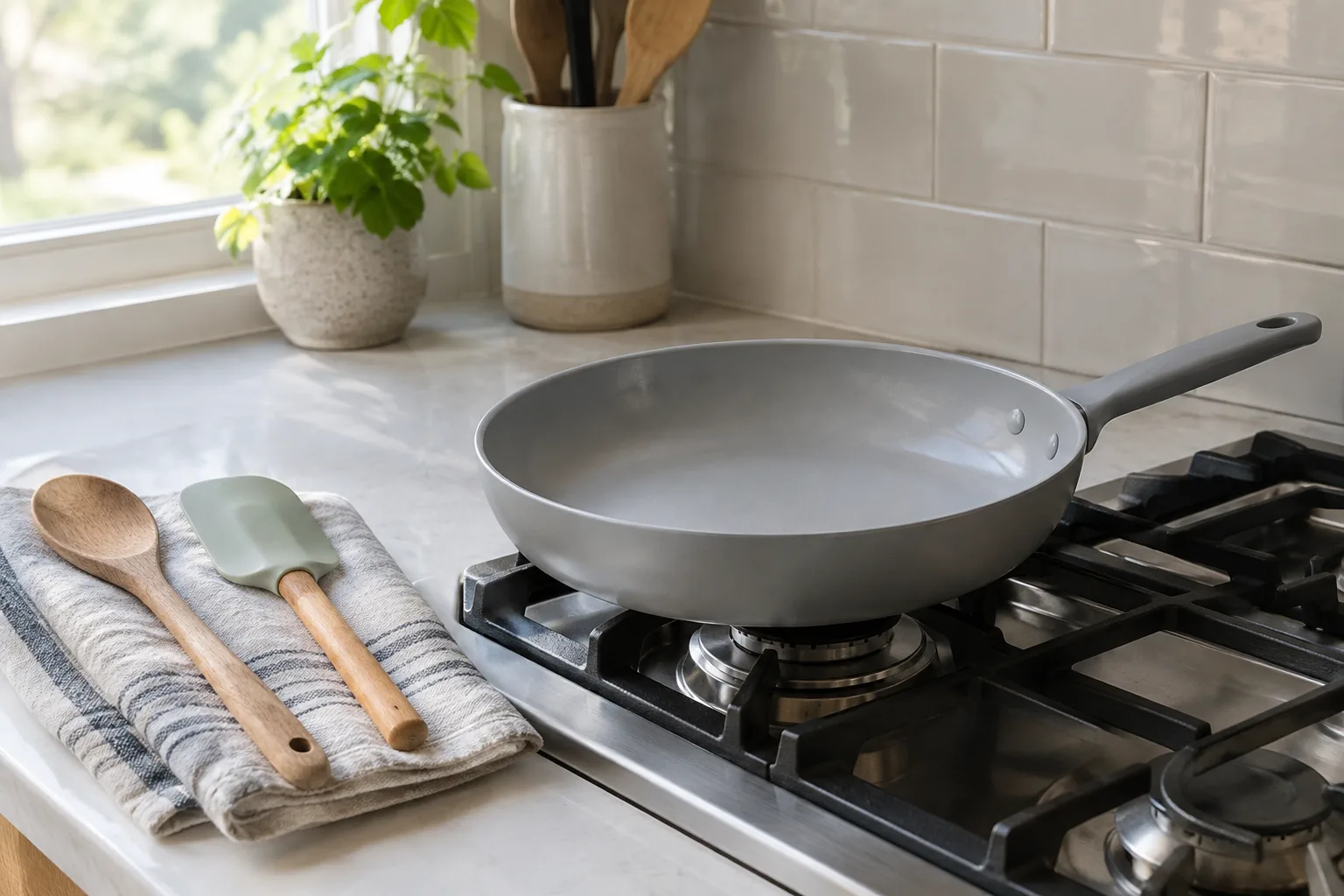
Weight, size, handle and lid
Weight is a daily habit, not a spec to admire. Picture lifting the pan with food in it: if you need two hands to tip it, you may drag it across the burner instead, and sliding can scratch the surface.
Pick the size by what you cook
- Small pan: one or two eggs, a single portion of pancakes.
- Medium fry pan: weeknight meals for two, sautéed vegetables.
- Large skillet: family batches, but check that it sits fully on your burner.
Handle and lid
Check how the handle is attached and whether the maker lists a separate oven limit for it. A lid is useful for steaming vegetables and finishing chicken, but a pan with lid only counts if the lid fits the pan you are buying.
Heat and utensil habits that keep the coating working
Heat and metal tools are the habits to watch. These steps cover a normal cooking session.
- Set the pan on the burner and preheat on low to medium heat before adding food.
- Add a light touch of oil. The coating is ceramic, so you do not need a pool of fat.
- Add the food and keep the heat at low to medium. For browning, give the pan more time to heat rather than turning the dial to high.
- Cook with a silicone, wood or nylon tool. Skip metal spatulas, forks and whisks.
- Move food with a lift, not a scrape. Let it release on its own before you turn it.
- Let the pan cool on the burner or a trivet before washing.
Overheated oil can smoke. Ventilate the kitchen, follow the manual, and turn the burner down if the pan smokes while empty.
Field note
Skip aerosol cooking oil on a ceramic pan. A bit of liquid oil wiped on with a paper towel is simple to control and does not leave a sticky film.
Why everything sticks to a ceramic pan
If food that used to slide now grabs, the cause is likely on this list. Work through it from top to bottom.
| Cause | What you see | Fix |
|---|---|---|
| Heat too high | Browned film, burnt oil spots | Preheat on low to medium and stay there |
| Oil residue | Slick, tacky patches | Wash with a soft sponge and dish soap; dry fully |
| Cold food in a cold pan | Eggs and fish grab the surface | Preheat first, then add oil and food |
| Metal tools | Scratches, dull streaks | Switch to silicone, wood or nylon |
| Plunging a hot pan into water | Dull or uneven surface | Let the pan cool before it meets water |
| Abrasive cleaning | Worn gloss | Use a soft sponge only |
A pan with deep scratches or bare metal showing has lost its coating. Washing will not bring it back, so plan for a replacement.
Ceramic nonstick compared with other pan types
Ceramic is one choice among several, and each trades something. Traditional nonstick uses a different coating chemistry, and some makers state on the product page whether it is made without PFAS, so read that line instead of guessing.
- Ceramic nonstick: needs a light touch of oil, low to medium heat, soft tools.
- Traditional nonstick: also needs moderate heat and soft tools; check the manual for its limits.
- Stainless steel: tolerates metal tools and high heat but needs technique. See our stainless steel pan guide for how to cook without sticking.
- Cast iron: built for high-heat searing; the cast iron steak guide covers preheating and resting.
You can keep a ceramic pan for eggs, pancakes and delicate fish, and a heavier pan for hard searing. Browse more pans in the cookware collection.
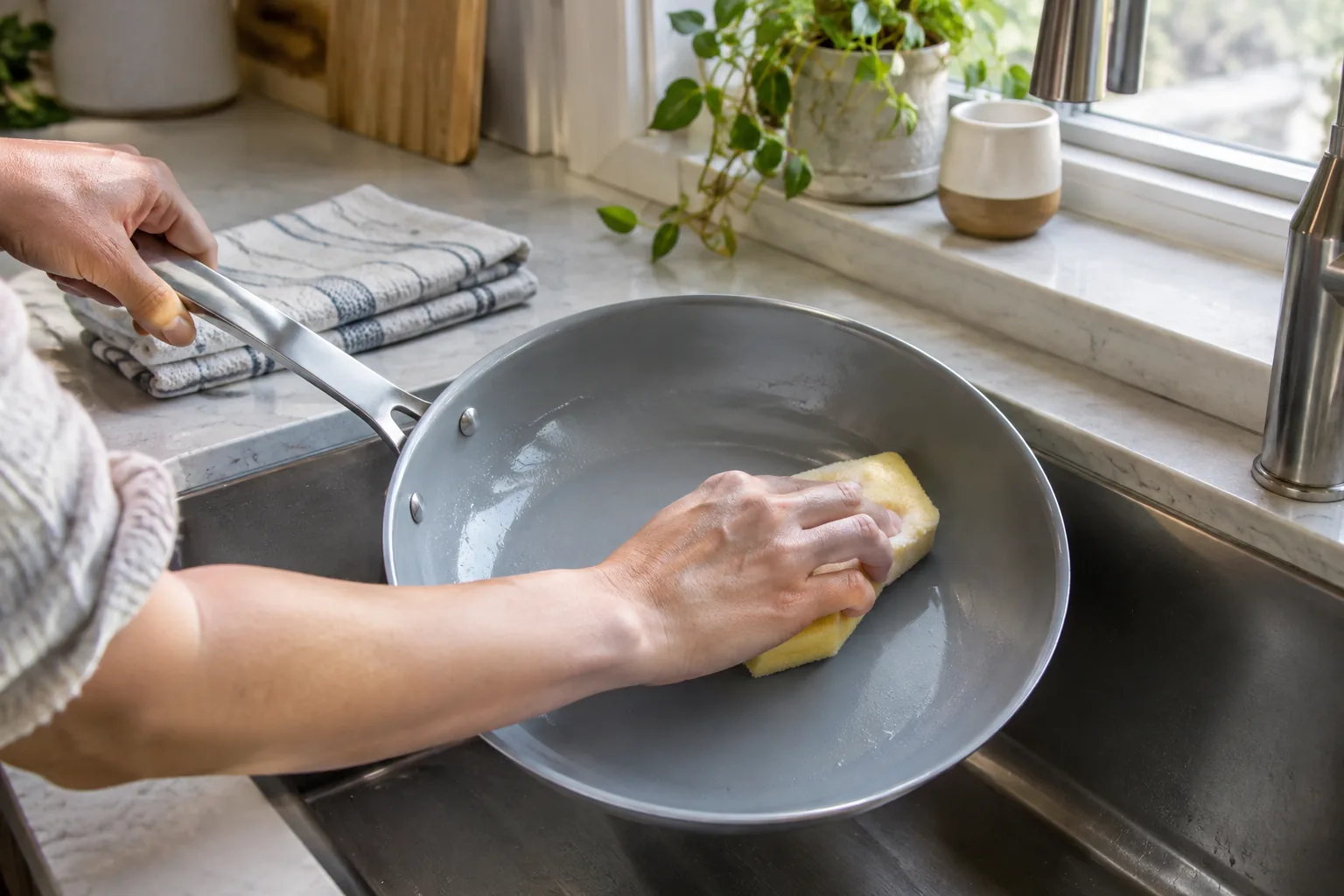
Care schedule
After every use
Let the pan cool, then wipe with a soft sponge. The Ferrastone page allows the dishwasher; for any other pan, follow its own manual.
Every week
Check the surface for oil film. If it looks tacky, wash with warm water and dish soap and dry it completely.
Storage
Do not stack pans directly on the coating. Place a paper towel, a cloth or a pan protector between them, or hang them.
When to replace
Replace the pan when the coating flakes, shows bare metal, or food sticks even after a clean, low-heat test with a little oil.