
How to Clean Windows Inside and Out Without Streaks
Dust first, wash with mild soapy water, squeegee in one pattern, and wipe the edges dry. Here is the full routine, plus which panes a window robot can take over.
The Cobalt Hollow Team
November 6, 2026 · 6 min read
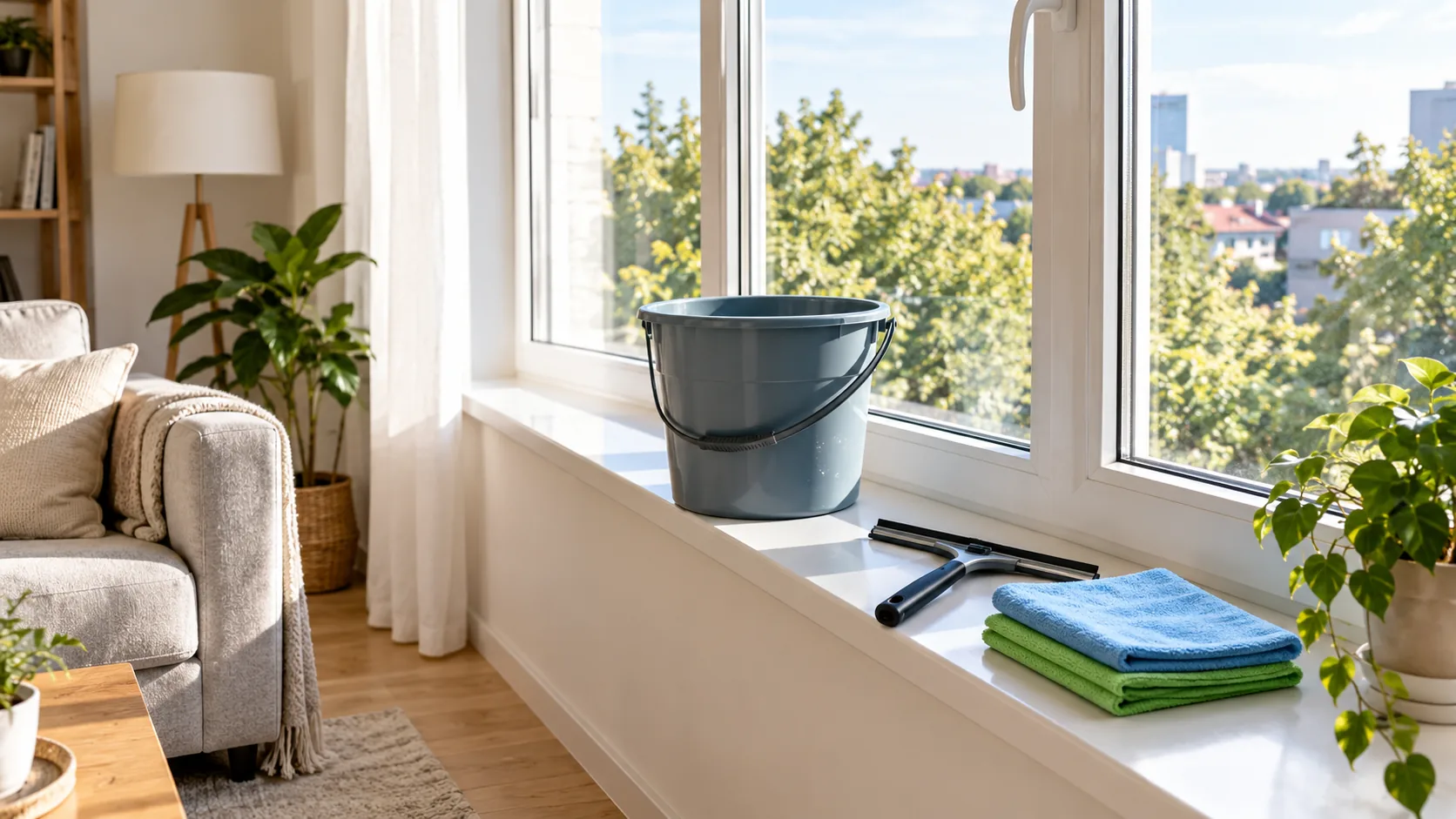
Here is how to clean windows without streaks: remove dust and debris first, wash the glass with warm water and a few drops of mild dish soap, then pull a squeegee across it in overlapping strokes. Wipe the blade after every pass and dry the edges with a clean microfiber cloth. Work on a cloudy day or in shade, because sun dries the solution before you can remove it.
This guide covers the tools, the solution, the order of work inside and out, and which panes a window robot can take over. It also explains what affects the cost of a cleaning service and how often to wash.
How to clean windows: tools and solution
You need few supplies. A squeegee with a fresh rubber blade does the main work, and a bucket holds the wash water. Add a scrubber or soft sponge, several clean microfiber cloths, a soft brush for frames, and a small towel for the sill.
For the solution, mix a few drops of mild dish soap into a bucket of warm water. Too much soap leaves a film that shows up as streaks, so keep it light. For inside glass with fingerprints or haze, some people use a mix of white vinegar and water; skip it on any surface the manufacturer says to keep acid away from.
Dish soap is fine for exterior glass when used in small amounts, and rinsing matters more than the brand. Check the window maker's care notes for coated or tinted glass before you start.
Supply checklist
| Item | Used for |
|---|---|
| Squeegee, fresh blade | Pulling water off the glass |
| Bucket of warm soapy water | Loosening dirt and film |
| Scrubber or soft sponge | Washing the pane |
| Microfiber cloths | Drying edges and wiping the blade |
| Soft brush | Frames, tracks and corners |
| Old towel | Catching drips on sills and floors |
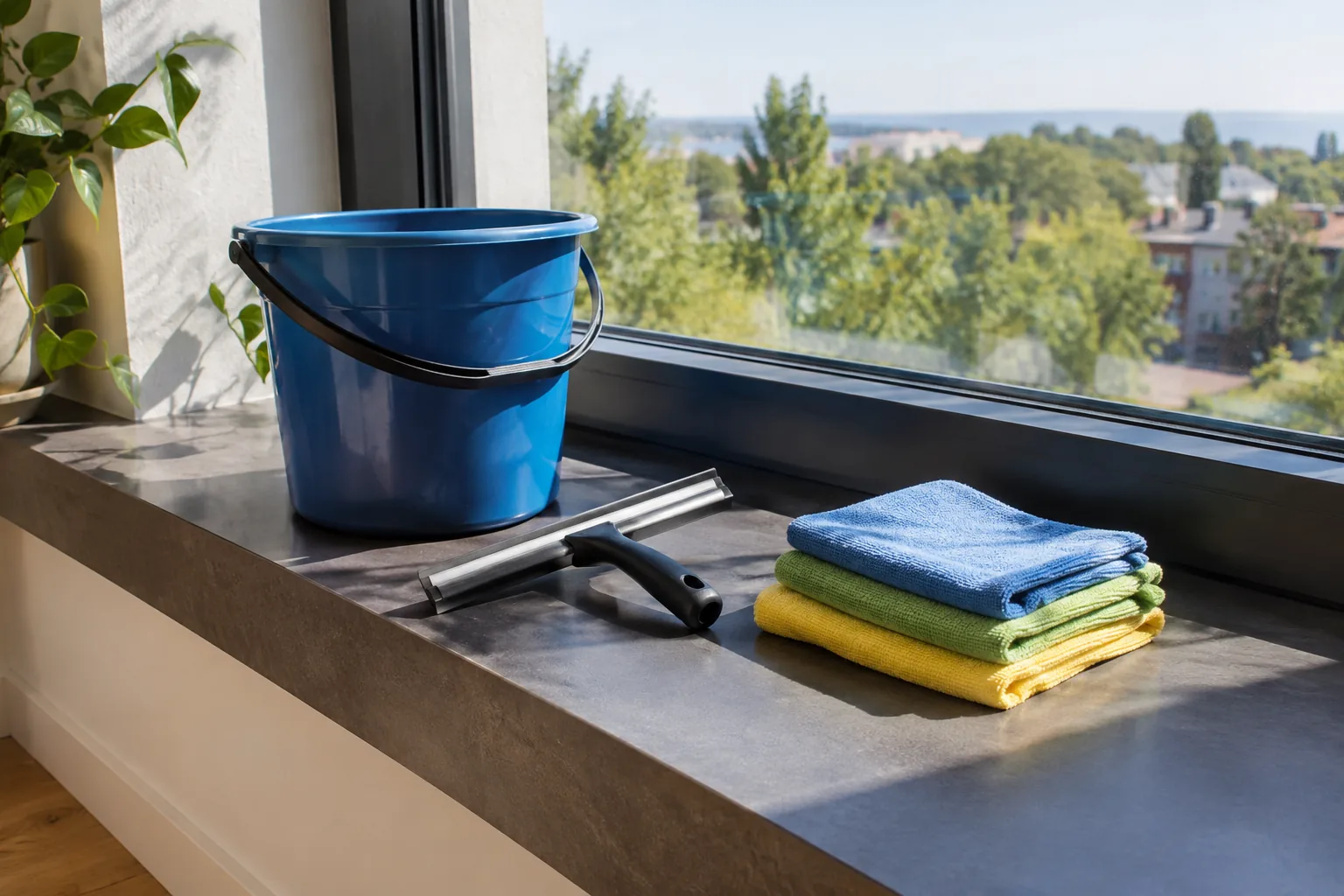
The order of work, step by step
Order matters because dirt falls down and water runs down. Start at the top of each window and finish at the sill. These steps show how to clean windows one pane at a time.
- Lay a towel on the sill and floor. Unplug nearby electronics or move them away from the window.
- Dust the frame, track and sill with a brush, or pick up loose debris with a vacuum. A cordless vacuum with a narrow attachment can pick up debris in tracks; browse our robot and cordless vacuums collection.
- Wet the glass with the scrubber and loosen dried-on spots, working top to bottom.
- Starting at the top corner, pull the squeegee across in a straight line. Wipe the blade, then overlap the next stroke by an inch or so.
- Wipe the edges and frame with a dry microfiber cloth so drips do not run back onto the glass.
- Check the pane from an angle in daylight and touch up any smears with a dry cloth.
Some windows tilt in, so you can reach the outer face from inside. Follow the manual for your window type before releasing any latch.
Inside versus outside
Do the exterior glass first when you can reach it, then the inside.
Wipe each side in a different direction, such as vertical outside and horizontal inside, so you can tell which side a streak is on.
| Area | Inside | Outside |
|---|---|---|
| Typical dirt | Fingerprints, dust, haze | Pollen, summer dust, bugs, winter grime and salt |
| Solution | Light soap or vinegar mix | Light soap and warm water, rinse after scrubbing |
| Extra work | Sill, blinds, curtains out of the way | Screens, frames, tracks, weep holes |
On the outside, rinse screens with a hose or wipe them with a damp cloth. Keep your feet on the ground or a stable ladder, and do not lean out of an upstairs window. For windows you cannot reach from solid footing, ask a professional window cleaner.
Which panes a window robot can take over
A window cleaning robot suits flat panes of glass that you can reach to place and retrieve. It does not replace the hand work around the glass. For a full look at the technology, see Robot Window Cleaning: How It Works and Where It Falls Short.
ClearVista attaches to glass by suction, using a 5600 Pa suction motor, and moves on dual rotating microfiber pads that are washable. You tie the included safety tether to a secure indoor anchor point, place the robot on the glass, and start it with the remote control. Sensors trace the window edges first, then it plots overlapping passes across the interior of the pane. LED lights show battery, suction and cycle status, and a backup battery is built in. When the LED signals the cycle is done, retrieve the unit.
Check the manual before using the robot on exterior or upper-floor glass, and keep the tether anchored indoors every time. Do not use the robot as a way to reach panes you could not otherwise get to.
 In this guideClearVista$219.99View
Robot or hand work
| Task | Robot | By hand |
|---|---|---|
| Large flat panes within reach to place it | Yes, with the tether anchored indoors | Optional |
| Frames, sills and tracks | No | Yes |
| Screens | No | Yes |
| Heavy, dried-on spots | Check the manual | Spot-scrub first |
| Exterior or upper-floor panes you cannot reach from solid footing | Only if you can place and retrieve it from inside; follow the manual | Ask a professional window cleaner |
Before each run, wipe the glass edges and pads. The kit includes spare cleaning rings, and the pads can be washed between uses. Follow the manual for glass types and sizes it supports.
Fixing streaks and haze
Streaks come from a few causes, and each has a fix.
| Problem | Likely cause | Fix |
|---|---|---|
| Lines the width of the blade | Dirty or worn blade | Wipe it each pass; replace a nicked blade |
| Cloudy film | Too much soap | Rinse with clean water and re-squeegee |
| Spots at the edges | Drips from the frame | Dry the frame with a cloth |
| Smears while washing | Direct sun | Wait for shade or a cloudy day |
| Lint | Cotton towels | Use microfiber |
Field note
Use two buckets or rinse your scrubber often. A scrubber loaded with grit drags dirt back across the glass and leaves marks that look like streaks.
How often to wash and what affects service cost
A twice-a-year routine, in spring and fall, is a sensible baseline for how to clean windows on a schedule. Add a rinse after pollen season or after winter road salt and grime. Clean glass shows off the natural light in a room, and regular cleanings keep dirt from building up on frames.
The going rate for window cleaning in your area depends on the number of panes, the number of floors, screens, and how hard the windows are to reach. We do not quote prices here; ask two or three local companies for written quotes that list what each includes, such as interior, exterior, screens and tracks.
A sensible split is hand work for frames, tracks and screens, a robot for large panes you can reach, and a professional for upper floors you cannot reach from solid footing.
Frequently asked questions
Keep reading
 Robot & Cordless VacuumsWindow Washing at Home: Tools, Steps and When a Robot Helps7 min read
 Robot & Cordless VacuumsRobot Window Cleaning: How It Works and Where It Falls Short6 min read
 Steam, Sanitizing & Specialty CleanersChemical Free Steam Cleaning: What Steam Handles and What It Can't6 min read