How to Open a Wine Bottle Without a Corkscrew, Ranked by Risk
Push the cork in with a spoon handle or pull it with a screw and pliers. Here is every improvised method ranked by risk, plus what to do if the cork crumbles.
The Cobalt Hollow Team
November 6, 2026 · 7 min read

How to open wine bottle without corkscrew: push the cork into the bottle with a wooden spoon handle, or twist a screw into it and pull it out with pliers. Both use common household items and put little stress on the glass. Methods that involve hitting the bottle or heating it carry the most risk, so this guide ranks every improvised option from lowest to highest.
It also covers what to do when the cork crumbles, and when a cordless opener is the better answer than another improvised attempt.
Before you try any improvised method
Every method below puts force on a glass bottle, so prepare first. Work over a counter or table, not in the air, and keep your free hand out of the line of the tool. Hold the bottle by the body, not the neck.
- Cut and remove the foil fully so you can see the top of the cork.
- Check the cork type. A synthetic cork grips tighter and may not take a screw the way natural cork does.
- Look at the glass for chips or cracks. If you see any, do not apply force; ask someone with an opener.
- Have a towel, a pitcher or decanter, and a fine strainer nearby in case of cork crumbs.
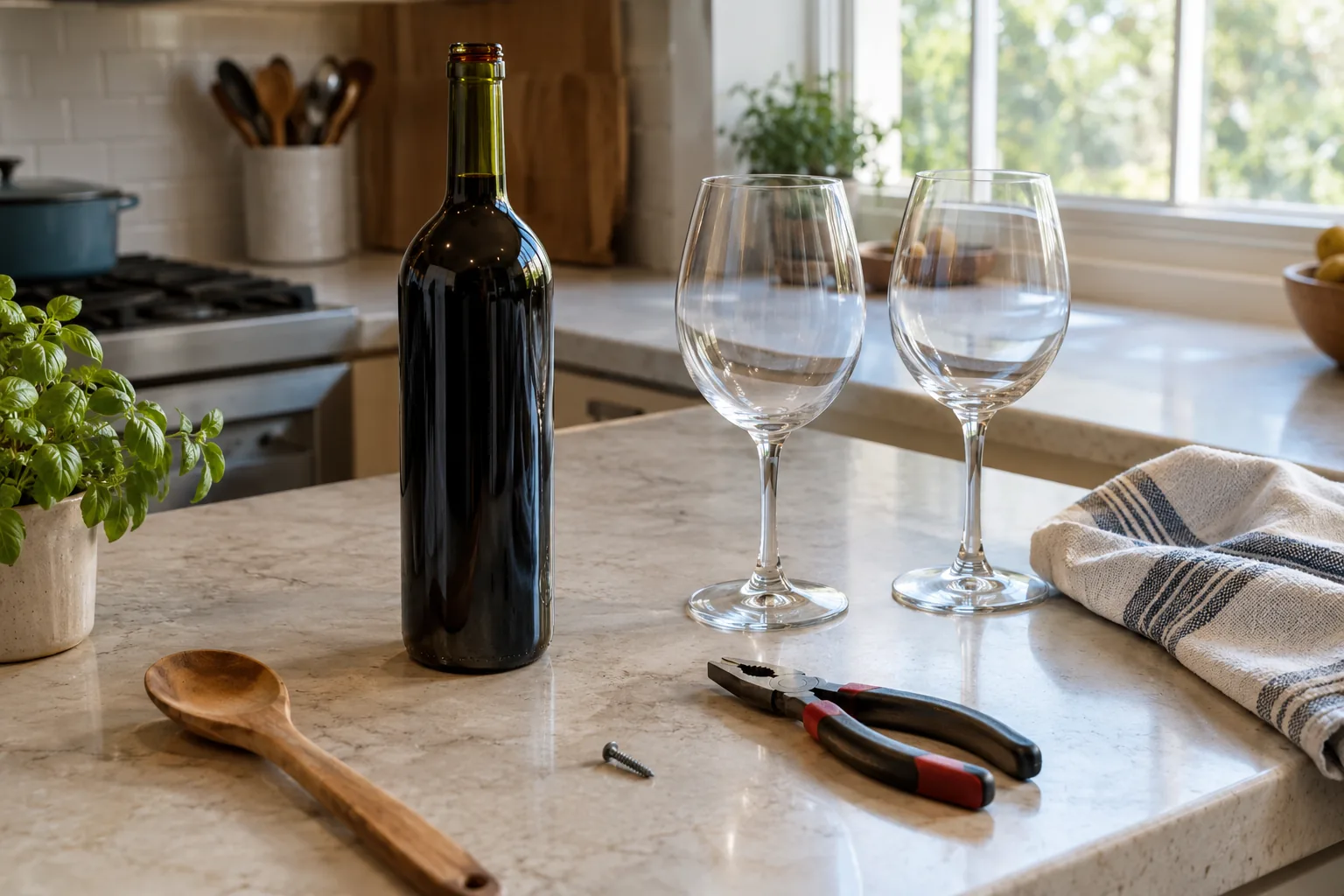
How to open wine bottle without corkscrew, ranked by risk
The table orders the methods from lowest to highest risk. Risk here means the chance of breaking glass, cutting a hand or wrecking the cork, judged from how much force and how many sharp or hot items each method involves.
| Rank | Method | What you need | Main risk |
|---|---|---|---|
| 1 | Push the cork in | Wooden spoon handle | Cork floats in the wine; splashing |
| 2 | Screw and pliers | Long screw, pliers or hammer claw | Cork splitting; slipping tool |
| 3 | Key or serrated knife twist | House key or serrated knife | Crumbling cork; slipping blade |
| 4 | Wire hanger hook | Straightened hanger, pliers | Sharp wire end; cork fragments |
| 5 | Pump needle | Inflation needle, hand pump | Pressure inside the glass |
| 6 | Shoe against a wall | Shoe, wall, towel | Glass breakage |
| 7 | Heating the bottle | Flame or hot water | Burns, cracked glass, damaged wine |
Ranks 1 to 3 are the ones to try first. Ranks 5 to 7 are listed so you can recognize them, not because we suggest them.
Lowest-risk methods, step by step
1. Push the cork in
Use the rounded handle of a wooden spoon, not a pointed tool. Set the bottle on a stable surface, press the handle on the center of the cork and push down steadily until the cork drops into the wine. Pour slowly, holding the cork back with the spoon, or let it float.
The trade-off is a floating cork that can drift toward the neck while pouring, and wine may spray when it drops in. Use this method when you plan to finish the bottle soon.
2. Screw and pliers
Twist a long screw into the center of the cork, stopping about an inch from the bottom. Leave the head exposed, then grip it with pliers or the claw of a hammer. Pull straight up while holding the bottle against the counter.
Go slowly. A long screw that goes in at an angle can split the cork, and pliers can slip off the head. Wrap the head with a cloth if the grip feels loose.
3. Key or serrated knife twist
This answers how to open a wine bottle with a key. Push the key into the cork at a steep angle near the edge, then twist and tilt it so the teeth bite. Work it around, pulling up a little each turn. A serrated knife works the same way with the tip, but a slipping blade is a real cut risk, so keep your other hand clear.
This method suits a cork that is already a little loose. A dry or old cork may crumble before it moves.
Higher-risk methods to be careful with
Wire hanger hook
Straighten a wire hanger, bend a small hook at the end and slide it down past the cork. Turn the hook sideways, catch the bottom edge and pull up. The wire end is sharp, and the cork can break into pieces as you pull, so use pliers to hold the wire and keep the bottle on a table.
Pump needle, shoe and heat
Pushing an inflation needle through the cork and pumping air pushes the cork out, but it adds pressure to a glass bottle. Hitting the base of the bottle with a shoe against a wall moves the cork by shock, and the glass can break. Heating the neck with a flame or hot water swells the air and can crack the bottle or cook the wine.
We would skip these three. If the first three methods do not work, an opener borrowed from a neighbor or a store is a lower-risk answer than escalating.
Field note
Whatever you try, stop if the bottle shifts, the glass makes a noise, or the tool slips twice. Set it down and switch to a lower-risk method.
What to do when the cork crumbles
A cork that breaks halfway can happen with old bottles and with screws driven in at an angle. Do not keep digging with the same tool.
- Stop and set the bottle on the counter.
- If the lower part of the cork is still stuck, push it down into the wine with the spoon handle.
- Pour through a fine strainer or a clean coffee filter into a pitcher or decanter to catch the pieces.
- Pour from the decanter into glasses. Remove any cork bits you can see.
If you pour straight from the bottle once the cork is out of the neck, a pourer with aerator fits a standard 750ml bottle. VintaFlow presses into the neck with a rubber-sealed collar, and wine runs through a narrow channel with air vents. It is not a strainer, so strain first when pieces are present.
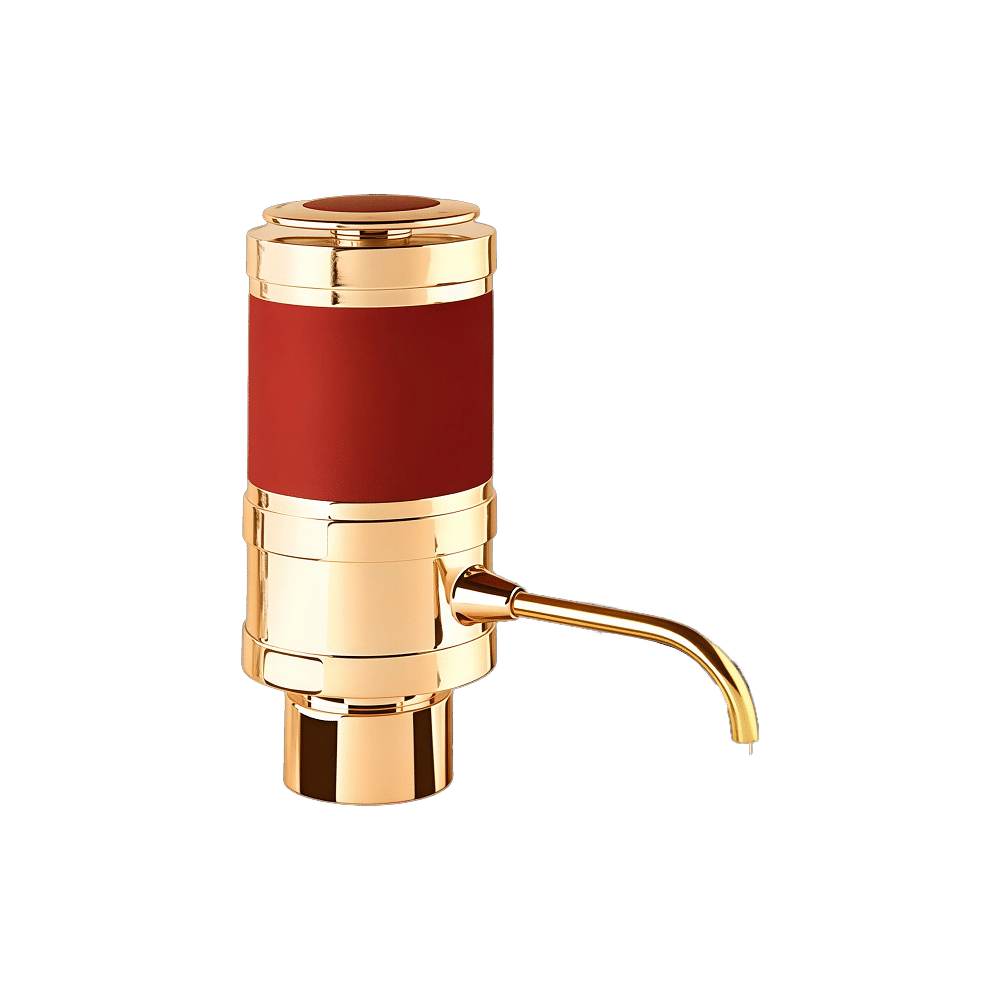 In this guideVintaFlow$129.99View
How to open a wine bottle with a corkscrew
If you have a corkscrew, the standard steps are short. Cut the foil below the lip and remove it. Center the screw tip on the cork and twist it in until only one turn of the spiral remains visible. Set the lever or arm on the lip, and lift the cork out slowly, finishing with a gentle wiggle so it does not snap.
The improvised methods above copy the same idea: grip the cork and pull it straight up.
When a cordless opener is the better answer
If you open bottles often, or you have worked through two failed attempts, a dedicated opener is worth considering. An electric wine opener uses a motor, so you do not twist or pull by hand.
VinoVolt is a rechargeable electric wine opener set. After cutting the foil with the included foil cutter, you set the opener on top of the bottle and press the single button. The motor draws the cork out, and a clear window lets you watch it rise. It works with natural and synthetic corks, in standard and oversized sizes.
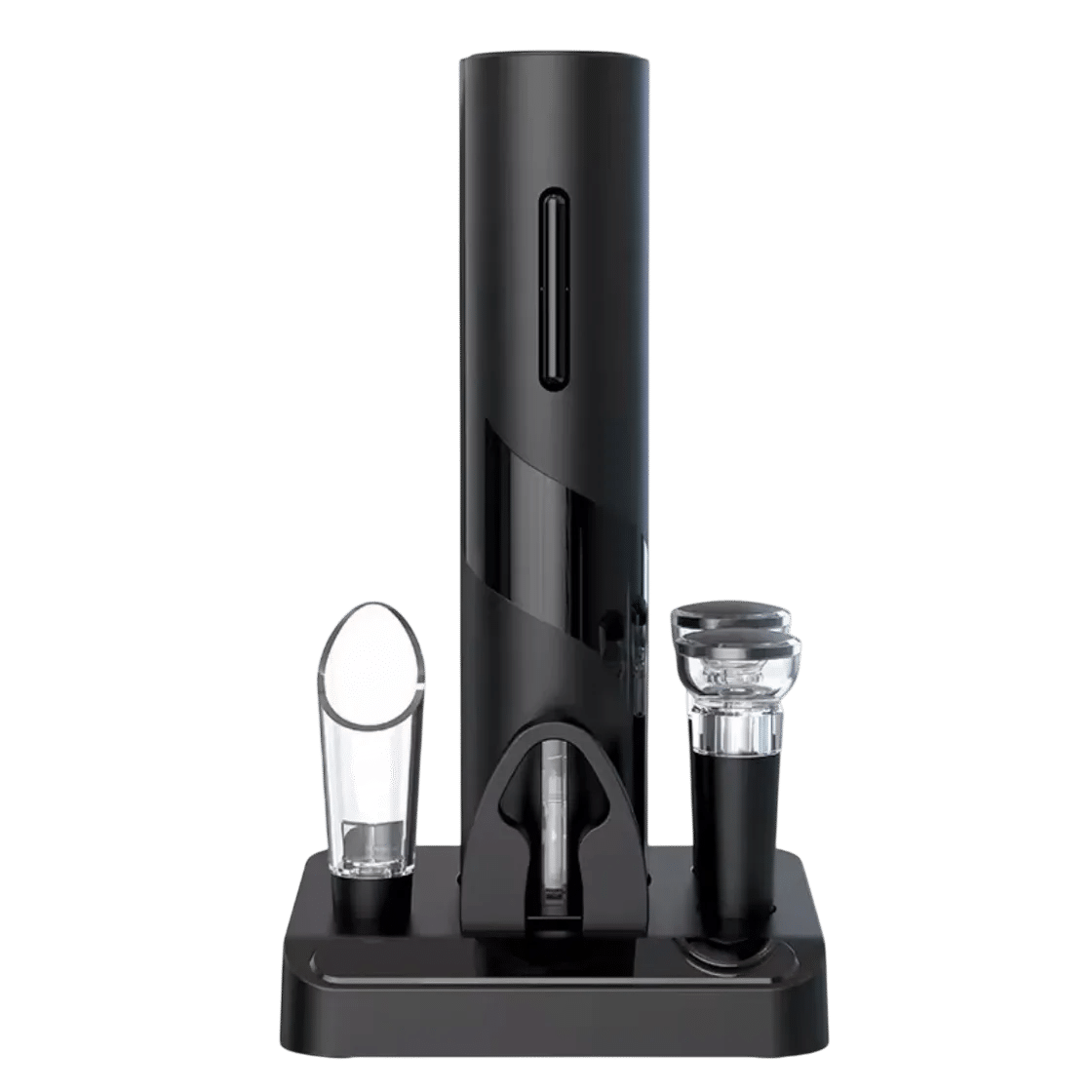 In this guideVinoVolt$129.99View
The set also includes a pourer with aerator, a vacuum stopper, and a storage and charging base that charges through a USB cable, so the serving pieces stay together. Browse more in Wine & Entertaining Accessories. Follow the user manual for charging and use.

Quick checklist: choosing a method
| Situation | Try this |
|---|---|
| Drinking the bottle tonight | Push the cork in |
| Want to keep the cork out of the wine | Screw and pliers |
| Loose, newer natural cork | Key or serrated knife twist |
| Cork already crumbled | Push remnants in, strain into a decanter |
| Synthetic cork that grips hard | Skip improvising; use an opener |
| Opening bottles often | Electric wine opener |
Once open, seal leftover wine with a stopper. If you pushed the cork in, you will need one, since the cork no longer fits the neck.
After the bottle is open
Wipe the lip of the bottle with a clean towel to remove glass dust or cork bits before you pour. Pour slowly the first time, so you can see whether pieces are coming through.
If you are hosting, set out a pitcher, chilled glasses and a drink for guests who skip wine. For a non-wine idea, see Slushy Machine Recipes for sugar ratios and flavor ideas.