Outdoor Lighting Plan: Layering Path, Accent and Security Light
Plan outdoor lighting zone by zone: low path light, soft accent light on the patio, and motion-triggered security light at entrances, matched to power and brightness.
The Cobalt Hollow Team
October 23, 2026 · 6 min read
Good outdoor lighting layers three jobs: low path light so you can see your footing, softer accent light that shapes the patio and plantings, and motion-triggered security light at entrances and the perimeter. Plan it one zone at a time, then match each zone to a light type, a power source and a brightness level. The table below does that matching, and the sections after it explain each choice.
This guide skips the fixture gallery. It gives you a zone-by-zone plan, a setup checklist and a list of mistakes to avoid before you buy anything.
Outdoor lighting in three layers
Each layer has a different purpose, so one type of fixture rarely covers a whole yard. Mixing them is what makes a yard feel finished instead of floodlit.
- Path and step light: low, spread-out points that mark where to walk.
- Accent and ambient light: color or warm white along decks, railings, fences and planting beds.
- Security light: bright, directed light that switches on with movement at doors, driveways and gates.
A useful rule of thumb is to light the task or the edge, not the whole space, and to keep the light source itself out of your eyes. Put the brightest light where you need to see detail, and keep the rest of the yard dimmer so the contrast makes the bright spots read clearly.
Zone-by-zone plan: light type, power and brightness
Start with this table, then adjust for your yard. Brightness is relative: low means a glow that marks a route, medium means enough to see a seating area, and high means enough to see a person or a car.
| Zone | Light type | Power source | Brightness |
|---|---|---|---|
| Garden paths and walkways | Staked or fence-mounted path lights | Solar with a dusk sensor | Low |
| Steps and railings | Low-level strip or small fixtures | Plug-in adapter or solar | Low to medium |
| Patio and deck | LED light strip along edges and railings | Plug-in adapter | Low to medium, adjustable |
| Front and back entrances | Wall-mounted motion light | Solar with a separate panel, or wired | High, on motion |
| Driveway and gate | Motion light on a post or wall | Solar or wired | High, on motion |
| Perimeter and fence line | Motion light plus low fence-mounted lights | Solar | Mixed |
Paths and garden beds
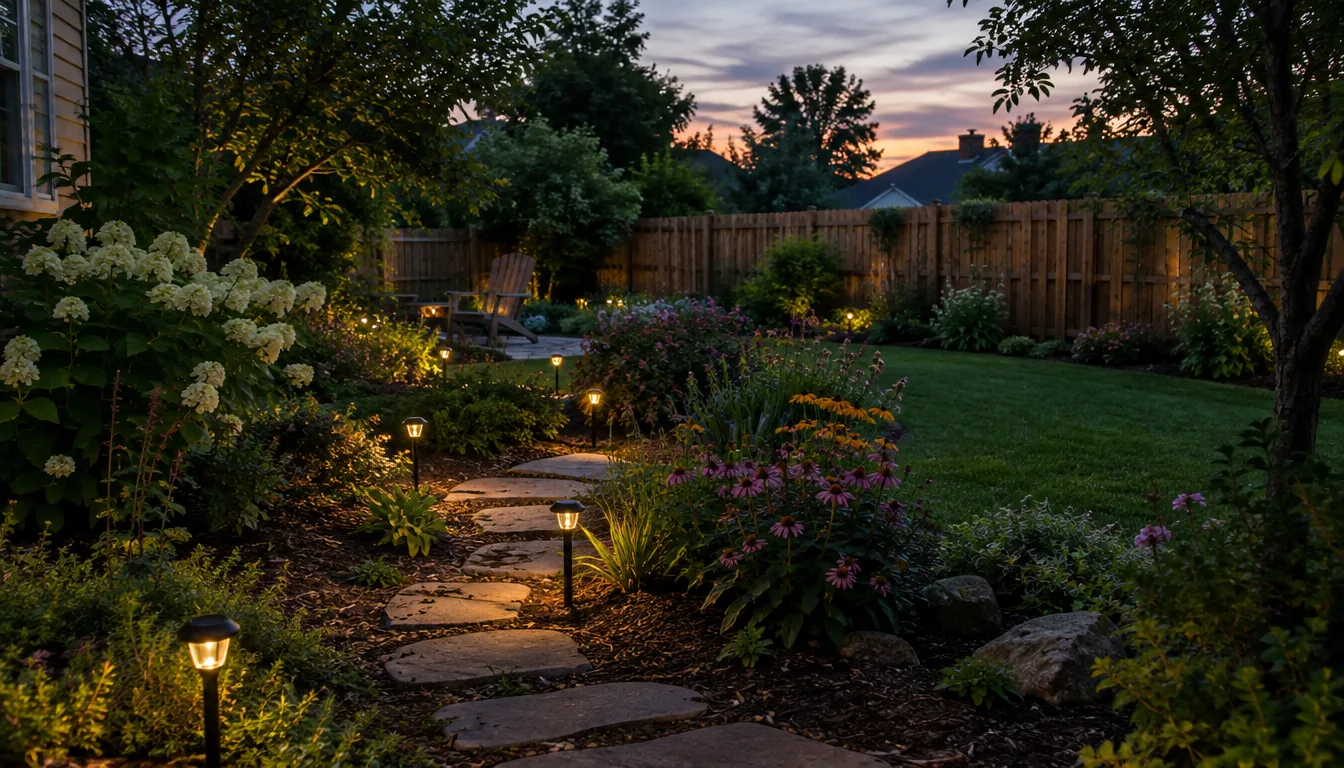
Path lights suit a repeating rhythm of low points rather than a few bright ones. Space them so each pool of light just meets the next, and set them along one side of the walkway, or alternate sides on a wide path.
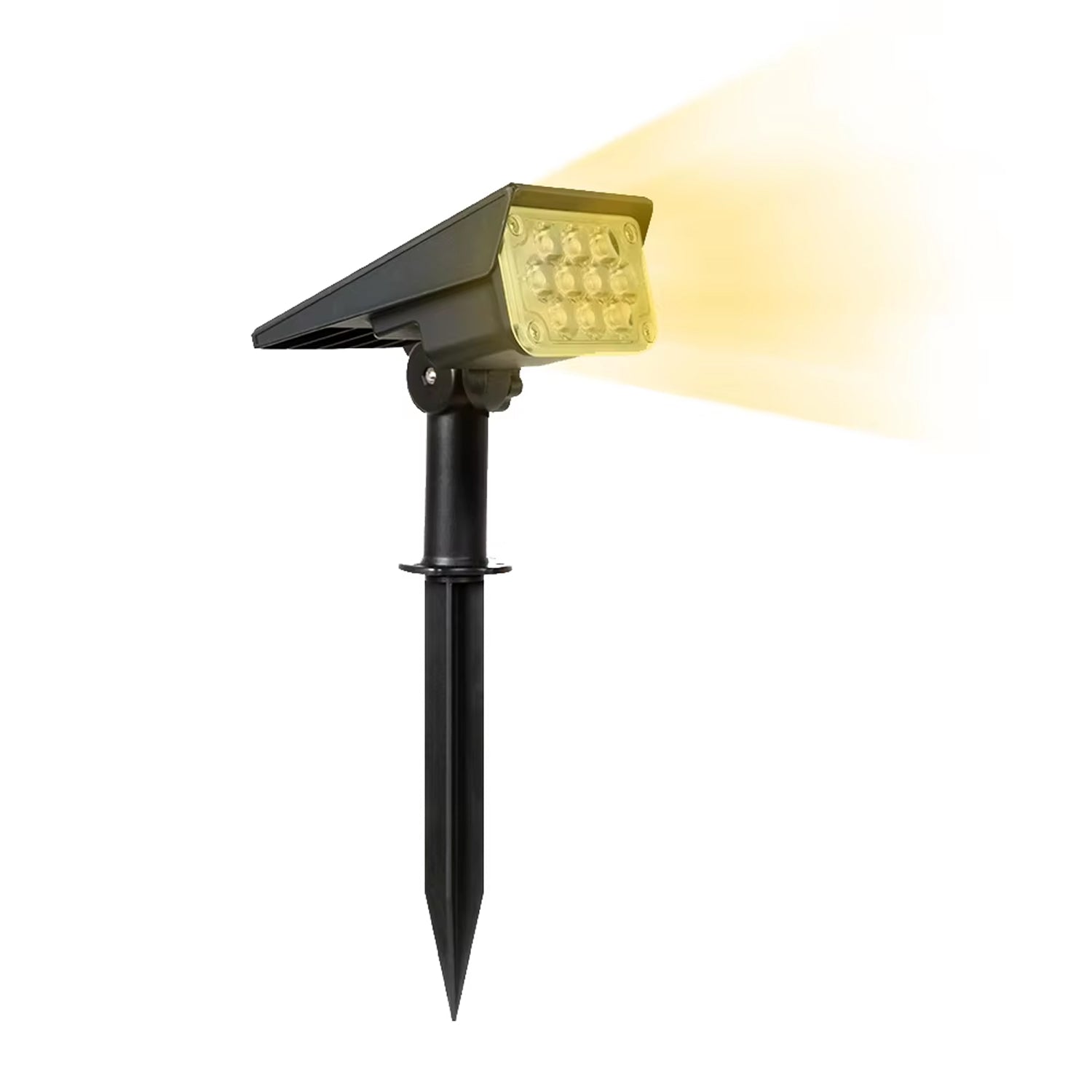
For beds and walkways far from an outlet, solar garden lights avoid trenching and wiring. HelioGrove is a set of solar garden lights with a built-in solar panel. You push the light into the ground on a stake or mount it on a fence with the included screws and rubber plugs, and a light sensor switches it on at sunset and off at sunrise.
 In this guideHelioGrove$99.99View
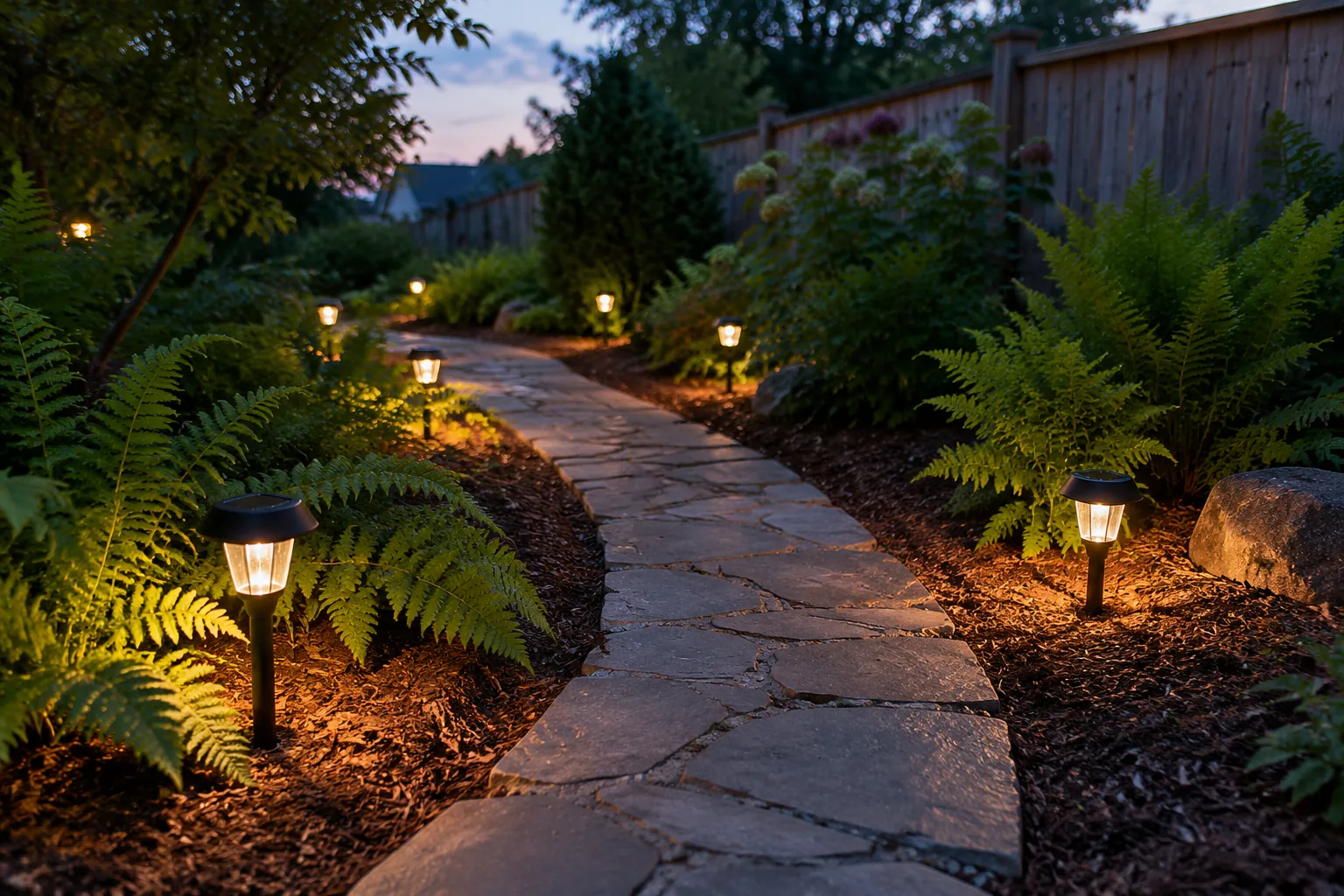
Because the panel does the charging, placement decides how well the light works. Keep the solar panel in direct sun during the day, tilt it toward the sun, and wipe dirt off it. For shaded spots under trees, choose a plug-in fixture instead. For brightness, battery and placement details, read Good Solar Garden Lights: Brightness, Battery and Placement.
HelioGrove offers warm white plus five RGB tones, cycled with a button on the unit. Warm white suits a path; save the colors for a seasonal look.
Patio, deck and railings
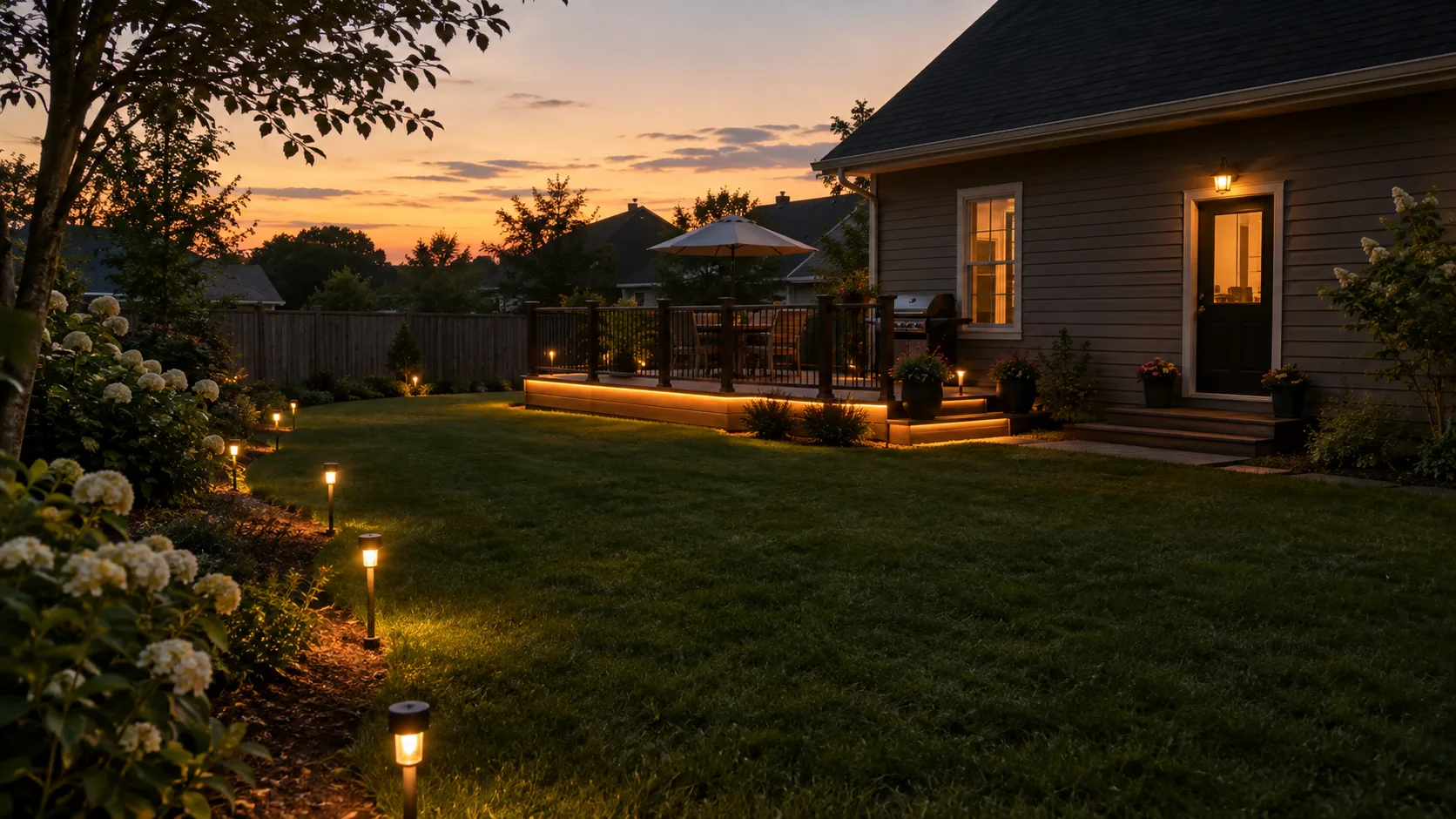
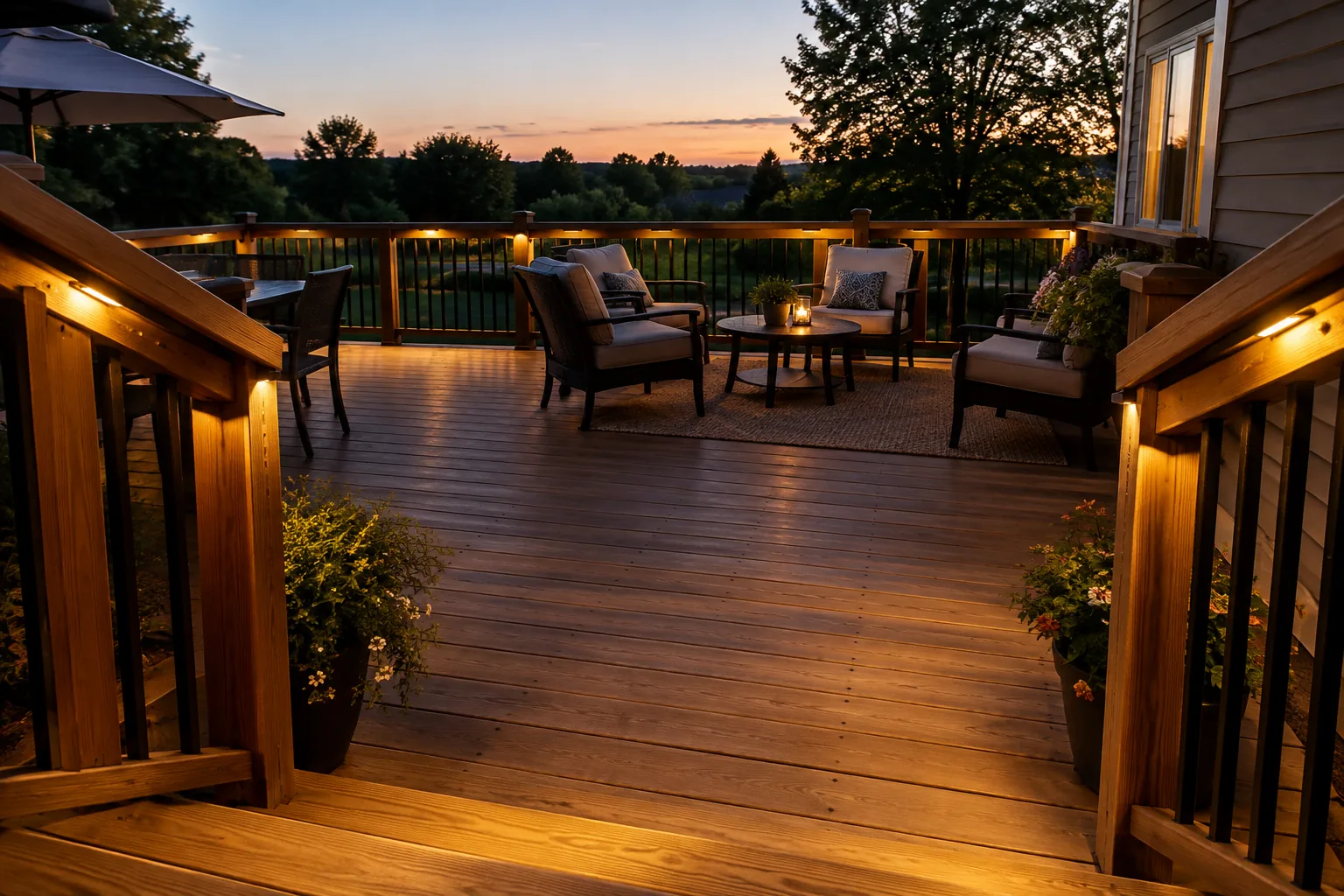
This is the accent layer, and it is where you set mood. Light the edges of the space rather than the center: a strip under a railing cap, along a deck border or beneath a bench lip gives a soft wash on the floor and keeps bare bulbs out of view.
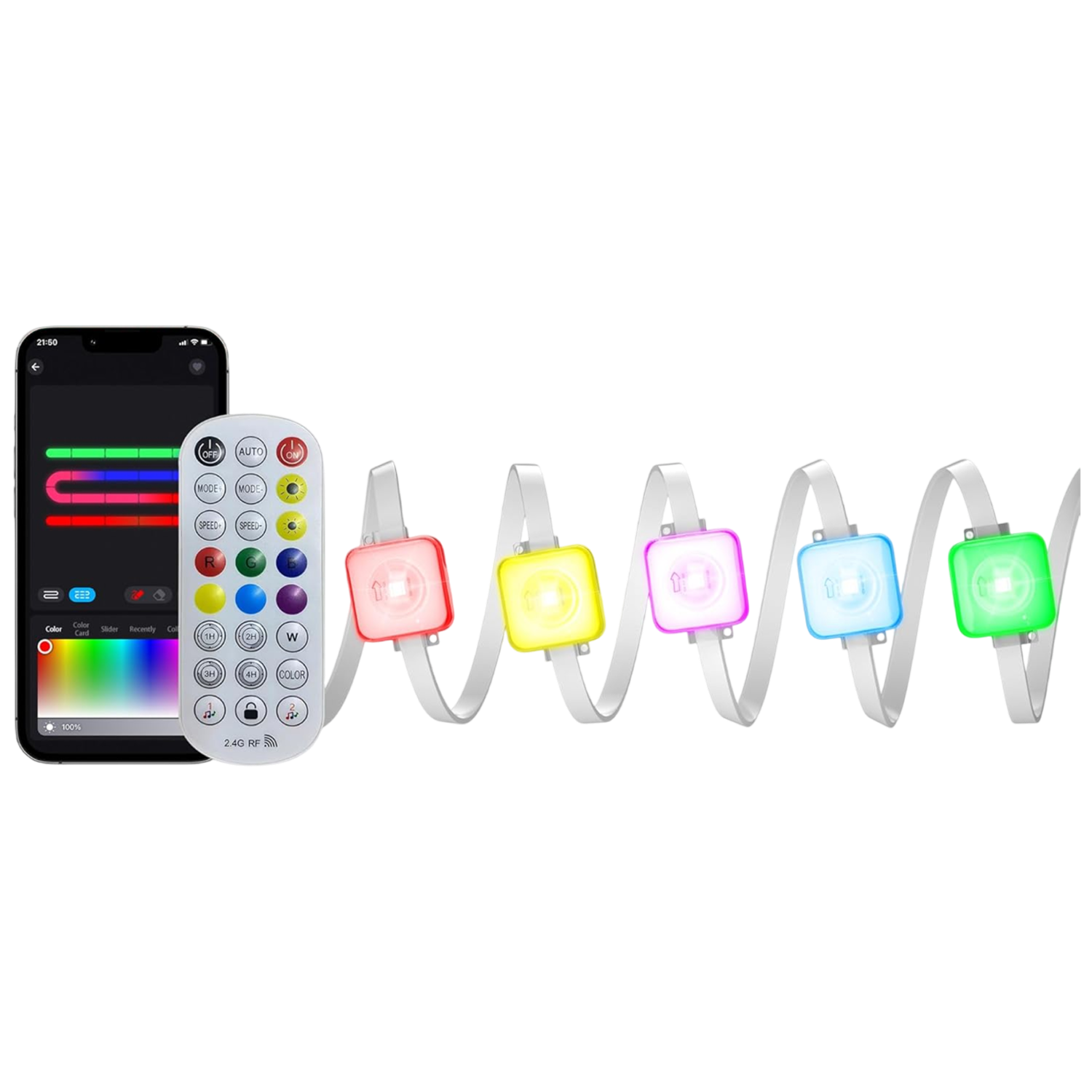
An LED light strip suits these runs because it is flexible and follows straight edges. RadiantStrand is an outdoor LED strip with RGB color settings. It mounts with the included clips and adhesive strips, runs from the included power adapter, and is controlled by a smartphone app over WiFi or by the Bluetooth remote. The app and remote set color and scene, and a music sync mode uses built-in sound sensors.
 In this guideRadiantStrand$99.99View
Plan the adapter location first, since a plug-in strip needs an outlet within reach of the run. Use clips, adhesive strips or both, as the product page lists. If you want to add lamps, string lights or other ambient pieces, browse the Smart & Ambient Lighting collection.
Entrances, driveway and perimeter
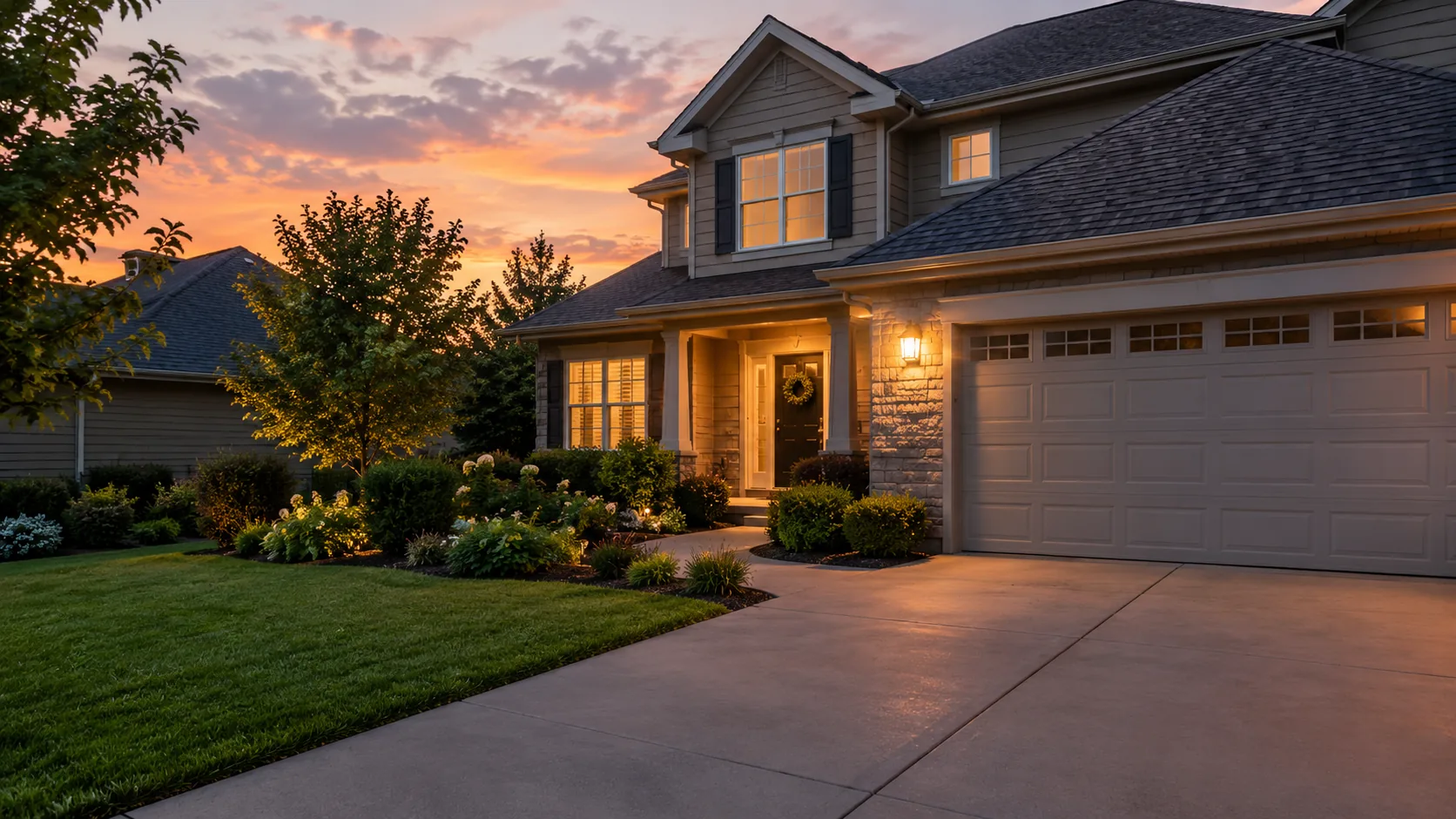
Security light should be bright, aimed and triggered by movement. A light that stays on all night blends into the background, while one that switches on with motion draws the eye to whatever moved. Mount it high enough to cover the approach, and aim it at the area you want to see rather than at the street.
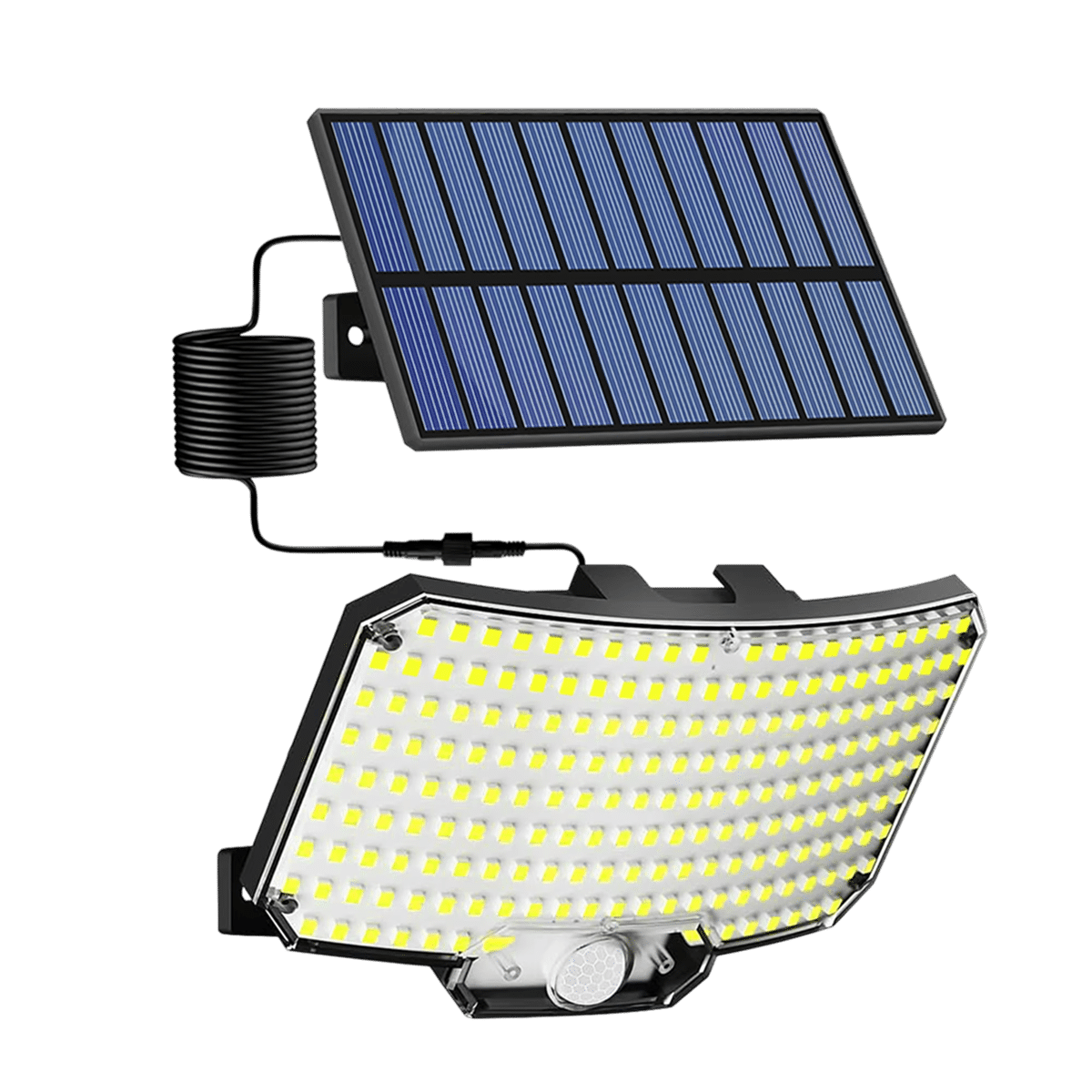
NovaBeacon is a solar-powered outdoor security light with a motion sensor that covers a 180° field out to 23 feet. It has 234 LED chips in an ABS housing and a built-in 1500mAh battery that stores energy from the separate solar panel. The panel connects by a 16.4 ft cable, so the panel can sit in a sunny spot while the light goes elsewhere. A remote control and mounting hardware are included.
 In this guideNovaBeacon$89.99View
Walk the area at night before you fix anything in place. Check where the sensor will see movement, and watch for branches that could trigger it. The guide Motion Sensor Light Outdoor: Choosing Power, Range and Settings covers sensor range and settings in more depth.
If you also want to see who is at the door or along the driveway, pair lighting with a camera from the Security Cameras & Doorbells collection.
Field note
Light the entrance from the side or above rather than straight at the door, and keep the fixture out of direct view so it does not glare at visitors or neighbors.
Choosing a power source: solar, plug-in or wired
Power decides where each light can go, so settle it zone by zone.
Solar
Solar fixtures need no wiring and suit paths, fences and remote corners. They need direct sun on the panel, so check the spot at midday. A separate panel on a cable, as on NovaBeacon, lets the light sit in shade while the panel sits in sun.
Plug-in
Plug-in strips and lamps suit patios and decks near an outlet. Use outdoor-suitable extension cords and covered outlets only as the manual allows, and keep connections off wet ground.
Wired
Hardwired fixtures suit entrances where you want fixed, constant power. Turn off the circuit before any work, follow the fixture manual, and ask a licensed electrician if you are unsure about the wiring.
Setup checklist and common mistakes
- Walk the yard at dusk and note dark steps, doors, gates and seating areas.
- Mark each zone and assign a layer: path, accent or security.
- Check sun exposure for any solar panel and the distance to outlets for plug-in lights.
- Place lights temporarily and look at them from the spots where people stand or sit.
- Fix them in place, using the included hardware and the manual.
- Recheck after a few nights and adjust aim, color and sensor position.
Mistakes to avoid
- Using one very bright light for everything, which creates glare and hard shadows.
- Placing solar panels in shade or under eaves.
- Aiming motion lights at busy streets or swaying branches.
- Leaving dark gaps on steps, where the footing changes.
- Mixing many color temperatures in view of each other; pick warm white for most zones.
Keep up a simple care routine: wipe panels and lenses, check clips and adhesive after weather changes, and replace anything that has loosened.