What Is a Water Leak Detector? Types and Where to Place Them
A water leak detector is a floor-level sensor that signals when water touches it. Compare spot, smart and shutoff types, then place them room by room.
The Cobalt Hollow Team
November 22, 2026 · 6 min read
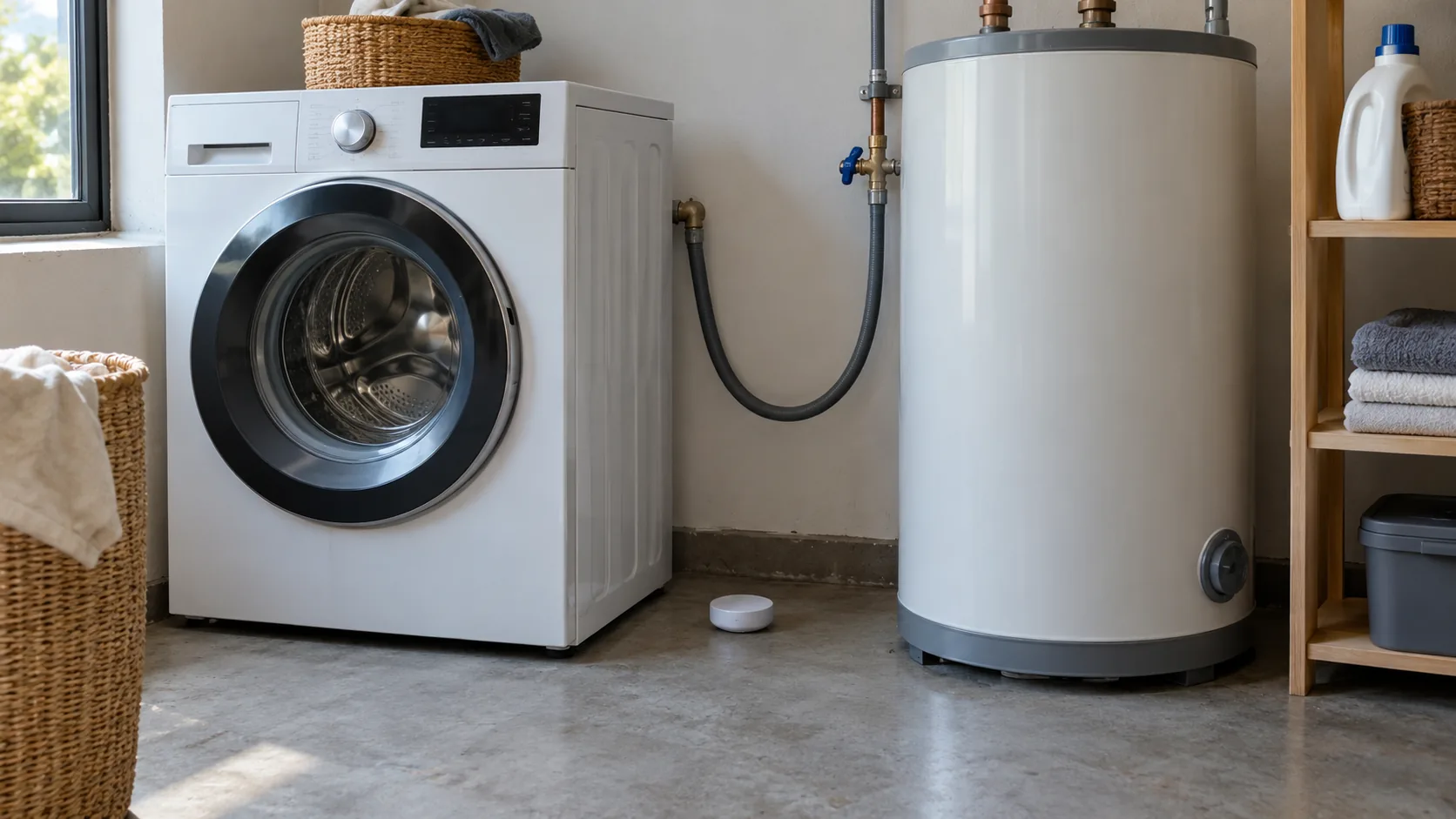
What is a water leak detector? It is a small sensor that sits on the floor or near a pipe, appliance or drain and signals when water reaches it. Some units only sound a local alarm, some send a phone notification, and some are wired to a valve that closes the supply line.
The right type depends on where water can escape and whether you are home when it does. This guide compares the main types, then gives a room-by-room placement checklist and a setup routine.
What is a water leak detector and how does it work?
Most home units use water contact sensing. Two metal contacts on the underside of the unit stay dry and open. When water bridges them, the circuit closes and the unit reacts with a siren, a light or a message to your phone.
That design means the detector only reports water that actually touches it. A sensor on the wrong spot of the floor can sit dry while a leak spreads a few feet away, so placement matters as much as the device you choose.
What it does not do
A spot sensor does not measure pipe pressure, locate a buried line or shut off water by itself. Those jobs belong to other tools, covered in the table below.
Types of water leak detectors compared
The three groups you will meet most are spot sensors, smart alert sensors and shutoff systems. Pipe-locating tools are a separate category used after a leak is suspected.
| Type | How it signals | Where it fits | Limit to know |
|---|---|---|---|
| Spot sensor with alarm | Local siren or light | Under sinks, beside a toilet | Only helps if someone is home to hear it |
| Smart alert sensor | Phone notification over WiFi or Bluetooth | Basements, garages, laundry rooms, vacation homes | Reports water but does not close a valve |
| Sensor with shutoff valve | Alert plus valve that closes the supply | Main line or a single appliance supply | Needs valve installation; ask a plumber if you are unsure |
| Whole-home flow monitor | Watches water use on the main line | Homes wanting a view of the whole system | Installed on the plumbing, not set on the floor |
| Acoustic or pipe-locating tool | Listens for sound of escaping water | Tracing a suspected hidden or underground leak | Used while tracing a leak, not left in place |
Spot sensors
A spot sensor is the simplest option. Place it, and when it gets wet it makes noise. It suits a bathroom or a kitchen where you are nearby most of the day.
Smart alert sensors
A smart water leak detector adds a connection to your phone. You get a push alert when you are at work or traveling, and some models log each event. A water leak sensor of this kind suits a basement or garage that you do not visit daily.
Shutoff systems
A shutoff system acts, not just warns. Because it connects to your plumbing, installation involves cutting into or fitting onto a supply line. Follow the manual, and ask a licensed plumber if you are not comfortable with that work.
A smart sensor pair for basements and laundry rooms
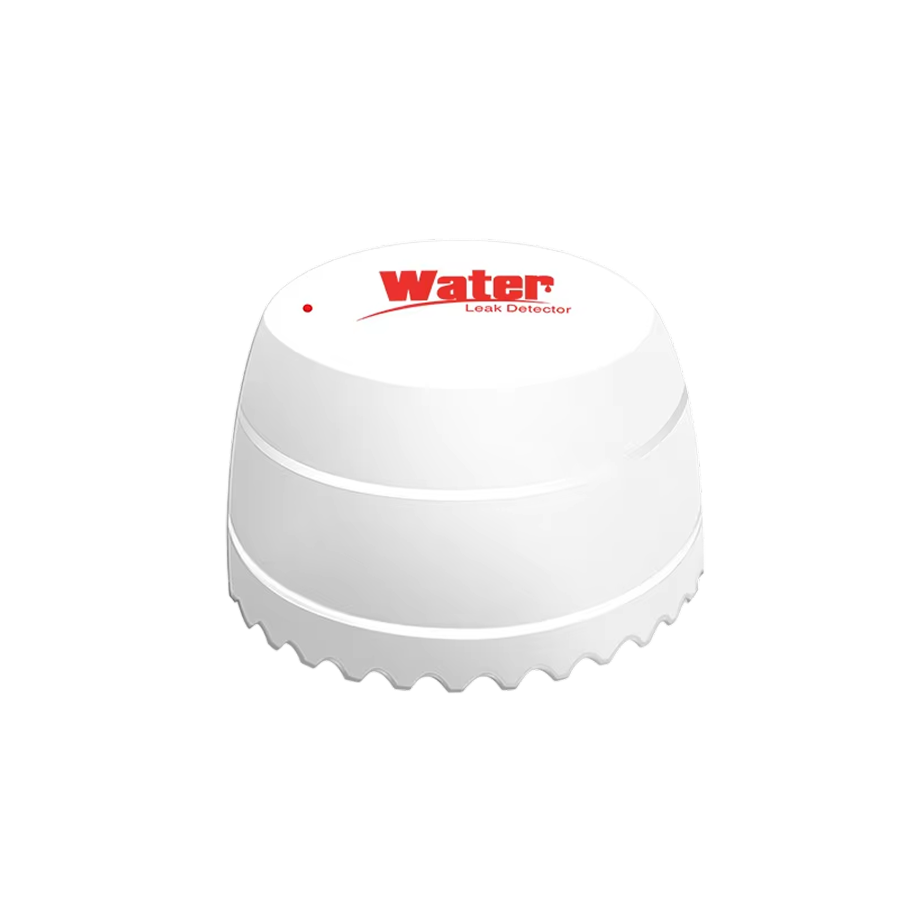
For floor-level spots where water collects, a smart pair is a practical starting point. AquaWarden is a pair of water leak detectors for basements, garages and laundry rooms. You set them on the floor near spots where water collects or escapes, and they pair with a phone app over WiFi or Bluetooth to send notifications.
The app saves every alert with a time stamp, so you can see when water keeps returning and plan upkeep. A low-battery reminder shows on your phone, so you can swap the battery. The detector operates from -10°C to 50°C (14°F to 122°F), so you can place it near the sump pit, heater or washer, and it works with common voice assistants if you want to ask for its status out loud.
 In this guideAquaWarden$59.99View
Where to place water leak detectors, room by room
Put a sensor where water would collect first: the lowest point of the floor, flat, within a short distance of the likely source. Sensors on a shelf or wall will not see a leak until the room is already flooded.
| Room | Placement spot | Why there |
|---|---|---|
| Basement | Lowest floor point, beside the sump pit or floor drain | Water runs downhill and pools here first |
| Water heater area | On the floor beside the tank, near the drain pan if there is one | Tanks and fittings can seep slowly |
| Laundry room | Behind or beside the washer, near supply hoses | Hoses and drain lines are common drip points |
| Kitchen | Under the sink and beside the dishwasher | Supply lines and drain traps sit low in the cabinet |
| Bathroom | Beside the toilet base and under the vanity | Supply stops and wax seals can weep |
| Garage | Near the utility sink, softener or second water heater | Equipment here can go unchecked |
| Upstairs | Beside the washer or tub if the room sits above finished space | Leaks can reach ceilings below before you see them |
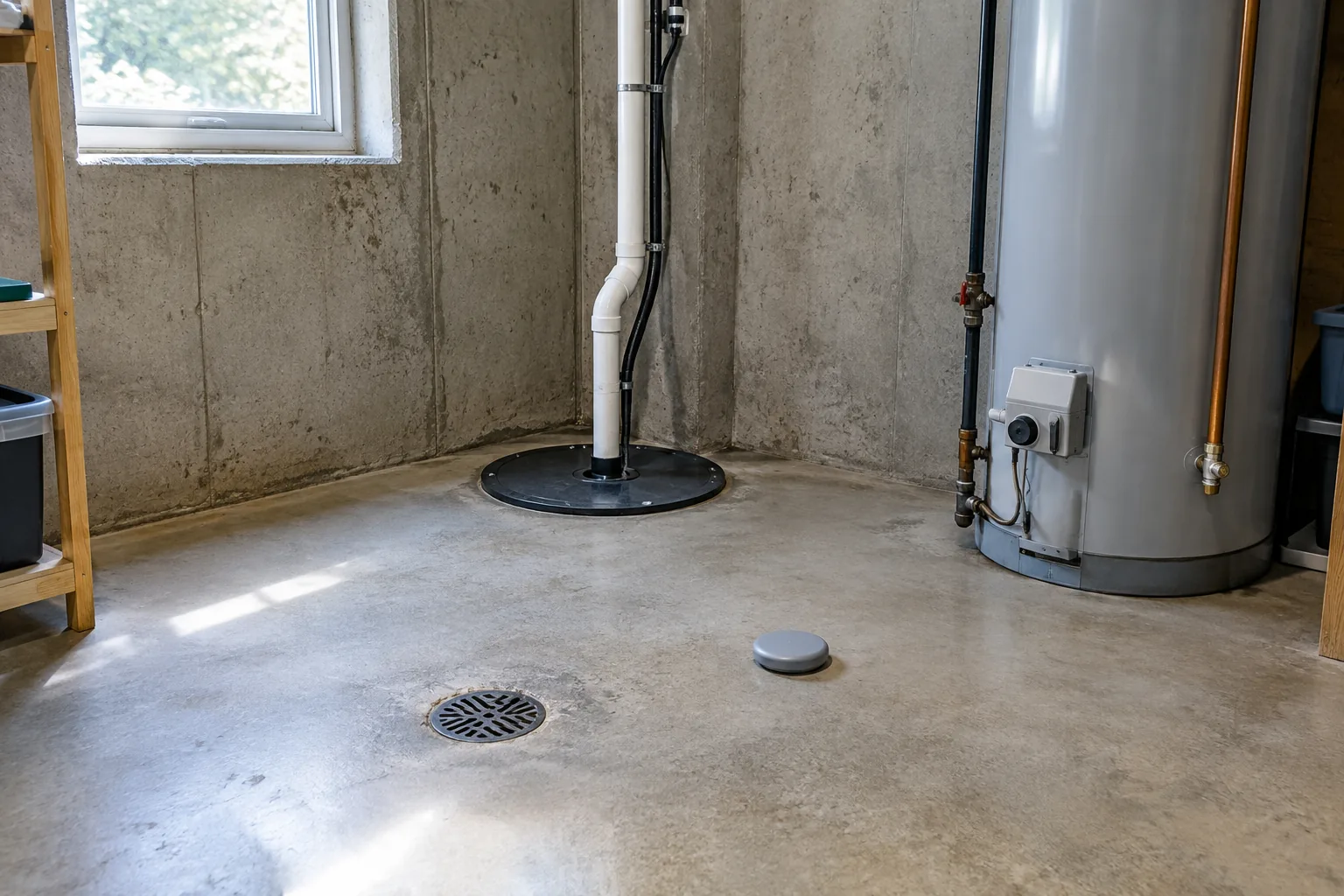
With two detectors, a sensible split is one at the lowest point near the sump pit or floor drain and one near the water heater, washer or another appliance that can leak. Under-sink leaks are common in kitchens; if your disposal drips, see our garbage disposal guide for what to check.
How to set up a leak detector
- Walk each room and note appliances, supply lines and the lowest floor spot.
- Clean and dry the floor where the sensor will sit, so the contacts start dry.
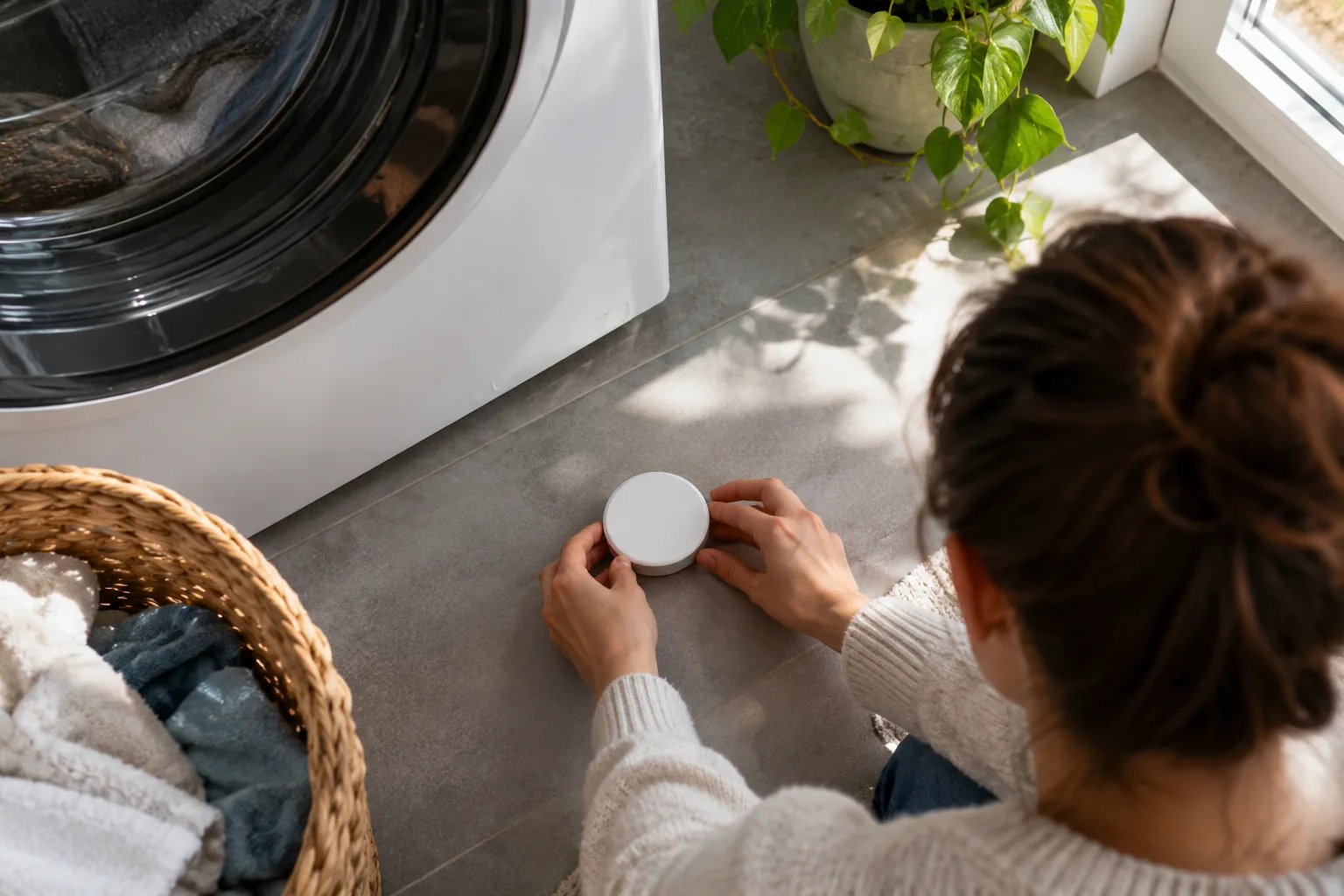
- Place the sensor flat, contacts facing down, a short distance from the likely source.
- Pair it with the companion app over WiFi or Bluetooth, following the manual.
- Touch the contacts with a damp cloth to confirm that an alert reaches your phone, then dry the unit and put it back.
- Name each sensor in the app by location so an alert tells you where to look.
Field note
Check that a phone alert arrives from every sensor after setup, and repeat that check each time you replace a battery or change your WiFi network.
When you need a plumber or a pipe-locating tool
A floor sensor tells you that water is present. It does not tell you which pipe is failing, especially inside a wall or under a slab. In that case, calling a plumber who uses water leak detector equipment, such as acoustic or pressure tools, is the practical next step.
Underground lines in a yard are a different problem. Acoustic tools listen for the sound of escaping water along the pipe, and some hardware stores and tool shops rent them. Ask a plumber if you are unsure how to read the results, and follow the manual for any tool you rent.
Outdoor water can also reach the foundation through clogged gutters, which a floor sensor may later pick up in a basement. Our gutter cleaning guide covers clearing them from the ground or a ladder.
Common mistakes and a care schedule
Mistakes to avoid
- Placing a sensor on a shelf instead of the floor.
- Covering all rooms but skipping the washer and water heater.
- Leaving a dead battery after a low-battery reminder.
- Ignoring repeat alerts, which can point to a slow, recurring leak.
- Assuming a spot sensor will close a valve; it only signals.
Care schedule
| When | Task |
|---|---|
| Monthly | Wipe dust from the contacts and confirm the app shows each sensor online |
| Every season | Run the damp-cloth check on each sensor |
| After an alert | Dry the sensor and floor, find the source, then review the alert log |
| When the phone reminder appears | Swap the battery |
To compare other sensors and monitors we stock, browse the Home Utility & Detection Devices collection.