Shredding Cheese in a Food Processor: Discs, Chill and Steps
Fit the shredding disc, chill the cheese until firm, and feed it through the tube with light pressure. This guide covers discs, cheese types and clump fixes.
The Cobalt Hollow Team
November 4, 2026 · 6 min read · Updated November 18, 2026

Shredding cheese in a food processor takes a shredding disc, a block of cheese that is cold and firm, and light pressure on the pusher. Fit the disc, drop pieces into the feed tube with the motor running, and the shreds collect in the bowl. If your machine has no disc, you can still chop firm cheese into small crumbles with the blade.
Below you will find which attachment to pick, how to chill each type of cheese, a step-by-step routine, fixes for clumping and a few options for when a disc is not on hand.
Which attachment shreds cheese in a food processor
Many processors that include discs come with a reversible shredding disc that has a slicing side and a shredding side. Some models add a fine grating disc. The disc sits on the stem above the bowl, and the cheese enters through the feed tube. Check your manual for the exact disc names, because they differ between models.
| Attachment | Result | Good for |
|---|---|---|
| Medium shredding disc | Classic shreds | Cheddar, Monterey Jack, low-moisture mozzarella |
| Fine grating disc | Small, dry shreds | Parmesan, Pecorino, aged Gouda |
| Slicing disc | Flat slices | Sandwiches, gratins, layering |
| Standard blade | Irregular crumbs | Hard cheese cut into cubes, when no disc is available |
Pick the disc by how you will use the cheese
Choose the medium disc for melting on tacos, casseroles and pizza. Choose the fine disc for cheese you want to scatter over pasta or soup. The slicing side is for layered dishes, not for shreds.
If you are still choosing a machine, What's a Good Food Processor? explains capacity, motor and blades, so you can check which discs come in the box.
Chill the cheese first, by cheese type
Warm cheese smears against the disc and clogs it. Cold, firm cheese breaks cleanly into shreds. Unwrap the block, cut it to fit the feed tube, and chill it before you start.
| Cheese | Chill | Disc | Notes |
|---|---|---|---|
| Cheddar, Colby, Monterey Jack | Refrigerator until cold, or a short freezer rest | Medium shredding | Cut into blocks that fit the tube |
| Low-moisture mozzarella | Freezer rest until very firm | Medium shredding | Soft when warm, so work in small batches |
| Fresh mozzarella | Freezer rest until stiff, after patting dry | Medium shredding | Wet cheese clumps, so expect softer shreds |
| Parmesan, Pecorino | Cool, rind-trimmed chunks | Fine grating, or blade | Very hard, so cut into small pieces |
| Brie, feta, goat cheese | Not suited | None | Crumble or slice by hand |
How to shred cheddar cheese in a food processor
Cheddar is a forgiving place to start. Cut the block into pieces that slide into the tube, refrigerate them until cold, and use the medium disc. A sharp, aged cheddar is drier and shreds cleanly, while a young, mild block is softer and needs a short rest in the freezer.
Soft and semi-soft cheeses
A short rest in the freezer helps semi-soft cheeses hold their shape. Pull the cheese when it feels firm but not frozen solid, since a rock-hard block can strain the disc and the motor. Crumble or slice very soft cheeses by hand.
Step-by-step: shredding cheese in a food processor
- Unplug the machine and follow the manual to fit the disc on the stem, with the cutting side facing the right way.
- Lock the bowl and lid in place.
- Cut the chilled cheese into blocks that slide into the feed tube without forcing.
- Start the motor, then drop the pieces into the tube.
- Push with the pusher using light, even pressure. Let the disc do the work.
- Turn off the motor and wait for the disc to come to a complete stop before you remove the lid.
- Lift out the disc before you empty the bowl, and unplug the machine before cleaning.
Work in several small batches rather than packing the tube. Pressing hard warms the cheese and makes shreds stick together. Empty the bowl when it is about half full so the shreds do not pile up against the disc.

How to avoid clumping
Clumps come from warmth, moisture and pressure. Fix those three and the shreds stay loose. Keep the cheese cold between batches by returning the unused block to the refrigerator, and pat wet cheeses dry with a paper towel before cutting.
If you plan to store the shreds, toss them with a spoonful of cornstarch or flour, then spread them on a tray before bagging. Keep them in an airtight container in the refrigerator and use them while they still look fresh. Wipe the disc and bowl between cheeses, since residue holds new shreds together.
| Problem | Likely cause | Fix |
|---|---|---|
| Shreds stick in a mass | Cheese too warm | Chill the block again and work in smaller batches |
| Cheese smears on the disc | Soft cheese or heavy pressure | Freeze briefly and push lightly |
| Pieces jam the tube | Blocks cut too wide | Trim to fit without forcing |
| Wet, soft shreds | High-moisture cheese | Pat dry and freeze until stiff |
| Shreds clump in storage | Moisture and compression | Toss with starch and spread on a tray first |
Common mistakes
- Using warm cheese straight from a sunny counter.
- Cutting pieces too wide, which jam the tube.
- Leaning on the pusher.
- Running a soft cheese through a fine disc.
- Leaving the leftover end piece on the disc, where it gets mashed. Shred it by hand instead.
Shredding without a disc
You can still prepare cheese in a processor that has only blades. Choose a firm cheese such as Parmesan or aged cheddar, cut it into small cubes, chill it, and process in short bursts. The result is small crumbles rather than long shreds, which suits topping soups, pasta and baked dishes.
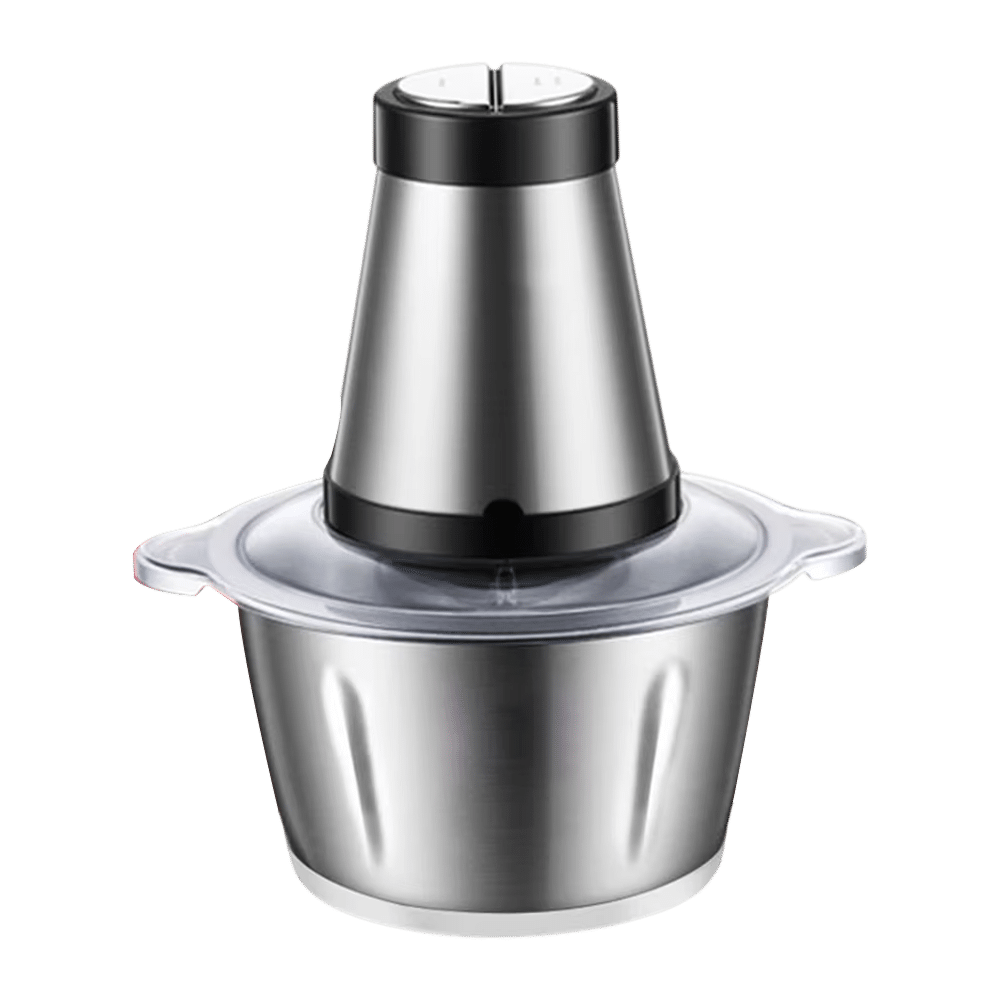
The ChopCraft is a countertop food processor with a 2L stainless steel bowl and four bi-level blades. It has two speed settings, and the product page does not list a shredding disc. It suits firm foods that need a rough chop or a fine mince, and the see-through lid lets you watch the bowl as you work, so you can release the control when the texture looks right. Check the Quick-Start User Guide before processing hard cheese. The parts are dishwasher-safe.
 In this guideChopCraft$149.99View
Field note
For crumbles without a disc, use cold cubes no larger than a die, fill the bowl only partway, and work in short bursts. Stop as soon as the pieces look even.
Other ways to shred or grate cheese
A processor suits large amounts, but several hand tools work for smaller ones.
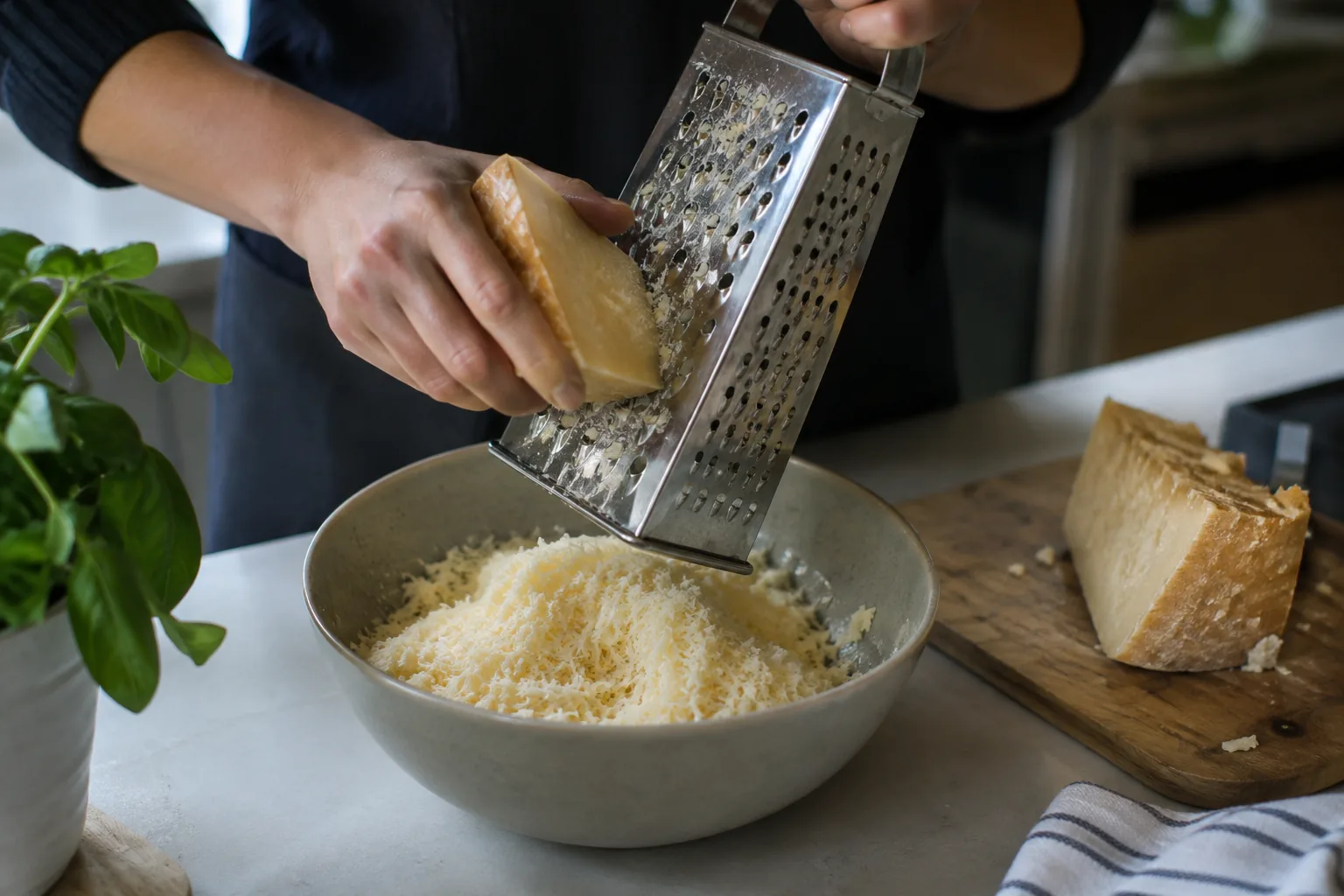
- Box grater: a hand tool with coarse and fine sides. Hold the block firmly and grate away from you.
- Rasp-style grater: a long, flat tool suited to dry, hard cheese like Parmesan.
- Rotary hand grater: it holds a small piece against a drum, which suits tableside use.
- Fork: for a very soft, crumbly cheese, mash it with a fork into small pieces. It does not work for firm blocks.
- Blender: cut hard cheese into small cubes and use short pulses with the lid on. Do not overfill the jar.
For a whole block, a processor disc moves the cheese through the tube in a single pass, while a grater suits a handful. See Blender vs Food Processor for which tasks suit each machine, or browse the Blenders, Mixers & Prep Tools collection.
Cleaning and care after cheese
Cheese leaves a film on discs and bowls. A prompt rinse helps before it hardens. Unplug the machine, handle discs by the center and wash with warm soapy water and a brush. Check the manual before putting any part in the dishwasher.
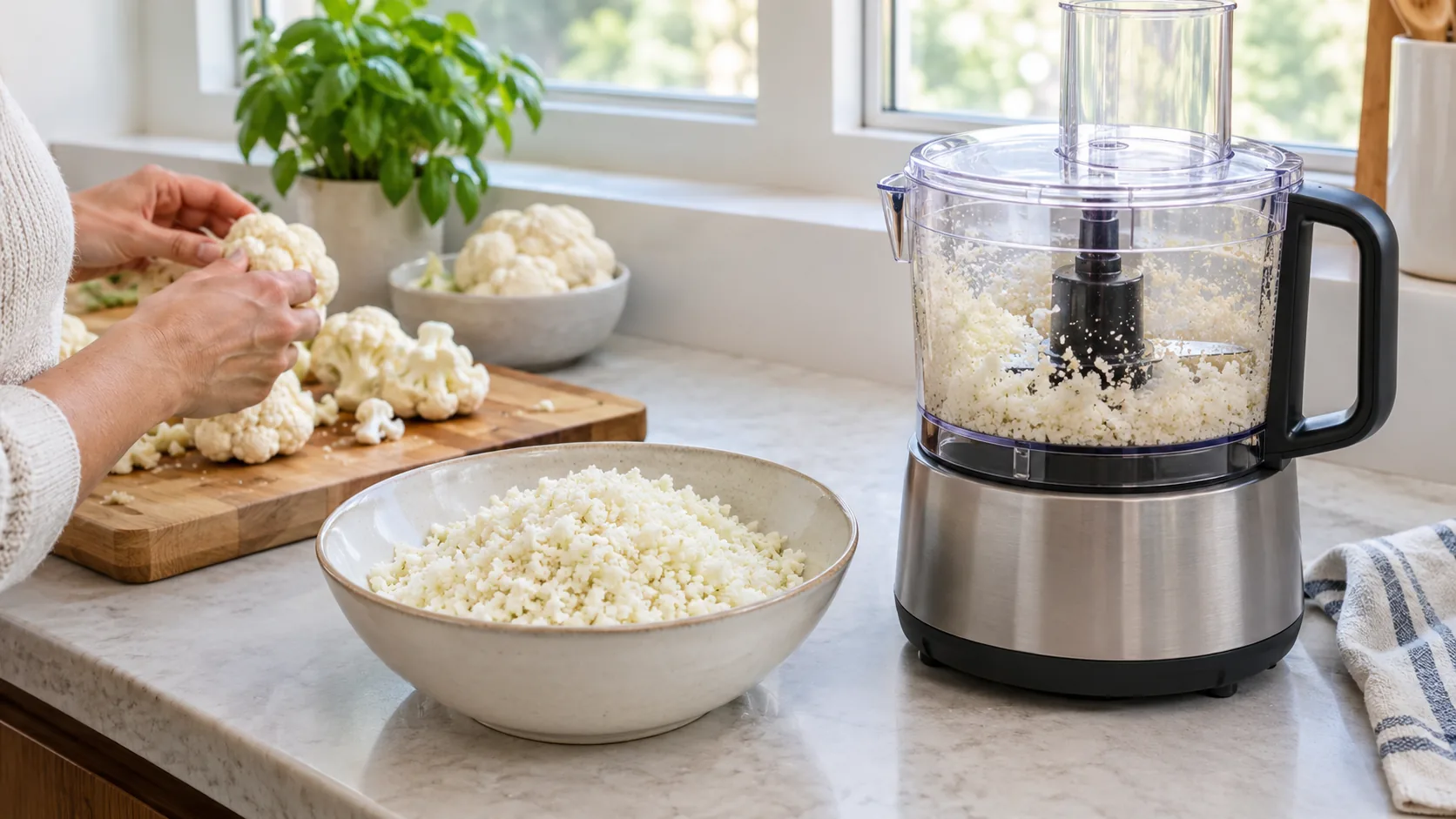
The same disc handles other firm foods. The cauliflower rice guide shows another job a processor does, and the same cleaning habits apply.