What's a Good Food Processor? Capacity, Motor and Blades Explained
A good food processor has a bowl sized to your household, a motor with speed control, and blades that match what you cook. Use these four steps to choose.
The Cobalt Hollow Team
October 21, 2026 · 7 min read · Updated November 18, 2026
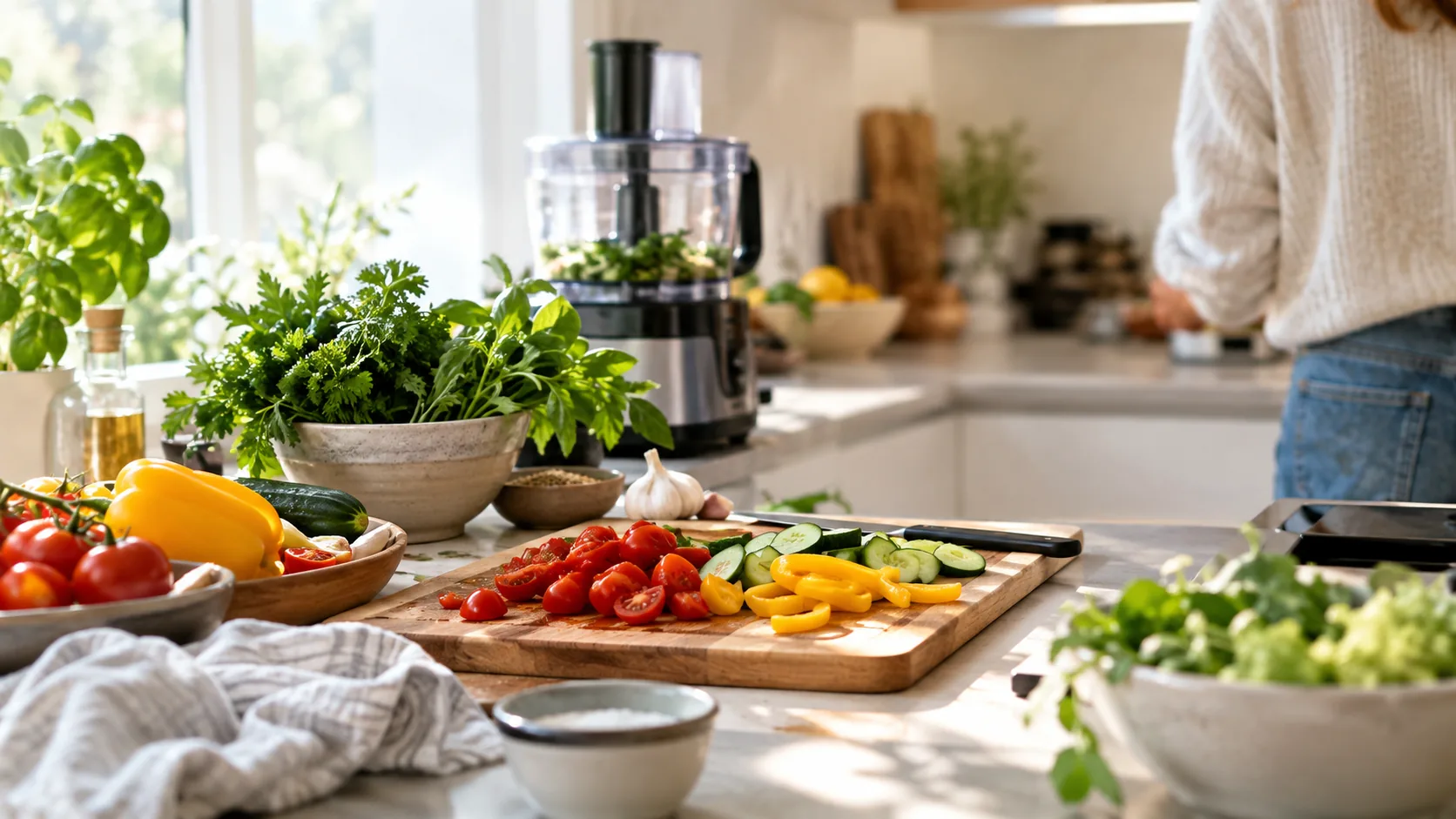
What's a good food processor? It is one whose bowl fits the batch size you cook, whose motor has the wattage and speed settings your ingredients call for, and whose blades match your tasks, such as chopping, slicing, shredding or mixing dough. Brand rankings matter less than these specs.
This guide answers what's a good food processor in four decisions, in order: capacity, motor, blades and attachments, and cleaning. It then covers when a blender suits your tasks and the mistakes to avoid.
What's a good food processor for your household?
Start with how many people you cook for and what you prep most often. Someone making salsa and chopped onions for two has different needs than a family batch-cooking meatballs, slaw and pastry dough on a Sunday.
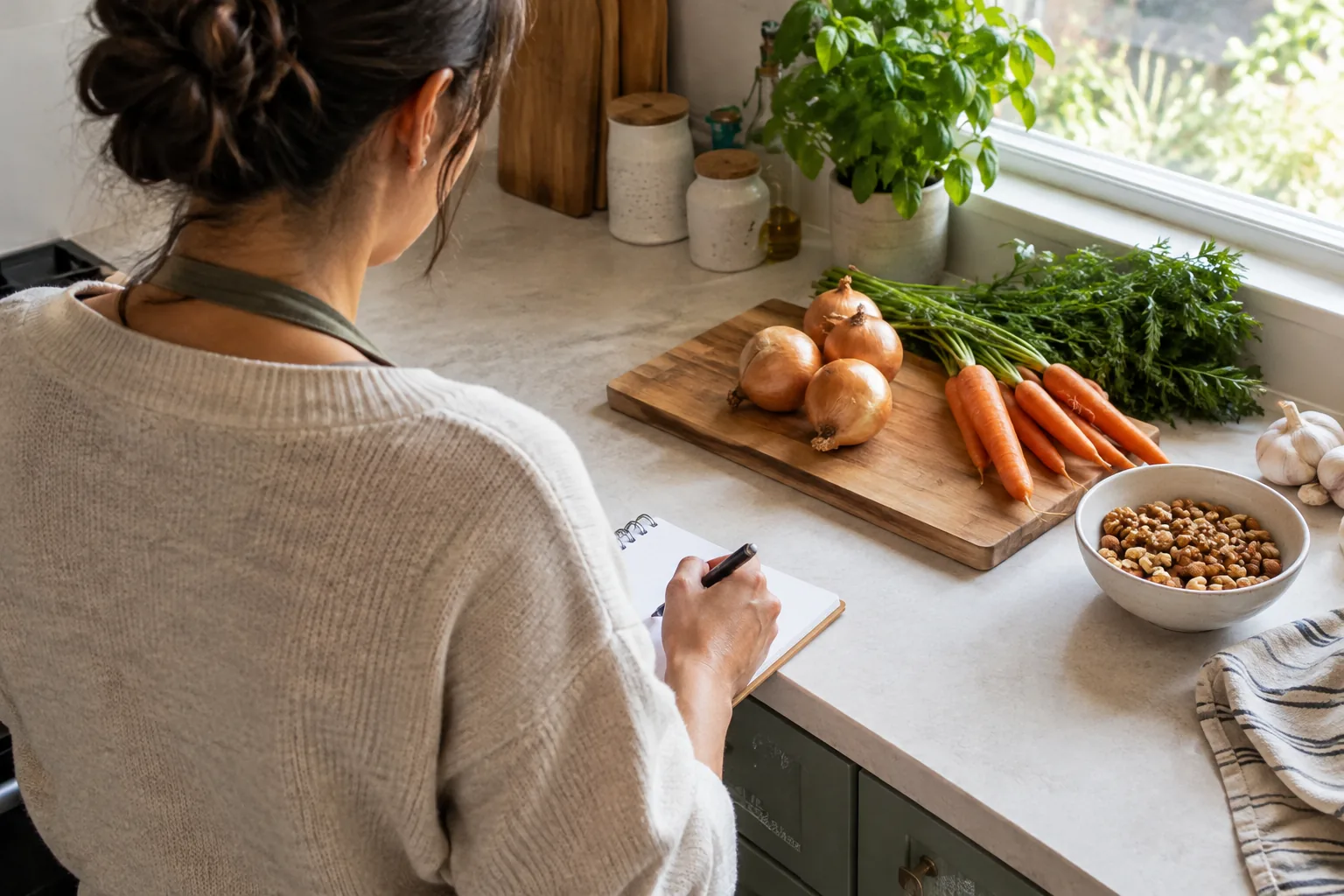
Write down your three most frequent tasks before you compare models. Every spec below ties back to that short list.
Step 1: Match bowl capacity to household size
Capacity is the most visible spec, and it sets the batch size. A bowl that is too small forces you to work in rounds. A bowl that is too large can leave small amounts of food spread thin across the blade, so a few chopped herbs may not process evenly.
Manufacturers list capacity in cups or liters. For reference, 1 liter is about 4.2 cups, so a 2L bowl is about 8.5 cups.
| Household | Typical tasks | Bowl capacity to look for |
|---|---|---|
| 1 to 2 people | Onions, herbs, salsa, nut butter, small sauces | About 3 to 5 cups (roughly 0.7 to 1.2L) |
| 3 to 4 people | Slaw, hummus, meatballs, baby food, weeknight prep | About 7 to 9 cups (roughly 1.7 to 2.1L) |
| 5 or more, or batch cooking | Large salads, shredded cheese, dough, meal prep | 9 cups (about 2.1L) or larger |
These ranges are starting points, not rules. If you often cook for a crowd, a larger bowl can help. If you mostly prep small amounts, a compact bowl suits you.
Also check the maximum liquid line. Processors have a fill limit for liquids, and soups or sauces can leak at the lid if you go past it. Your manual states the limit.
Step 2: Check motor wattage and speed settings
Wattage tells you how much power the motor draws, and it matters most for firm or dense ingredients such as carrots, hard cheese, nuts and dough. A higher number gives you more headroom for those jobs, but wattage alone does not tell the whole story. Bowl size, blade shape and how you load the bowl all shape the result.
Speed control is just as useful. Soft herbs and tender vegetables call for a lower speed, while firmer ingredients call for a higher one. A model with two speeds gives you that choice, and a pulse function lets you control the texture in short bursts.
- Look for a stated wattage on the spec sheet, not just a marketing label such as "powerful."
- Check for at least two speed settings, or one speed plus pulse.
- If you plan to knead dough, confirm the manual lists dough as an intended use.
- Check whether the base is weighted or reinforced, since a processor can shift on the counter while the motor runs.
Field note
Fill the bowl no higher than the maximum line in your manual, and cut food into even pieces of about 1 inch before you start. Even pieces give a more even texture.
Step 3: Match blades and attachments to your tasks
The blade set decides what the machine can do. Extra attachments add range, but each one is one more part to store and wash, so choose only what you will use.
Common blades and what they do
| Blade or attachment | Used for |
|---|---|
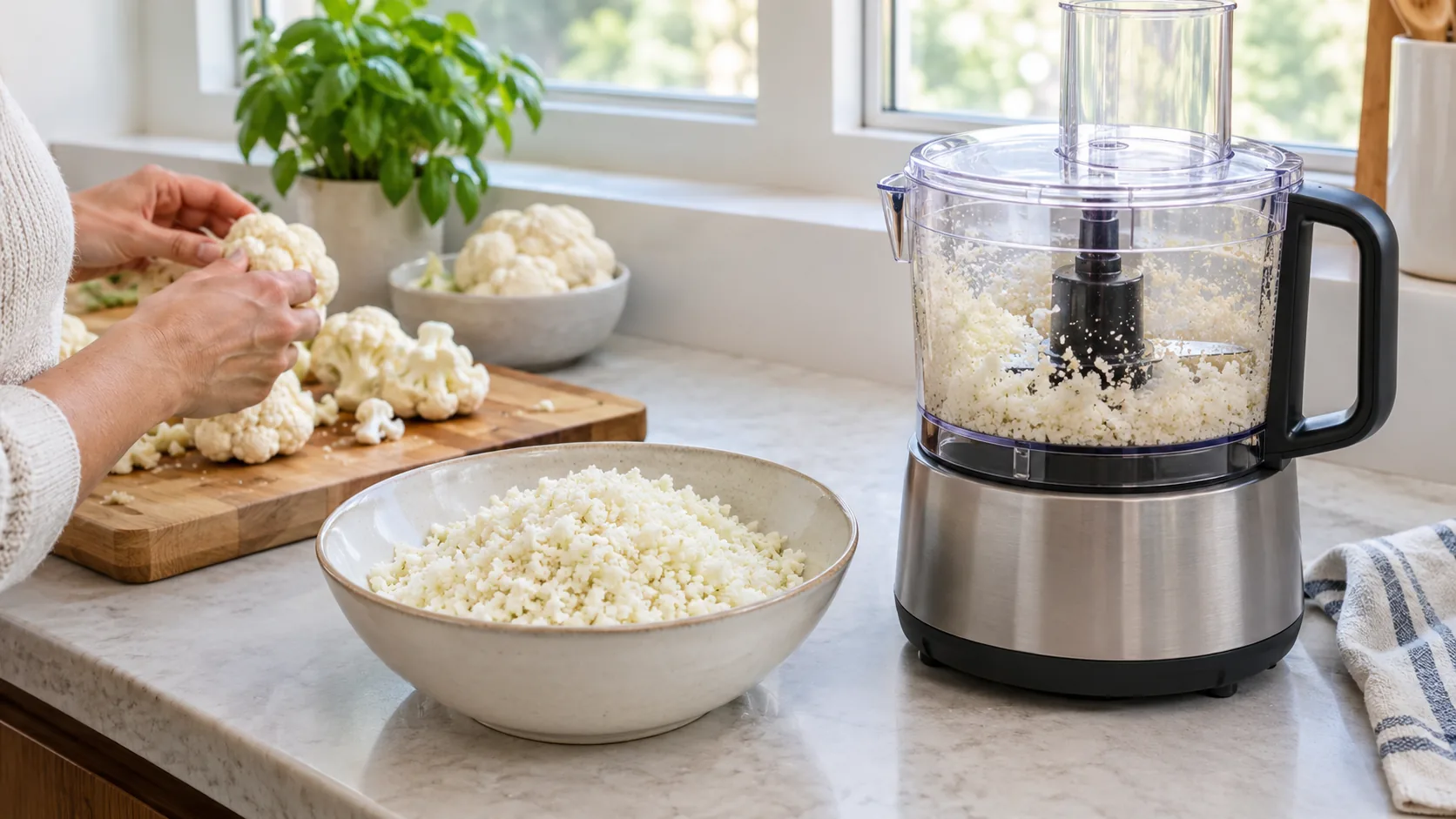
| S-shaped or multi-level chopping blade | Chopping vegetables, nuts, herbs and meats; mincing; making purees and spreads |
| Dough blade | Mixing pastry dough and small bread dough batches |
| Slicing disc | Uniform slices of cucumbers, potatoes and onions for salads |
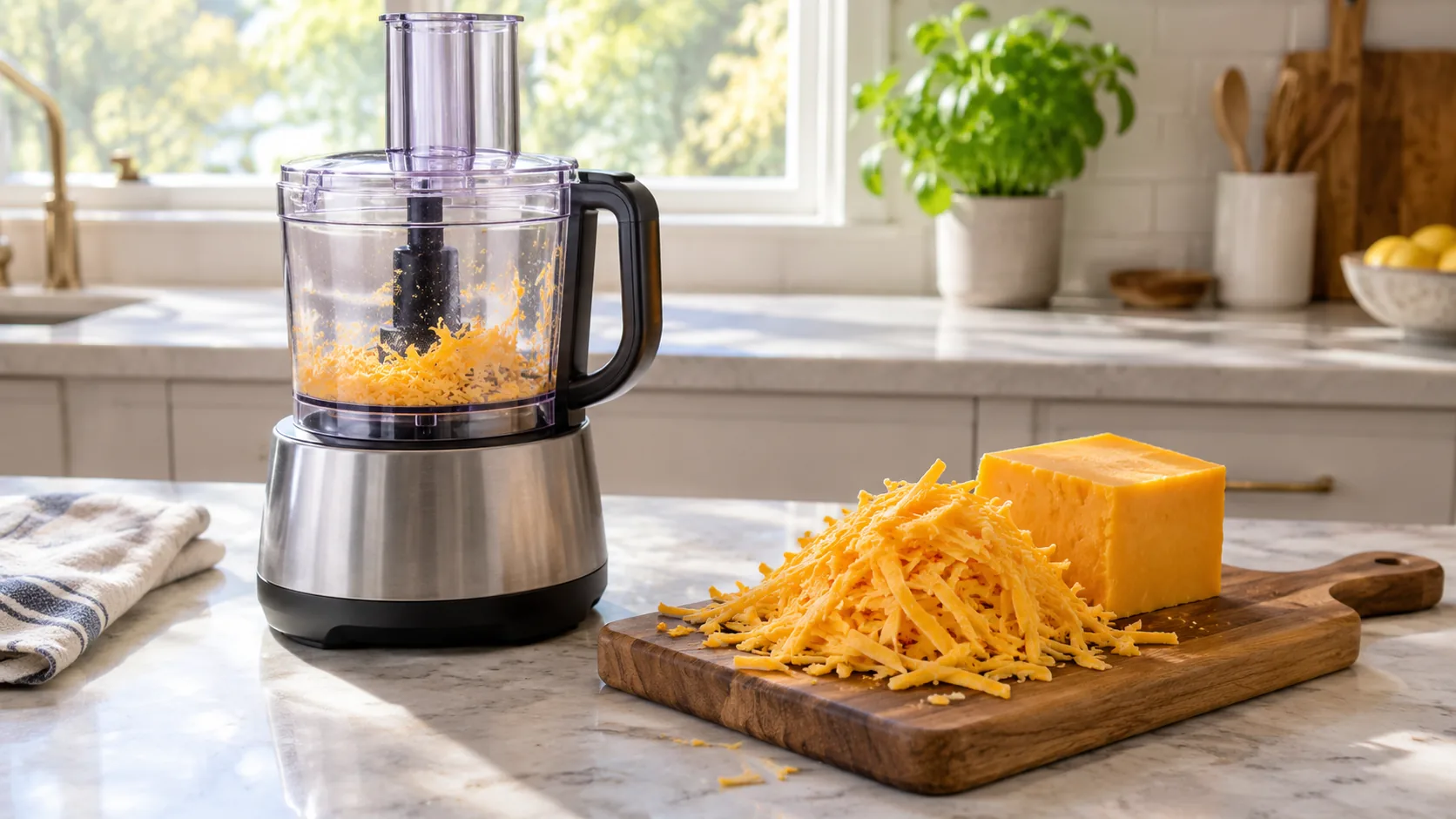
| Shredding disc | Cabbage for slaw, carrots, cheese |
| Dicing kit | Cubed vegetables of consistent size |
If you cook from scratch daily, a slicing and shredding disc earns its drawer space. If you mostly chop, mince and puree, a chopping blade set in a suitable bowl covers the job.
Bi-level blades have two sets of cutting edges at different heights. They are designed to work through the top and bottom of the bowl in the same pass.
Handle blades and discs by the hub or the handle, and unplug the unit before you remove or swap them. Follow the manual for assembly.
Step 4: Look at the bowl, lid and cleaning
You will wash the processor far more often than you will use its most specialized attachment. That makes the removable parts worth a close look.
- Bowl material: stainless steel and clear plastic differ in look and weight, so pick the one you prefer to handle.
- Lid: a see-through lid lets you watch the texture as you work, so you can stop at a rough chop or keep going to a fine mince.
- Dishwasher-safe parts: check the manual for which pieces can go in the dishwasher and which need hand washing, especially blades and lids.
- Fewer parts: a simple bowl, blade and lid set comes apart quickly for rinsing.
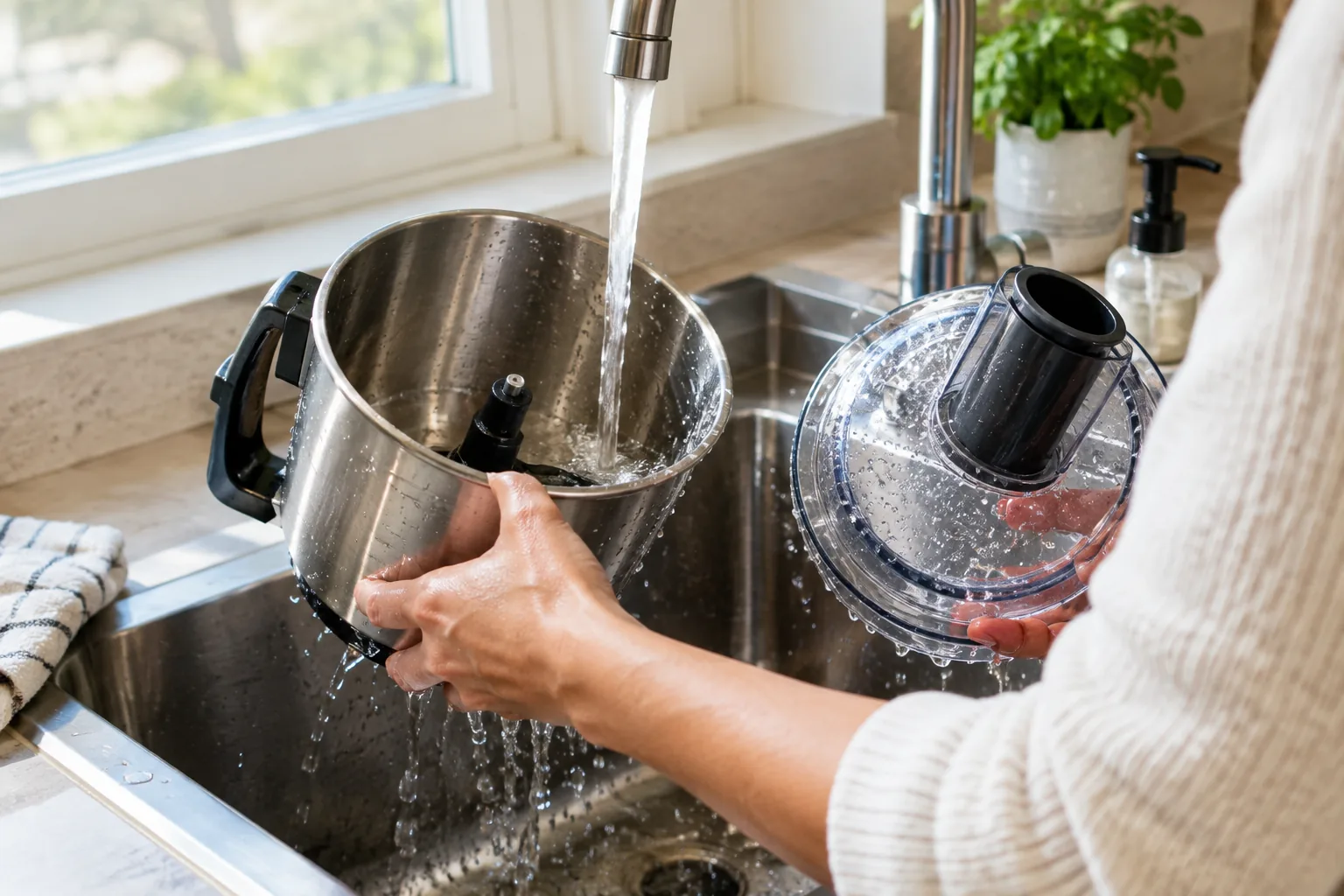
Unplug the base before cleaning, and wash blades with the edge facing away from you. Wipe the base with a damp cloth rather than submerging it.
Food processor vs blender: which do you need?
A food processor has a wide, shallow bowl and blades or discs that chop, slice, shred and mix. A blender has a tall, narrow jug built for liquids, such as smoothies, soups and frozen drinks. Some products combine both in one base with different containers, so check which containers and blades come in the box.
- Choose a food processor for chopped vegetables, shredded cheese, dough, nut butter, dips and ground meat.
- Choose a blender for smoothies, thin soups and drinks.
- For ice, check the manual before you try it. Crushing ice is a job for a blade and container built for it.
For a task-by-task breakdown, read Blender vs Food Processor: Which Kitchen Tasks Need Which. If you mainly want to blend soups in the pot, What Is an Immersion Blender and Do You Need One? explains where that tool fits. You can also browse the Blenders, Mixers & Prep Tools collection.
One option that fits a family-size prep list
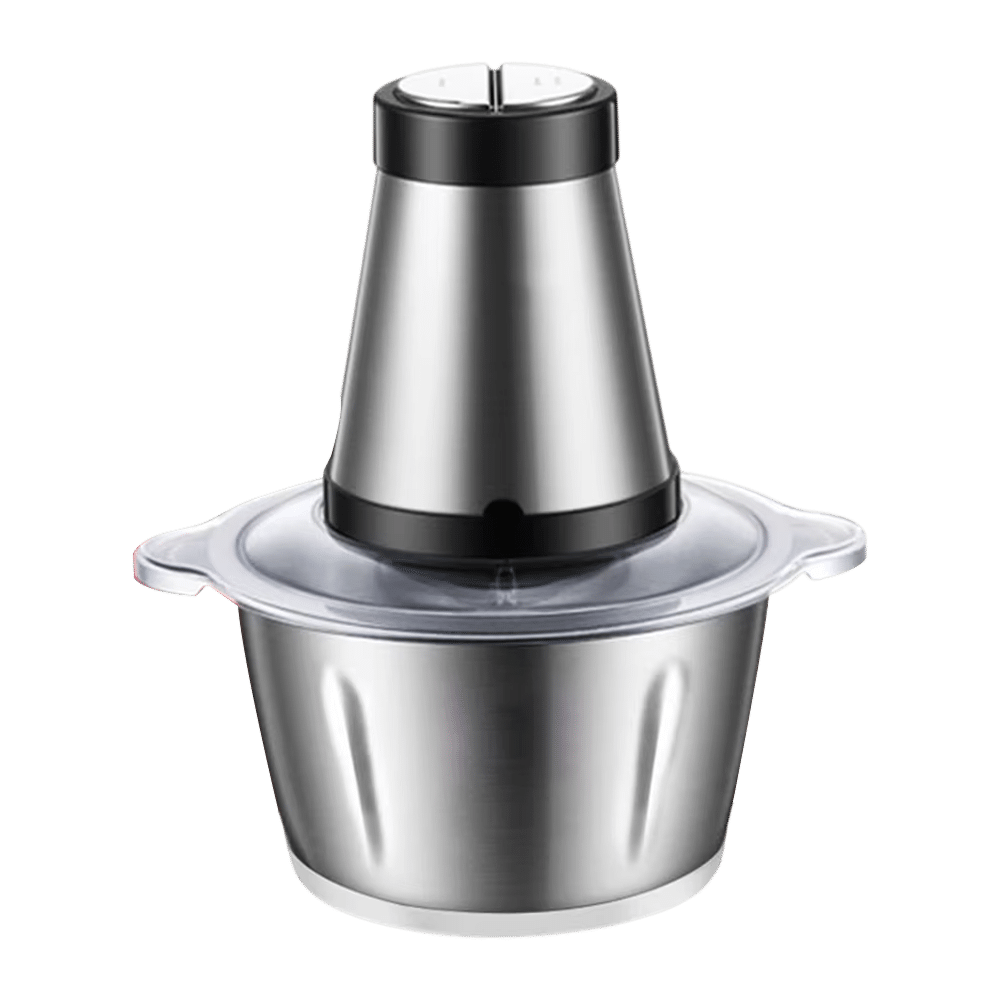
The ChopCraft is a countertop food processor with a 2L (about 8.5 cups) stainless steel bowl and four bi-level blades. It suits the middle row of the table above, where the tasks are chopping vegetables, meats, nuts and herbs, and preparing baby food.
Two speed settings let you pick a lower speed for herbs or a higher speed for firmer ingredients. The see-through lid lets you watch the texture and release the control when it looks right. The body uses three layers of stainless steel and a reinforced base, and the added weight helps hold the unit in place on the counter while the motor runs.
To use it, snap the bowl, blade and lid together, choose low or high speed, press the control to chop and release it to stop, then serve from the bowl. The parts are dishwasher-safe. In the box you get the processor, the stainless steel blade set, the 2L stainless steel mixing bowl and a quick-start user guide.
 In this guideChopCraft$149.99View
Common mistakes when choosing a food processor
- Buying on bowl size alone. Check wattage, speeds and blade types as well.
- Paying for attachments you will not use. Match the blade set to the three tasks you wrote down.
- Ignoring storage. A large bowl and a box of discs need a cabinet or shelf.
- Overfilling the bowl. Work in batches and stay below the max line.
- Skipping the manual. It lists which ingredients, liquids and cleaning methods the model supports.
Quick decision checklist
- List your three most frequent prep tasks.
- Pick a bowl capacity from the household table.
- Confirm the wattage and at least two speed settings or a pulse option.
- Match blades and discs to your tasks, including a dough blade if you bake.
- Check the lid, the bowl material and which parts go in the dishwasher.
- Decide whether a blender, not a food processor, covers your main tasks.
Together, these answers settle what's a good food processor for your kitchen: a bowl sized to your household, a stated wattage, speed control and few removable parts, whichever brand is on the front.