
How to Make Cauliflower Rice With a Food Processor
Cut dry florets, fill the bowl about halfway, and pulse in short bursts until the pieces look like rice. This guide gives pulse counts, batch sizes, cooking steps and storage options.
The Cobalt Hollow Team
November 2, 2026 · 6 min read · Updated November 18, 2026
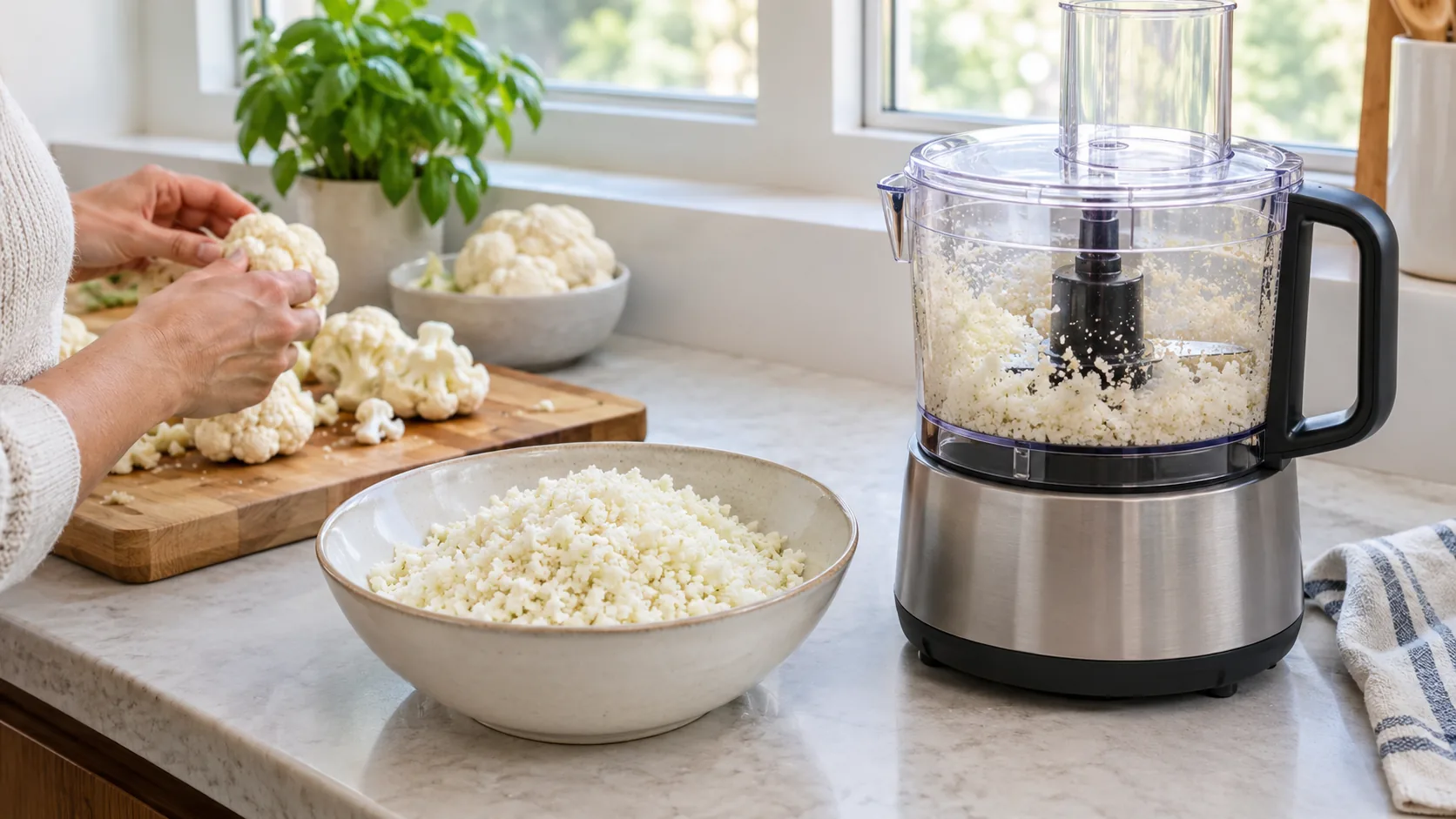
To make cauliflower rice with food processor pulses, cut dry florets to a similar size, fill the bowl about halfway, and pulse in short bursts until the pieces look like rice grains. Stop as soon as the pieces are even, because holding the button down turns them to mush. Work in batches, then cook the rice in a hot pan or store it.
Below you will find pulse counts by batch size, a prep checklist, cooking steps, other methods for when you have no processor, and ways to store the rice.
Is cauliflower rice just chopped cauliflower?
Yes. Cauliflower rice is raw cauliflower cut into pieces about the size of rice or couscous. Nothing else is added. What separates good rice from a wet clump is how evenly it is cut and how much moisture stays in it.
That is why technique matters more than any recipe. A processor cuts evenly, but only if the florets are dry and the batch is small enough for the blade to move freely.
What you need before you start
- 1 medium head of cauliflower
- A sharp knife and a cutting board
- A food processor with an S-shaped or multi-blade set
- A clean kitchen towel or paper towels
- A rimmed baking sheet for spreading the rice
- A wide skillet, olive oil, salt and pepper for cooking
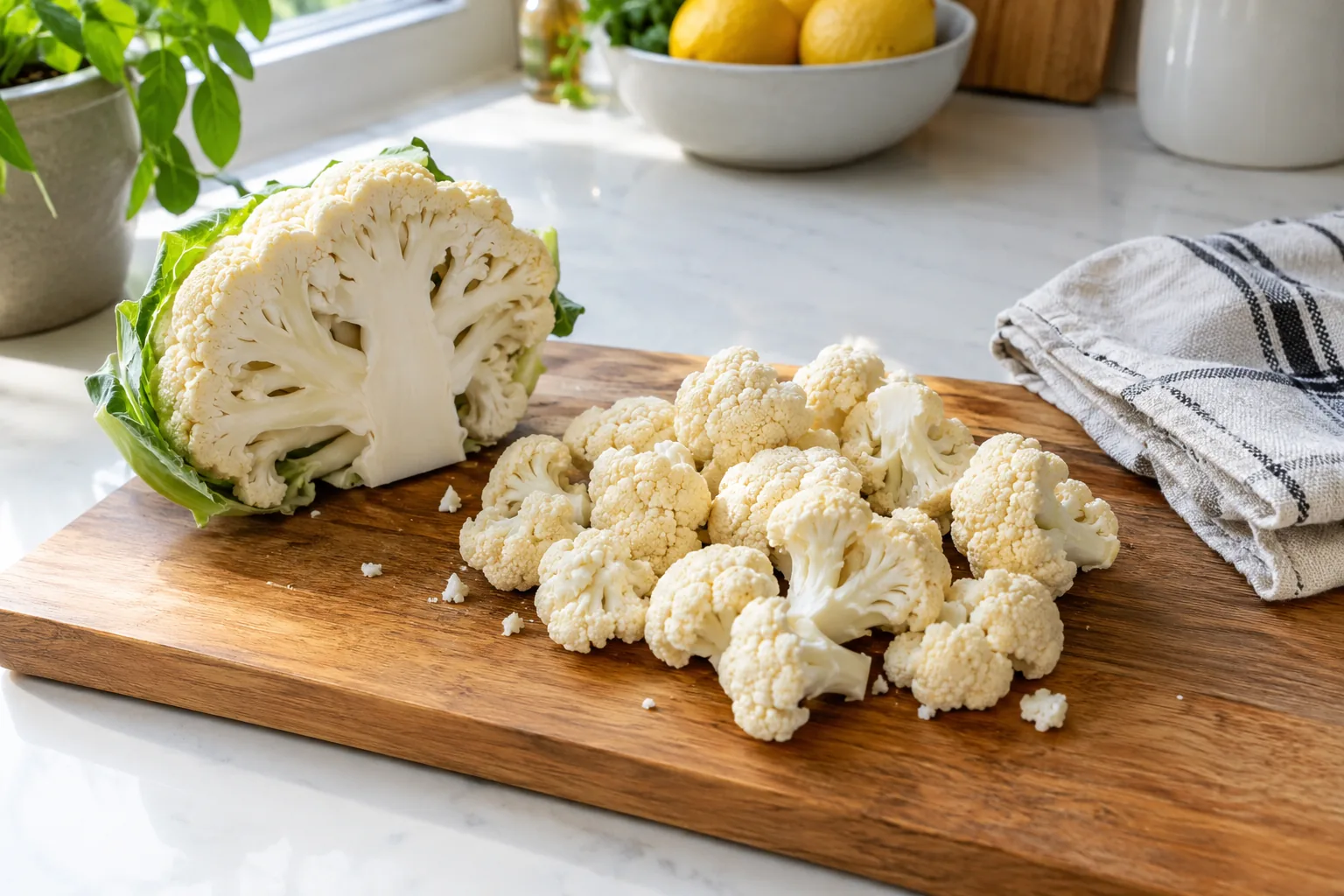
A sharp knife matters for the first step: removing the leaves and core. You do not need to peel anything. The stem is edible, but cut it into small chunks so it processes at the same rate as the florets.
Step-by-step: cauliflower rice with food processor pulses
- Remove the leaves and trim the core. Cut the head into florets about the size of a golf ball or smaller.
- Rinse the florets, then dry them well with a towel. Water on the surface is what makes rice clump.
- Add florets to the bowl until it is about half full. In a crowded bowl, the top pieces do not reach the blade.
- Pulse in short bursts, about one second each. Check the texture through the lid after every few pulses.
- Stop when most pieces look like rice. A few larger bits are fine, and a few fine crumbs are normal.
- Tip the batch onto a baking sheet, then process the next one.
If your processor has two speeds, use the higher setting for firm cauliflower. ChopCraft has two speed settings and a see-through lid, so you can watch the texture change and stop at the right point. Its four bi-level blades are stainless steel, and the parts are dishwasher-safe.
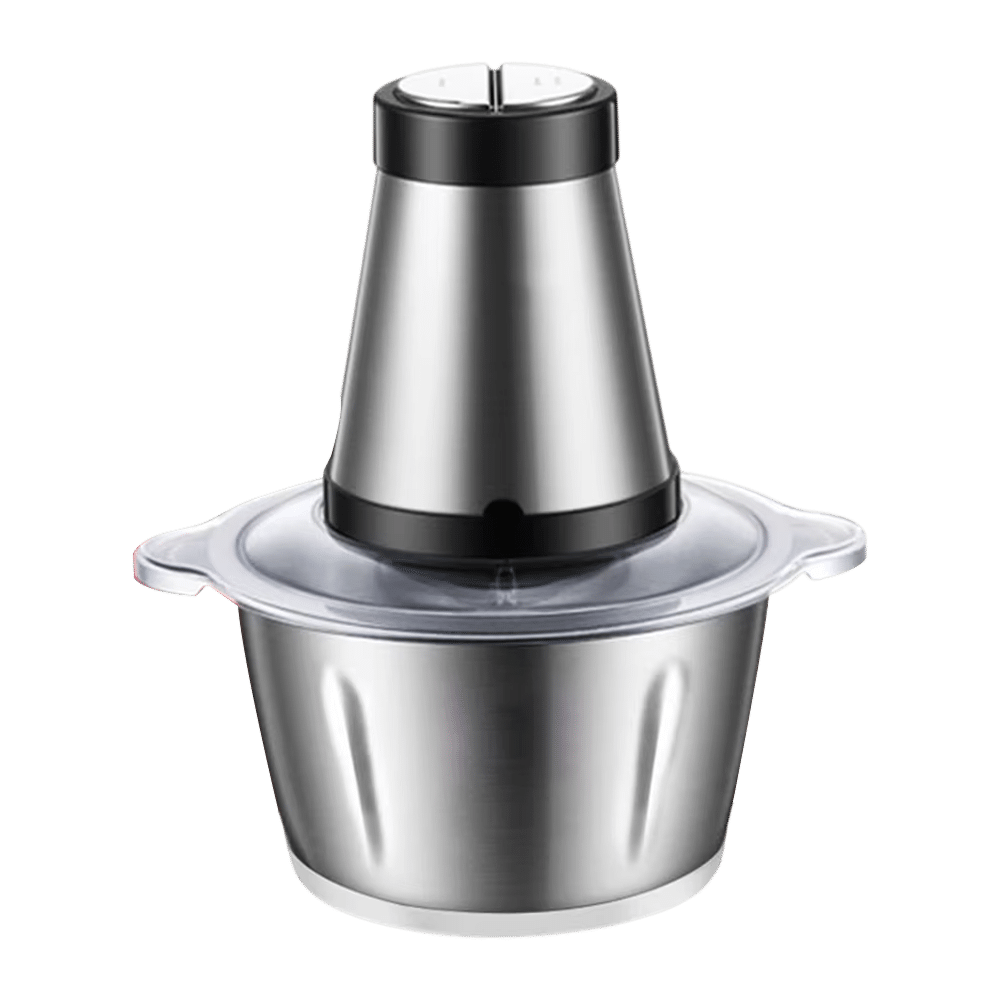 In this guideChopCraft$149.99View
Pulse counts and batch sizes
Bowl shapes and blades differ, so use these counts as a starting point and adjust by sight. The pattern holds on any machine: smaller batches need fewer pulses and give an even grain.
| Batch (florets) | Bowl fill | Pulses | Notes |
|---|---|---|---|
| About 2 cups | Under half | 6 to 8 | Even grain; check after 5 |
| About 4 cups | Around half | 8 to 10 | Scrape down the sides once midway |
| About 6 cups or more | Over half | Split it | Make two batches instead of one crowded one |
Pulse counts are for fresh, dry florets. If you add the core chunks, give each batch one or two extra pulses and check the bowl.
Signs you have gone too far
- The bottom layer looks like paste or wet crumbs.
- Pieces stick to the lid and bowl walls.
- The rice clumps when you press it in your hand.
If that happens, spread the rice on a towel and press out moisture. It will not return to a loose grain, but it still works in fritters, patties, or stirred into soups.
Tips to avoid mush
Mush comes from three things: moisture, crowding and over-processing. Adjust those and the texture follows.
- Dry the florets after rinsing, and pat the finished rice on a towel if it looks wet.
- Use short pulses rather than holding the button.
- Keep each batch to about half the bowl.
- Cut florets to a similar size so small ones are not pulverized while large ones catch up.
- Cook the rice in an open, wide pan, not a covered pot where steam collects.
Field note
Spread the processed rice on a baking sheet lined with a towel for a few minutes before cooking. Surface moisture evaporates, and the grains cook as separate pieces instead of steaming together.
How to cook cauliflower rice
Heat a wide skillet with a spoonful of olive oil over medium heat. Add the rice in a single layer, season with salt and pepper, and stir now and then until it turns tender-crisp. Take it off the heat while it still has a little bite, since it keeps softening in the pan.
For an Indian-style version, start with cumin seeds in the oil, then add turmeric, chopped onion, green peas and salt before the rice goes in. You can also stir it into a pilaf, a stir-fry or a burrito bowl, or serve it raw in salads.
Cooking from frozen
Frozen cauliflower rice can go straight into a hot, open pan. If you are starting with frozen florets, let them thaw slightly and pat them dry before pulsing, because wet frozen pieces turn to paste. Follow the instructions on the package for store-bought frozen rice.
Other ways to make it without a processor
You can make cauliflower rice without a food processor, and each method has trade-offs.
| Method | How | Watch for |
|---|---|---|
| Box grater | Grate florets on the large holes | Hand work, and the flat side of the florets crumbles into powder |
| Knife | Slice florets thin, then chop across the slices | Takes patience, and gives you control over grain size |
| Blender | Small amount of florets, short pulses | Blades can pull the top pieces into paste; do not fill the jar |
A blender works if you keep the batch small and pulse. A processor bowl is wider, which suits chopping. Our article Blender vs Food Processor explains which kitchen tasks suit which tool. If you are shopping for one, What's a Good Food Processor? covers capacity, motor and blades. You can also browse the Blenders, Mixers & Prep Tools collection.
Storing cauliflower rice
Choose the method that matches when you plan to cook it.
Refrigerator
Pack the dry rice in an airtight container lined with a paper towel to absorb moisture. Keep it cold, and check for a sour smell or slimy texture before you use it. If either shows up, throw it out.
Freezer
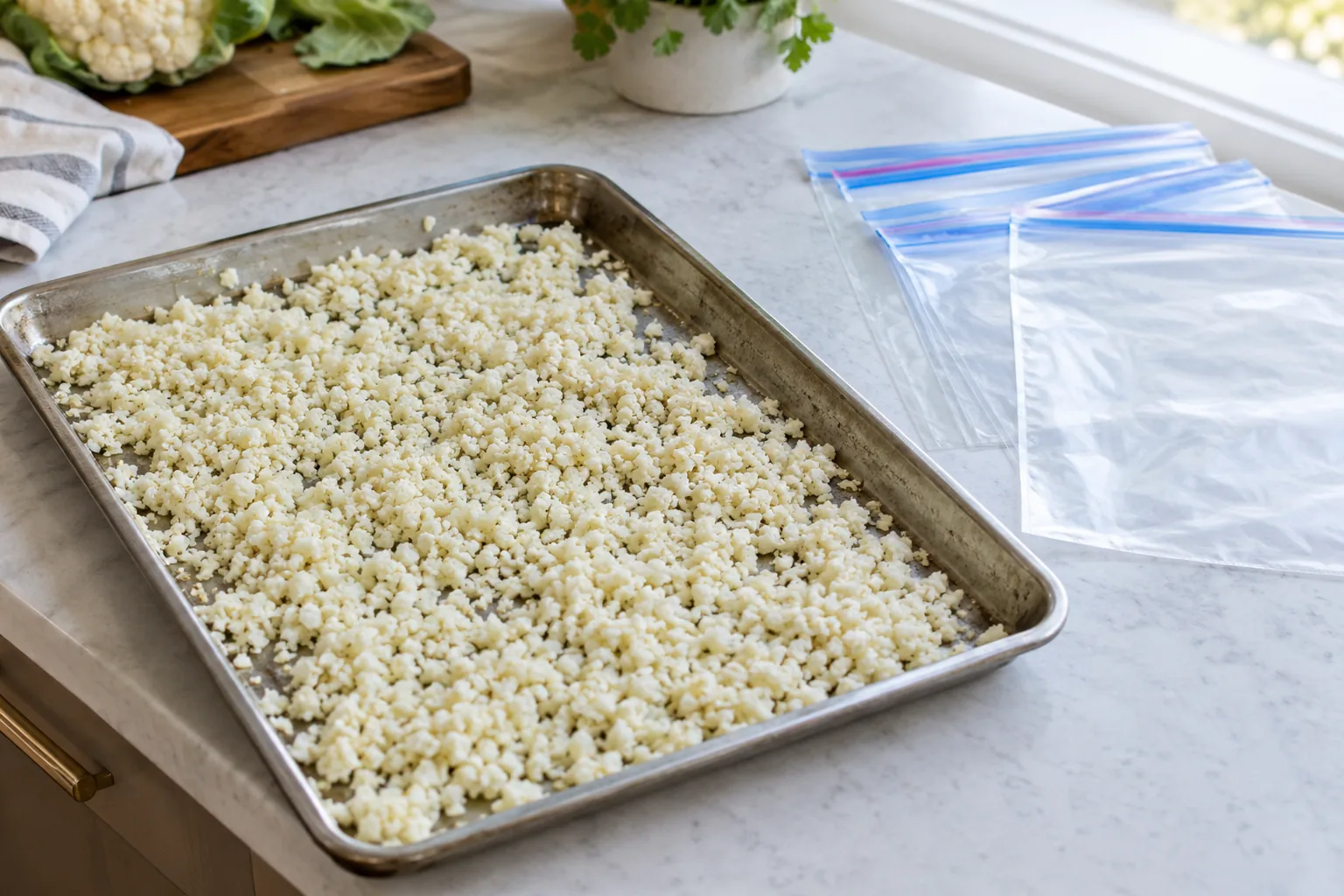
Spread the rice in a thin layer on a baking sheet and freeze until firm. Then move it to freezer bags in portion-size amounts, press out the air and label them with the date. Freezing it loose first keeps the grains separate instead of one block.
Vacuum sealing
SealVault Pro pulls air from a bag and heat-seals the opening with a double seal bar. It has dry and moist modes plus a pulse control. Fresh cauliflower rice holds some moisture, so choose moist mode and use pulse to draw air out in short steps. A built-in roll cutter lets you cut a bag to length at the same spot. You can seal frozen portions or fresh ones; follow the manual for sealing.
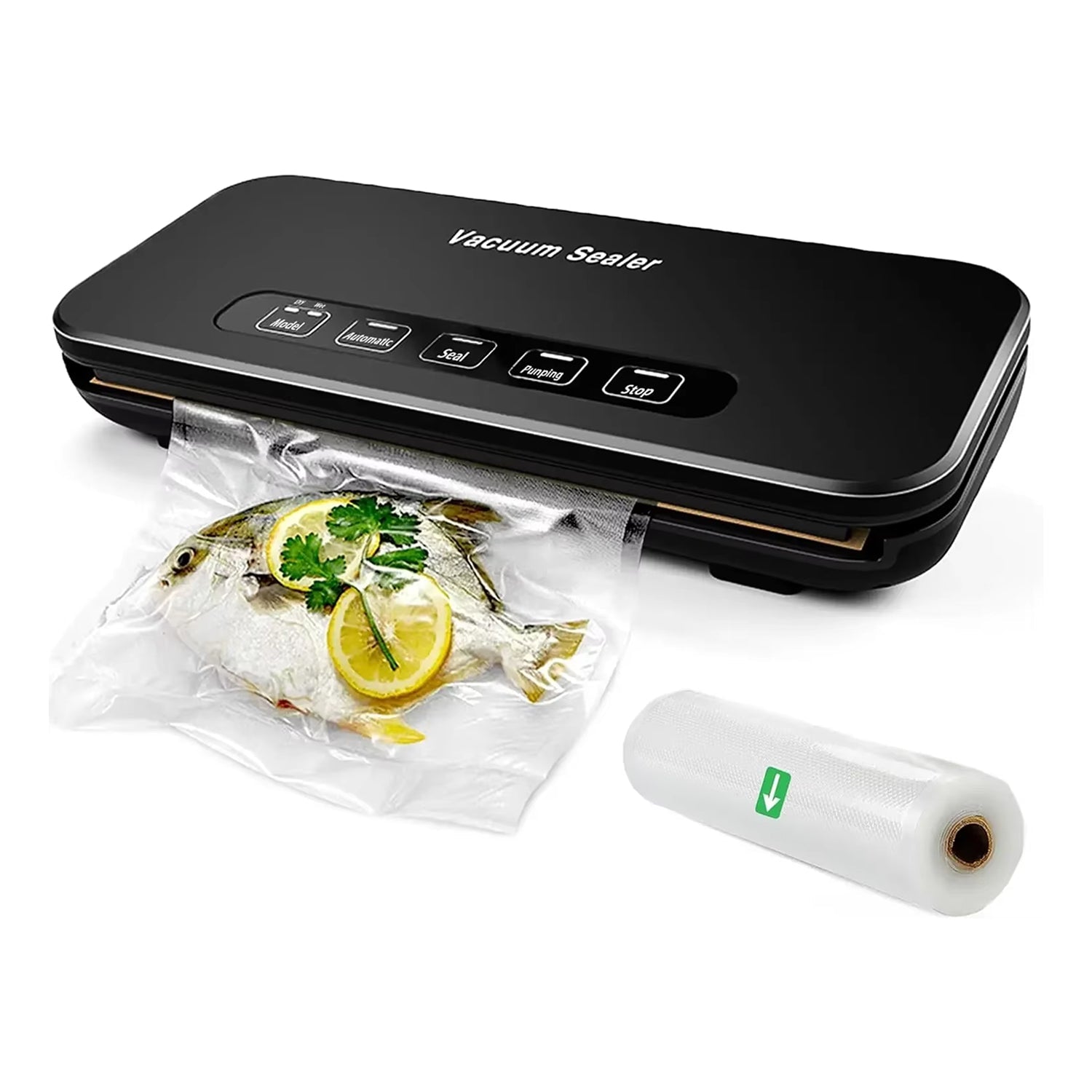 In this guideSealVault Pro$139.99View
Common mistakes to skip
- Filling the bowl to the top, which leaves a pile of paste under a layer of whole florets.
- Rinsing and processing right away without drying.
- Covering the pan while cooking.
- Cooking until fully soft instead of stopping at tender-crisp.
- Putting hot rice into a sealed container, which traps steam.
Unplug the processor before you remove the blade or clean the bowl, and handle the blades with care as the manual describes. Once the bowl is empty, rinse the parts or place the dishwasher-safe ones in the dishwasher.
With dry florets, half-full batches and short pulses, a food processor turns a head of cauliflower into rice grains in two or three rounds. Cook it hot and open, and store the extra flat.
Frequently asked questions
Keep reading
 Blenders, Mixers & Prep ToolsShredding Cheese in a Food Processor: Discs, Chill and Steps6 min read
 Cooking Appliances & Countertop OvensHow to Sous Vide With a Vacuum Sealer: Bags, Sealing, Steps7 min read
 Blenders, Mixers & Prep ToolsWhat's a Good Food Processor? Capacity, Motor and Blades Explained7 min read