What Is a Chicken Brooder and How to Set One Up
A chicken brooder is a warm, enclosed space with a heat source that stands in for a mother hen. This guide gives a setup checklist and a week-by-week temperature schedule.
The Cobalt Hollow Team
October 17, 2026 · 6 min read
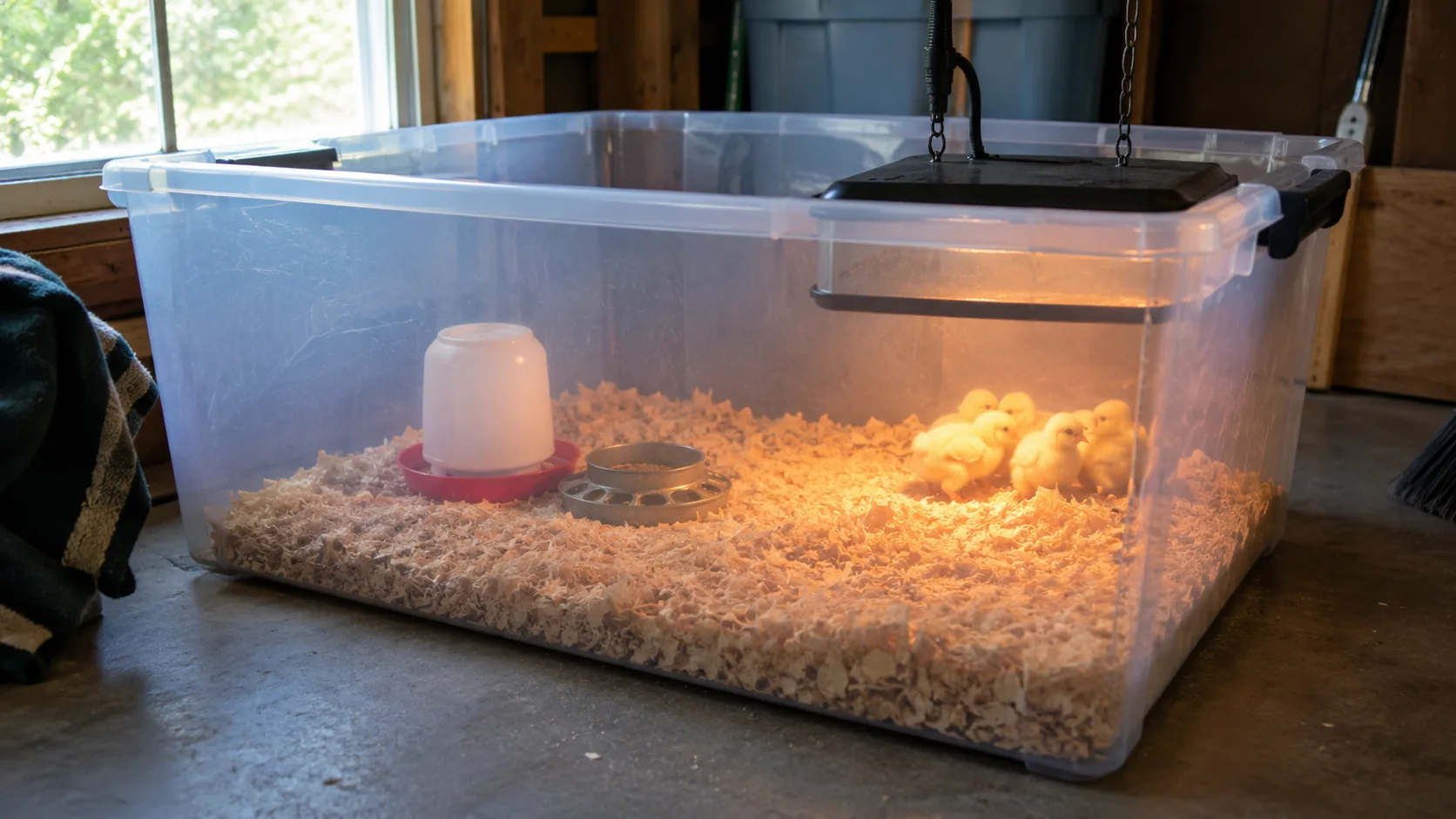
A chicken brooder is a warm, enclosed space with a heat source, sheltered from drafts, where newly hatched chicks live until they grow their feathers. It does the job a mother hen would do: it gives chicks a place to warm up, rest, eat and drink. If chicks are on the way, you need a box or pen, a heat source, bedding, feed and water, and a thermometer.
The term covers both the heat source itself (a brooder lamp or heating plate) and the whole setup around it (the brooder box, pen or house). This guide explains both and gives you a written checklist and temperature schedule.
What a Brooder Means and What It Includes
"Brooder" comes from "brood," the behavior of a hen sitting on and sheltering her young. The phrase "brooder chicken" can mean one of two things: a hen that tends chicks, or the equipment that replaces her. In a backyard flock, it is almost always the equipment.
A complete brooder setup has five parts:
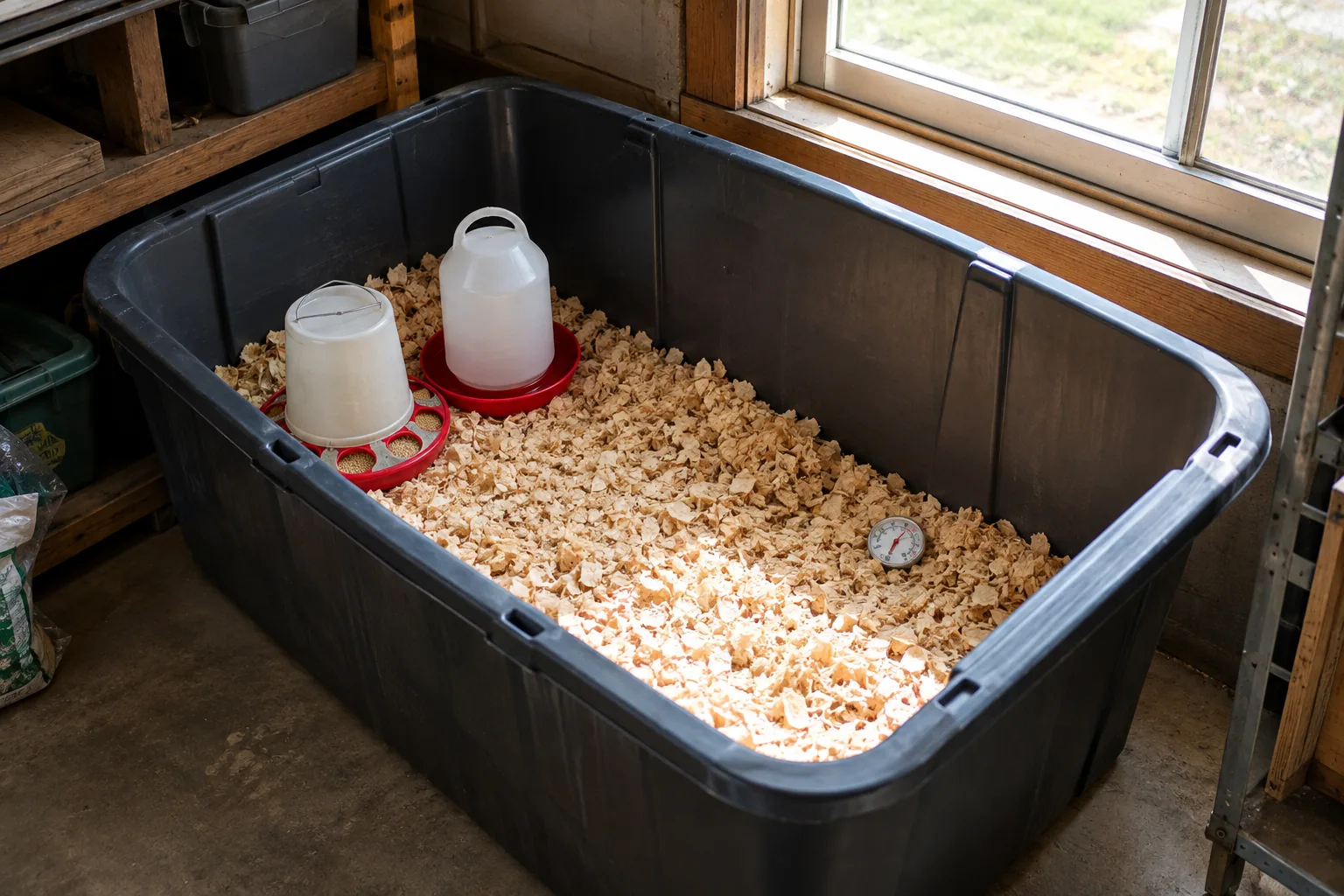
- Enclosure: a large tote, stock tank, wooden box or a small pen with solid sides that block drafts.
- Heat source: a heat lamp, a radiant heating plate or a heated pad, set up so chicks can move toward or away from the warmth.
- Bedding: pine shavings or similar absorbent material on the floor.
- Feeder and waterer: sized for chicks, placed away from the heat source.
- Thermometer: to check the temperature at chick level.
Types of Brooder Heat Sources
The heat source is the main decision. Each type has trade-offs in space, cord management and fire risk, so compare them before you buy.
| Type | How it works | Points to consider |
|---|---|---|
| Heat lamp | Hangs above the box and warms by radiant light | Needs secure mounting; a lamp that falls into bedding is a fire hazard |
| Radiant heating plate | Flat plate hangs or stands over the chicks | Height must be adjusted as chicks grow |
| Heated pad | Chicks sit on or under a warm surface | Sized for a small number of chicks; check the manual for capacity |
| Mother hen | Hen sits on the chicks | Needs a broody hen and a protected nesting area |
Whatever you choose, read the manual and plug into an outlet that suits the load. If you are unsure about wiring in a barn or coop, ask an electrician.
A Plug-In Plate Option
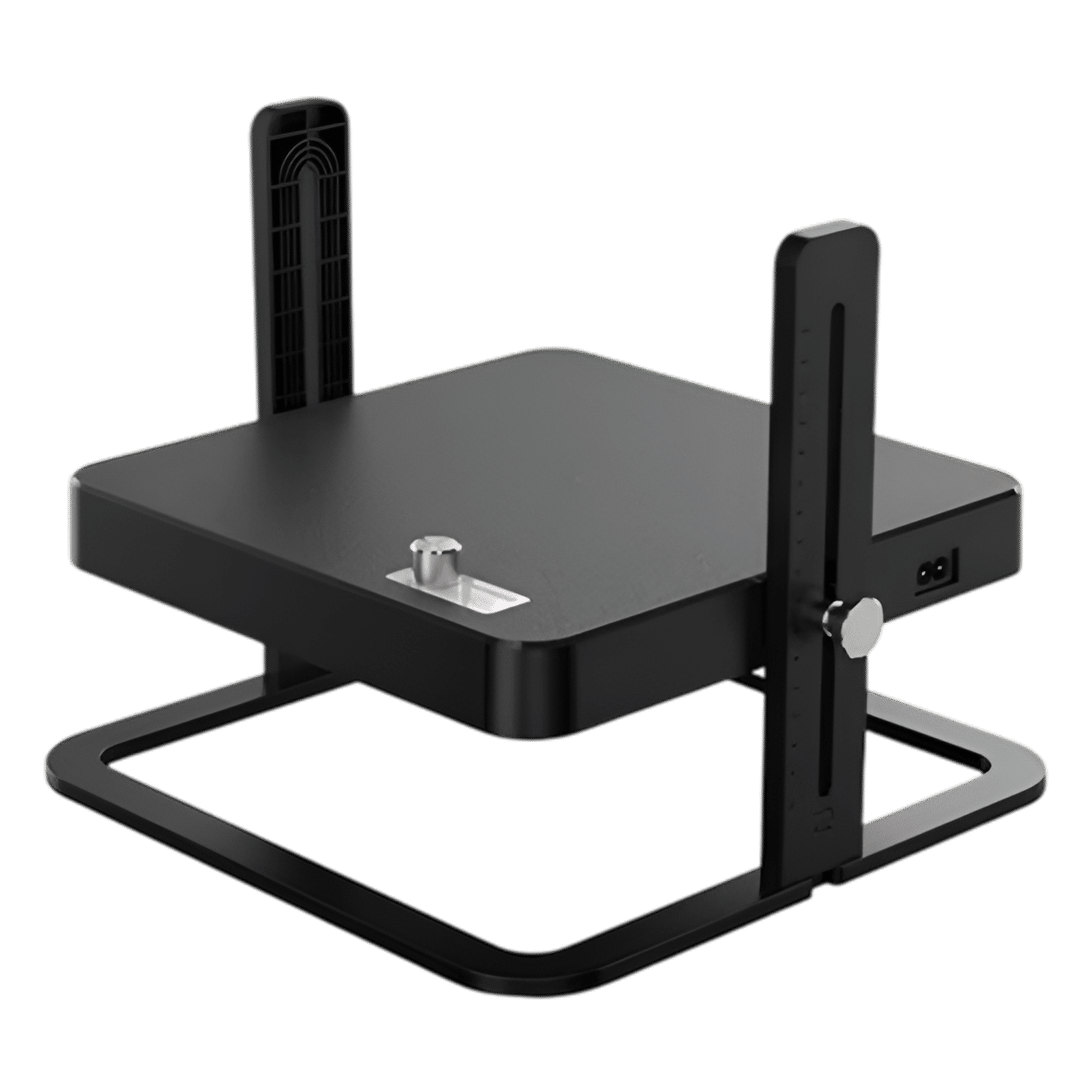
If you want a flat, hanging heat source, the RoostGlow is a plug-in chicken brooder with a low-voltage heating plate. It hangs over chicks in a coop or brooder box, and a rotary knob sets the plate warmth from 113°F to 158°F. It draws 15 to 22 watts and plugs into a standard outlet, so you only need to run a cord to the coop or box.
The plate height adjusts from 1.5 to 8 inches above the floor, and it tilts, so you can raise it as the flock grows. Stainless steel knobs hold the plate in the position you choose. The housing is smooth ABS plastic that wipes clean with a cloth between batches. Note that the knob sets the plate warmth, not the air temperature in your box, so you still check the temperature at chick level with a thermometer.
Chicken Brooder Setup Checklist
Work through this list a day or two before the chicks arrive, so you can fix problems without birds in the box.
- Pick the location. Choose a spot indoors or in a closed coop or garage, away from drafts, pets and direct sun. Keep it where you can hear and check on the chicks.
- Build or buy the enclosure. Give chicks room to move away from the heat. Sides should be tall enough that growing chicks cannot hop out, and a mesh cover helps once they start flapping.
- Add bedding. Spread a layer of pine shavings. Avoid slick surfaces such as bare plastic or newspaper, since chicks can slip on them.
- Mount the heat source. Secure it so it cannot fall, keep cords out of reach of beaks and away from water, and keep bedding clear of the heating surface as the manual directs.
- Place a thermometer. Set it at chick height, under or near the heat source, not on the wall.
- Add feed and water. Use chick starter feed and shallow, clean water. Place both away from the heat so they stay dry and clean.
- Run a trial. Turn the heat on a day ahead and adjust until the temperature at chick level matches the schedule below.
Field note
Make the box large enough to have a warm zone and a cooler zone. Chicks that can walk away from the heat will show you whether the setting suits them.
Chicken Brooder Temperature: Week-by-Week Schedule
The common starting point is about 95°F at chick level for the first week, then lowering the temperature by about 5°F each week until the chicks are fully feathered or match the room. Use this as a guide and let the chicks' behavior fine-tune it.
| Week | Target temperature at chick level | What to do |
|---|---|---|
| 1 | 95°F | Keep the heat source low; check several times a day |
| 2 | 90°F | Raise the heat source slightly; watch for chicks moving out to explore |
| 3 | 85°F | Add more bedding; increase floor space if crowded |
| 4 | 80°F | Check for pin feathers and add a low perch |
| 5 | 75°F | Let chicks start to adapt to room temperature |
| 6 | 70°F or room temperature | Move to the coop once fully feathered and the weather allows |
How to read the chicks
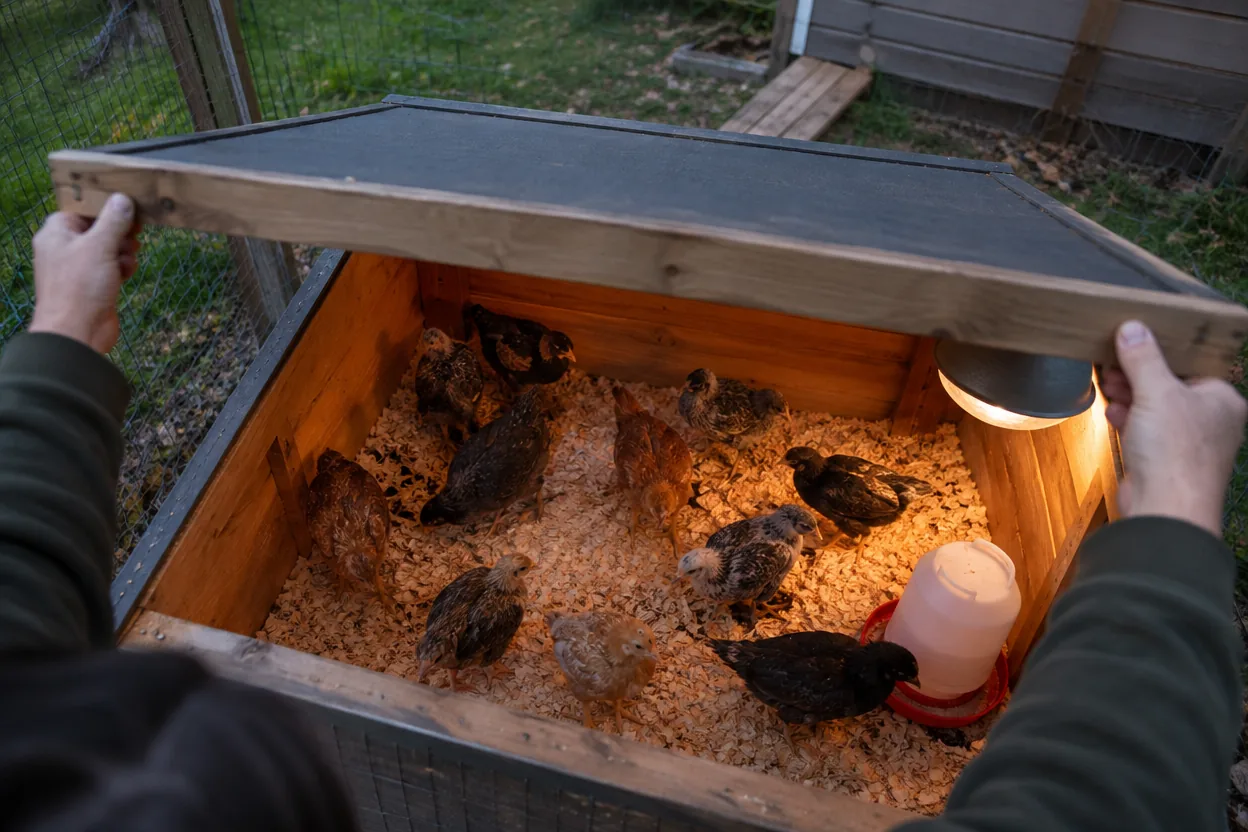
- Spread out evenly and active: the temperature is likely about right.
- Piled under the heat and cheeping: they may be cold, so lower the heat source or raise the setting a little.
- Crowded to the far edges, panting or wings held out: they may be too warm, so raise the heat source or reduce the setting.
With an adjustable plate, change the knob setting and the plate height gradually, then recheck with the thermometer rather than guessing. Raise the plate as the birds grow from day-old chicks to nearly feathered ones.
 In this guideRoostGlow$129.99View
Common Brooder Mistakes
- Drafts. Warm air does little good if cold air blows across the floor. Use solid sides.
- Unsecured heat sources. Hang or clamp heat sources with more than one point of attachment, and follow the manual.
- Wet bedding. Spilled water leads to damp, smelly bedding. Replace wet patches promptly.
- Overcrowding. Chicks grow, so plan for more space than you need on day one.
- Skipping the thermometer. Judging by feel is unreliable.
- Lowering heat too early. Follow the chicks' behavior as well as the calendar.
Care and Cleaning Routine
Check feed and water every day, and spot-clean wet or soiled bedding as needed. Wash your hands after handling chicks or equipment. Unplug the heat source before cleaning it, and wipe the housing only as the manual directs.
Between batches, empty the box, scrub and dry it, then reset it with fresh bedding. When the chicks outgrow the box, they move to the coop. Browse the Poultry, Coop & Pest Control collection for other coop equipment.
Quick Answers Around Brooding
The 90/10 rule
In chicken feeding, the 90/10 rule means most of the diet comes from a complete feed, with only a small share made up of snacks and scraps. For chicks, stick to starter feed and ask a veterinarian or your hatchery about anything extra.
Cucumbers
Adult chickens can eat cucumbers as an occasional snack. Keep chicks on starter feed while they are in the brooder, and introduce extras later in small amounts.
Hatchery guides, extension offices and a local veterinarian are good sources for details about your breed, climate and flock size.