Bird Netting for a Garden: Mesh Size and How to Install It
For a bird netting garden setup, pick a mesh opening small enough that heads cannot pass, hold the net taut off the plants, and close every edge at the ground.
The Cobalt Hollow Team
October 31, 2026 · 6 min read
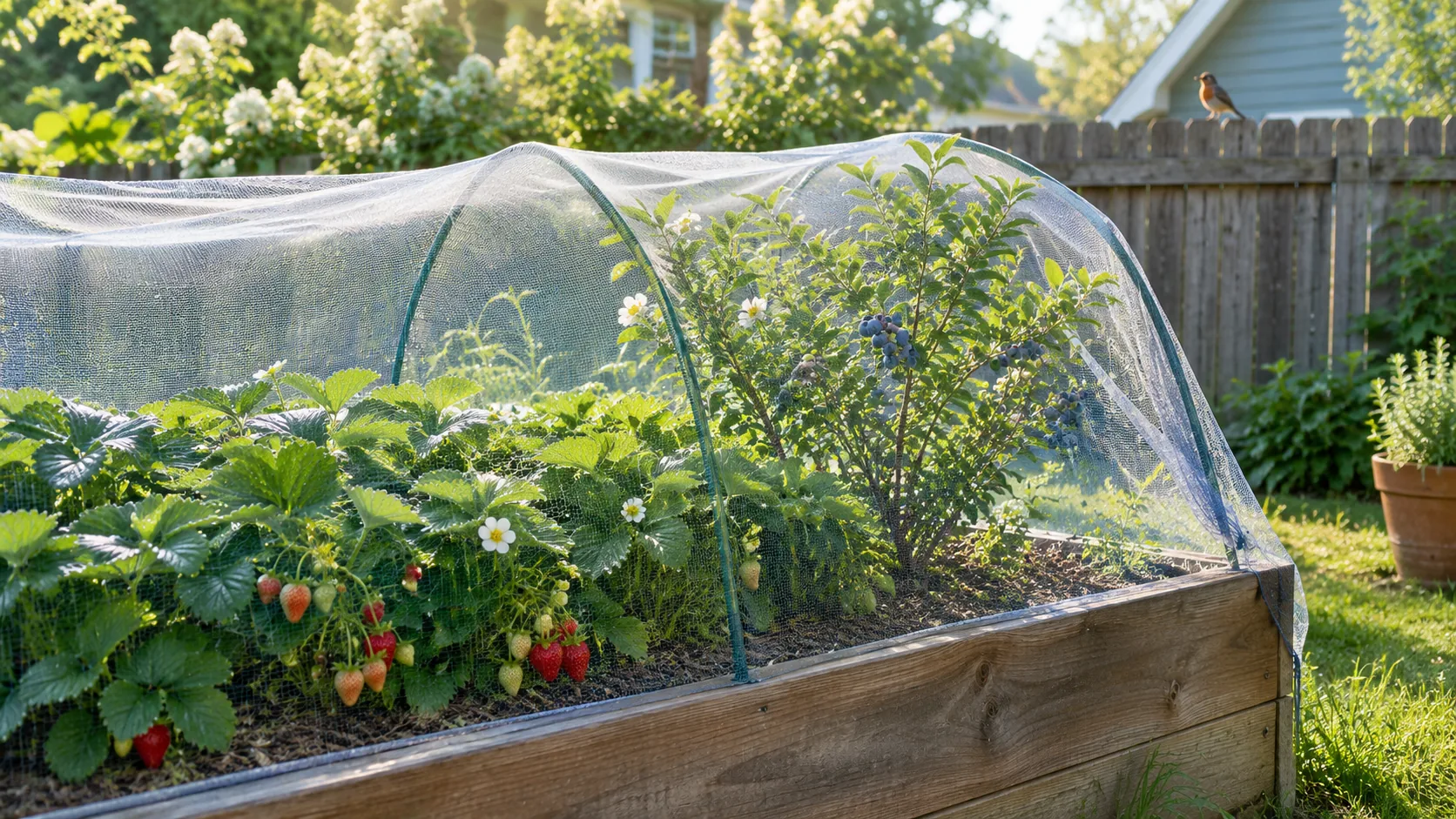
For a bird netting garden setup, choose a mesh opening small enough that a bird cannot push its head through (about 1/2 inch, or 1.3 cm, suits small songbirds), hold the net off the plants on a frame or hoops, and close every edge at ground level. A loose, sagging or gapped net can trap wildlife, so the install matters as much as the mesh.
This guide covers mesh size, which plants need cover, a step-by-step install, and the checks that help reduce the risk of birds and other animals getting tangled.
Choose the mesh size first
Mesh size is the width of one opening in the net. The goal is a physical barrier with openings too small for a head, wing or foot to wedge into. Size the mesh to the smallest bird visiting your garden, not the biggest.
| Mesh opening | Suits | Notes |
|---|---|---|
| 1/4 to 1/2 inch (6 to 13 mm) | Small songbirds, berry patches, strawberry beds, blueberry bushes | Fine mesh garden netting for small fruit |
| 3/4 inch (about 19 mm) | Mid-size birds around fruit trees and vegetable rows | Small birds may still reach through, so watch what visits |
| 1 inch (about 25 mm) | Large birds such as pigeons around larger plantings | Too open for small songbirds; they can push in and tangle |
If you are unsure, choose the finer mesh, since a wider opening is where a head or wing can wedge in. Fine openings do not rule out tangles, though: a slack net can still wrap a wing or foot, so tension matters at any mesh size.
Material and weave
Look for a soft woven mesh with flexible strands rather than stiff, thin plastic that holds loops. Garden netting sits in direct sun all season, so UV protection in the material matters. Heavy duty bird netting is sold on a roll for large plots, while a pre-cut net with a closure suits a single bed or tree.
A ready-made option for beds, trees and pots
GroveNet is a bird netting made from soft woven nylon mesh with UV protection. You drape it over fruit trees, garden beds, potted plants or ponds, then pull the drawstring snug so no loose areas hang open. The open weave passes sunlight, air and rain, so you can leave it in place while you water.
Measure the bed, tree or pond first and choose the size that matches; the product page lists the options. The box includes a drawstring closure, a storage pouch and a quick-start installation guide.
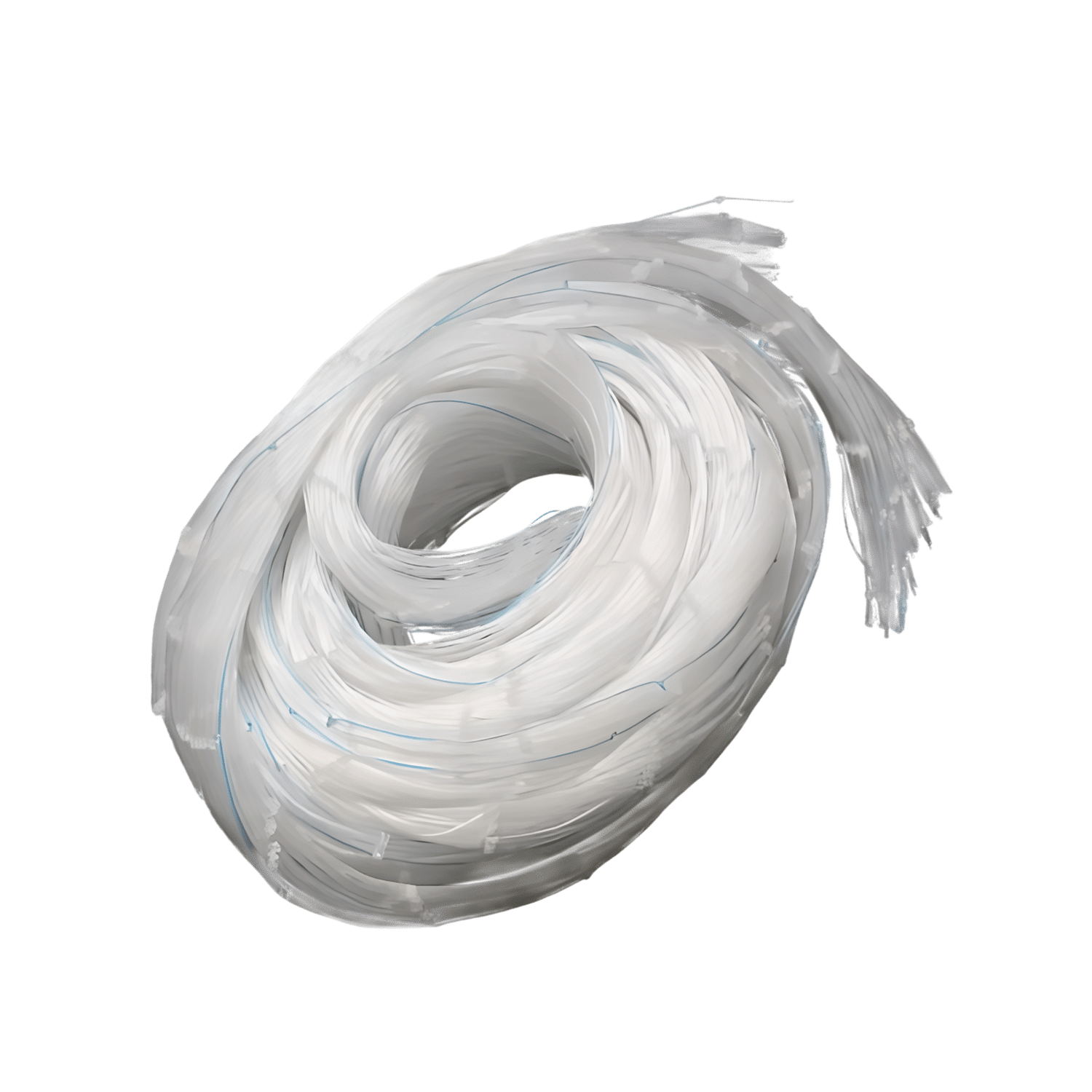 In this guideGroveNet$39.99View
Which plants need netting
Tomato plants
Netting over tomatoes makes sense once fruit begins to color, since birds peck ripening fruit. Set the net on a cage or stake frame so it does not rest on the plants, and keep it clear of the foliage so birds have less room to reach fruit through the mesh.
Strawberries and blueberries
Low strawberry beds suit hoops or a short frame. Blueberry bushes are taller, so use a frame that clears the top, or drape the net over the bush and gather and secure it low around the base, down to the ground. Fine mesh garden netting suits small-fruit patches.
Raised beds
For raised beds, push flexible hoops or stakes into the bed corners, drape the net across, and fasten the edges to the bed frame or ground. The bed sides give you a ready anchor line.
Climbing plants
For peas, beans or grapes on a trellis, hang the net a hand-width off the plants on the outer side of the trellis. Climbing plants grow into mesh that touches them, which makes harvest awkward and traps stems.
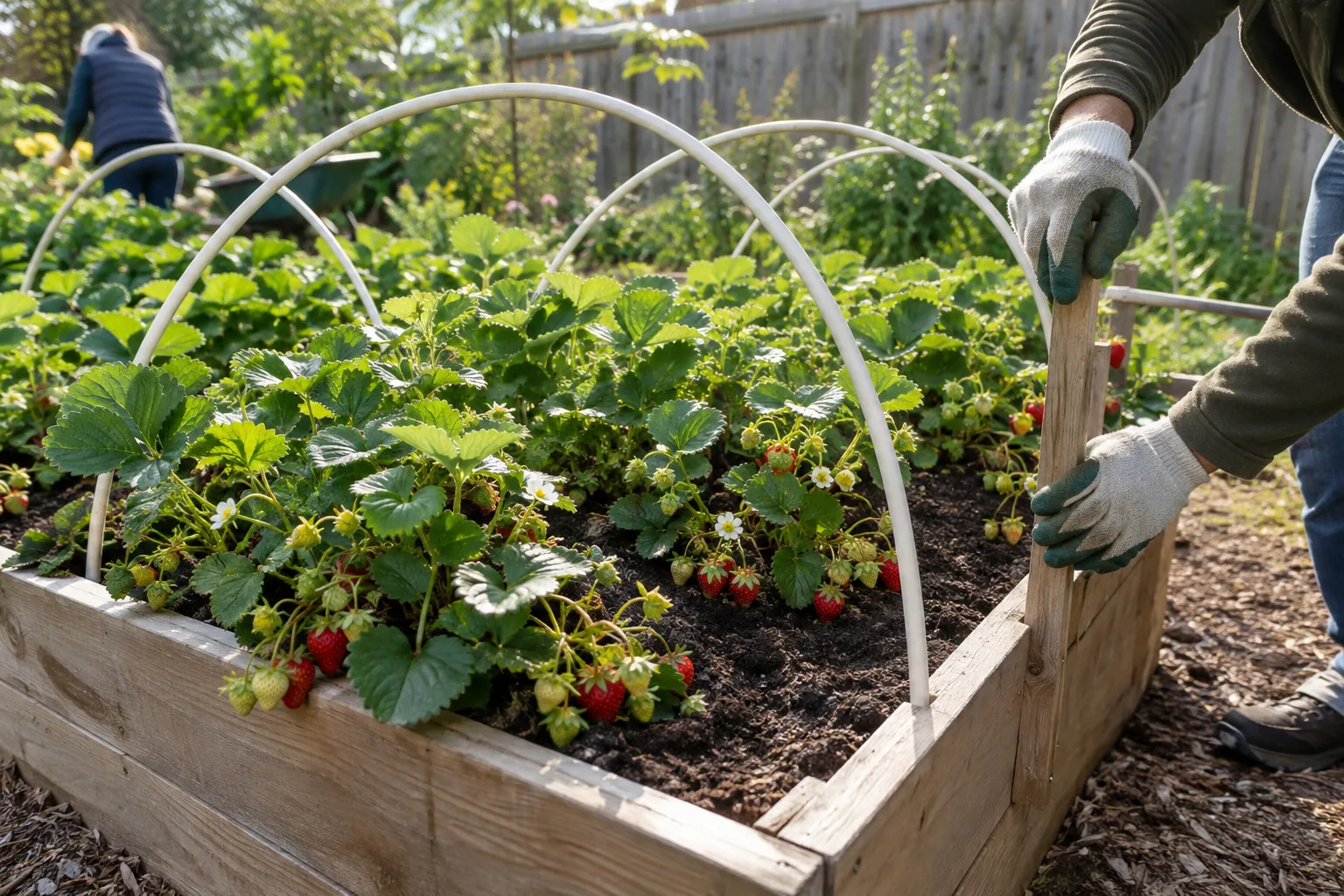
Bird netting garden install, step by step
- Measure the length, width and height of the bed, tree or row, then add enough to reach the ground on every side.
- Build the support: hoops, stakes, a cage or a simple frame. Round off or cover sharp tips so the net does not snag.
- Lay the net over the frame loosely at first, working from one end so it does not bunch.
- Pull the netting taut across the top. With a drawstring net, pull the drawstring snug so no loose areas hang open.
- Close the sides to the soil. Tuck or stake the edges down, or weigh them with boards, leaving no gap a bird could walk under.
- Check corners and seams, where folds and slack collect.
- Lift a flap by hand when you harvest, and fasten it back down right away.
Install the net before fruit ripens, since birds that already feed there will look for gaps. Follow the manual for any product you use.
Field note
Walk a slow lap after installing and press on the net at several points. If it sags into the plants or you can slip a hand under an edge, a bird can get in or tangle, so re-tension or restake it.
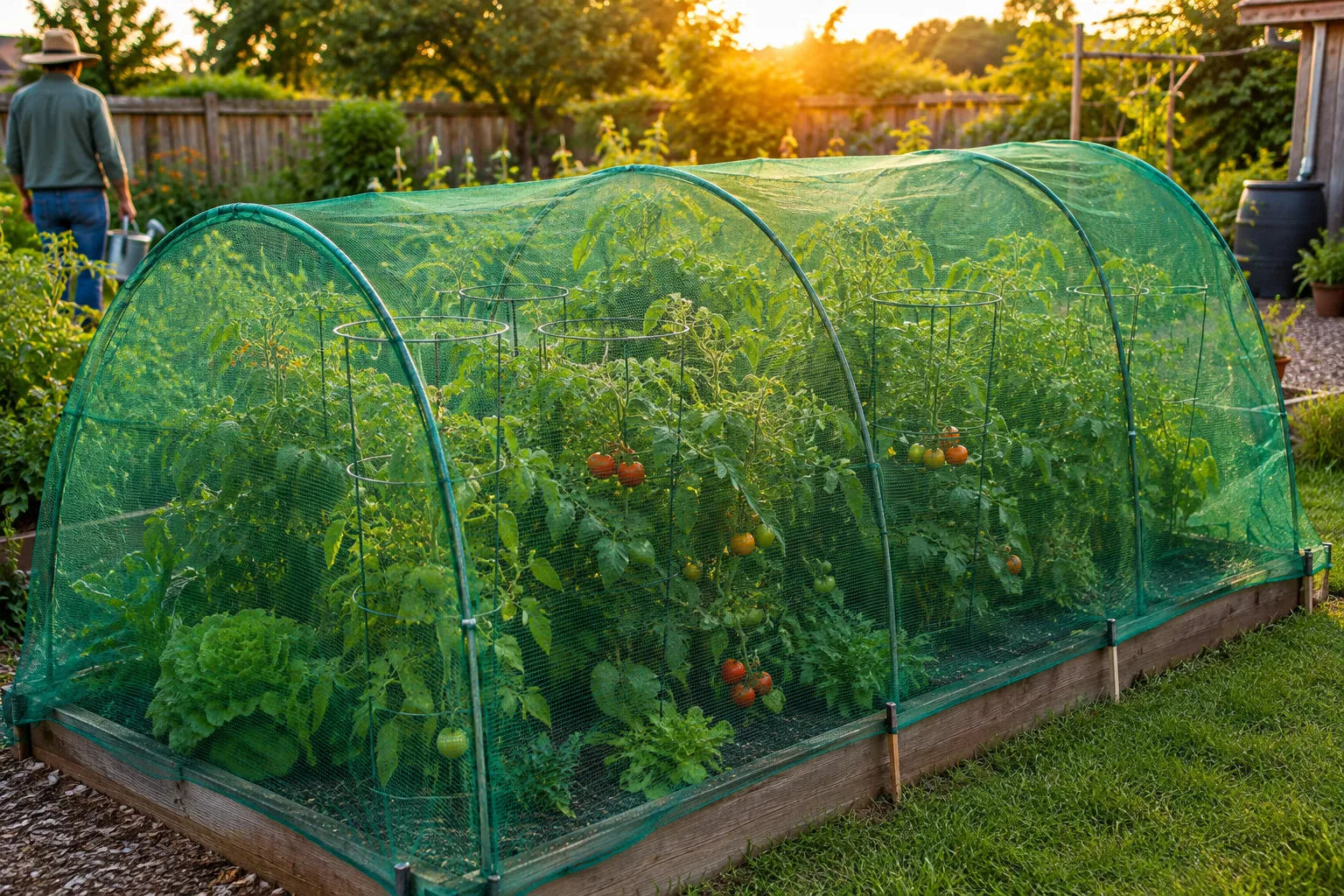
Keep wildlife from getting tangled
Tangles come from slack net, wide mesh or gaps at the ground. Fix those three things and check the net often.
- Keep the net taut and off the plants.
- Close the bottom edge fully rather than leaving it loose on the grass.
- Check the net every day while it is up, early in the morning.
- Remove it when the harvest is done or the fruit is not at risk.
If an animal is caught, wear gloves, stay calm and cut the net away from the animal rather than pulling. Contact a local wildlife rehabilitator or a veterinarian for advice if it needs help or does not fly off.
Other ways to keep birds off plants
Netting is a physical barrier, which is different from scare devices. Some gardeners hang reflective tape or move decoys around, but birds can get used to things that stay put. Floating row cover can shield young seedlings, though it is not a substitute for netting on ripening fruit.
Pair any approach with good watering habits; our guide to watering and irrigation systems shows how to plan watering around covered beds. For pest control around a coop, browse the Poultry, Coop & Pest Control collection.
Balconies and containers
For a balcony, attach the net to the railing and ceiling hooks, or drape it over potted plants on a small frame. Pull it taut, close the gaps at the floor and railing, and check that no loose ends dangle where a bird could land and tangle.
Care and storage between seasons
When the season ends, remove the stakes and shake off leaves and debris. Rinse the net with plain water if soiled and let it dry fully before packing it. Look for torn strands or holes and replace the net if it is damaged, since a frayed net can catch a foot or wing.
Fold it flat and store it in a dry pouch or bin. GroveNet folds flat into its included storage pouch, ready for the next season.