Cast Iron Frying Pan Steak: Preheat, Sear, Baste and Rest
For cast iron frying pan steak, dry the steak, preheat the empty pan, sear without moving it, baste with butter and pull it by internal temperature. Tables by thickness below.
The Cobalt Hollow Team
November 18, 2026 · 6 min read
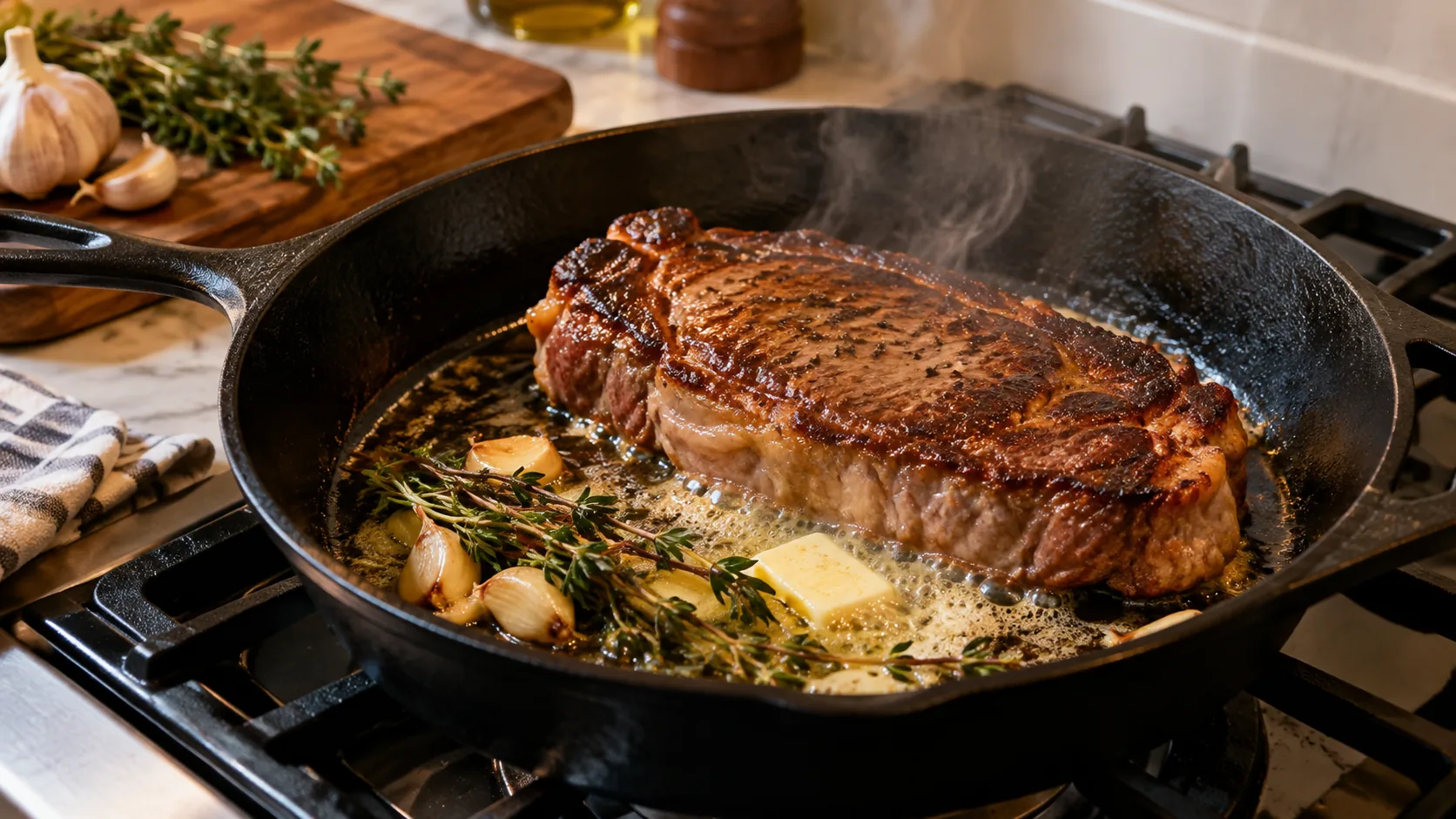
For cast iron frying pan steak, dry the steak, preheat the empty pan over medium-high heat until oil shimmers, sear each side without moving the steak, then baste with butter and rest the meat. Choose the finish by internal temperature, not by the clock: pull a medium-rare steak at 130°F (54°C) and let it rest.
Thickness changes the plan more than the cut does. The tables below give preheat, sear and oven-finish steps for 1-inch, 1.5-inch and 2-inch steaks, plus pull temperatures for every doneness level.
What you need before the pan gets hot
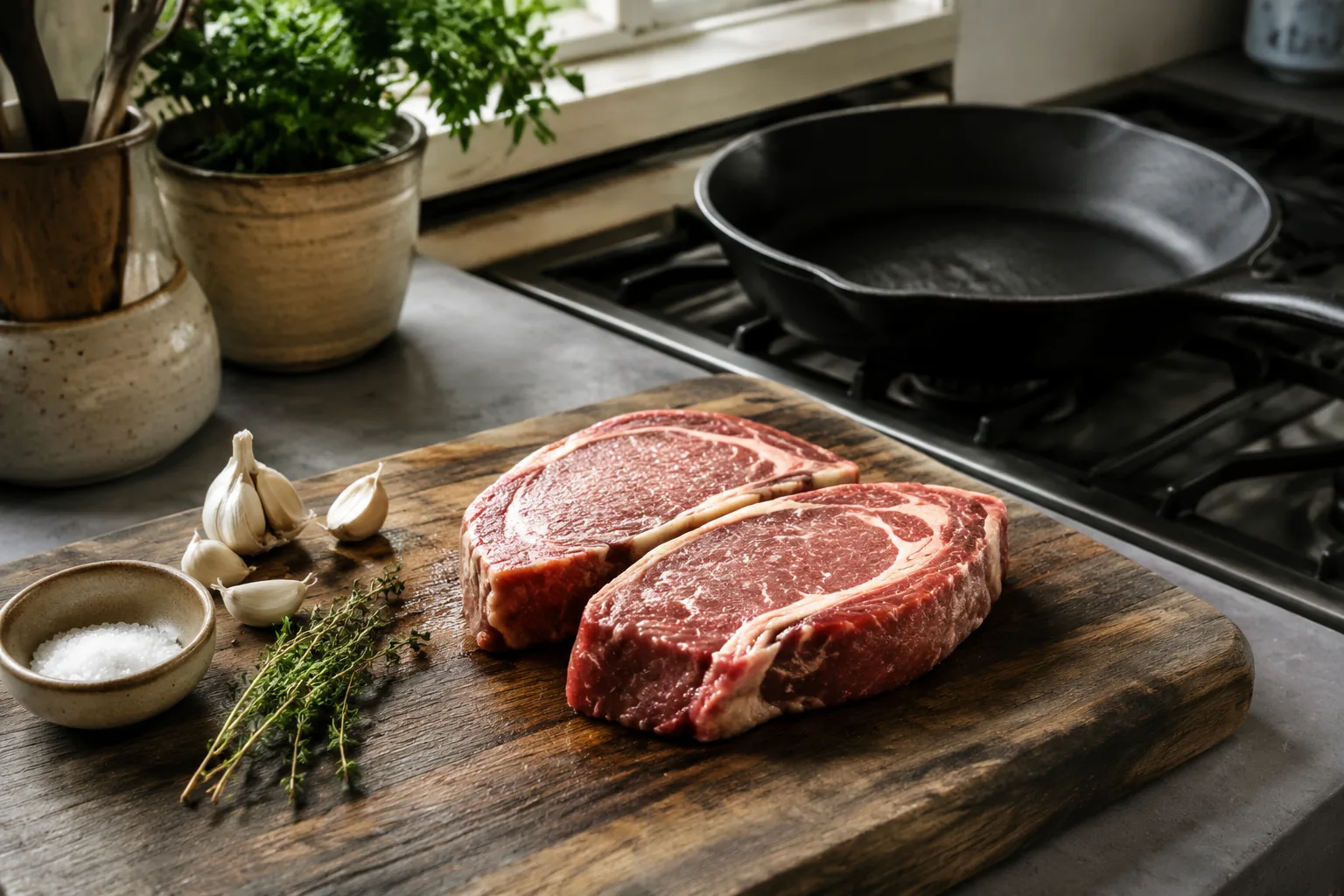
Gather everything first, because a hot pan moves fast. You need a cast iron skillet, a high-smoke-point oil, coarse salt, black pepper, butter, garlic and a sprig of thyme or rosemary. Add tongs, a plate, paper towels and a meat thermometer.
Pick the steak
Ribeye, strip steak, filet and top sirloin all work in a cast iron pan. Look for steaks at least 1 inch thick, since thin steaks overcook before a crust forms. Fattier cuts like ribeye render into the pan and brown well. Lean cuts like filet suit the butter baste.
Prep the steak
- Thaw it completely in the refrigerator before cooking.
- Pat all sides very dry with paper towels. Surface moisture steams the meat and keeps the crust from forming.
- Salt generously on all sides. Either salt well ahead and leave the steak uncovered in the refrigerator, or salt right before it goes in the pan.
- Take the steak out of the refrigerator while the pan preheats, so it is closer to room temperature.
Preheat the cast iron pan and skillet
Cast iron heats slowly and holds heat, so give it time. Set the empty skillet over medium-high heat and wait until a drop of water skips and evaporates on contact. A thicker steak or an electric coil calls for a longer heat-up.
Add a teaspoon or two of oil. It should shimmer and move like water across the pan, with the first thin wisps of smoke. If the oil smokes heavily, lower the heat for a moment.
Searing makes smoke, so turn on the range hood or open a window. Use a dry oven mitt on the handle, since the whole handle gets hot, and keep children and pets away from the stove.
Cast iron frying pan steak: sear, baste and finish by thickness
Lay the steak in the pan away from you, so oil does not splash toward you. Press it down once, then leave it alone. Moving it early breaks up the crust. Flip when it releases from the pan and the underside is deep brown.
| Steak thickness | Preheat the dry pan | Sear | Finish |
|---|---|---|---|
| 1 inch | Medium-high, until water skips | Each side until deep brown | Stovetop only. Add butter, garlic and herbs after the flip and baste. |
| 1.5 inches | Medium-high, a little longer | Each side until deep brown | Baste briefly, then move the pan to a 400°F (204°C) oven until the thermometer hits your pull temperature. |
| 2 inches | Medium-high, longest heat-up | Each side until deep brown, then sear the edges | Move the pan to a 400°F (204°C) oven and check the thermometer often until it hits your pull temperature. |
Use these steps as a starting point. Pan weight, burner output and the starting temperature of the steak all shift the timing, so the thermometer makes the final call.
Baste with butter
After the flip, lower the heat to medium. Add 2 tablespoons of butter, 2 smashed garlic cloves and the herbs. Tilt the pan so the butter pools, then spoon it over the steak repeatedly. Butter burns in a screaming-hot pan, which is why the heat drops first.
Doneness by internal temperature
Color and finger-press tests vary from steak to steak. A thermometer reads the actual temperature. Insert it sideways into the thickest part of the steak, away from bone and the pan. Remove the steak from the heat about 5°F (3°C) below your target, because the temperature keeps climbing while it rests.
| Doneness | Pull from heat | Final after rest |
|---|---|---|
| Rare | 120°F (49°C) | 125°F (52°C) |
| Medium rare | 130°F (54°C) | 135°F (57°C) |
| Medium | 140°F (60°C) | 145°F (63°C) |
| Medium well | 150°F (66°C) | 155°F (68°C) |
| Well done | 155°F (68°C) | 160°F (71°C) |
If you cook for guests or anyone with health concerns, follow current food safety guidance for the temperature you serve.
Use a probe for oven-finished steaks
When a thick steak goes into the oven, opening the door to poke it lets heat out. A wireless probe lets you read the temperature from outside. RoastRadar is a 304 stainless steel probe that you insert into the thickest part of the meat, avoiding bone. It pairs over Bluetooth with a free app, shows the temperature on your phone, and sends an alert at your target temperature. Its range is 14°F to 212°F (-10°C to 100°C), which spans every pull temperature in the table above.
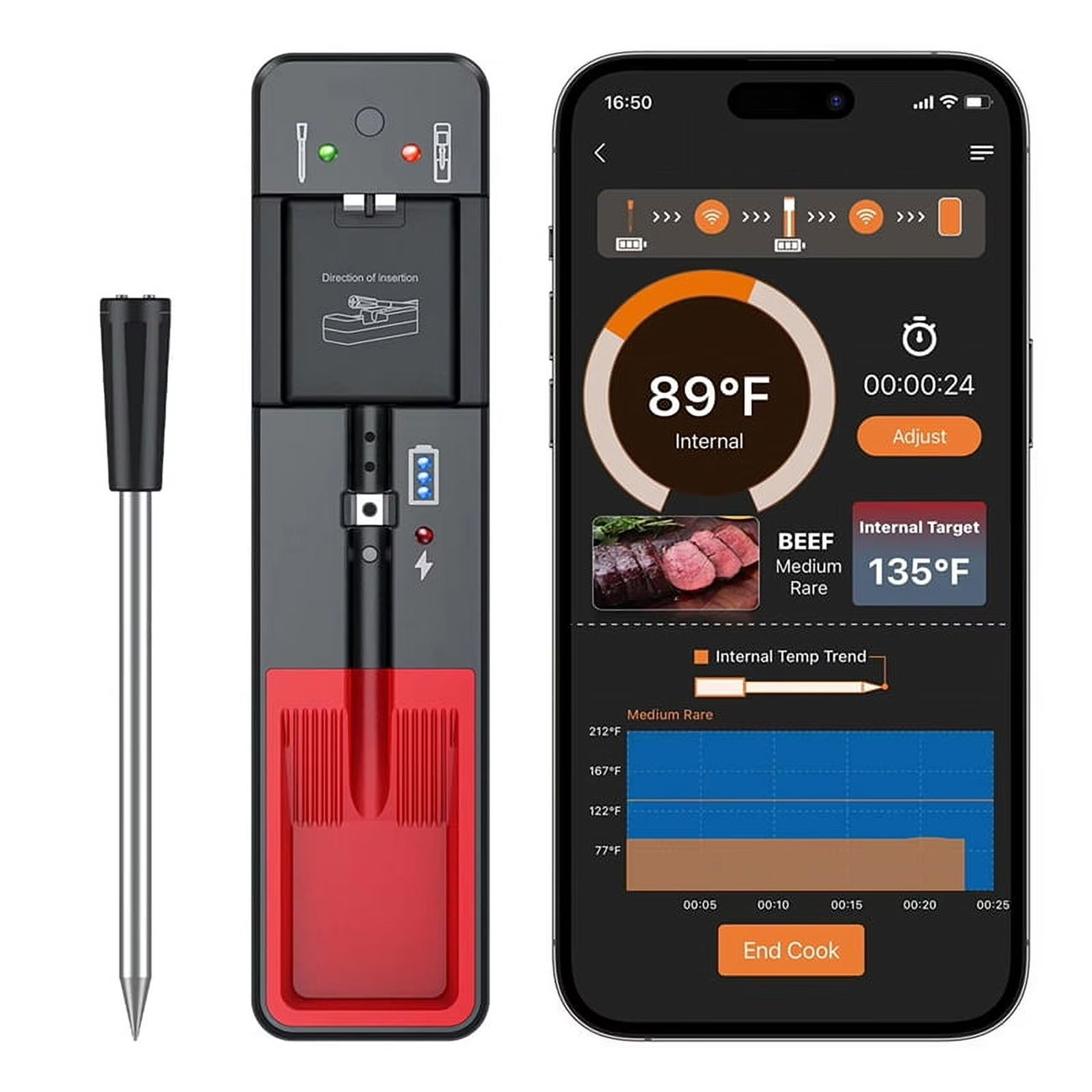 In this guideRoastRadar$119.99View
Rest the steak, then slice
Move the steak to a warm plate or board and let it rest, longer for a thicker steak. Spoon the pan butter over the top while it waits.
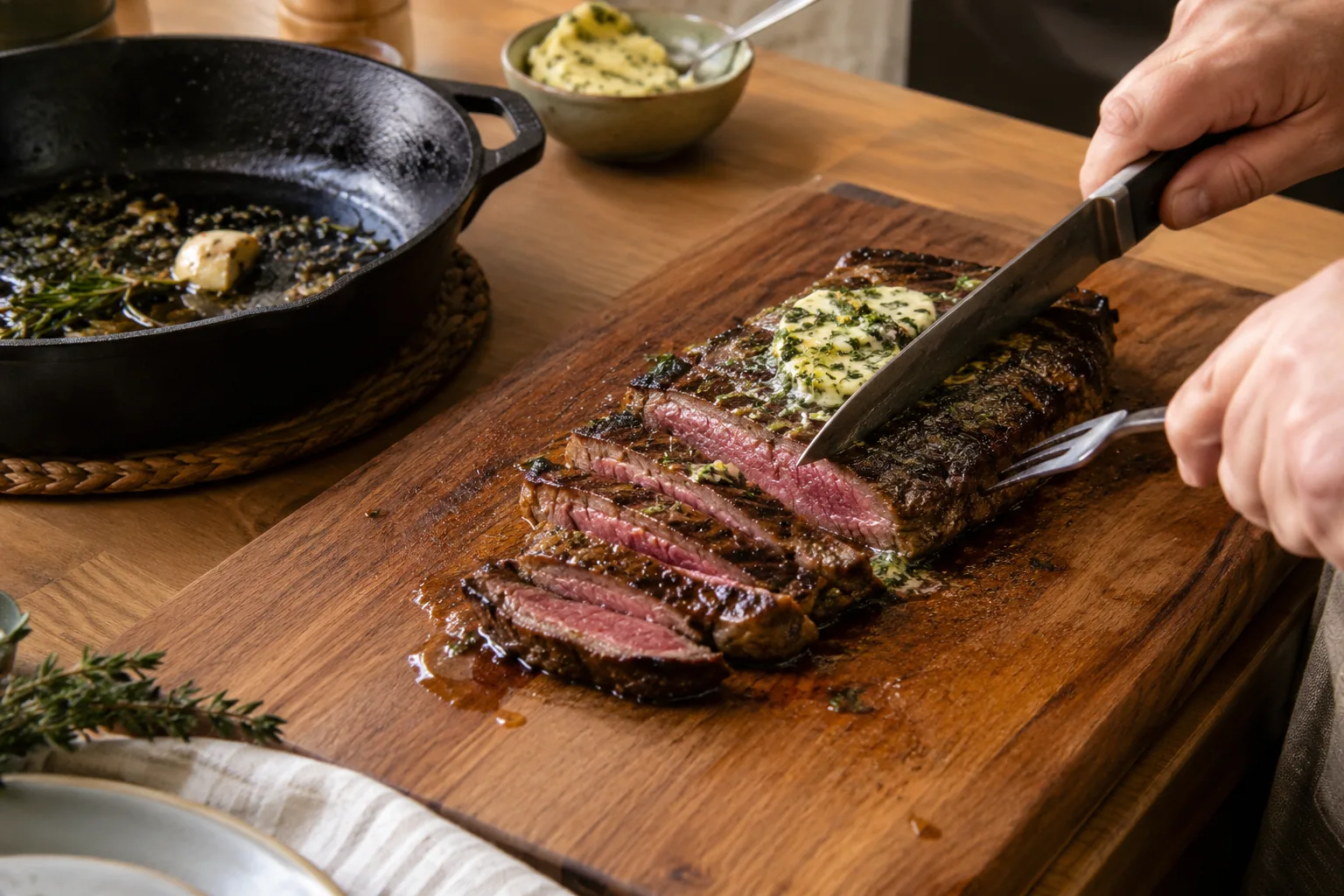
Slice against the grain, which means cutting across the visible muscle lines. Pour any juices from the board over the slices.
Mistakes that ruin a cast iron skillet or a steak
- Soaking the pan in the sink or leaving it wet. Standing water leads to rust.
- Putting the skillet in the dishwasher. Hand wash instead, dry it right away on a warm burner and wipe on a thin film of oil.
- Pouring cold water into a hot pan. Sudden temperature changes can crack cast iron.
- Crowding the pan. A full pan cools, so cook one or two steaks at a time.
- Cooking a wet steak, starting in a cold pan, or flipping repeatedly. Each one weakens the crust.
- Simmering acidic sauces for a long time in a pan with thin seasoning. The seasoning can wear off.
After cooking, let the pan cool until you can handle it, scrape out bits with a spatula, and rinse with hot water and a brush. A little mild soap is fine for a seasoned pan. Check the manufacturer's care sheet for your skillet.
Alternatives to a full cast iron method
If you prefer a low-and-slow start, cook the steak at a low oven temperature and sear it at the end. Our guide to sous vide with a vacuum sealer covers a bag-first method that ends with a hot-pan sear. For more tools around the cutting board and the fridge, browse the Meat, Grain & Specialty Food Prep collection.
Whichever route you pick, the same checklist applies to cast iron frying pan steak: a dry surface, a hot pan, an undisturbed sear and a thermometer reading before you pull the meat.
Field note
Pat the steak dry a second time right before it goes into the pan. Salt draws moisture to the surface, and that film stands between the meat and a brown crust.