Countertop Reverse Osmosis Water Filter Systems: How to Choose
Countertop reverse osmosis water filter systems use a membrane in a plug-in unit, no plumbing required. This guide compares them with other countertop filters and lists what to check before you buy.
The Cobalt Hollow Team
October 25, 2026 · 7 min read
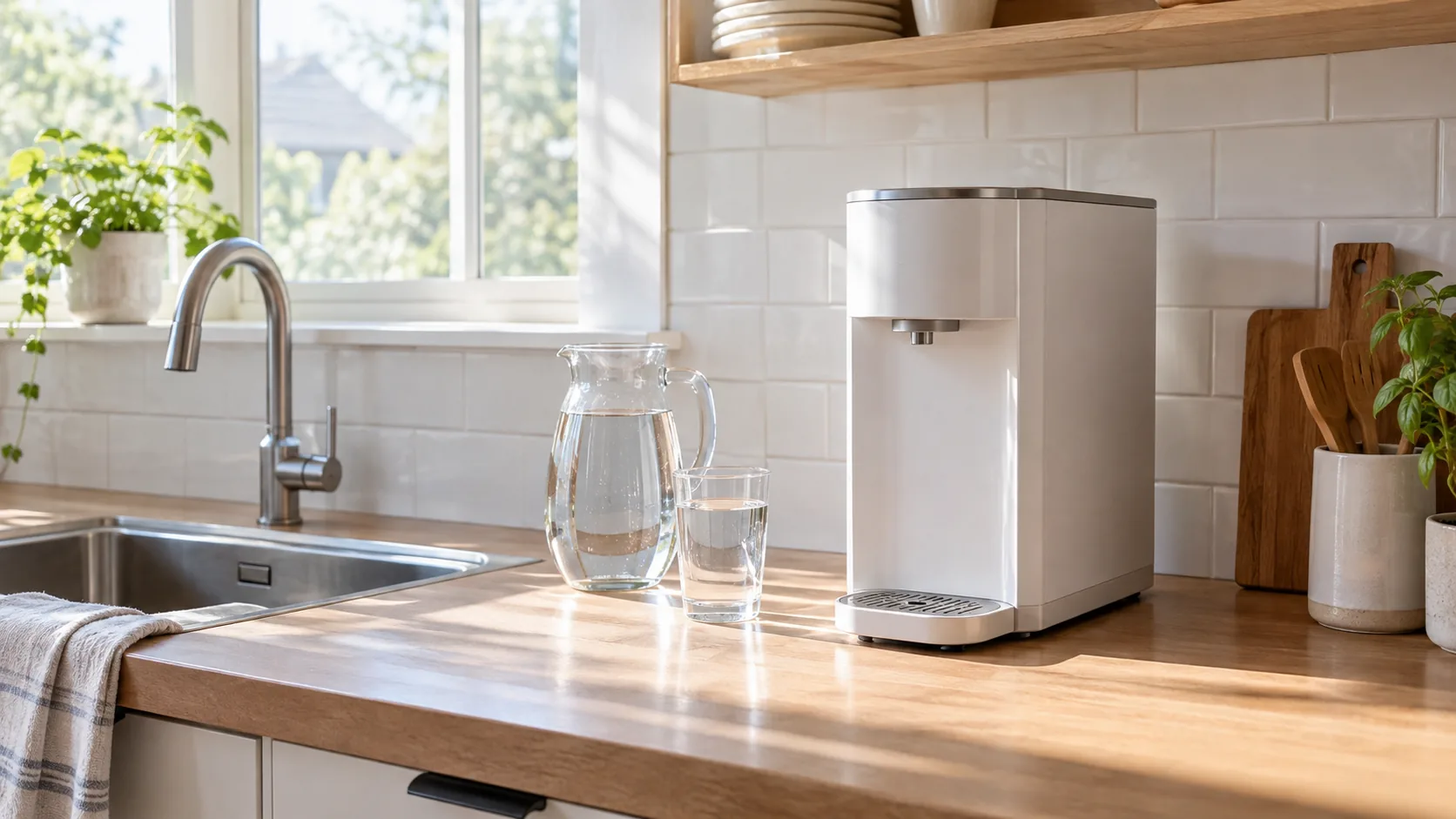
Countertop reverse osmosis water filter systems push tap water through a membrane inside a self-contained unit that sits on your counter, so there is no under-sink plumbing to install. To choose one, match it to your water report, check how much reject water it sends to the drain, compare tank size and counter footprint, and look at the replacement filter schedule in the manual.
Reverse osmosis is not the only countertop option. Gravity filters, pitchers and faucet-mounted units work differently, and one of them may fit your kitchen and your water better. The sections below compare them side by side.
How a countertop RO unit works
A reverse osmosis system uses pressure or a pump to move water across a semipermeable membrane. Carbon and sediment prefilters usually sit ahead of the membrane, and a post filter may follow it. The water that passes through is the filtered water you drink. The water that does not pass carries what the membrane held back and goes to a drain line or a waste tray.
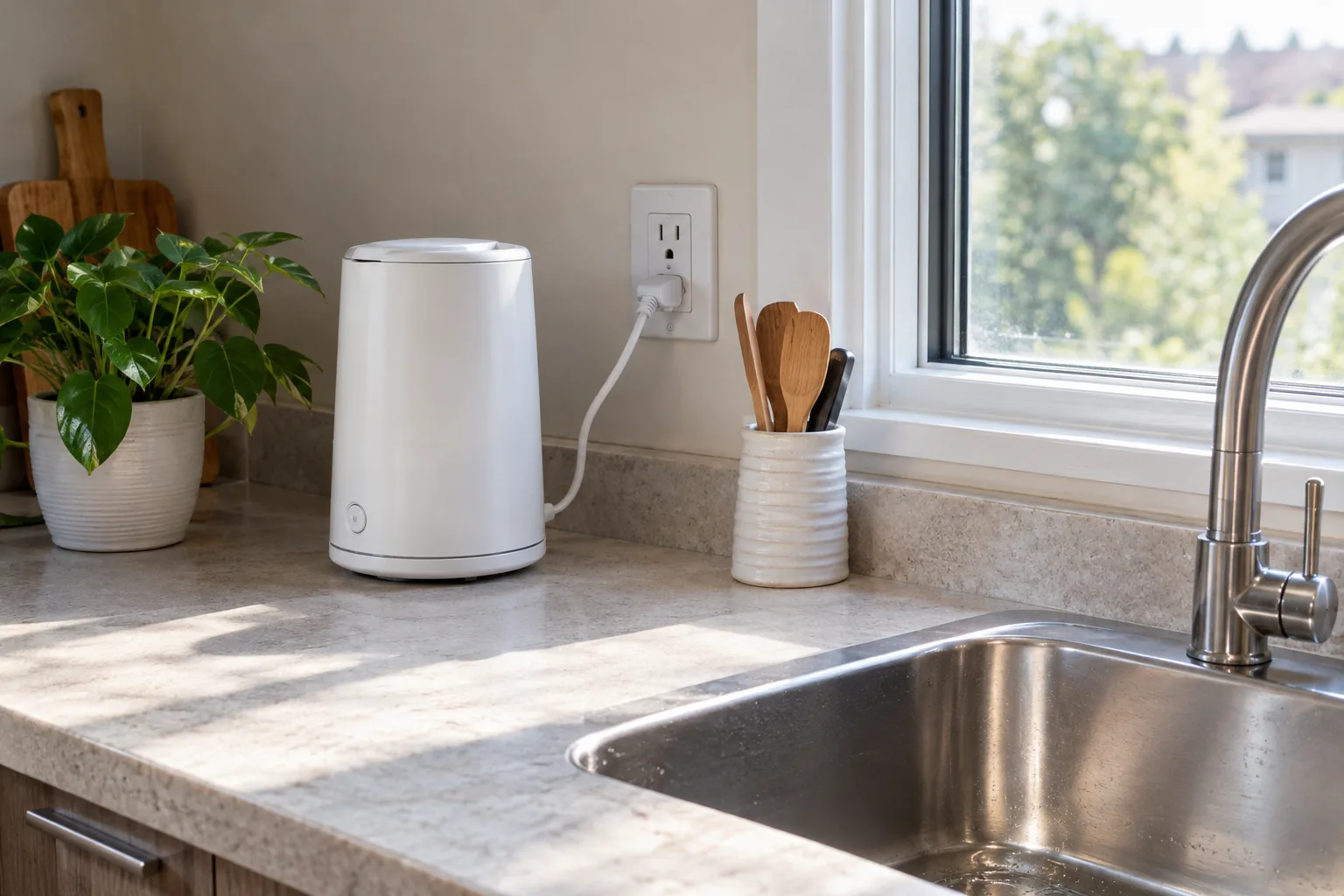
A typical countertop RO unit is a plug-in appliance with a fill reservoir on top and a clean-water tank below. You pour tap water in, the unit runs its cycle, and you draw filtered water from the tank. Some models connect to a faucet or water line instead of a reservoir, so check which style you are buying before you plan your counter.
What the membrane is for
The membrane is the part that sets RO apart from carbon-only filters. Whether it suits you depends on what is in your tap water, so start with the local utility report or a lab test of your own water. The manufacturer's data sheet lists which contaminants a given system is built to address. Read that sheet instead of relying on the product name.
Countertop RO vs other countertop filters
Waste water, replacement parts and footprint are the three differences that show up in daily use. This table compares the main types in general terms. Exact numbers vary by model, so confirm them on each product page.
| Type | How it works | Waste water | Replacement parts | Space and setup |
|---|---|---|---|---|
| Countertop RO | Membrane plus prefilters, usually powered | Produces reject water that goes to a tray or drain | Prefilters and a membrane, on separate schedules | Largest footprint, needs an outlet and a fill step |
| Gravity-fed dispenser | Water drips through filter elements by gravity | None produced by the filtering step | Filter elements | Medium footprint, no outlet, refill by hand |
| Pitcher | Gravity filter cartridge in a lid | None produced by the filtering step | Cartridge | Fits in a refrigerator door, refill by hand |
| Faucet-mounted cartridge unit | Tap water runs through a cartridge | None produced by the filtering step | Cartridge | Small, attaches to the faucet with adapters |
The waste column matters most if you are on a well or watch your water use. The space column matters most in a small kitchen, an office or an RV, where a bulky RO tank may not fit.
Where a faucet-mounted countertop filter fits
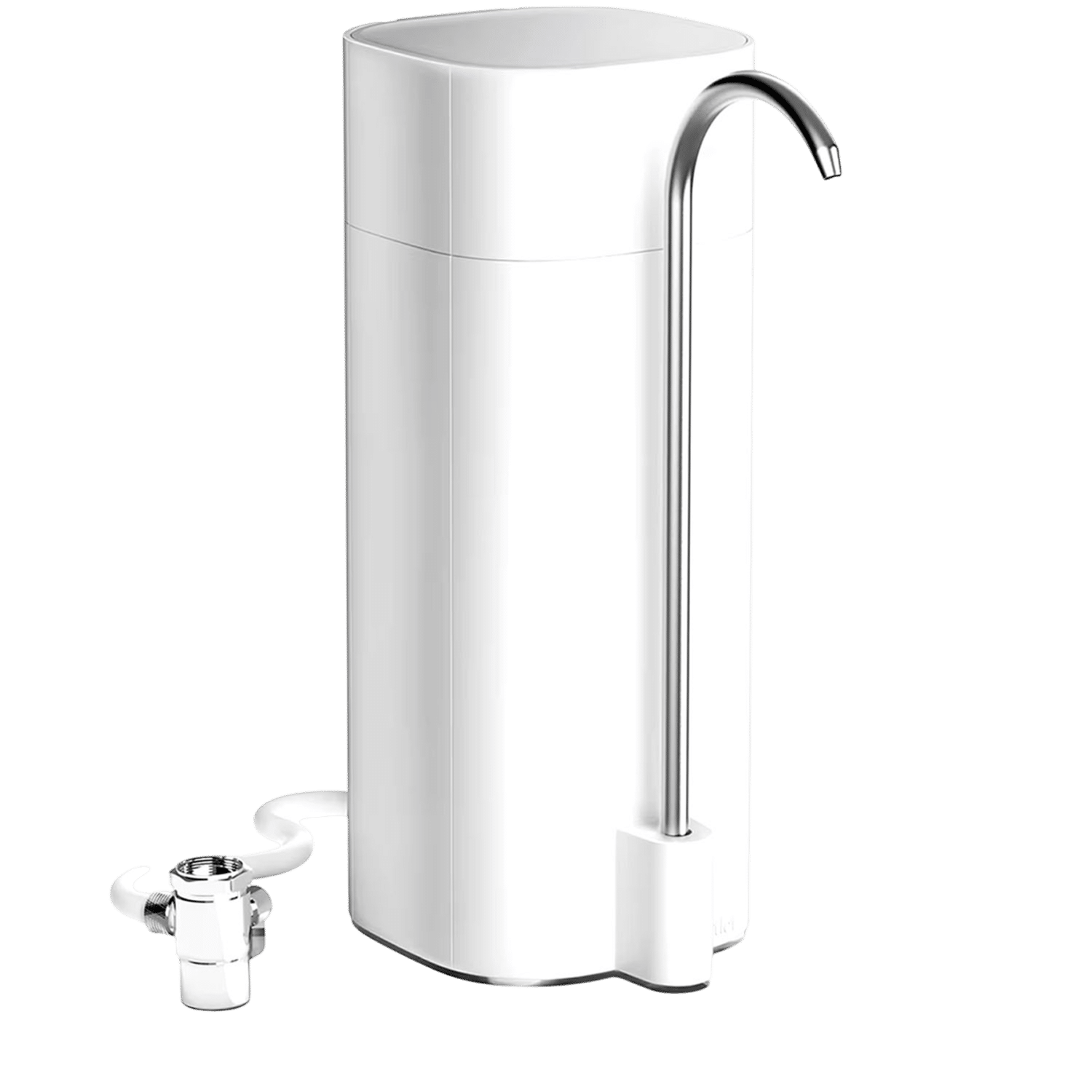
If your main goals are everyday drinking and cooking water and a compact footprint, a faucet-mounted unit is worth a look. PureSpring is a countertop water filter that connects to a standard kitchen faucet. Tap water passes through a replaceable 4-in-1 filter cartridge as it moves from the faucet to your glass.
It is not a reverse osmosis system. There is no pump, motor or holding tank inside, so you do not need an outlet or a fill step. The housing is transparent, so you can see the cartridge and the water when you decide it is time to fit a fresh cartridge.
 In this guidePureSpring$189.99View
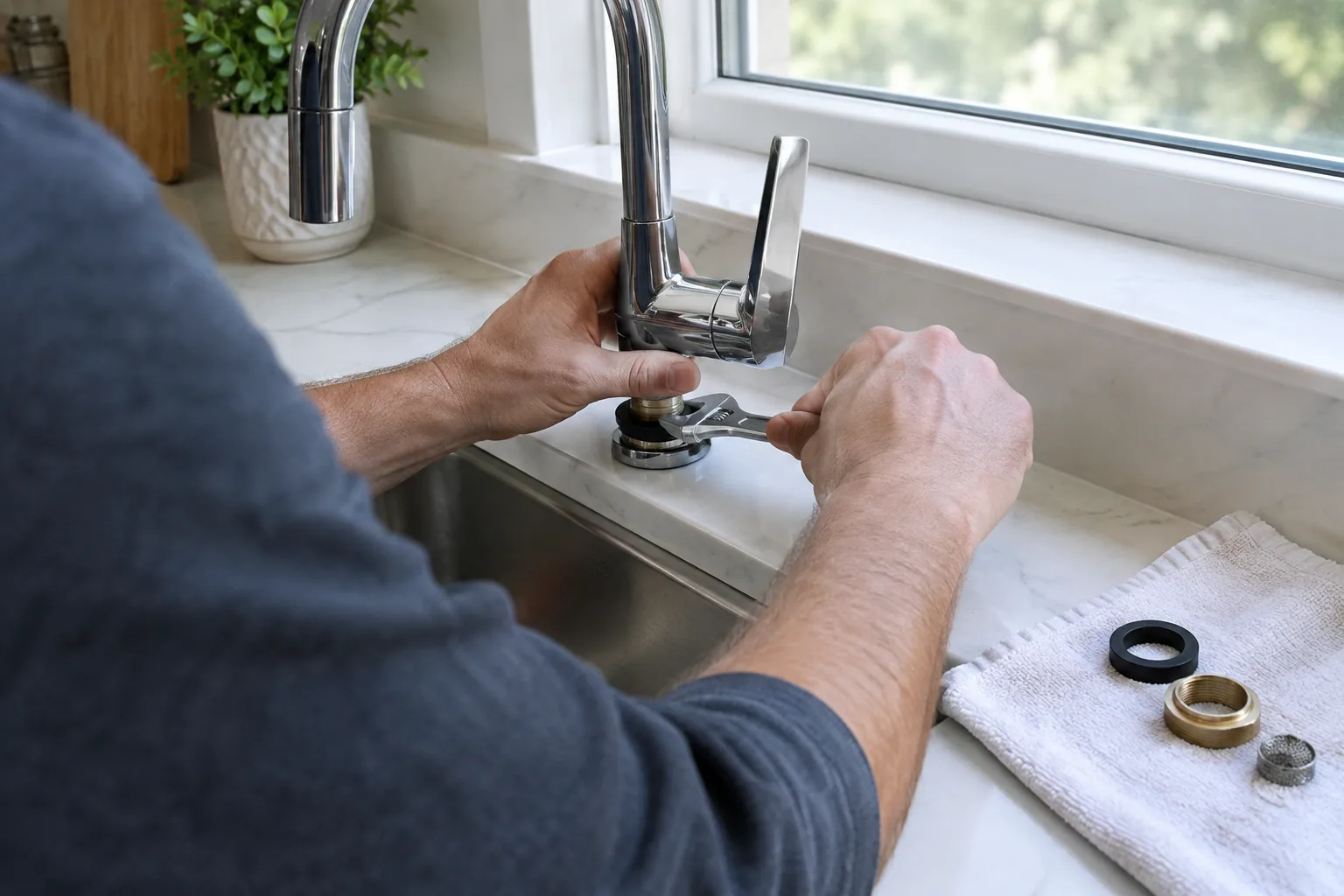
The kit includes a universal faucet adapter, a mounting base, a wrench, an A3/A5 adapter, an O-ring and thread seal tape, plus the manual. Its compact size suits kitchens, offices and RVs. If you also want to browse related gear, the Food Storage, Cookware & Water Filtration collection lists what we stock.
How to choose countertop reverse osmosis water filter systems
Work through these steps in order. Each one narrows the field before you compare models.
- Get your water report from your utility, or send a sample to a lab if you use a private well.
- List the contaminants you want to address, then compare them with the data sheet of each system.
- Check the certifications the manufacturer lists and which specific claims they cover.
- Measure your counter, the height under your wall cabinets and the distance to an outlet.
- Ask how much reject water the unit produces and where it goes.
- Find the replacement schedule and the parts list for the prefilters and the membrane.
- Decide whether you will refill a reservoir by hand or want a faucet or water line connection.
Questions to settle before you buy
Tank size decides how often you refill. A household that drinks a lot of filtered water needs a larger clean-water tank than one person who fills a bottle each day. Look at filter life too, since it sets how often you buy and fit parts.
Remineralization is a separate feature. Some RO units add a mineral stage after the membrane, and some do not. If taste matters to you, check whether the model has this stage and how it is replaced.
Countertop RO is one of several routes. If you would rather connect to the cold water line under the sink, read our guide to under-the-sink water filter systems for sizing and installation steps.
Field note
Write the install date on a piece of tape on the unit's base each time you fit a new filter. It gives you a clear reference when you check the replacement schedule in the manual.
Setup checklist for a countertop filter
Setup differs by type, so follow the manual that comes with your unit. These steps cover a typical countertop install.
- Place the unit on a level, dry surface away from the stove and the edge of the counter.
- Rinse or flush new filters as the manual describes before you drink from them.
- For a plug-in RO unit, use an outlet that is away from the sink splash zone. Ask an electrician if you are unsure about your outlets.
- For a faucet-mounted unit, turn the water off at the faucet before you fit the adapter. Use the O-ring and thread seal tape at the joints and tighten the connections with the wrench.
- Check every joint for drips after you turn the tap on, and tighten only as the manual says.
- Empty and wipe the reject water tray, if your model has one, on a regular schedule.
Care schedule and common mistakes
Every countertop filter needs upkeep. Leaving a filter in place past its schedule undermines the whole unit, so build the dates into your routine.
| Task | When |
|---|---|
| Wash the reservoir, tank or housing | Follow the manual's interval |
| Replace prefilters or cartridges | On the schedule the manual lists |
| Replace the RO membrane | On the membrane schedule the manual lists |
| Empty the waste tray | Each time you refill the unit |
| Inspect hoses, joints and seals | Check when you change filters |
Mistakes to avoid
- Buying a system without reading your water report first.
- Ignoring the cabinet clearance above the counter, so the reservoir cannot be lifted off or refilled.
- Skipping the first flush of new filters.
- Leaving water in a tank or reservoir for long stretches without cleaning it.
- Pairing an adapter with the wrong faucet thread. Check the adapter list in the kit before you buy extras.
For general background on how point-of-use RO systems work and where reject water goes, see this overview of point-of-use reverse osmosis systems.
Which type fits your kitchen
Choose countertop RO if your water report points to contaminants that a membrane is built to address, and you have the counter space and an outlet. Accept the reject water and the separate membrane replacement as part of that choice.
Choose a gravity dispenser or pitcher if you want no power and are fine with refilling by hand. Choose a faucet-mounted cartridge unit if you want a small footprint and direct water from the tap. Whatever you pick, compare the data sheet with your water report, and keep the filter schedule on your calendar.