Good Electric Tankless Water Heater: Sizing, Power and Checks
A good electric tankless water heater matches your flow rate and temperature rise, and fits the amps your panel can spare. Here is the math, a sizing table and a pre-purchase checklist.
The Cobalt Hollow Team
November 2, 2026 · 7 min read
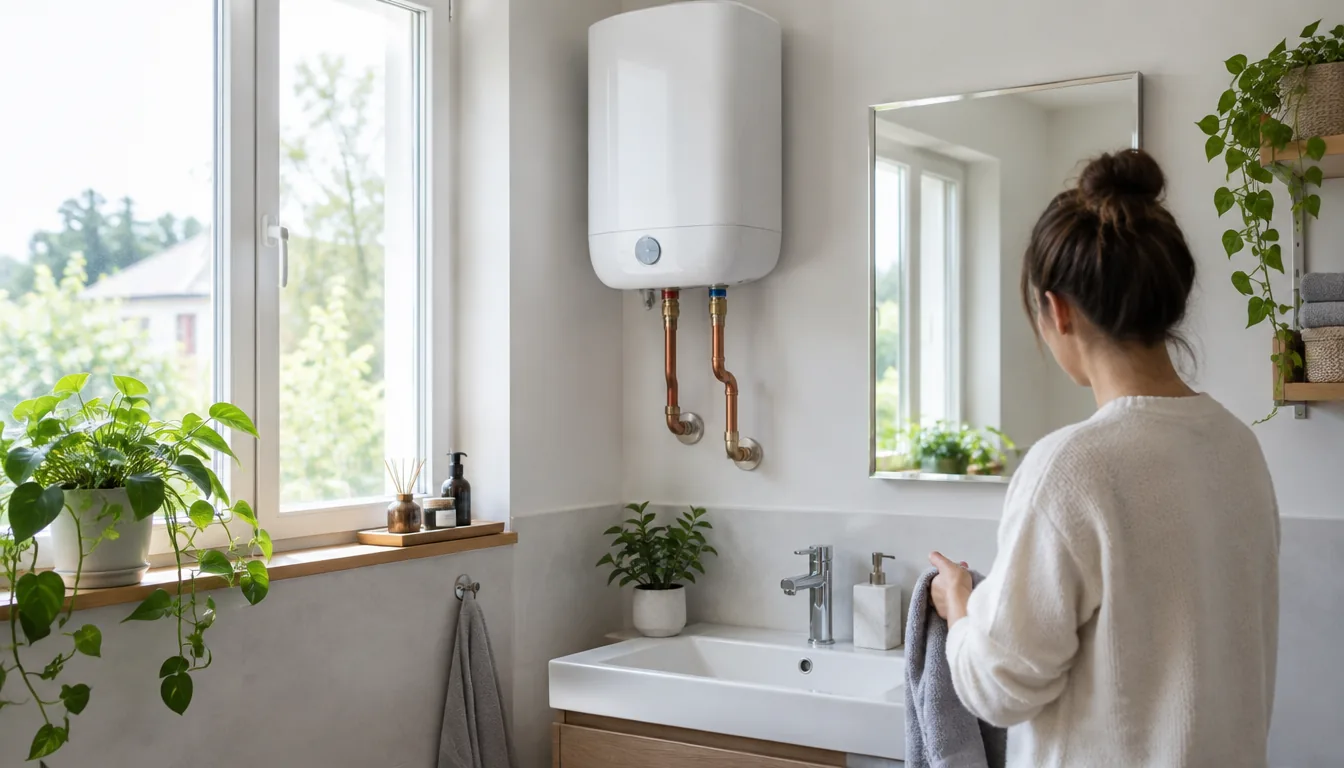
A good electric tankless water heater is one sized to your peak flow rate and temperature rise, and one your home's electrical system can actually feed. Work out how many gallons per minute you need, subtract the incoming water temperature from your target, and convert the result to kilowatts and amps. Then confirm the panel, breaker and wiring can carry that load before you buy.
This guide walks through that math, the electrical checks, the plumbing and water-quality details, and the signs that an existing heater is wearing out.
What makes a good electric tankless water heater
A tankless unit has no storage tank. When you open a tap, flow starts the heating element, and the water is heated as it passes through. When flow stops, the heating stops.
That means you do not run out of a stored volume, but the unit can only raise the temperature of the water by so much at a given flow. If you ask for more flow than the heater can warm, the water comes out cooler than you set it. Sizing is about closing that gap.
Whole house or single point
A whole house unit serves every fixture from one location and needs a large dedicated electrical supply. A smaller point-of-use unit sits near one sink, shower or kitchen and serves only that fixture. The right one depends on how many fixtures run at once and how much power you can add.
Sizing by flow rate and temperature rise
Two numbers decide the size: flow rate in gallons per minute (GPM) and temperature rise, which is your target temperature minus the incoming water temperature.
- List the fixtures that could run at the same time, such as a shower and a kitchen faucet.
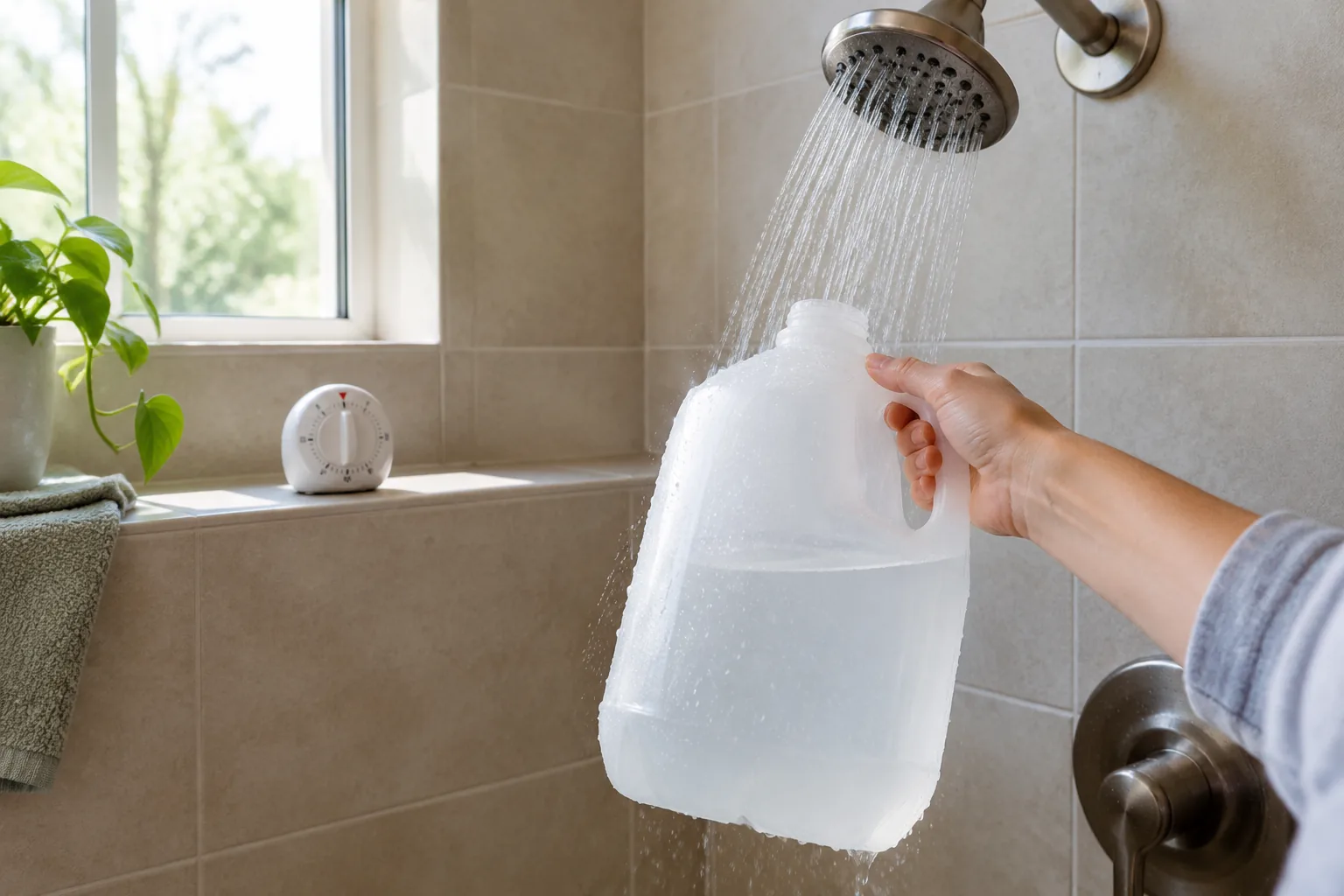
- Find each fixture's flow in GPM. Check the label or packaging, or time how long it takes to fill a one-gallon container.
- Add the flows to get your peak GPM.
- Measure or estimate incoming water temperature. It is colder in winter and in cold climates, so size for the coldest month.
- Subtract incoming temperature from your target to get the rise in °F.
- Multiply: kilowatts needed = GPM x rise x 0.1467.
For example, 2 GPM with a 50°F rise (55°F water heated to 105°F) needs about 14.7 kW. The same 2 GPM with a 70°F rise (40°F water to 110°F) needs about 20.5 kW. Colder incoming water raises the power demand sharply.
Sample load table
The table uses a 50°F rise and a 240-volt circuit. Amps are the heater's running load (kW x 1000 / 240), before any breaker margin your electrician adds.
| Peak flow (GPM) | Power needed (kW) | Load at 240 V (amps) | Typical use |
|---|---|---|---|
| 0.5 | 3.7 | 15.4 | Single bathroom sink |
| 1.0 | 7.3 | 30.5 | Kitchen faucet |
| 1.5 | 11.0 | 45.8 | Low-flow shower |
| 2.0 | 14.7 | 61.1 | Standard shower |
| 2.5 | 18.3 | 76.3 | Shower plus a faucet |
If you are comparing a 7 GPM electric unit on a spec sheet, run the same formula. A 7 GPM figure only holds at a small temperature rise; at a 50°F rise, 7 GPM would call for roughly 51 kW, far beyond what a typical home panel supplies.
Check your home's electrical capacity first
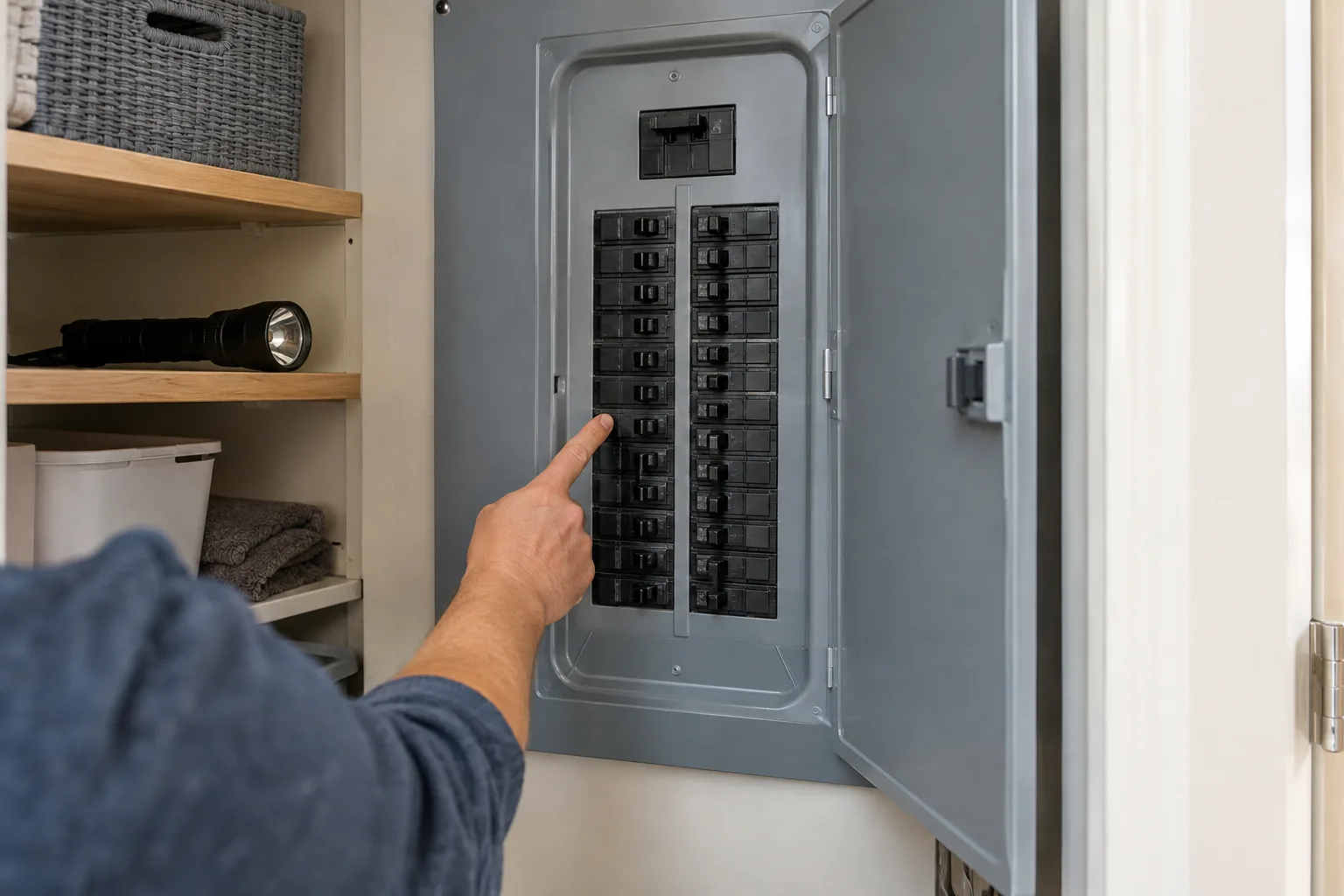
Electric tankless units draw high current, and this is where a purchase can fall apart. Before you choose a model, look at four things.
- Panel capacity: the service rating (printed on the main breaker) and how much of it your existing loads already use.
- Open breaker spaces: larger units need dedicated double-pole breakers.
- Wire gauge and run length: the cable has to match the breaker size on the heater's nameplate and manual.
- Existing circuits: an electric range, dryer or EV charger may already use much of the available capacity.
Compare the amp load from the table with what your panel can spare. If the heater needs more than the panel has, you can choose a smaller unit, serve fewer fixtures, or have an electrician quote a panel or service upgrade.
What about 120-volt units
A 120-volt heater is held to the capacity of the circuit it plugs into or is wired to. A 15-amp, 120-volt circuit carries well under 2 kW, which supports only a small temperature rise at a low flow. That fits a single sink, not a shower in a cold-water region. Ask a licensed electrician to confirm the circuit and local code requirements before you wire anything.
Field note
Turn the breaker off and confirm the circuit is dead with a voltage tester before touching any heater wiring. Follow the manual, and hire a licensed electrician for panel work or any new circuit.
Can a tankless heater run a whole house?
Yes, if the heater is sized for your peak flow and the home has enough electrical service to feed it. Electric whole house units draw far more current than most other household appliances, and some homes would need a service upgrade to support them.
If that upgrade is not practical, split the load. A smaller unit near the farthest bathroom or kitchen can serve that fixture, and your existing heater continues to serve the rest. Another option is to avoid simultaneous use, such as not running the dishwasher during showers.
A wall-mounted option for a single location
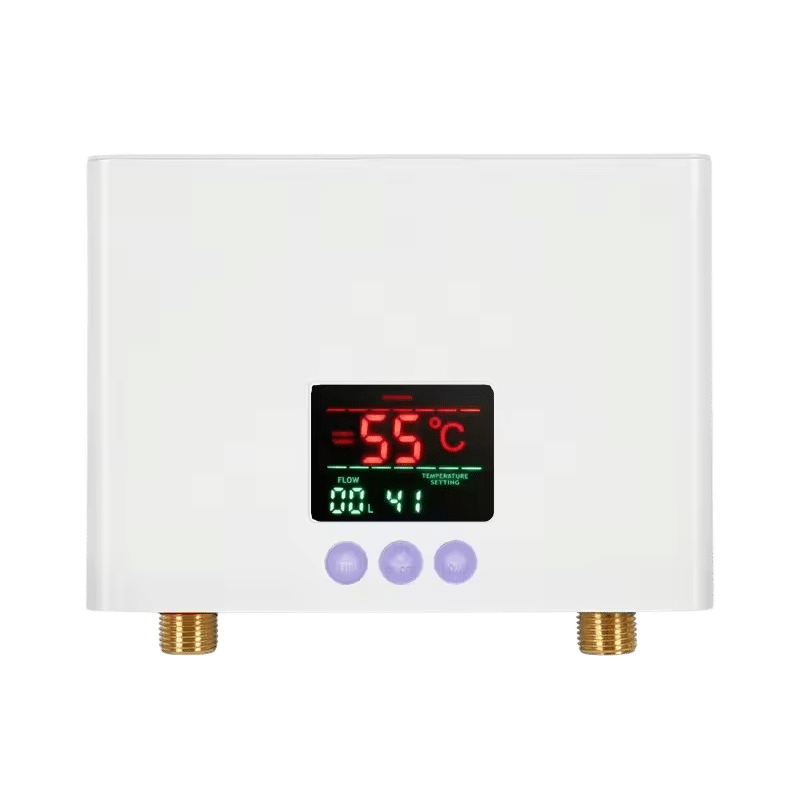
When the job is one sink, a small bathroom or a kitchen where floor space is tight, a compact wall-mounted unit is worth a look. HydroSpark is a wall-mounted electric water heater, 8.3 inches tall, that heats water as it flows through the unit with no storage tank. It shuts off automatically when water flow stops.
You set the target on the touch panel or the remote, anywhere from 30°C to 55°C (about 86°F to 131°F). Gear settings let you step the setting up or down. It ships with the remote control, wall-mount installation hardware and a user guide. Check the product page for its electrical requirements and compare them with your circuit before ordering.
 In this guideHydroSpark$199.99View
Plumbing, water quality and placement
Electrical capacity is half the decision. The rest is how the unit connects to your water.
- Pipe size and connections: confirm the inlet and outlet match your plumbing, or plan for adapters.
- Water pressure: a unit that needs a minimum flow to switch on will not start on a trickle.
- Hard water: mineral scale builds up on heating parts, so test your water hardness and plan a descaling routine.
- Mounting location: pick a wall that supports the unit and keeps wiring runs short. Follow clearances in the manual.
- Shutoff valves: isolation valves on both water lines make flushing and service possible.
Scale is the main upkeep item. Our guide to tankless water heater maintenance covers flushing, descaling and a schedule, and maintenance for electric on-demand units covers the checks specific to electric models.
Pros and cons compared with a tank heater
| Factor | Electric tankless | Tank heater |
|---|---|---|
| Hot water supply | Heats while water flows, with no reserve | Holds a volume of heated water in reserve |
| Space | Wall-mounted, small footprint | Floor-standing, larger footprint |
| Electrical demand | High current while running | Lower current, heats over a longer period |
| Fuel | Electricity only | Electric, natural gas or propane models exist |
| Upkeep | Descaling where water is hard | Tank flushing and anode checks |
| Install work | May need new breaker, wire or panel | Often reuses existing hookups |
Gas-fired tankless models exist, but they need venting and a fuel line. An electric unit needs only power and water, which can suit a home without a gas supply.
Pre-purchase checklist for a good electric tankless water heater
Go through these steps in order before you add any unit to a cart.
- Write down peak GPM for the fixtures that run together.
- Record incoming water temperature in the coldest month.
- Calculate kilowatts with GPM x rise x 0.1467.
- Convert to amps at the heater's voltage.
- Compare with free capacity and open breaker spaces in your panel.
- Confirm wire gauge and run length with an electrician.
- Check pipe connections, water pressure and hardness.
- Pick a wall with room for clearances and shutoff valves.
- Confirm local permit and code requirements.
Common mistakes
- Sizing for average use instead of the peak, when two fixtures run at once.
- Using summer water temperature for the calculation.
- Reading a spec-sheet GPM figure without checking the temperature rise behind it.
- Buying before confirming the panel has the capacity.
Lifespan and signs of a failing water heater
Lifespan varies by model, water hardness and how well the unit is maintained. The manual and the product page are the places to check for its expected service life, and descaling on schedule is the habit that matters most where water is hard.
Signs that a heater, tank or tankless, is wearing out include:
- Water that swings between hot and cold at a steady tap setting.
- Little or no hot water when it used to be fine.
- Error codes or a breaker that trips repeatedly.
- Leaks or moisture at the fittings or the base.
- Rusty or cloudy hot water, or rumbling in a tank model.
- A rising energy bill without a change in use.
Turn off power and water, and call a licensed plumber or electrician if you see a leak or a tripping breaker. Browse the Heating, Cooling & Water Heating collection if you are comparing other options for a single location.