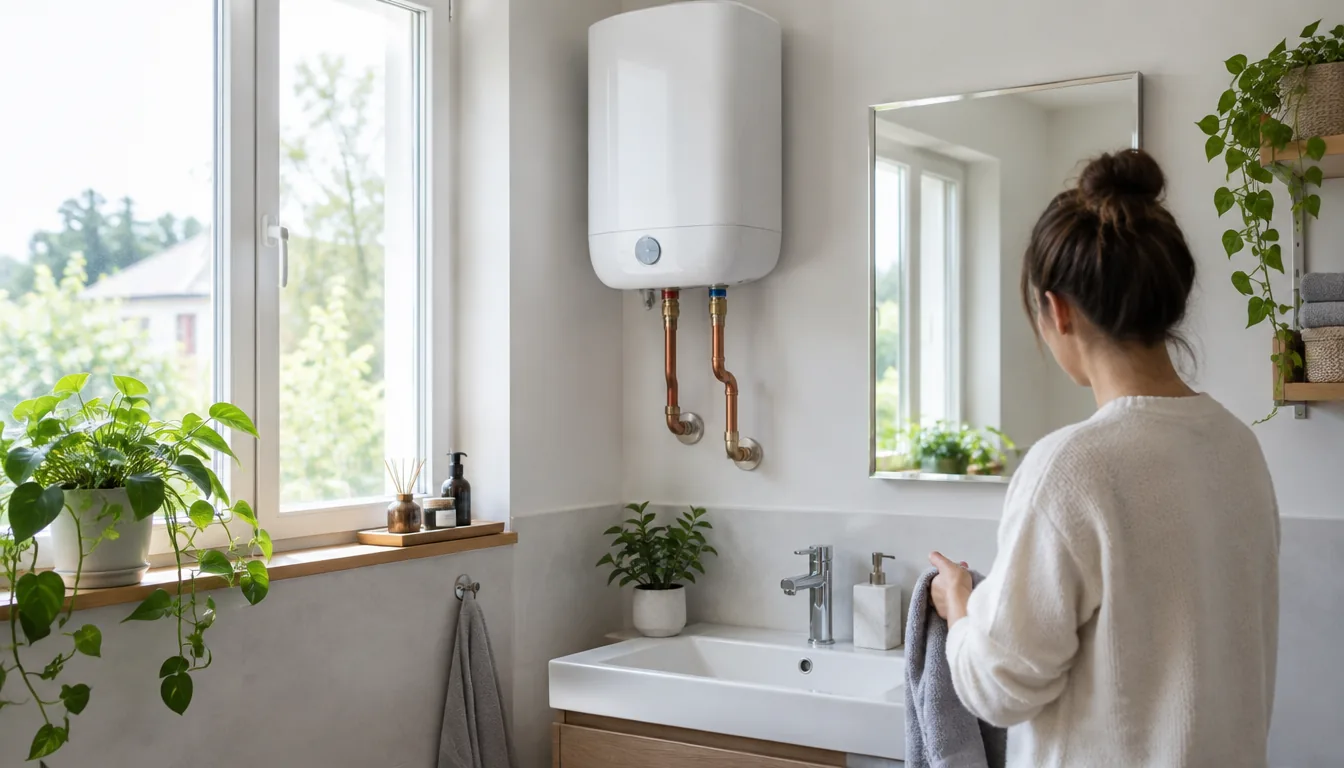
Tankless Water Heater Maintenance: Flush, Descale, Schedule
Clean the inlet filter, flush with a descaling solution, and check the connections, on a schedule set by your water hardness. Here is the checklist and when to call a plumber.
The Cobalt Hollow Team
October 24, 2026 · 6 min read
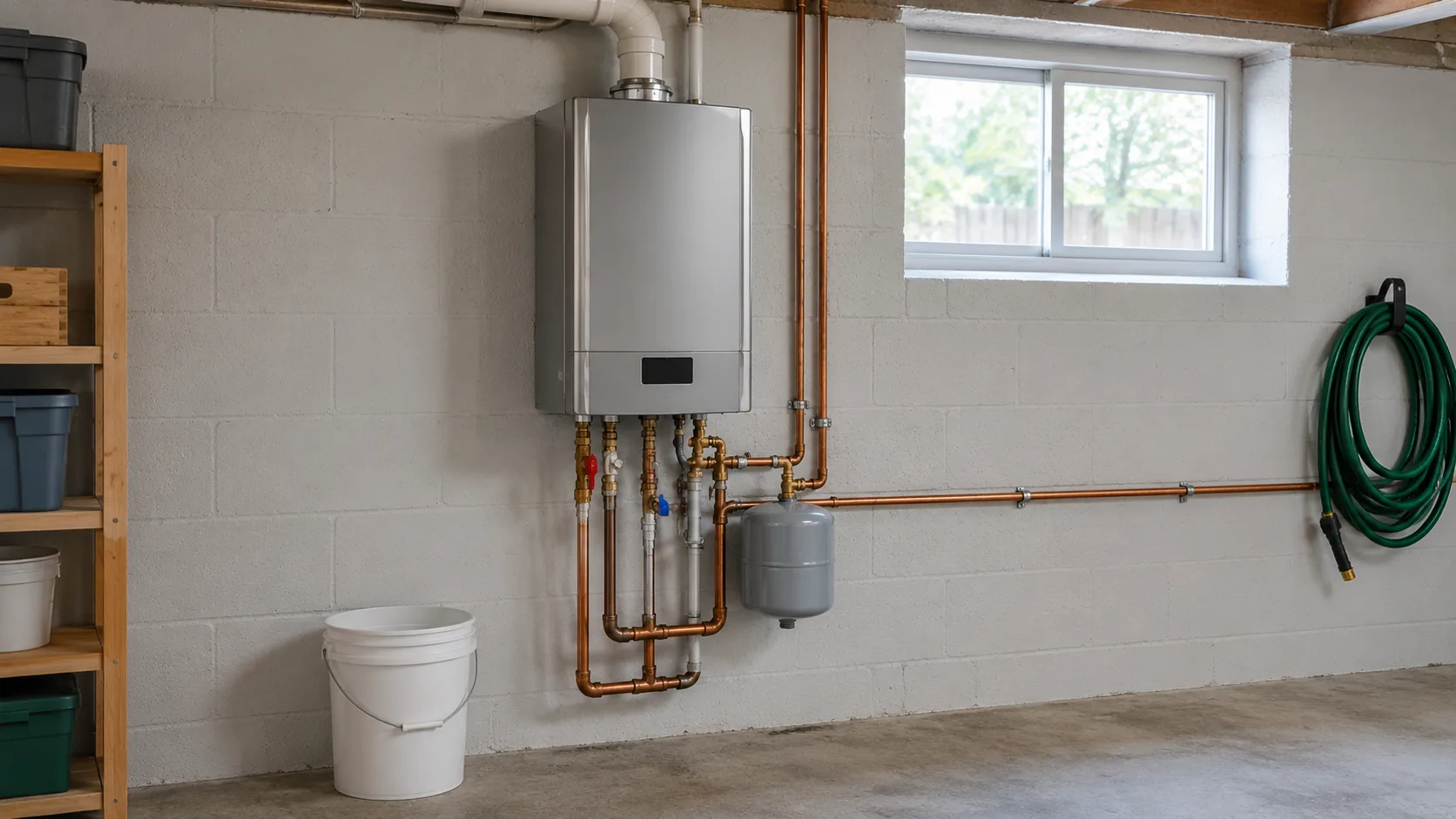
Tankless water heater maintenance comes down to three jobs: clean the inlet filter, flush the unit with a descaling solution, and check the connections, vent and drain. How often you do each one depends on your water hardness and on what the manual lists, with hard water calling for shorter intervals. Switch off power (and gas, on a gas unit) before you start, and leave anything inside the burner or electrical compartment to a licensed professional.
What tankless water heater maintenance covers
A tankless unit heats water as it flows, so mineral buildup forms on the heat exchanger and in narrow passages instead of settling at the bottom of a tank. That is why the main jobs are flushing and descaling rather than draining a tank.
The table shows which tasks apply to which type of unit.
| Task | Electric point-of-use | Whole-house (gas or electric) |
|---|---|---|
| Clean water inlet filter | If the manual lists one | Yes |
| Flush and descale | Follow the manual for access | Yes, through the service ports |
| Wipe the exterior | Yes | Yes |
| Check for leaks at fittings | Yes | Yes |
| Clean air intake or fan area | Not applicable | Gas units, as the manual lists |
| Inspect vent and condensate drain | Not applicable | Gas units, as the manual lists |
| Check temperature setting | Yes | Yes |
Set the schedule by water hardness
Hard water carries more dissolved minerals, so scale builds sooner. Check your hardness with a test strip or your local water utility report, then use the table as a starting point. If the manual lists an interval, follow the manual.
| Water hardness | Flush and descale | Inlet filter check |
|---|---|---|
| Soft | Once a year | Once a year |
| Moderate | Once or twice a year | Twice a year |
| Hard | Two to four times a year | Four times a year |
| Very hard | Four times a year | Four times a year |
If you are in the hard or very hard rows, ask a plumber about a water softener or a scale-reduction filter ahead of the heater. It addresses the minerals before they reach the unit.
Gather tools and shut everything off
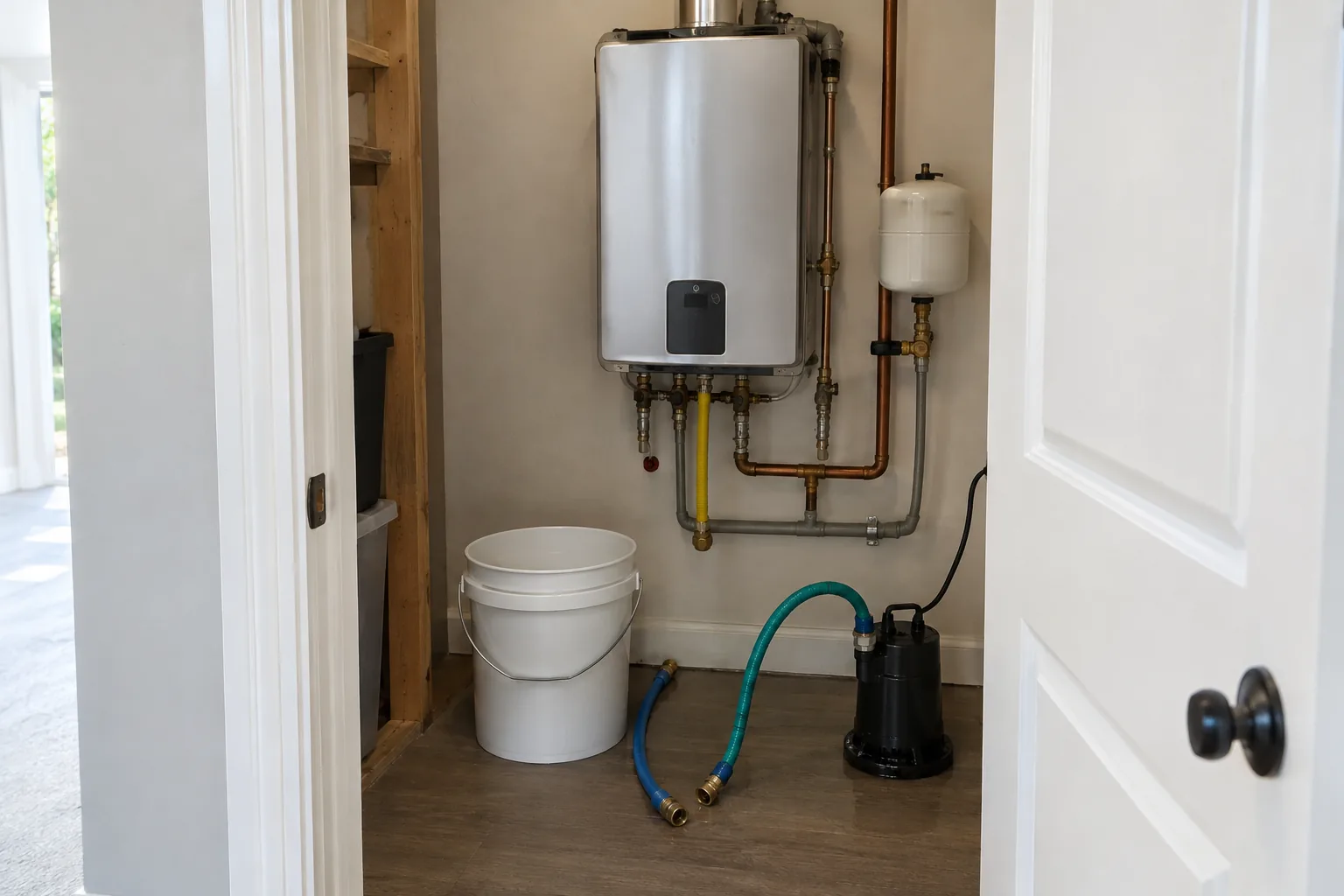
Collect these before you open any valve:
- Two washing machine style hoses and a bucket
- A small submersible pump, if your unit has isolation valves and service ports
- White vinegar or a descaling solution the manual allows
- A soft brush or old toothbrush for the inlet filter
- Towels, gloves and eye protection
- Clean water for rinsing
Turn off the breaker, or unplug the unit if the manual allows it. On a gas model, close the gas supply as well. If you smell gas, leave the area and call the gas utility. Do not try to fix it yourself.
Flush and descale step by step
Whole-house unit with service ports
- Switch off power and close the gas supply. Wait for the unit to cool, since the heat exchanger and pipes can stay hot.
- Close the cold and hot isolation valves.
- Attach one hose to the cold service port and one to the hot service port. Place the free ends in the bucket with the pump and the descaling solution, forming a loop.
- Open both service port valves and run the pump for the time the manual lists. Do not shorten or extend it on a guess.
- Drain the bucket, then flush the unit with clean water. Rinse until the water runs clear.
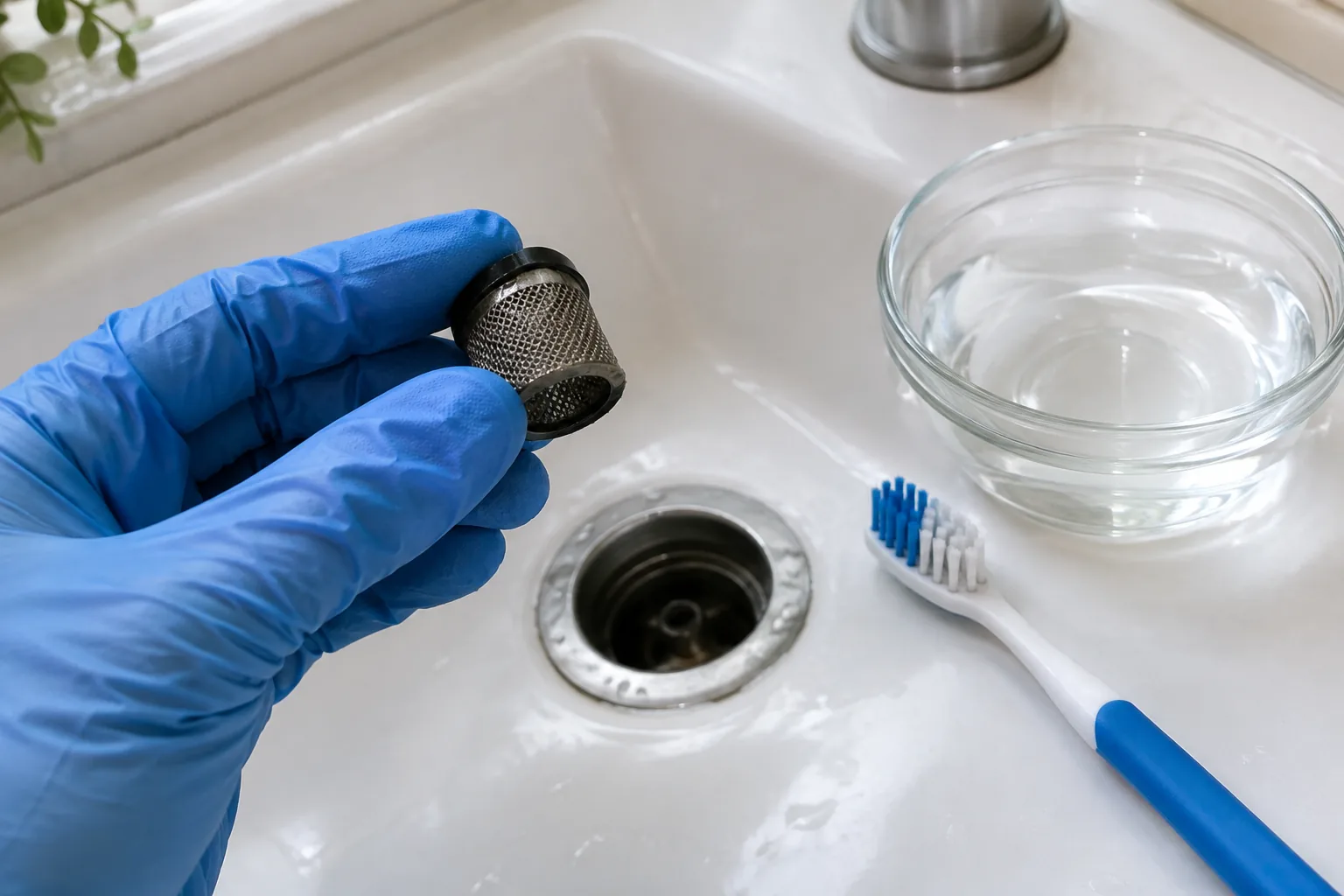
- Remove the inlet filter, rinse it under the tap and brush off loose debris. Refit it.
- Close the service ports, reopen the isolation valves, and open a hot tap to push air out of the line.
- Restore power and gas, then check every fitting for drips.
Electric point-of-use unit
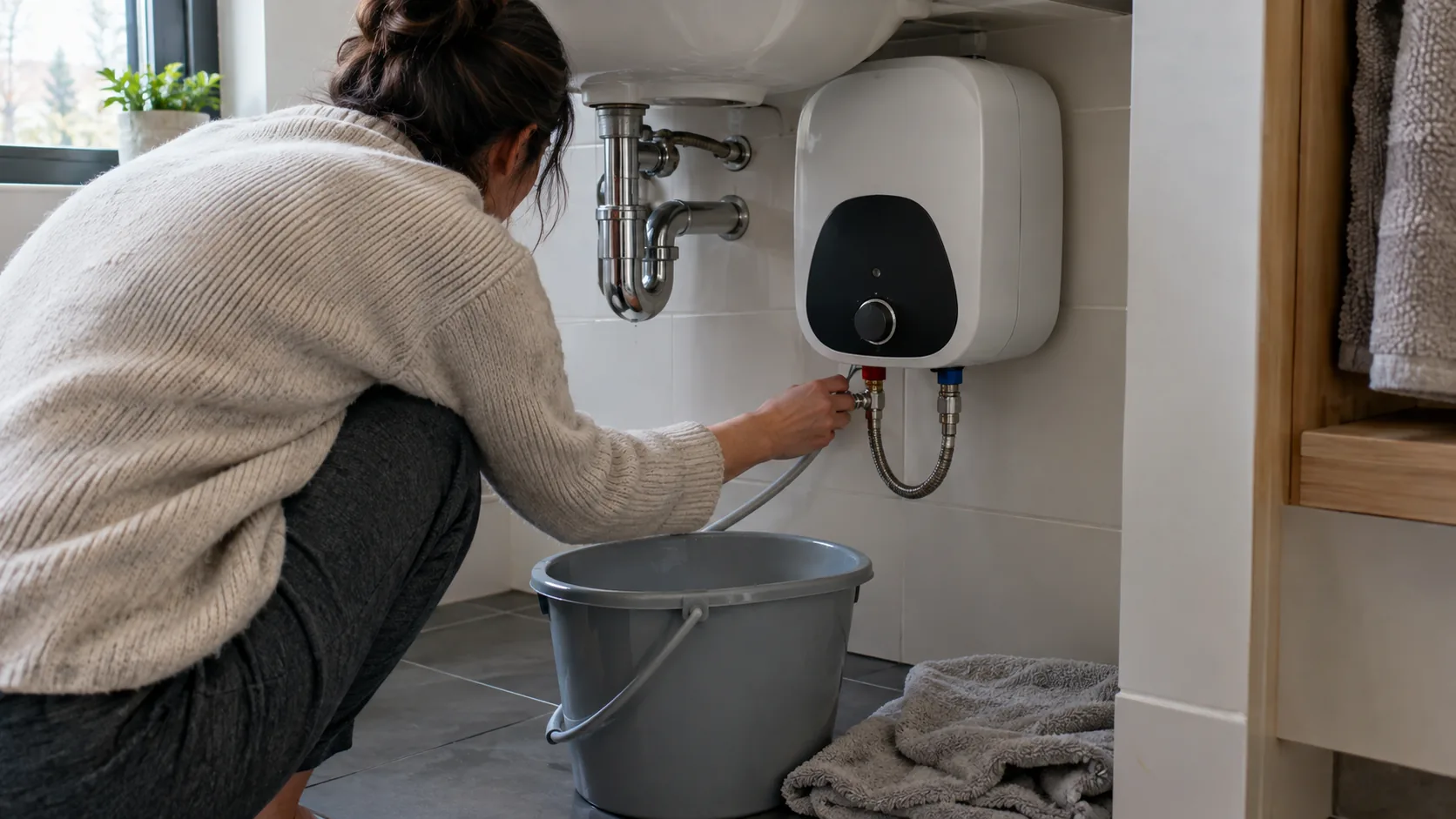
Small wall-mounted units differ, so open the manual first. The general sequence is to switch off the breaker, close the water supply, and disconnect the water line as the manual shows. Clean any inlet screen you find, circulate or soak the descaling solution as the manual allows, and rinse with clean water. Reconnect the line, open the tap fully to purge air, and only then restore power.
Our guide to descaling and checking electric on-demand units goes deeper on this type.
Field note
Open a hot tap and let water flow before you switch the power back on. Electric heating elements are meant to run with water moving through them, so air in the line is the first thing to clear.
A note on wall-mounted electric units
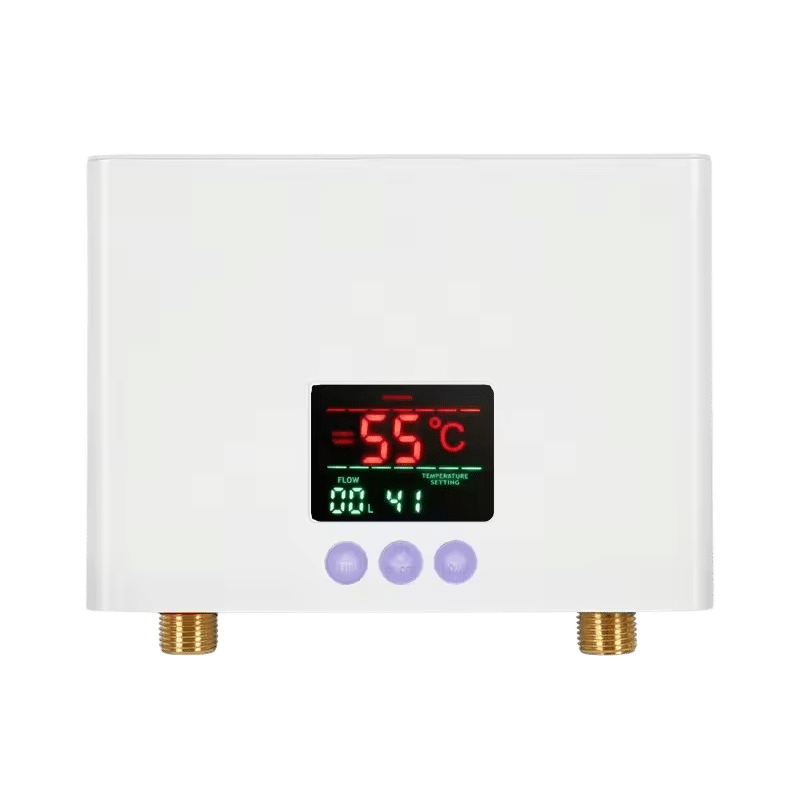
If you are comparing small electric options, HydroSpark is a wall-mounted electric water heater that heats water as it flows through the unit, with no storage tank. The body is 8.3 inches tall, you set the temperature from 30°C (86°F) to 55°C (131°F) on the touch panel or the remote, and it shuts off automatically when water flow stops. Read the included quick-start guide for the water line and power connections, and follow the manual for any cleaning of the water connection.
 In this guideHydroSpark$199.99View
Checks between flushes
Short checks catch trouble before the next descale, and they are part of regular tankless water heater maintenance. Add them to a calendar reminder.
- Wipe the exterior and keep the area around the unit clear of boxes and cleaning supplies.
- Look at the fittings and valves for drips or mineral crust.
- On gas units, clean the air intake or fan area as the manual lists, with the unit off.
- Check that the condensate drain and vent look clear and connected.
- Confirm the temperature setting still matches what your household uses.
Keep a short log of the date, what you did and any odd behavior. A log helps a plumber spot a pattern if a fault appears later.
Can you do it yourself, or call a professional?
Flushing, descaling and cleaning the inlet filter are jobs you can handle with the manual open. Anything involving gas lines, venting, combustion parts, wiring or a sealed electrical compartment belongs to a licensed plumber or electrician. The cost of tankless water heater maintenance by a pro varies by region and unit type, so ask for a quote before you book.
Signs it is time to call
- An error code that returns after you flush and restart
- Hot water that turns lukewarm or swings between hot and cold
- Water flow that drops at the tap after you have cleaned the filter
- Rumbling, popping or clicking noises from the unit
- Leaks, rust marks or white crust at fittings
- A gas smell, soot, a pilot or burner that will not light, or a breaker that keeps tripping
For gas smells or scorch marks, leave the area and contact the gas utility or emergency services first.
Common mistakes to avoid
- Skipping the power shutoff before opening valves
- Using a cleaner the manual does not list, which can damage seals or the heat exchanger
- Forgetting to rinse, so descaling solution reaches the taps
- Leaving isolation valves half open after the flush
- Ignoring hard water until flow drops
- Running the unit again before air is cleared from the line
For more heating and water gear, browse the Heating, Cooling & Water Heating collection.