Water Heater Maintenance for Tankless Electric Units
Water heater maintenance for a tankless electric unit comes down to descaling, flushing and cleaning any inlet screen on a schedule your water hardness sets. Here are the steps and the red flags.
The Cobalt Hollow Team
October 23, 2026 · 7 min read
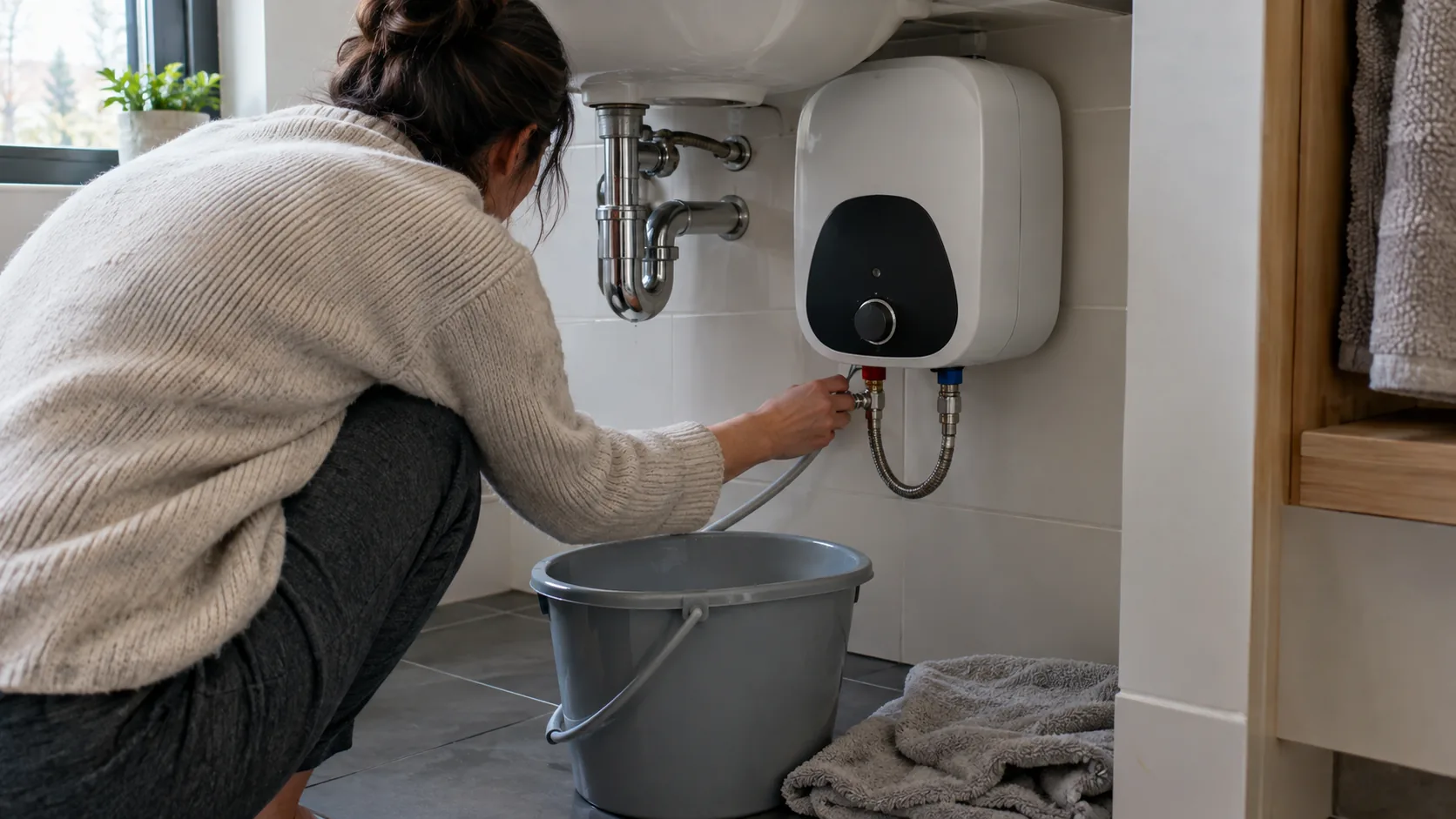
Water heater maintenance for a tankless electric unit means three jobs: descale the heating chamber, flush the lines, and clean any inlet filter screen. Mineral scale is the main wear factor, so the harder your water, the more often you do them. Follow your manual for the exact method, and call a licensed pro for anything involving wiring, leaks, or repeated shutdowns.
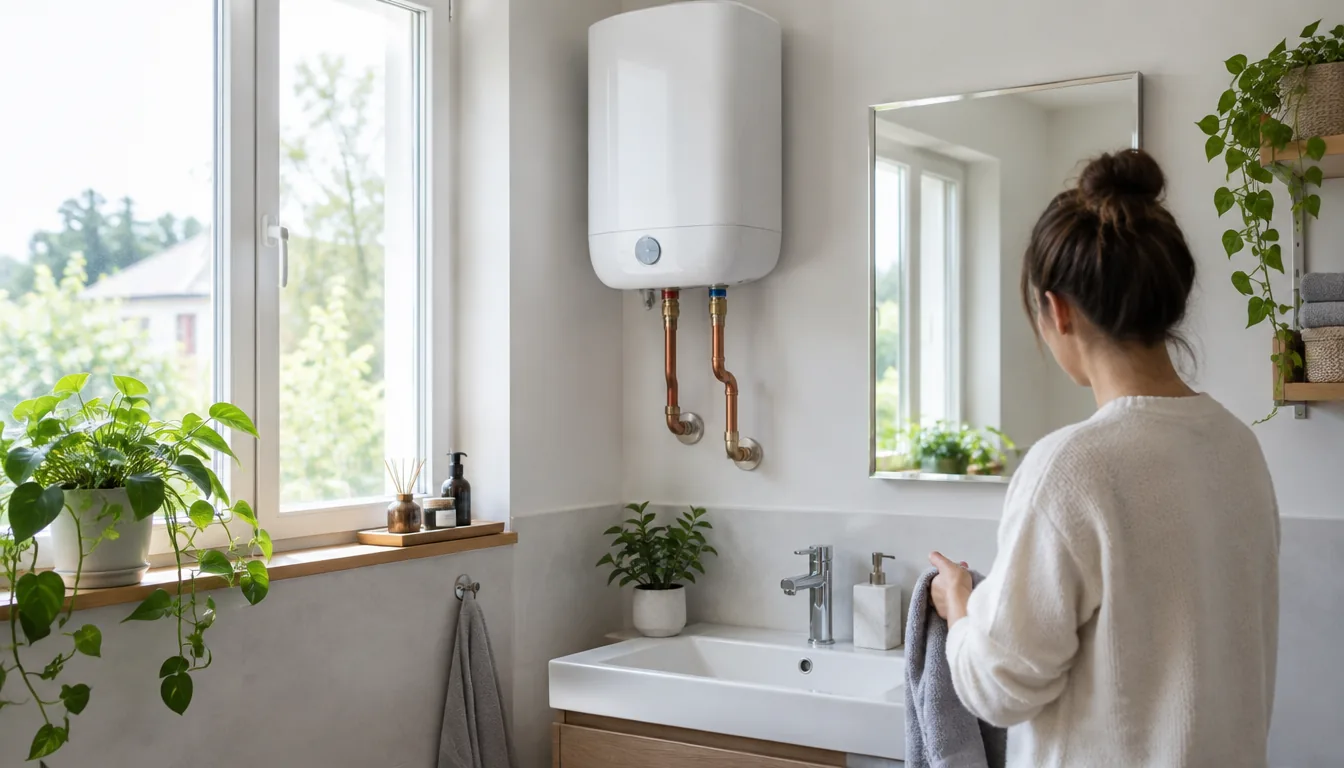
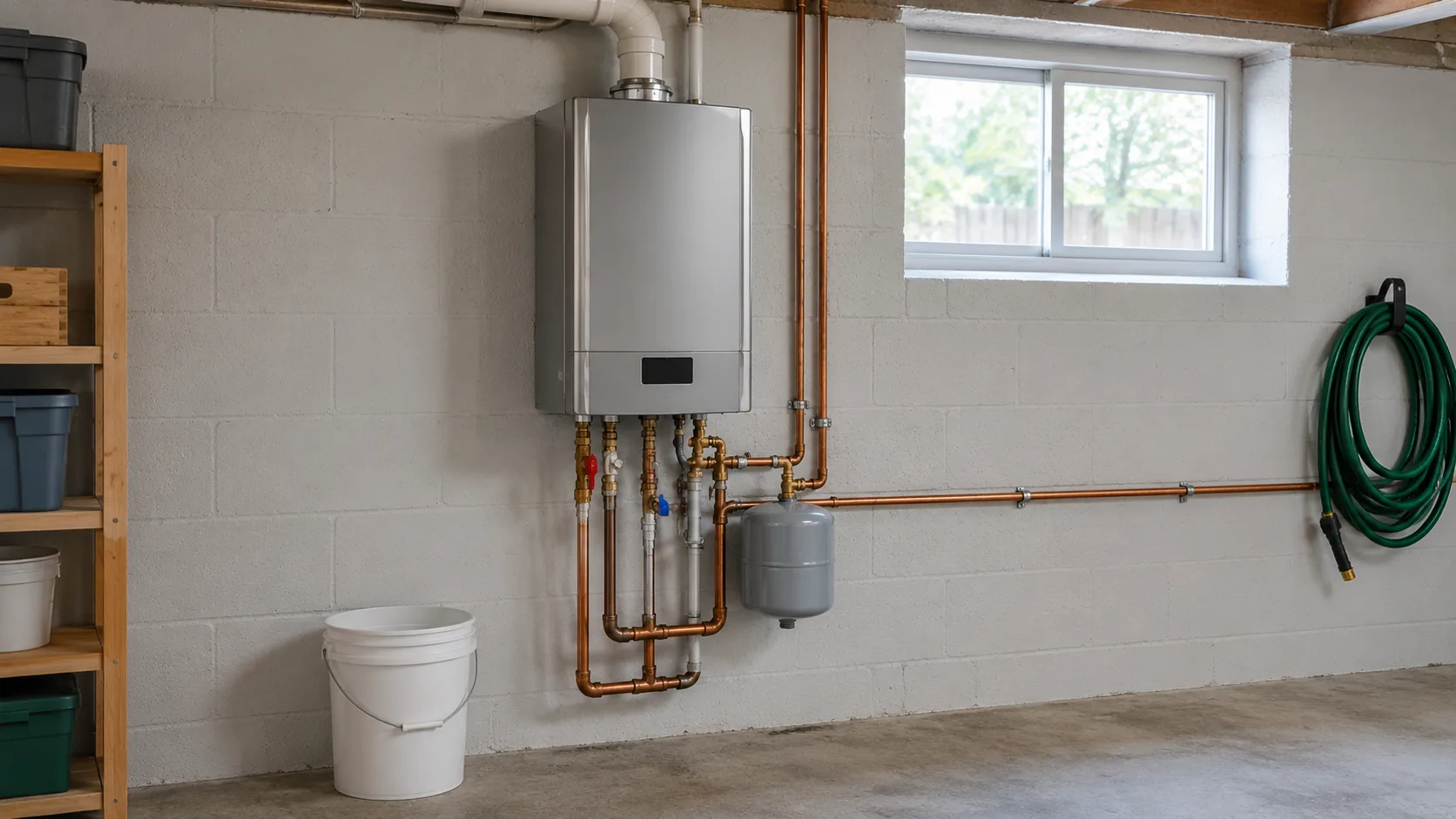
This guide covers point-of-use tankless electric heaters, the small units mounted near a sink or shower. They have no tank to drain, so upkeep looks different from a storage heater, where you would drain sediment from the tank.
Water heater maintenance schedule at a glance
Use this table as a starting point, then replace the intervals with the ones in your manual. Hard water, a white crust on fixtures, or a drop in flow all point toward shorter gaps.
| Task | How often | What you do |
|---|---|---|
| Visual check | Monthly | Look for drips, damp wall, discolored fittings, loose mounting |
| Aerator and showerhead cleaning | Each season | Unscrew, soak, rinse off scale |
| Inlet filter screen | Each season, or sooner if flow drops | Shut off power and water, remove, rinse, refit |
| Descale and flush | Once a year, more often with hard water | Circulate descaling solution, then rinse with clean water |
| Electrical and plumbing inspection | When something changes | Hire a licensed electrician or plumber |
Write the date of each task on a label near the unit or in a phone note. A short log shows when a task is overdue.
Before you touch the unit: power and water off
Every task below starts the same way. Electricity and water share a small space in these heaters, so make the preparation your most careful step.
- Switch off the dedicated breaker, then unplug the unit if it has a plug.
- Close the cold-water inlet valve.
- Open the hot tap to release pressure and let remaining water drain out.
- Wait for the unit to cool before handling internal parts.
- Keep the manual open to the maintenance page and follow it over any general advice.
If you are unsure about any step, ask a licensed electrician or plumber. Do not open sealed electrical compartments yourself.
How to descale and flush a tankless electric heater
Scale forms when heated water leaves dissolved minerals on hot surfaces. In a flow-through heater, that crust builds up inside the heating chamber and on the lines. Descaling is meant to dissolve it so water can move through the unit again.
What you need
- A bucket and two short hoses that fit your fittings
- A small submersible pump
- Descaling solution (the manual lists which kind suits your unit)
- Clean water for rinsing
- A towel and a flashlight
Steps
- Complete the power and water shutdown above.
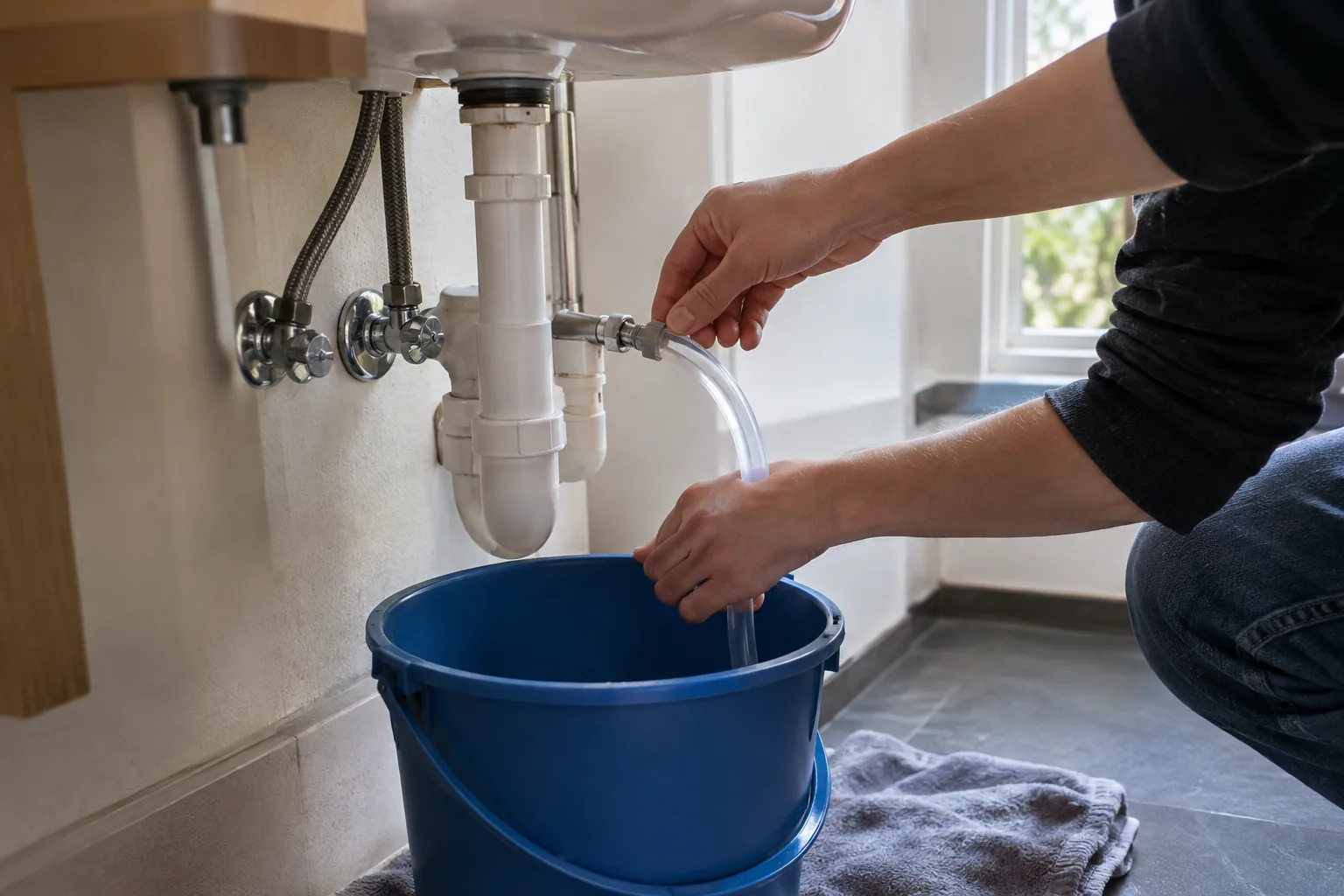
- If your unit has service ports or removable fittings, connect one hose to the inlet side and one to the outlet side as the manual shows. If it has none, ask a plumber to fit them rather than forcing connections.
- Place the pump in a bucket of descaling solution and circulate it through the unit for the time the manual lists.
- Drain the solution into a bucket and dispose of it as the label directs.
- Flush with clean water until the discharge runs clear and has no sour smell.
- Reconnect the lines, check each joint, and open the inlet valve.
- Open the hot tap and let water run steadily to push out air. Only then restore power.
Running a heating element without water flowing through it can damage it, so do not skip the purge in the last step. After power returns, watch the first use for drips or error codes.
Clean the inlet filter and the fixtures
Some heaters include a small mesh screen where water enters. Check the manual to learn whether yours does and how to reach it. If it has one, shut off power and water, pull the screen, and rinse it under a tap. A soft brush loosens grit, and a soak in descaling solution loosens scale.
Refit the screen exactly as it came out, with the seal in place. A pinched or missing seal can cause drips after maintenance.
Faucet aerators and showerheads collect the same minerals. If the water pressure seems low, clogged aerators are a first thing to check. Unscrew them, soak them, and rinse before you blame the heater.
Why scale changes performance: water heat capacity and flow
Water takes a fixed amount of energy to rise one degree. That is the heating capacity of water, and it is why flow rate and the temperature rise you want decide whether a small heater keeps up. A unit has only so much power to hand to each moving liter, so more flow means a smaller rise.
Scale gets in the way of this exchange. A crusted chamber or a clogged screen can restrict flow and leave heat transfer uneven. You may notice lukewarm water, fluctuating temperature, or a unit that shuts off sooner than before.
The same logic explains seasonal changes. Colder incoming water needs a bigger rise to reach the same target. If the heater struggled in winter but not summer, check the target setting and the flow before assuming a fault. A city water utility's guide to water heater maintenance and water quality covers general upkeep of this kind.
Signs you should call a pro instead of repairing it
Descaling and filter cleaning are owner jobs. Fault finding inside the unit is not. Call a licensed electrician or plumber if you see any of the following.
- The breaker trips when the heater starts, or trips again after you reset it
- A burning smell, scorch marks, or melted insulation near the unit or its cable
- Water on the floor or wall that returns after you tighten a fitting
- Corrosion or green-white crust at a pipe joint
- A persistent error code that clears only briefly
- No heat even though water flows and the settings are right
- Cold water only after you have cleaned the screen and descaled
For cost questions, there is no single figure. What you pay depends on wiring, pipe access, the wall, local codes and permits, and whether a repair or replacement fits your unit.
Field note
Before booking a repair visit, note the date of your last descale, the error code on the display, and whether the flow at the tap is steady. A pro can work from those details.
Repair or replace, and what installation involves
A heater that responds to descaling and a clean screen is worth keeping. Repeated electrical faults, leaks from the body, or a unit that no longer matches the demand at the tap are reasons to look at replacing it. Compare repair quotes with a new unit, and ask whether wiring changes are needed.
Water heater installation for a small electric unit covers four things: a solid wall, a water line, a power supply sized to the unit's rating, and clear access for later service. Leave electrical connections to a licensed electrician, and place the unit where you can reach the valves.
If you want a compact option for a bathroom, kitchen or apartment, HydroSpark is a wall-mounted electric water heater, 8.3 inches tall, that heats water as it flows with no storage tank. You set a target between 30°C and 55°C (about 86°F to 131°F) on the touch panel or the remote, and it shuts off automatically when flow stops. The box includes the heater, a remote control, wall-mount hardware and a quick-start guide. You can browse similar units in the Heating, Cooling & Water Heating collection.
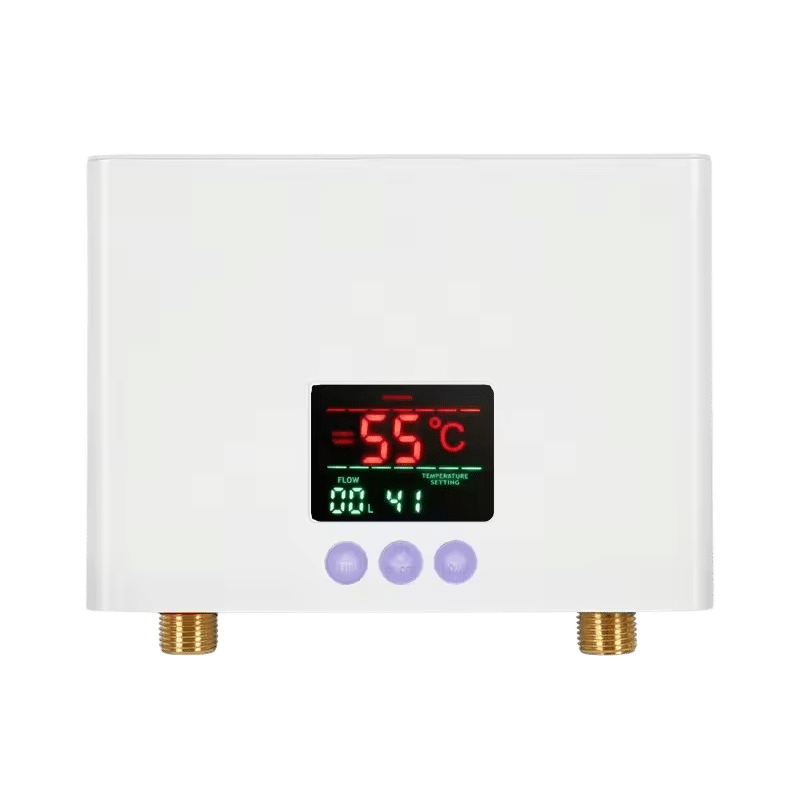 In this guideHydroSpark$199.99View
Common maintenance mistakes
- Restoring power before air is purged from the lines
- Using a descaler the manual does not list, which can harm seals and internal parts
- Skipping the rinse, which leaves solution in the pipes
- Forcing a stuck fitting instead of asking a plumber
- Ignoring a small drip until it damages the wall
- Resetting a tripping breaker over and over
Keep the manual and a short log next to the unit. For general home water upkeep, a federal water-efficiency program's home maintenance page lists leak checks you can add to the same routine.