Good Filter Shower Head: Cartridge Types, Fit and Schedule
A good filter shower head threads onto a standard arm, uses a cartridge you can swap, and lists its media and flow on the product page. Use this checklist to compare options.
The Cobalt Hollow Team
November 25, 2026 · 7 min read

A good filter shower head threads onto a standard shower arm by hand, holds a cartridge you can replace, and states its filter media and flow on the product page. Judge it on five points: media type, thread fit, flow, cartridge cost per year and a clear replacement interval. This guide walks through each one so you can compare heads without guessing.
It stays on the hardware: what is inside the cartridge, how the head connects, and how to tell when a cartridge is spent. It makes no claims about skin or hair.
The checklist for a good filter shower head
Print or copy this list before you compare models. Each line below is something you can read on a product page or check in the box.
- Filter media named on the page, not just "multi-stage".
- Standard shower arm connection that tightens by hand.
- Cartridge that swaps out of the body without replacing the whole head.
- Flow rate in gallons per minute stated by the maker.
- Replacement interval stated in the manual.
- Spare cartridges priced or included, so yearly cost can be worked out.
- Spray face you can wipe or rinse during cleaning.
If a page leaves out the media or the interval, ask the seller to fill the gap before you buy.
Filter media types and what to look for
The filter media is the material inside the cartridge that the water passes through. Shower cartridges commonly use one or more layers, and the layers differ by head. The product page should name them.
| Media layer | What it is | What to check |
|---|---|---|
| Activated carbon | Porous carbon granules or block | Whether the page says what it is meant to filter |
| Calcium sulfite | Mineral granules used as a layer | Where it sits in the stack and the stated interval |
| Metal-alloy granules | Mixed metal media in some cartridges | Whether the cartridge is replaceable |
| Mesh or sediment screen | Fine screen at the inlet | Whether you can rinse or replace it |
| Multi-stage stack | Several layers in one cartridge | The list of layers, not just the stage count |
Filtering is not softening
A shower filter and a water softener do different jobs. If hard water is your concern, a shower cartridge is not a softener unless its product page says so. For whole-house options and ways to read your water, browse the water softener and water-quality collection.
Thread fit: will it go on your shower arm?
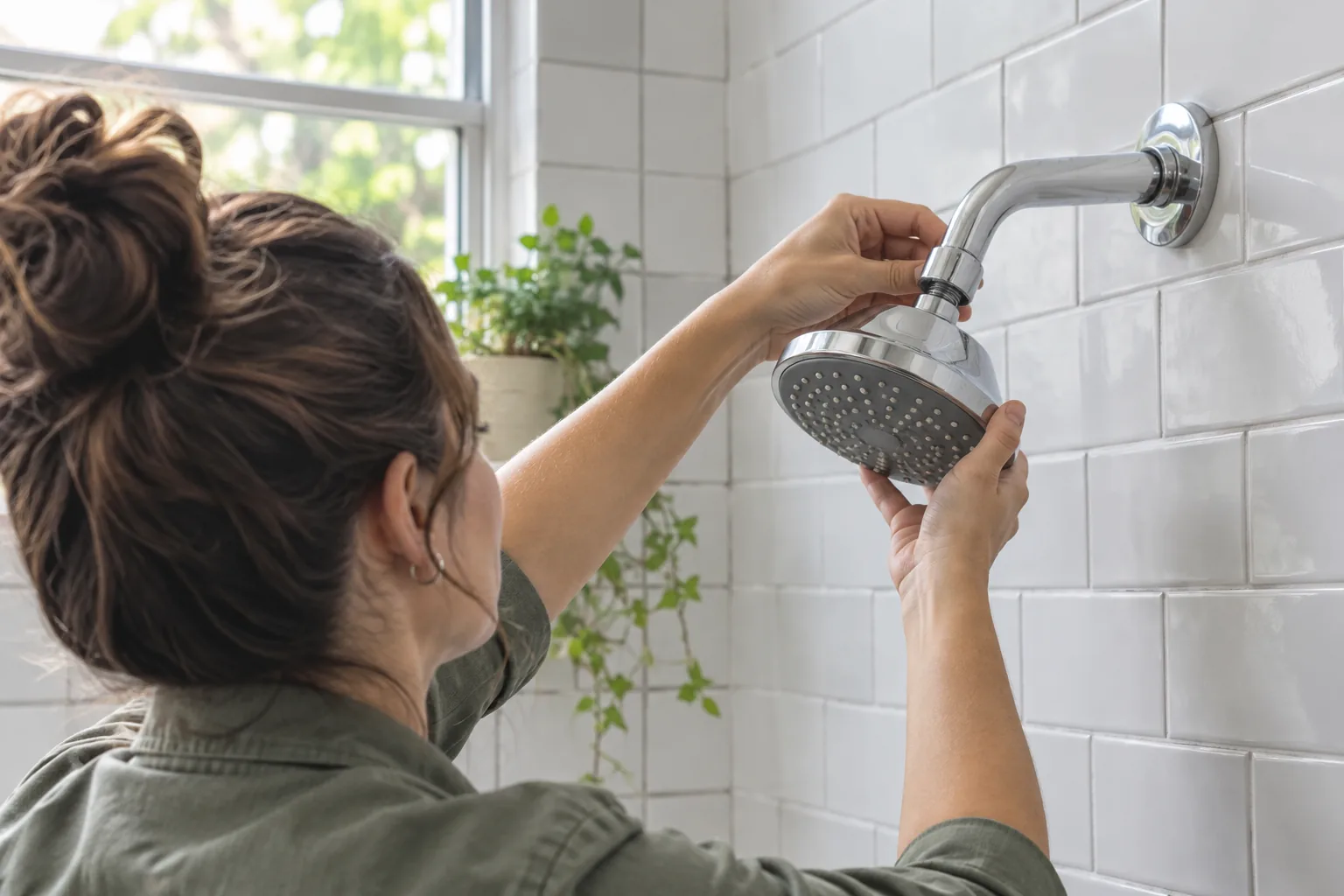
Standard shower arms have a threaded end, and some filtered heads are built to match it. Thread fit is the first physical check, because a head that does not seat cannot be sealed. Look for wording such as "fits standard shower arms" and "hand-tightens" on the page.
Fitting steps
- Unscrew the current head from the arm by hand. Turn it counterclockwise.
- Look at the arm threads and the washer inside the old head. Follow the manual for any washer or tape the new head asks for.
- Thread the new head onto the arm and hand-tighten it. No tools are needed for a head that is built for hand fitting.
- Run the water and look at the joint for drips. If water seeps at the connection, shut the water off and re-seat the head. If it persists, ask a licensed plumber.
Flow rate and spray pattern
A cartridge adds resistance, so flow rate deserves a look. Check the maker's stated gallons per minute, and check whether the face is a micro-nozzle design or a wide rain-style spray. A fine, even spray pattern spreads the water across many small openings.
Your home's water pressure also shapes the flow from any head, so compare the new head against the old one on the same day. If the flow drops sharply after fitting, check that the cartridge is seated and that any packing material was removed, then follow the manual.
Handheld models add a hose connection, which is another joint to check for drips. If you want a handheld, confirm the page lists the filter inside the handle or the body, and how the hose attaches.
Cartridge cost per year
The head is a one-time purchase. The cartridge cost repeats, so it is the number to compare. Work it out with the maker's interval, not a guess.
| Step | What to do |
|---|---|
| 1 | Find the replacement interval in the manual, in weeks or months. |
| 2 | Count how many of those intervals fit in one year to get cartridges per year. |
| 3 | Multiply by the price of one replacement cartridge. |
| 4 | Add the head's price once to get a first-year total. |
| 5 | Compare totals across models, using the same interval basis. |
Spares in the box change the first-year math. A kit that includes spare cartridges covers part of the schedule before you buy more. Check whether the replacement cartridges are sold separately and whether they fit only that head.
Field note
Write the install date on a piece of tape and stick it inside the bathroom cabinet. When the manual's interval comes around, the date is already there.
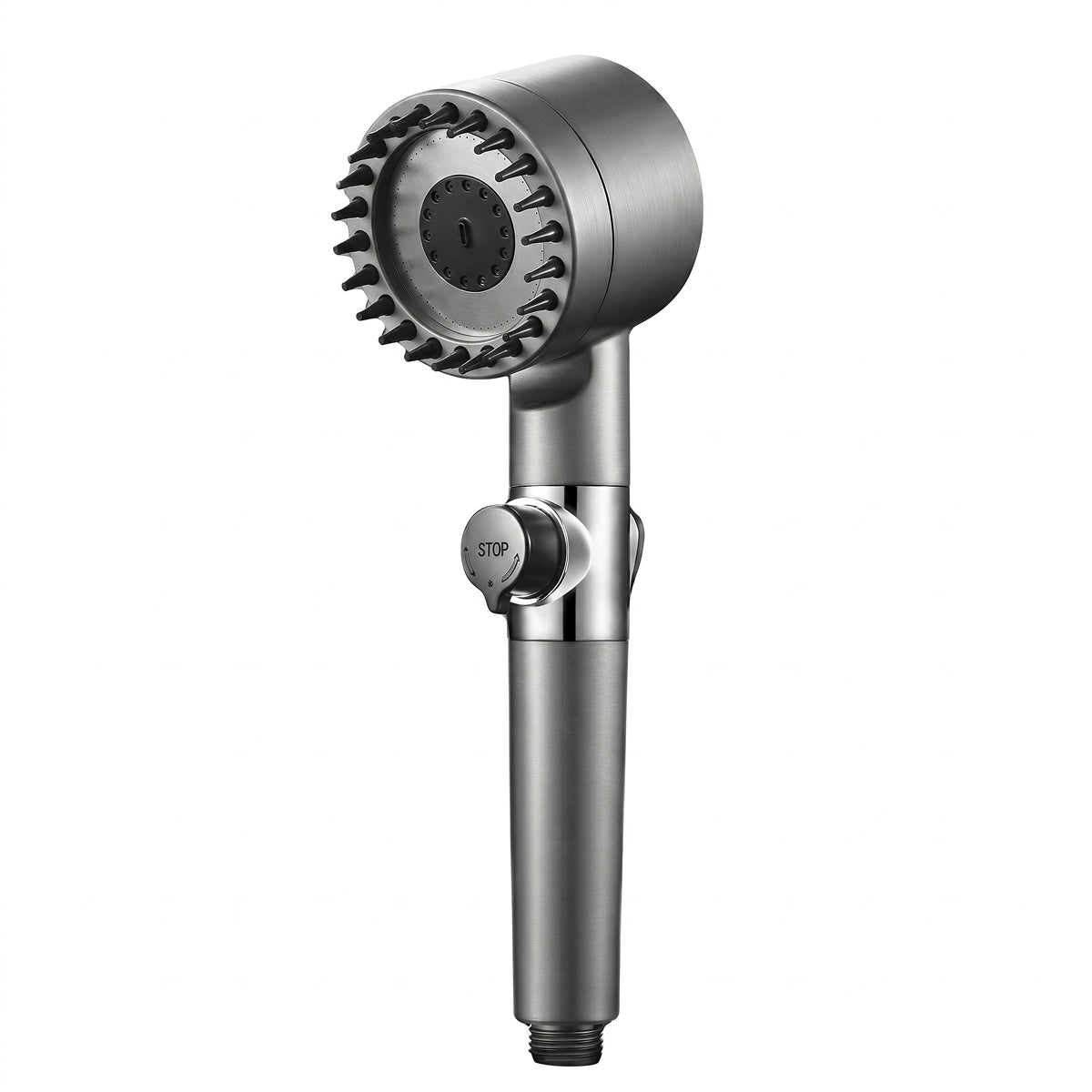
A filtered head with spare cartridges: VivaBloom
VivaBloom is a filtered shower head that replaces the fixed head on a standard shower arm. A multi-stage filter cartridge sits inside the body, and a micro-nozzle face sprays the water in a fine, even pattern. It hand-tightens onto the arm, so no plumber is needed to fit it.
The cartridge swaps out of the body as a separate piece. Five replacement filter cartridges are in the box, which gives you a built-in supply for the schedule you work out above. The box holds one VivaBloom Filtered Shower Head and those five cartridges.
 In this guideVivaBloom$59.99View
How to tell a cartridge is spent and when to replace it
The manual's interval is the starting point for your replacement schedule. Use the signs below as prompts to check the cartridge sooner, and follow the manual for what to do next.
| Sign | What to check |
|---|---|
| Flow looks weaker than at install | Seating of the cartridge, clogged face, then cartridge age |
| Spray looks uneven or sputters | Mineral buildup on the nozzles, then cartridge age |
| The interval date has passed | Swap the cartridge, even if the spray looks normal |
| Visible debris or discoloration on the face | Rinse the face, then check the cartridge |
| Cartridge looks waterlogged or crumbly when removed | Replace it with a spare |
Swap steps
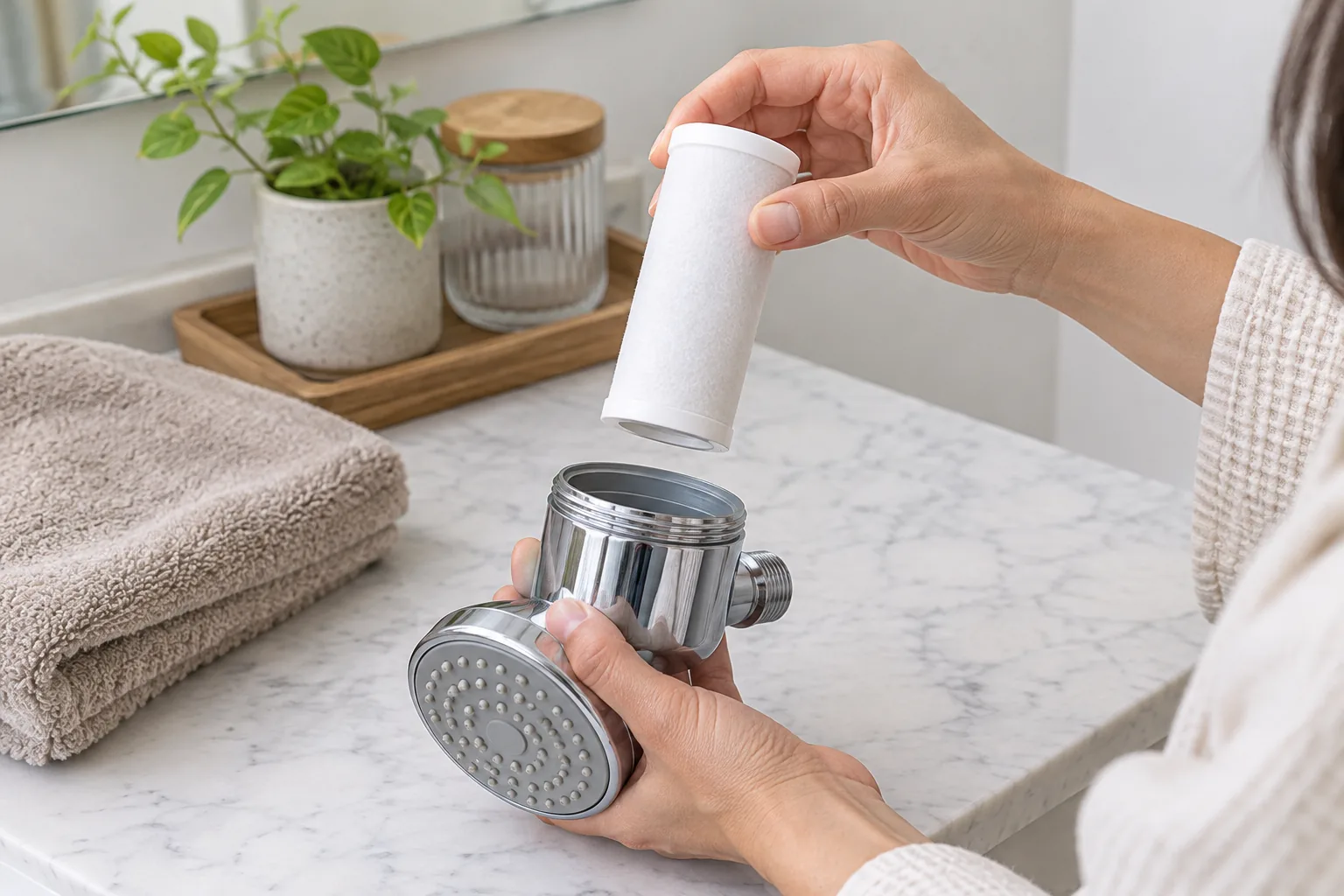
- Shut off the shower and let the head drain.
- Open the head body as the manual describes and lift out the old cartridge.
- Seat the new cartridge in the same orientation, then close the body.
- Run the water and check the joints for drips.
- Update the date on your reminder.
Read your water before you pick a cartridge
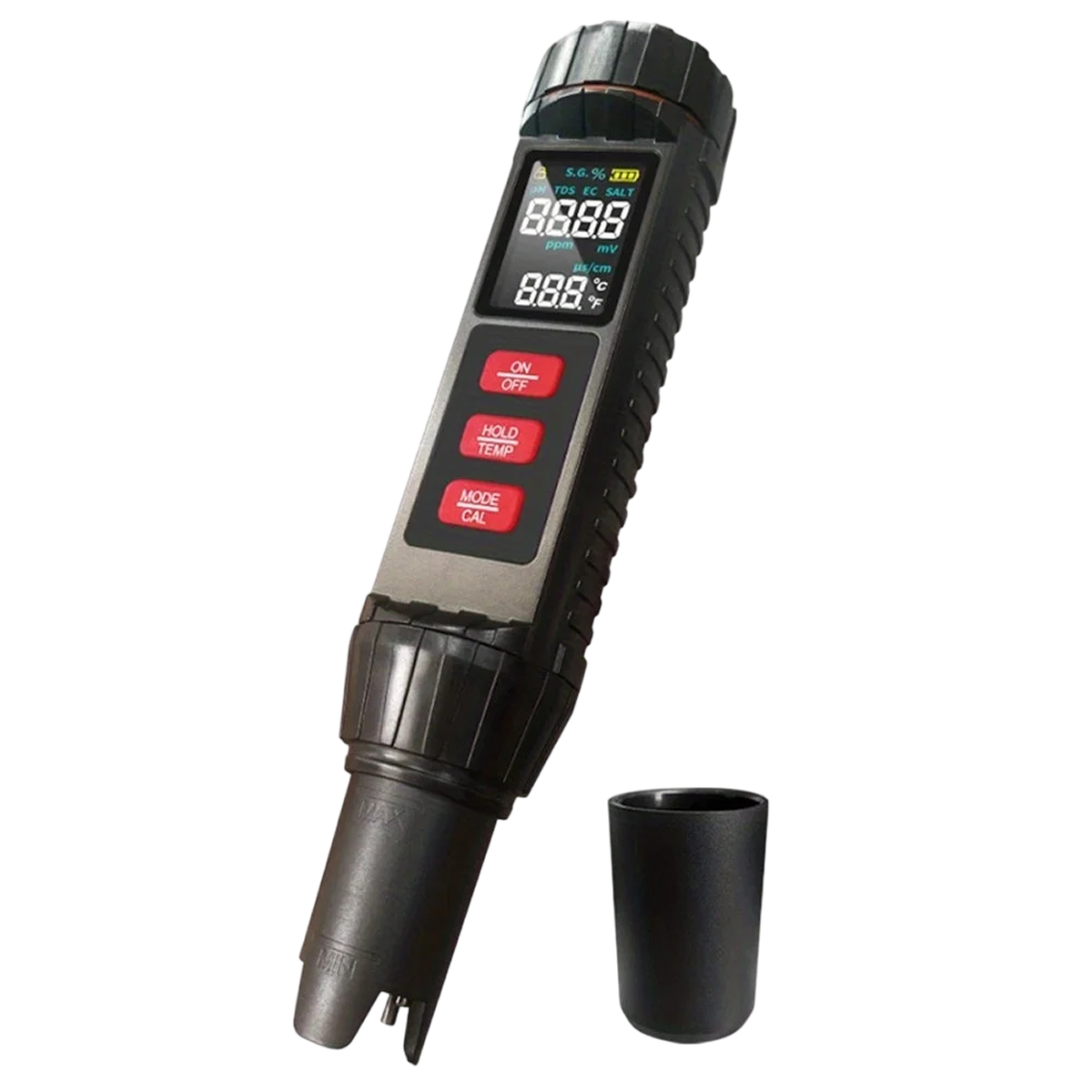
Your water source shapes what you want from a filter, so a baseline reading helps. CrystalGauge is a handheld digital reader that shows pH, TDS, EC, salinity, specific gravity and temperature on a backlit screen. You dip the probe into a tap water sample and read the display. A one-tap hold freezes the reading so you can write it down.
TDS and EC describe dissolved solids in the sample. They do not identify chlorine or chloramine, so use the readings as a record, not as a verdict on a cartridge. Check the user manual and calibration guide in the box for setup.
 In this guideCrystalGauge$79.99View
Common mistakes when buying a filter shower head
- Buying on the head's price alone and skipping the cartridge cost per year.
- Assuming the filter softens hard water when the page lists no softening media.
- Ignoring the replacement interval because the spray still looks fine.
- Over-tightening with a wrench on a head built for hand fitting.
- Leaving packing material or caps on a new cartridge.
- Skipping the drip check at the arm after install.
Drips from a joint are also worth a look with a sensor placed nearby. The article on water leak detector types and placement explains where to put one.
A good filter shower head is one you can fit yourself, feed with cartridges you can keep stocking, and maintain on a schedule you can write down. Use the checklist at the top, work out the yearly cost, and keep the install date where you can see it.