Kitchen Faucets With Sprayers: Pull-Down, Pull-Out or Side Spray
Pick the sprayer style by sink depth, spout reach and hose length. This guide compares pull-down, pull-out and side spray, then fixes water coming out of the sprayer.
The Cobalt Hollow Team
November 24, 2026 · 7 min read

Kitchen faucets with sprayers come in three styles: pull-down, pull-out and side spray. A pull-down suits a deep sink or tall pots, a pull-out suits a shallow sink or a low window, and a side spray is a separate nozzle that sits beside a standard spout. Match the style to your sink depth, the spout reach and the hose length, and the rest is finish and looks.
This guide gives you a decision table, a short checklist for measuring your sink, and a fix for the common problem of water coming out of the sprayer instead of the spout.
Pull-down, pull-out and side spray compared
All three put a spray head within reach of the sink. The difference is where the hose lives and how the head returns to its spot.
| Style | How it works | A good fit for | Watch for |
|---|---|---|---|
| Pull-down | Spray head is part of a tall spout and pulls down toward the basin | Deep sinks, large pots, rinsing corners | Needs open space above the spout for the arc |
| Pull-out | Spray head pulls straight out toward you | Shallow sinks, low windows, bar sinks | A lower spout may not clear tall pots |
| Side spray | Separate nozzle on its own hose, set in an extra mounting hole | Sinks with several pre-drilled holes, a classic look | Needs a spare hole or a deck plate that covers it |
A pull-down head is pulled down into the basin from a high arc, while a pull-out head is pulled toward you from a lower spout. A side spray is a separate nozzle on the deck, and the main spout stays fixed.

How to choose kitchen faucets with sprayers
Work through these steps in order. Each one narrows the list before you look at a single finish.
1. Measure sink depth and basin width
Measure from the counter surface down to the sink bottom. A deep sink pairs well with a pull-down or high-arc spout, because the hose can reach the corners. A shallow sink or a wide single bowl is a good fit for a pull-out with a lower arc.
2. Check spout reach and height
Reach is the distance from the faucet base to where the water lands. The stream should fall near the center of the basin or the drain, not on the back edge. Height matters for filling a tall pot or a pitcher, and a window sill behind the sink may cap the arc.
3. Plan the hose length
Measure from the base of the spout to the farthest corner of the sink, then check the hose length on the product page. A hose that reaches the far corner and snaps back without sagging is the goal. A docking weight or a magnetic dock is what returns the head to its spot, so check which one the model uses.
4. Count your mounting holes
Look under the sink and at the counter. A single hole fits a single-handle faucet. Two or more holes fit a side spray or a double-handle faucet, and a deck plate can cover extra holes you do not use.
5. Pick the handle and the finish
A single-handle faucet controls flow and temperature with one lever. A touch sensor adds a way to start and stop water with a tap. Finish is the last choice: brushed nickel, matte black and stainless steel all suit different kitchen styles.
| Your sink or kitchen | Sprayer style to look at | Check before buying |
|---|---|---|
| Deep single bowl, no window | High-arc pull-down | Overhead clearance for the arc |
| Shallow sink under a low window | Pull-out | Spout height against the sill |
| Farmhouse apron sink | Pull-down with a tall spout | Deep basin reach |
| Sink with three or four holes | Side spray with a standard spout | Hole spacing and a deck plate |
| Bar or prep sink | Compact pull-out | Hose length and spout reach |
Finish and style: choosing the coolest kitchen faucets
If you want the coolest kitchen faucets for a modern room, look at clean lines, a matte or brushed finish and a sprayer that docks flush with the spout. A stainless steel body fits many kitchen styles and keeps a plain look next to appliances. Match the finish to your cabinet hardware, not to the sink, and the room looks planned.
A pull-down faucet from our store
For a deep or wide sink, NovaTap is a pull-down kitchen faucet with a touch sensor and a manual lever. The body is SUS304-grade stainless steel, a corrosion-resistant metal. Quick-connect hoses join it to the supply lines, and the pull-down hose reaches into the corners of the sink, then snaps back into place after rinsing.
You can switch between spray patterns for rinsing produce or filling a large pot. The touch sensor starts and stops water without gripping the handles, which is useful when your hands are messy. Browse more in the Sink Fixtures & Accessories collection.
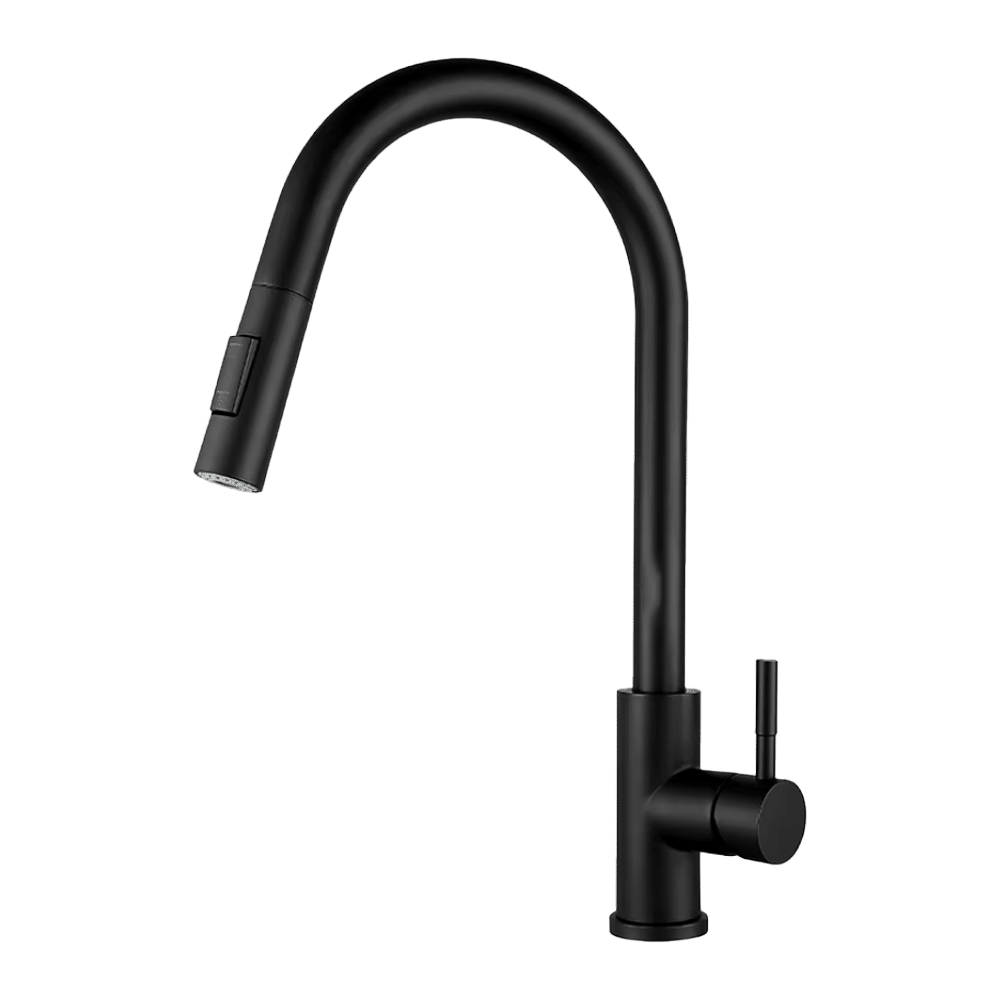 In this guideNovaTap$179.99View
Setup checklist before you install
- Clear the cabinet under the sink and set a bucket and towel below the supply lines.
- Shut off both supply valves, then open the old faucet to release pressure.
- Check the new faucet against your hole count and deck thickness.
- Check the clearance around a garbage disposal or other items under the sink.
- Follow the manual for mounting, and join the quick-connect hoses to the supply lines as it describes.
- Open the valves slowly and look for drips at every connection.
- Run the sprayer and the spout, and confirm the head returns to its spot.
If your sink has a disposal that is acting up or the supply lines are corroded, ask a licensed plumber to do the job; the garbage disposal troubleshooting guide covers resets and when to replace one. Installation costs vary by region and by the work needed, so ask for a written quote. A leak sensor under the sink adds a warning if a connection loosens later; see what a water leak detector is and where to place it.
Field note
Lay a tape measure along the sink before you shop: note the depth, the distance from the faucet hole to the far corner and the clearance under any window or cabinet. Those three numbers answer the spout and hose questions.
Water comes out of the sprayer instead of the spout
When water shoots from the sprayer while the spout is on, the diverter is usually stuck or blocked. The diverter is the small valve that sends water either to the spout or to the spray head. Work through these checks in order, and turn off the supply valves before taking anything apart.
| Check | What to look for | What to do |
|---|---|---|
| Spray button | Button stuck in the spray position | Press it a few times and switch back to stream mode |
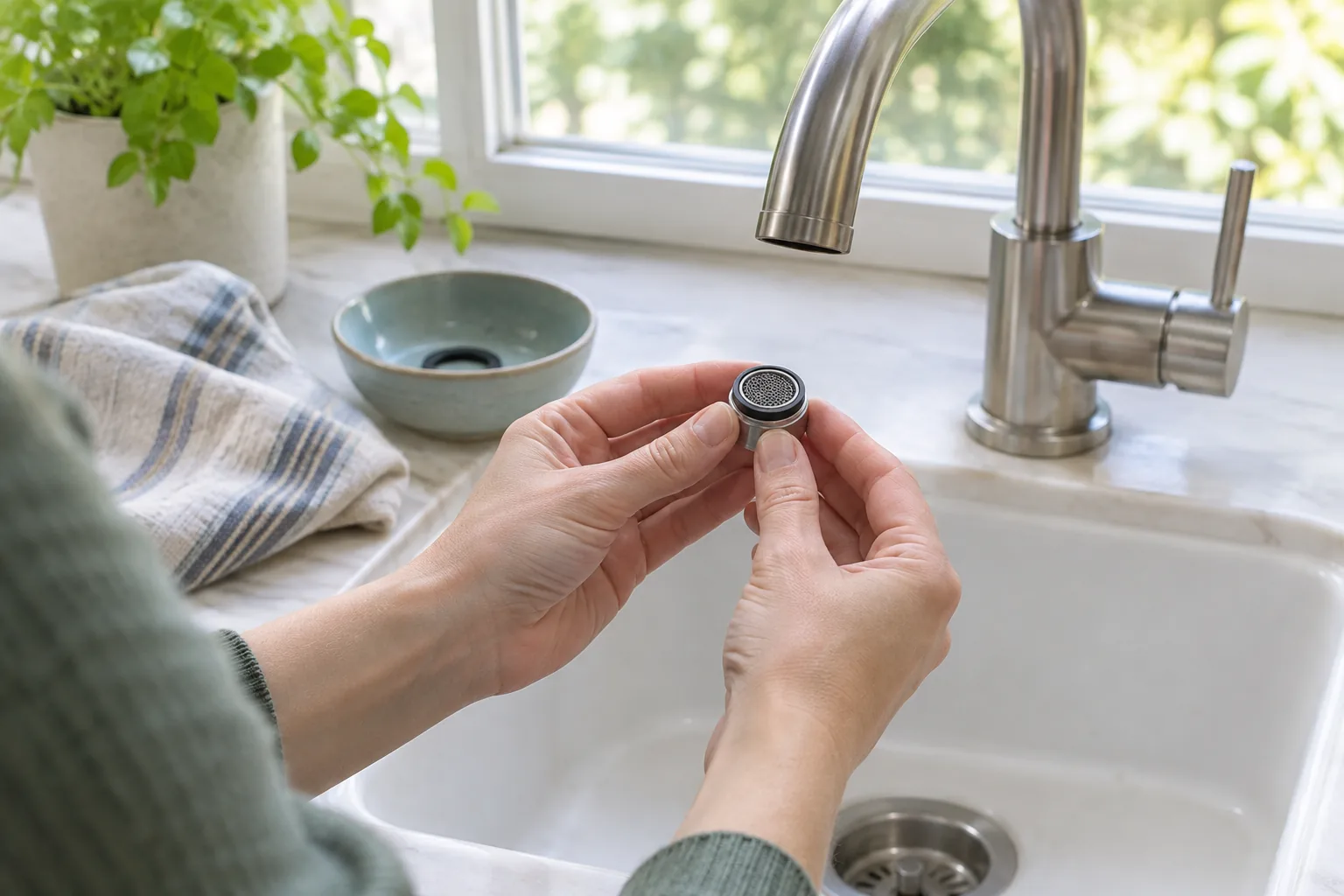
| Aerator | Mineral buildup on the spout tip | Unscrew, rinse and clear the screen, then reattach |
| Diverter | Buildup in the valve: in the spout base on side-spray models, or in the spray head or valve on pull-down and pull-out models | Check the manual, then clean or replace it as it describes |
On a side spray, the cause is often a worn diverter valve or buildup in the spout base. On pull-down and pull-out models, the switch between spray and stream may sit in the spray head or in a valve, so check the manual for your model. To loosen mineral deposits on the aerator, soak it in white vinegar, then rinse it well before putting it back.
Also look at the general flow. A kinked or twisted hose under the sink cuts the flow to the sprayer, so straighten it and keep it free of the supply lines. A head that is not fully docked can leave a gap at the spout, so let it return until it seats.
Follow the manual for your model, and turn off the supply valves first. If the spout will not come off, if you see leaks at the base, or if the problem returns after cleaning, ask a licensed plumber to look at it.
Common mistakes when buying a sprayer faucet
- Buying a high-arc spout for a sink under a low window or shelf.
- Skipping the hole count and finding out the base does not cover the old holes.
- Ignoring hose length, so the head cannot reach the far corner of a wide sink.
- Choosing a finish first and the sprayer style last.
- Skipping the check of clearance around the disposal and supply lines under the sink before installing.
Choose the style from the sink, check reach and hose length, and match the finish last. With that order, kitchen faucets with sprayers become a short decision rather than a long comparison.