What Is a Cocktail Shaker? Boston, Cobbler and French Types
A cocktail shaker is a lidded container that chills and mixes drinks with ice. Here are the three types, how to shake and strain, and how to choose one.
The Cobalt Hollow Team
November 23, 2026 · 7 min read

A cocktail shaker is a lidded container, usually stainless steel, that you fill with ice and ingredients and shake to chill, mix and dilute a drink. It also separates the liquid from the ice when you pour. The three main types are the Boston, cobbler and French shaker, and the right one depends on how often you shake and how many tools you want to hold at the counter.
What is a cocktail shaker used for?
The main purpose of a shaker is to combine ingredients that do not blend by stirring alone, such as citrus juice, syrup, egg white or cream, while cooling them against ice. Shaking adds controlled dilution as the ice melts slightly, which softens the alcohol and rounds out the flavor.
It helps to know what a cocktail is: a mixed drink built from a spirit plus modifiers such as juice, sweetener, bitters or liqueur. Drinks that contain juice, dairy or egg are usually shaken. Drinks made only of spirits, like a martini or old fashioned, are usually stirred in a mixing glass.
What a shaker is made of
Shakers are often stainless steel, which is easy to rinse and does not hold flavors. Some bar tools pair a steel tin with a glass mixing vessel. Every design has the same job: a sealed space for ice and liquid, and a way to pour without the ice.
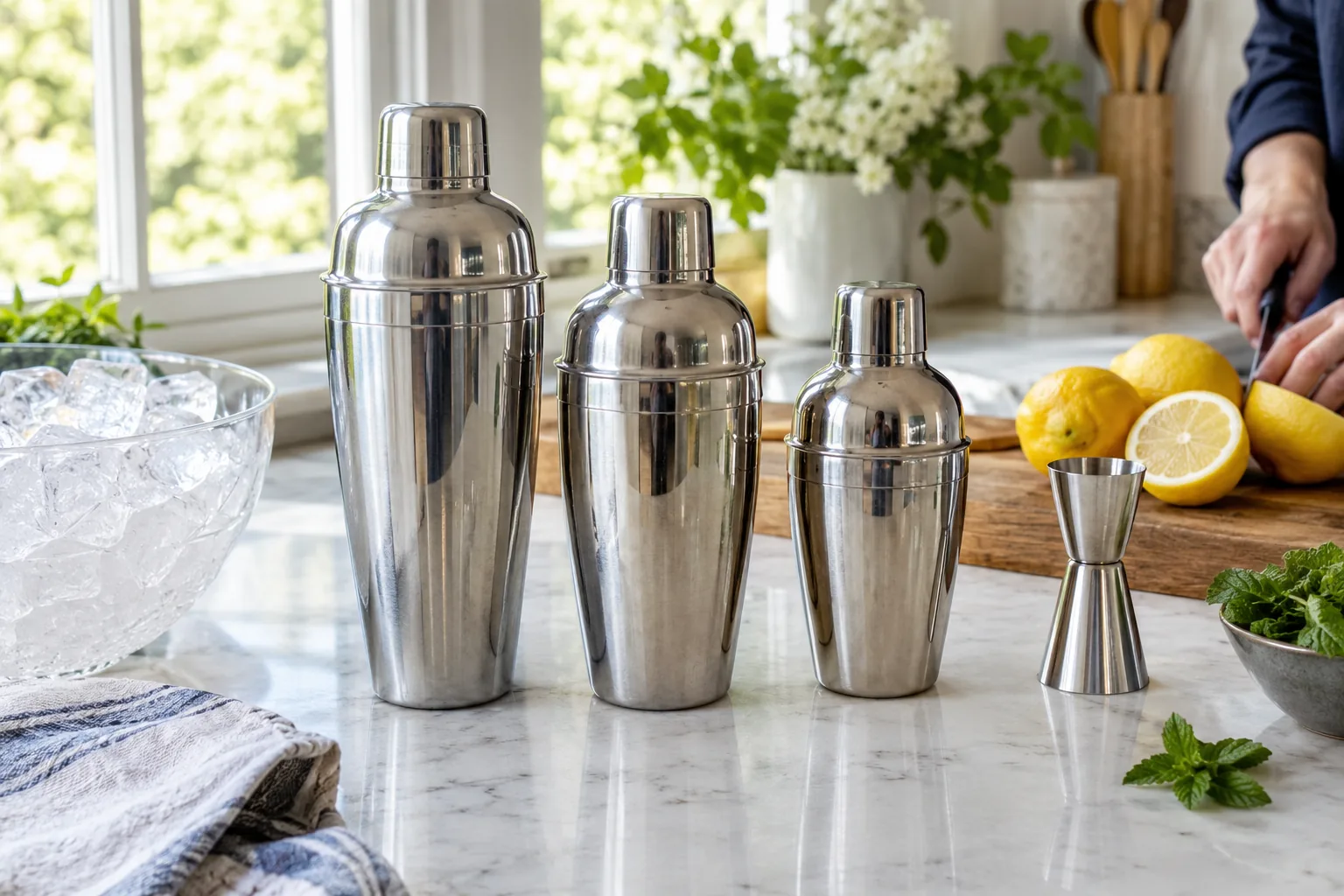
The three types of cocktail shakers compared
Each type seals differently, strains differently and suits a different habit. Use the table to match one to how you make drinks.
| Type | Parts | Strainer | Works well for | Watch out for |
|---|---|---|---|---|
| Boston | Two tins, or one tin and one glass | Separate strainer needed | Frequent shaking, larger batches, taking apart to clean | Takes practice to seal and break apart |
| Cobbler | Body, built-in strainer, cap | Built in | Beginners and occasional use | Lid can stick when cold; small strainer holes can clog with pulp |
| French | Two pieces, one fits into the other | Separate strainer needed | A slim, tidy look on the bar cart | Fit can bind when cold; no built-in strainer |
Boston shaker
The Boston shaker is two pieces that nest together: a larger tin and a smaller tin or glass. You pour ingredients into one, add ice, and seal them with a firm tap. Because there is no built-in strainer, you pour through a separate hawthorne or fine strainer.
Bartenders use it for the roomy interior and the way it comes apart for cleaning. The trade-off is technique: you need to seal it correctly and learn where to tap to release it.
Cobbler shaker
The cobbler shaker has three parts: a body, a lid with a built-in strainer, and a small cap over the strainer. You fill the body, press on the lid, shake, remove the cap and pour. Everything is in one tool, so a cobbler suits a first home bar.
French shaker
The French shaker has two metal pieces with no separate lid. The top piece sits inside the base. It is slim and works like a Boston, so you also need a separate strainer. Metal contracts when cold, so run warm water over the join if it sticks.
How to choose a good cocktail shaker
A good cocktail shaker seals without leaking, opens when you want it to and holds the amount you usually make. Work through these steps before you buy.
- Decide how many drinks you make at once. One or two servings suit a small body; a group needs a larger capacity.
- Choose whether you want a built-in strainer or are happy to hold a separate one.
- Check the material. Stainless steel can be rinsed and dried right after use.
- Look at the cap or lid. It should lock or seat firmly, since a loose seal leaks mid-shake.
- Confirm that it comes apart without tools, and that you can reach inside to clean it.
If you are comparing a shaker set cocktail kit against a single tool, check what is in the box. Some sets add a jigger, spoon or strainer; others are the shaker alone.
A set with a locking cap and built-in strainer
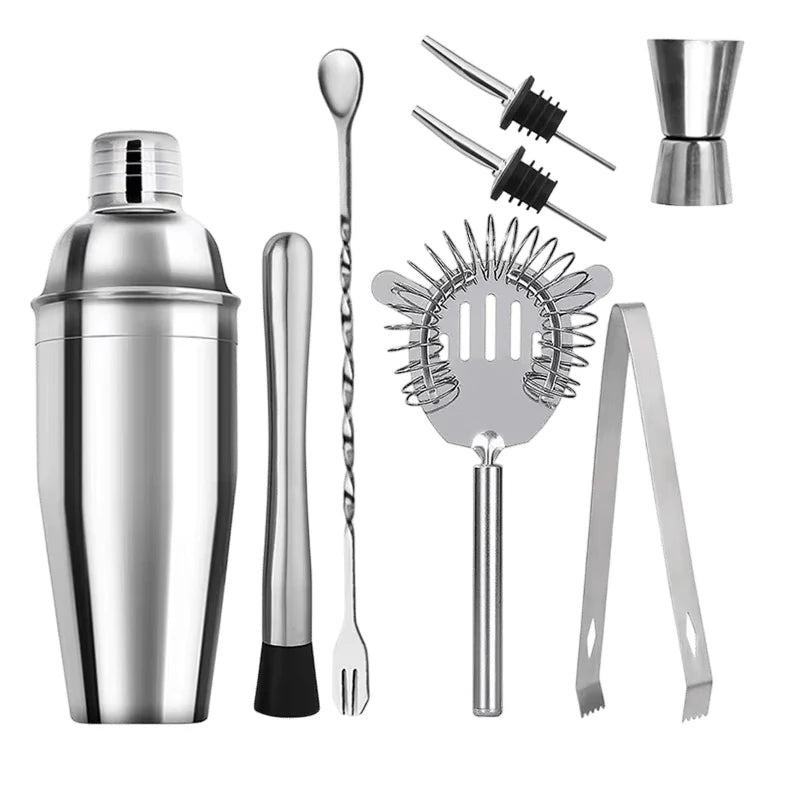
For a one-piece setup, PourCraft is a cocktail shaker set with a 24oz body, a cap and an integrated strainer. The cap locks onto the body before you shake, so ingredients stay inside, and ice and fruit pulp are caught as you pour. The 24oz body has room for a single serving or a larger batch, such as martinis or margaritas for a group. The box includes the shaker with integrated strainer, the cap and a quick-start mixing guide.
 In this guidePourCraft$59.99View
How to shake and strain a cocktail
The steps are the same for every type. Only the sealing and straining details change.
- Chill your serving glass with ice and water, or place it in the freezer, while you build the drink.
- Add the liquid ingredients to the shaker first, then fill it about two-thirds with fresh ice.
- Seal the shaker. Lock the cap or press the lid on, and check the seal before you lift it.
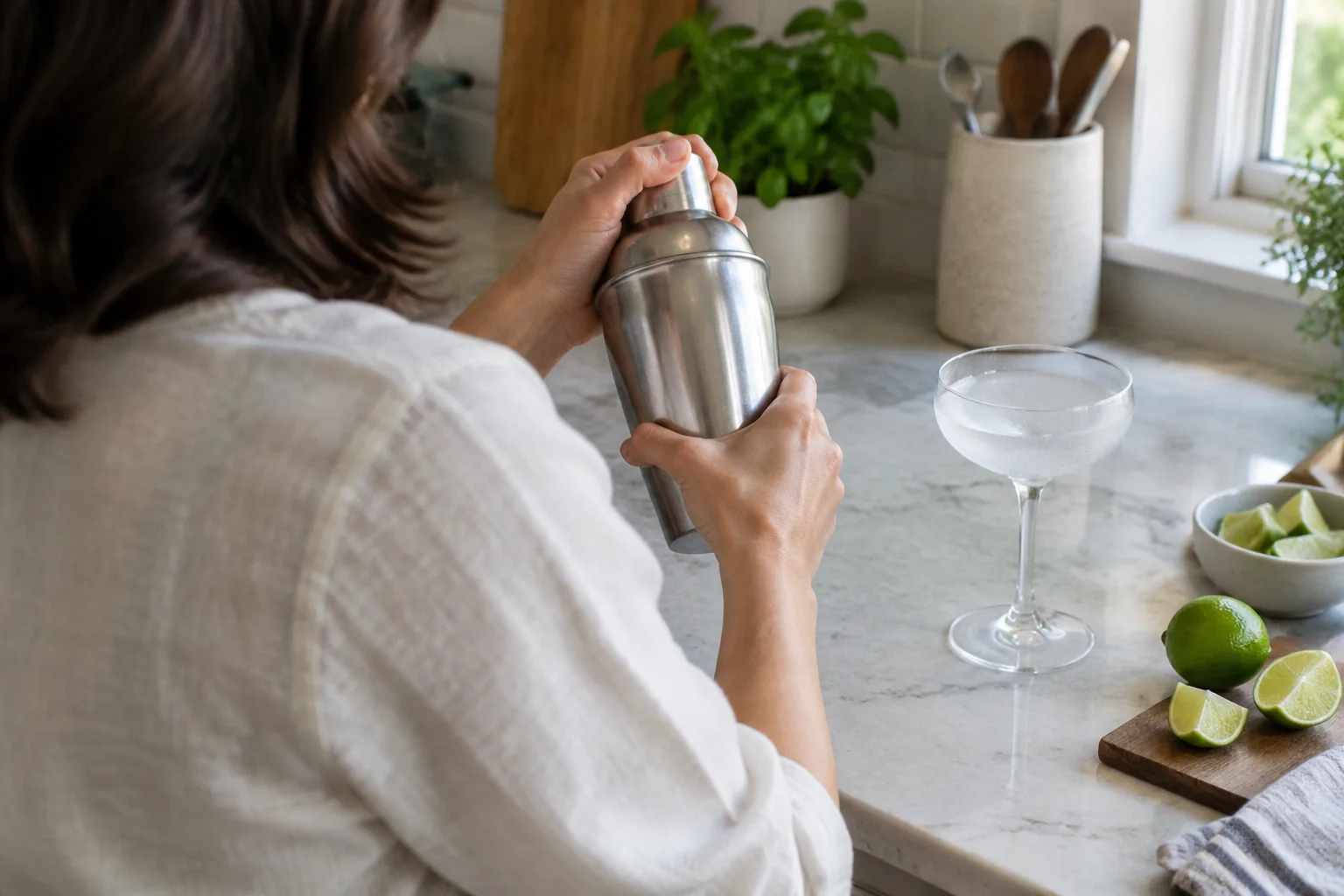
- Hold it with both hands, one on each end, and shake hard until the outside turns cold and frosty.
- Open the shaker, using a firm tap on the seal for a Boston or French style, or removing the cap on a cobbler.
- Strain into the chilled glass. Discard the used ice; do not reuse it in another shake.
Rinse and dry the shaker right after pouring. Sugar and citrus left inside will dull the metal and can make the lid stick next time.
Field note
Add ice last and seal right away. Ice that sits in the liquid before you shake melts and waters down the drink before it is mixed.
Shaking methods: dry shake, hard shake and more
The Japanese hard shake is a style in which the bartender moves the shaker in a sharp, angled pattern rather than a simple back-and-forth. The aim is to throw the ice around inside the tin so the drink chills and aerates thoroughly. It takes practice and a well-sealed tin, so start with the standard shake until the seal feels secure.
A dry shake means shaking without ice first, which helps egg white or cream mix into a foam. Then you add ice and shake again. Use a firmly sealed shaker, since the contents can push against the seal.
Drinks that suit a shaker
- Margarita, daiquiri and sidecar, which combine spirit, citrus and sweetener.
- Whiskey sour and similar drinks that use egg white.
- Drinks with cream, fruit juice or syrup that must be blended.
Gin and tonic is built in the glass, and a martini made only of spirits is traditionally stirred, though some bartenders shake one. Taste and adjust to your preference.
Straining options
A built-in strainer catches ice as you pour. With a Boston or French shaker, a hawthorne strainer sits over the tin and holds back the ice. For drinks with fruit pulp or herbs, you can also pour through a fine mesh strainer held over the glass, which is called double straining.
Common mistakes and care
Leaks and stuck lids often come from a few habits you can change.
- Overfilling: leave room above the ice so it can move.
- Sealing a warm shaker: a metal body that came out of a dishwasher can fit tightly as it cools, so let it cool before sealing.
- Letting sugary mixes dry inside: rinse after each use.
- Forcing a stuck seal: run warm water over the outer piece, then tap gently.
- Skipping the dry: wipe the metal so water spots do not build up.
Check the manual or product page for whether a piece is dishwasher compatible. If not, wash by hand with mild soap, rinse and dry fully before storing.
Building your home bar around the shaker
A shaker works with a few companion tools: a jigger for measuring, a bar spoon for stirring and a fine strainer if your shaker lacks one. Our Wine & Entertaining Accessories collection covers more tools for hosting. If you also open wine at the same gathering, see how to open a wine bottle without a corkscrew for what to do when the corkscrew goes missing.
Start with one shaker, learn two or three recipes and measure each time. Consistent pours matter more than a long list of tools.