Grain Mills for Home: Stone vs Burr, Manual vs Electric
Choose grain mills for home by grain type, flour fineness, batch size and noise. A decision table and five steps show which mill type fits your kitchen.
The Cobalt Hollow Team
November 20, 2026 · 6 min read
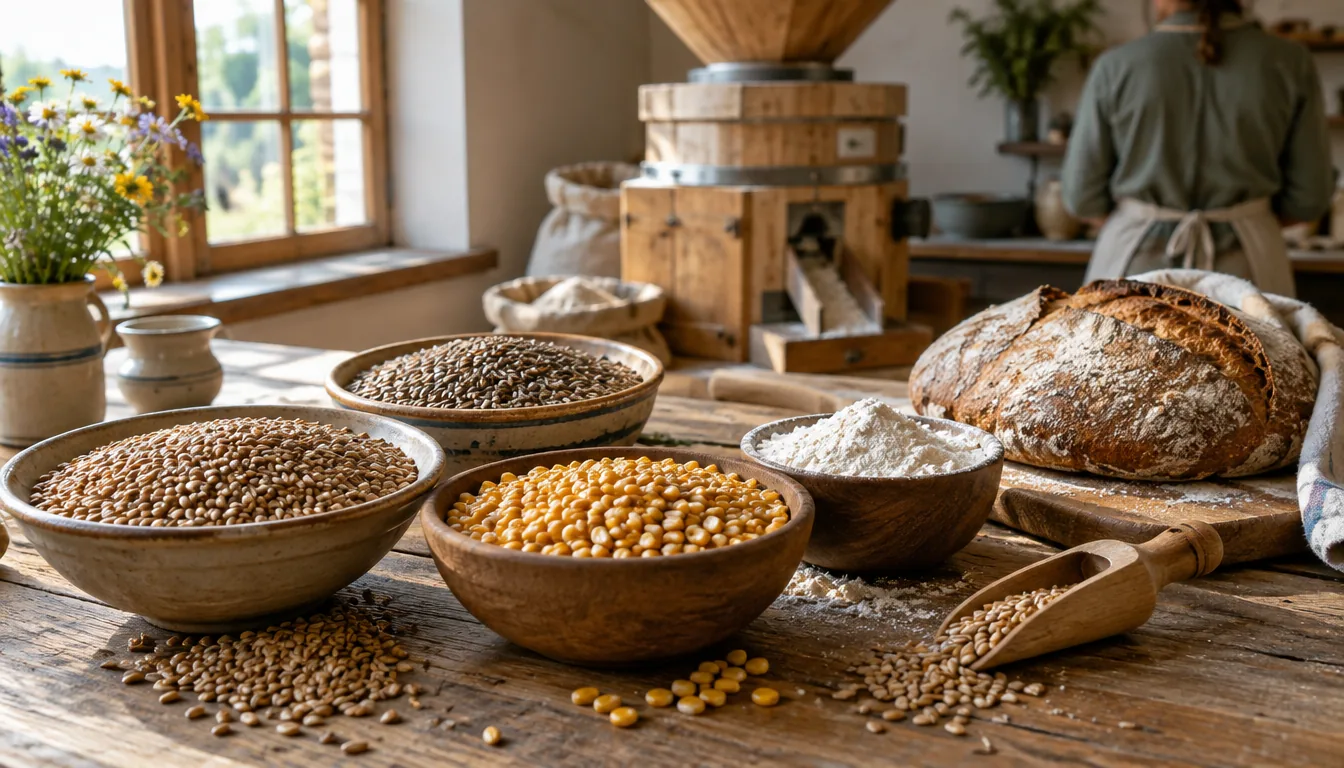
Grain mills for home fall into three working styles. Stone mills and burr mills come in hand-cranked or motorized form, and electric chamber (impact-style) grinders are a third, motor-only style. Pick by what you grind (dry grain, or also spices, coffee and nuts), how fine you want the flour, how much you bake per batch and how much motor noise your kitchen can take. The table below matches those four factors to a mill type.
This guide skips brand rankings. It gives you a decision path you can apply to any mill you find new, used or locally.
Grain mills for home: a decision table
Use this table as a first filter. Specifics vary by model, so confirm grain types, settings and capacity on the product page or in the manual before you buy.
| Mill type | Grains it suits | Flour range | Batch size | Noise |
|---|---|---|---|---|
| Hand-cranked stone mill | Dry wheat, rye, corn, oats | Adjustable, from coarse meal toward fine flour | Small, set by your arm work | Crank and grinding sound, no motor |
| Electric stone mill | Dry grains; check the manual for oily seeds and nuts | Adjustable, with a wide range | Medium to large | Motor plus stone sound |
| Hand-cranked burr mill | Dry grains; some models also list coffee | Cracked grain to flour, set by the burr gap; fineness varies by model | Small | Crank and metal grinding sound |
| Electric burr mill | Dry grains and cracked grain for porridge | Adjustable by burr setting | Medium | Motor noise |
| Electric chamber grinder | Grains, spices, coffee beans, nuts | Meal to powder, judged by eye | Small, chamber-sized | Motor noise during the run |
If your row says "adjustable", the mill has a setting you change between coarse and fine. If it says "judged by eye", you end the grind when the texture looks right.
Stone vs burr: how the grinding surface changes the flour
Stone grain mills
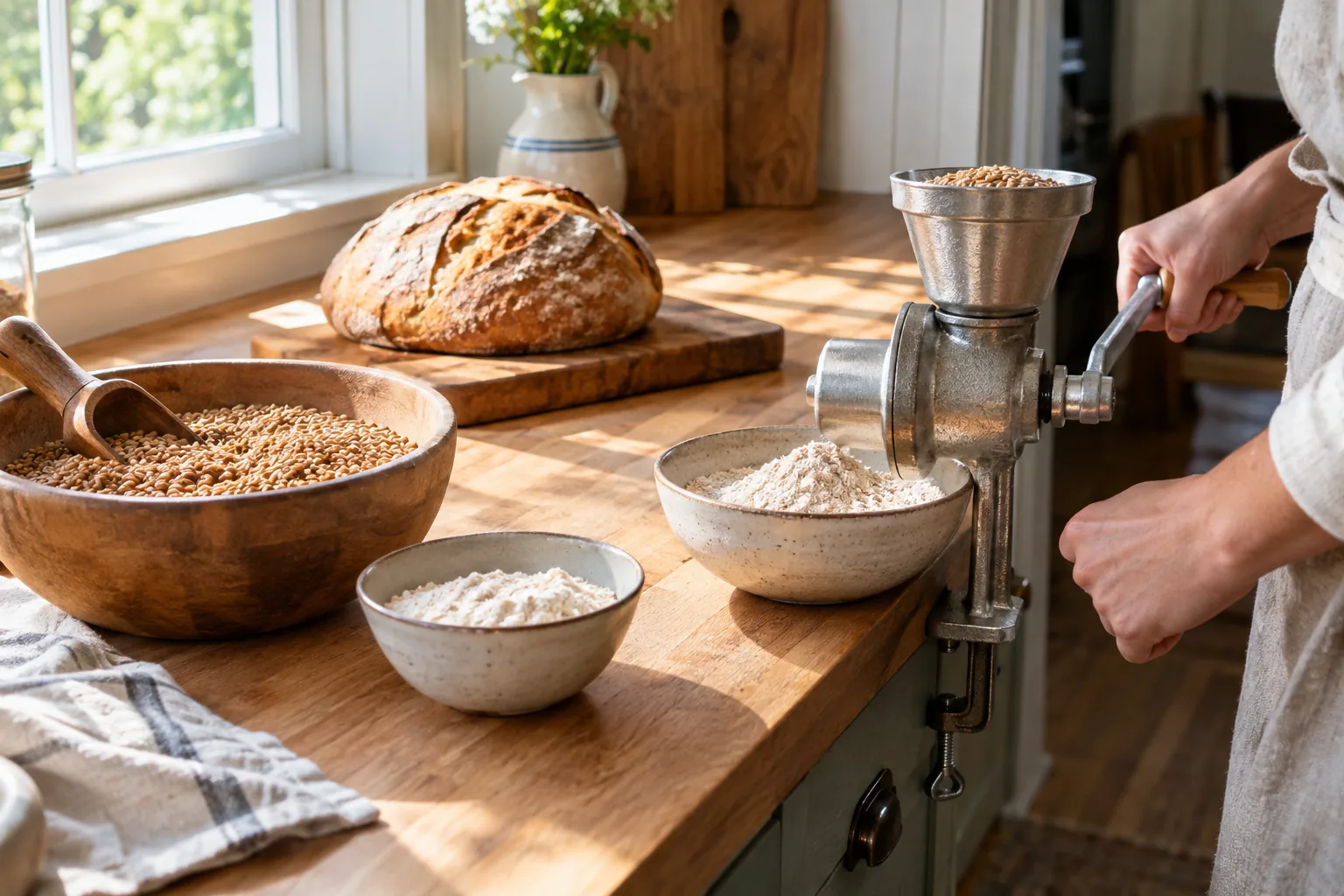
Stone grain mills crush grain between two millstones, usually a stationary one and a turning one. You set the gap between them to choose coarse meal or fine flour. They suit dry, low-oil grains such as wheat, rye and corn.
Oily seeds and nuts can smear on stone surfaces, so read the manual before you feed one anything beyond dry grain.
Burr mills
A burr mill uses toothed metal or ceramic discs. Grain falls between them and is cracked, then ground, as the gap narrows. Burr designs appear in many manual mills, and they make cracked grain and coarse meal as well as flour, depending on the model.
Impact-style and chamber grinders
Instead of two plates, a chamber grinder spins a cutting or impact element inside a closed chamber. You fill the chamber, run the motor and end the run when the texture suits the recipe. This style is motor-driven only, takes small batches and handles spices and coffee along with grain.
Manual or electric: what changes day to day
A hand mill needs no outlet and makes only the sound of the crank. It also needs steady effort, and a large batch of flour means a long session. Many hand mills clamp to a counter, so check that your counter edge and the clamp match.
An electric mill uses a motor to turn the grinding parts, so you load grain and wait. The trade-offs are motor noise, a power cord and a larger footprint on the counter or in a cabinet. Look at the wattage on the product page and make sure the mill suits your outlet.
| Question | Manual mill | Electric mill |
|---|---|---|
| Power source | Your arm, or an optional motor kit on some models | Wall outlet |
| Batch size | Small to medium, set by your stamina | Small to large, set by the hopper or chamber |
| Noise | Crank and grinding sound | Motor sound plus grinding |
| Storage | Often a compact body plus a clamp | A body and a cord |
| Use during an outage | Works as it is | Needs power |
Five steps to choose a mill
- List what you grind. If it is only wheat for bread, a dedicated grain mill fits. If you also grind spices, coffee or nuts, look at a chamber grinder or a mill that lists those ingredients.
- Pick your flour target. Whole wheat bread, pancakes and pastry flour all call for fine flour, while porridge and polenta use coarse meal. Confirm that the mill has a setting or a way to judge texture.
- Estimate your batch. Count the cups of flour your usual recipe takes, then check that the hopper or chamber holds that much or that you are willing to run it more than once.
- Decide on noise and power. Hand cranks need effort but no outlet. Motors need an outlet and make noise during the run.
- Check the care. Look for parts that wipe clean and a manual that spells out cleaning.
Field note
Mill only what you plan to bake with. Freshly ground whole grain flour is easy to portion when you grind it for one recipe at a time.
Fine flour, coarse meal and everything between
On a stone or burr mill, you move the plates or burrs closer for fine flour and farther apart for coarse meal. Start coarse, check the texture, then tighten the setting. On mills that allow it, you can run the grain through a second time for a finer result.
On a chamber grinder there is no gap to set. You watch the texture and end the run when it looks right, so a clear lid helps. Grind in short bursts and check each time, because the longer it runs the finer the powder gets.
Coffee follows the same logic: fairly fine for a moka pot, coarse for a press. Our guide on making espresso in a moka pot covers the grind that suits that brewer.
Where a countertop electric grinder fits
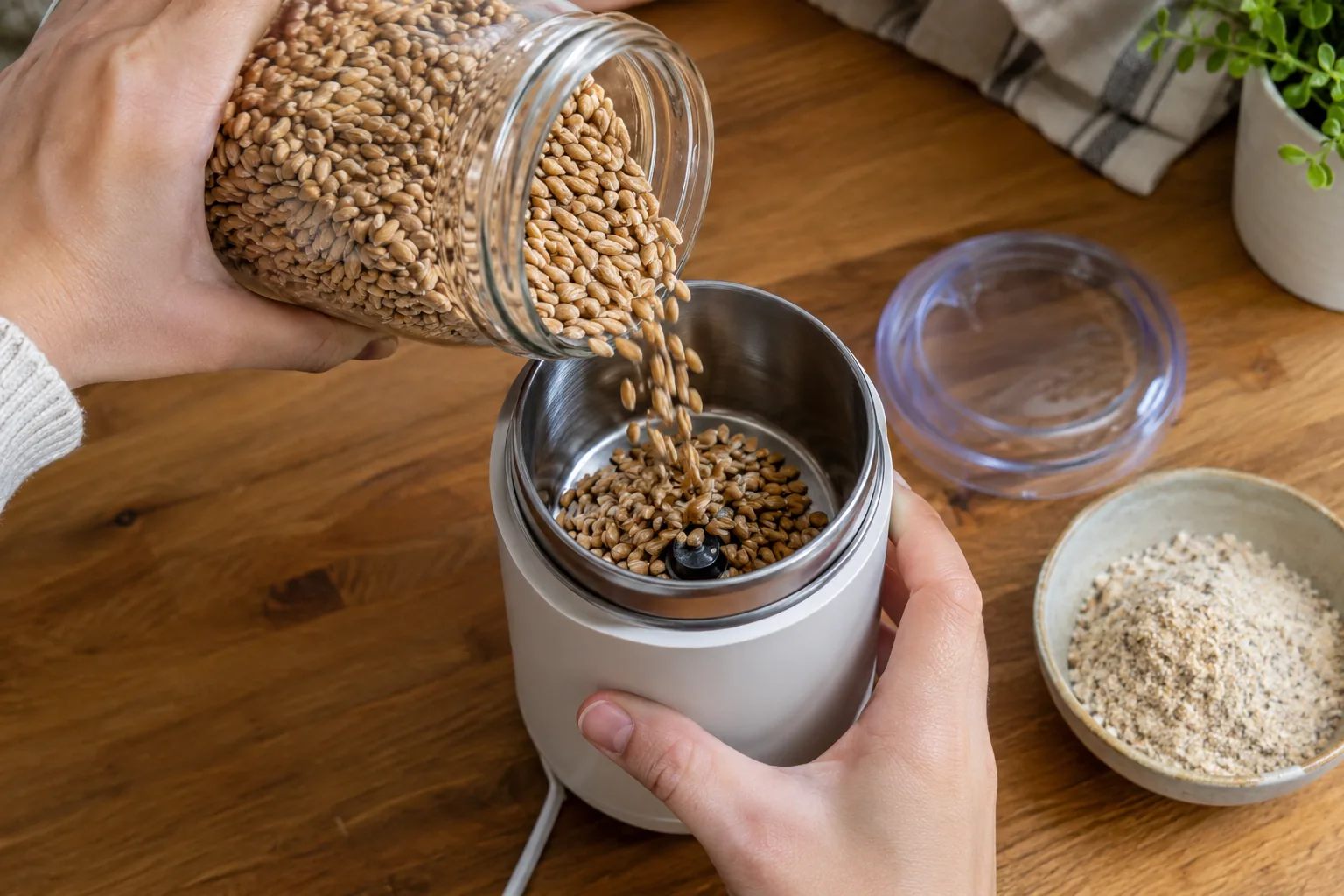
A full stone mill is a good fit for a household that bakes bread every week. A small electric grinder suits a different job: occasional batches of meal or powder, plus spices and coffee, from one tool.
GrainForge is an electric mill grinder for turning grains, spices, coffee beans and nuts into meal or powder in a home kitchen. A 200W electric motor does the turning. You add your ingredients to the grinding chamber, press the one-touch button and watch the grind through the clear lid until the texture suits your recipe.
The parts are 304 stainless steel, which wipe down after use. It handles wheat, rice, corn, oats, spices, coffee beans and nuts in one chamber. It is not a stone mill and does not have a plate gap to adjust, so choose a stone or burr mill if you want a dial-set fineness for regular bread baking. The box holds the grinder and a user manual.
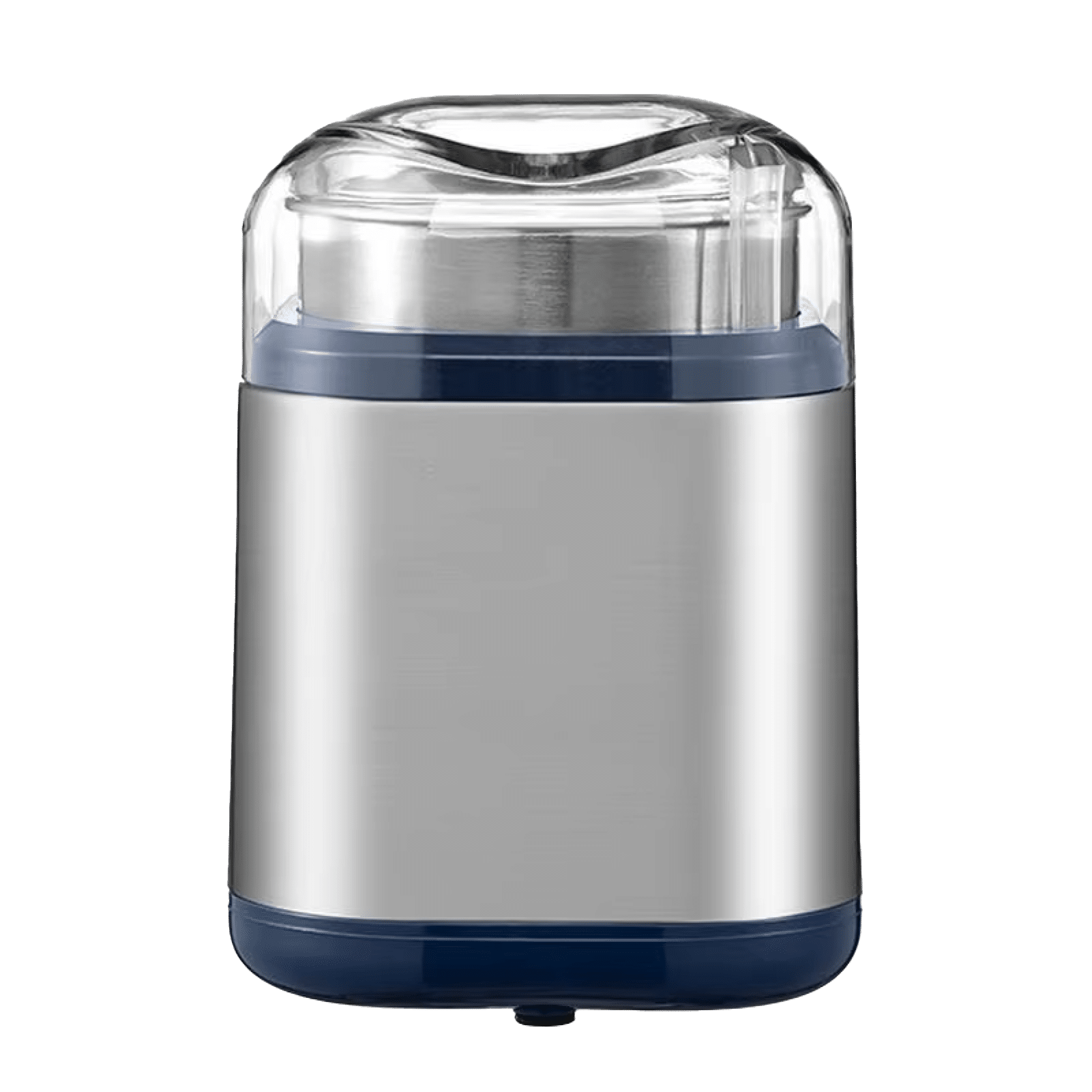 In this guideGrainForge$69.99View
Buying used, local or online
Whether you buy a used mill from a neighbor, a local shop or an online listing, apply the same checklist. Ask which grains the seller has milled, and whether the grinding surfaces are intact with no chips or heavy wear. Check that the hopper, clamp or base and any power cord are complete. Ask for the manual or find it online.
Skip a used mill if the seller cannot say whether it ground oily nuts or damp grain, because residue can be hard to clear. Browse our meat, grain and specialty food prep collection for kitchen tools that handle similar jobs.
Care and common mistakes
- Grind only dry grain in a stone or burr mill unless the manual says otherwise. Damp grain can clog the grinding parts.
- Do not force oily ingredients through a mill that is not listed for them.
- Unplug an electric mill before you clean it, and follow the manual for which parts can be removed.
- Wipe stainless parts after use and let them dry before you store them.
- Store whole grain in a sealed container in a cool, dry place, and flour in a sealed container as well.
- Follow the manual's guidance on run time and rest between batches.