
How to Make Espresso in a Moka Pot: Grind, Water, Heat, Timing
Fill the base with water to the valve, add medium fine grounds level in the cone, and brew over medium heat. Take the pot off the heat once the top chamber fills.
The Cobalt Hollow Team
November 17, 2026 · 6 min read
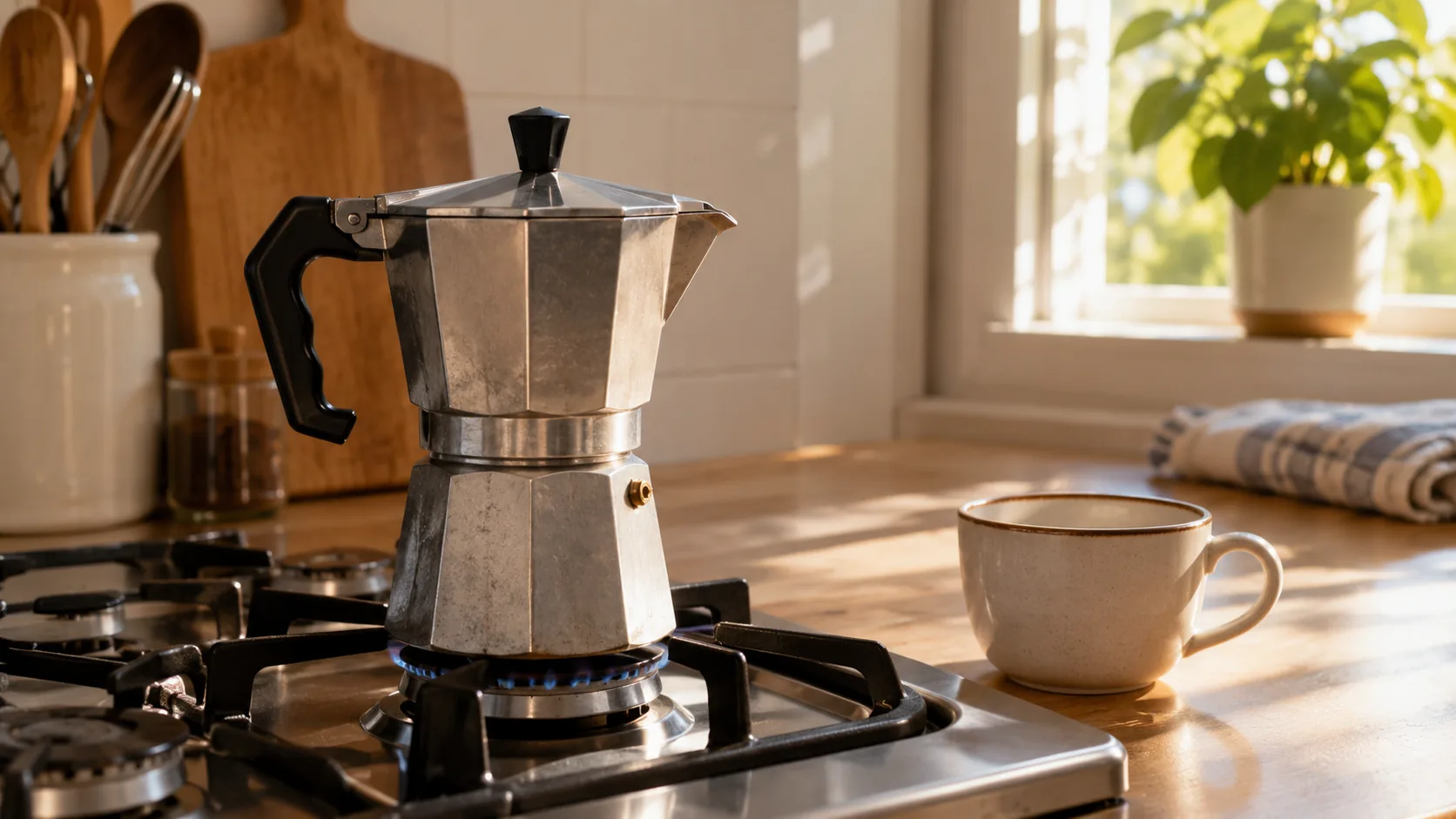
To make espresso in a moka pot, fill the base with water to the level of the valve, load the filter cone with medium fine grounds, screw the chambers together and set the pot on your hob over medium heat. Pressure pushes the coffee up into the top chamber. When that chamber has filled, take the pot off the heat and pour.
The result is strong, concentrated stovetop coffee. It is close in style to espresso, though a moka pot does not work like a pump machine. This guide covers grind, water, heat, timing and fixes for bitter or weak cups.
What a moka pot is and how it brews
A moka pot is a stovetop brewer with three parts: a lower chamber for water, a filter cone for grounds, and an upper chamber that collects the coffee. If you are asking what is a moka pot coffee, the answer is the drink this brewer makes: a small, strong cup with a rich body. The moka pot Italian design dates back many decades and is still a familiar sight on home stoves.
As the water heats, steam pressure builds in the base and pushes the water up through the grounds. The brewed coffee then collects in the top chamber. Nothing is pumped or plugged in, so the heat you set on the hob does most of the work.
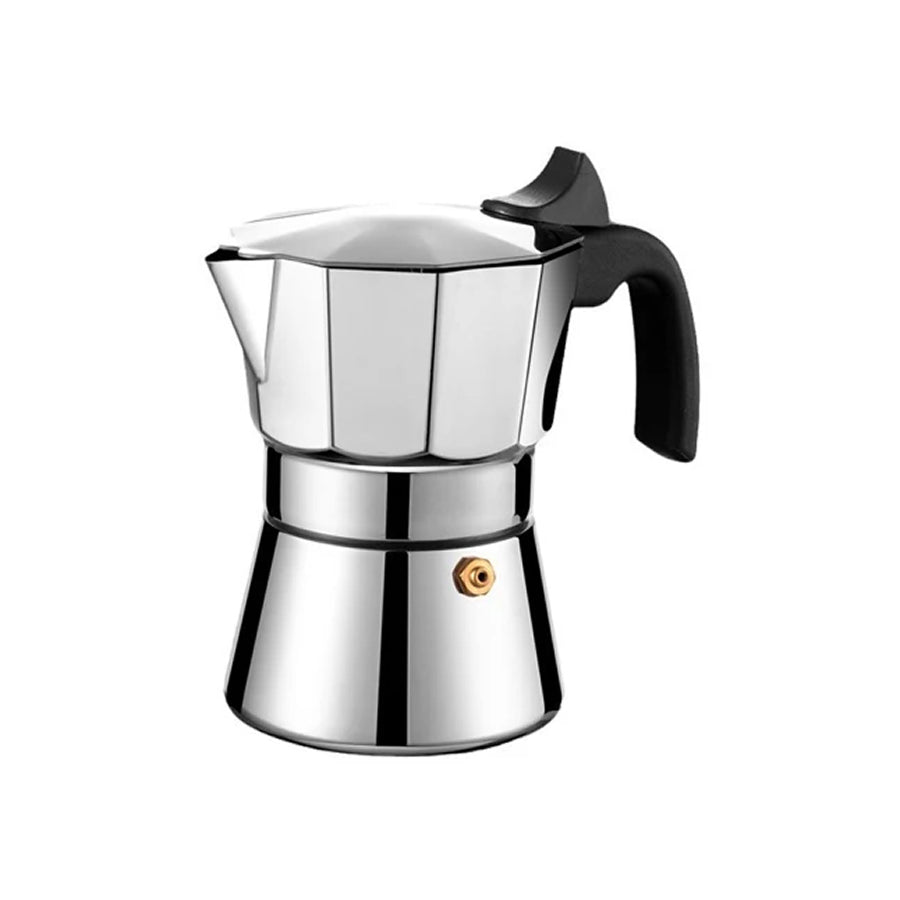
A brass valve in the lower chamber of a pot such as the Caffenza marks the fill line, so you can fill to the valve and skip guessing the water level. The same pot works on gas, electric, ceramic and induction hobs thanks to its magnetic multi-layer base.
What you need before you start
- A moka pot, clean and dry
- Fresh whole beans, ground just before brewing
- Fresh cold water, or hot water if you preheat
- A hob that fits the pot base
- A cup or small pitcher
- A cloth or oven mitt for the hot handle and base
Set the pot on a burner that matches its base, so the flame does not reach up the sides. Keep the pot away from the edge of the hob and follow the manual for your pot and stove.
The stainless steel Caffenza holds 150ml (about 5 fl oz) and comes with a filter cone. Its octagonal body gives your hand flat faces to grip when you pour.
 In this guideCaffenza$79.99View
Grind size for espresso in a moka pot
Aim for a medium fine grind: finer than drip, coarser than true espresso powder. Grounds that are too fine can clog the filter and make the cup bitter. Grounds that are too coarse let water rush through and taste thin.
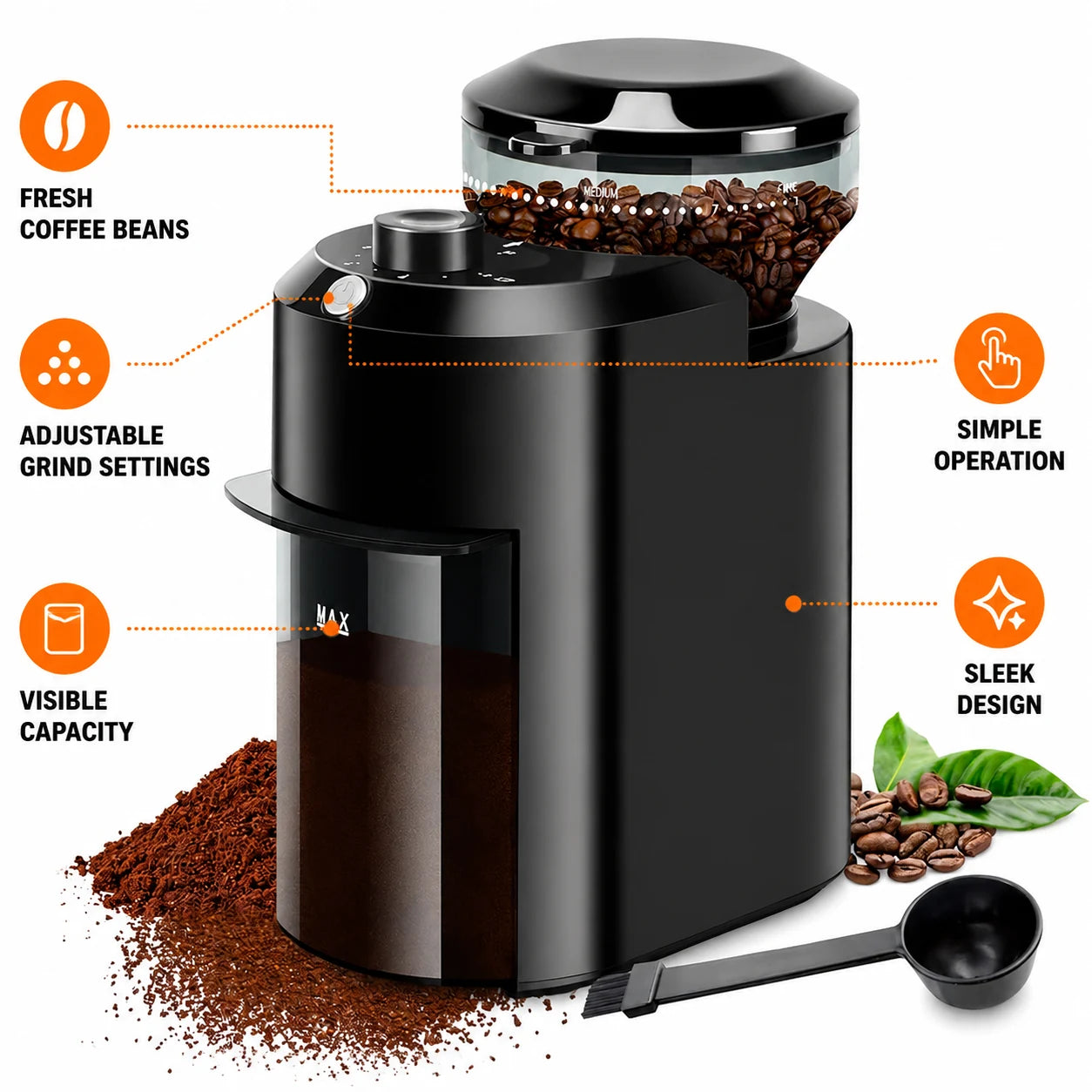
A burr grinder gives you even particles, because the beans pass between metal burrs instead of under a spinning blade. The GrindNova has 28 grind settings. Its reference card lists steps 1-8 for espresso and 9-15 for pour-over, so a moka pot grind sits between those two ranges. Start at the coarse end of the espresso steps, then move one step at a time.
Grind just before brewing and measure the beans for the cone. The GrindNova has a dose dial set between 2 and 12 cups, and its catch chamber is anti-static, so you slide it out, tap it once and move the grounds to the cone. If you are choosing between grinder types, see manual burr coffee grinder vs electric.
 In this guideGrindNova$149.99View
Water and coffee fill levels
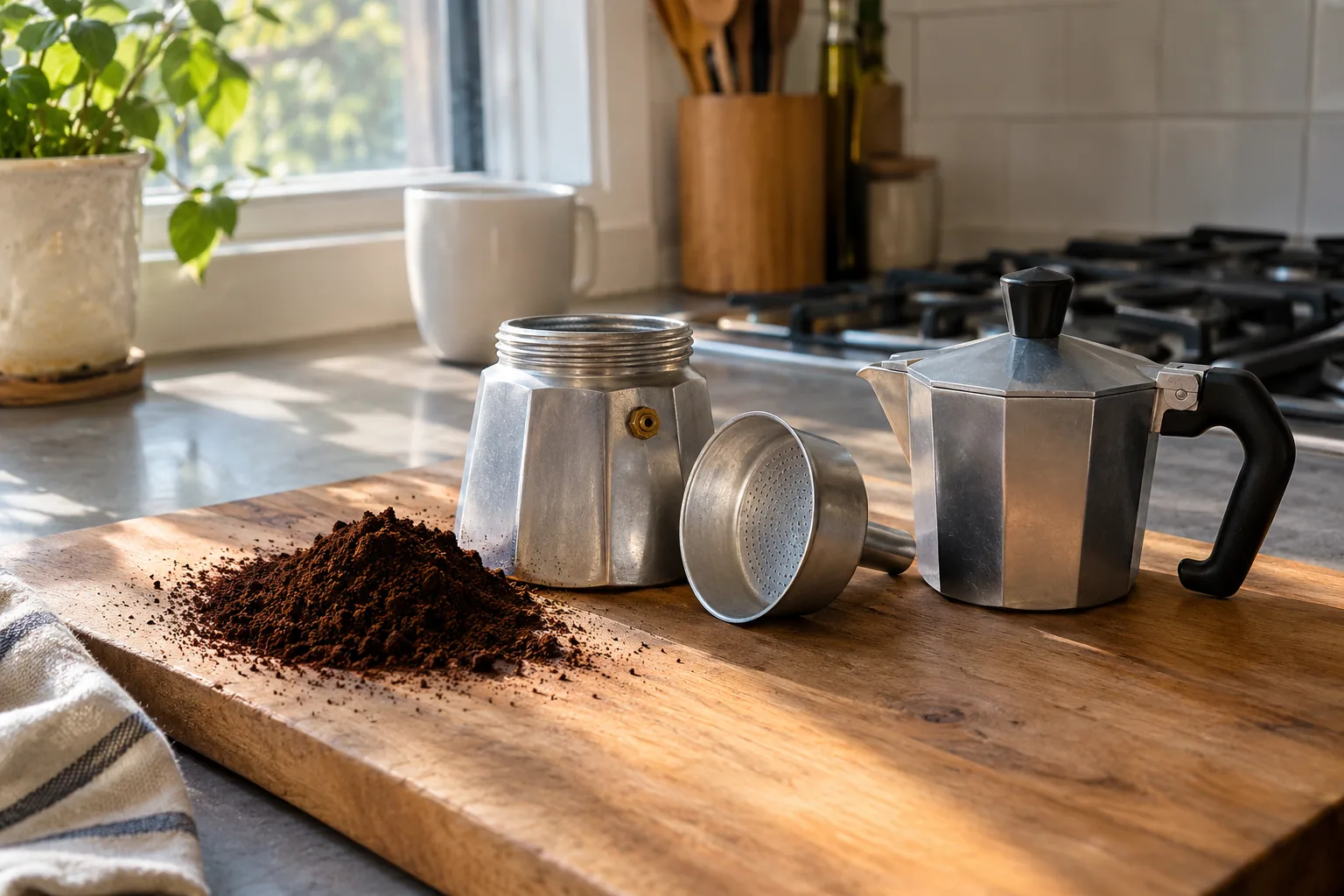
The fill level matters as much as the grind. Water to the valve is the rule for the base: the water sits just under the brass valve, and the valve stays uncovered. Filling above it can interfere with how pressure builds and releases.
| Part | How to fill it | Common mistake |
|---|---|---|
| Base (lower chamber) | Water filled to the level of the valve | Covering the valve |
| Filter cone | Medium fine grounds, heaped then leveled with a finger | Tamping the grounds down |
| Rim and threads | Wiped clean of grounds | Grounds in the threads, so the seal sits crooked |
| Top chamber | Empty at the start | Adding water or coffee here |
Fill the cone fully, level and loose. A cone that is half full lets water find an easy path, and the cup comes out thin.
Step-by-step: coffee in a moka pot
- Fill the base with water to the level of the valve. Do not cover the valve.
- Add medium fine grounds to the filter cone. Level them with a finger and do not tamp.
- Wipe any grounds from the rim, then screw the chambers together firmly. Use a cloth, as the base can be hot.
- Set the pot on your hob over medium heat, with the flame under the base.
- Watch the top chamber. When coffee starts to rise, keep the heat steady.
- When the upper chamber has filled, take the pot off the heat and pour.
Always follow the manual, and stay in the kitchen while the pot heats. Pour with a firm grip, since the full pot is hot.
Field note
Wipe the rim of the filter cone and the top of the base before you screw the chambers together. Grounds caught in the threads can leave a gap that lets steam escape.
Heat control and timing
Medium heat is the setting. A flame that is too high pushes water through hard and the coffee turns bitter. A flame that is too low stalls the brew and can give a flat cup. On a gas hob, keep the flame under the base and not licking up the sides.
You do not need a stopwatch. Use these cues instead, and take the pot off the heat once the top chamber is full.
| Stage | What you see or hear | What to do |
|---|---|---|
| Heating | Pot is closed, no coffee yet | Keep medium heat |
| Brewing | Dark coffee rises steadily into the top chamber | Hold the heat steady |
| Finishing | Chamber is nearly full, a gurgle starts | Take the pot off the heat |
| Pouring | Flow has ended | Pour and serve |
Using preheated water
You can fill the base with hot water instead of cold, so the grounds spend less time sitting on a hot pot. Use a kettle with a temperature preset, like the Infusia, which has six presets from 45°C to 100°C (113°F to 212°F) and a 2.0-liter tank. It lifts off its cordless power base to pour. Handle the hot base with a cloth, fill only to the valve, and screw the chambers together carefully.
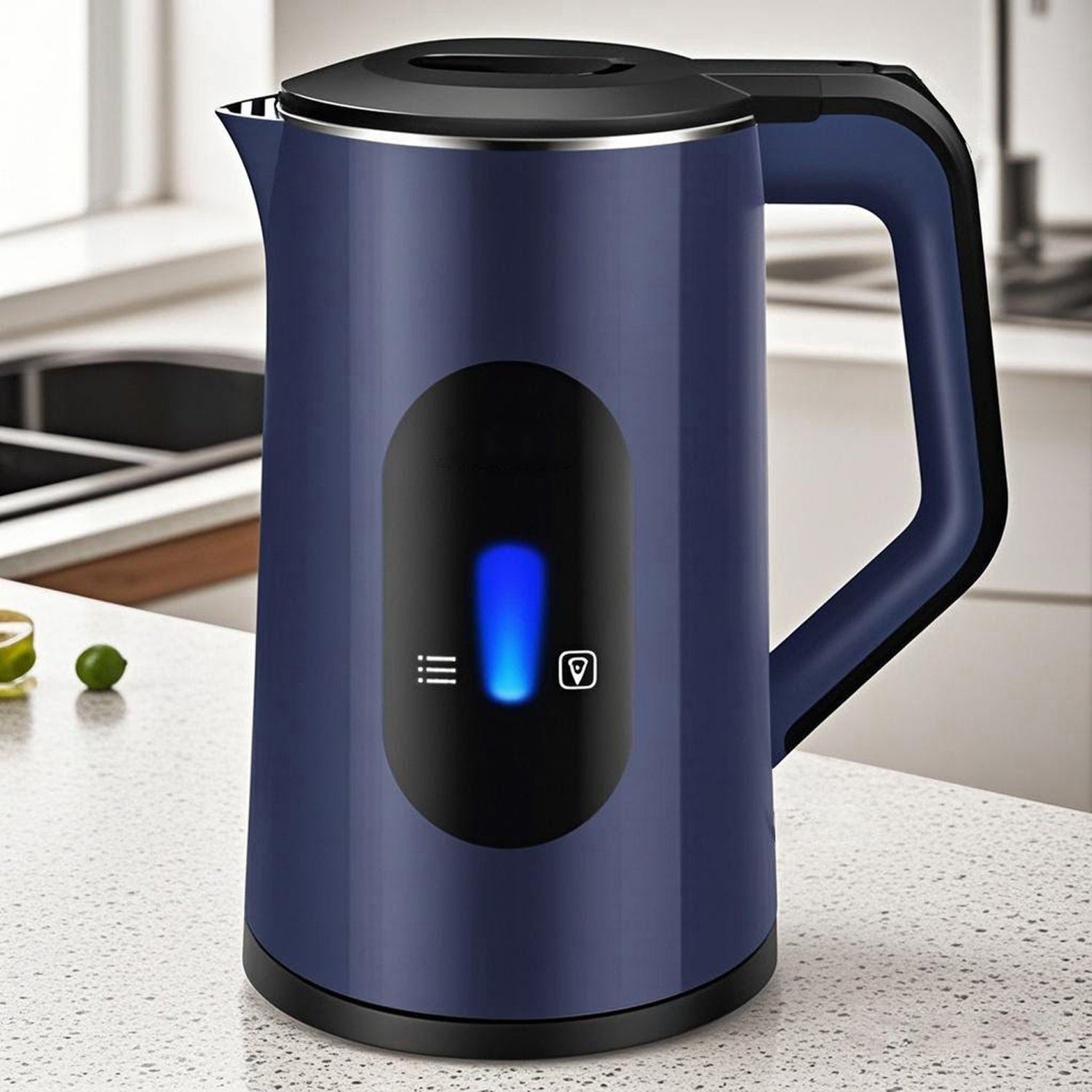 In this guideInfusia$119.99View
Fixing bitter or weak espresso with a moka pot
| Problem | Likely cause | Fix |
|---|---|---|
| Bitter, harsh | Heat too high or grind too fine | Lower the heat, coarsen the grind one step |
| Weak, watery | Grind too coarse, cone underfilled or heat too low | Grind finer, fill the cone, use medium heat |
| Sour | Under-extracted, flow too fast | Grind slightly finer, check the heat |
| Metallic or burnt taste | Pot left on the heat after filling | Remove the pot as soon as the top chamber is full |
| Spurting, uneven flow | Overheated base or loose seal | Lower the heat, tighten the chambers |
Change one variable at a time so you can tell what made the difference. Check that the filter holes are clear and the gasket sits flat.
Old, stale beans also give a flat cup whatever the settings. Buy whole beans in small amounts and grind them only when you brew.
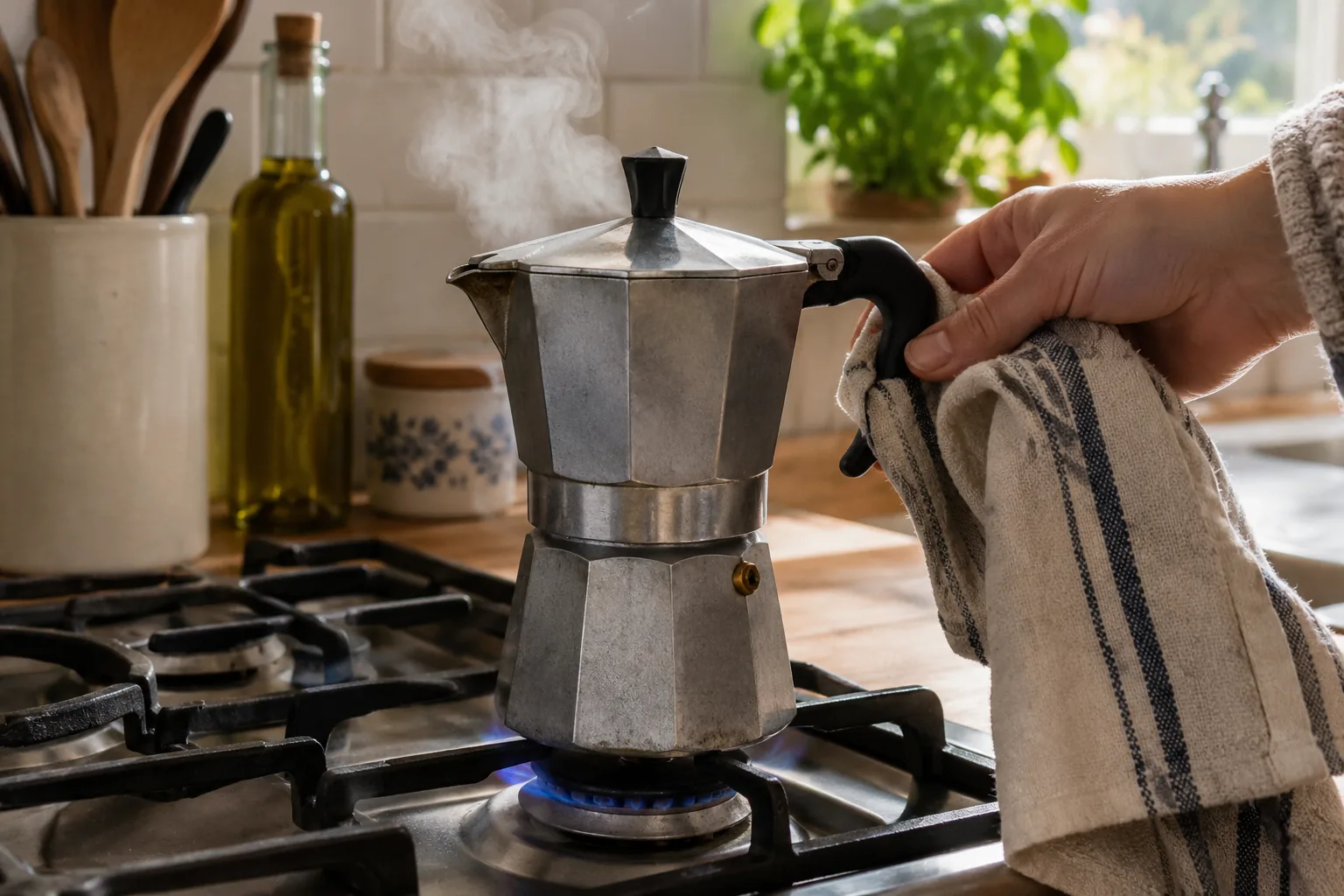
Cleaning and care after each brew
Let the pot cool, then unscrew the chambers and discard the used grounds. Rinse with warm water and wipe with a soft cloth. Coffee oils and mineral film collect inside a brewing pot, and a polished steel interior gives them a smooth surface to rinse off.
Let every part dry before you reassemble. Check the valve and gasket for wear now and then, and replace worn parts according to the manual.
For scale in other coffee gear, read how to clean a coffee maker with vinegar. More gear is in the Coffee & Hot Beverage Makers collection.
Care checklist
After each brew, empty the grounds and rinse. Each week, look at the filter holes and the gasket. Keep a soft cloth for wiping rather than anything rough, which can scratch the polished surface.
Frequently asked questions
Keep reading
 Coffee & Hot Beverage MakersCoffee Manual Burr Grinder vs Electric: Which Fits Your Brew8 min read
 Food Storage, Cookware & Water FiltrationNon Stick Ceramic Coating Pans: How to Choose and Make Them Last6 min read
 Blenders, Mixers & Prep ToolsVittoraMix Stand Mixer: Setup, Attachments and Care6 min read