How to Clean a Coffee Maker With Vinegar: Ratios, Soak, Rinse
Use equal parts white vinegar and water for scale, or 1:2 for a routine clean. Run half, pause to soak, finish, then rinse with fresh water until the smell is gone.
The Cobalt Hollow Team
November 7, 2026 · 7 min read
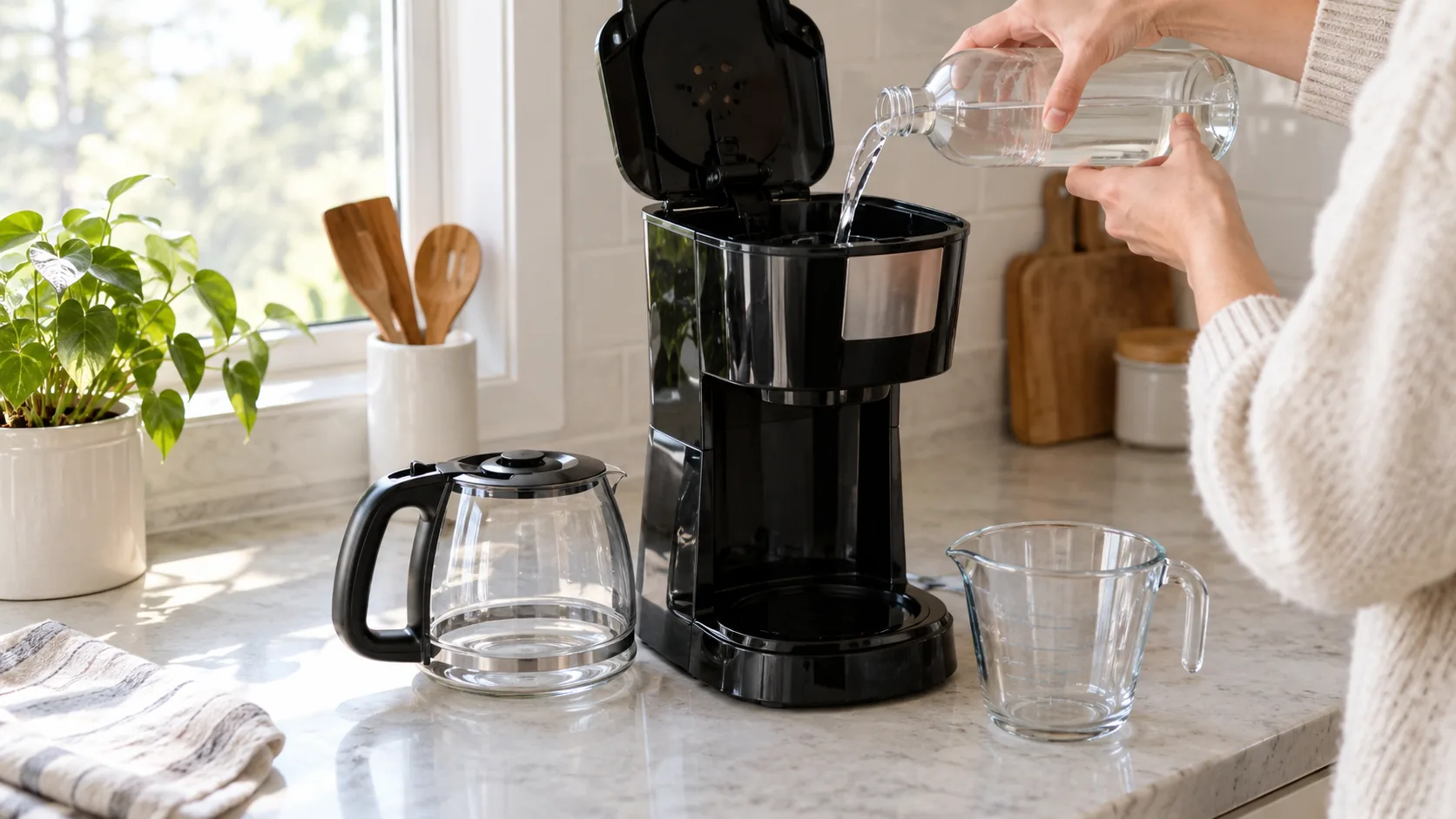
To learn how to clean coffee maker with vinegar, fill the reservoir with equal parts white vinegar and water for scale, or 1 part vinegar to 2 parts water for a routine monthly clean. Run the brew cycle halfway, pause and let the solution sit for the soak time your manual lists (if it lists none, wait half an hour), then finish the cycle. Follow with two or three full cycles of clean water until the vinegar smell is gone.
This guide gives the ratios, the soak step, how to tell the rinse is finished, a citric acid alternative, and how to adapt the method for small drip, pod and travel brewers.
What you need before you start
- Distilled white vinegar (the standard grocery kind), enough to fill half the reservoir
- Clean water, and a measuring cup
- A fresh paper filter if your machine uses one
- Dish soap and a soft sponge for removable parts
- A clean mug for pod brewers
Unplug the machine and let it cool before you remove or wash any part. Follow the manual for your model, since some makers list their own descaling steps.
Which vinegar to use
Plain distilled white vinegar is the usual choice. It is clear, has no sugars or color, and rinses out cleanly.
Skip apple cider vinegar and other flavored types. They can leave residue and a lingering smell in the reservoir and tubing.
What to do with cleaning vinegar
Cleaning vinegar is sold at a higher acidity than the table kind. If you use it, read the label and dilute it as directed, and check your manual first, since higher-acid vinegar is not what every maker calls for. When in doubt, stay with standard white vinegar.
Vinegar ratios and soak times by situation
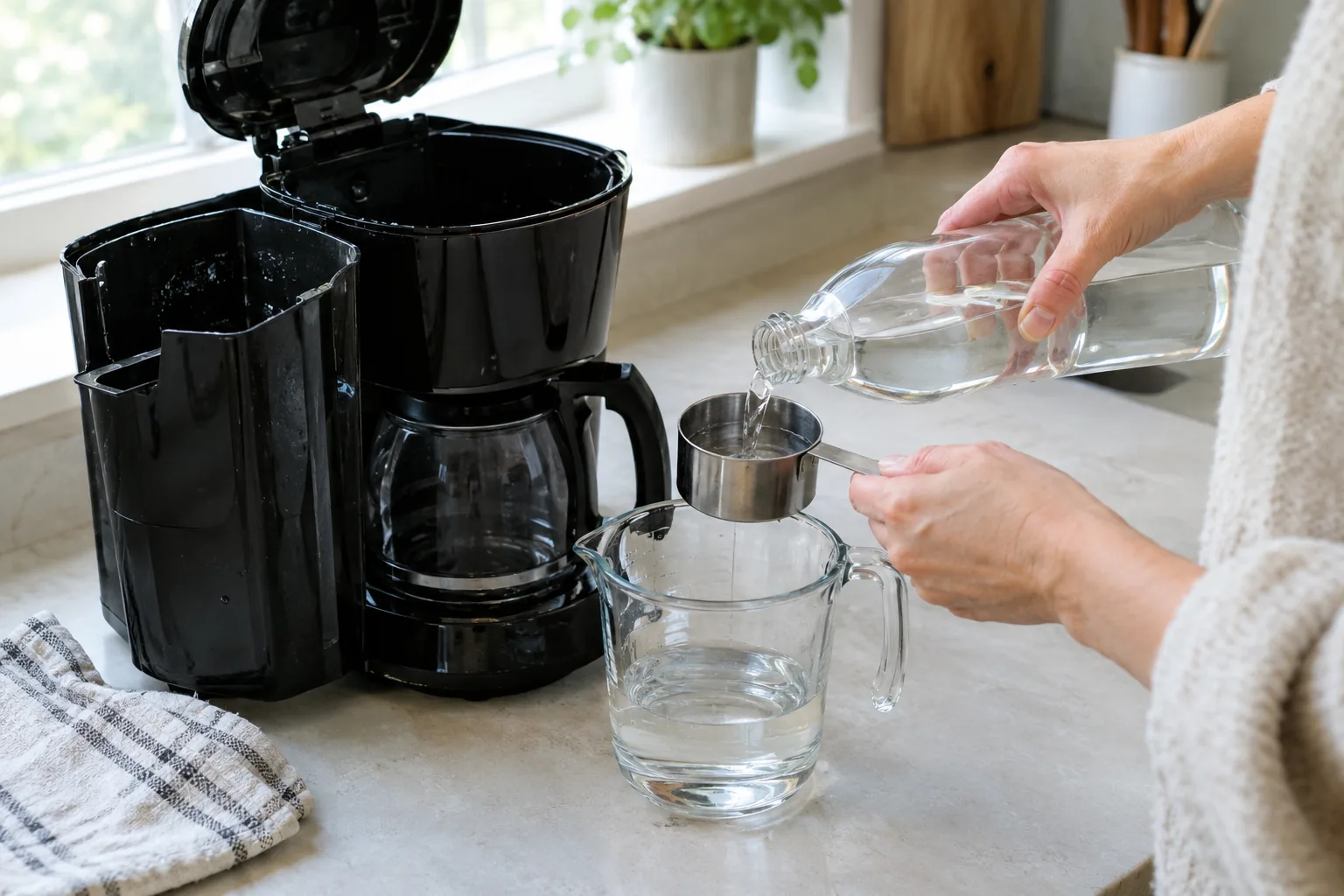
Equal parts is the standard mix for scale. For a machine you descale often, use less vinegar. The manual's soak time comes first; the table gives fallback soak steps for when it lists none.
| Situation | Vinegar to water | Soak step |
|---|---|---|
| Routine monthly clean | 1 part vinegar to 2 parts water | Pause mid-cycle, wait half an hour while you wash the removable parts |
| Visible mineral scale or slow brewing | 1 part vinegar to 1 part water | Pause mid-cycle, wait an hour |
| Heavy buildup | 1 part vinegar to 1 part water, repeat | Wait an hour, finish the cycle, then run a second round with another hour of soaking |
| Pod brewer | 1 part vinegar to 1 part water | Run into a mug with no pod, wait half an hour while you wash the tray |
Fill the reservoir to its maximum line so the solution reaches the whole water path. For a 12-cup maker that means 6 cups of vinegar and 6 cups of water in the equal-parts mix.
How to clean coffee maker with vinegar: step by step
1. Empty and prep
Discard old grounds and the used filter. Wash the carafe, lid, filter basket and any removable parts in warm soapy water, then put them back.
2. Add the solution
Pour the vinegar and water mix into the reservoir. Place a fresh paper filter in the basket if your machine uses one, and set the empty carafe in place. Do not add coffee.
3. Run half, then pause
Start the brew cycle and switch the machine off when half the solution has passed into the carafe. If your machine has no pause or off option, unplug it, following the manual.
4. Let it soak
Leave the solution in the machine for the soak time your manual lists. If it lists none, follow the table above: half an hour for a routine clean, an hour for visible scale, and a second round for heavy buildup. This is when the acid works on scale in the heating path and the reservoir.
5. Finish the cycle
Switch the machine back on and let the rest of the solution run through. Pour the used mix down the drain.
6. Rinse thoroughly
Fill the reservoir with clean water and run a full cycle. Repeat for two or three cycles. This rinse is the part of cleaning coffee maker with vinegar that decides whether your next cup tastes of vinegar.
How to tell the rinse is finished
Smell the hot water in the carafe: no sharp vinegar odor should remain. Taste a small cup of plain brewed water if you are unsure, and run one more cycle if you notice any sourness.
Field note
Write the date on a piece of tape under the reservoir lid after each descale. It shows when the next one is due.
Cleaning the parts vinegar does not reach
Descaling cleans the water path. Coffee oils collect on the parts the vinegar does not reach, so wash those separately.
- Carafe and lid: warm soapy water and a soft sponge
- Filter basket and permanent filter: warm soapy water, then air dry
- Reservoir lid and drip tray: wipe with a damp cloth
- Warming plate: wipe once it is cool
You can use ordinary dish soap on removable parts. Do not pour it into the reservoir, because suds are hard to rinse out of the tubing.
For a stained glass carafe, make a paste of baking soda and water and scrub it on as its own step. Keep baking soda and vinegar apart: do not mix them in the reservoir.
If you grind at home, wipe out the grinder too. Our comparison of a manual burr grinder vs an electric one covers which fits your brew and how each handles old grounds.
Citric acid: how to clean a coffee maker without vinegar
Citric acid powder is an option if you dislike the smell of vinegar. It dissolves in water and rinses out the same way.
- Dissolve citric acid in warm water following the powder's label. A starting point is 1 to 2 tablespoons in a full reservoir.
- Run half the cycle, pause, and soak for the time your manual lists, or wait half an hour if it lists none.
- Finish the cycle, then run two or three clean water cycles.
Some makers list their own descaling solution in the manual. Use the one the manual names if your machine has a descale setting.
Lemon juice and denture tablets turn up as household options too. Their strength varies, so check the manual before using them.
Adapting the steps for small, pod and travel brewers
Small drip makers
For a 4- to 5-cup or single-serve drip machine, scale the mix to the reservoir. For a 4-cup machine, use 2 cups of vinegar and 2 cups of water, then take the same pause, soak and rinse steps as above.
Pod brewers
Remove the pod and run the vinegar mix into a mug. Repeat the water-only rinse cycles until no vinegar smell remains. Clear the needle and pod holder as the manual describes, and wash the drip tray and removable reservoir by hand.
Hand-press and travel makers
A hand-press maker has no reservoir or heating path to descale, so there is nothing to run vinegar through. Cleaning means taking the parts apart and rinsing them after each use.
The PrestoNomad works this way. It is a hand-pressed portable espresso maker with no battery, heating element or plug. You add hot water, load ground coffee or a capsule with the included adapter, and press into the detachable Tritan cup. Take the parts apart afterward and rinse them, and check the Quick-Start User Guide before using any vinegar on its parts.
 In this guidePrestoNomad$89.99View
How often to clean your coffee maker
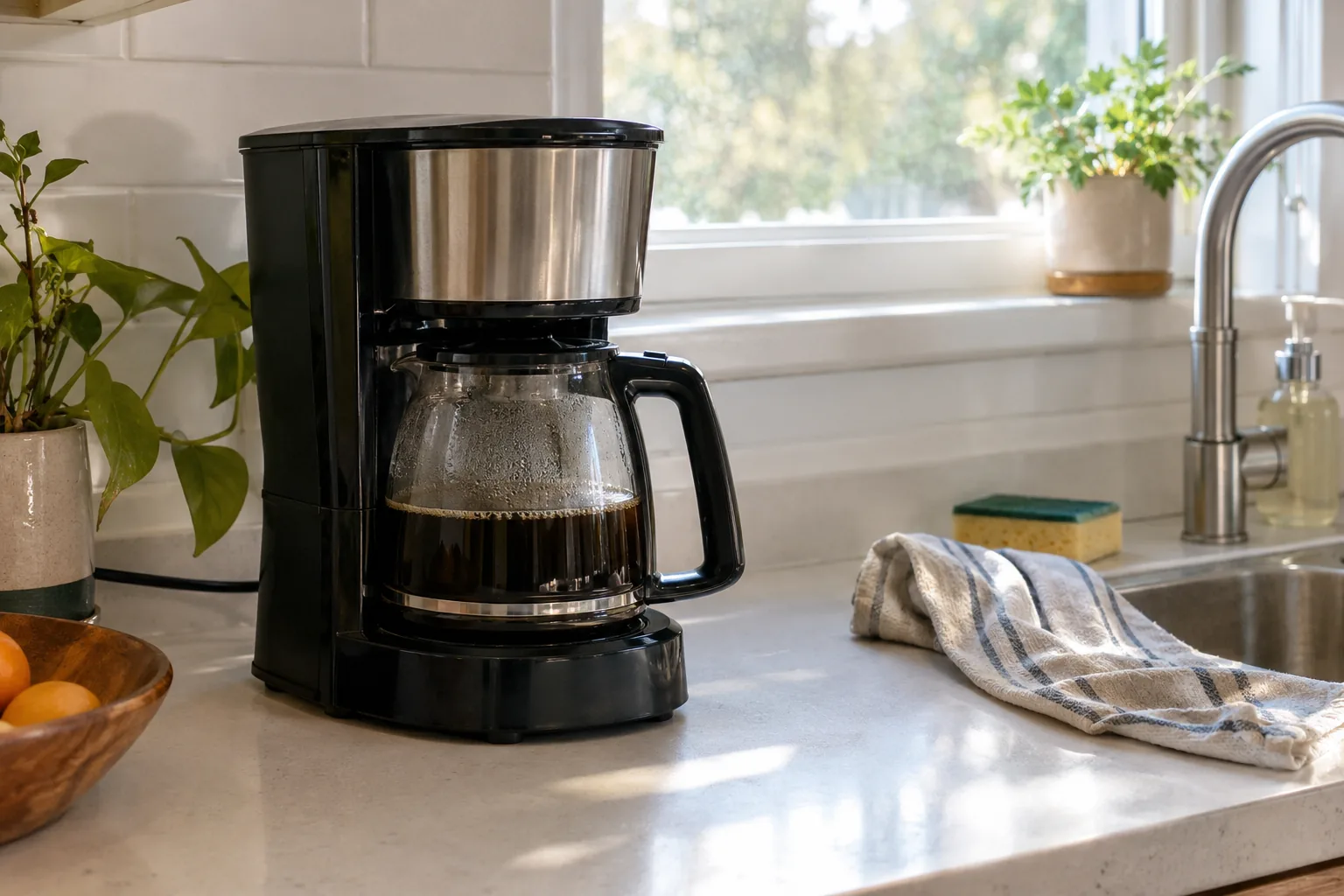
Wash removable parts after every pot. Descale once a month, or follow the schedule in your manual.
Hard water leaves more scale, so descale more often if you see white flakes, slow brewing, or a gurgling sound. Bitter or flat coffee and a sour or stale smell from the machine are also signs it is due.
If you want more gear for the daily routine, browse the Coffee & Hot Beverage Makers collection.
Common mistakes to avoid
- Skipping the rinse cycles, which leaves a vinegar taste in the next cup
- Using flavored vinegar instead of plain white vinegar
- Pouring dish soap into the reservoir
- Mixing baking soda and vinegar in the reservoir
- Removing or washing parts while the machine is plugged in or hot