How to Wash Rice Before Cooking, and When to Skip It
Swirl rice in cool water, pour off the cloudy water, and repeat until it runs mostly clear. Use the table to see which rice to wash, which to skip, and how to adjust water.
The Cobalt Hollow Team
November 9, 2026 · 6 min read
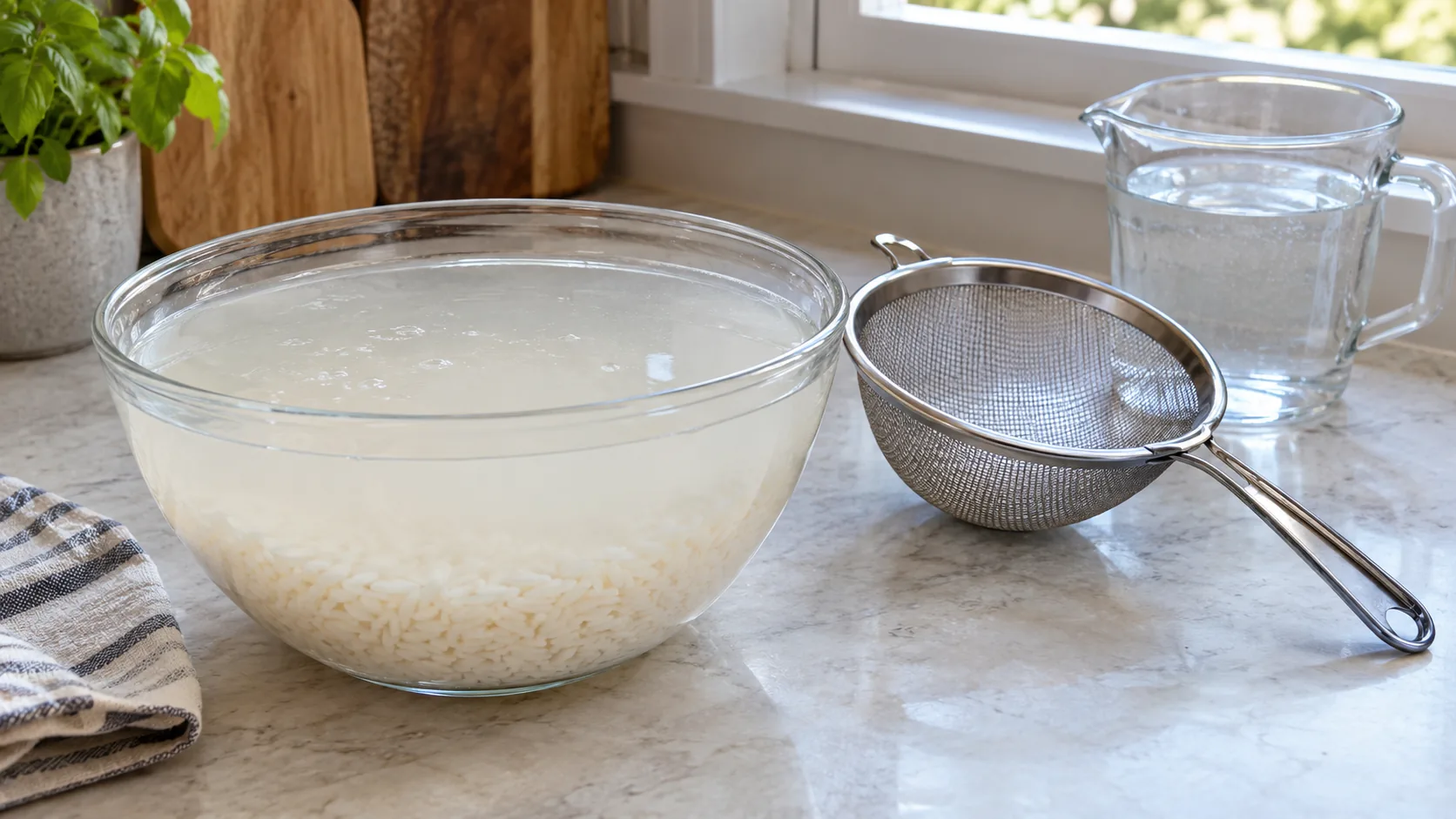
To learn how to wash rice, put it in a bowl, cover it with cool water, swirl with your fingers, drain, and repeat until the water looks mostly clear. Do this for most white rice, then drain well before cooking. You can skip washing for risotto rice, for rice labeled pre-washed, and when a recipe wants the surface starch.
This guide gives the rinse steps, a table of which varieties to wash or skip, and the water changes to make when you cook in a rice cooker.
Why wash rice: what rinsing does
Dry grains carry loose surface starch and fine dust from milling and handling. When you add water, that starch clouds it and coats the grains. Rinsing washes much of it down the drain.
This is the reason rinsed rice cooks up with grains that sit apart, while unrinsed rice tends to clump and form a tacky film. Rinsing does not change the starch inside the grain, so sushi rice still turns sticky and holds together after rinsing.
Rinsing also lets you see and remove stray husk bits or grit. It is a matter of texture and preference, not a required step for every recipe. If you have questions about arsenic or other contaminants in rice, ask a health professional; this guide covers technique only.
How to wash rice, step by step
- Measure the dry rice with the same cup you will use for the water.
- Put it in a large bowl or the cooking pot. A bowl gives room to swirl.
- Add cool water until the rice is covered by a couple of inches.
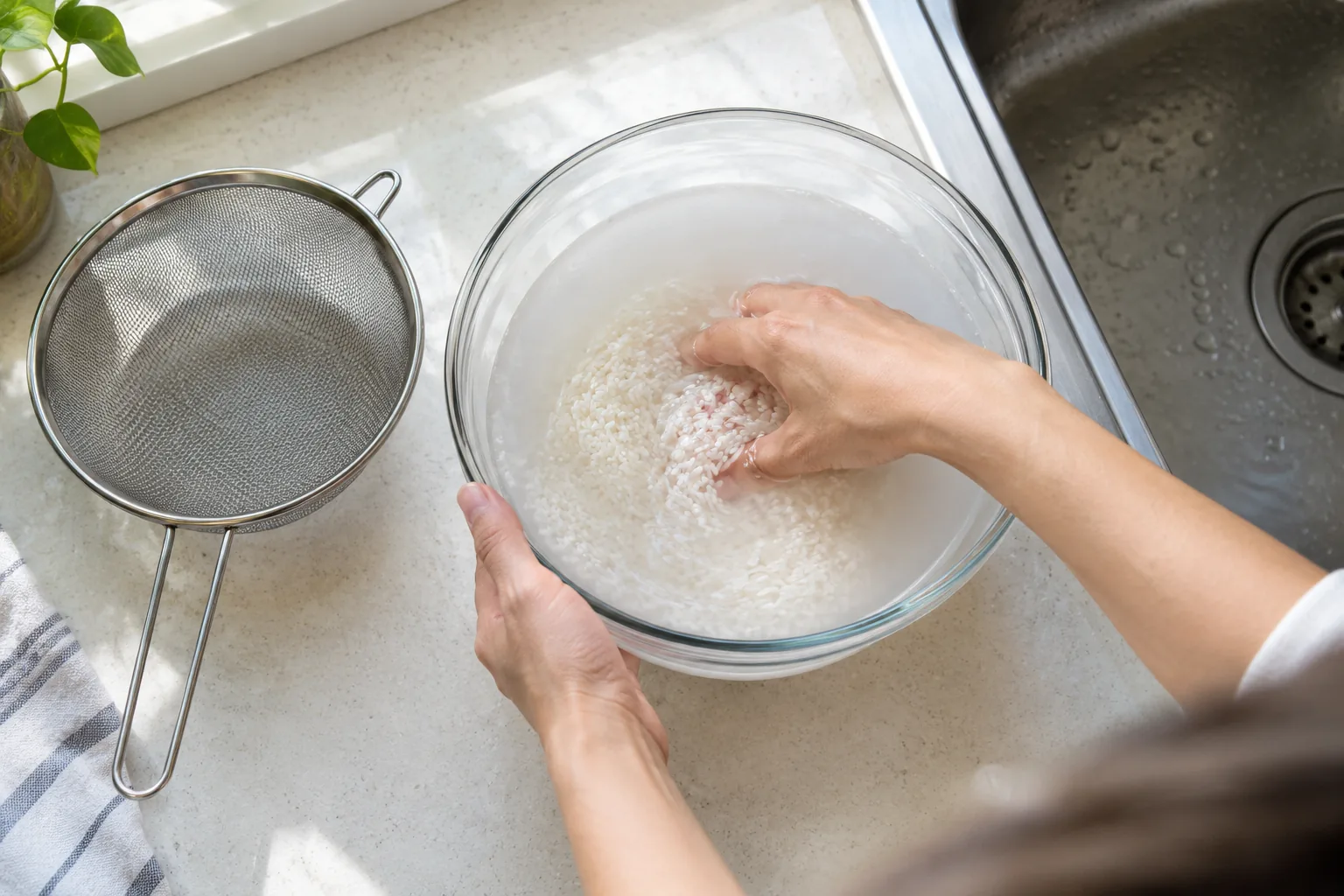
- Swirl with your fingertips or stir gently with your hand. The water turns milky.
- Tilt the bowl and pour off the cloudy water, holding the grains back with your palm or a strainer.
- Repeat with fresh water until the water is mostly clear. It does not need to turn fully clear.
- Drain well. Tilt the bowl and let the last water run off before you add cooking water.
With a strainer
Set a fine-mesh strainer over a bowl, add the rice, and run cool water through it while stirring with your hand. Lift the strainer to drain the bowl, and repeat. A strainer works for long-grain rice, but fine mesh matters, since broken grains can slip through coarse holes.
Without a strainer
Use a bowl and the pour-off method above. Hold your hand flat against the grains as you tip out the water, or use a lid slightly ajar. It takes a few more rounds, but the result is the same. For the last drain, tilt the bowl and give it a gentle shake.
How the Japanese wash rice
The Japanese method uses a bowl and no strainer. Add water, stir briskly, and pour it off right away so the grains do not soak up cloudy water. Then rub the rice lightly with your palm using a gentle pressing motion, add water, and drain again. Repeat a few times until the water is mostly clear. The rice may then be soaked and drained before cooking, following the package or recipe.
Which rice to wash and which to skip
Check the package first. If it says pre-washed or ready to cook, follow its directions.
| Rice type | Wash? | Notes |
|---|---|---|
| Long-grain white | Yes | Rinse until the water is mostly clear for separate grains. |
| Basmati | Yes | Rinse gently so the long grains do not break; some cooks soak it before cooking. |
| Jasmine | Yes, lightly | A few light rinses; some cooks keep a bit of starch for a softer texture. |
| Short-grain sushi rice | Yes | Rinse thoroughly, drain, and rest before cooking as your recipe directs. |
| Medium-grain | Yes | Rinse a few times unless a recipe wants a creamier result. |
| Brown rice | Light rinse | Less surface starch; rinsing mainly clears dust. |
| Parboiled | Light rinse | Optional; grains are already firmer. |
| Arborio and risotto rice | Skip | The surface starch is what makes risotto creamy. |
| Enriched or pre-washed rice | Skip | Rinsing may wash off added coatings; follow the package. |
| Sticky (glutinous) rice | Rinse, then soak | Follow the recipe, which may call for soaking and steaming. |
Does washing rice make it less sticky?
It changes the surface, not the grain. Rinsing removes the loose starch that glues grains together, so the grains separate when fluffed. Short-grain and sushi rice still cling because of the starch inside the grain.
If you want a creamy or clingy dish, such as risotto or rice pudding, skip the rinse and keep the starch.
Washing rice for a rice cooker
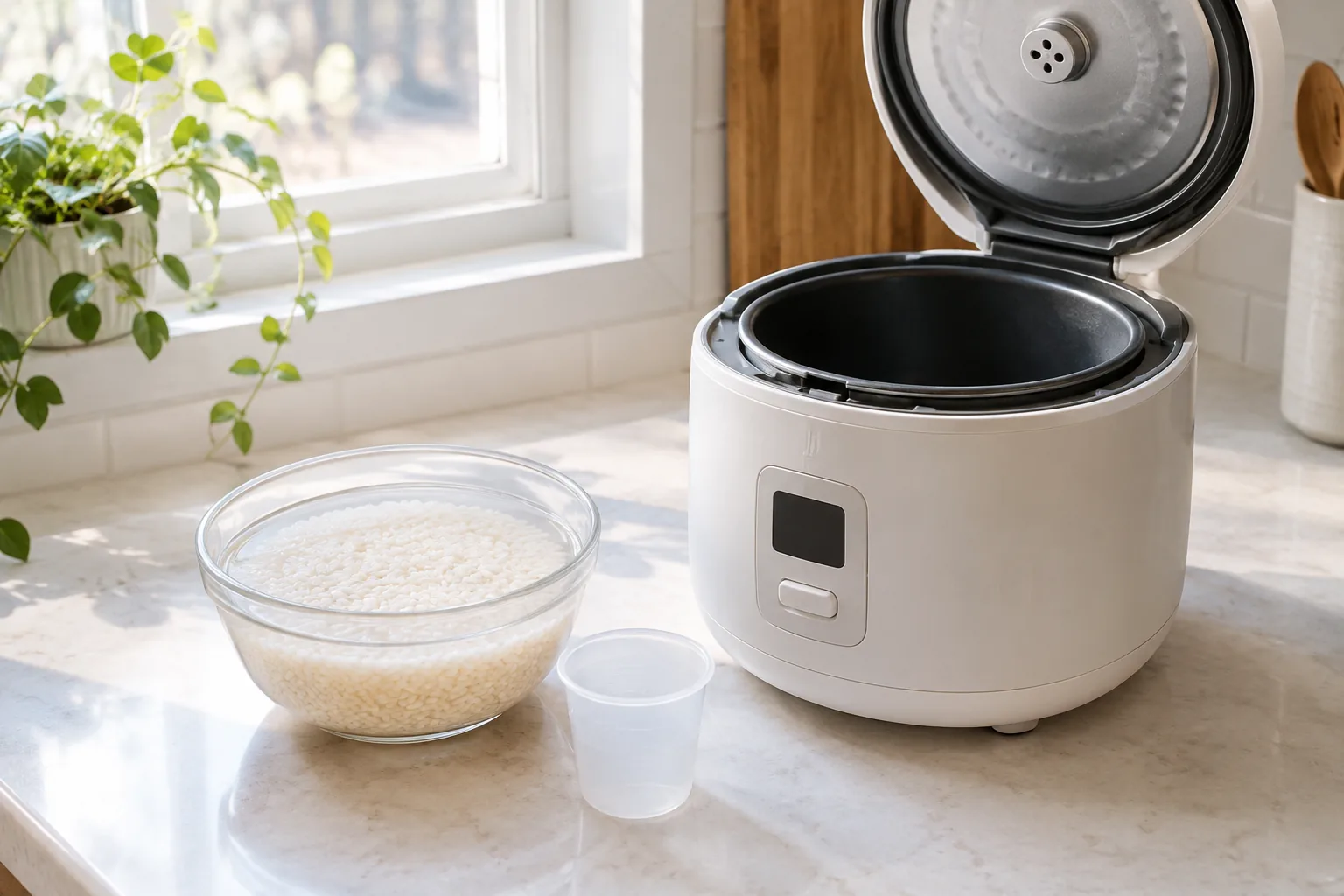
Rinsed rice holds a little water between and on the grains, and a rice cooker pot adds water on top of that. The change in ratio is small, so adjust by looking at the grains rather than guessing.
- Rinse in the pot or a separate bowl, then drain well.
- Use the water lines or ratio in your cooker's manual for that rice type.
- If the rice is still dripping wet, add a little less water than the line shows.
- If you soaked the rice, you can reduce the water slightly, since the grains have already absorbed some.
- Level the rice before cooking so it heats evenly.
Adjust by small amounts and note what you changed. After one or two batches you will know what your cooker and rice need.
Wipe the outside of the pot dry before placing it in the base, and unplug the cooker before you clean it.
Rinsing rice for a small cooker
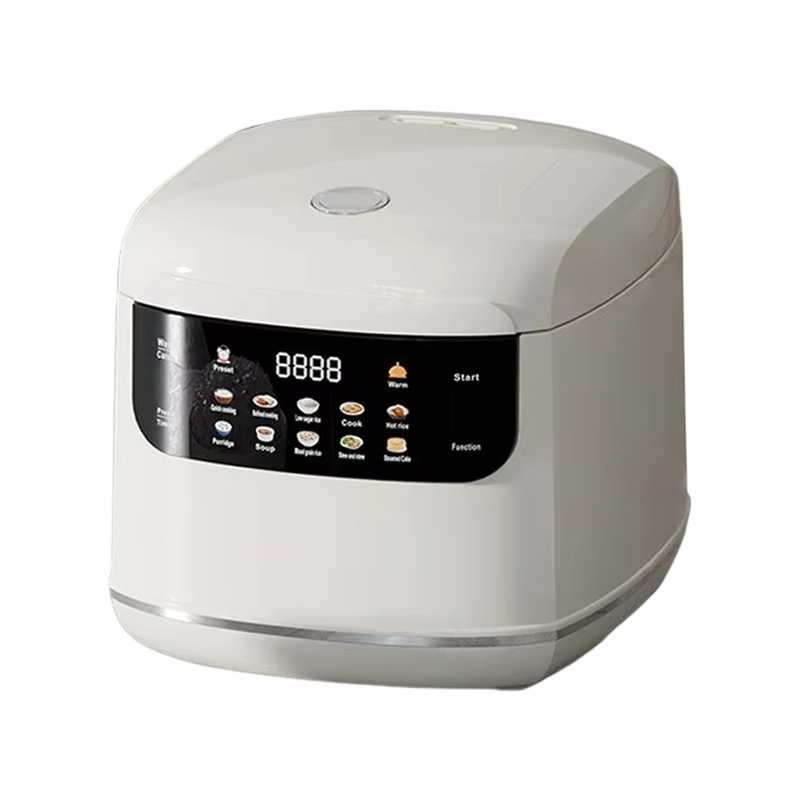
A compact cooker suits one to three servings, so rinsing fits in a single bowl. The GrainHearth is a small rice cooker with a 2L pot (about 2.1 quarts), a touch display with ten cooking modes, and an upper steaming tray. You rinse the rice, add it to the pot with water, tap a mode, and start right away or set the delay timer for a later start. When the program ends, it switches to keep-warm.
The steaming tray sits above the pot, so you can steam vegetables while the rice cooks below. Follow the instruction manual for water amounts.
 In this guideGrainHearth$179.99View
Field note
Rinse in a bowl rather than the cooker pot if your pot has a nonstick coating, and use your fingers, not a whisk or spoon, so the surface is not scratched.
Common mistakes when rinsing rice
- Rinsing with hot water, which can start to cook the surface of the grains and make them gummy.
- Scrubbing hard, which breaks grains, especially basmati.
- Skipping the drain, which leaves extra water and changes the ratio.
- Rinsing risotto or pre-washed rice when the starch or coating is wanted.
- Washing rice after cooking. Cooked rice is not rinsed; rinsing it only adds water and cools it.
What the 123 rice rule means
The name is used for more than one idea, and some cooks apply it to a simple water-to-rice ratio. Because rice types and cookers differ, do not rely on a catchphrase. Use the ratio in your cooker's manual or on the rice package, then adjust for rinsed, soaked or drained rice as above.
For more countertop options, browse the Cooking Appliances & Countertop Ovens collection. For another countertop routine, How to Clean a Coffee Maker With Vinegar covers ratios, soak time and rinsing.