Herb Garden Indoor: Which Herbs to Grow and How to Set It Up
Grow basil, chives, parsley, mint, thyme and more indoors with a herb-by-herb light, water and harvest table and a step-by-step setup checklist.
The Cobalt Hollow Team
October 21, 2026 · 5 min read
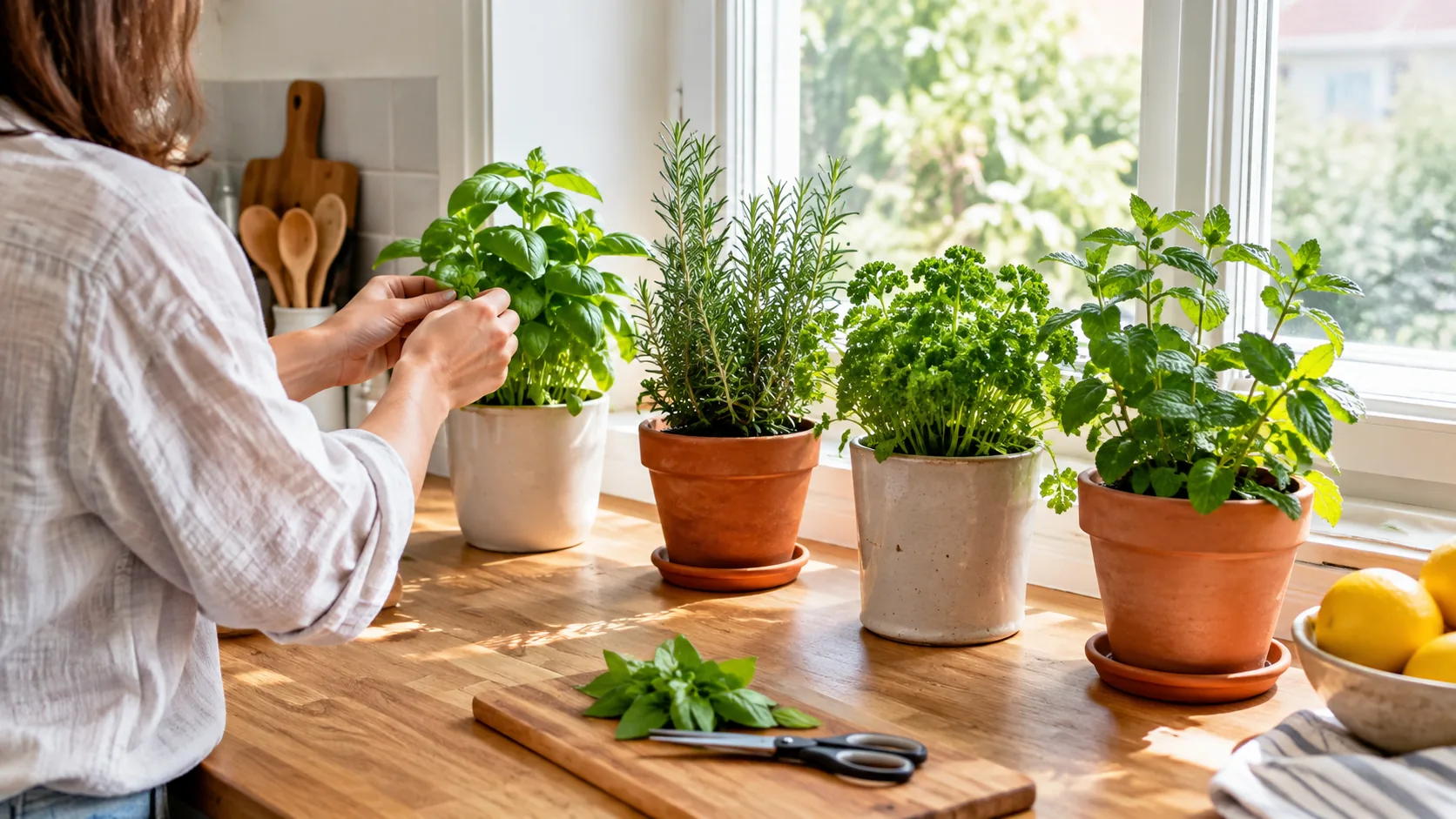
A herb garden indoor setup needs three things: a bright spot or a grow light, containers that drain (or a hydroponic unit), and herbs matched to the conditions you have. Basil, chives, parsley, mint, thyme and oregano suit a sunny window or a grow light on a counter. Start with three to five herbs you cook with, group them by water needs, and harvest by pinching stems often.
This guide gives you a herb-by-herb table, a setup checklist, and a list of common mistakes to avoid.
Herbs for indoor herb garden containers: light, water and harvest
Herbs fall into two camps. Soft-leaved herbs such as basil, parsley, cilantro, chives and mint like evenly moist growing medium. Woody Mediterranean herbs such as rosemary, thyme, oregano and sage prefer to dry out between waterings.
| Herb | Light | Water | How to harvest |
|---|---|---|---|
| Basil | Brightest light you have; a grow light helps in winter | Evenly moist, not soggy | Pinch stems just above a pair of leaves |
| Mint | Bright to medium light | Evenly moist | Snip stem tips; keep it in its own pot |
| Chives | Bright light | Evenly moist | Cut leaves near the base with scissors |
| Parsley | Bright to medium light | Evenly moist | Cut outer stems at the base |
| Cilantro | Bright light, cooler spot | Evenly moist | Cut outer leaves; sow again as plants tire |
| Thyme | Bright, direct light | Let the top layer dry first | Snip tips, leave woody stems |
| Oregano | Bright, direct light | Let the top layer dry first | Trim stem tips above a leaf pair |
| Rosemary | Brightest window or a grow light | Dry out between waterings | Cut young tips, not bare wood |
| Sage | Bright light | Let the top layer dry first | Pick single leaves or small tips |
Pick by what you cook
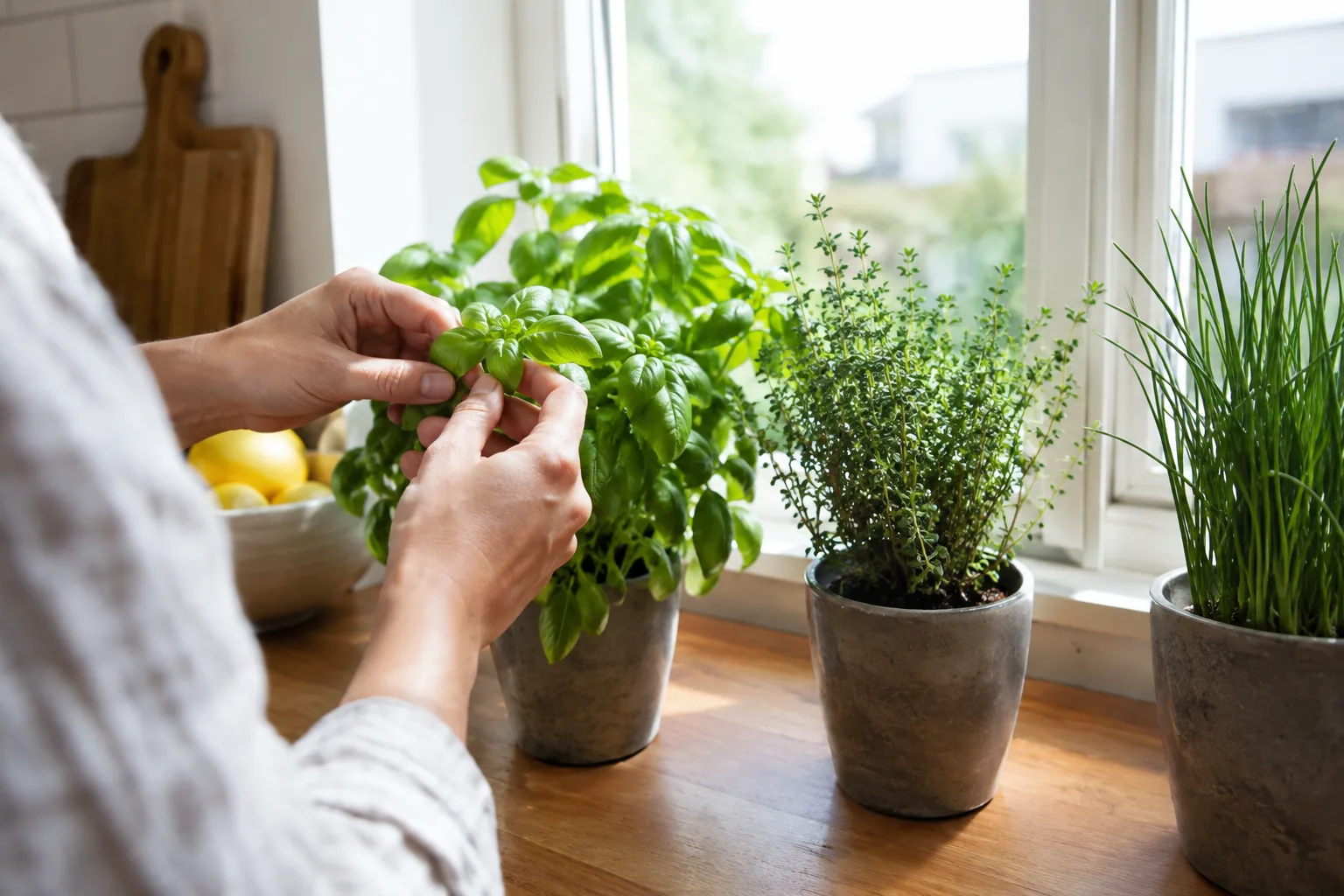
The herbs worth growing in an indoor herb garden are the ones you reach for weekly. If you make pasta and salads, choose basil, parsley and chives. If you roast vegetables and meat, lean toward rosemary, thyme and sage.
Group by water needs
Put thirsty herbs together and drought-tolerant herbs together. Mixing rosemary and basil in one pot means one of them is always unhappy. Give mint its own container because its roots crowd neighbors.
Light: window or grow light
Light is the limit for most indoor herbs. A south-facing window can work through much of the year, but short winter days and shaded rooms leave plants stretched, pale and thin. If stems lean toward the glass or the spaces between leaves grow long, the plant wants more light.
A grow light puts the light source where you need it. Look for full-spectrum white light, which lets you check leaves and soil in normal color. For the details on spectrum, distance and hours, read Can Plants Grow With LED Lights? Spectrum, Distance and Hours. You can also browse the Indoor Gardening & Grow Lights collection.
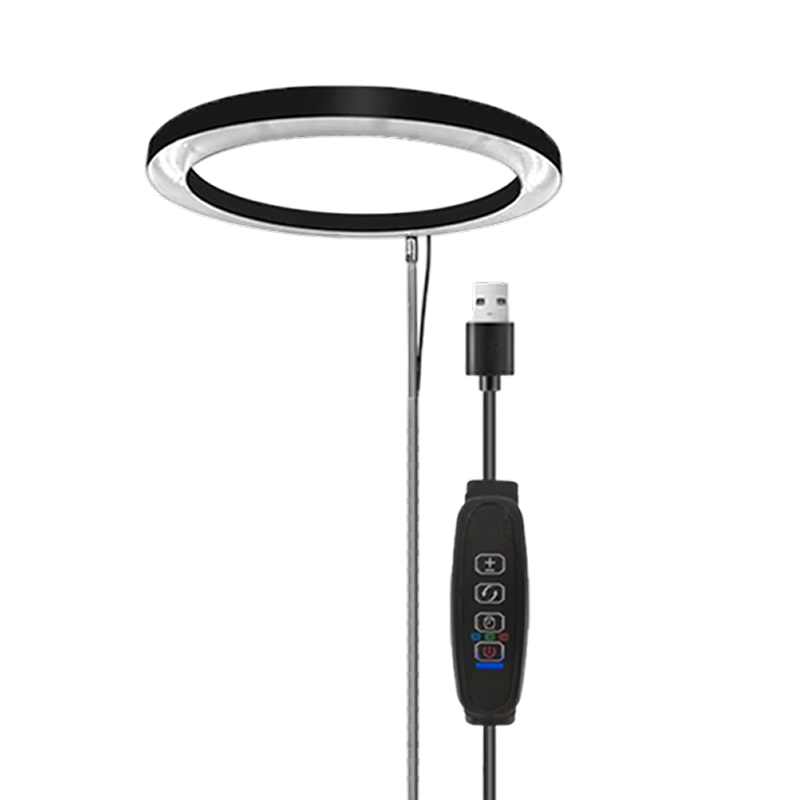
The FloraAxis is one example. It has a round 16cm (about 6 in) LED head with 70 LED beads, mounted on an adjustable stand that extends from 20 to 165cm (about 8 to 65 in). You can set the head low over seedlings and raise it as the herbs grow. Its built-in auto-timer has three settings, so the light follows a schedule without manual switching.
 In this guideFloraAxis$99.99View
Setup checklist for your herb garden indoor
Work through these steps in order before you buy a single plant.
- Choose the spot: a bright window, or a counter or shelf where a grow light can sit above the plants.
- Pick containers with drainage holes, plus saucers to catch runoff. Match the pot to the herb: deeper for rosemary and parsley, wider for chives and mint.
- Fill with a light potting mix made for containers, not garden soil, which packs down indoors.
- Plant starts or sow seeds, following the seed packet for depth and spacing.
- Water until it drains from the bottom, then empty the saucer.
- Set the light. If you use a grow light, position the head over the plants and choose a timer setting so the schedule stays consistent.
- Label each pot and note which herbs are thirsty and which prefer dry spells.
- Plan to rotate pots a quarter turn on a regular schedule so growth stays even.
Field note
Check moisture with a finger. Push it into the mix to the first knuckle: damp means wait for the drier-style herbs, and dry means water the soft-leaved herbs now.
Hydroponic option: a countertop unit
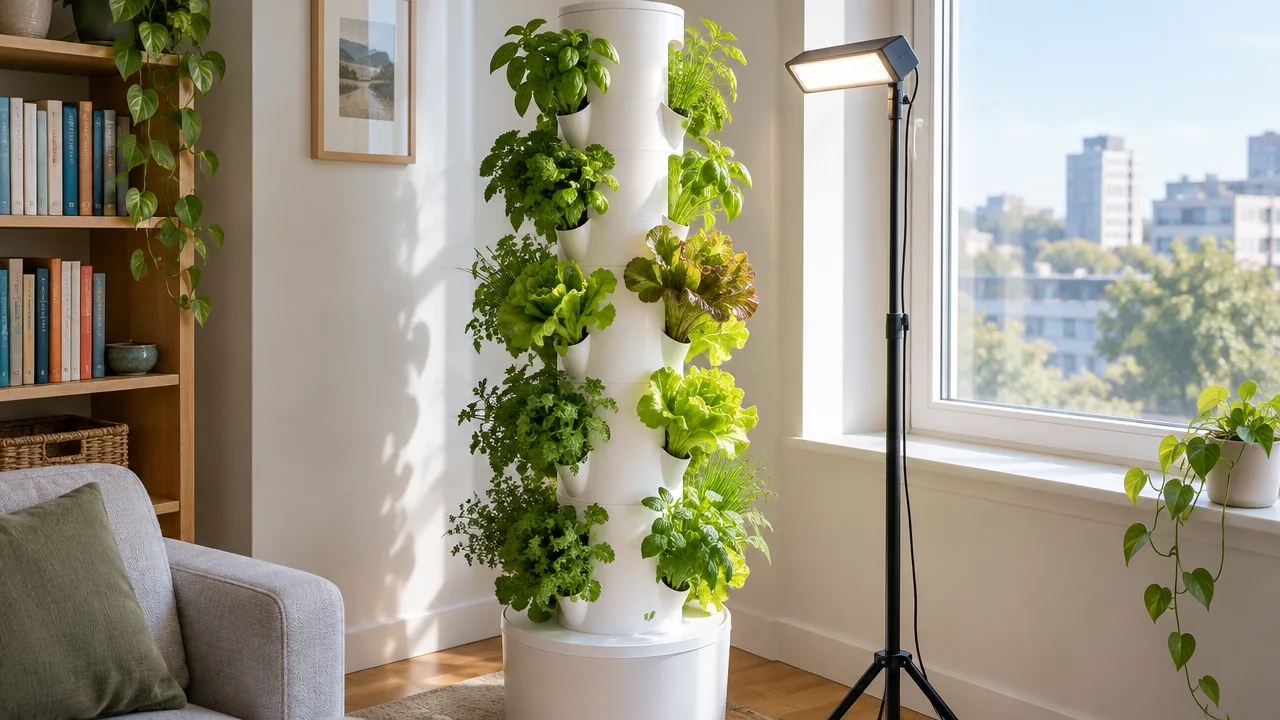
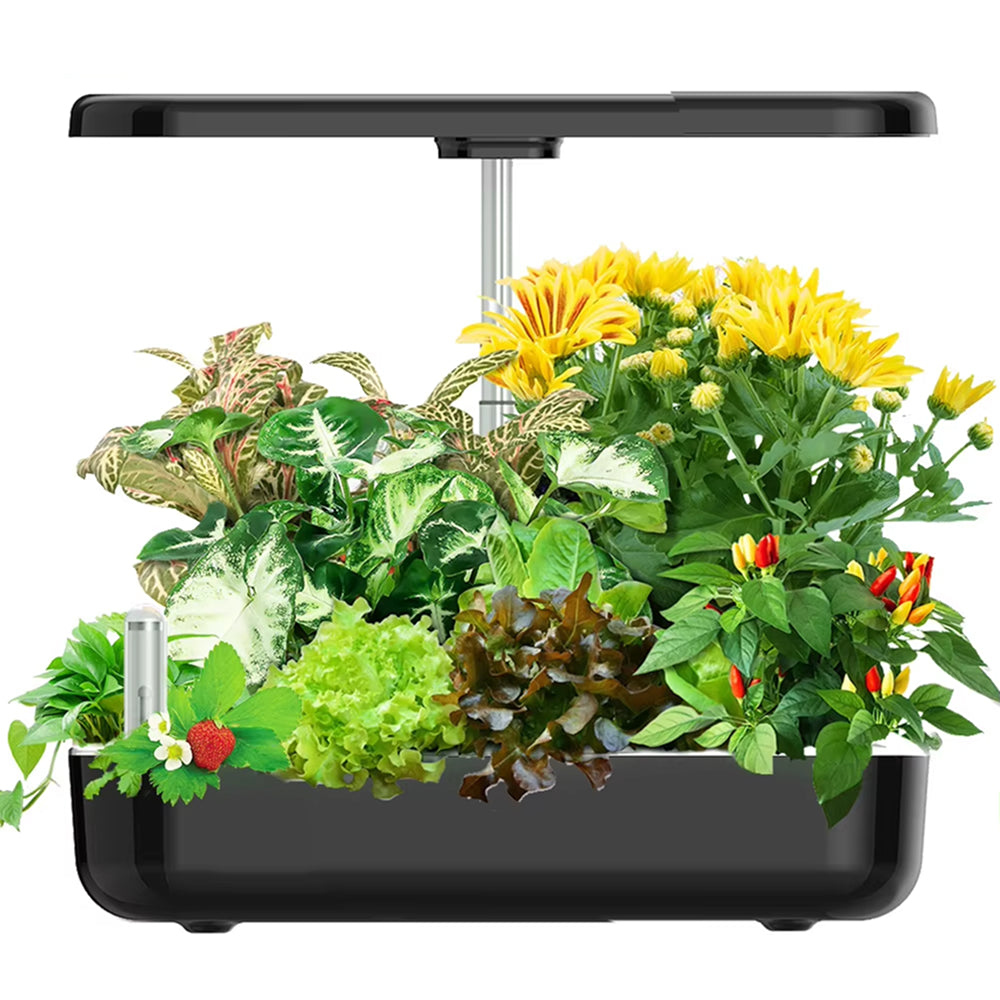
If you would rather skip potting mix, a hydroponic herb garden indoor unit holds plants in a growing medium and feeds them from a water reservoir. A countertop hydroponic unit also suits kitchens without a bright window, since the light is built in.
The HerboLoom has a full-spectrum LED on an automated cycle and a water circulation pump that moves water past the roots. Plants sit in reusable baskets filled with bio-carbon growing medium. It holds a dozen herbs and vegetables, and you choose the mix. To use it, fill the reservoir with water, add the nutrient starter solution (supplied), set seeds or starts into the baskets and plug it in. The box also includes a Quick-Start Setup Guide.
 In this guideHerboLoom$249.99View
Water, feed and harvest
Watering
Overwatering is a frequent cause of failure in containers. Water when the top of the mix feels dry for woody herbs, and when it is just barely damp for soft herbs. Empty saucers so roots do not sit in water.
Feeding
Container herbs use up nutrients in their mix. Feed lightly with a diluted fertilizer made for edible plants, following its label. Heavy feeding tends to give watery growth with less flavor.
Harvesting
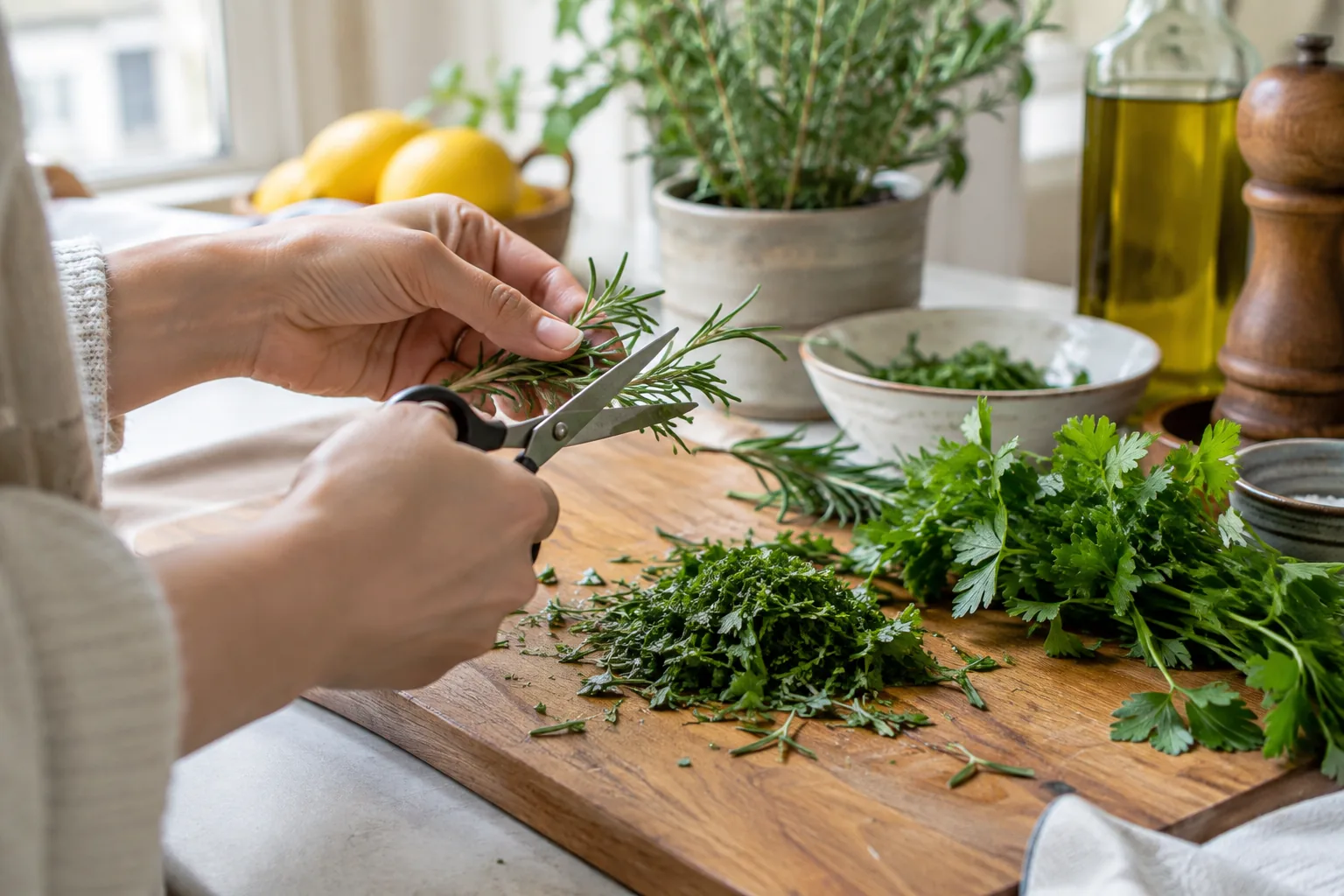
Regular cutting keeps herbs bushy. Take stem tips rather than stripping single leaves, and leave enough foliage for the plant to keep growing. Pinch off flower buds on basil and cilantro as they appear, since flowering changes the leaf flavor.
Common mistakes and fixes
| Problem | Likely cause | Fix |
|---|---|---|
| Long, leaning stems | Not enough light | Move closer to the window or lower the grow light head |
| Yellow lower leaves | Too much water or poor drainage | Check drainage holes, empty saucers, water less often |
| Wilting despite wet mix | Roots sitting in water | Repot into fresh mix with drainage |
| Bitter or thin flavor | Plant flowering or short on light | Pinch buds and increase light |
| Pests on leaves | Crowded, stagnant plants | Space pots out, wipe leaves, isolate the affected pot |
Avoid crowding too many plants in one container, and avoid placing pots against cold glass or near heating vents, where temperature swings stress them.
How long herbs last indoors
Basil, cilantro and parsley are short-lived herbs and respond well to regular new sowings. Rosemary, thyme, oregano, sage, mint and chives are perennials and can live for years indoors when repotted as they outgrow containers and given enough light.