Is a Stainless Steel Pan Good? Pros, Cons and No-Stick Method
A stainless steel pan is good for searing, pan sauces and everyday cooking if you preheat it and add oil at the right moment. This guide covers pros, cons, the preheat test and cleaning.
The Cobalt Hollow Team
November 20, 2026 · 9 min read
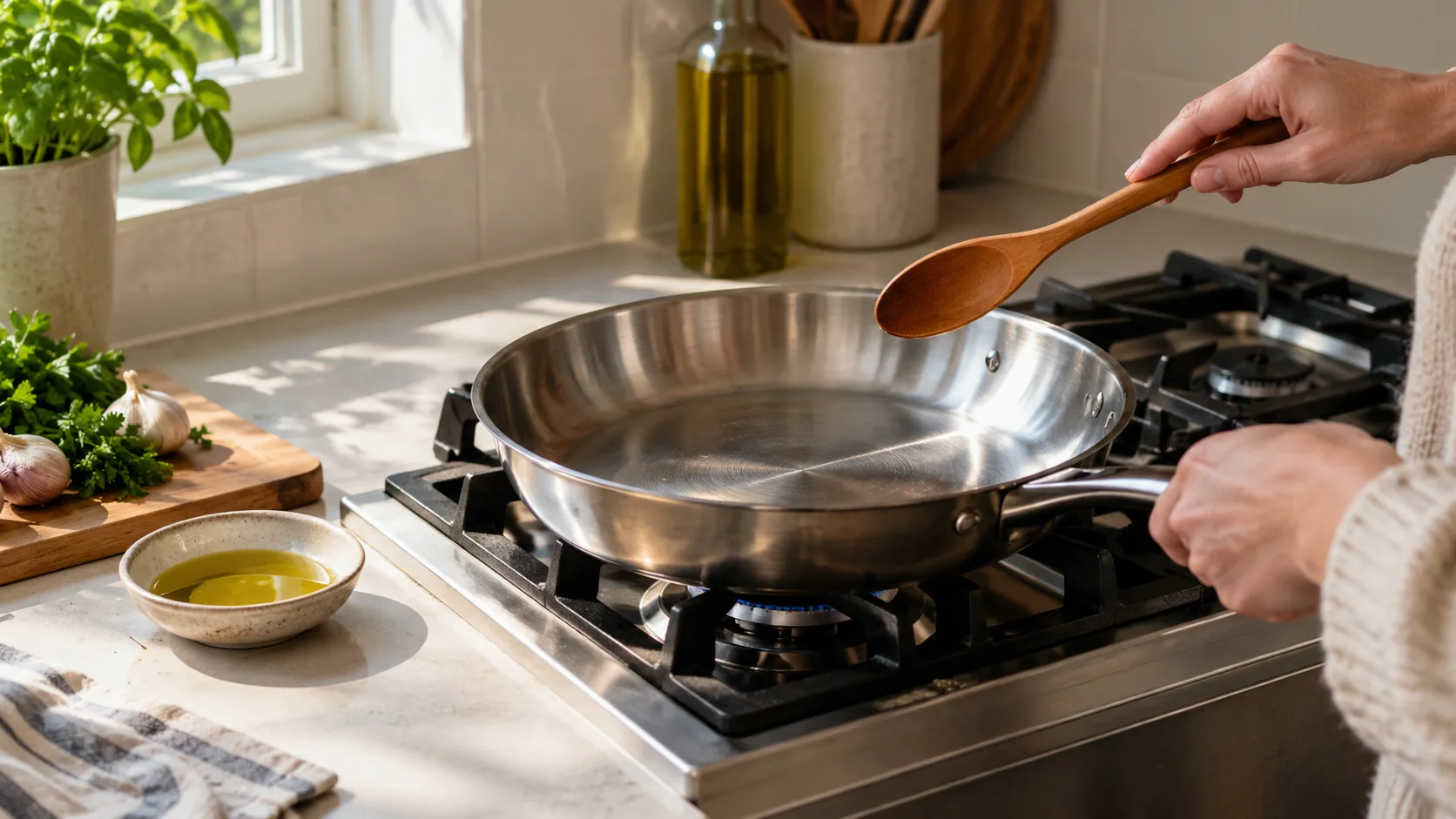
A stainless steel pan is good for searing, browning, pan sauces and everyday stovetop cooking, as long as you learn one habit: preheat the pan, then add oil, then add food. The trade-offs are real. Stainless steel has no nonstick coating, it has more weight than thin pans, and it needs a layered base to spread heat well.
This guide gives you an honest pros and cons table, a water-drop test that tells you when the pan is ready, a cleaning routine, and a checklist for choosing a pan.
Is a stainless steel pan good? Pros and cons
Stainless steel suits cooks who want one durable pan for browning meat, building a sauce in the same pan, and finishing dishes on the stovetop. It asks a little more of you than a coated pan does. The table lays out both sides.
| Point | Pro | Con |
|---|---|---|
| Cooking surface | Uncoated, so metal spatulas and tongs are fine | Food sticks if the pan is cold or the oil goes in too early |
| Browning | Builds a brown crust and the browned bits for a pan sauce | Needs attention to heat level |
| Acidic foods | Tomato, wine and lemon sauces can be cooked in it | Long simmers may leave faint spots to clean |
| Construction | An aluminum core between steel layers carries heat across the base | Single-layer pans tend to run hot in the middle |
| Weight | A stiff, full-clad base sits flat on the grate or cooktop | More weight to lift and flip |
| Cleaning | Soap and water, plus a soak for stuck bits | Burnt-on food needs a soak and some scrubbing |
| Cooktops | FerroSear fits gas, ceramic, electric and induction stoves | Check the product page for your cooktop type |
| Learning curve | The same preheat method applies across foods | Eggs and fish are less forgiving until you have the method |
What are the disadvantages of stainless steel pans?
There are four worth knowing before you buy.
- Food sticks when the pan is not hot enough, or when the pan is crowded and the food cannot release.
- A thin, single-layer pan develops hot spots, so food browns unevenly.
- The pan has more weight than aluminum or coated pans, which you notice when flipping or carrying a full pan.
- It shows fingerprints, water spots and a rainbow tint after heat, which are cosmetic and can be cleaned off.
These come down to construction and technique. A clad pan with an aluminum core addresses the hot-spot issue, and the water-drop test below addresses the sticking.
What to look for in a stainless steel frying pan
Brand names matter less than a few build details. Use this checklist when you compare a stainless steel skillet or frying pan.
Layers and core
Look for a tri-ply build: an aluminum core between layers of stainless steel. Aluminum carries heat, and the steel on the cooking side gives you the uncoated surface. The core should run from edge to edge, so heat moves across the base and up toward the rim, not only under the burner.
A flat, stiff base
A pan that rocks on the burner is hard to cook in, and oil runs to one side. Set the pan on a flat counter and press on the rim before you commit. A full-clad stainless base gives the pan a stiff structure, so it sits flat on the grate or cooktop.
Cooktop match
Check that the pan lists your cooktop type. Induction needs a magnetic base, and the product page should say whether the pan fits.
Size and sides
Pick a diameter that fits your burner and your household. A larger pan lets you sear without crowding, while a smaller one suits a single steak or two eggs. Sloped sides make it simple to slide food out and toss it, and straighter sides hold more liquid for sauces.
| Job | Pan size to reach for |
|---|---|
| One steak, two eggs, a single chicken thigh | Smaller pan, so oil stays in a thin layer under the food |
| Family-size searing | Larger pan, so pieces have space between them |
| Pan sauce after searing | Straighter sides, so liquid has room to reduce |
| Tossing vegetables | Sloped sides, so food slides out and over |
A tri-ply pan to consider
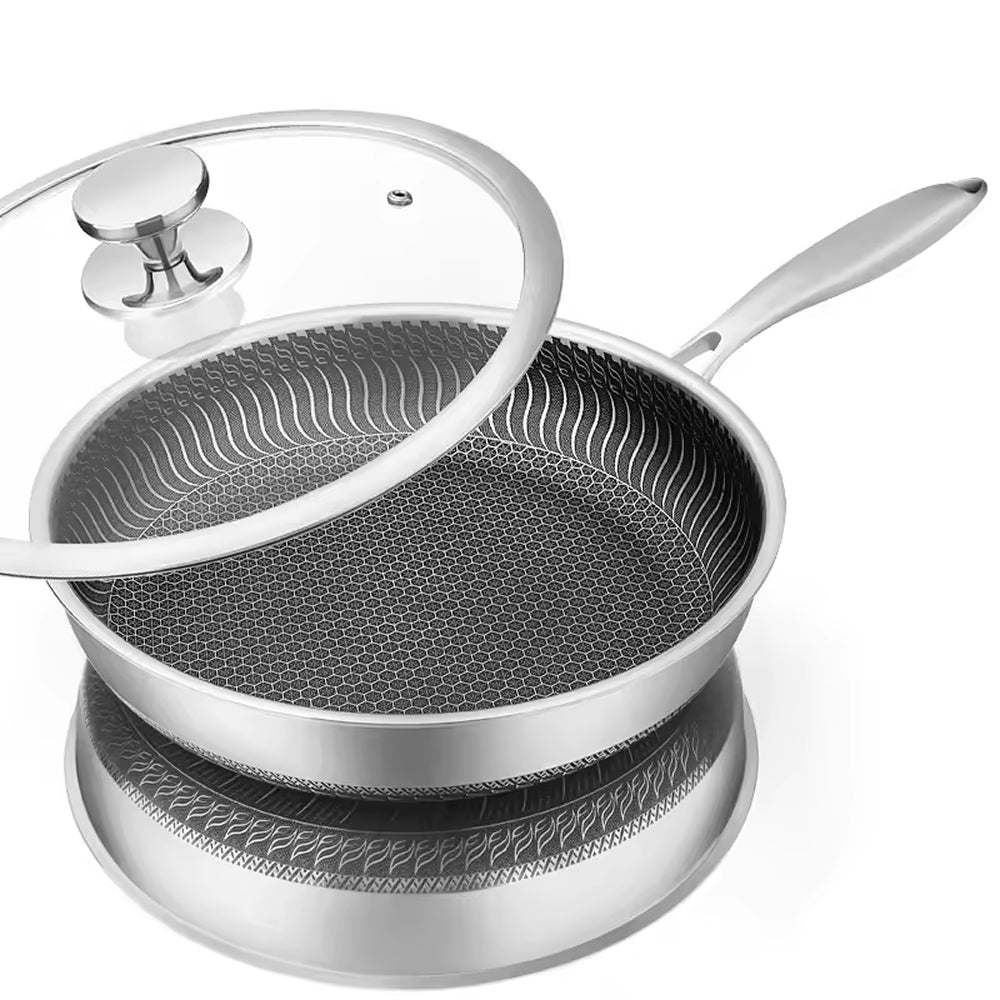
FerroSear is a stainless steel pan with tri-ply cladding: an aluminum core encased in 304 stainless steel. It fits gas, ceramic, electric and induction stoves.
The cooking surface is uncoated steel, which takes metal spatulas and tongs and lets you cook acidic sauces. The full-clad stainless base gives the pan a stiff structure so it sits flat on the grate or cooktop. Choose the size that suits your kitchen and household. A matching lid is an optional add-on, and the box includes a quick-start searing technique guide.
 In this guideFerroSear$119.99View
The preheat test that stops sticking
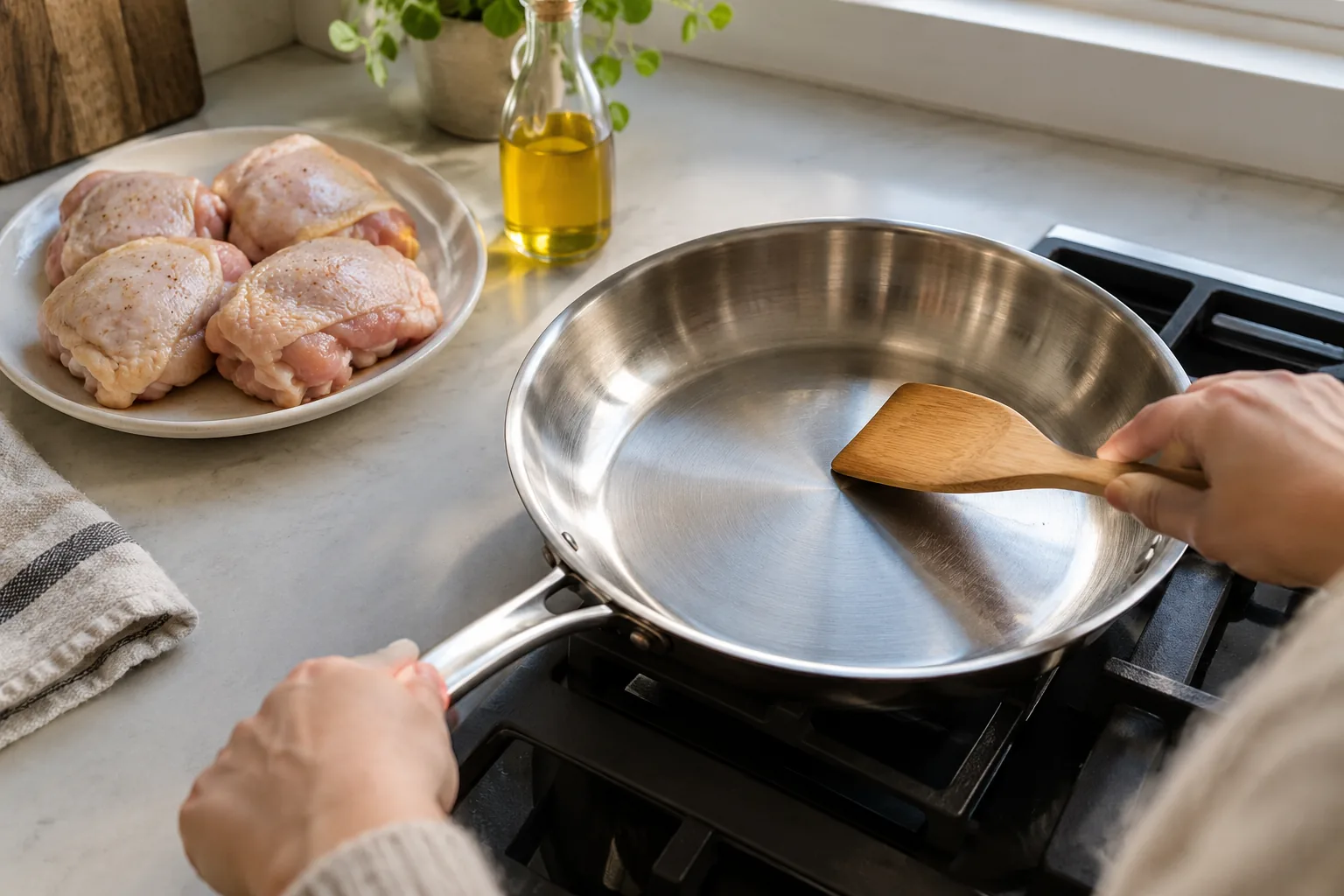
Food grabs a cold pan and tears when you flip it. The fix is heat first, oil second, food third. The water-drop test shows when the pan is ready, without a thermometer.
- Dry the pan and set it on the burner over medium heat. Leave the oil in the bottle for now.
- Flick a few drops of water onto the surface.
- If the drops sizzle and evaporate right away, the pan is not ready. Keep heating and test again.
- When the drops bead into small balls and move across the surface, the pan is ready. If they break into many tiny beads, take the pan off the heat until it cools a little, then test again.
- Wipe out the water, add a thin layer of oil, and let it shimmer.
- Add the food and leave it alone. Food releases from the surface once a crust forms, so if it resists a nudge, give it more time.
Field note
Pat meat, fish and vegetables dry before they go in. Surface moisture cools the pan and makes food cling, so dry food has a chance to form a crust.
Common mistakes that cause sticking
- Adding food to a cold or barely warm pan.
- Pouring oil into the pan while it heats, where it can break down before the food goes in.
- Crowding the pan, which cools the surface and releases steam.
- Flipping too soon. Give the food time to form a crust and lift on its own.
- Turning the burner to maximum out of habit. Once the pan is hot, medium to medium-high heat is a sensible range for searing, and very high heat can scorch oil.
Heat control and rainbow tint
Stainless steel holds heat, so you do not need to keep the burner high after the pan has reached temperature. Start at medium, run the water-drop test, and adjust from there. If oil smokes, lower the heat and wipe out the pan before continuing.
The blue or rainbow tint that sometimes appears is a cosmetic change from heat. It wipes off with a little white vinegar, as the cleaning section shows. Heavy browning on the pan walls usually means the burner was set higher than the food needed.
If you already cook on cast iron, the logic is familiar. Our guide to cast iron frying pan steak walks through preheating, searing, basting and resting, and the same sequence carries over to stainless.
What should not be cooked in stainless steel?
Nothing is off limits, but some foods ask for more care. Eggs and delicate fish stick when the pan is under-heated or the fat is skimpy, so use the water-drop test and enough oil. Starchy or sugary glazes can burn onto the surface, so lower the heat once they go in.
Do not leave food sitting in the pan after cooking. Move leftovers to a storage container, then wash the pan. Acidic sauces such as tomato, wine and lemon can be cooked in uncoated steel, and the pan is a good tool for building a sauce from the browned bits left after searing.
Is stainless steel the healthiest pan to use?
We do not rank pans by health. Stainless steel has no applied coating, so metal tools are fine. If you have a specific dietary or material concern, ask a qualified health professional or the pan maker, and read the care and use notes that come with the pan.
How to clean a stainless steel pan
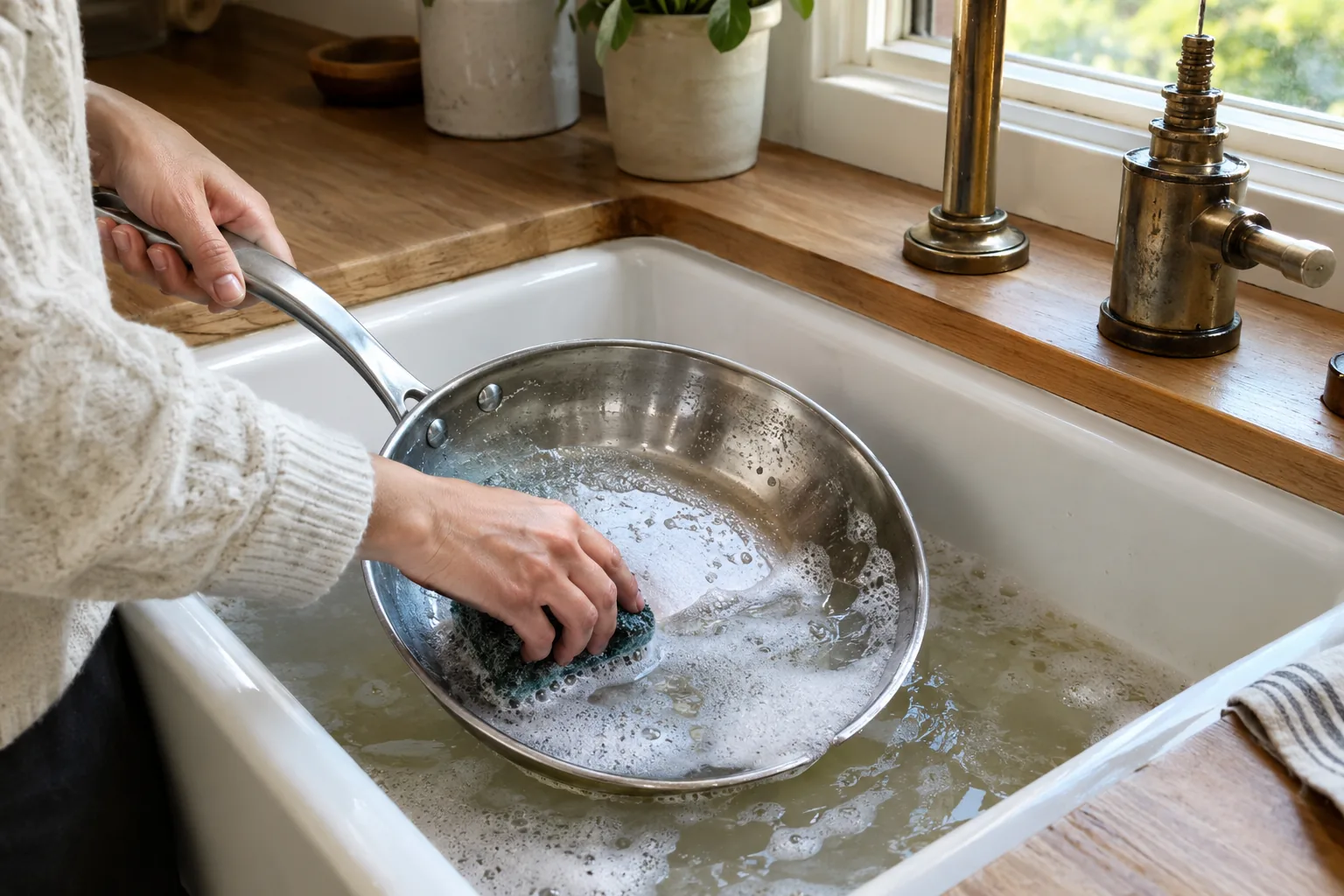
Whether you want to know how to wash a stainless steel pan after dinner or how to clean a stainless steel frying pan with burnt-on food, the routine is short. Let the pan cool before it meets water, because plunging a hot pan into cold water can stress the metal. Follow the care notes in the manual for your pan.
Everyday wash
- Let the pan cool until you can handle it.
- Wash with warm water, dish soap and a sponge or soft brush.
- Rinse, then dry with a towel to prevent water spots.
For a pan like FerroSear, cleanup is soap and water.
Stuck-on food
- Fill the pan with enough hot water to cover the stuck area and add a few drops of dish soap.
- Let it soak for 1 hour.
- Loosen the residue with a wooden spoon or a non-scratch pad, then wash as usual.
For stubborn spots, simmer a little water in the pan and scrape gently with a wooden spoon. Let it cool before you pour it out.
Stains, spots and tint
| Problem | What to do |
|---|---|
| Burnt-on food | Soak in hot soapy water for 1 hour, then scrub with a non-scratch pad |
| Stuck, browned residue | Simmer water in the pan, then loosen with a wooden spoon |
| Cloudy white spots or rainbow tint | Wipe with white vinegar on a cloth, rinse and dry |
| Dull film or light stains | Make a paste of baking soda and water, rub with a soft cloth, rinse and dry |
| Water spots | Dry right after rinsing |
Skip steel wool and harsh scouring powders on the cooking surface, since scratches collect residue. Do not mix cleaners, such as vinegar with bleach-based products, and ventilate the kitchen when you use a strong one.
Care schedule
| When | Task |
|---|---|
| Before each use | Dry the pan, then run the water-drop test before adding oil |
| After each use | Cool, wash with soap and water, dry with a towel |
| When spots appear | Wipe with vinegar or a baking soda paste, then rinse and dry |
| When stored | Keep it dry and avoid stacking heavy items directly on the cooking surface |
Buying checklist
Before you buy any stainless pan, confirm these points:
- Tri-ply or full-clad construction with a core that reaches the rim.
- A flat base that sits steady on your cooktop.
- A listed match for your stove type, including induction if you use it.
- A size that fits your burner and household.
- A handle and weight you can manage when the pan is full.
A stainless steel pan suits cooks who want a durable, uncoated surface for browning and sauces and who will spend a few cooking sessions learning the preheat method. If you want to cook eggs with no oil and no learning curve, a coated pan may suit you.
For more pots, pans and kitchen storage, browse our Food Storage, Cookware & Water Filtration collection.