Smallest Cordless Leaf Blower: Weight, Airflow and Battery Trade-offs
The smallest cordless leaf blower suits patios, porches and light lawn cleanup. Match CFM, MPH, weight and battery voltage to your yard task before you buy.
The Cobalt Hollow Team
November 16, 2026 · 6 min read
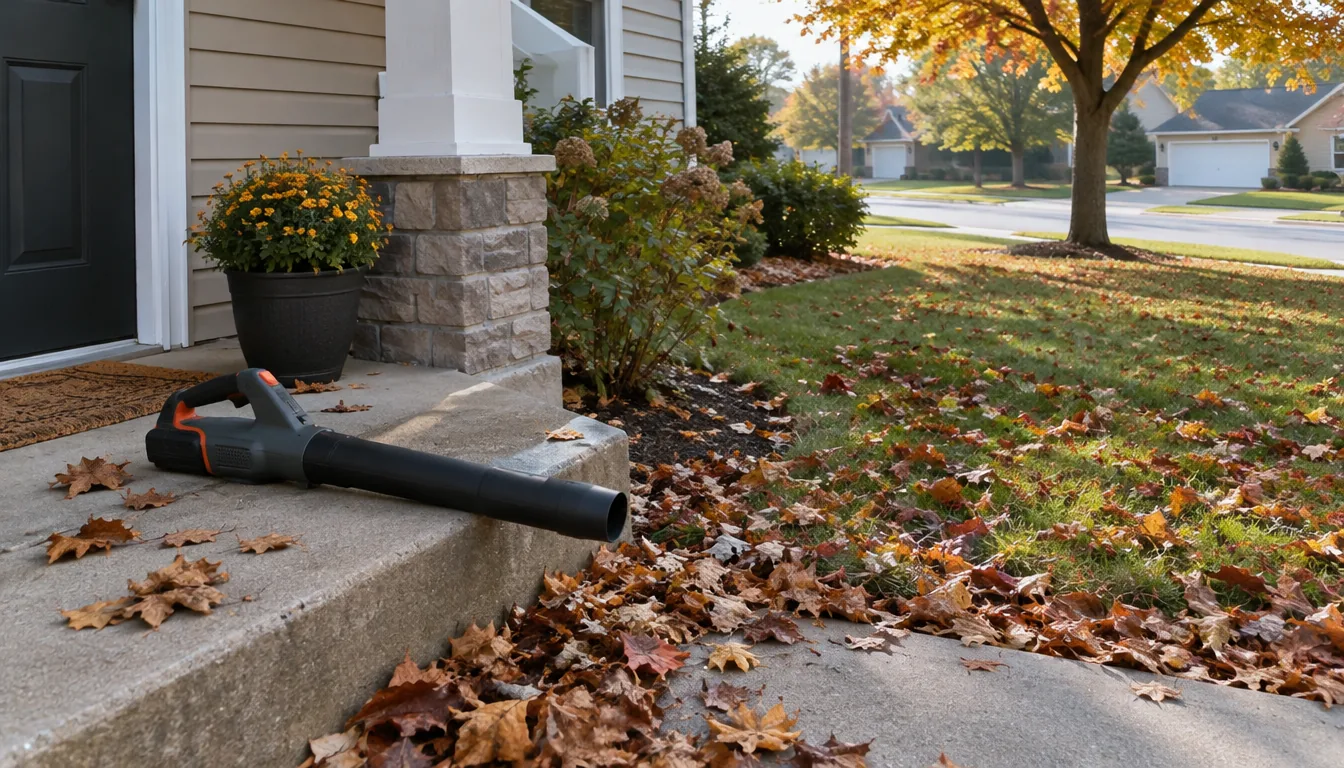
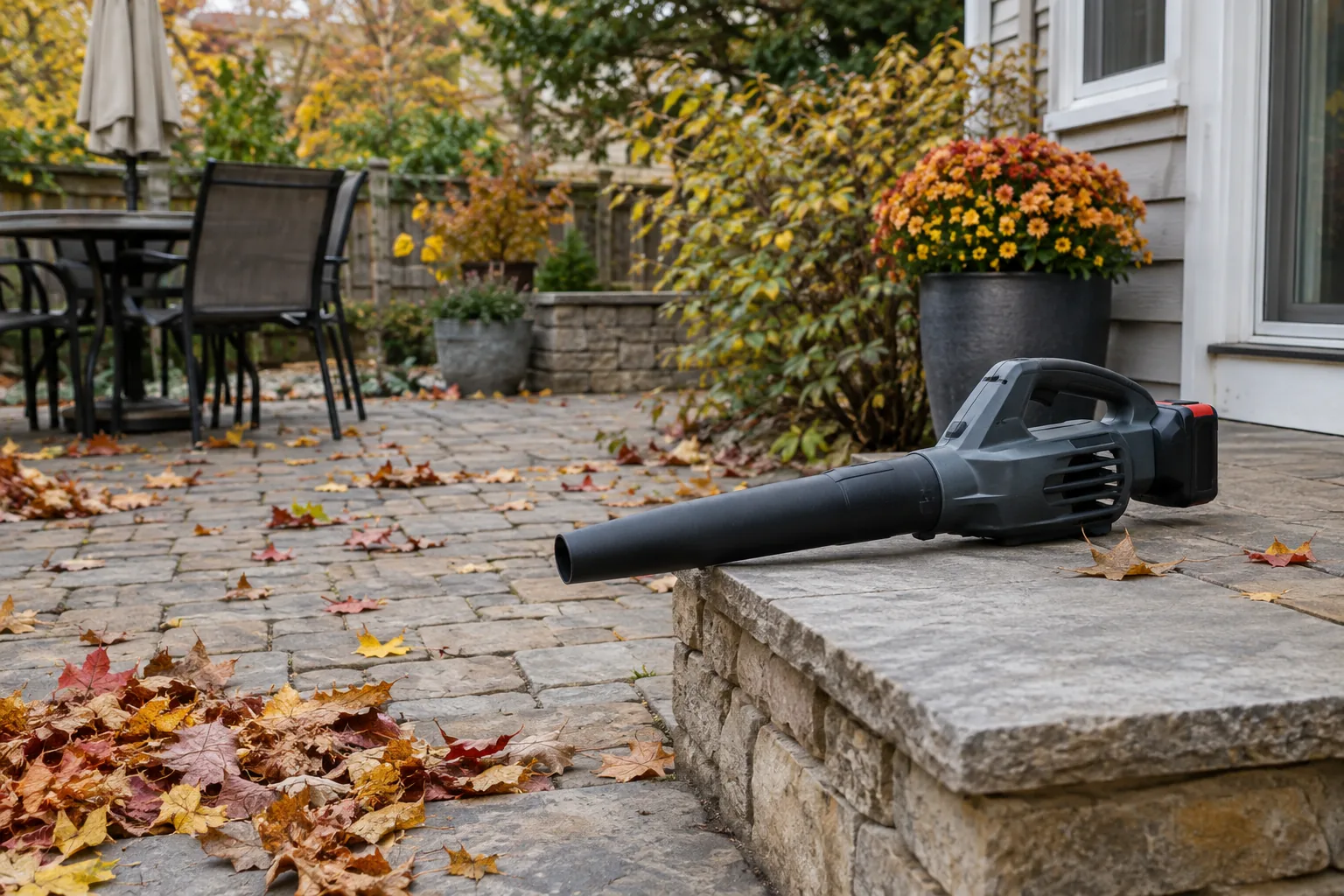
The smallest cordless leaf blower is a handheld unit with a compact battery, and it fits light jobs: porches, patios, driveways, and dry leaves on a small lawn. The trade-off is always the same. Less weight and a smaller battery mean less airflow and a shorter working session, so choose by the task, not by size alone.
This guide shows which numbers to read on a spec label, what to expect from each size, and how to match a compact blower to your yard.
The four specs that decide a compact blower
Every cordless blower label gives a few numbers. Each one tells you something different, and a small body can score high on one while giving up another.
- CFM (cubic feet per minute) is the volume of air moved. It matters for pushing a wide pile of leaves.
- MPH is air speed at the nozzle. It matters for lifting stuck, flat or damp debris.
- Weight is what your wrist carries. Check whether the listed figure includes the battery.
- Voltage and amp-hours describe the battery. Together they set how much energy is stored.
A high MPH figure with a low CFM figure clears light debris from a narrow spot but moves a big pile slowly. A high CFM figure with modest MPH sweeps open ground but struggles with wet leaves stuck to pavement.
Smallest cordless leaf blower by yard task
Use this table as a starting point. The ranges are general reading guides, approximate and not tied to any model, so compare them with the figures on the product page you are considering.
| Yard task | Approx. CFM | Approx. MPH | Weight priority | Battery size |
|---|---|---|---|---|
| Porch, patio, steps | 100 to 250 | 60 to 110 | Highest: smallest body works | Compact pack is enough |
| Driveway and walkway | 250 to 400 | 90 to 130 | High | Mid-size pack |
| Dry leaves on a small lawn | 300 to 500 | 100 to 140 | Medium | Mid-size pack, spare if the yard is large |
| Wet, matted leaves | 400 to 600 | 120 to 160 | Lower: expect a heavier unit | Larger pack or spare |
| Large lot or heavy fall drop | 500 and up | 130 and up | Lowest: size is not the goal | Larger voltage system |
If your jobs sit in the top three rows, a compact blower is a sound fit. If your work is mostly in the bottom two, a small unit takes many passes and more battery swaps.
20V vs 40V: what differs
Voltage is the battery system's electrical level. A 40V system tends to pair with a larger motor design, while a 20V system is common in lighter, handheld tools. The pack's amp-hours matter too, since volts multiplied by amp-hours gives watt-hours of stored energy.
| Factor | 20V class | 40V class |
|---|---|---|
| Body | Compact, handheld | Larger, often with a bigger pack |
| Weight | Lower | Higher |
| Airflow ceiling | Suits light to moderate jobs | Suits heavier piles and wet leaves |
| Suited to | Patios, small lawns, short tidy-ups | Larger yards, frequent fall cleanup |
Batteries are not interchangeable across tool systems, so check which pack you already own before you pick a voltage. If you want the most powerful cordless leaf blower for a big lot, look at the higher-voltage class and accept the extra weight. For a small yard, that capacity often goes unused.
How much does a blower weigh?
Weights vary by model and battery, but rough ranges help. Compact handheld cordless blowers often fall around 3 to 5 lb with the battery. Full-size handheld models run roughly 5 to 9 lb, and backpack types can reach roughly 10 to 20 lb. Some spec sheets list the weight without the battery, so add the pack before you compare.
Weight balance matters as much as the number. A unit with its mass over the handle holds differently from one that is nose-heavy. A rubberized or anti-vibration grip and a lockable switch also suit longer jobs.
A weight check before buying
- Find the weight on the product page and note whether the battery is included.
- Add the battery weight if it is listed separately.
- Compare against how long a session in your yard takes.
- If you work overhead or along fence lines, favor the lighter option.
A cordless blower that also vacuums
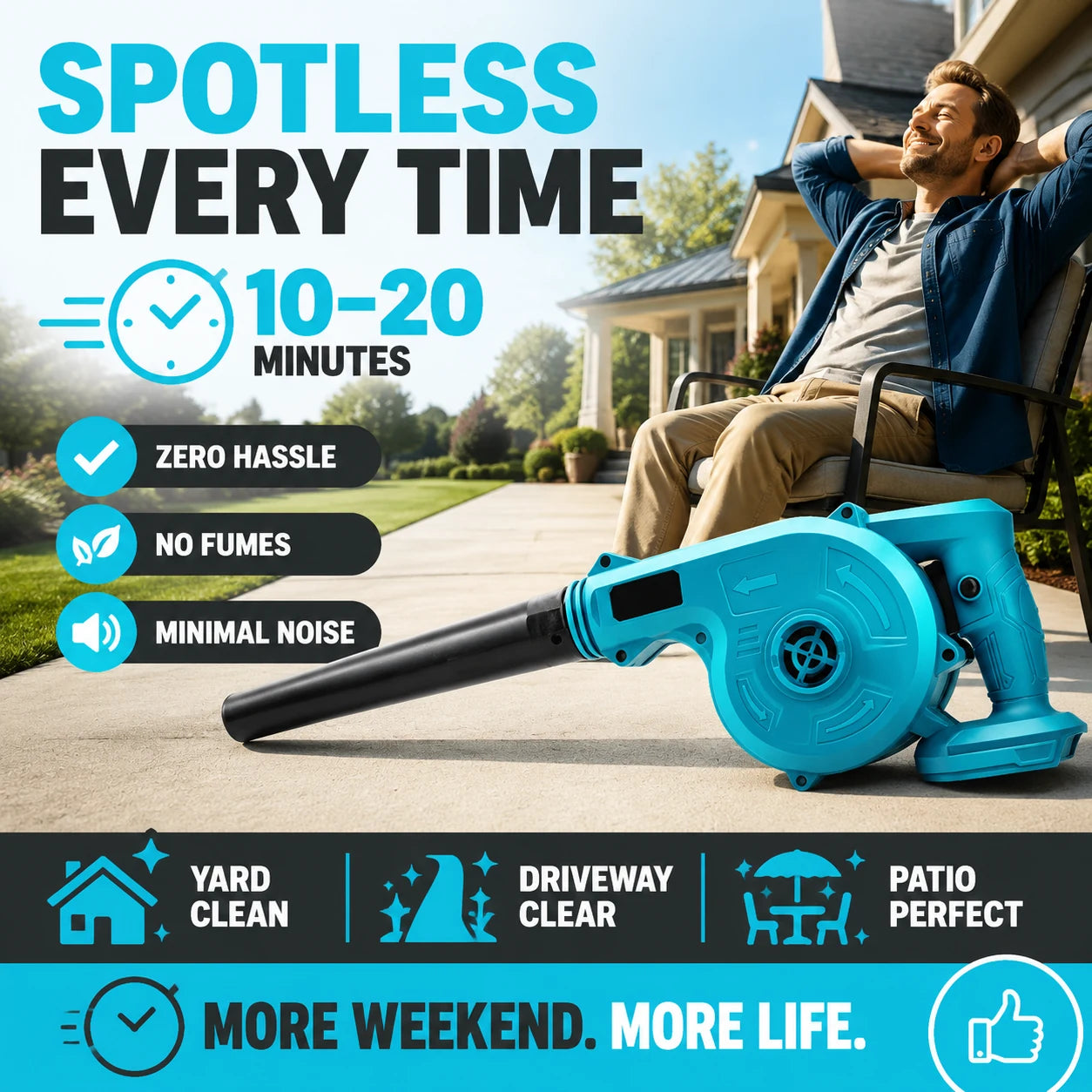
If you want one tool for blowing and collecting, look at a cordless leaf blower vacuum. The AirForce Pro is a cordless leaf blower that also works as a vacuum, running on a lithium-ion battery pack. It has a brushless motor, so there are no carbon brushes to replace. The product page does not list CFM, MPH or voltage here, so check its weight and airflow figures against the table above.
A variable speed dial sets the power level: low for patios, medium for dry leaves, and turbo for wet, matted piles. You change between the blower nozzle and the vacuum intake with a tool-free click. The handle has an anti-vibration grip and a self-locking switch, and the weight is balanced across the body.
 In this guideAirForce Pro$89.99View
The box includes the blower nozzle, the vacuum intake, a washable and reusable dust collection bag, the battery pack, a charger and a quick-start user guide. For upkeep, wipe the housing, keep the vents clear, and empty and wash the bag after vacuuming, then let it dry. Our Dryers, Blowers & Trash Care collection lists other blowers we stock.
Are handheld and battery-powered blowers worth it?
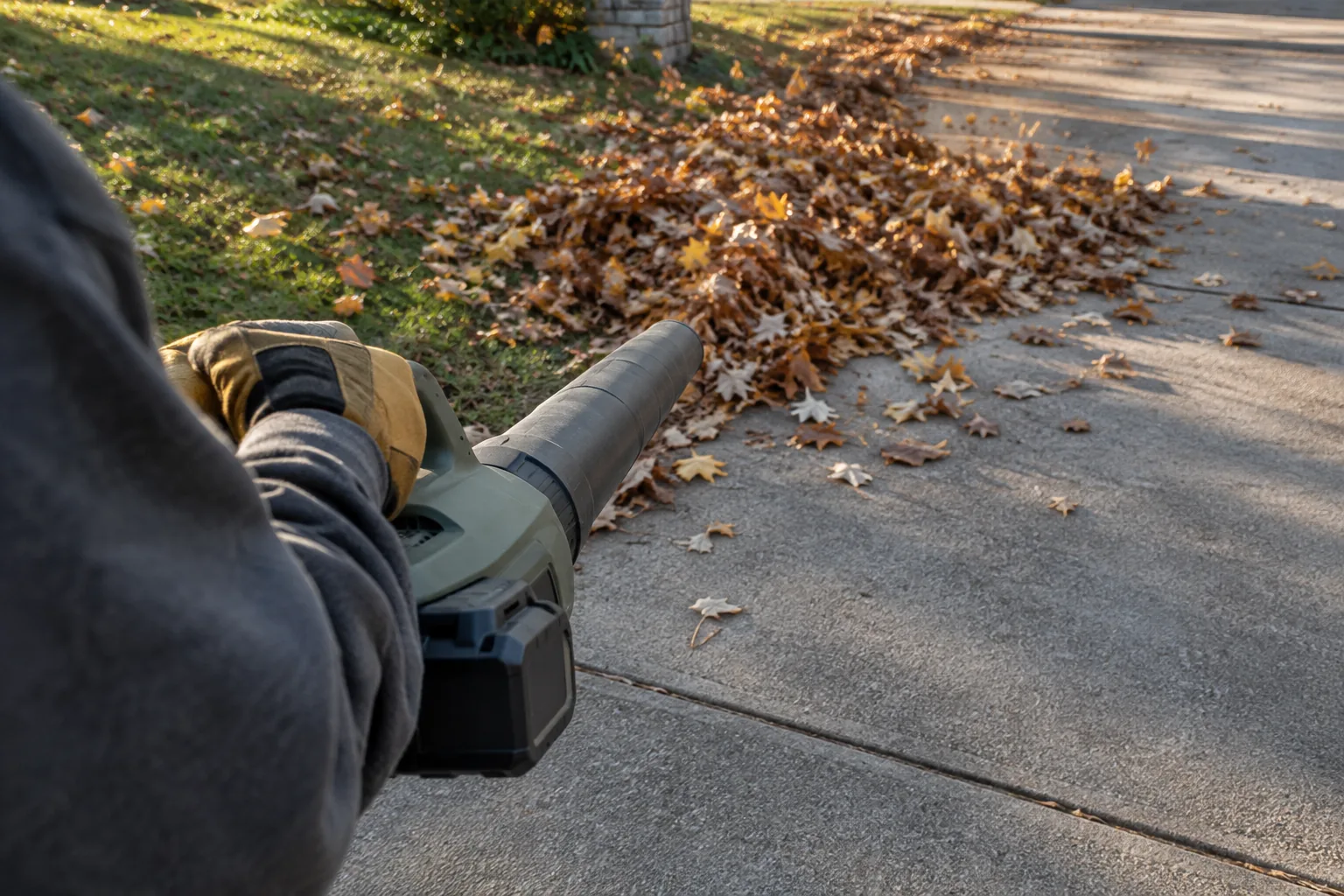
Handheld cordless blowers are a good match when your yard is small to medium and your jobs are short. They start with a switch, have no cord to manage, and store on a shelf. For a cleanup that spans several acres or a heavy fall drop, a larger-voltage system or a second battery is worth considering.
Run a simple check. List your three most frequent jobs, find the row for each in the table above, and see whether one compact unit covers them. If it does, a small blower fits. If two of the three call for turbo or wet-leaf power, step up in size.
Battery-powered units also suit a yard routine that already includes other cordless tools. Our electric lawn mower guide by yard size and terrain covers the same size-versus-battery thinking for mowing, and the Lawn, Yard & Snow Care collection lists other yard tools.
Setup checklist and common mistakes
Before the first job
- Charge the battery with the supplied charger and read the manual.
- Fit the nozzle that matches the job before you insert the battery.
- Start on the lowest speed and raise it as needed.
- Wear eye protection, and follow the manual: remove the battery before changing attachments or clearing a blockage.
Mistakes to avoid
- Comparing CFM on one label with MPH on another. Compare like with like.
- Ignoring whether the listed weight includes the battery.
- Buying a compact unit for wet, matted leaves, then running it on turbo for the whole job.
- Blowing leaves toward a neighbor's property or into a street. Work toward a pile on your own ground.
- Storing the unit with the battery attached.
For the technique, work across the area in passes, move debris into a corner or one pile, and collect it with a vacuum attachment or a tarp.
Field note
Do the heaviest work first with the battery full: wet or matted piles need the highest speed setting. Switch to a low setting for patios and furniture.
Decision steps
- Name your main task: patio, driveway, dry lawn leaves, or wet piles.
- Pick the row in the table, then check CFM and MPH on the label.
- Check the weight including the battery.
- Choose 20V for light, compact work or a higher voltage for heavy piles.
- Confirm the charger and battery are in the box.
Follow this order and the smallest cordless leaf blower that does your jobs becomes clear, without paying for power or weight you do not need.