Unit of Measurement for Energy: Joules, kWh and Your Meter
The SI unit of energy is the joule (J); your electric bill uses the kilowatt-hour (kWh). Here is how they connect, how watts differ, and how to read a meter.
The Cobalt Hollow Team
November 26, 2026 · 6 min read
What is the unit of measurement for energy? In the SI system it is the joule (J), and on a household electric bill it is the kilowatt-hour (kWh). One kWh equals 3,600,000 J, which is why utilities use the larger unit for home use.
Watts and kilowatts are not energy units. They measure power, the rate at which energy is used. The sections below turn the physics units into the ones you see on a meter.
What is the unit of measurement for energy in physics?
Energy is the capacity to do work, and work is a force applied over a distance. The joule is the work done when a force of one newton moves an object one meter. That makes the SI unit of work and the SI unit of energy the same thing: the joule.
The joule covers every form of energy: motion, heat, stored energy and electrical energy all use it. Written in base units, one joule is one kilogram meter squared per second squared. So yes, energy is measured in J.
Formulas that produce joules
- Work: W = F × d (newtons times meters)
- Kinetic energy: KE = ½ × m × v² (kilograms times meters per second, squared)
- Electrical energy: E = P × t (watts times seconds)
The last line shows why a watt-second is also a joule. A watt is one joule per second, so power multiplied by time gives energy.
The seven SI base units
Joules are built from a small set of base units. The seven base units of the SI system are:
- Meter (length)
- Kilogram (mass)
- Second (time)
- Ampere (electric current)
- Kelvin (temperature)
- Mole (amount of substance)
- Candela (luminous intensity)
The joule is a derived unit made from the meter, kilogram and second. Electrical quantities such as the watt and volt also trace back to these base units, including the ampere.
Other energy units and how they convert
The joule is small for everyday use, so other fields use other units. The table lists the ones you are likely to meet, with the conversion to joules.
| Unit | Symbol | Equals in joules | Where it appears |
|---|---|---|---|
| Joule | J | 1 J | Physics, SI work and energy |
| Kilojoule | kJ | 1,000 J | Food labels in some countries, chemistry |
| Erg | erg | 0.0000001 J | CGS system, older physics texts |
| Electronvolt | eV | about 1.6 × 10⁻¹⁹ J | Atomic and particle physics |
| Calorie (thermochemical) | cal | 4.184 J | Chemistry, nutrition |
| British thermal unit | BTU | about 1,055 J | Heating and cooling equipment in the US |
| Kilowatt-hour | kWh | 3,600,000 J | Electric bills and meters |
The CGS unit of energy is the erg, from the centimeter-gram-second system. A unit is a convention, so no unit is the smallest possible. The electronvolt is far smaller than the joule and suits single atoms and particles.

Energy or power: watts, kilowatts and kilowatt-hours
Power is how much energy a device draws at a given moment. Energy is the total used over a span of time. A device label lists watts, while your bill lists kWh.
| Quantity | Unit | What it measures | Where you see it |
|---|---|---|---|
| Power | Watt (W) | Rate of use right now | Appliance labels |
| Power | Kilowatt (kW) | 1,000 watts | Heaters, solar systems, panel loads |
| Energy | Watt-hour (Wh) | A watt of power drawn for an hour | Small devices |
| Energy | Kilowatt-hour (kWh) | A kilowatt of power drawn for an hour | Utility meters and bills |
The formula is kWh = kW × hours of running. A 1.5 kW heater that runs for a full day of use is counted in kWh, not kW. So is energy measured in kW or kWh? It is kWh; kW describes the rate.
So on a bill, the unit of measurement for energy is the kilowatt-hour. The per-kWh rate on your bill, multiplied by the kWh used, gives the energy charge.
How to read household energy use on a meter
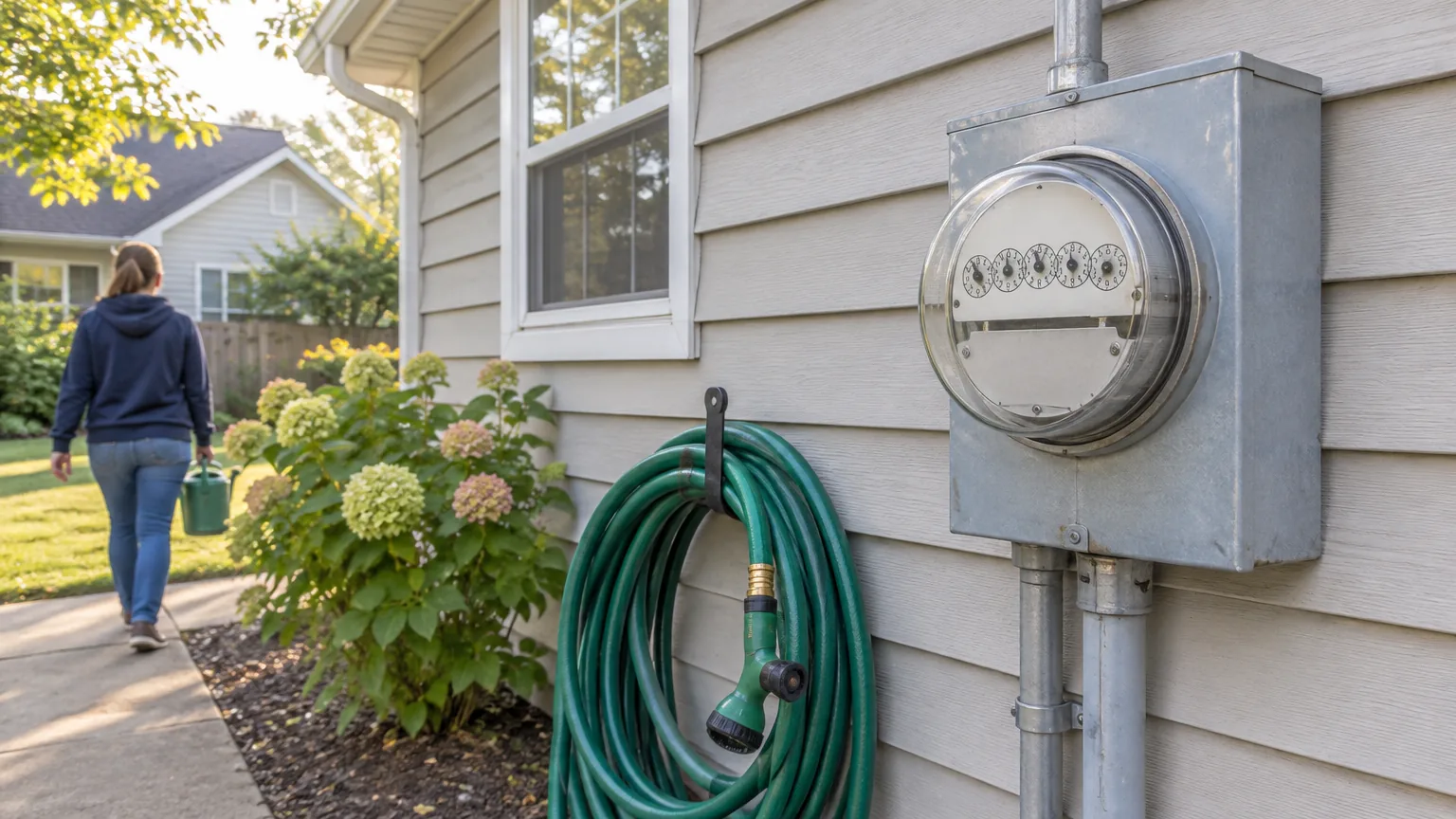
The meter at your home counts cumulative kWh, like a car odometer. You read it twice and subtract. Follow the manual or your utility's instructions for your meter model, and do not open the meter housing.
- Find the meter, usually outside the house or in a utility room, and look for the kWh label on the display or dials.
- On a digital display, note the number shown for total kWh. Some displays cycle through screens, so wait for the total reading.
- On dial meters, read the dials left to right. Write the lower number when a pointer sits between two digits. Adjacent dials turn in opposite directions.
- Write down the reading with the date.
- Wait 24 hours, then read the meter again.
- Subtract the first reading from the second. The difference is the kWh used between the two readings.
- Multiply by the per-kWh rate on your bill to estimate the energy charge.
A smart meter installed by your utility may show these figures in an online account as well. Check the utility's page for what it offers.
Field note
To compare one large appliance, read the meter over two time windows of equal length. Keep the appliance off in the first window and on in the second, and use everything else in the house the same way. Subtract the first window's kWh from the second.
Watching household use on your phone with a clamp-on smart energy meter
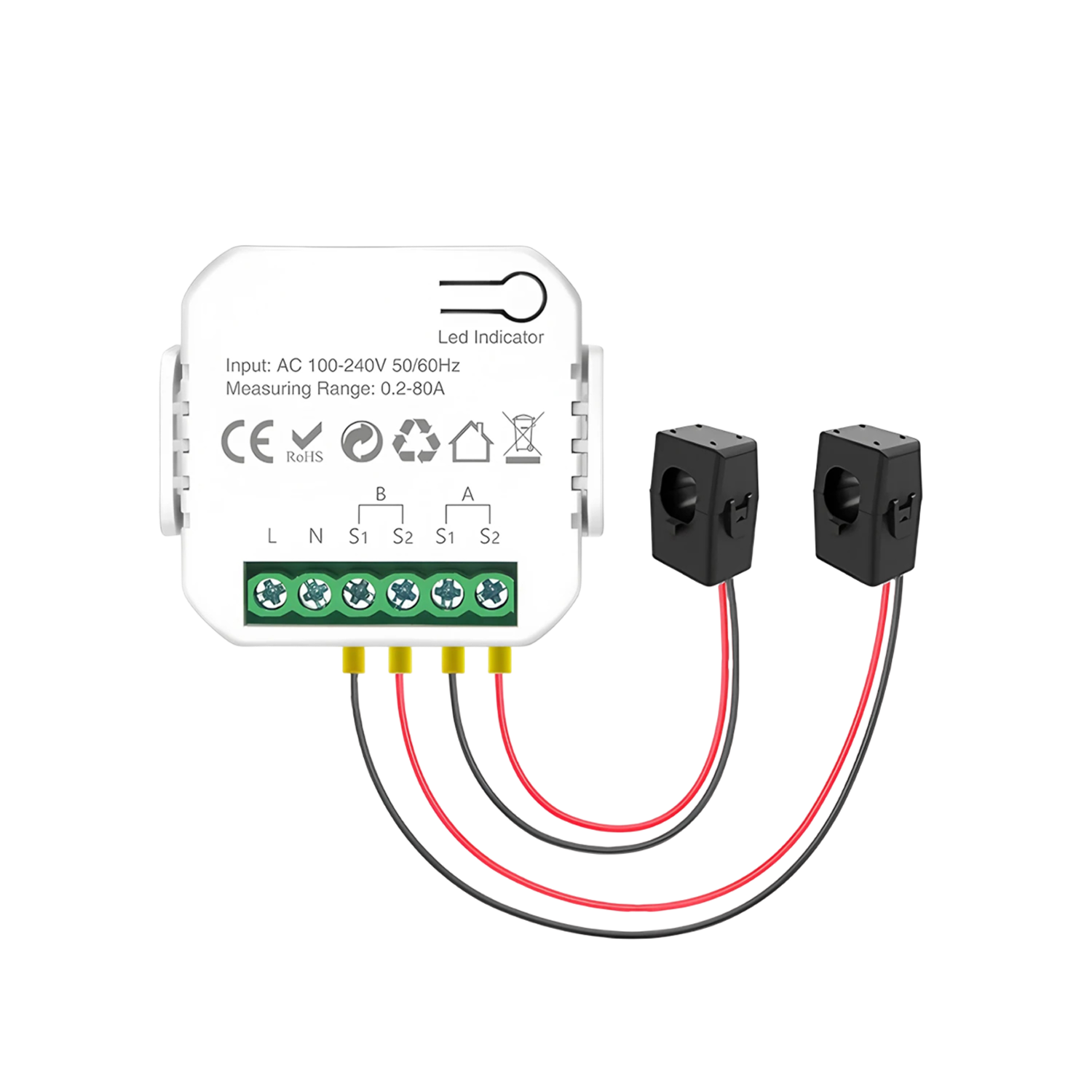
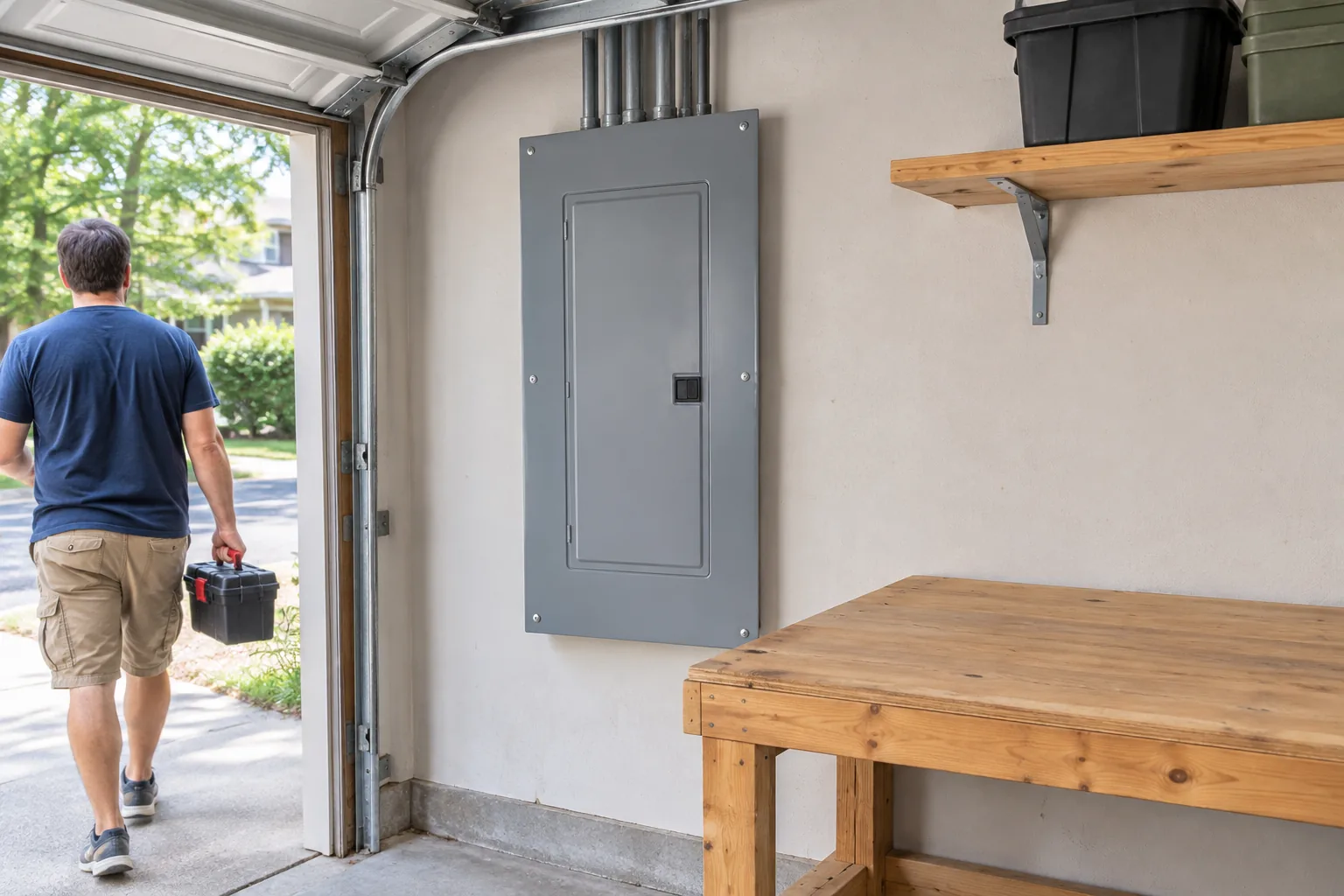
A utility meter is read at the meter itself. If you want to see live household figures on your phone, a clamp-on smart energy meter is one option. WattLedger is a WiFi smart energy meter with two split-core CT clamps. You open the clamps around live wires, so no cable gets cut, then join the module to your home network through the companion app.
Two channels show solar and grid figures side by side, so if you have solar panels you can read both flows on one screen. You can enter your own high and low limits in the app and receive a push notification when a reading crosses one. Check the product page for the units and figures the app displays.
Clamping around live wires is electrical work. If you are not comfortable opening the panel, or the wiring layout is unclear, ask a licensed electrician to fit the clamps, and follow the Quick-Start User Guide in the box. The box holds the WiFi smart module, 2 split-core CT clamps and the guide.
 In this guideWattLedger$89.99View
Common mistakes with energy units
Check what is the unit of measurement for energy in each source before you compare figures. These slips are easy to make:
- Mixing up kW and kWh. A kW is a rate, a kWh is an amount used.
- Reading a watt rating on a label as the energy used. A device draws that power only while it runs, and some devices cycle on and off.
- Forgetting the factor of 1,000 between watts and kilowatts, or between joules and kilojoules.
- Confusing the calorie on a food label with a thermochemical calorie in a physics problem. Check which one the source uses.
- Subtracting readings taken at different times of day and comparing them to a full-day figure.
To compare heating equipment, look at its power in watts or BTU and how long you run it. Our smart thermostat install guide covers the wiring check if you want to control that runtime. Browse the Home Utility & Detection Devices collection for other household monitoring tools.