What Is a Good Portable Air Conditioner? BTU, Hoses and Noise
A good portable air conditioner matches your room's BTU size, uses a hose design you can fit at the window, and has noise and drainage details you can accept.
The Cobalt Hollow Team
November 27, 2026 · 7 min read
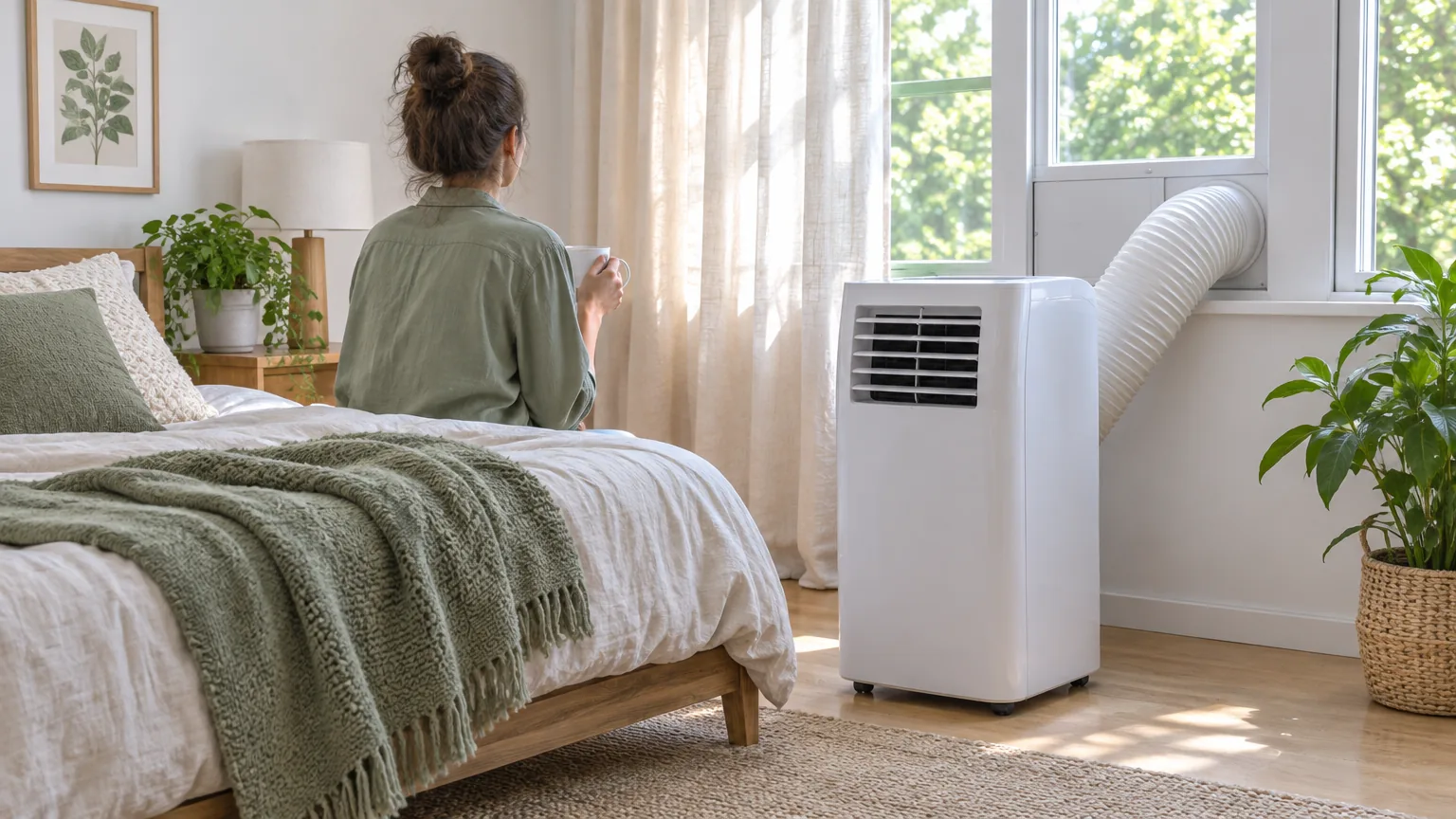
What is a good portable air conditioner? It is a unit whose BTU capacity matches your room size, with hoses set up for the way you will vent it, a noise level you can live with, and a drainage method you will actually keep up. Size first, then hose type, then noise and water handling.
This guide gives you a room-size table, a single versus dual hose comparison, a noise and drainage checklist, and a setup list. We do not rank brands here, because the specs on the label and the manual matter more than a name.
What is a good portable air conditioner? Five checks in order
Work through these checks before you compare models. Each one narrows the list.
- Measure the room in square feet and note sun exposure, ceiling height and heat sources.
- Pick a BTU range from the table below, then check the exact figure on the spec sheet.
- Decide between a single-hose and a dual-hose design.
- Look up the noise information and the fan speed settings.
- Confirm how condensate leaves the unit and where the hoses will run.
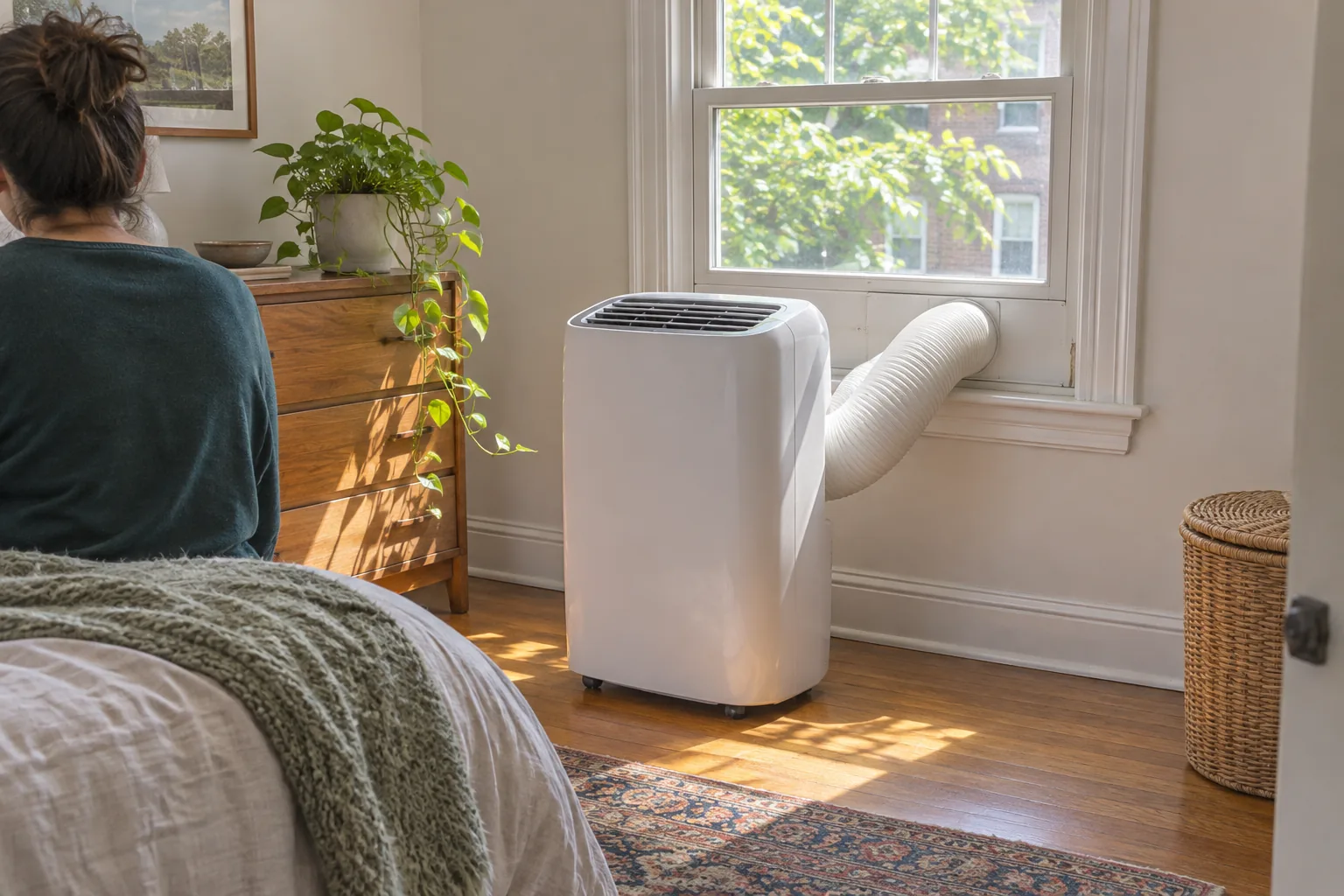
A portable unit stands on the floor and vents hot air through a hose to a window or another opening. It suits rooms where a window unit will not fit, or where the window cannot hold the weight. It still needs an opening for the exhaust, so plan the route before you buy.
How many BTU for a portable air conditioner
BTU measures cooling capacity. Too little capacity leaves the room warm on hot afternoons, and too much capacity for a small room is wasted. Use the table as a starting range, then read the spec sheet for the exact figure and which measurement method it states, since some labels list two numbers.
| Room size | Typical BTU range | Example rooms |
|---|---|---|
| Under 150 sq ft | 5,000 to 6,000 | Small bedroom, home office |
| 150 to 250 sq ft | 7,000 to 8,000 | Average bedroom, nursery |
| 250 to 350 sq ft | 9,000 to 10,000 | Large bedroom, small living room |
| 350 to 450 sq ft | 12,000 | Living room, open den |
| 450 sq ft and above | 14,000 or higher | Large living area, open plan space |
When to size up
Move up one row in the table if the room gets direct afternoon sun, has high ceilings, or sits above a garage. A kitchen, a room with several computers, or a space that opens into another room also adds heat. If you cool a large room with a small unit, expect it to run continuously without reaching the set point.
What size AC does a room need?
Multiply room length by width to get square feet, find the row, and adjust for the conditions above. For an open-plan space, add the connected areas together or cool only the zone where you sit.
8,000 BTU or 12,000 BTU: which fits your room
Neither is better on its own; the room decides. An 8,000 BTU unit fits a bedroom or office in the 150 to 250 sq ft range. A 12,000 BTU unit fits a living room or den in the 350 to 450 sq ft range.
If your room falls between two sizes, look at the sun and the ceiling. A shaded room with a standard ceiling can use the lower figure. A bright room with a west-facing window calls for the higher one. Also check the plug and circuit details in the manual, because larger units can need a dedicated outlet. Ask an electrician if you are unsure about your wiring.
Single hose vs dual hose
The hose design changes how the unit uses the air in your room. A single-hose unit draws room air across the condenser and sends it outdoors, so replacement air can enter the room through gaps and doors. A dual-hose unit uses one hose to bring in outside air for the condenser and another to vent the heat outdoors.
| Feature | Single hose | Dual hose |
|---|---|---|
| Air for the condenser | Taken from the room | Taken from outside through the intake hose |
| Hoses to route | One | Two |
| Window kit | One hose port | Two hose ports |
| Check for | Gaps where outside air enters | Space for two hoses and the panel |
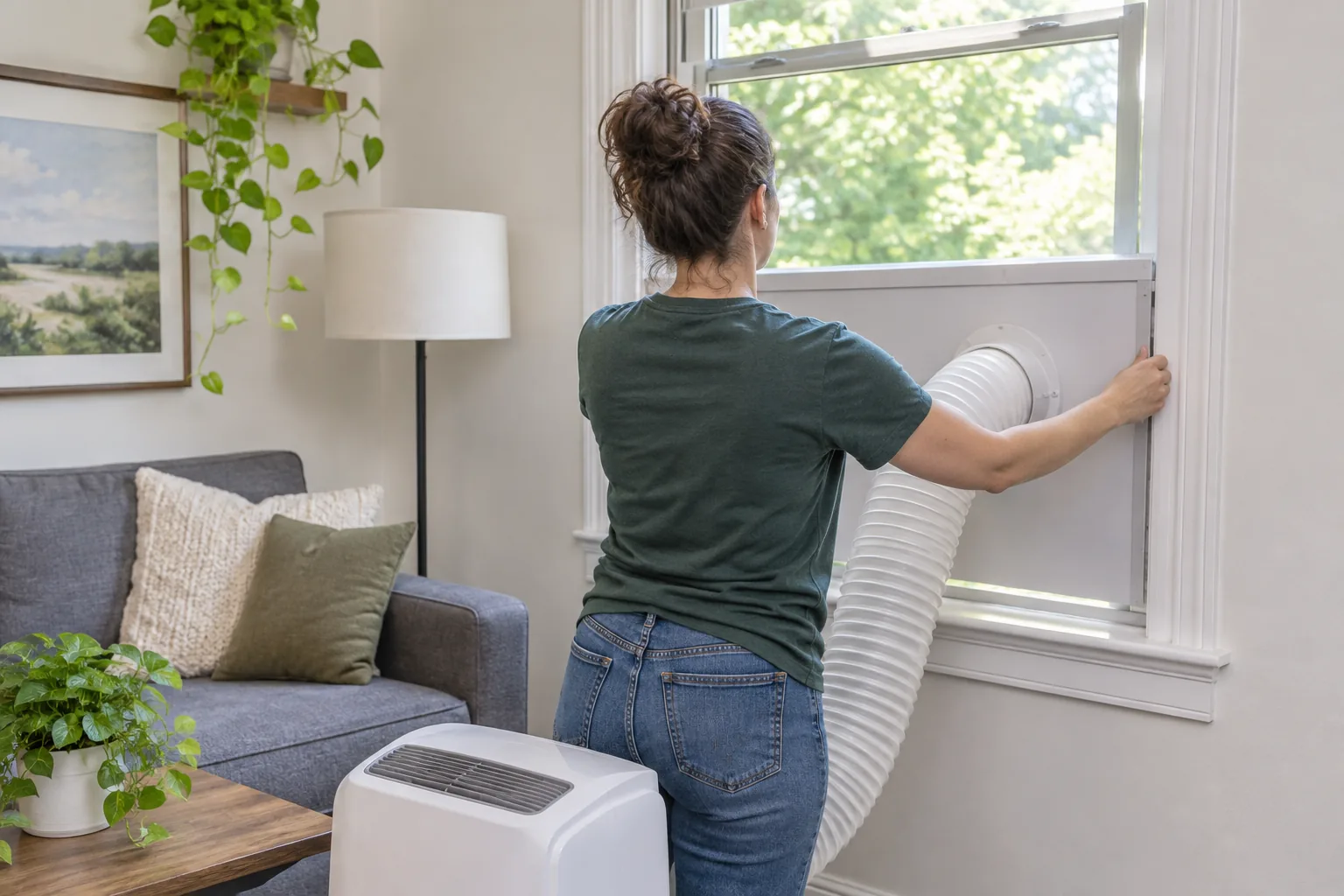
Dual-hose units take more room at the window, so measure the opening and read the kit description. Short, straight hose runs are a good fit, since long or sharply bent hoses restrict airflow. Keep the hoses as the manual directs, and do not cut or extend them.
Noise and fan speed checks
A portable unit puts its compressor and fan in the room with you, so noise matters most in a bedroom or office. Look for a decibel figure on the spec sheet, and check whether it applies to the low or the high fan speed.
- Look for several fan speeds and a sleep or low setting.
- Check whether the compressor adjusts its output or cycles fully on and off.
- Place the unit on a flat, hard surface so it does not vibrate against furniture.
- Leave space around the unit as the manual lists, so the fan is not blocked.
An inverter compressor raises or lowers its output toward the temperature you set instead of switching fully on and off. That changes the sound pattern, since the unit adjusts gradually. Fan speed is a separate setting on units like this, so you can lower the fan without changing the target temperature.
Field note
Read the noise figure for the fan speed you will use at night, not only the highest setting, and place the unit away from the bed head if the room allows.
Drainage: how the water leaves
Cooling air also removes moisture, and that water has to go somewhere. Portable units handle it in a few ways, so check which one applies before you buy.
- A collection tank that you empty when a warning appears.
- A drain hose or port that runs to a floor drain or a bucket.
- A system that evaporates the moisture and carries it out with the exhaust air.
Humid rooms fill a tank sooner than dry ones, so a tank-only design can mean frequent trips to the sink. Keep the unit level and place a tray under any drain port. The article What Is a Water Leak Detector? Types and Where to Place Them covers a sensor you can set near the floor in case a drain connection slips.
Where a dual-hose unit fits
ArcticDrift is a portable air conditioner for cooling a single room. It uses two hoses, one for intake and one for exhaust, and connects to a window through the included accordion-panel kit. One hose draws outside air across the condenser and the other vents heat outdoors, so the unit does not pull its air supply from the room.
It has an inverter compressor and a remote control. You choose the target temperature and fan speed with the remote, and the compressor adjusts its output toward that setting. Moisture removed from the air is evaporated and carried out through the exhaust hose, and its how-it-works steps do not involve emptying a water tank.
The box holds the unit, the dual-hose window kit with accordion panel, the intake hose, the exhaust hose, the remote control, and a user manual with setup guide. Check the product page for the BTU figure and window size before you match it to your room. You can also browse the Heating, Cooling & Water Heating collection for other options.
 In this guideArcticDrift$99.99View
Setup checklist and common mistakes
Setup decides how a good unit performs. Follow the manual, and unplug the unit before moving it or changing hose connections.
- Measure the window opening and compare it with the kit.
- Set the unit on a level floor near an outlet, with clearance on all sides.
- Attach the hoses to the unit and the window kit as the manual shows.
- Fit the panel into the opening and close any gaps around it.
- Plug in, then set the target temperature and fan speed.
Common mistakes
- Buying by square footage alone and ignoring sun and ceiling height.
- Leaving gaps around the window panel, which lets warm air back in.
- Running long, kinked hoses.
- Using an extension cord when the manual lists a direct outlet connection.
- Skipping the filter cleaning steps in the manual.
Close doors and curtains on the sunny side to help the unit hold the set temperature. Clean or replace the filter on the schedule the manual lists.
Hose-free options and brand lists
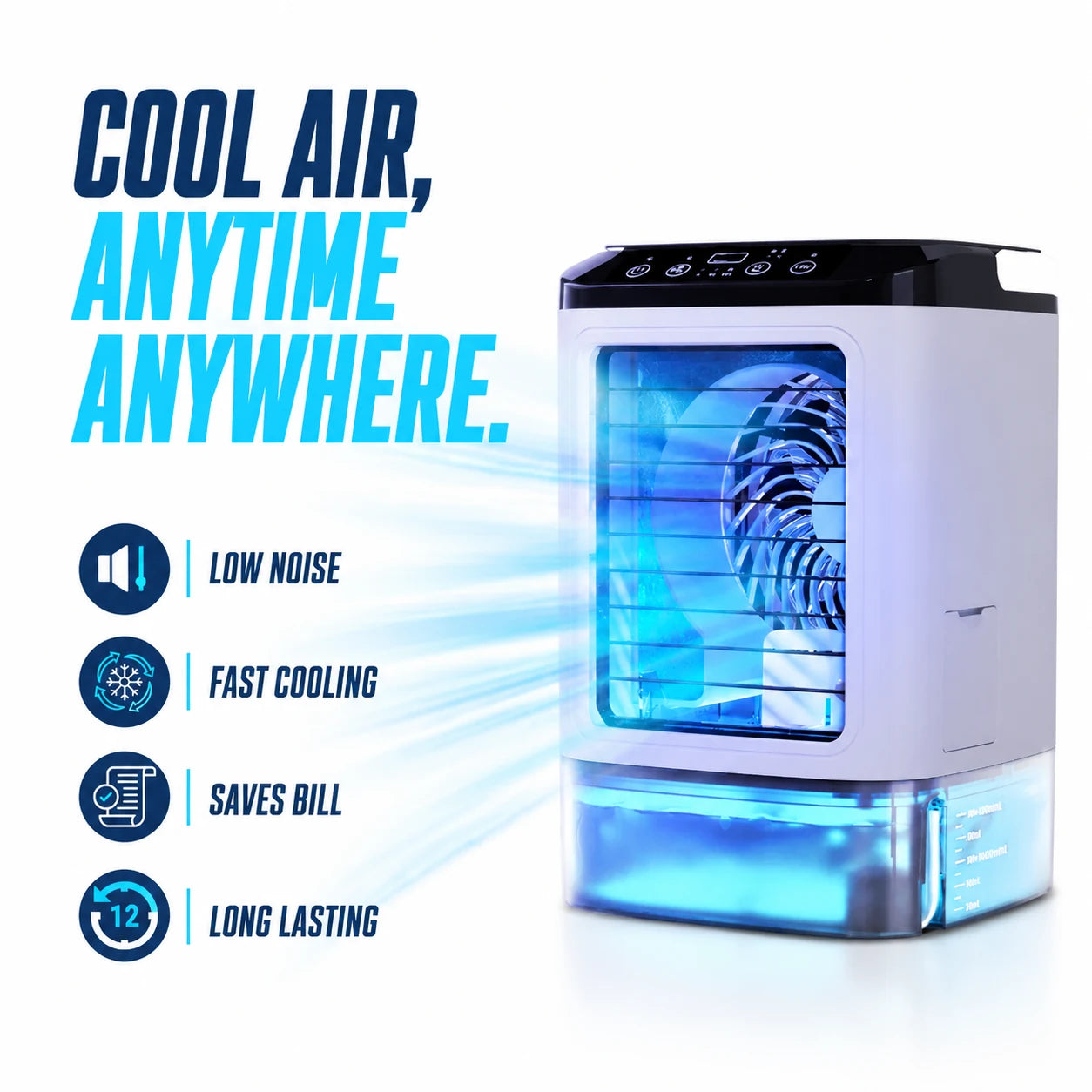
Some units sold without an exhaust hose are evaporative coolers. They add moisture to the air with water and a fan, and they work differently from an air conditioner with a compressor. Check the product page to see which type you are looking at, since the two are not interchangeable for sizing.
For a ranked top 10 of brands, you will find lists elsewhere, but a name tells you little about fit. Compare the BTU figure, hose design, noise information, drainage method and what is in the box, and use the 90-day return window in the store policy if the room turns out different from your measurements.