
What's in Fog Machine Liquid and How to Choose the Right Fluid
Fog machine liquid is mostly water blended with glycol, glycerin or both; haze fluids can be oil-based. Match the fluid to your machine's manual, and skip homemade mixes.
The Cobalt Hollow Team
October 28, 2026 · 8 min read
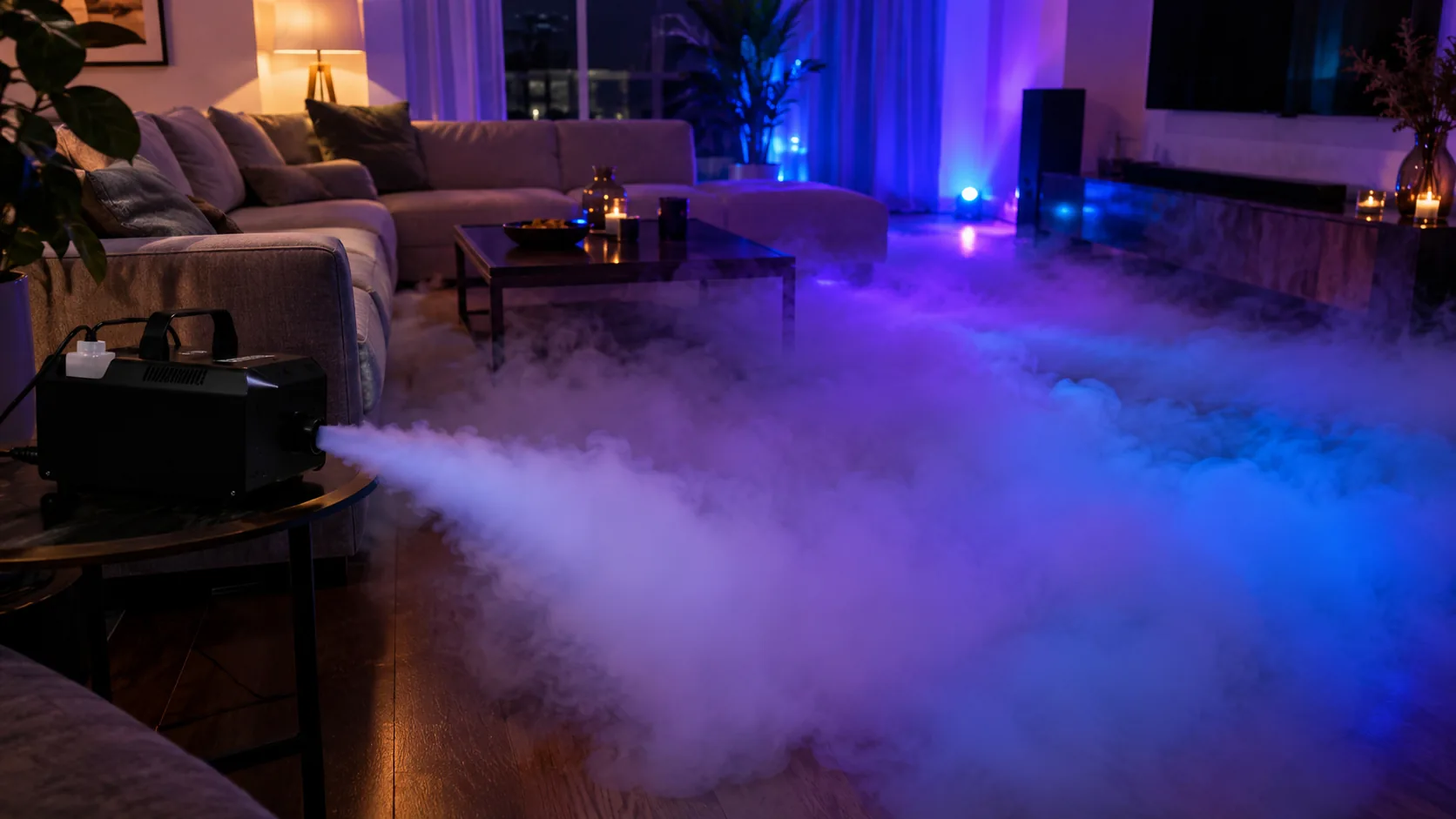
What's in fog machine liquid? Most fog fluid is distilled water blended with glycol, glycerin or a mix of the two, plus small amounts of additives. Haze fluids are sometimes oil-based. The right choice depends on what your machine's manual lists, so match the fluid to the machine rather than to the scent or the look on the bottle.
This guide covers each ingredient, compares the fluid types in a table, explains how heated fog, low-lying fog and haze differ, gives a matching checklist and explains why homemade mixes and substitutes are a poor idea for a heated machine.
What's in fog machine liquid: the main ingredients
A fog machine heats fluid until it vaporizes. When that vapor meets cooler room air, it condenses into a visible cloud. The fluid has to vaporize cleanly, which is why the ingredient list is short.
Water
Water is the base of water-based fluids. Look for distilled or purified water on the label, because minerals in tap water can leave deposits on a heat exchanger. This is also why you should not top off a tank with water from the tap.
Glycol
Propylene glycol is a frequent ingredient in water-based fog fluid. It is a clear, nearly odorless liquid that vaporizes into a white cloud. Some fluids use other glycols, such as triethylene glycol, which tend to appear in fluids made for lingering fog.
Glycerin
Glycerin is a thick, clear liquid that is also used in water-based fog. Fluids that rely on glycerin are described as producing a dense, thick white fog. Some makers blend glycerin and glycol to change how the cloud looks and how long it hangs in the air.
Mineral oil
Oil-based fluids use mineral oil, usually in haze machines. A haze is a thin, even veil that makes light beams visible, rather than a thick cloud. Oil-based and water-based fluids are made for different machines, so they are not interchangeable.
Additives
Some fluids add scent, or ingredients that change how the fog behaves, such as a low-lying fog formula. If the label does not list what a fluid contains, look for a safety data sheet from the maker before you buy.
Fog fluid types compared
Use this table to see how the types differ before you read the label on a bottle.
| Fluid type | Main ingredients | Typical look | Typical use |
|---|---|---|---|
| Water and glycol | Distilled water, propylene glycol or another glycol | White fog that fades as the room air moves | Parties, stage setups, haunted houses |
| Water and glycerin | Distilled water, glycerin | Thick white fog | Dense-cloud effects |
| Glycol and glycerin blend | Water, glycol, glycerin | Fog with a different density and hang time | General fog effects |
| Low-lying fog fluid | Water-based, made for use with a chilling stage | Fog that hugs the floor | Machines built for ground fog |
| Oil-based haze fluid | Mineral oil | Thin, even haze | Haze machines, lighting beams |
Other ways to make fog, such as dry ice in warm water, use no fluid at all. A heated fog machine is a different device and needs fluid made for it.
Heated fog, low-lying fog and haze machines
The fluid you buy depends on the kind of machine you own, so it helps to know the three main types.
A heated machine pumps fluid through a heat exchanger, where it vaporizes and leaves the nozzle as a visible cloud. This is the type used for parties, stage setups, seasonal displays and haunted houses. These machines call for water-based fluid, and the manual names the kind.
Low-lying fog hugs the floor instead of rising. Some setups get this look by passing heated fog through a chilling stage, and others use dry ice and warm water. If your machine has no chilling stage, a low-lying fog fluid will not change where the cloud travels, so check the manual before you buy a specialty bottle.
A haze machine makes a fine, even veil. Its job is to show light beams and stage lighting, not to fill a room with a thick cloud. Some haze machines use oil-based fluid and others use water-based fluid, so the manual decides which bottle fits.
| Machine type | Output | Where the fluid choice comes from |
|---|---|---|
| Heated fog machine | Visible white cloud | The water-based fluid type named in the manual |
| Chilled or low-lying fog machine | Fog that stays near the floor | The fluid the manual lists for the chilling stage |
| Haze machine | Thin, even veil | Haze-specific fluid, oil-based or water-based as the manual states |
How to match the fluid to your machine
The machine's manual is the first authority. A heat exchanger, pump and tank are built around a particular kind of fluid, and a different one can leave residue or fail to vaporize.
- Open the user manual and find the fluid section. Note whether it names water-based fluid, oil-based fluid or a specific type.
- Check the label on the bottle for the same type, and confirm it says it is made for fog machines.
- Read the ingredient list or the safety data sheet. A fluid from a reputable maker lists what it contains.
- Pick the fog look you want from the types in the table, and stay within what the manual allows.
- Fill the tank to the level in the manual, and do not mix two different fluids in one tank.
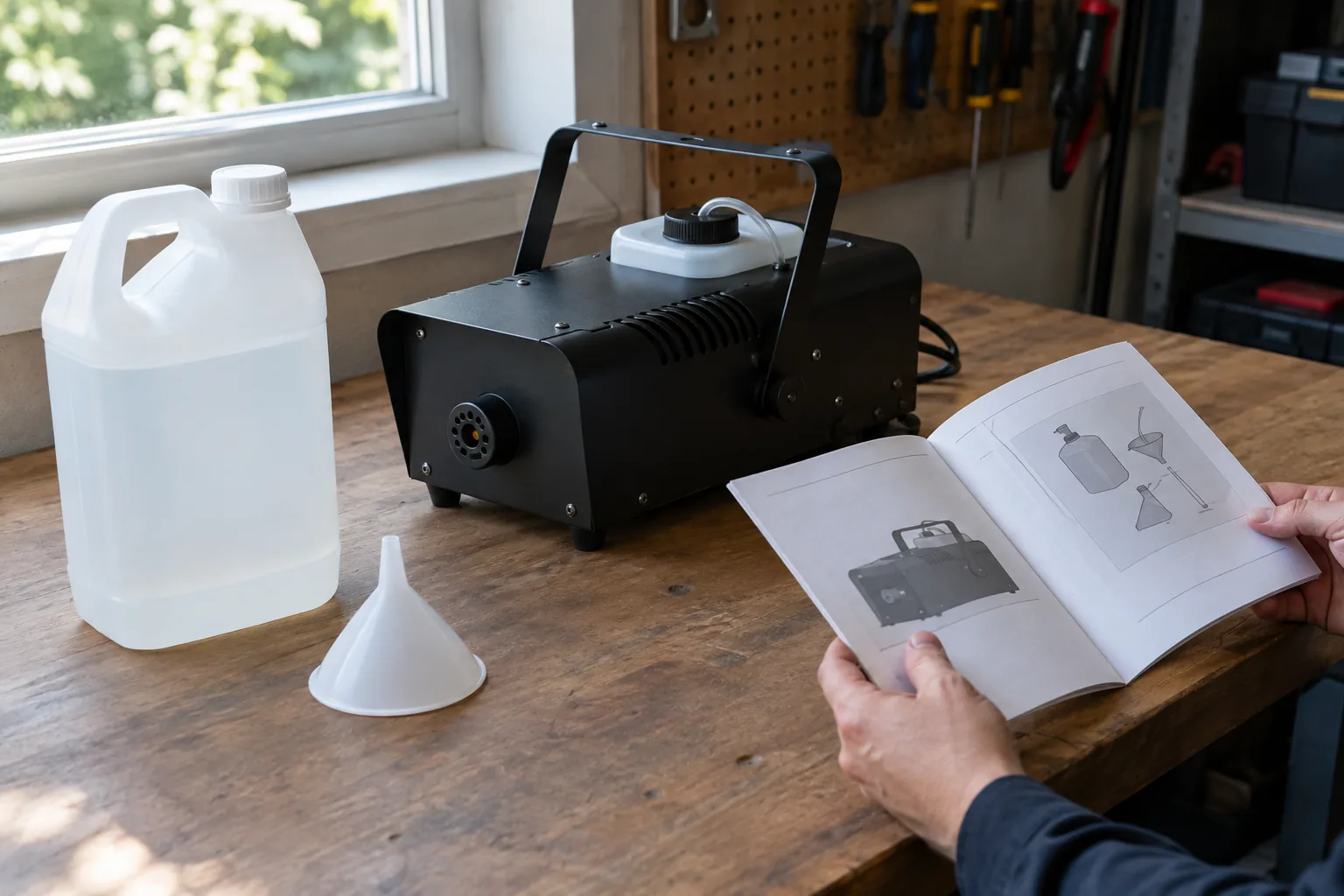
A fog machine with a wide-mouth fill port
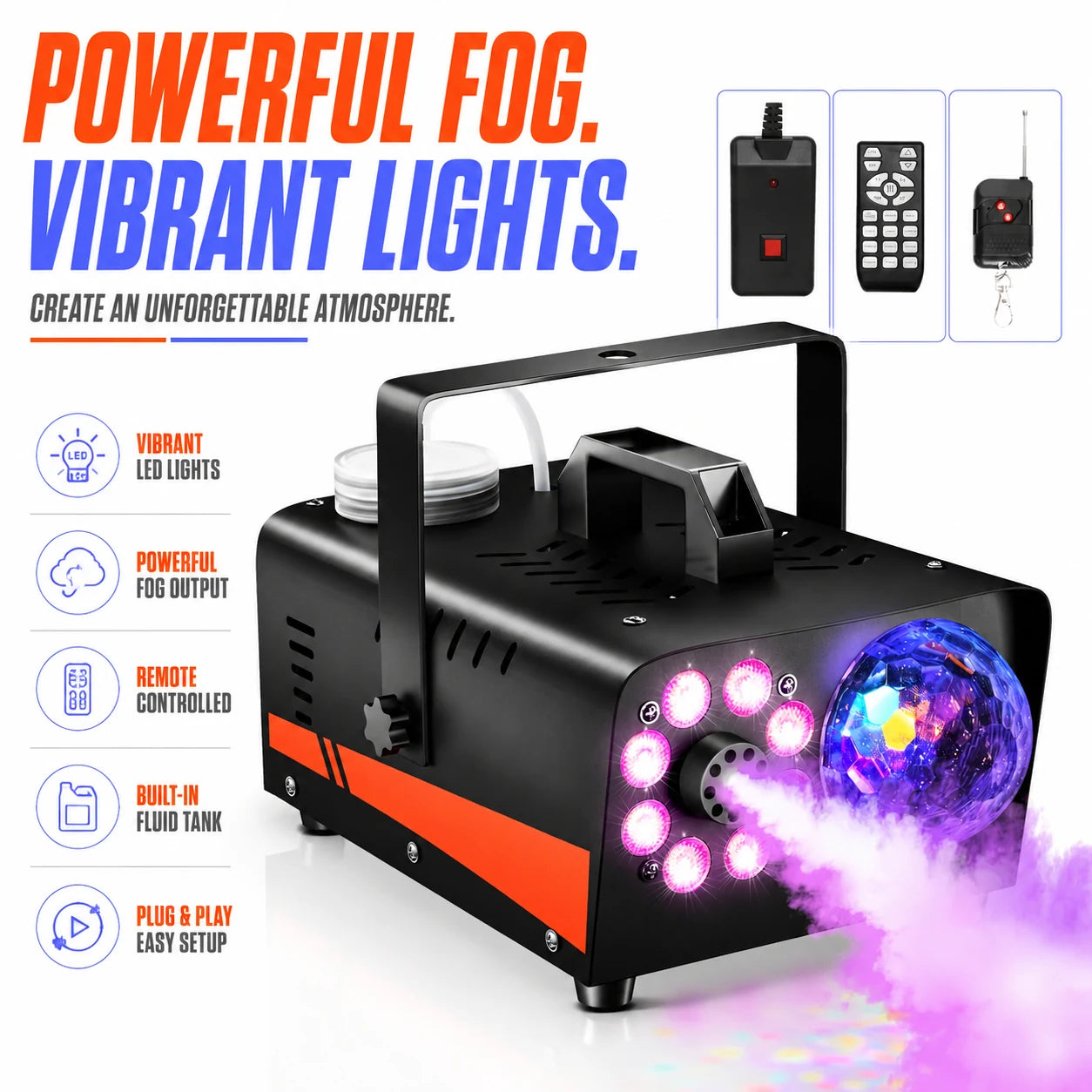
If you are setting up for parties, seasonal displays or stage work, the machine itself matters as well as the fluid. The HazeForge is a 600W fog machine with an easy-access tank and a wide-mouth fill port. Its heating system warms the fog fluid and pushes it out as a dense cloud, and you choose a fog spray mode from the wireless remote.
It also has built-in RGB LED lighting with 13 colors and 4 effect modes, and the fog and lights have independent controls. The body is an all-metal chassis with an integrated carry handle. Check the user manual in the box for the fluid it calls for before you fill the tank.
 In this guideHazeForge$199.99View
Why homemade fog fluid and substitutes are risky
Recipes for homemade fog juice describe simple ingredients: water plus glycerin or glycol. The trouble is that a heated machine is built around a particular composition, and a kitchen mix can differ from a fluid made for the purpose.
What can go wrong with a DIY mix
- Tap water carries minerals that can leave deposits on the heat exchanger.
- An uneven ratio can leave residue instead of vaporizing cleanly.
- Food-grade or cosmetic ingredients are not made for use in a fog machine's heater.
- The mix has no safety data sheet, so you cannot check what is in it.
- Using fluid the manual does not list can go against the manufacturer's instructions for your machine.
Substitutes that are not fog fluid
Baby oil, cooking oil, water alone, perfume and cleaning products are not fog fluid. Heating them is a different matter from vaporizing a purpose-made fluid, and they can leave residue or give off fumes you did not plan for. If you run out of fluid, wait and get the type your manual lists.
This guide does not give a recipe for making your own. If you want a different fog look, change the fluid type within what the manual allows, not the chemistry in your kitchen.
Field note
Keep the bottle label or a photo of it with your machine's manual. When you reorder, you can match the fluid type exactly instead of relying on memory.
Breathing fog: ventilation, label checks and care
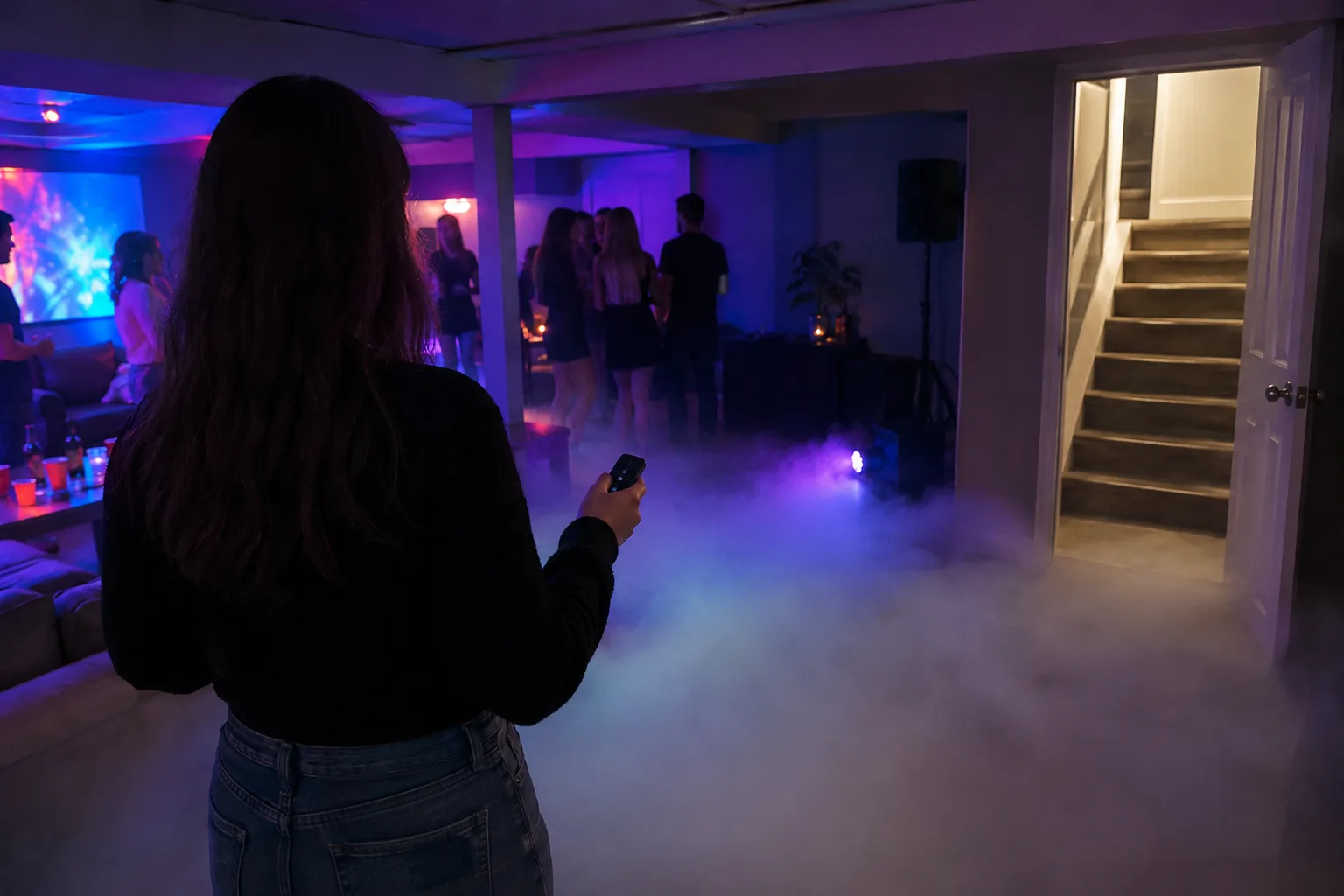
Whether a fog fluid suits breathing depends on the specific fluid, the amount of fog and the room. This guide cannot make that call for you, so read the safety data sheet and follow the manual. If you or a guest has a breathing concern, ask a healthcare professional before using fog in a closed room.
- Run fog in a room with ventilation, and open a door or window between sessions.
- Use short bursts instead of filling the room until you cannot see across it.
- Keep fog away from smoke detectors unless the manual says otherwise, since a detector may react to the cloud.
- Unplug the machine before you fill, clean or move it.
- Keep fluid out of reach of children and pets, and do not let anyone drink it.
Ask the venue first if you are using a machine in a rented hall or public space. Some places have rules about fog and alarms.
Fill, store and care checklist
A routine helps you spot a problem early and keeps the fluid you chose in good condition.
| Step | What to do |
|---|---|
| Before use | Unplug the unit, check the tank for debris and fill to the level in the manual. |
| During use | Run in bursts in a ventilated room and keep the machine on a stable surface. |
| After use | Unplug, let the unit cool as the manual describes and wipe the exterior. |
| Storage | Close the bottle tightly and keep it in a cool, dry place away from direct sun. |
| Long breaks | Follow the manual for emptying or flushing the tank before you store the machine. |
Fluid that looks cloudy, smells off or has settled into layers should not go into your machine. Dispose of it as the label or your local waste rules direct.
Common mistakes and choosing your fluid
- Pouring oil-based haze fluid into a water-based machine, or the reverse.
- Topping off with tap water when the tank runs low.
- Mixing leftover fluids from different bottles.
- Choosing fluid by scent instead of by the type the manual lists.
- Running the machine in a closed room with no ventilation.
- Skipping the safety data sheet because the bottle looks familiar.
Decision guide
Start with the machine, then the look you want. If the manual names water-based fluid, choose a water-and-glycol or water-and-glycerin fluid made for fog machines. If you want a thin veil for light beams, check whether your device is a haze machine that calls for an oil-based or haze-specific fluid.
If a fluid is not listed in the manual, ask the manufacturer before you try it. A purpose-made fluid that matches the manual is the straightforward choice.
If you are planning a whole setup, pair the fog with lighting that shows it off. The Smart & Ambient Lighting collection has options for adding color and mood around the cloud. For a display outside, the article Outdoor Lighting Plan: Layering Path, Accent and Security Light explains how to layer path, accent and security light.
Frequently asked questions
Keep reading
 Home Utility & Detection DevicesWhat Is a Water Leak Detector? Types and Where to Place Them6 min read
 Security Cameras & DoorbellsDIY Home Security Systems: Cameras, Doorbells and Lights to Combine9 min read
 Security Cameras & DoorbellsDoorbell Camera No Subscription: Storage Options and Setup7 min read