How to Clean a Pizza Stone Without Cracking or Staining It
To clean a pizza stone, let it cool fully, scrape off debris, wipe with a barely damp cloth, and skip soap and soaking. Dark stains are generally cosmetic.
The Cobalt Hollow Team
November 10, 2026 · 6 min read
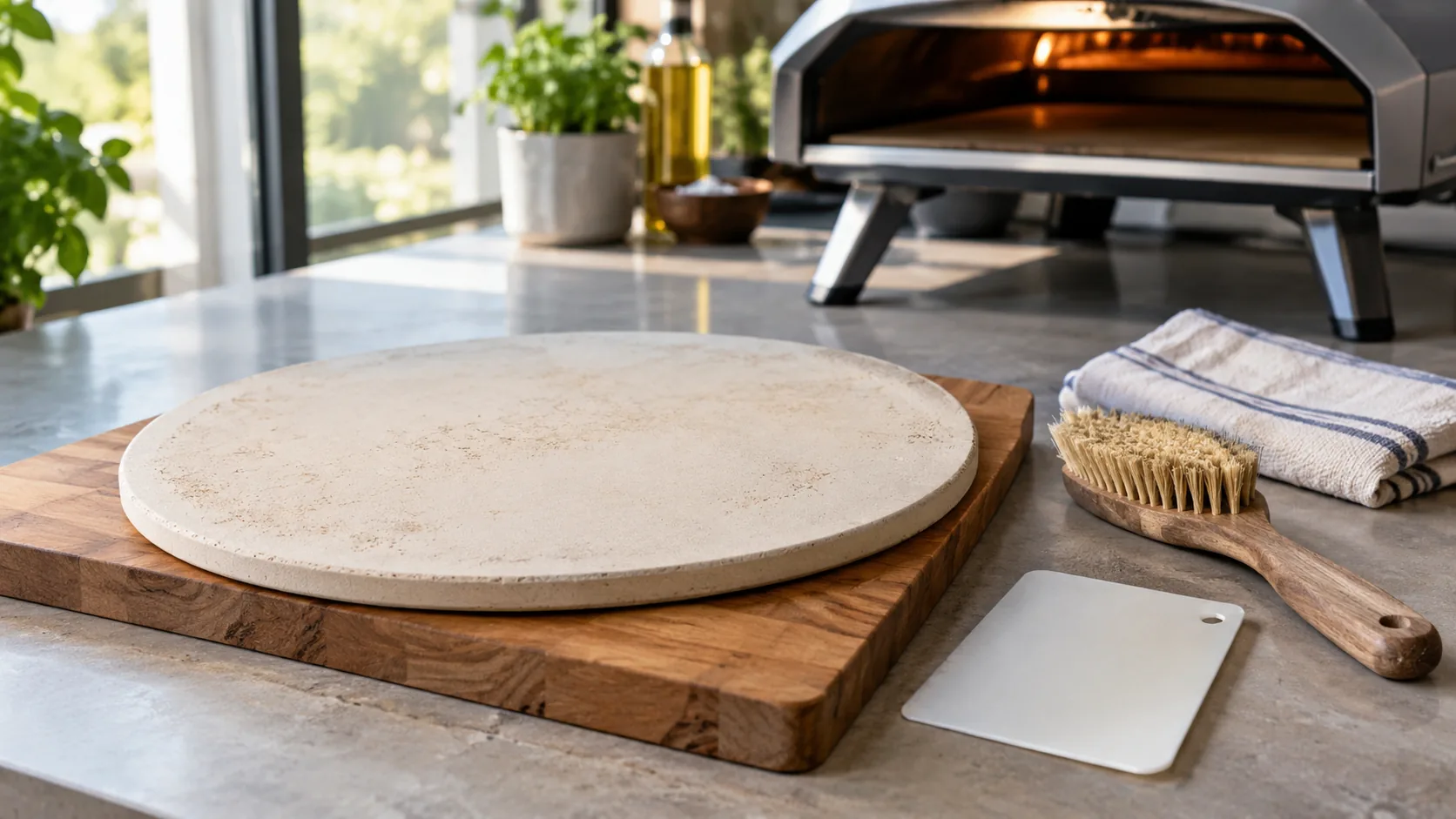
To learn how to clean a pizza stone, remember three moves: let it cool all the way, scrape off the stuck bits dry, and wipe it with a barely damp cloth. Skip soap and do not soak it, because a porous stone absorbs liquid and can crack the next time it heats. Dark spots and a brown or black surface are normal and do not mean the stone is dirty.
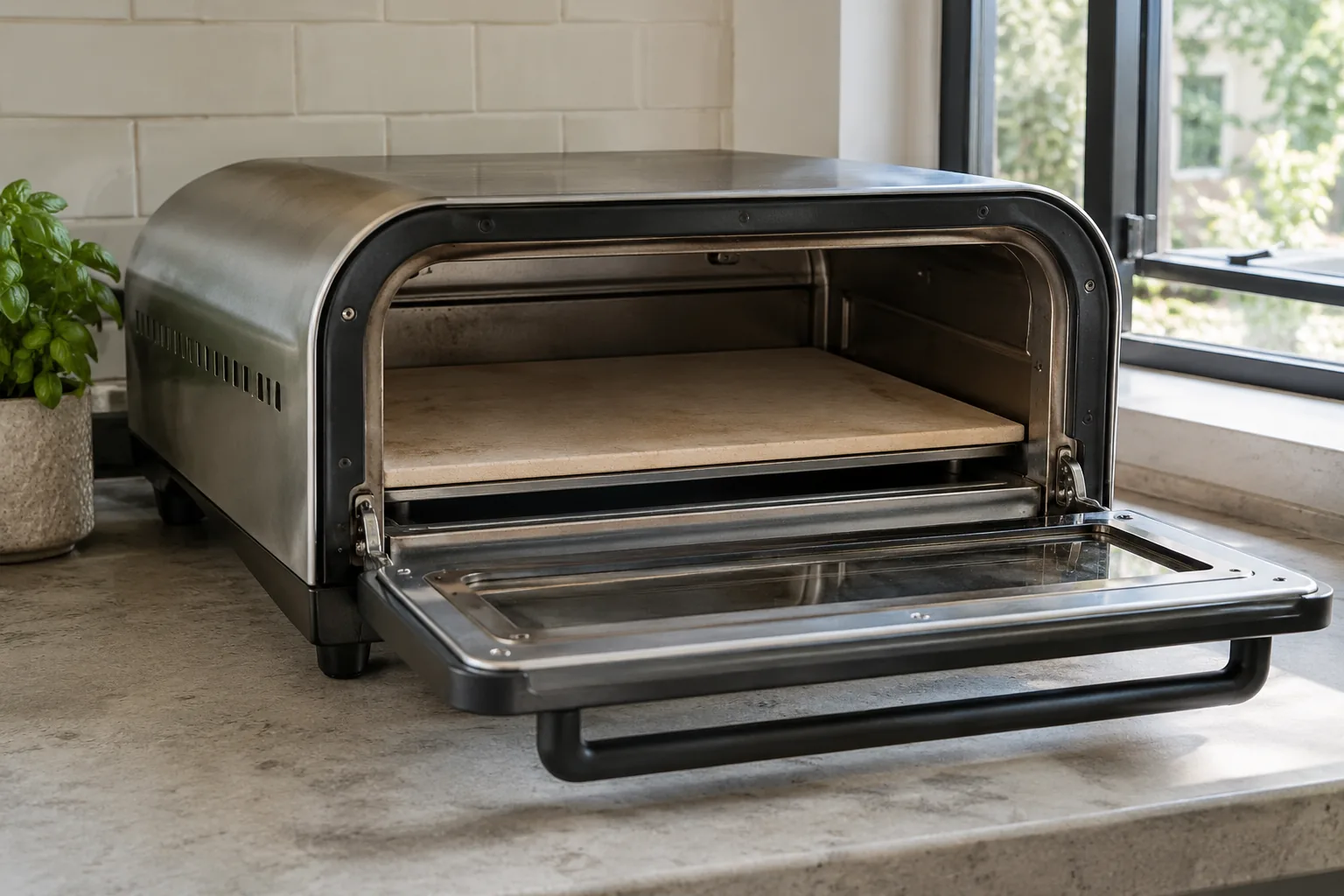
This routine is written for a stone that lives in an indoor pizza oven, where the stone is smaller and sits close to the heating elements. Always follow the manual for your own stone, since materials and finishes differ.
Does a pizza stone need to be washed?
No. A baking stone needs scraping and wiping, not washing. Unglazed ceramic and similar stones are porous, so they take in water, soap and oils instead of shedding them. Trapped moisture turns to steam when the stone heats, and that is what can lead to cracks.
Flour, cheese drips and a thin layer of oil build up a natural patina over many bakes. That darker surface is a normal result of use. What you remove is loose debris and burnt-on lumps, not color.
What you need before you start
- A plastic bench scraper or a stiff plastic spatula
- A stiff nylon brush (a dry kitchen brush works if you do not own a stone brush)
- A clean, lint-free cloth and a bowl of water
- Baking soda for stubborn spots
- A towel or rack where the stone can air-dry on its edge
Leave out steel wool, metal scrapers with sharp corners and any scented cleaner. Scratches hold residue, and a porous stone can hold on to scent.
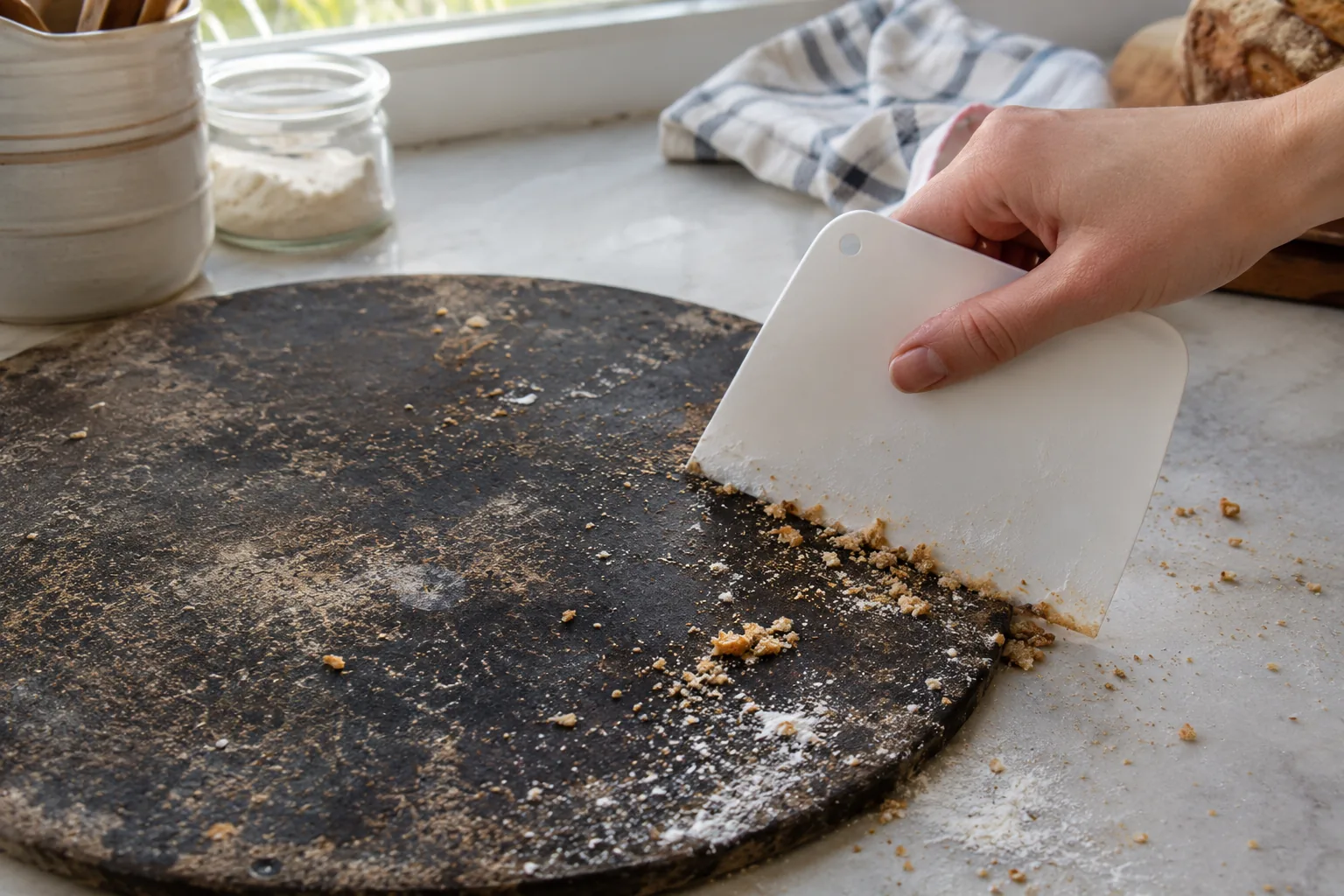
How to clean a pizza stone: the cool-down, scrape and wipe routine
1. Unplug and let it cool in place
Turn the oven off, unplug it, and leave the stone alone until it is completely cool. Moving or wetting a hot stone can crack it, because one side changes temperature before the other. If it still feels warm, wait.
2. Lift the stone out
In an electric indoor oven with a removable stone, take it out only once it has cooled. The BrickBlaze indoor pizza oven has a baking surface where high heat burns cooked-on residue to ash, which is then brushed off and wiped clean. Work on a flat counter so the stone is fully supported.
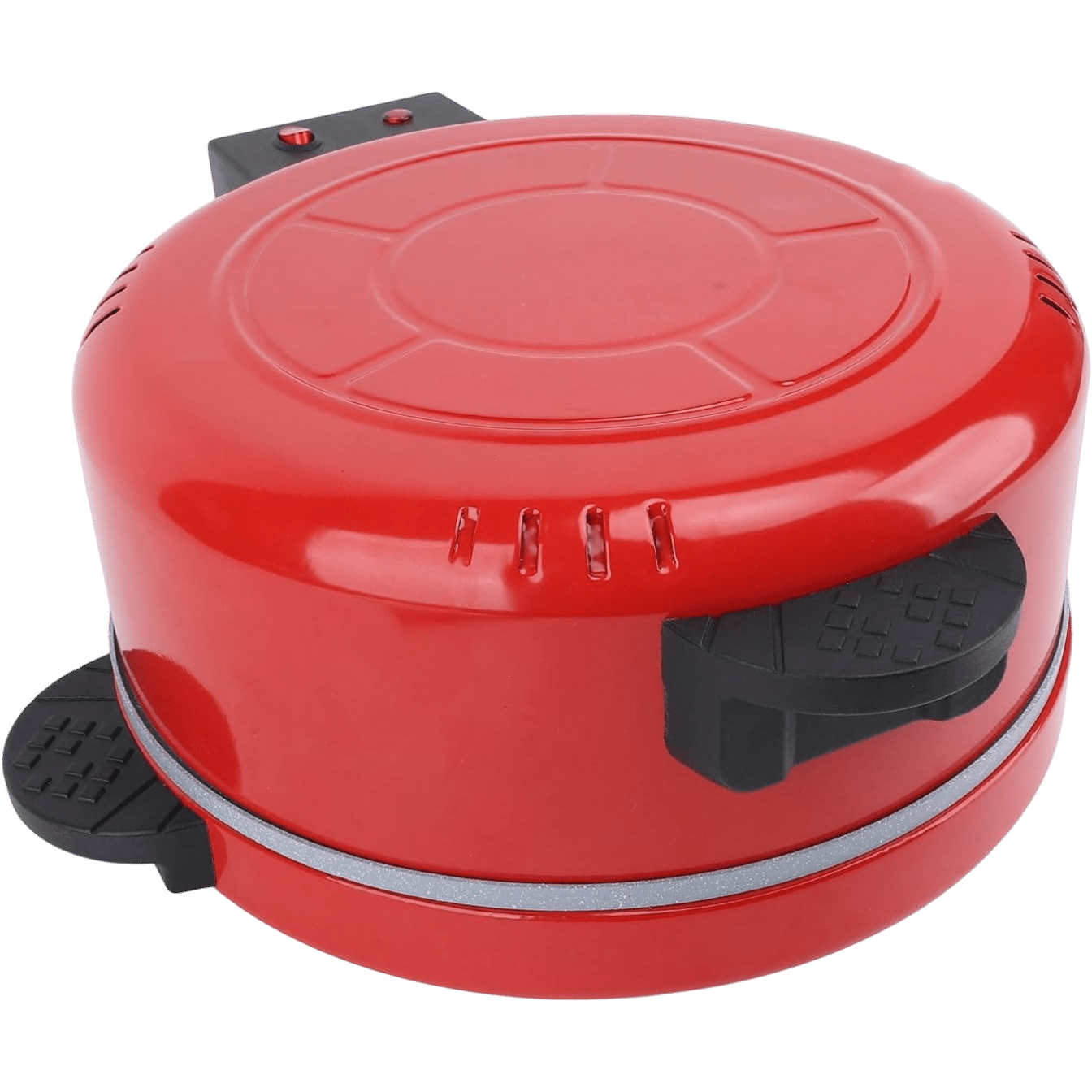 In this guideBrickBlaze$229.99View
3. Scrape off debris dry
Hold the scraper at a low angle and push crumbs and cheese bits off the edge into the trash. Follow with a stiff brush in small circles. Baked-on cheese often lifts as dry flakes at this stage.
4. Wipe with a barely damp cloth
Wring out a barely damp cloth until it is almost dry, then wipe the surface to lift dust. Do not pour water on the stone or hold it under a tap. Wipe the underside and edges with a dry cloth too.
5. Dry it completely
Stand the stone on its edge in open air, or leave it on a rack, until it is dry all the way through. Put it back in the oven only when you are sure it is dry, since damp storage invites odor and mold.
Do and don't: soap, soaking and burnt spots
| Situation | Do | Don't |
|---|---|---|
| Soap | Use a dry brush and a barely damp cloth | Add dish soap, which a porous stone can absorb and later release as taste or smoke |
| Soaking | Let the stone air-dry on its edge | Soak it or run it under water |
| Hot stone | Wait until fully cool | Splash water or set it on a wet surface while warm |
| Burnt cheese | Scrape at a low angle once cool | Chip at it with a knife tip or metal scraper corner |
| Grease spots | Bake them off, per the manual | Scrub with oil-cutting sprays |
| Stains | Accept the patina | Chase a uniform color with abrasives |
| Storage | Store dry and fully cooled | Seal it away while damp |
If you are unsure about a cleaner, leave it out. A scraper, a brush and a barely damp cloth cover routine cleaning.
How to get burn marks and stuck-on food out of a pizza stone
Burnt cheese and dough
Let the spot cool, then scrape it dry. If a thin film remains, make a thick baking soda paste with a little water, rub it on with the nylon brush, then wipe it off with a barely damp cloth. Use only a small amount, and wipe until no paste remains.
The bake-off for grease and smoke
For residue that scraping does not reach, run the empty stone through a bake-off: put the clean, dry stone back in the oven and heat it with nothing on it, following the heat guidance in your manual. Ventilate the kitchen, because burning off grease can smoke. Let the stone cool fully again before you handle it.
Stains that will not lift
Black or brown marks are carbonized oil and food that sit in the surface. They are generally cosmetic, so you can leave them. Scrubbing harder only risks scratching the stone.
Why a pizza stone turns black, smokes or smells
| Problem | Likely cause | What to do |
|---|---|---|
| Turning black | Oil, cheese and flour carbonize over repeated bakes | Nothing; this is a patina |
| Smoking | Grease or cheese left on the surface | Scrape, wipe, then bake off with ventilation |
| Odd smell or taste | Soap, oil sprays or trapped moisture | Scrape, dry fully, bake off; skip soap from now on |
| Musty or visible mold | Stored while damp | Check the manual, scrape, use baking soda paste, dry fully, bake off |
| Cracks | Sudden temperature change or trapped moisture | Check the manual; replace a stone with a deep crack |
If mold returns or the stone smells even after a bake-off, replace it instead of cooking on it.
Cleaning without a stone brush
A dedicated stone brush is optional. A stiff nylon kitchen brush, a plastic bench scraper or a dry, crumpled-up cloth lifts loose crumbs. Keep the tool dry and free of soap or oil, and avoid wire bristles that can scratch the surface. This is how to clean a pizza stone when you have nothing but kitchen basics.
For the oven body, unplug it and wait until it is cool. Wipe the outside with a barely damp cloth, and keep liquid away from the heating elements and the thermometer.
Cleaning a stone before first use and between bakes
Before the first use, brush off dust and wipe the stone with a dry or barely damp cloth. Then read the manual for any first-heat step it lists. Do not wash a new stone.
After each bake, wait until the stone is cool, then give it a short pass with the brush. Knowing how to clean a pizza stone between bakes comes down to a simple schedule:
- After every bake: unplug, cool, brush off crumbs
- When spots build up: scrape and wipe with a barely damp cloth
- When it smokes or smells: bake off with ventilation
- Before storage: confirm it is dry through and through
Wiping the oven body follows the same idea as in our guide on cleaning a waffle maker without ruining the nonstick: unplug first and keep liquid away from the heating parts. If you are shopping for a countertop oven with a removable stone, browse cooking appliances and countertop ovens.
Field note
Bake on parchment or a dusting of flour or semolina so less cheese and sauce reaches the stone. Only use parchment as your oven's manual allows, and keep its edges trimmed away from the heating elements.
Common mistakes to avoid
- Cleaning the stone while it is still warm
- Using soap, vinegar or spray cleaners on a porous surface
- Letting the stone sit in a damp sink or cabinet
- Scraping with sharp metal that can gouge the surface
- Putting a wet stone back in a hot oven
Think of the stone as close kin to cast iron: dry cleaning, patience, and a darker surface over time.