How to Clean an Oven: Racks, Door Glass and Baked-On Grease
How to clean an oven: soak the racks, loosen the door glass, then clean the walls and floor, using baking soda paste, a spray cleaner or the self-cleaning cycle as your manual allows.
The Cobalt Hollow Team
November 26, 2026 · 6 min read
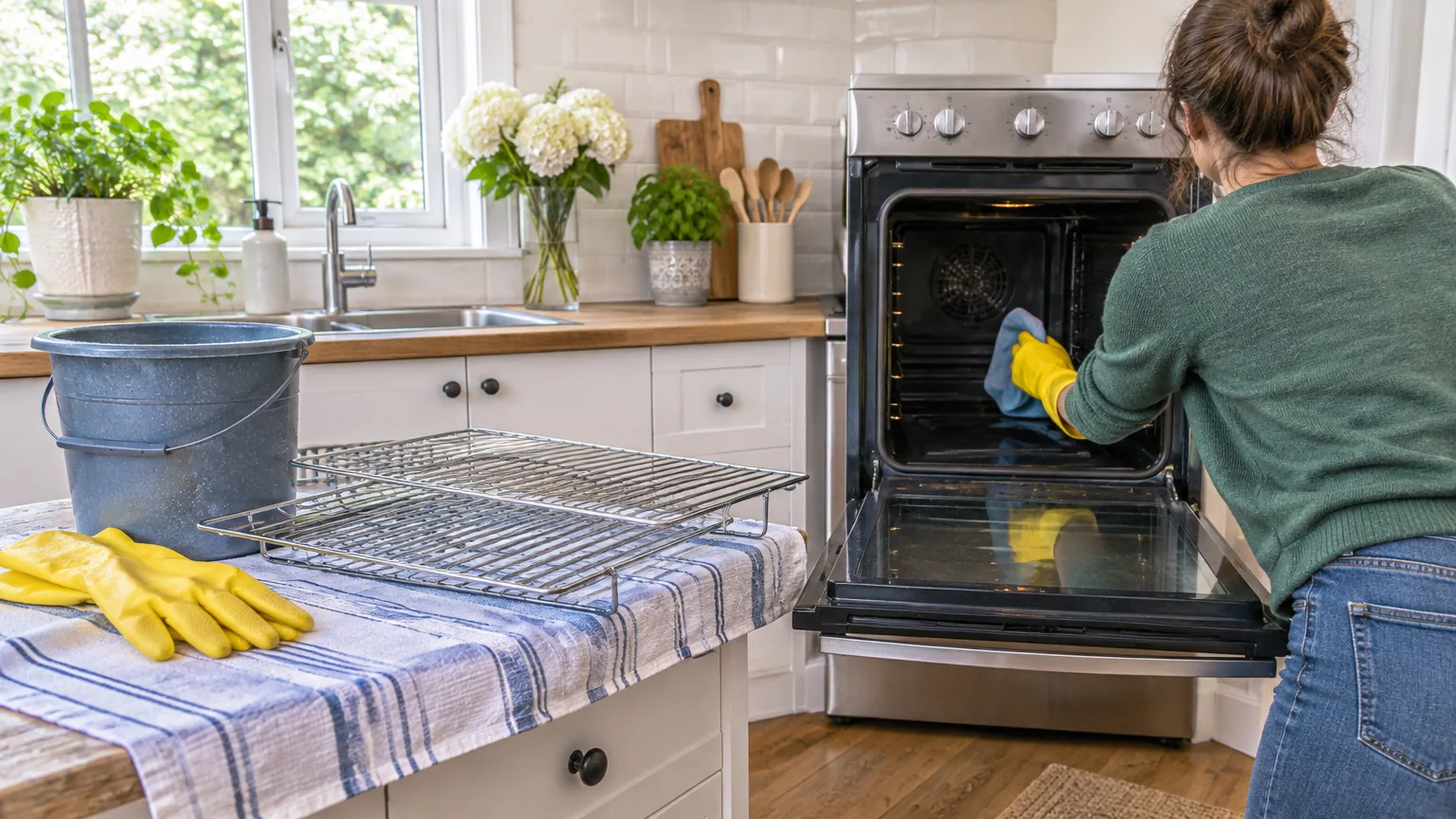
To learn how to clean an oven, work by area with the oven cool and switched off: soak the racks, loosen the door glass, then clean the walls and the floor last. Each area gets its own soak, so you scrub less and do not smear grease from one surface to the next. This guide gives the order, the soak steps and the point where a spin scrubber helps.
Check your oven manual first. It lists what the interior finish can take, whether the self-cleaning cycle is available and which cleaners to avoid.
Prepare the oven before you clean
Make sure the oven is off and fully cool. Unplug it or switch off its breaker if the manual says to, and open a window or turn on the range hood fan. Ventilation matters most if you plan to use a spray cleaner or the self-cleaning cycle.
Take out the racks, the oven thermometer and any baking stones. Lay old towels on the floor in front of the oven, because drips land there once you start. Pull on rubber gloves and keep a bucket of warm water nearby for rinsing cloths.
Brush or scoop out loose crumbs and burnt flakes with a dry cloth or a small brush. Removing loose debris first means your cleaner works on grease, not on a layer of ash.
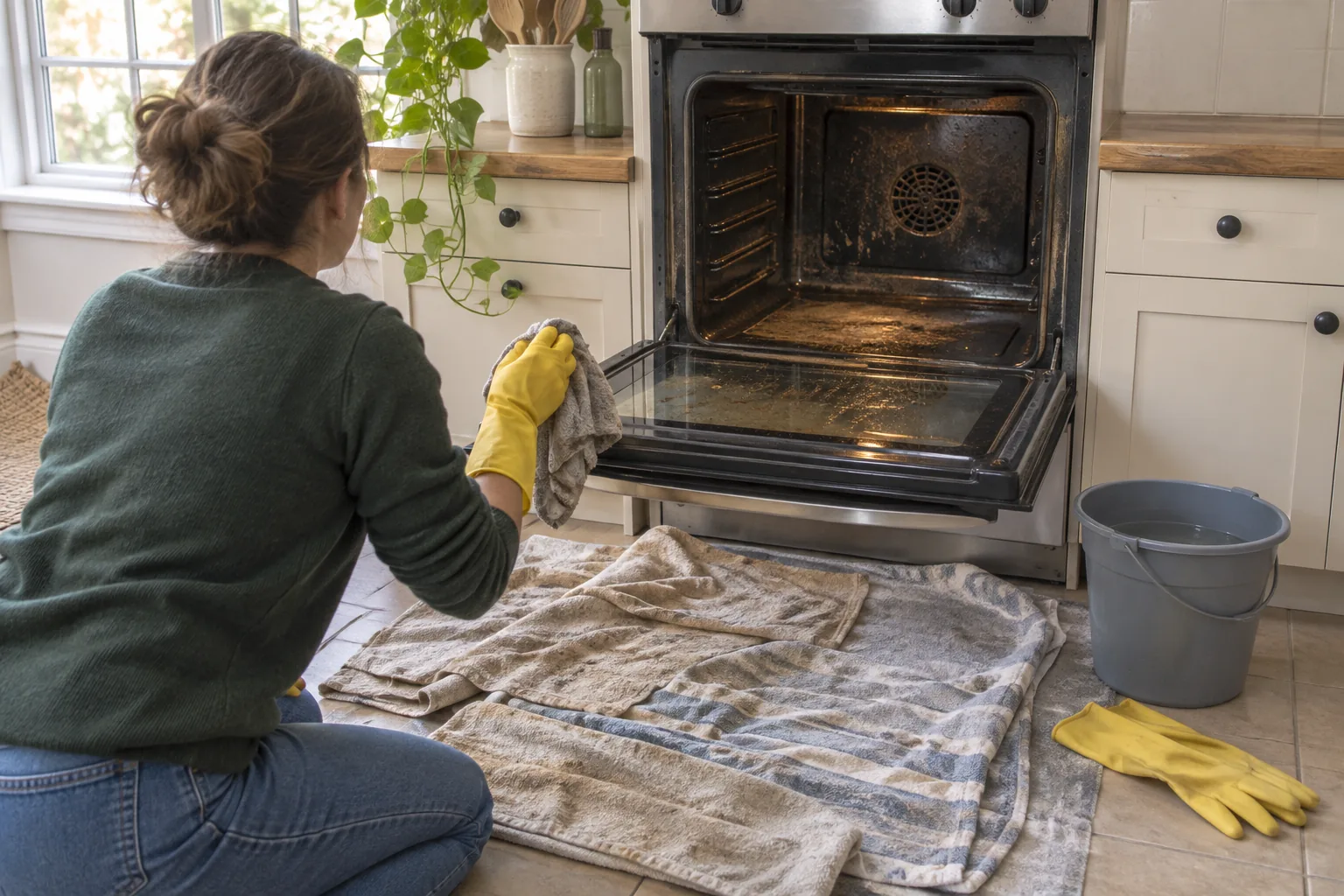
How to clean an oven: the order of work
Clean from the parts that need the longest soak to the parts that need a wipe. The racks go into water first, so they soak while you work on the glass and the cavity.
| Area | What to use | Method |
|---|---|---|
| Racks | Warm water, dish soap, a bath or large sink | Soak, then scrub with a brush or scouring pad |
| Door glass | Soapy water or baking soda paste, soft cloth | Loosen grease, wipe, then dry |
| Walls and ceiling | Baking soda paste or a spray cleaner used as labeled | Spread, wait, then wipe with a damp cloth |
| Floor | Same paste or spray, plus a plastic scraper | Soften, scrape gently, then wipe |
| Door seal and edges | Damp cloth only | Wipe lightly; do not scrub the seal |
Skip the heating elements and any gas ports. Wipe around them, and follow the manual for anything the walls or floor panel hides.
Racks: soak first, scrub second
Racks hold the most baked-on grease and are easy to move, so start there. Lay a towel in the bottom of a bathtub or deep sink to avoid scratching, set the racks on it and cover them with hot water and a generous squirt of dish soap. Add a cup of baking soda if the grease is thick.
Soak the racks for 1 hour. For heavy buildup, leave them in overnight instead, then drain and scrub with a nylon brush or non-scratch pad, working along the wires.
Rinse with clean water, dry with a towel and slide them back only once the cavity is finished. Check the manual before soaking racks that have a coated or enamel finish.
Door glass: loosen before you wipe
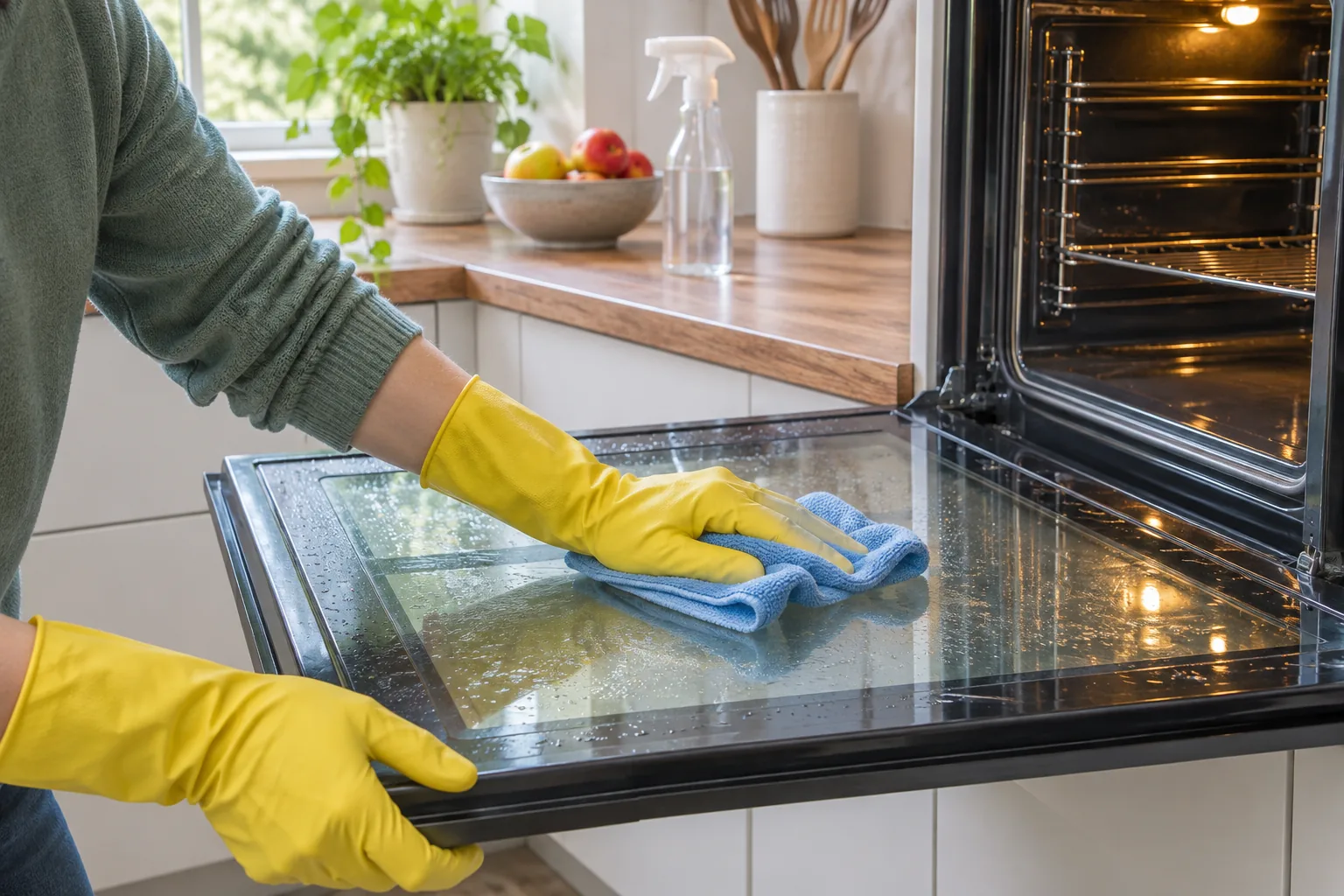
The inner glass collects splatter that bakes into a brown film. Mix a baking soda paste with a little water and spread it over the glass with a soft cloth. Leave the paste on for 30 minutes, then wipe in circles with a damp microfiber cloth.
For the stubborn spots, add a few drops of dish soap to the cloth and repeat. A plastic scraper held flat will lift a crusted drip without marking the surface. Do not use a metal blade or steel wool on glass.
Some doors let you lift or unhook the inner panel for cleaning between the layers. Only do this if the manual shows the steps; otherwise leave it for a service technician.
Where a spin scrubber helps
Scrubbing a wide door and a deep floor with a cloth means bending and long reach. A cordless spin scrubber turns the brush for you, and a telescopic rod lets you work standing up. Brillara is a cordless electric spin scrubber for bathrooms, kitchens and glass. It comes with nine brush heads and a telescopic extension rod, and each head twists onto the same spindle.
Use it only when the oven is cool and switched off. Pick the brush head that suits the surface, and follow the user guide for what the heads can touch. Charge it through the Type-C port and hang it on its wall hook afterward.
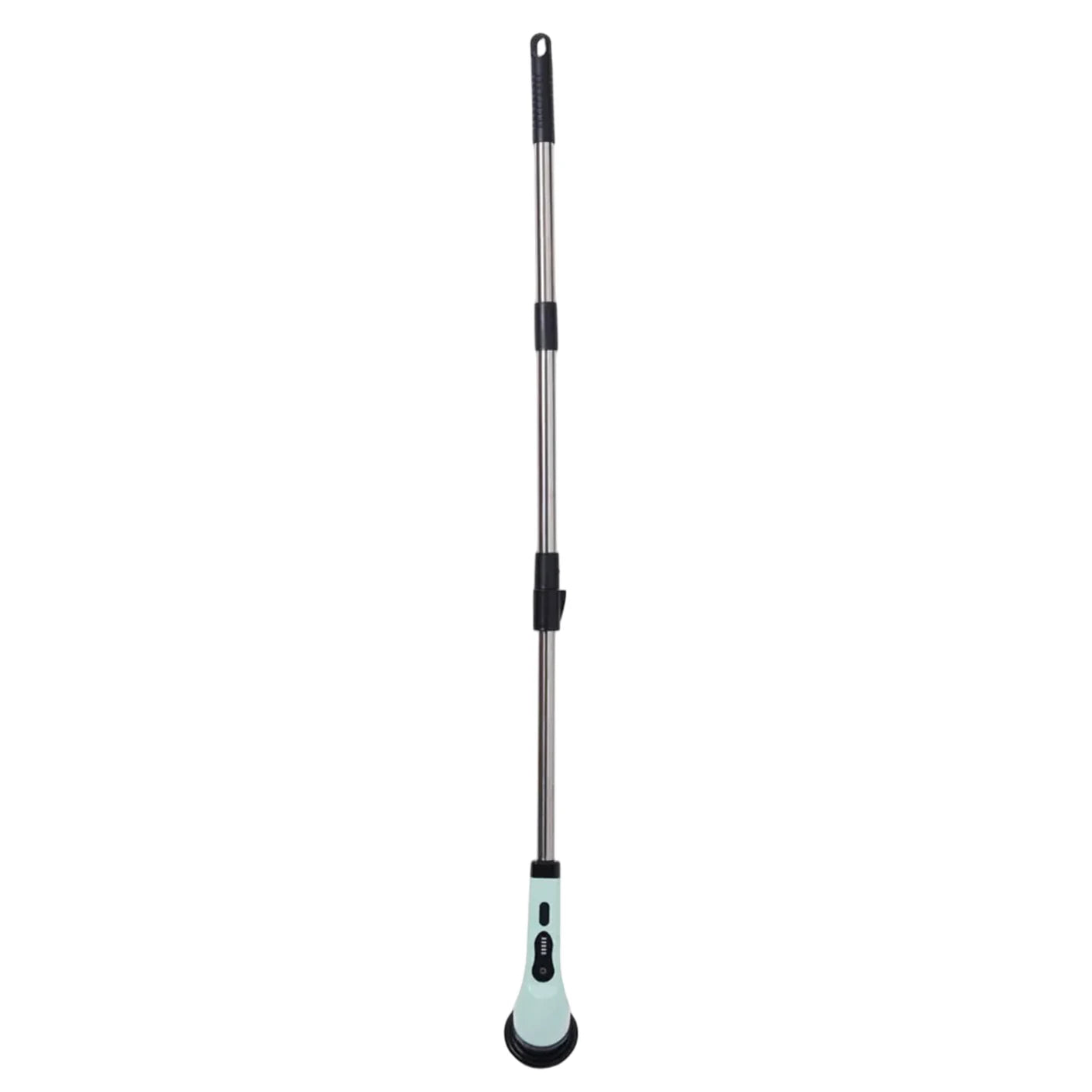 In this guideBrillara$89.99View
Walls, ceiling and floor: baked-on grease
With the racks soaking, turn to the cavity. Baking soda paste is a plain option: mix about half a cup of baking soda with a few tablespoons of water until it spreads like thick frosting. Wearing gloves, coat the walls, ceiling and floor, keeping it off the heating elements.
Leave the paste on overnight. In the morning, wipe it off with a damp cloth, rinsing the cloth often. For caked spots on the floor, use a plastic scraper, then spray a little vinegar over any white residue and wipe again.
Without scrubbing
If you want to avoid scrubbing, give the paste the full overnight soak and let the damp cloth do the work. Repeat on stubborn patches instead of pressing harder. A brush head on a spin scrubber can handle the rinse-and-buff step on the floor once the grease has softened, as long as the manual allows it.
Oven bottom
The oven bottom collects the most drips. Lift out a removable floor panel if the manual shows one, and clean it in the sink. If the floor is fixed, work from the back to the front and finish with a clean, damp cloth so no paste is left behind to burn on at the next preheat.
Using oven cleaner or the self-cleaning cycle
A commercial oven cleaner can be used on tough grease, but the label and the manual decide whether it suits your oven. Read both before you spray. Wear gloves, ventilate the kitchen and keep the spray off the elements, the door seal and the outside of the oven. Do not use caustic sprays in a self-cleaning oven unless the manual says you can.
Spray, wait for the time on the label, then wipe out with a damp cloth and rinse until no residue remains. Leave the door open for a while so the fumes clear.
The self-cleaning cycle burns residue to ash at high heat. Wipe out loose debris first, take out the racks unless the manual says they can stay, and keep the room ventilated while it runs. Once the oven is cool, wipe the ash with a damp cloth. If you smell smoke or see it pouring out, switch the oven off and ask a licensed professional to look at it.
Blue and colored interiors
A blue or other colored interior is usually an enamel coating. Use the mildest method first, such as soap and baking soda paste, and skip abrasive pads. Check the manual for the cleaners the coating can take.
Field note
Wipe up spills once the oven is cool, even if the mess looks small. Fresh splatter lifts with a damp cloth, while baked-on grease needs a full soak.
Common mistakes and a cleaning schedule
These errors add work or damage the oven:
- Spraying cleaner onto the heating elements or the fan opening.
- Cleaning while the oven is still warm.
- Using steel wool on glass or enamel.
- Leaving paste or spray residue behind, which smells when the oven heats.
- Running the self-cleaning cycle with heavy grease pooled on the floor.
A simple cleaning schedule keeps each session short. Wipe visible spills after each use once the oven is cool. Clean the door glass and floor whenever you see a film build up, and give the full routine above on a schedule that suits how often you roast and bake.
Cookware matters too: our guide to non stick ceramic coating pans covers how to look after pans that go from stovetop to oven, and is a stainless steel pan good covers cooking without sticking.
If you want more tools for the glass, the grout and the sink, browse our Scrubbers & Surface Cleaners collection.